Vinyl plank floors rarely look dull because they are dirty. Most of the time they look dull because something was left behind on them: a film of cleaner that dried in place, a "shine" product that built up, or tiny grit that slowly scratched the top layer. The good news is that the fix is usually less effort, not more.
Luxury vinyl plank (LVP) is one of the most forgiving floors you can live with, especially as a renter. It handles a damp mop, kitchen splashes and muddy boots far better than laminate or real wood. It just has a few quiet dislikes, and once you know them, keeping it clear and soft-looking becomes a ten-minute habit.
This guide covers how to clean vinyl plank floors without dulling them: what the floor is actually made of, a simple daily and weekly routine, the six habits that cloud or damage the finish, gentle fixes for scuffs, sticky patches and haze, and a problem-and-fix table you can screenshot for later. If you only ever buy one tool for this floor, make it a microfibre flat mop with washable pads, because almost everything below depends on a mop you can wring well.
What Makes Vinyl Plank Different
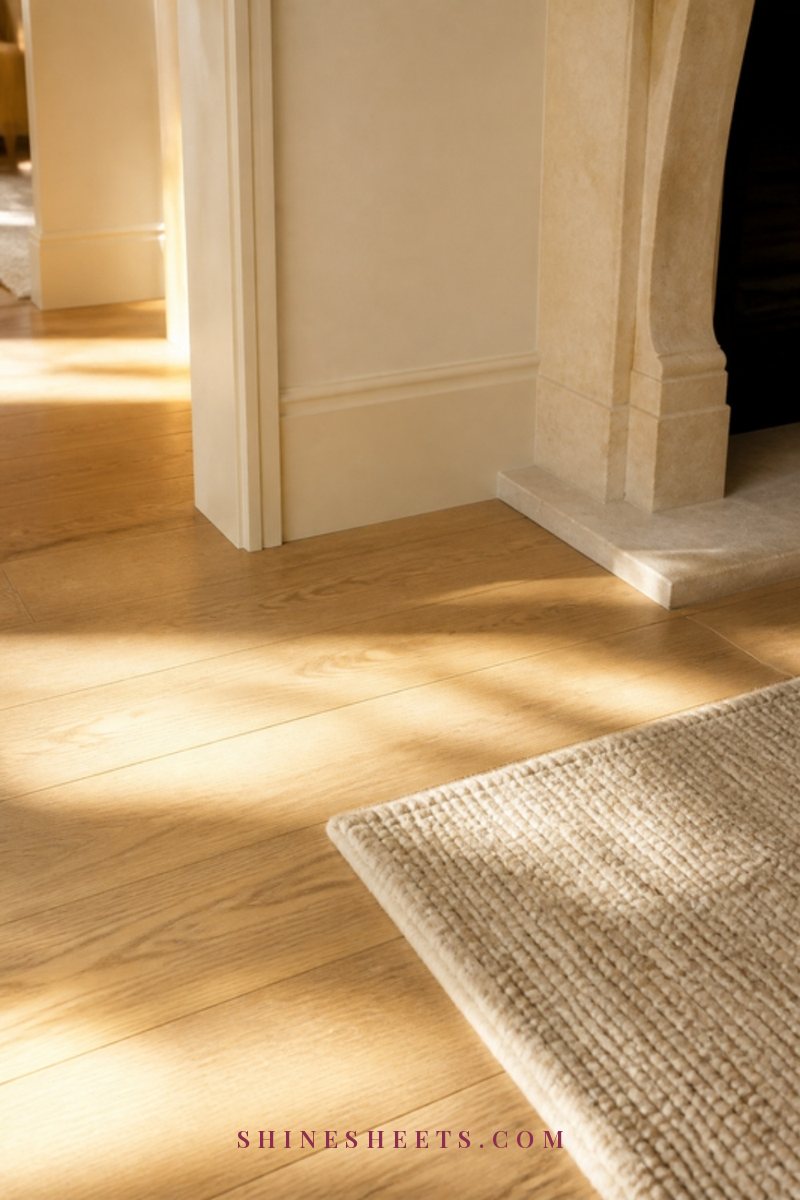
Vinyl plank looks like wood, but it is a layered product. At the bottom there is a core (often a rigid stone-plastic composite or a flexible vinyl base), then a printed design layer that gives you the oak or ash look, and on top a clear wear layer with a protective coating. That clear top layer is what you are really cleaning. When it is smooth and clean, the floor looks natural and soft. When it is coated in residue or covered in fine scratches, light scatters and the whole room looks a little gray.
That is why vinyl needs a different approach from our guide to cleaning laminate floors. Laminate has a wood-fibre core that swells when water sneaks into the seams. Vinyl's core is far more water-tolerant, so you can mop it properly. What vinyl does not tolerate well is anything that sits on top of the wear layer and dries there, or anything that scratches it.
A quick honest note: different brands use different wear layers and coatings, and some warranties are very specific about which cleaners and tools are allowed. If you rent, ask your landlord whether they have the flooring maker's care sheet (they often do), and if you own, look up the brand name on the box or receipt. Their instructions always win over any general guide, mine included.
Why Vinyl Handles a Damp Mop but Not a Soak
Vinyl planks themselves are water-resistant, and many are sold as fully waterproof. The weak points are the seams, the edges and what lies underneath. Planks usually click together as a "floating" floor over an underlayment and a subfloor, and water that pools and sits can work its way through the joints. It will not ruin the vinyl, but it can lead to trapped moisture, odors or mildew underneath, which is the last thing you want in a rental.
Heat is the other quiet enemy. Very hot water, steam and long, direct sun can soften the top layer or the adhesive in some products, and that can lead to slight warping, gapping or a cloudy look over time. Lukewarm water is all you need.
The simple rule I go by: damp, not wet; warm, not hot. If your mop leaves a sheet of water that takes more than a couple of minutes to dry, it is too wet.
The Daily and Weekly Routine
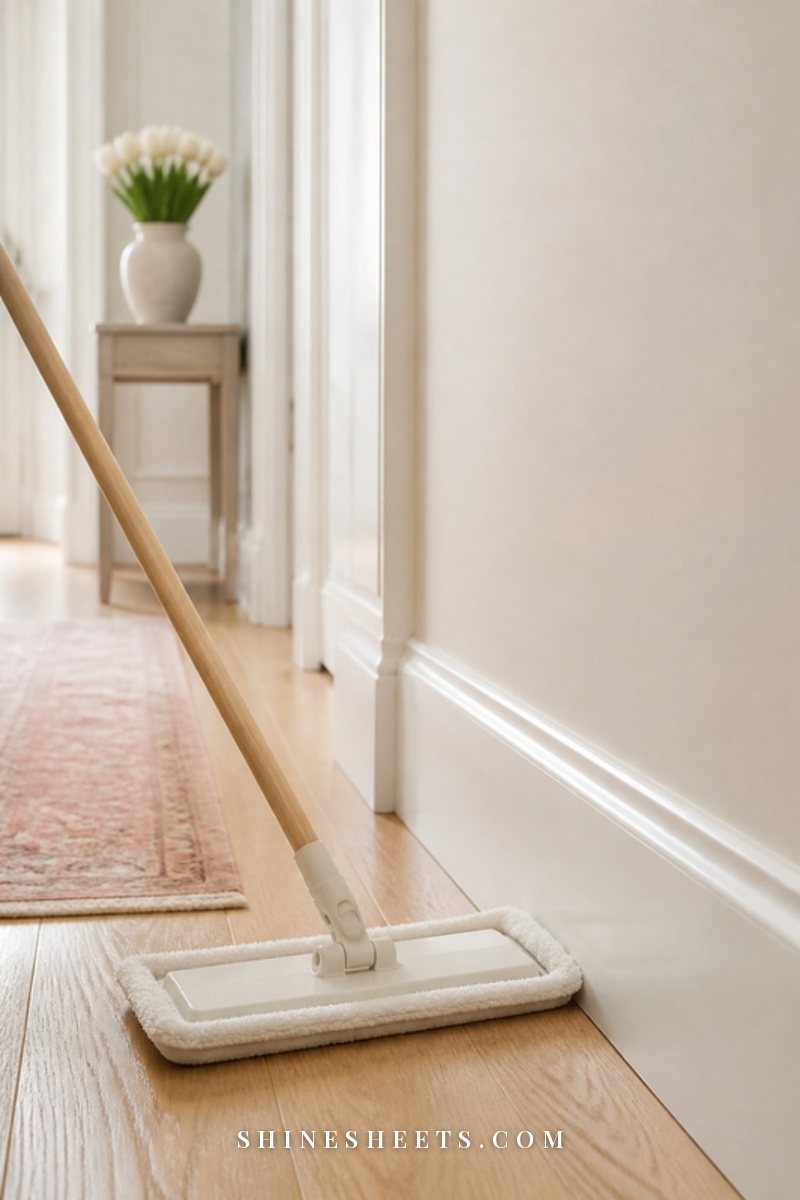
Vinyl plank does not need a big weekend scrub. It needs grit removed often and a light damp mop once a week. Here is how I would split it.
Daily: Dry Dust First
Grit is what slowly scratches the wear layer, so getting it off is the most protective thing you can do. Every day (or every other day in a quiet home), run a dry dust mop over the main walkways, or vacuum on the hard-floor setting. If your vacuum has a spinning beater bar, switch it off or use a hard-floor head, because a fast-turning brush can scatter grit and leave faint marks. If your vacuum keeps blowing dust back out, our guide on how to clean a vacuum cleaner and its filter will help it pick up properly again.
Focus on the places dirt gathers: just inside the door, in front of the kitchen sink and the stove, under the dining table and along the edges where dust drifts.
Weekly: The Well-Wrung Damp Mop
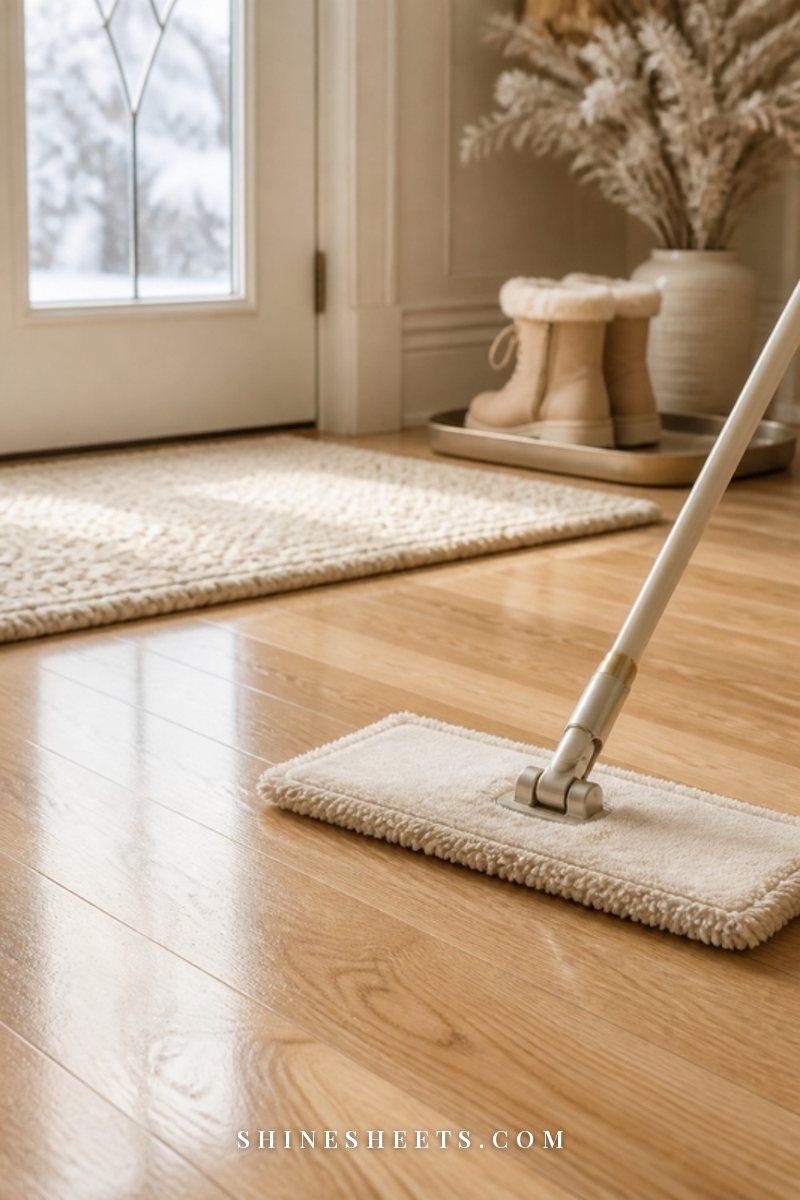
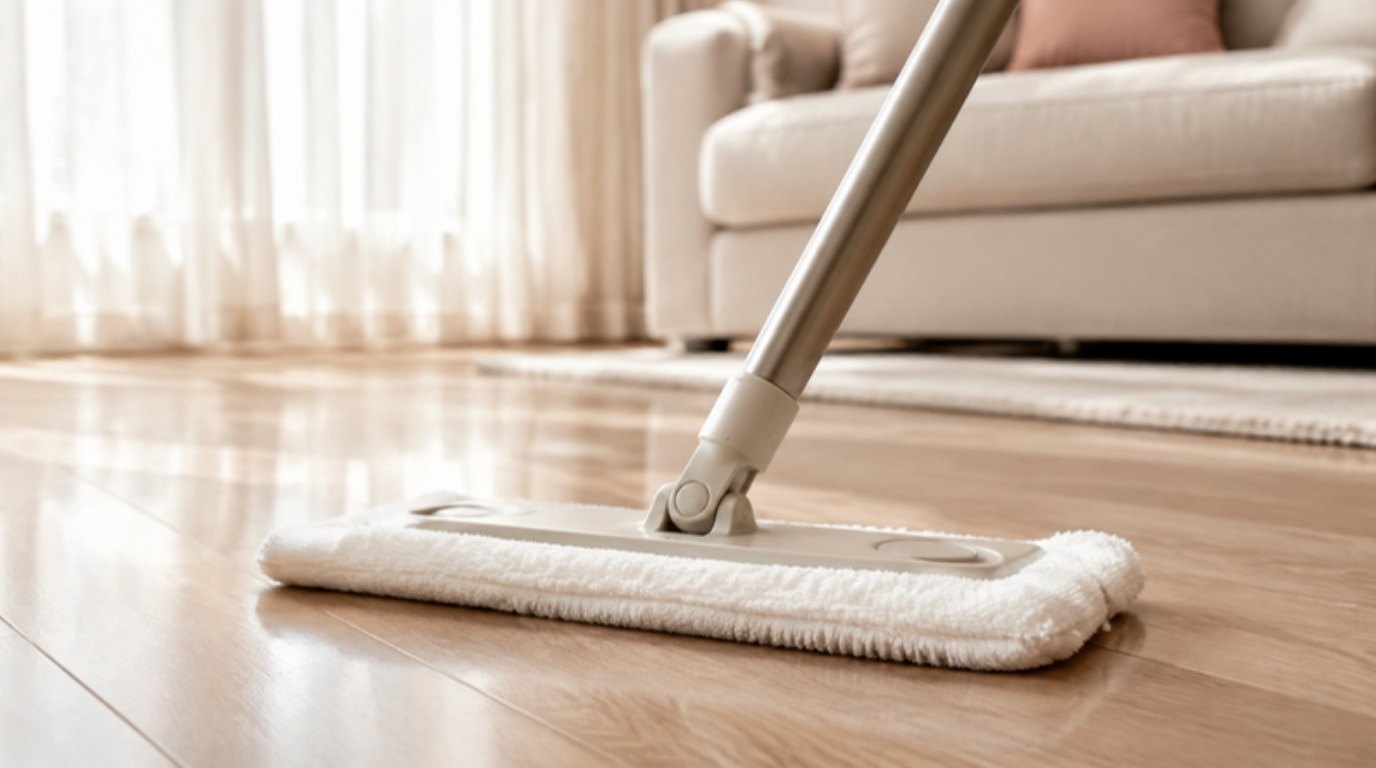
Once a week, after you have dry dusted, damp mop with a pH-neutral cleaner. "pH-neutral" simply means it is neither strongly acidic nor strongly alkaline, so it lifts everyday grime without stripping or clouding the coating. A gentle pH-neutral floor cleaner labelled safe for vinyl or LVP is the easiest choice, diluted exactly as the bottle says. More product does not mean cleaner floors; it means more film.
- Fill a bucket with lukewarm water and add cleaner at the label dilution (often a capful or two per gallon).
- Dip and wring the microfibre pad until it feels just damp to the touch, with no drips when you lift it.
- Mop in the direction of the planks, working from the far corner toward the door so you never step on wet floor.
- Flip or swap the pad once it looks gray. One pad per room is a good rhythm in a busy kitchen.
- Let it air dry for a few minutes, or go over any wetter patches with a dry microfibre pad.
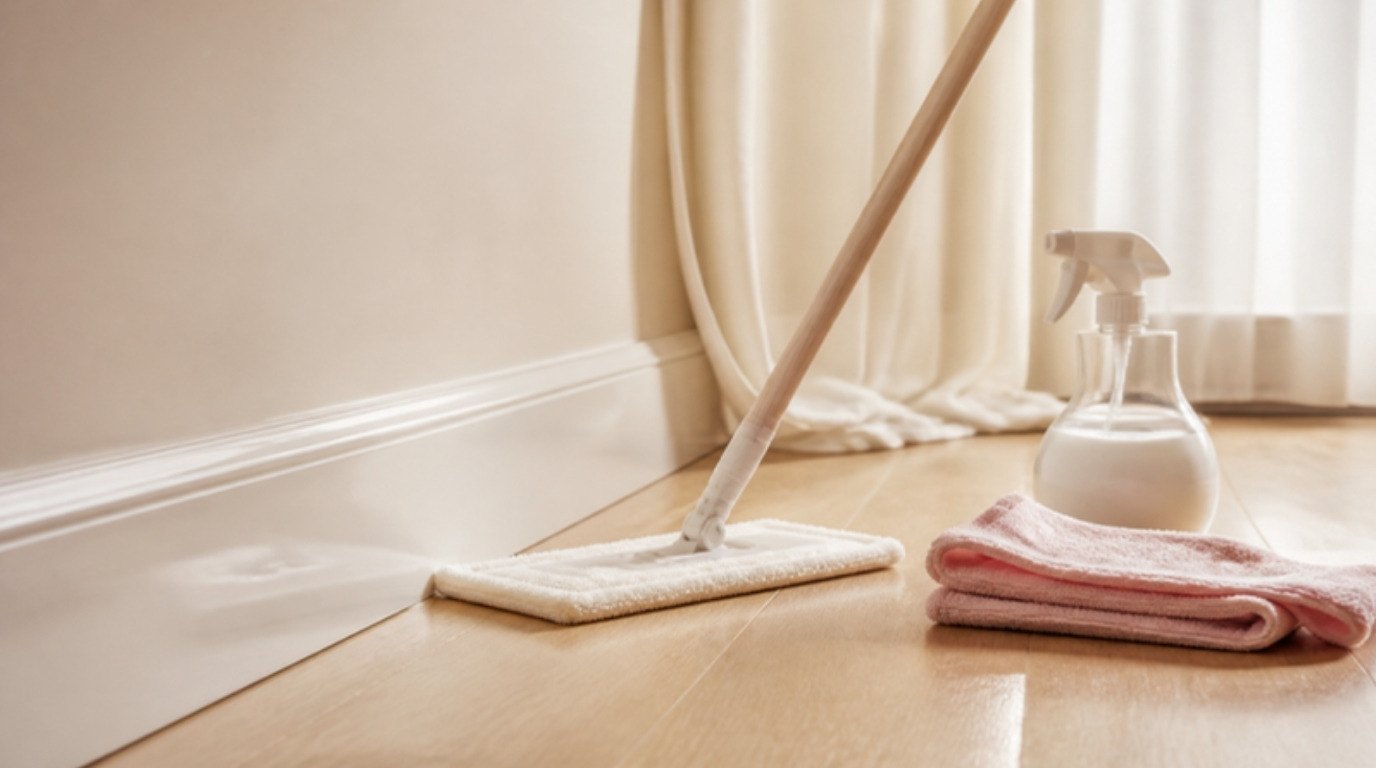
If you prefer the spray method, a refillable blush spray bottle filled with diluted cleaner lets you mist one small area at a time ahead of a dry mop pad. It is the best way to avoid puddles, and it uses very little product.
Monthly: A Closer Look
Once a month, give five extra minutes to the bits a quick mop misses: along the baseboards, around table legs, behind the toilet and in front of appliances. While you are down there, check felt pads on chairs and look for any lifted edges or gaps between planks, which are worth mentioning to a landlord early.
What To Mop With
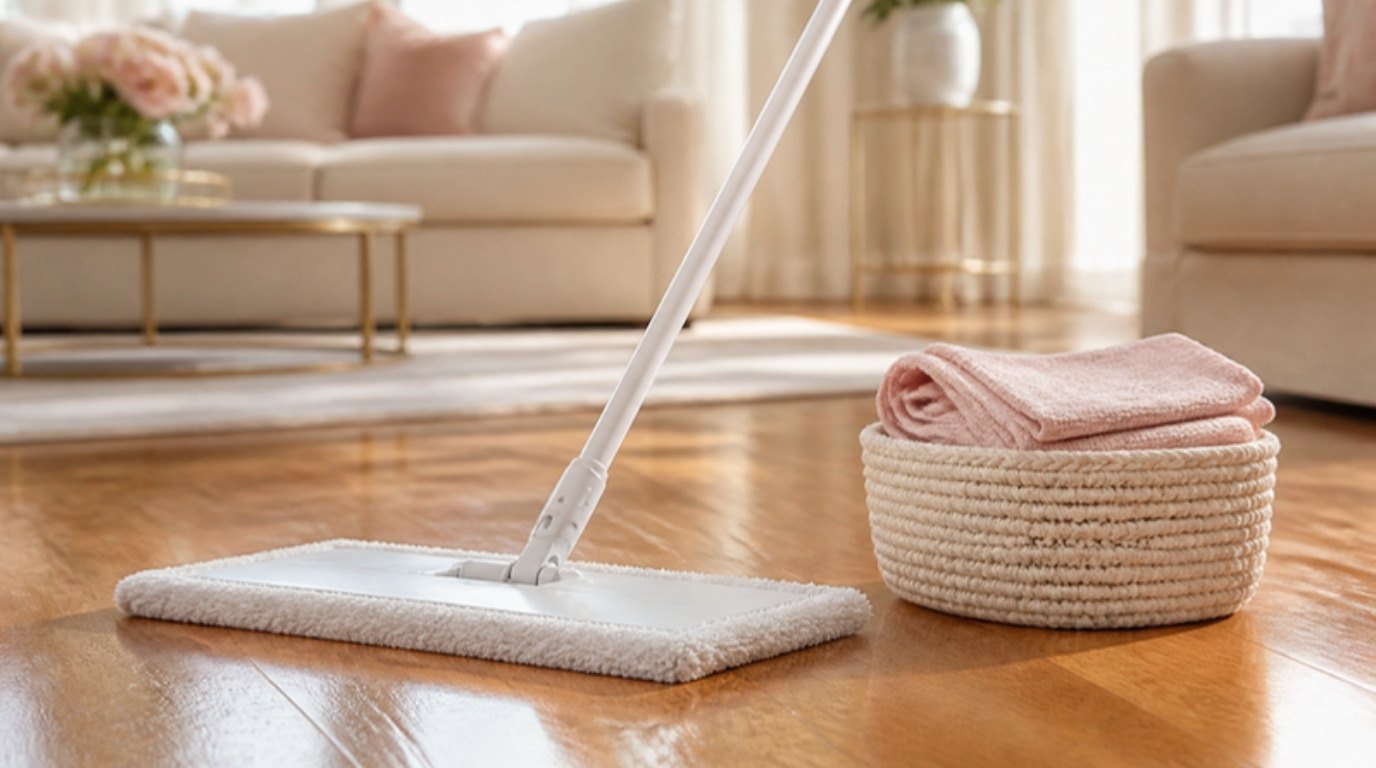
You really only need three things for a vinyl floor: a dry dust mop or vacuum, a flat microfibre mop with a few washable pads, and a gentle cleaner. Microfibre matters because its fine fibres grab grit and grime with very little water. If you want to know why it works so well and how to wash pads so they keep working, our guide to using and washing microfiber cloths covers it all (short version: no fabric softener, because it coats the fibres and they stop grabbing).
Here is the simple mopping mix I come back to:
- Everyday mop: lukewarm water plus a pH-neutral floor cleaner at the label dilution.
- No floor cleaner at home: about 1 gallon of lukewarm water with 2–3 drops of plain, clear dish soap. Not a squirt, just drops, or it will leave a film.
- Light haze or hard-water spots: about 1 gallon of lukewarm water with ½ cup of white vinegar, used occasionally rather than every week, and only if the flooring maker does not advise against it.
A small but useful habit: keep two pads in rotation, one for mopping and one dry pad for a final buff in the kitchen, where splashes leave the most spots.
6 Things That Dull or Damage Vinyl Plank Floors
Most dull vinyl floors have been loved a little too enthusiastically. These are the six habits I would quietly drop.
1. Oil Soaps and Wax
Oil soaps, wax and "restore and shine" polishes are made for other floors. On vinyl, they sit on top of the wear layer, attract dust and slowly build into a sticky, yellowish haze. Vinyl has its own factory finish and does not need waxing. If a product promises shine, skip it.
2. Too Much Product Left To Dry
The most common reason for a cloudy floor is too much cleaner and too little rinsing. When a strong solution dries on the planks, it leaves a thin film that shows every footprint. Measure your cleaner, and if the floor still looks streaky after drying, go over it once with a pad dampened in plain water.
3. Abrasive Pads and Powders
Scouring pads, steel wool, magic-eraser style sponges used hard, and gritty powders all leave micro-scratches in the wear layer. Each one is invisible, but together they make the floor look matte and tired. Soft microfibre, a soft-bristle brush and patience do the same job without the damage.
4. Steam Mops
Steam combines heat and moisture, which is exactly what vinyl and its seams like least. Many vinyl makers say not to use steam mops at all, and some warranties are voided by them. Check the manufacturer's instructions before you even consider one; if in doubt, a well-wrung microfibre mop is the safer choice.
5. Rubber-Backed Rugs and Mats
Some rubber and latex backings react with vinyl over time and leave yellow or brown stains that do not wash off. Look for rugs and mats labelled safe for vinyl floors, or use a felt or natural-fibre rug pad, and lift rugs now and then so the floor underneath can breathe.
6. Dragging Furniture
A sofa pulled across the room or a chair scraped back from the table can gouge or scuff the wear layer in a second. Lift, don't drag, and put pads on everything that moves (more on that below).
How To Lift Scuffs, Sticky Spots and Dull Haze
Most marks on vinyl come off with something gentle and a bit of patience. Always try the mildest fix first, test on a hidden plank (inside a closet or under a sofa), and rinse and dry afterwards.
Scuffs From Shoes
Black heel marks often lift with a dry microfibre cloth rubbed firmly in small circles. If they don't, dampen the cloth with a drop of dish soap in warm water and rub again, then wipe with plain water and dry. A clean tennis ball rubbed over the mark also works surprisingly well on fresh scuffs.
Sticky Spots
For dried drinks, syrup or tape residue, lay a warm, soapy cloth over the spot for 2–3 minutes to soften it, then wipe with gentle pressure. Repeat rather than scrubbing harder. Finish with a damp cloth and a dry one, so no soap is left behind to attract dust.
Dull Haze and Film
If the whole floor looks cloudy, it is almost always residue. Mop once with the diluted vinegar mix (about ½ cup per gallon of lukewarm water), using a fresh pad and wringing it well, then mop again with plain water and buff dry. If the haze came from a wax or polish, it may need a dedicated vinyl-safe residue remover, used exactly as directed. A haze that stays after all that may be wear in the top layer, and that is worth asking the flooring maker or landlord about rather than scrubbing.
Vinyl Plank Floor Problems at a Glance
Here is the whole guide in one table. Screenshot it and keep it for the next time something looks off.
| Problem | Likely cause | Gentle fix | What to avoid |
|---|---|---|---|
| Cloudy, dull finish | Cleaner residue or too much product left to dry | Plain-water mop with a well-wrung pad, then buff dry; occasional diluted vinegar pass | Adding more cleaner or "shine" products |
| Footprints show right after mopping | Film from undiluted or soapy mixes | Measure cleaner; rinse once with plain water | A squirt of dish soap in the bucket |
| Sticky or tacky feel | Oil soap, wax or polish build-up | Vinyl-safe residue remover per label, then plain-water rinse | Wax, oil soaps, furniture polish |
| Black heel scuffs | Rubber soles | Dry microfibre or a tennis ball; drop of dish soap if needed | Scouring pads, harsh solvents |
| Fine scratches in walkways | Grit ground in by shoes | Dust mop more often; doormats at every entry | Vacuum beater bar on hard floors |
| Yellow patch under a rug | Rubber or latex backing reacting with vinyl | Swap to a vinyl-safe or felt rug pad; ask the flooring maker about the stain | Bleach or strong cleaners on the stain |
| Gaps or lifted edges | Standing water, heat or the floor shifting | Dry the area; tell your landlord early | Steam mops, very hot water |
Safety Notes Before You Start
Cleaning a floor is gentle work, but a few habits keep you and the floor safe:
- Never mix bleach with vinegar or ammonia. These combinations release harmful gases. Use one product at a time and rinse in between. Our natural cleaning guide lists the combinations never to mix.
- Ventilate by opening a window or turning on a fan while you clean, especially in a small kitchen or bathroom.
- Wear gloves if you are using anything stronger than water and a drop of soap, or if your hands get dry easily.
- Test on a hidden plank before trying any new cleaner or spot fix.
- Follow the flooring maker's care instructions, especially if a warranty is involved.
- Mind the slip risk. A damp vinyl floor can be slippery, so mop toward the door and keep pets out until it dries.
Prevention: Small Habits That Keep the Finish Clear
Prevention is where vinyl floors really shine (in the quiet, natural way). A few small habits save hours of fixing later:
- Felt pads on everything that moves. Stick white felt furniture pads under chairs, tables, stools and sofa feet, and check them every few months, because grit gets stuck in old pads and turns them into sandpaper.
- Doormats at every entry. One outside and one inside catch most of the grit before it reaches the floor. A beige washable doormat is the easiest to keep fresh, because you can simply put it in the machine.
- Shoes off near the door. Even a gentle "slippers inside" habit cuts scratches dramatically.
- Wipe spills straight away. Keep a couple of soft white microfibre cloths under the sink so a splash never gets the chance to dry sticky.
- Soften strong sun. Sheer curtains or blinds in a very sunny room help prevent fading and heat stress on the planks.
- Lift furniture when you move it, ideally with someone helping, or use furniture sliders on the way.
How Often To Clean Vinyl Plank Floors
Here is the rhythm that keeps most homes looking clear without turning floors into a hobby:
- Daily or every other day: dry dust mop or vacuum main walkways (about 5 minutes).
- Weekly: damp mop with a pH-neutral cleaner (about 15–20 minutes for a small apartment).
- As needed: spot-clean spills, scuffs and sticky patches.
- Monthly: edges, corners, under furniture, and a check of felt pads and rug backings.
- Every few months: a plain-water rinse mop if you notice any film building up.
If you have other hard floors in the home, the same "dry first, damp second" logic applies, with a few tweaks. Our guide on how to clean tile floors so they shine, not streak covers grout and bathroom tiles if your bathroom isn't vinyl.
Final Thoughts
Vinyl plank floors are easy to love once you stop doing too much. Sweep away the grit, mop with a damp pad and a measured splash of gentle cleaner, and skip the wax, the steam and the scrubbing.
Give it a few weeks of that calm routine and you will notice the floor looks softer and clearer, the way it did on move-in day. That is a small, lovely kind of home care, and it only takes a few minutes at a time.