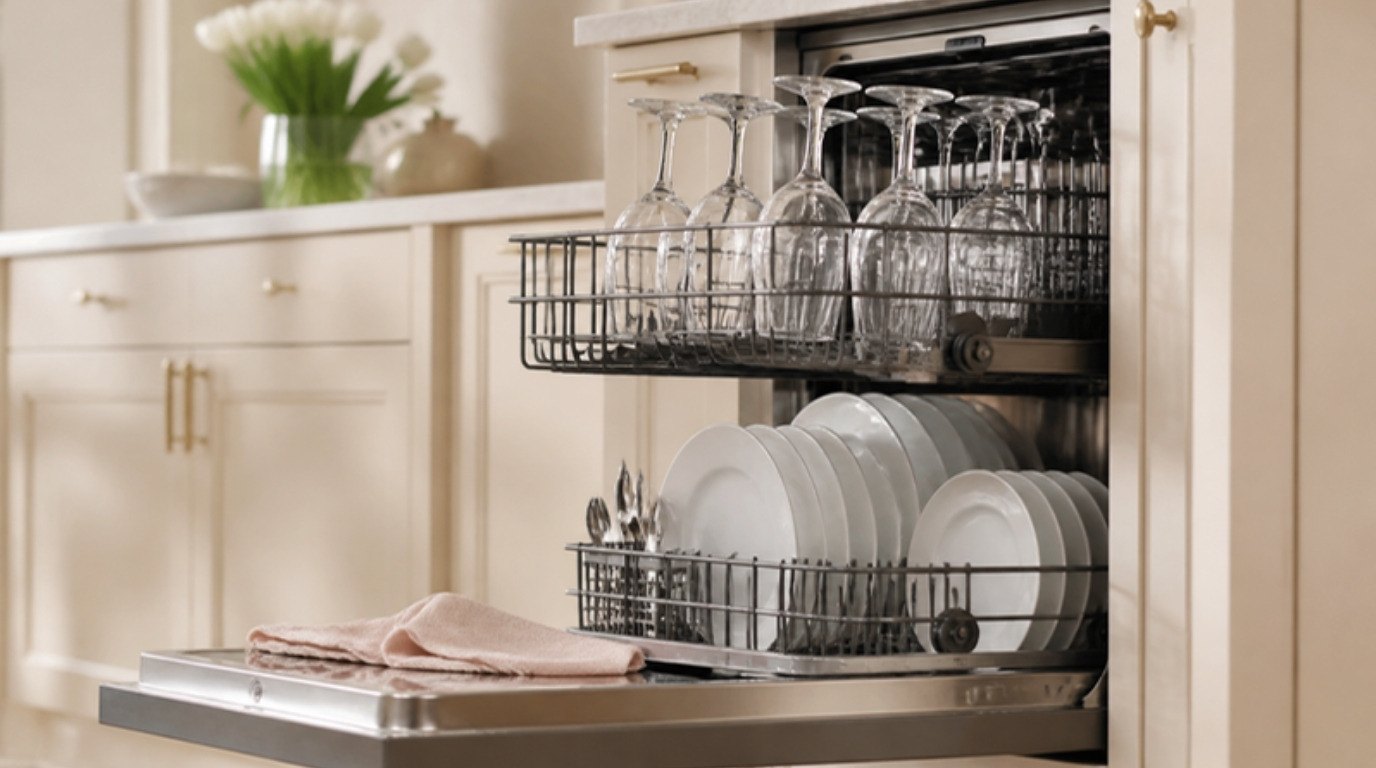
A dishwasher that smells a little sour isn't a dirty-house problem. It's a filter problem. Almost every musty, foody or "something died in there" smell comes from a small cylinder at the bottom of the machine that quietly collects bits of food, grease and paper labels, wash after wash. Most people don't even know it comes out.
The rest of the cleaning is easy once that's done: clear the spray arms, wipe the door seal, run one hot cycle and your dishwasher smells fresh again. The whole job takes about 30 minutes of hands-on time, and keeping it that way takes five minutes a week. I genuinely find it one of the most satisfying cleaning jobs there is, mostly because the difference is so immediate.
This guide covers how to clean a dishwasher step by step: the signs it needs it, the tools you'll want, the filter, spray arms and door seal, whether to use vinegar or a cleaner tablet, what never to mix, a monthly maintenance routine table, loading habits that keep it clean and how to handle cloudy hard water film.
Signs Your Dishwasher Needs Cleaning
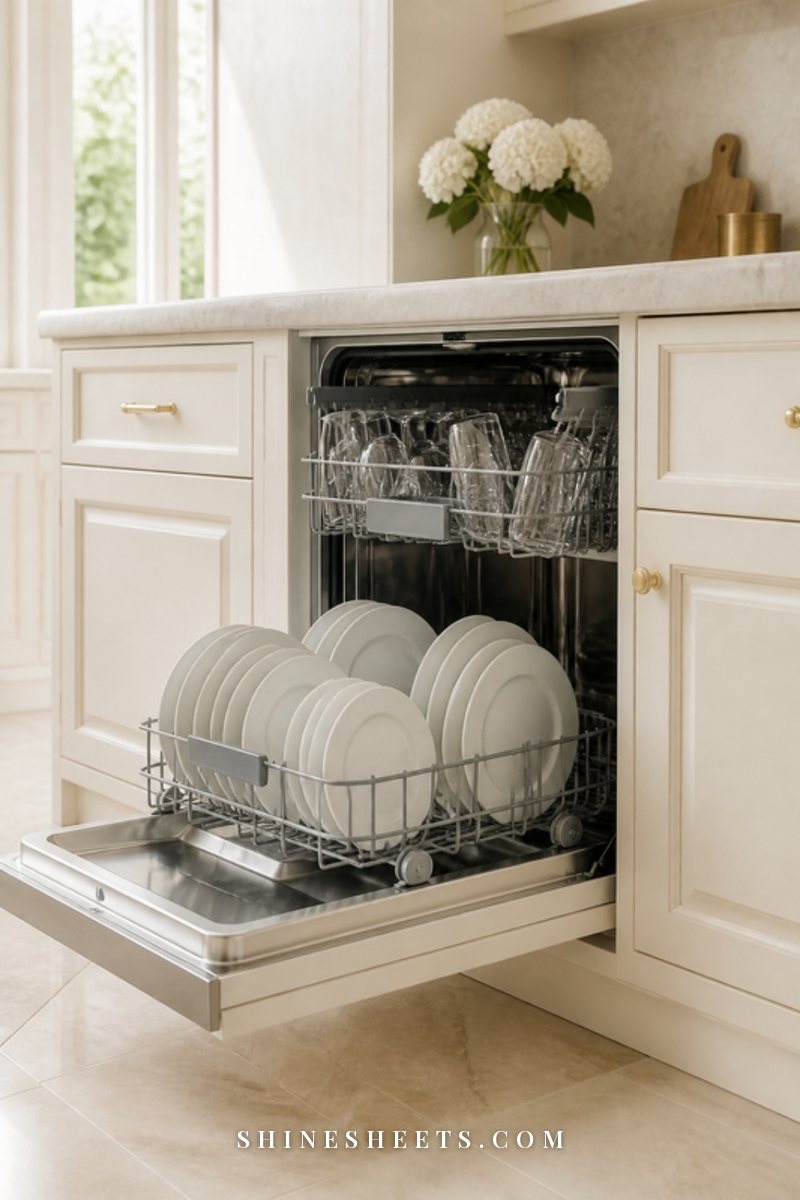
Dishwashers work hard and get forgotten. Yours is asking for attention if you notice:
- A smell when you open the door, especially after it's been closed for a day or two.
- Gritty or sandy dishes, or little bits of food stuck to glasses and plates after a full cycle.
- A cloudy film on glasses or a white coating inside the machine.
- Standing water at the bottom after the cycle finishes.
- Greasy or slimy patches along the door edges and the bottom seal.
- Dishes that aren't getting as clean as they used to, even on a strong program.
Any one of these is a sign to start with the filter. If several apply, give it the full clean below.
What You Need To Clean a Dishwasher
Nothing special, and most of it lives under your sink already:
- Rubber gloves. The filter is not a pretty job. A pair of pink rubber cleaning gloves makes it much more pleasant.
- A soft brush. An old toothbrush works, but a bottle brush cleaning set with a few sizes reaches into the filter, spray arm holes and corners more easily.
- Microfiber cloths. A few microfiber cleaning cloths for wiping the door, seals and racks.
- Dish soap and warm water in a sink or bowl, for soaking the filter.
- A toothpick or wooden skewer to clear spray arm holes.
- White vinegar or a dishwasher cleaner for the hot cycle (one or the other, not both).
- A spray bottle for a vinegar and water mix, handy for the door and edges. A refillable glass spray bottle is easy to keep under the sink.
Before you start, take a quick look at your dishwasher's manual (or the manufacturer's website). Filter designs differ a little between brands, and a few manufacturers recommend their own cleaners over vinegar.
How To Clean a Dishwasher Step by Step
Do these in order. The hot cycle comes last so it rinses everything you've loosened.
1. Empty It and Check the Bottom
Take out all dishes and pull out the bottom rack completely. Look at the floor of the dishwasher, especially around the drain and the filter. With gloves on, remove anything you can see: bits of food, glass fragments, paper labels from jars, small lids or seeds. Use a paper towel for anything sharp.
If there's standing water, soak most of it up with a cloth or sponge so you can reach the filter without a mess.
2. Remove and Clean the Filter
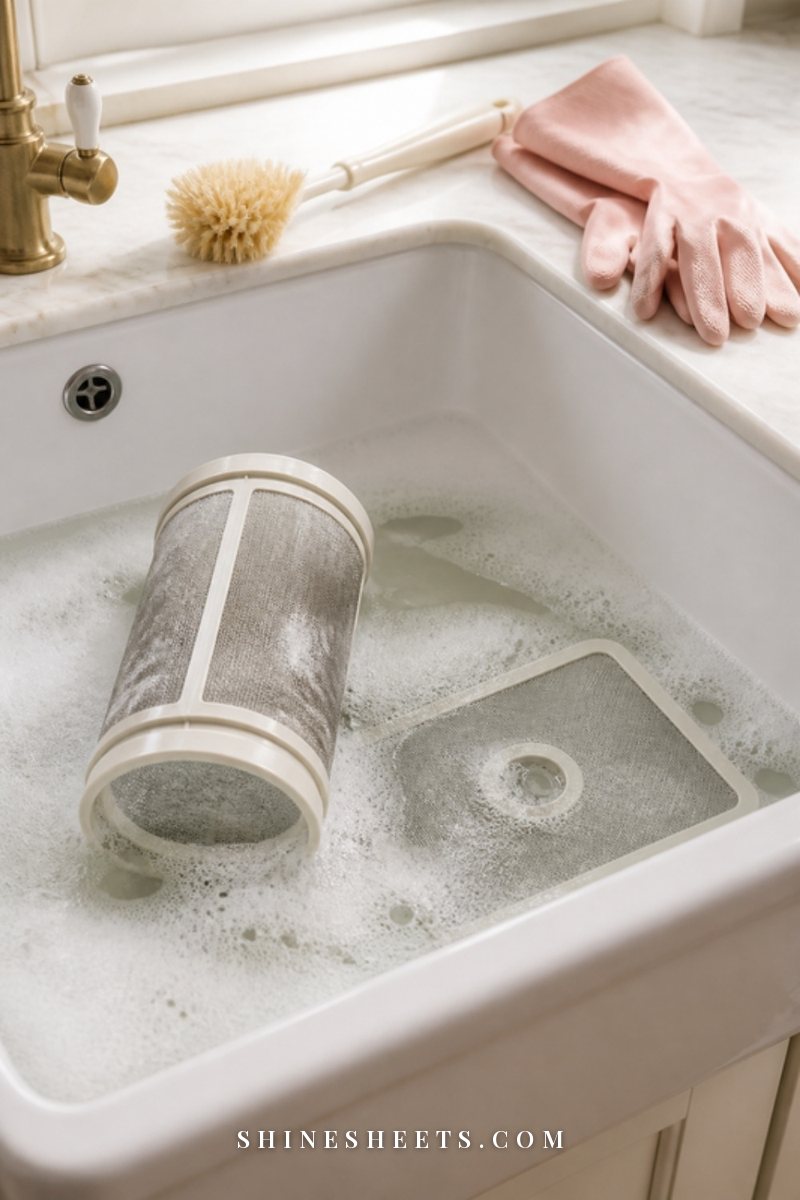
This is the most important step. In most modern dishwashers, the filter is a cylinder in the bottom center or back corner, sitting in a flat mesh plate.
- Twist the cylinder counterclockwise (usually a quarter turn) and lift it out.
- Lift out the flat mesh plate underneath if it comes out too.
- Rinse both under warm running water to remove loose debris.
- Soak them in warm water with a few drops of dish soap for 10 to 15 minutes to loosen grease.
- Scrub gently with a soft brush, inside and out, until the mesh looks clear. Don't use wire brushes or scouring pads; they can tear the mesh.
- Rinse well and hold the filter up to the light. You should be able to see through the fine mesh evenly.
- Wipe out the filter housing in the dishwasher with a damp cloth, then put everything back and twist to lock. Make sure it's fully seated, or food can get past it.
If your dishwasher is older and has no removable filter, it probably has a self-cleaning grinder. In that case, just clear any visible debris from around the drain.
3. Clear the Spray Arms
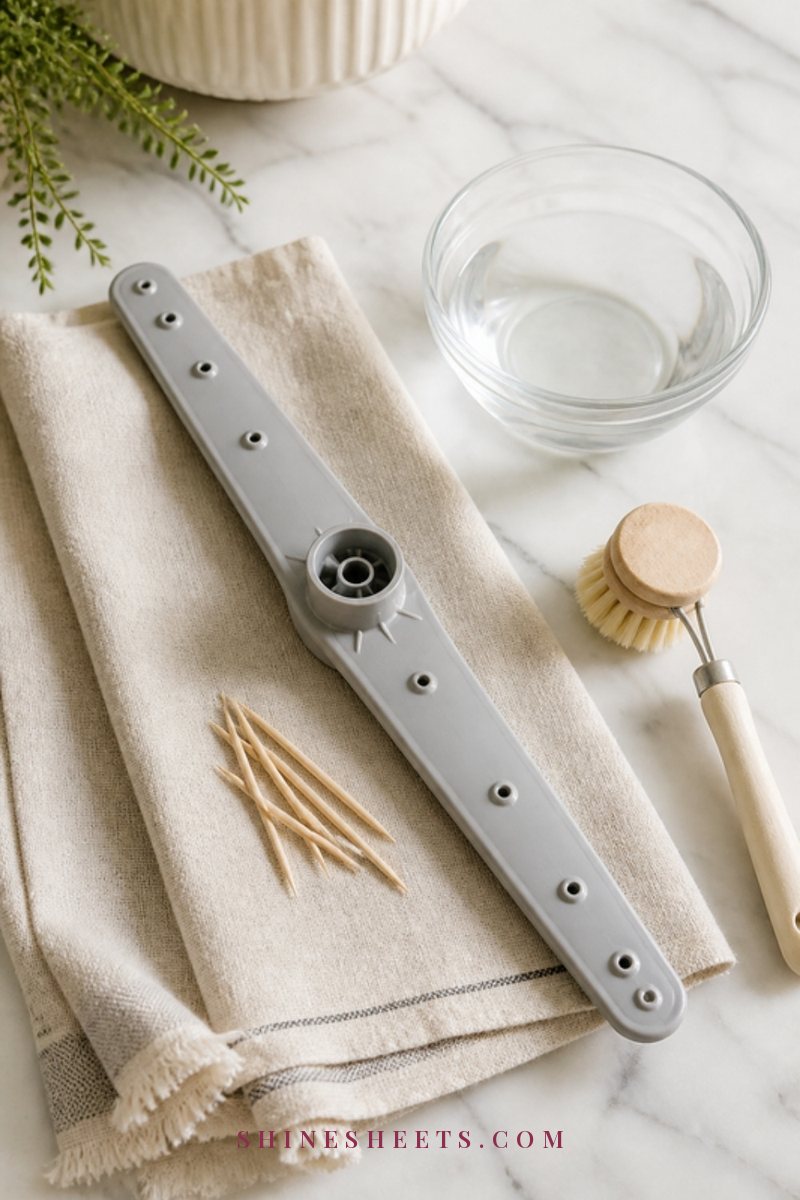
Spray arms have small holes that shoot water at your dishes. When they clog with food or limescale, parts of the rack stop getting clean.
- Lower arm: usually lifts straight up and off.
- Upper arm: usually unscrews or unclips from under the top rack. Some machines also have a third arm in the ceiling.
- Check each hole and gently poke out any blockage with a toothpick or skewer. Don't use metal pins, which can widen the holes.
- Rinse the arms under warm water and shake them. Water should run out of every hole.
- For limescale, soak the arms in a bowl of equal parts white vinegar and warm water for about 30 minutes, then rinse.
- Pop them back in and spin them by hand. They should turn freely.
4. Wipe the Door Gasket and Edges
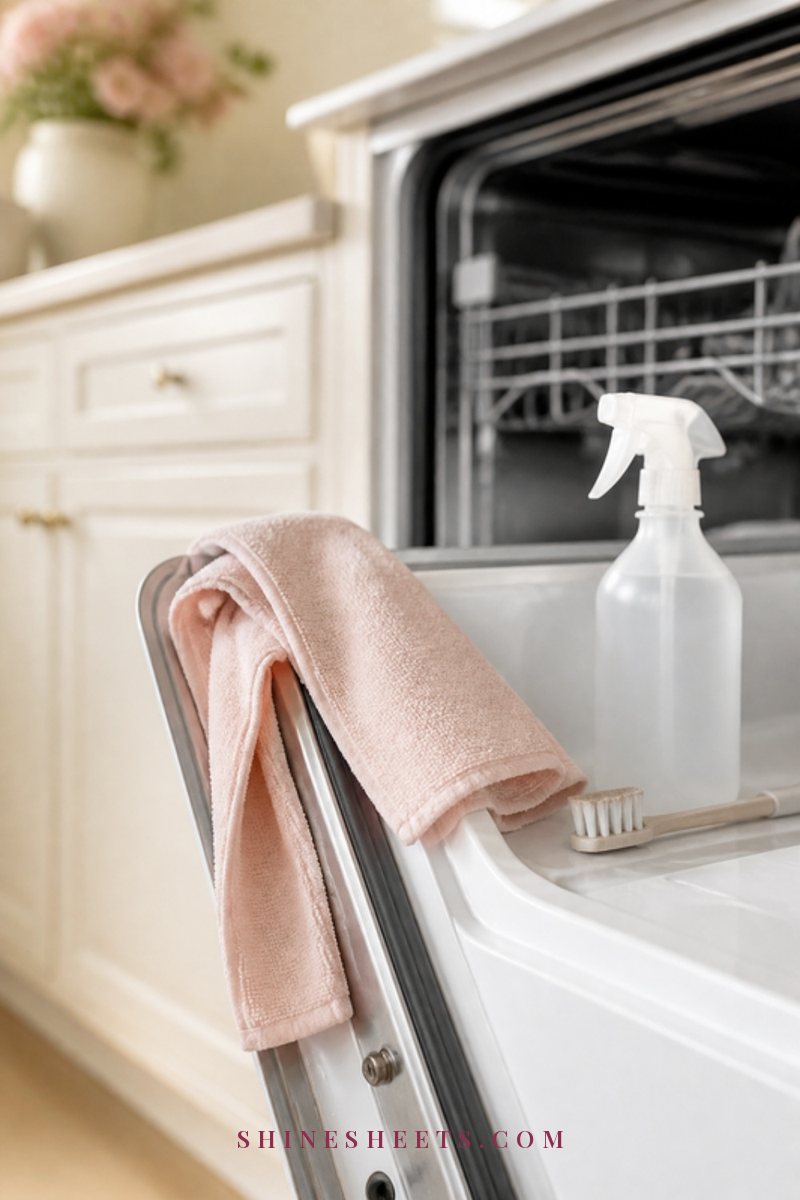
The rubber seal around the door and the bottom edge of the door are where grease, crumbs and mildew hide, because water never reaches them directly.
Spray the seal and door edges lightly with warm soapy water or a 50/50 vinegar and water mix and let it sit for two to three minutes. Wipe with a microfiber cloth, gently lifting the edge of the seal to reach the groove underneath. Use a soft brush or toothbrush in corners and along the bottom of the door, where gunk tends to collect. Wipe the detergent dispenser and its lid too.
Finish with a damp cloth to remove any residue, then dry the seal.
5. Clean the Cutlery Basket and Racks
The cutlery basket collects more food than you'd expect. Lift it out, empty any debris and soak it in warm soapy water for ten minutes, then scrub the slots with a bottle brush. Wipe the racks with a soapy cloth, paying attention to the wheels and rails. If you see rust spots on rack tines, a little rack touch-up paint from the manufacturer can cover them so they don't spread.
6. Run a Hot Cleaning Cycle
With the dishwasher empty and everything back in place, choose one of these:
- Dishwasher cleaner: follow the package directions, usually placing a dishwasher cleaner tablet in the detergent compartment or on the bottom of the empty machine, then running the hottest cycle.
- White vinegar: place a dishwasher-safe bowl or measuring jug with about one cup (250 ml) of white vinegar upright on the top rack. Run the hottest cycle with no detergent.
Use one method per cycle, never both together. The hot water and cleaner dissolve grease and loosen mineral buildup throughout the machine, including the pipes you can't reach.
7. Finish With a Rinse
Once the cleaning cycle ends, run a short rinse cycle or quick program with the machine still empty. This flushes out any loosened residue and leftover cleaner, so your next load of dishes comes out spotless and smelling of nothing at all. Leave the door slightly open afterward so the inside can dry completely.
8. Wipe the Outside
Finish with the part everyone sees. Wipe the front, the handle and the control panel with a damp microfiber cloth and a drop of dish soap, then buff dry. For stainless steel fronts, wipe in the direction of the grain to avoid streaks. Avoid spraying liquid directly onto the control panel.
Vinegar or Dishwasher Cleaner: Which To Use?
Both work, and the right choice depends on your machine and your water.
| White vinegar | Dishwasher cleaner tablet | |
|---|---|---|
| Best for | Light odors, a monthly freshen-up | Grease, heavy buildup, hard water |
| How to use | 1 cup upright on top rack, hottest cycle | As directed on the package, hottest cycle |
| Cost | Very low | Low to moderate |
| Things to know | Some manufacturers advise limiting it, as frequent use may affect rubber seals | Designed for dishwashers, so check it suits your model |
| How often | Once a month at most | Every one to three months |
If your manual recommends against vinegar, simply use a dishwasher cleaner instead.
What Never To Mix (A Quick Safety Note)
Cleaning a dishwasher is safe and simple, as long as you keep products separate:
- Never mix bleach with vinegar or ammonia. Together they release toxic gases. If you've used a bleach-based product anywhere in the dishwasher, run a full rinse cycle before using vinegar.
- Don't use bleach in a dishwasher with a stainless steel interior. It can damage the finish.
- Don't combine vinegar and a commercial cleaner in the same cycle.
- Never use regular dish soap in the detergent compartment. It creates mountains of suds that can leak onto your floor.
- Wear gloves when handling the filter and debris, and keep cleaner tablets stored away from children and pets.
Your Monthly Dishwasher Maintenance Routine
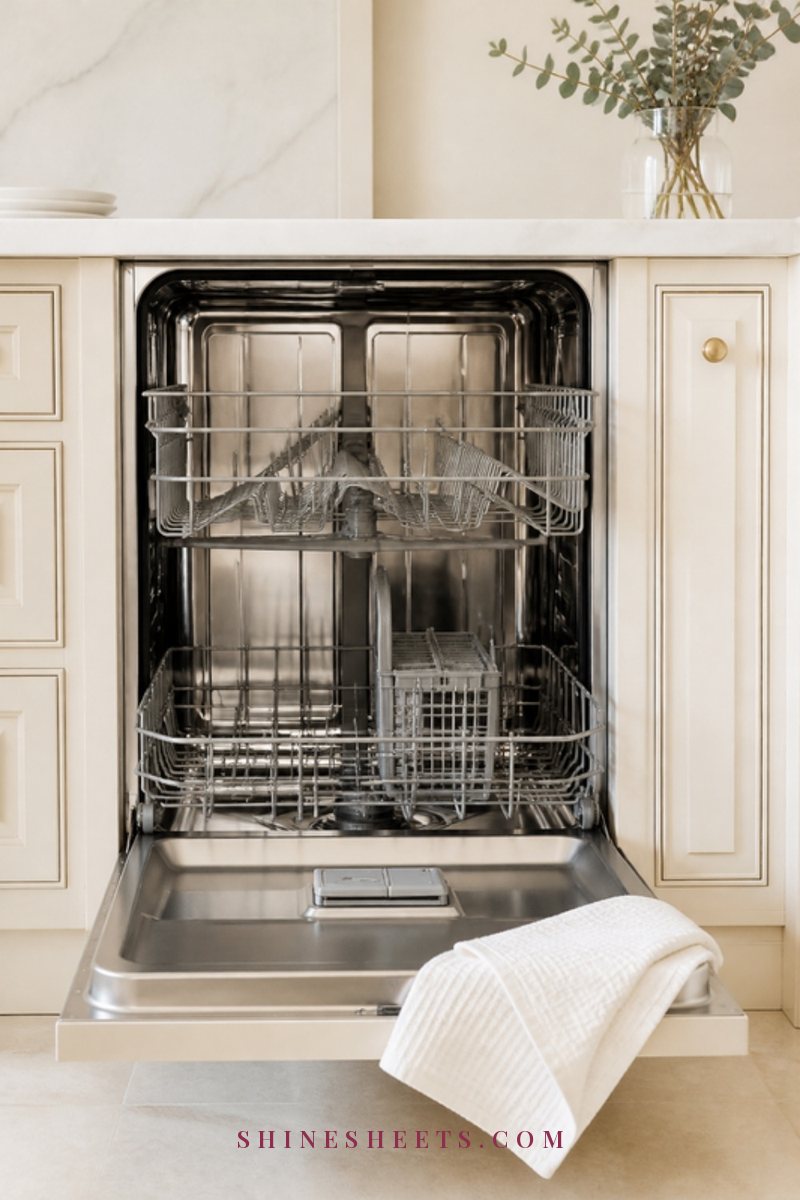
Once the deep clean is done, this simple rhythm keeps the smell from coming back. Screenshot it, or add it to your kitchen routine.
| How often | Task | Time |
|---|---|---|
| After each load | Leave the door slightly open for an hour to dry | 5 seconds |
| Weekly | Check the bottom for food, glass or labels | 1 minute |
| Weekly | Wipe the door edges and bottom seal | 2 minutes |
| Every 2 weeks | Rinse the filter under warm water | 3 minutes |
| Monthly | Soak and scrub the filter | 15 minutes |
| Monthly | Check spray arm holes and spin the arms | 5 minutes |
| Monthly | Hot cycle with vinegar or a dishwasher cleaner, then a rinse | 2 minutes hands-on |
| Every 3 months | Soak the spray arms, clean the cutlery basket, wipe the racks | 20 minutes |
If you do a big kitchen clean once a season, fold the three-month tasks into it. My guide on how to deep clean your kitchen shows where the dishwasher fits in the order of jobs.
Loading Habits That Keep Your Dishwasher Clean
How you use the machine makes a big difference to how often it needs a deep clean:
- Scrape, don't rinse. Scrape food into the trash, but you don't need to pre-rinse. Modern detergents work best with a little food to act on, and pre-rinsing wastes water.
- Remove labels and big bits. Paper labels from jars and seeds or bones clog the filter fast.
- Don't overload. Water and detergent need space to reach every dish. Face dirty sides toward the spray arms.
- Run the hot water tap first. Run your kitchen tap until the water is hot before starting the dishwasher, so the cycle begins hot.
- Use the right amount of detergent. Too much leaves film; too little leaves food. Follow the package for your water hardness.
- Run it regularly. A half-full dishwasher left closed for days is how smells start. If it'll be a while, run a quick rinse.
- Leave the door ajar after the cycle. Drying the inside prevents mildew.
How To Deal With Hard Water Film
If you live in a hard water area, you might see a white, chalky coating inside the dishwasher and cloudy glasses that don't wipe clean. That's mineral buildup, mostly calcium and magnesium.
- Use dishwasher salt if your machine has a salt compartment (common on European models). It softens the water inside the machine. Top it up when the indicator light comes on.
- Use a rinse aid if your manual recommends it; it helps water run off glasses instead of drying into spots.
- Set the water hardness level in the dishwasher settings if it has one. Your water company can tell you your local hardness.
- Run a cleaner cycle designed for limescale every one to two months.
- Soak cloudy glasses in warm white vinegar for 15 minutes, then rinse. If the cloudiness doesn't wipe away after soaking, it may be etching (tiny scratches in the glass), which can't be reversed but can be prevented with less detergent and softer water.
Hard water leaves its mark all over the house, not just in the dishwasher. My sister guide on how to remove hard water stains covers taps, shower screens and sinks too.
How Often Should You Clean a Dishwasher?
It depends on how often you run it and how hard your water is, but here's a good general guide:
- Filter: rinse it every two weeks and give it a proper soak and scrub once a month. If you run the dishwasher daily for a big household, check it weekly.
- Full deep clean: every one to three months, including the spray arms, seal, racks and a hot cleaning cycle.
- Quick wipes: door edges and the bottom seal once a week, which takes two minutes.
- Hard water homes: a descaling cycle every month or two, because mineral buildup happens faster.
- Light users: if you only run it a couple of times a week, a full clean every three months is usually plenty, but keep an eye on the filter.
The biggest clue is your nose. The moment a smell appears, check the filter first, and you'll usually solve it in ten minutes.
Make It Part of a Kitchen Reset
A clean dishwasher pairs naturally with the other "hidden" kitchen jobs that make the whole room feel fresher. If you have an hour, start the dishwasher's hot cleaning cycle and use that time to wipe cabinet fronts, clean the sink and degrease the stovetop. By the time the cycle ends, the whole kitchen feels new.
The oven is the natural next step, and my guide on how to clean your oven has a gentle, low-fume method that fits perfectly into the same afternoon. Light a candle when you're done, make a cup of tea and enjoy a kitchen that smells of nothing but clean.
When the Smell Won't Go Away
If you've cleaned the filter, the seal and the spray arms, run a hot cleaning cycle and it still smells, check these:
- The drain hose. A kink or blockage keeps dirty water sitting in the machine. Look under the sink to make sure the hose has a high loop or air gap and isn't bent.
- The sink drain or garbage disposal. If your dishwasher drains into a disposal, run the disposal before starting the dishwasher so the shared drain is clear.
- Hidden debris under the lower spray arm or in the filter housing.
- Mildew behind the door seal that needs a second, slower clean with a brush.
If standing water keeps returning or the smell lingers after all of this, it's worth calling a technician, as the drain pump may need attention. For other stubborn household odors, my guide on how to get rid of a musty smell covers the most common culprits. And if you're on a roll with appliances, the same filter-first approach works beautifully in my guide on how to clean a washing machine.
Final Thoughts
A fresh-smelling dishwasher is mostly about one small part: the filter. Clean it, clear the spray arms, wipe the seal, run a hot cycle with vinegar or a cleaner and finish with a rinse, and your machine will feel almost new again.
After that, a few minutes a week and a door left open to dry keep everything clean, sparkling and pleasant every time you open it.