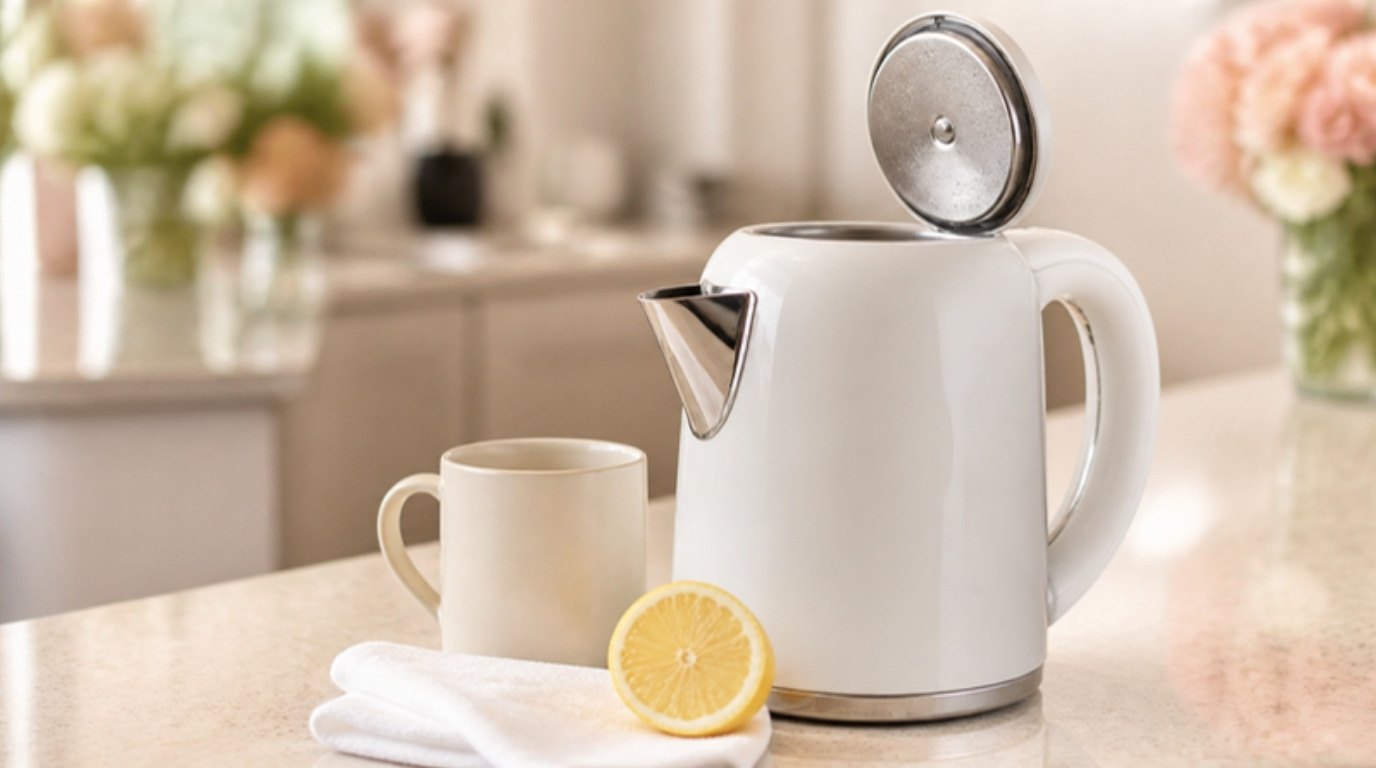
A crusty kettle isn't a dirty kettle. That chalky white layer on the bottom is limescale, the minerals left behind every time hard water boils away, and it comes off with something you probably already have in the cupboard. No scrubbing, no harsh chemicals, just a mild acid, a bit of heat and some patience.
Descaling is one of the most satisfying little kitchen jobs. You pour in a cloudy solution, wait, and pour out a kettle that looks almost new inside. Your tea tastes cleaner, those tiny floating flakes disappear, and the kettle boils a little faster too.
This guide shows you how to descale a kettle naturally, step by step, with white vinegar or citric acid (plus a lemon option). You'll also find a method comparison table, how to clean the filter and the outside, tips for glass and stainless steel kettles, how often to descale, and simple habits that keep limescale from coming back so fast.
It takes about five minutes of actual effort. The acid does the rest while you get on with your day.
Why Limescale Builds Up
Tap water carries dissolved minerals, mainly calcium and magnesium. The more of them your water contains, the "harder" it is. When you boil water, some of those minerals turn into a solid, chalky deposit (calcium carbonate) that clings to the heating element, the base and the walls of your kettle. Every boil adds a fine new layer.
Limescale isn't dangerous, but it does a few annoying things:
- It flakes off into your drinks, leaving little white bits floating in your tea.
- It can give hot drinks a dull, chalky or slightly metallic taste.
- It acts like insulation on the heating element, so the kettle takes longer to boil and uses more energy.
- Over time, heavy buildup can shorten the life of the kettle.
If you see the same white crust on your taps and shower glass, you have hard water, and your kettle will need descaling more often. My guide on how to remove hard water stains covers the rest of the house.
Do You Have Hard Water?
If you're not sure, a few clues give it away quickly:
- White, chalky spots on taps, shower glass and drying dishes.
- A crusty ring around the plughole or the base of your faucet.
- Soap and shampoo that lather poorly and leave a film behind.
- Glasses that come out of the dishwasher cloudy.
- Scale in your kettle within a few weeks of descaling.
Many local water suppliers publish the hardness of their water online, and simple test strips from a hardware store give you an answer in seconds. Knowing your water helps you decide how often to descale, and whether a water filter is worth it for you.
Limescale itself isn't usually considered a health concern, it's mostly a matter of taste, appearance and keeping your appliances working well. Still, a clean kettle simply makes nicer tea.
Signs Your Kettle Needs Descaling
You don't need to wait for a thick crust. Descale when you notice any of these:
- A white, gray or slightly rusty-looking film on the base or element.
- White flakes or a cloudy film floating in boiled water.
- Tea or coffee that tastes flat, chalky or "off."
- Rough, crusty patches on the inside walls or around the water gauge.
- The kettle getting noisier or taking noticeably longer to boil.
- A clogged spout filter that slows the pour.
Safety First
A few rules keep this simple job safe for you and your kettle:
- Unplug and cool down before you handle, rinse or wipe anything, and let a just-boiled kettle cool before you empty it.
- Never immerse an electric kettle or its base in water, and keep the base and plug completely dry.
- Don't fill above the max line, even with descaling solution, because boiling liquid can spit out of the spout.
- Check your kettle's manual. Most kettles are fine with vinegar or citric acid, but some manufacturers recommend a specific method or warn against boiling vinegar.
- Ventilate the kitchen when boiling vinegar, and keep your face away from the steam.
- Never mix vinegar with bleach or other cleaning products. Use one descaler at a time, and rinse well before switching.
What You Need
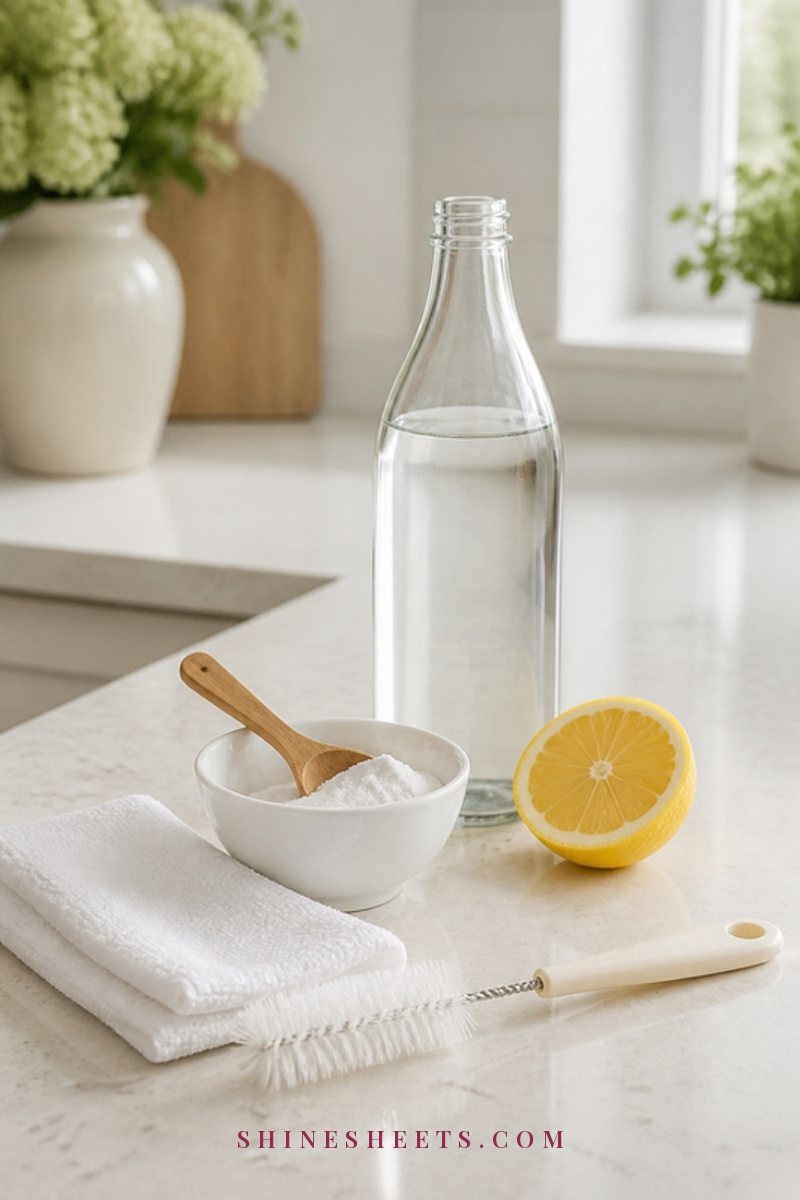
Just a few basics:
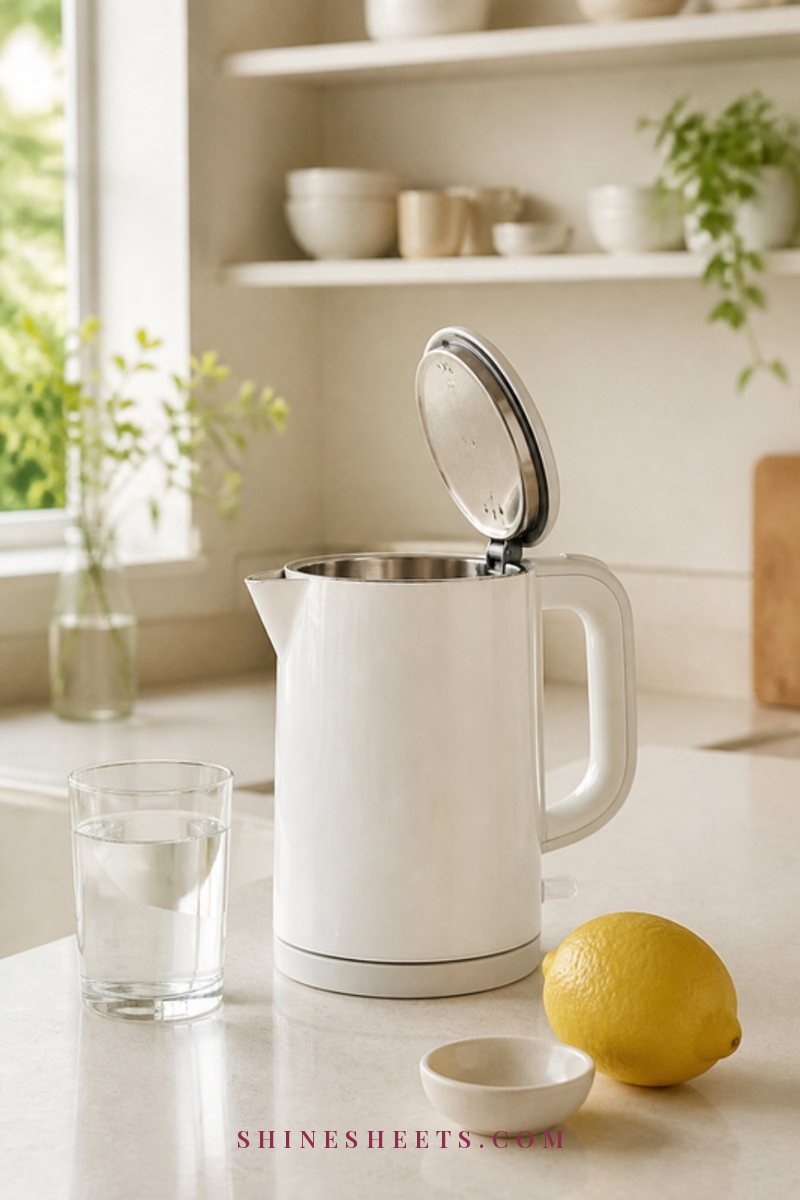
- A mild acid: distilled white vinegar, or a food-safe citric acid cleaner in powder form. A fresh lemon works for light buildup.
- Water.
- A soft cloth. A pack of microfiber cloths is perfect for wiping the inside and buffing the outside without scratches.
- A soft brush for the spout and any stubborn spots. A slim bottle brush reaches into the spout and around the gauge easily.
- Optional: a soft old toothbrush for the filter mesh.
Skip steel wool, abrasive powders and scouring pads. They scratch stainless steel and glass, and scratches give limescale even more places to cling.
How To Descale a Kettle With White Vinegar
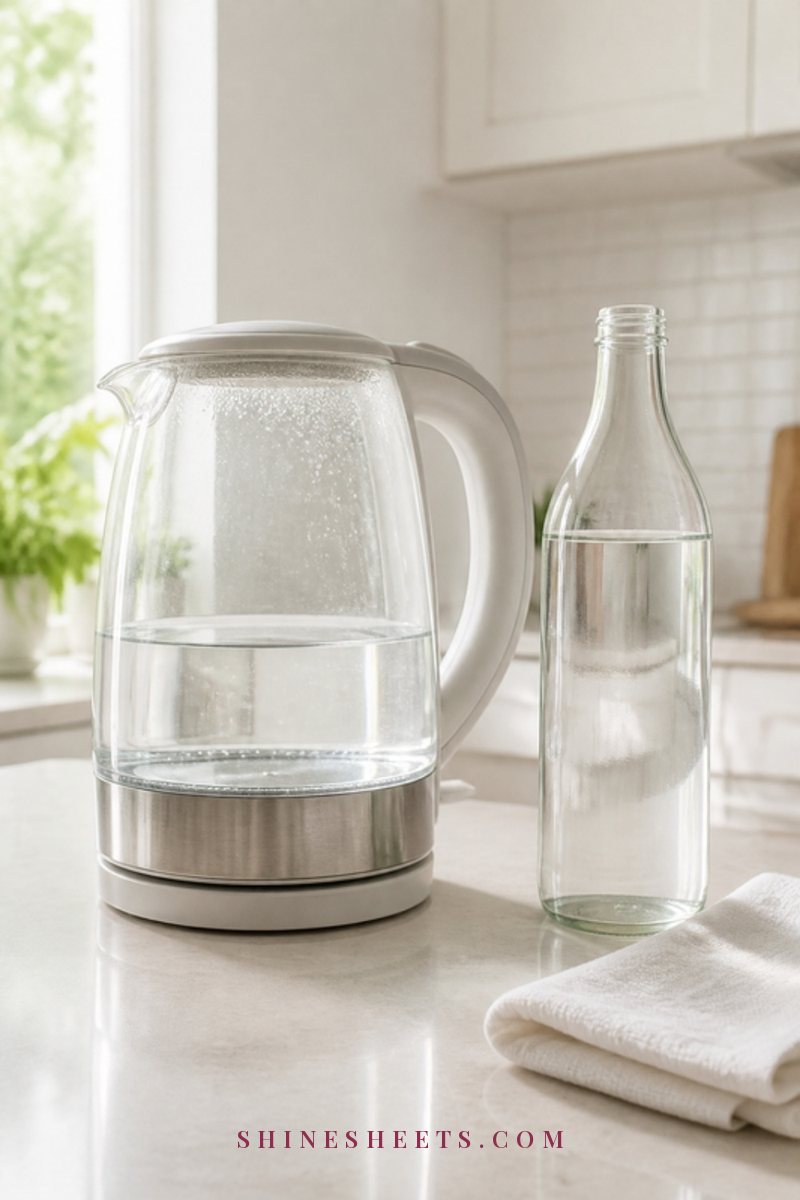
Vinegar is the classic method, cheap and very effective. The only downside is the smell, which disappears after rinsing.
- Empty the kettle and make sure it's unplugged and cool.
- Mix a 1:1 solution. Fill the kettle about halfway with equal parts white vinegar and water, for example 2 cups of each in a standard 1.7-liter kettle. The liquid should cover all the scale, but stay below the max line.
- Bring it to a boil. Plug it in and boil once, then switch it off and unplug. Open a window or turn on the extractor fan.
- Let it soak. Leave the hot solution in the kettle for 30 minutes to 1 hour. For heavy buildup, leave it for up to 3–4 hours, or boil a second time after the first soak.
- Pour it away once it has cooled. You'll often see flakes and cloudy residue come out with it.
- Wipe away any loose scale with a damp soft cloth or a bottle brush. Don't scrape the element or the base.
- Rinse well with cold water two or three times.
- Boil fresh water and discard it, twice. This removes any leftover vinegar taste and smell.
If some scale is still left, repeat the process with a slightly stronger mix, about two parts vinegar to one part water.
How To Descale a Kettle With Citric Acid
Citric acid is my top pick for most kettles. It's gentle, works quickly and leaves almost no smell. It's also what many store-bought descalers are based on.
- Fill the kettle about halfway to three quarters with water (roughly 4 cups, or 1 liter).
- Add citric acid. Stir in 1–2 tablespoons of citric acid powder for light to moderate buildup, or up to 3 tablespoons for heavy scale.
- Boil once, then switch off and unplug.
- Let it sit for 15–30 minutes. You may see the scale fizzing or loosening as it works.
- Pour away the solution once cooled, and wipe out any loosened bits with a soft cloth.
- Rinse two or three times with fresh water.
- Boil fresh water and discard it once or twice before using the kettle again.
Citric acid powder is also handy for coffee makers, irons and shower heads, so one container goes a long way. If you're building a gentler cleaning cupboard, my guide to natural cleaning covers which simple ingredients work where, and which combinations to never mix.
The Lemon Method for Light Buildup
A lemon is a pretty, fresh-smelling option for kettles with only a thin layer of scale, or for regular maintenance between deeper cleans.
- Squeeze the juice of one lemon into a half-full kettle of water, and drop in the squeezed halves or a few slices.
- Bring it to a boil, then switch off and unplug.
- Let it sit for about 1 hour.
- Pour away, rinse well and boil fresh water once before use.
Lemon is milder than vinegar or citric acid powder, so it's less effective on heavy, thick deposits. Think of it as a gentle refresh rather than a deep descale.
What To Do About Stubborn, Thick Scale
If your kettle hasn't been descaled in a long time, one round may not be enough. Don't reach for a knife or a scourer; just give the acid more chances to work:
- Repeat the cycle. Two or three rounds of citric acid, each with a fresh solution, dissolve far more than one long soak.
- Boil twice in one round. Boil the solution, let it sit for 20 minutes, then boil it again before the final soak.
- Use a slightly stronger mix. Up to 3 tablespoons of citric acid per liter, or two parts vinegar to one part water.
- Brush between rounds. A soft bottle brush lifts the loosened top layer so the next round reaches the scale underneath.
Rinse and do the two fresh-water boils only after the final round. Patience here saves your kettle from scratches.
Descaling Method Comparison
Here's how the three methods compare at a glance. Screenshot it and keep it on your phone for descaling day.
| Method | Ratio | Soak time | Smell | Best for |
|---|---|---|---|---|
| White vinegar | 1 part vinegar to 1 part water, filled halfway | 30–60 minutes (up to 3–4 hours for heavy scale) | Strong while boiling, gone after rinsing | Moderate to heavy buildup, budget-friendly |
| Citric acid powder | 1–2 tablespoons per 4 cups (1 liter) of water | 15–30 minutes | Almost none | Most kettles, regular descaling, stainless steel |
| Fresh lemon | Juice of 1 lemon in a half-full kettle | About 1 hour | Fresh and light | Light buildup and in-between refreshes |
For a kettle that's never been descaled, start with vinegar or a stronger citric acid mix, then keep it clean with citric acid or lemon every few weeks.
How To Clean the Kettle Filter
Most electric kettles have a small mesh filter inside the spout that catches limescale flakes. When it's clogged, the kettle pours slowly and the flakes end up in your cup anyway.
- Unplug the kettle and let it cool completely.
- Gently slide or unclip the filter out of the spout (check your manual if it doesn't come out easily).
- Soak it in a small bowl of equal parts warm water and white vinegar, or warm water with a teaspoon of citric acid, for 20–30 minutes.
- Brush it gently with a soft toothbrush to remove loosened scale.
- Rinse under running water, let it dry and click it back into place.
If the filter doesn't come out, it will get descaled along with the rest of the kettle. Just give the spout a gentle brush afterward.
How To Clean the Outside of Your Kettle
A sparkling inside deserves a fresh outside too. Always unplug first, and never let water drip into the base or the switch.
- Plastic or painted kettles: wipe with a cloth dampened with warm water and a drop of dish soap, then dry with a clean microfiber cloth.
- Stainless steel: wipe with a damp cloth, then buff dry in the direction of the grain to avoid streaks. A cloth lightly dampened with diluted vinegar removes fingerprints and water spots.
- Glass: wipe the outside with diluted vinegar or a glass-safe cleaner on a cloth (never sprayed toward the base), then buff dry.
- Handle and lid: these get greasy fingerprints, so give them a soapy wipe and dry well.
- The base: unplug, then wipe with a barely damp cloth and dry completely. Never put it under the tap.
The kettle is often the star of a tea station, so it's worth keeping it gleaming. My tea corner ideas are full of pretty ways to style it with your mugs and tea tins.
Glass and Stainless Steel Kettles
Glass Kettles
Glass kettles show limescale clearly, which makes it easy to see when it's time to descale and when you're done. Citric acid is ideal here, because it works fast and leaves the glass crystal clear. Avoid sudden temperature changes, like pouring cold water into a just-boiled glass kettle, and don't use abrasive pads that can scratch the surface.
Stainless Steel Kettles
Stainless steel is tough, but it can stain or dull with harsh treatment. Use citric acid or vinegar as described above, rinse thoroughly and dry the inside with a cloth to prevent water spots. Never leave a strong acid solution sitting in a stainless steel kettle overnight. Rainbow-like discoloration is usually harmless heat tint, not damage, and often fades with a citric acid descale.
Stovetop Kettles
The same methods work on stovetop kettles: heat the solution on the hob until it just boils, turn off the heat and let it soak. Be careful with enamel kettles and follow the manufacturer's care advice, because some coatings don't like strong acids.
How Often To Descale a Kettle
It depends on your water and how often you use the kettle:
- Very hard water and daily use: every 2–4 weeks.
- Moderately hard water: about once a month.
- Soft water or occasional use: every 2–3 months.
A simple trick: descale on the first weekend of each month, or add it to your monthly kitchen routine. If you're planning a bigger session, my plan for deep cleaning your kitchen fits descaling in alongside the oven, fridge and cabinets.
How To Prevent Limescale Buildup
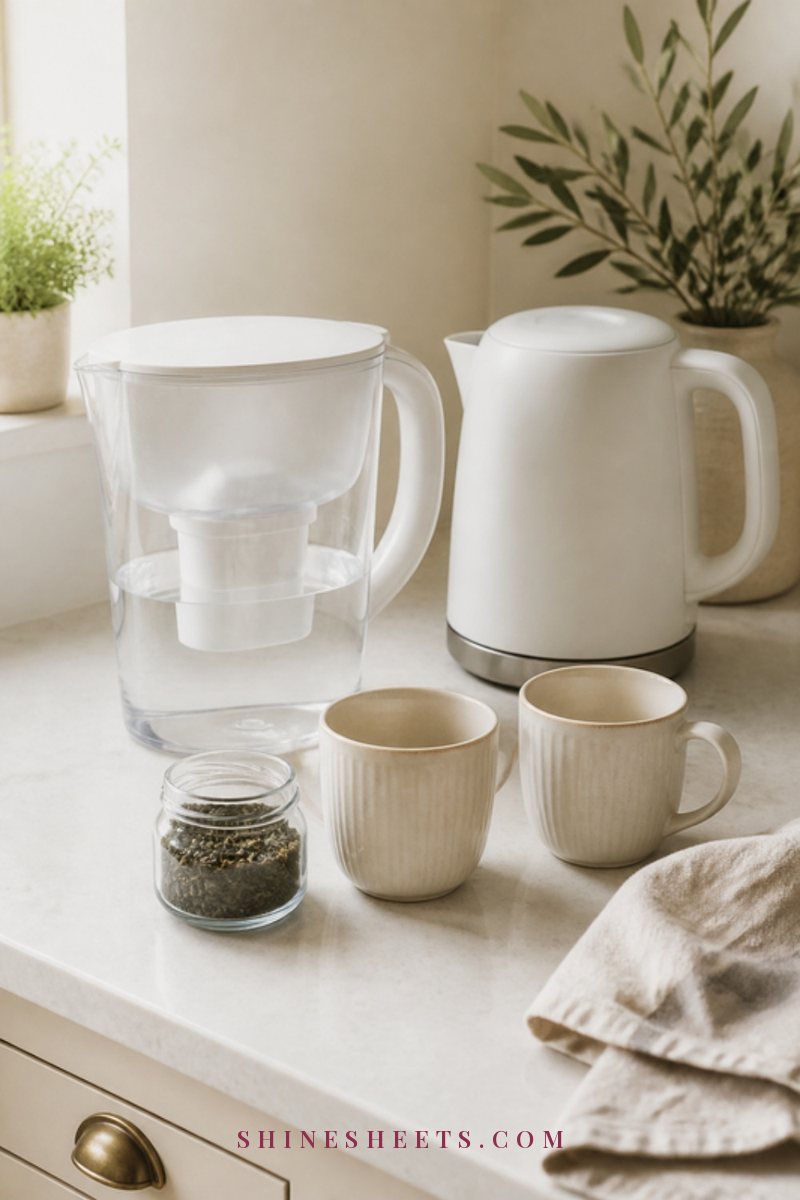
You can't stop hard water entirely, but you can slow limescale down dramatically with a few easy habits:
- Empty the kettle after each use. Water left standing lets minerals settle and harden on the base.
- Only boil what you need. Less water means fewer minerals left behind, and less energy used too.
- Use filtered water. A water filter pitcher removes some of the minerals that cause scale, which can noticeably reduce buildup in hard water areas. Change the filter as recommended.
- Rinse and air-dry. Once a week, rinse the kettle and leave the lid open for an hour so it dries fully.
- Descale little and often. A quick citric acid clean every few weeks is much easier than tackling thick, stubborn crust.
If your kettle is truly beyond saving, with a cracked base, a broken switch or scale that won't budge after several rounds, it may be time to replace it. A simple white electric kettle with a removable filter and a wide opening is the easiest kind to keep clean, and it looks lovely on any counter.
A Quick Monthly Kettle Routine
Once your kettle is clean, keeping it that way takes about ten minutes a month. Here's an easy rhythm:
- Daily: empty leftover water after use and leave the lid open for a few minutes to let it dry.
- Weekly: rinse the inside with fresh water, wipe the outside and handle with a damp cloth and dry it.
- Monthly: a citric acid descale, a filter soak and a full wipe of the outside and base.
- Every few months: check the cord, plug and base for damage, and replace the kettle if anything looks worn or cracked.
Tie the monthly descale to something you already do, like changing your bedding or watering the plants, and it becomes automatic.
Descaling Other Kitchen Appliances
Once you've descaled your kettle, the same gentle acids work on other appliances that heat water. Always check the manual first, because some machines have their own descaling program or specific instructions.
- Drip coffee makers: run a cycle with equal parts white vinegar and water (or water with citric acid), let it sit for 30 minutes halfway through, finish the cycle, then run two or three cycles of fresh water.
- Pod and espresso machines: use the descaling mode and a descaler the manufacturer approves, since some machines are sensitive to vinegar.
- Steam irons: many have a self-clean setting. Otherwise, follow the manual, because irons vary a lot.
- Tap aerators: unscrew, soak in vinegar for an hour, brush gently and screw back on.
Common Descaling Mistakes
Most descaling problems come down to one of these five:
- Skipping the final boils. Not boiling fresh water afterward leaves a vinegary or sour taste in your next cup.
- Scraping the element. Metal tools or scouring pads scratch the base and damage the coating. Let the acid do the work.
- Overfilling. Solution above the max line can bubble out of the spout while boiling.
- Getting the base wet. Water in the base or switch is a safety risk. Keep it dry, always.
- Waiting too long. Thick, old scale takes several rounds to dissolve; regular descaling takes one.
The same descaling idea works on your coffee maker too. If your morning brew corner could use some love, my coffee corner ideas pair beautifully with a freshly cleaned kettle.
Final Thoughts
Learning how to descale a kettle is one of those small kitchen wins that makes every cup of tea a little nicer. A splash of vinegar or a spoonful of citric acid, a single boil and a short soak, and that chalky layer is gone.
Do it once a month, empty the kettle after each use and boil only what you need, and your kettle will stay clean, quick and lovely to use for years. Fresh water, clean kettle, perfect cup.