Hard water doesn't damage your skin overnight, and it isn't the villain behind every dry patch. What it can do is quietly make a gentle routine work a little harder: the minerals in it react with soap, leave a thin film behind and can nudge already-dry or sensitive skin toward tightness and itch. Once you know what to look for, the fixes are mostly small, inexpensive swaps.
This guide is all about hard water and skin: what hard water actually is, how it may affect your face and body, what the research does and doesn't show, six signs it could be playing a part in your dryness, and the simple changes that tend to help. There's also a sign-by-sign table you can screenshot for your next shower.
One warm note before we start: if your skin is dry, it's rarely just one thing. Weather, hot showers, harsh cleansers, stress and your own skin type all join in. Hard water is one factor among many, and you get to treat it that way.
What Hard Water Actually Is

Hard water is simply water that carries a lot of dissolved minerals, mostly calcium and magnesium. As rainwater moves through limestone, chalk and other rock on its way to your tap, it picks these minerals up. Nothing about that is dangerous to drink, and in many places it's completely normal.
Water hardness is usually measured in milligrams per liter (or in grains per gallon). As a rough guide, water above about 120 mg/L is considered hard, and above about 180 mg/L is very hard. Soft water, on the other hand, has very few of these minerals.
You don't need a lab to guess which one you have. If your kettle grows a chalky crust, your shower glass turns cloudy within days and shampoo seems to lather less than it should, you're probably on hard water. For a clearer answer, inexpensive water hardness test strips give you a reading in under a minute, and many local water suppliers publish hardness levels for your area too.
How Hard Water May Affect Your Skin

Here's the main mechanism, in plain words. Traditional soap is made from fatty acids. When those fatty acids meet calcium and magnesium, they bind together into a sticky, insoluble residue (it's the same stuff you see as soap scum on your tub). Some of that residue can stay on your skin even after you rinse.
That film may do a few things:
- It can make skin feel tight or squeaky. That "squeaky clean" feeling is often a sign your skin has lost some of its natural oils, not that it's extra clean.
- It can make rinsing less efficient. Because soap lathers less in hard water, many of us use more of it, which means more cleansing than skin really needs.
- It may nudge skin's pH. Hard water and bar soap tend to sit on the alkaline side, while the surface of healthy skin is mildly acidic. Repeated alkaline exposure can make the skin barrier work harder to rebalance.
- It can leave skin a little more reactive. If your barrier is already stressed, a residue layer plus extra cleansing can show up as itch, flaking or redness.
It took me a while to understand this one, because my combination, sensitive skin doesn't scream about hard water. It whispers: a slightly tight forehead after cleansing, cheeks that feel rough by the evening, a T-zone that gets shinier as if to make up for it.
What the Research Says (and What It Doesn't)
I want to be fair here, because hard water gets blamed for a lot online. The evidence is real but mixed, and it's mostly about people with sensitive or eczema-prone skin.
- What studies suggest: Several large population studies have found that children living in hard water areas are somewhat more likely to have eczema. Lab research has also shown that hard water combined with a common cleansing ingredient (sodium lauryl sulfate) can increase skin barrier irritation, especially in people whose barrier is already more fragile.
- What it doesn't show: A well-known UK trial that installed water softeners in the homes of children with eczema did not find a clear improvement in their eczema compared with usual care. In other words, softening the water alone wasn't a reliable fix.
- What that means for you: Hard water may make dryness or irritation a bit worse for some people, especially when it's paired with harsh soap, long hot showers and a weakened barrier. Changing those other habits often matters just as much as the water itself.
That's actually good news. You don't need to rebuild your plumbing to feel a difference. Most of what helps happens in your cleanser, your shower timing and your moisturizer.
6 Signs Hard Water May Be Drying You Out
None of these signs proves that hard water is the cause on its own. But if several of them show up together, and especially if your taps are covered in white crust, it's worth trying the swaps further down for a few weeks.
1. Your Skin Feels Tight After Cleansing

If your face feels like it's a size too small within five minutes of washing, pay attention. That tight, pulled feeling (often around the cheeks, chin or forehead) means your skin has lost moisture and oils faster than it can replace them.
Quick test: wash one evening with tap water and your usual cleanser, then another evening remove makeup with micellar water and rinse briefly. If the second evening feels noticeably softer, mineral residue or over-cleansing may be part of the story.
2. Flaky, Dry Patches That Keep Coming Back
Dry patches on the shins, elbows, hands or around the nose that return no matter how often you moisturize can be a sign that something keeps undoing your work. When a film of soap and minerals sits on the skin, moisturizer may not absorb as comfortably, and dry spots stay rough.
Watch for where the flakes show up. If they're worst on areas that get the most water and soap (hands, legs, the body in general), your shower and handwashing routine is a good place to look first.
3. Itchiness After Showering
A shower should feel soothing. If you step out and start itching within ten to twenty minutes, especially on your back, arms or legs, your skin may be reacting to dryness, hot water, residue or a mix of all three.
Itch that fades within an hour and improves with moisturizer is usually dryness. Itch that lingers, keeps you up at night or comes with a rash deserves a dermatologist's look (more on that at the end).
4. A Film That Won't Quite Rinse Off

Some people describe it as a slippery feeling that won't go away; others feel the opposite, a dull, slightly sticky layer. Either way, it's that sense that your skin isn't fully clean even after a long rinse.
A good clue: if your shower glass, tub and faucets build up white or cloudy marks quickly, the same mineral and soap residue is touching your skin too. Clearing it from surfaces is its own job (my guide on removing hard water stains from glass, faucets and tiles walks through that), but it's also a hint about what's happening on your body.
5. Eczema-Prone Skin Flaring More Often
If you have eczema-prone or very sensitive skin and you've noticed more flares since moving house, starting to travel often or changing cities, water hardness is one of several things worth considering. It's also worth considering new detergents, a drier climate, more stress or a change in skincare.
Please don't self-diagnose here. If flares are frequent, cracked or painful, a dermatologist can help you figure out the real triggers and the right treatment. The swaps in this guide are gentle support, not a treatment.
6. Scale on Your Taps and Shower Head
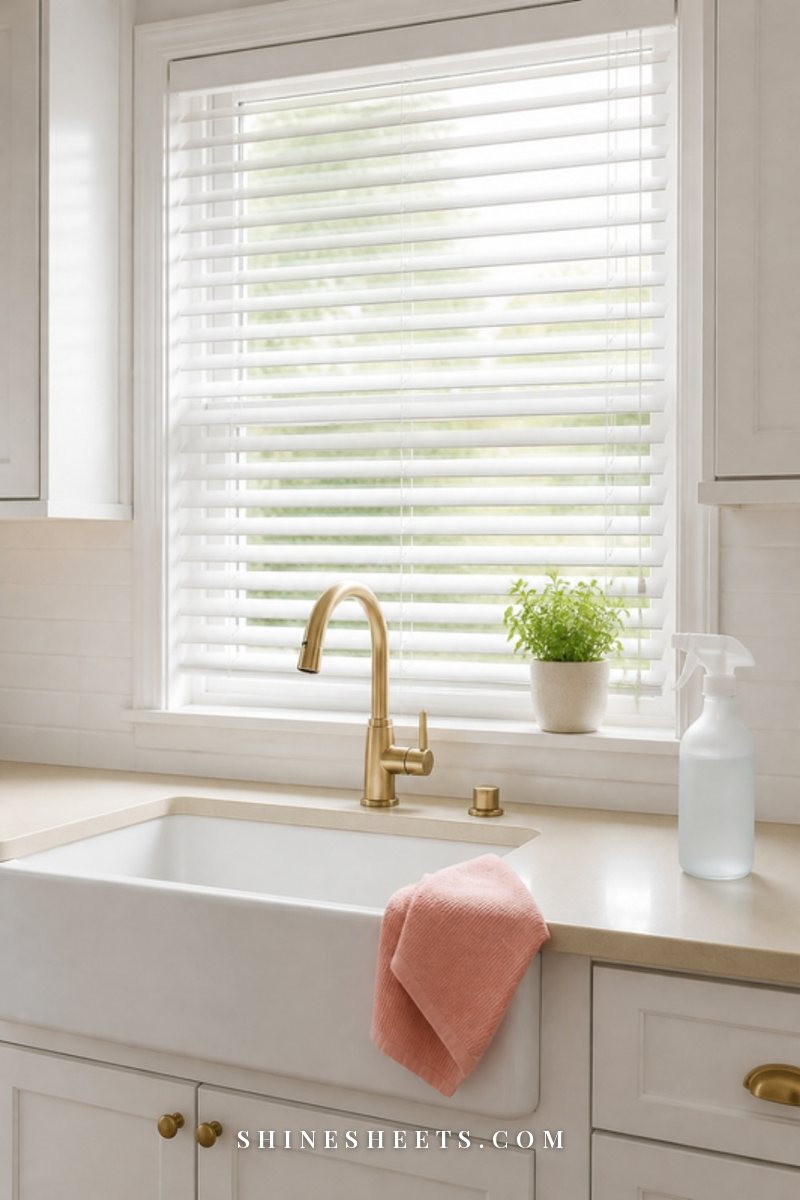
This is the most visible sign of all. White, chalky crust around faucets, a shower head with clogged nozzles, a kettle with a pale coating inside: that's limescale, and it's calcium carbonate left behind as hard water dries.
Scale doesn't harm your skin directly, but it tells you clearly that your water is mineral-rich. If you also see signs 1 to 5, you've got a reasonable reason to try the changes below. (Your hair may be telling you the same story; my guide to hard water hair covers the signs and fixes from roots to ends.)
Hard Water and Skin: Sign-by-Sign Table
Here's everything in one place. Screenshot it and check it against what your skin is doing over the next two weeks.
| Sign | Why hard water may play a part | What to try | See a dermatologist if |
|---|---|---|---|
| Tight after cleansing | Soap and minerals form a residue; skin loses oils quickly | Low-pH cream cleanser, 30–60 seconds of washing, lukewarm water | Tightness comes with burning or stinging that doesn't settle |
| Flaky patches | Residue can make moisturizer feel less effective | Moisturize within 3 minutes of showering; look for ceramides and glycerin | Patches are thick, scaly, spreading or not better after 4 weeks |
| Itchy after showers | Dryness plus hot water plus residue | Shorter (5–10 minute) lukewarm showers, fragrance-free body lotion | Itch keeps you up at night or comes with a rash |
| Film that won't rinse | Calcium and magnesium bind with soap fatty acids | Swap bar soap for a gentle liquid wash; rinse 20–30 seconds longer | Skin looks red, bumpy or irritated where the film sits |
| Eczema-prone flares | Hard water may add to barrier irritation for some people | Gentle routine, patch test new products, keep showers short | Flares are frequent, cracked, weeping or painful |
| Scale on taps | A clear marker of mineral-rich water | Test your water; consider a shower filter with realistic expectations | Not a skin issue on its own, but useful context to share |
What Helps: 6 Gentle Swaps for Hard Water Skin
Think of these as a small reset rather than a big project. Start with the first two, give them two to three weeks, and add the rest if you still feel tight or itchy.
1. Swap Bar Soap for a Gentle Low-pH Cleanser

This is the swap that tends to make the biggest difference. True soap (most traditional bars) is what reacts with calcium and magnesium to form that residue. Most liquid cleansers are made with synthetic cleansing agents instead, and the gentle ones don't form soap scum the same way.
For your face, look for a gentle low-pH cream cleanser described as fragrance-free, non-foaming or low-foaming, with a pH around 5 to 5.5. Several well-known drugstore and Korean best-sellers fit that description. For your body, a creamy, fragrance-free body wash does the same job.
How to use it: massage it in for 30 to 60 seconds (that's plenty), then rinse well. If you double cleanse at night, keep both steps gentle.
2. Keep Showers Short and Lukewarm
Hot water dissolves your skin's natural oils faster, and the longer you stand in it, the more contact your skin has with the minerals. Aim for 5 to 10 minutes with water that feels warm, not hot, on the inside of your wrist.
I know, a long hot shower feels like a hug. If you love it, keep it for the days you really need it and go shorter on the others. There are more small habits worth checking in my list of shower habits that dry out your skin, along with an easy swap for each.
3. Use Micellar Water for Your Face
Your face doesn't have to meet hard tap water every time you cleanse. On lighter days, or as the first step of an evening routine, a micellar water for sensitive skin lifts makeup, sunscreen and the day's grime without much rubbing.
How to use it: soak a cotton pad, hold it on each area for 5 to 10 seconds, then sweep gently. Follow with your low-pH cleanser and a quick lukewarm rinse, or, on very dry days, simply use micellar water and go straight to moisturizer. If your skin feels sticky afterward, a short rinse helps.
4. Moisturize While Skin Is Still Damp

This one is all about timing. Within about three minutes of stepping out, while your skin is still a little damp, smooth on your moisturizer. You trap water in the skin instead of letting it evaporate away.
Ingredients that help: ceramides to support the barrier, glycerin and hyaluronic acid to draw in water, and a little shea butter or squalane to seal it all in. A fragrance-free ceramide body lotion is a pick for legs, arms and anywhere that flakes. If you want to understand why ceramides matter so much, my guide to ceramides explains it simply.
For your face, the same rule applies: pat on your moisturizer while skin is still slightly damp. My combination skin likes a light gel-cream on the T-zone and a richer cream on the cheeks.
5. Consider a Shower Filter (With Honest Expectations)

Shower filters are popular, and some people love how their skin and hair feel afterward. Let's be clear about what they can and can't do, though.
- What many do well: reduce chlorine, which can be drying for some people, and sometimes catch sediment.
- What most don't do: remove much calcium and magnesium. Truly softening water usually takes a whole-home water softener, which is a much bigger decision.
- What to expect: a softer feel for some, little change for others. It's a nice extra, not a cure.
If you'd like to try one, a white filtered shower head that screws onto your existing fitting is the easiest option for renters. Look for clear information on what it filters and how often the cartridge needs changing (usually every 3 to 6 months), and change it on time so it doesn't become a problem of its own.
6. Pat Dry Gently With a Soft Towel
Rubbing hard with a rough towel scrapes at skin that's already feeling dry. Instead, press and pat. A soft blush cotton bath towel feels lovely and is kinder to sensitive areas.
Towels washed in hard water can also get stiff and scratchy over time, because minerals and detergent build up in the fibers. Use a little less detergent, skip heavy fabric softener and wash towels every three to four uses.
A Simple Hard Water Skin Routine
If you'd like everything above in a few lines, here's a gentle daily rhythm:
- Morning: rinse your face with lukewarm water or a splash of micellar water, then moisturizer and sunscreen.
- Shower: 5 to 10 minutes, lukewarm, gentle body wash only on the areas that need it (underarms, feet, skin folds). Plain water is fine for the rest most days.
- Right after: pat dry and moisturize within three minutes.
- Evening: micellar water to remove makeup and sunscreen, a low-pH cleanser for 30 to 60 seconds, a quick rinse and moisturizer on damp skin.
- Weekly: check your taps and shower head for scale, and change filter cartridges if you use one.
If your barrier is already feeling raw, start here instead: my guide on signs of a damaged skin barrier and how to restore it covers what to pause and what to lean on for a calm couple of weeks.
Patch Testing and When To See a Dermatologist
Before adding any new cleanser or lotion, patch test it. Apply a small amount behind your ear or on the inside of your forearm once a day for a few days. If you notice redness, itching, burning or bumps, skip it.
And please see a dermatologist if:
- your itching keeps you up at night or lasts for weeks,
- you have a rash, cracks, weeping or bleeding skin,
- eczema-prone skin is flaring often or getting worse,
- dry patches are thick, scaly or spreading,
- gentle changes haven't helped after about a month.
It can help to mention that you live in a hard water area. It's useful context, and a dermatologist can tell you whether it's likely to matter for your skin. This article is general information, not medical advice, and it can't replace a proper look at your skin.
Final Thoughts
Hard water is one of those things you can't always change, and that's okay. You can change what meets your skin alongside it: a gentler cleanser, a shorter, cooler shower, moisturizer on damp skin and a soft towel.
Give these swaps two or three weeks before you judge them. Skin changes slowly, and small, steady kindness tends to show up as calmer, softer skin you can actually feel.