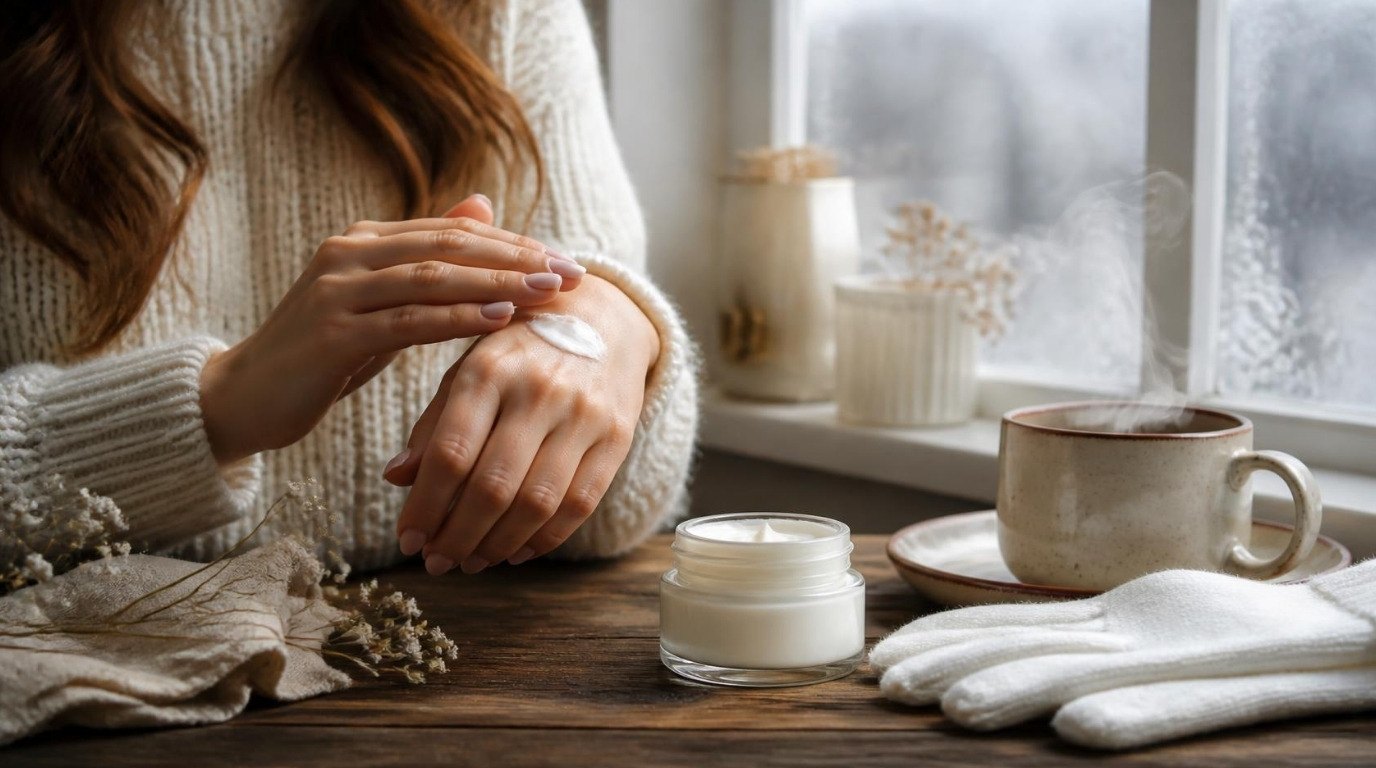
Winter body care is less about buying more products and more about protecting the moisture your skin already has. Hot showers, indoor heating, dry outdoor air and scratchy layers all pull water out of your skin day after day. The fix is a handful of small, consistent habits that keep it in, and they work far better than any single rich cream used once in a while.
Body skin also gets a little forgotten. We spend time on our faces and then rush the rest, even though our shins, arms and heels often feel the cold first. My own skin is combination and sensitive, so I've learned that "gentle and regular" beats "intense and occasional" every time.
This guide is a complete winter body care routine: why skin dries out in the cold, shower habits that make a real difference, how to exfoliate without irritation, which moisturizer texture to choose and when to apply it, extra care for hands, elbows, knees and heels, a calming night routine, a weekly winter body care calendar, and when it's time to see a dermatologist.
Think of it as a soft, warm layer you build once and then carry through the whole season.
Why Body Skin Gets So Dry in Winter
Your skin's outer layer works like a brick wall: skin cells are the bricks and natural fats (including ceramides) are the mortar. When that mortar is healthy, water stays in and irritants stay out. In winter, several things chip away at it at once:
- Cold, dry outdoor air. Low humidity pulls water from your skin faster.
- Indoor heating. Radiators and forced-air heat dry the air inside your home even more than the air outside.
- Hot showers and baths. They feel wonderful on a cold evening, but hot water strips away the natural oils that protect your skin.
- Harsh soaps. Strongly foaming, fragranced washes can leave skin tight and itchy.
- Wool and rough fabrics. Friction from scratchy layers can irritate already-dry skin.
- Drinking less water. It's easy to forget in the cold, and while water alone won't fix dry skin, it does help overall.
The result is that familiar winter list: tight shins after the shower, flaky patches, rough elbows, cracked heels and an itch that seems to come out of nowhere at night. Each habit below targets one of these causes.
Shower Habits That Protect Your Skin

Your shower is where winter skin is either protected or stripped, so it's the most important place to start.
Keep It Lukewarm and Short
Aim for comfortably warm water, not hot, and keep showers to about 5 to 10 minutes. A good test: if your skin turns pink or blotchy, the water is too hot. If you love a hot shower, turn the temperature down for the last minute or two before you step out. Your skin will feel noticeably less tight.
Choose a Gentle Body Wash
Switch to a cream-based or hydrating wash with a gentle formula, ideally fragrance-free or lightly scented if your skin is sensitive. A gentle hydrating body wash should leave your skin feeling soft, not squeaky. Squeaky means the natural oils are gone.
You also don't need to lather every inch of your body every day. Focus your wash on the areas that need it (underarms, groin, feet) and let water rinse the rest. Your shins and arms will thank you.
Pat, Don't Rub
Wrap up in a soft towel and gently pat your skin, leaving it slightly damp. Rubbing vigorously creates friction and removes the very water you're about to seal in with moisturizer. Keep your moisturizer in the bathroom so you never skip the next step.
Exfoliate Gently, Once a Week

Dry winter skin tends to collect flakes, which makes it look dull and stops moisturizer from sinking in well. Gentle exfoliation helps, but in winter, less is more.
- How often: once a week is plenty for most people. Twice only if your skin isn't sensitive and doesn't sting afterward.
- What to use: a soft exfoliating body mitt or washcloth with light circular motions, or a mild body scrub with fine, rounded grains. Chemical exfoliants (body lotions with lactic acid or urea) are also an option for rough areas.
- How: on damp skin, for a minute or two, with gentle pressure. You're polishing, not sanding.
- Skip: broken, cracked, sunburned or freshly shaved skin, and any area with a rash.
Moisturize immediately afterward, because freshly exfoliated skin loses water faster. For a deeper look at methods, my guide on how to exfoliate your body covers every option step by step.
Moisturize on Damp Skin
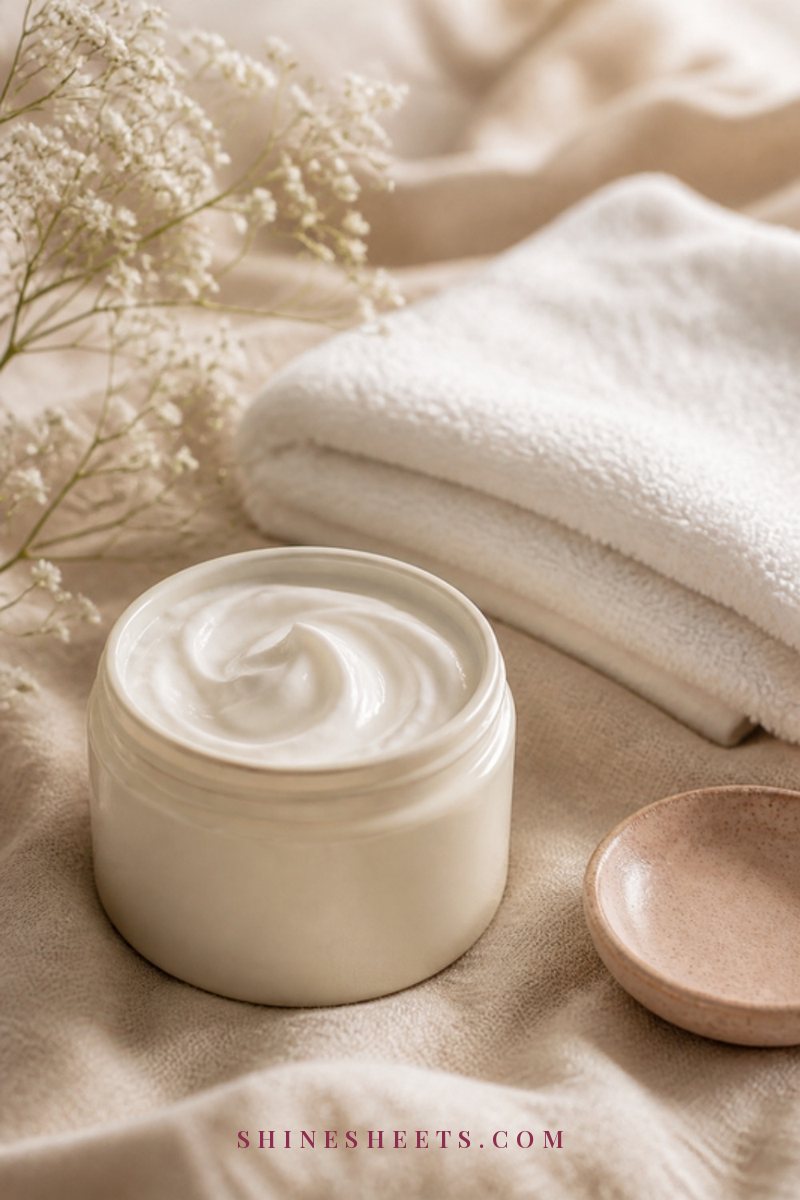
This is the single most important habit in any winter body care routine. Apply your moisturizer within about three minutes of stepping out of the shower, while your skin is still slightly damp. The moisturizer traps that water in your skin instead of letting it evaporate.
Use more than you think: roughly a generous palmful for each leg, a smaller one for each arm and one more for your torso. Smooth it on in long strokes, then give it a minute or two to absorb before you get dressed.
Cream vs Lotion vs Oil vs Balm
The texture you choose matters more in winter than any other time of year. Here's how they compare:
- Lotion: light and quick-absorbing, with a higher water content. Lovely for mild dryness or as a daytime layer, but often not enough on its own for very dry winter skin.
- Cream: thicker and richer, with more oils. The best everyday choice for most people in winter. A ceramide body cream helps rebuild the skin's natural barrier, and fragrance-free versions suit sensitive skin.
- Oil: wonderful for sealing in moisture and adding a soft sheen. A few drops of lightweight body oil on damp skin, or layered over cream on very dry areas, can make a big difference. On its own, oil doesn't add water, so it works best on damp skin.
- Balm or ointment: the thickest option, often with petrolatum or waxes. Perfect for cracked heels, rough elbows and hands at night, but heavier than most people want on their whole body.
If you want to dig deeper into ingredients like ceramides, glycerin, shea butter and urea, my body lotion guide explains what to look for on a label.
Give Problem Areas Extra Care
Some parts of your body have thinner skin, fewer oil glands or more friction, so they dry out first and need a little extra attention.
Hands
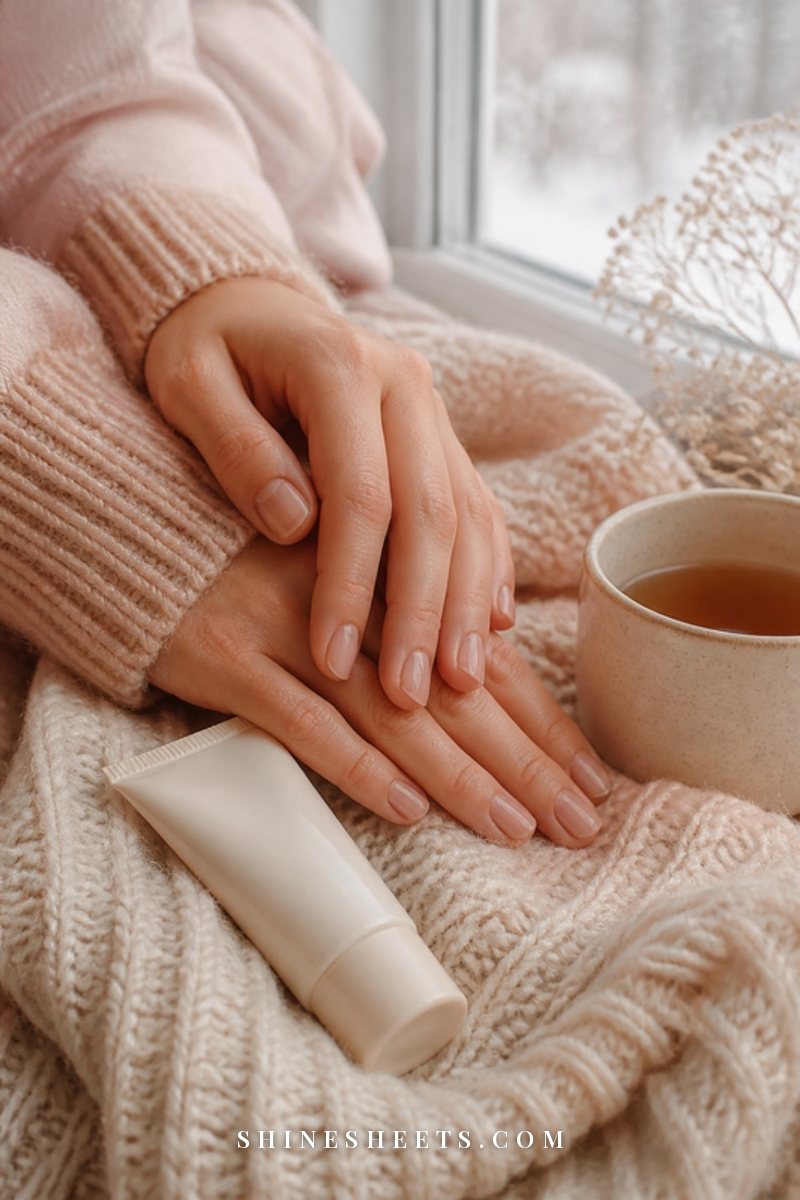
Hands are washed constantly and exposed to cold air. Keep a hand cream next to every sink, apply after every wash and wear gloves outdoors. At night, apply a thick layer and slip on cotton gloves for an overnight treatment. My full winter hand care guide covers cuticles and cracked knuckles too.
Elbows and Knees
These areas get rough and darker when they're dry. Exfoliate them gently once a week, then apply a cream with urea or lactic acid, followed by a thin layer of balm at night. Be patient: smoother elbows usually take two to four weeks of consistent care. My guide to dry elbows and knees goes into more detail.
Heels and Feet
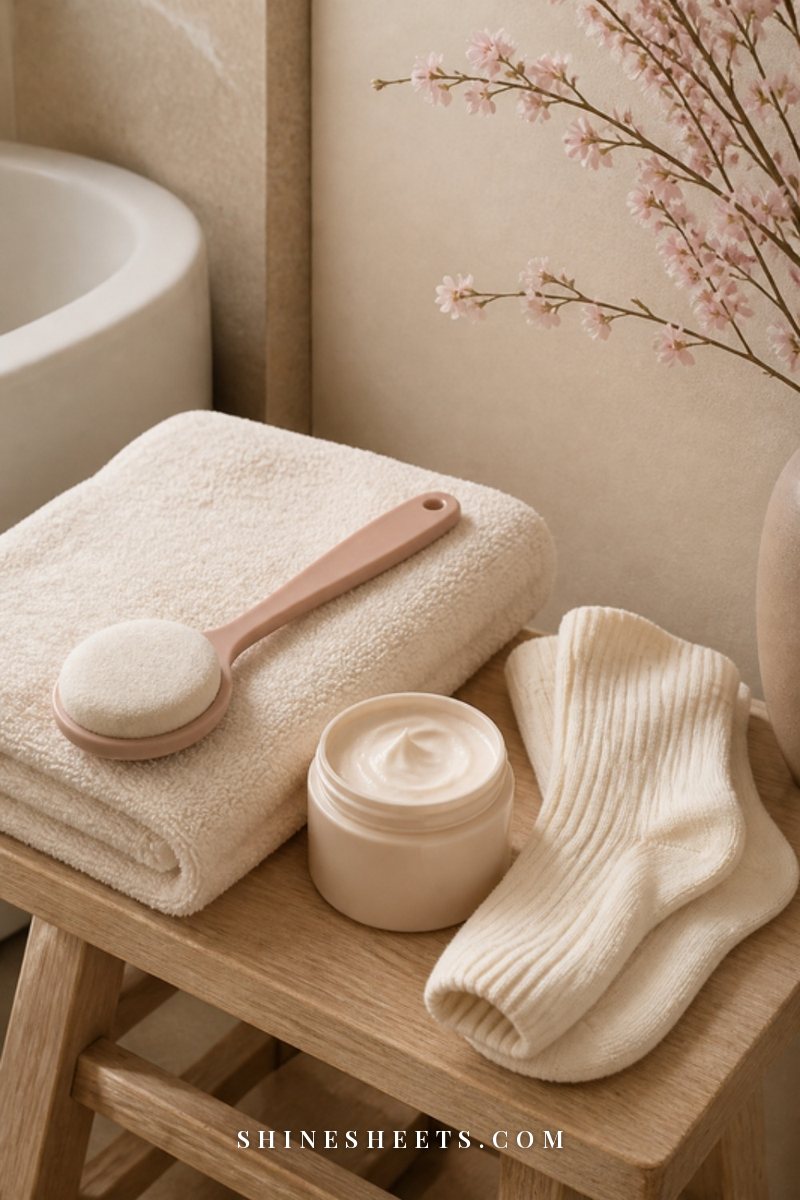
Heels carry your whole weight and often crack in winter. After a warm foot soak or shower, gently buff rough spots with a foot file (never a blade), then massage in a urea foot cream. Urea softens thick skin and helps it hold moisture. Pull on soft cotton socks for the night so the cream stays put and your sheets stay clean.
Lips
A quick mention because they're part of the body too: apply a balm before going outside and before bed, avoid licking your lips and skip harsh lip scrubs if they're cracked.
A Simple Night Routine for Winter Skin
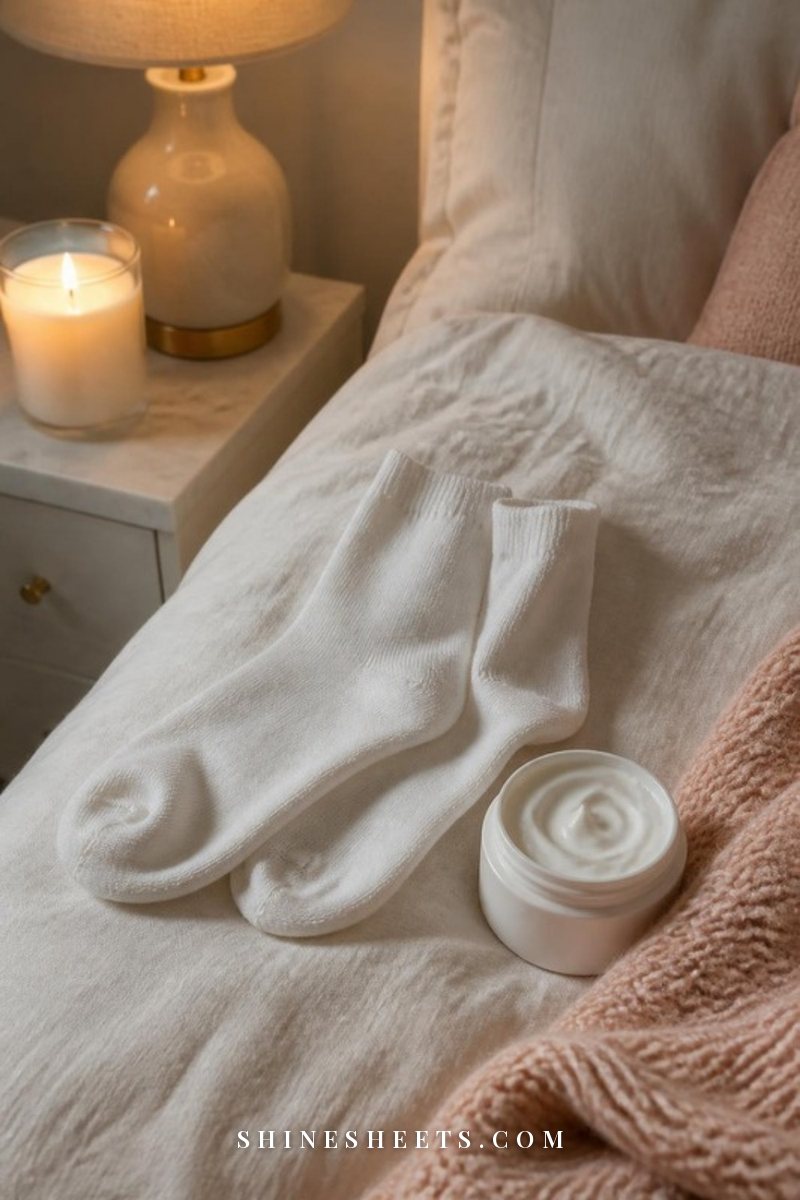
Nighttime is when your skin does a lot of its repair work, and when you have the most time to let thicker products sink in. A calm, simple routine might look like this:
- Warm shower or bath, not hot, about 10 minutes before you want to wind down.
- Pat dry and moisturize within three minutes using your body cream.
- Seal the driest areas (shins, elbows, knees, heels) with a little oil or balm on top.
- Hands and feet: a thick cream, then cotton gloves or socks.
- Lip balm as the very last step.
- Soft, breathable pajamas in cotton or modal so nothing rubs.
I like to finish with evening tea and a candle, which has nothing to do with skin and everything to do with making the routine something I look forward to. That's the real secret to doing it every night.
Your Weekly Winter Body Care Calendar
Here's a gentle weekly rhythm you can screenshot. It keeps the basics daily and spreads the extras out so nothing feels like a chore.
| Day | Morning | Evening | Extra focus |
|---|---|---|---|
| Monday | Short lukewarm shower, body lotion | Hand cream and lip balm | Refill hand creams by every sink |
| Tuesday | Light lotion on arms and legs | Body cream, cotton socks with foot cream | Heels |
| Wednesday | Short shower, body cream on damp skin | Balm on elbows and knees | Elbows and knees |
| Thursday | Light lotion | Hand mask: thick cream and cotton gloves | Hands |
| Friday | Short shower, body cream | Lip balm, humidifier on in the bedroom | Check humidity at home |
| Saturday | Light lotion | Gentle exfoliation, then body cream and oil | Weekly exfoliation |
| Sunday | Slow shower, body oil on damp skin | Foot soak, file, urea foot cream and socks | Feet and rest |
Showers on Tuesday, Thursday and Saturday are up to you. The point is that moisturizing happens every day, exfoliation happens once a week and each problem area gets a little focused care.
Humidity, Fabrics and Little Everyday Fixes

Your routine works best when your environment isn't working against it.
- Add humidity. Running a humidifier in your bedroom at night helps your skin hold on to moisture while you sleep. Keep it clean and follow the manufacturer's instructions. I explain how to choose and use one in my guide to a humidifier for skin.
- Layer smart. Wear a soft cotton or silk layer under wool sweaters so the scratchy fabric doesn't touch your skin directly.
- Wash gently. Choose a fragrance-free laundry detergent if you're prone to itchiness, and skip heavy fabric softener on clothes that sit against your skin.
- Turn the heat down a little. Even a degree or two lower at night makes the air less drying.
- Drink regularly. Warm water, herbal tea or plain water throughout the day all count.
- Don't forget sunscreen on exposed skin if you're spending time outdoors, especially in the snow.
For the face side of things, my winter skincare routine pairs perfectly with everything here.
If Your Skin Is Very Sensitive
Sensitive skin needs the same steps, just with a softer touch. Mine reacts easily, so these are the adjustments I'd suggest:
- Go fragrance-free first. Fragrance and essential oils are among the most common causes of stinging and itching. Choose plain, fragrance-free wash and cream as your base, and add a scented body mist on clothes rather than skin if you miss the scent.
- Introduce one new product at a time. Wait about a week before adding another, so if something irritates you, you know exactly what it was.
- Patch test. Apply a small amount to the inside of your forearm for a few days before using a new product all over.
- Skip strong acids. Lotions with high levels of glycolic acid can sting dry winter skin. If you want gentle exfoliation, lactic acid or urea are usually kinder.
- Keep it simple. A gentle wash, a ceramide cream and a balm for rough spots is a complete routine. More steps aren't better.
If anything burns, turns red or itches more after applying, rinse it off with lukewarm water and go back to your plain, fragrance-free basics for a few days.
A Quick Morning Routine for Winter Skin
Mornings are usually rushed, so the goal is protection, not pampering. This takes about five minutes:
- Keep the shower short. If you showered at night, a quick rinse or no shower at all is perfectly fine on cold days.
- Use a lighter layer. A lotion or light cream absorbs quickly so you can get dressed without feeling sticky. Save heavy balms for the evening.
- Focus on exposed skin. Hands, wrists and the back of your neck face the cold air directly. Give them an extra layer.
- Dress in soft layers. A smooth base layer under knitwear protects freshly moisturized skin from friction.
- Pack a hand cream. A small tube in your bag or coat pocket means you can reapply after washing your hands anywhere.
If your skin still feels tight by midday, it's a sign you need a richer morning product or more of the one you already have, not necessarily something new.
Shaving and Hair Removal in Winter
Shaving removes a thin layer of skin along with the hair, so winter skin can feel extra sensitive afterward. A few small changes help:
- Shave at the end of your shower, when the hair is soft and the skin is warm.
- Use a moisturizing shave gel or cream, never just soap or dry skin.
- Use a sharp razor and replace blades regularly. Dull blades drag and irritate.
- Shave with the direction of hair growth if you get bumps or redness easily.
- Skip exfoliation on shaving days and moisturize right away with a fragrance-free cream.
Many people shave less often in winter simply because legs are covered, which also gives skin a welcome break.
Winter Body Care Mistakes To Avoid
Most dry skin problems come from a few well-meaning habits. Watch for these:
- Waiting too long to moisturize. Ten minutes after your shower, most of that helpful water has already evaporated.
- Scrubbing harder when skin flakes. Flakes are a sign of dryness, not dirt. More scrubbing usually makes it worse.
- Using a strongly scented lotion on itchy skin. Fragrance can irritate already-stressed skin. Save scented products for skin that feels calm.
- Applying moisturizer only once a day. Very dry areas often need a second layer in the evening.
- Only using a light lotion. In cold, dry months most people need a cream or an extra layer of oil on top.
- Scratching at night. Keep nails short, moisturize before bed and keep the bedroom cooler and more humid.
- Giving up too soon. Your skin needs about two weeks of consistent care to show real change. Keep going.
When To See a Dermatologist
Most winter dryness improves within two weeks of consistent, gentle care. But some signs mean it's worth getting a professional opinion:
- Itching that keeps you awake or doesn't improve with moisturizing.
- Deep cracks that bleed or don't heal, especially on heels or hands.
- Red, inflamed, scaly or weeping patches.
- Signs of infection such as warmth, swelling or pus.
- Dryness that comes with other symptoms or appears suddenly and severely.
Conditions like eczema or psoriasis often flare in winter and need targeted treatment. A dermatologist can help you find what works, so there's no need to keep guessing on your own.
Final Thoughts
Soft winter skin comes from small, steady kindnesses: cooler showers, a gentle wash, moisturizer on damp skin, a little extra care for hands, elbows and heels, and a home that isn't bone-dry.
None of it takes long, and once it becomes routine, you'll notice the difference every time you pull on a sweater. Your skin carries you through the whole season, and it deserves that warm layer of care.