Most of us call our hair "thick" or "thin" as if it were one simple thing. It isn't. Hair density is how many strands grow from each little patch of your scalp, and thickness is how wide each single strand is. You can have lots of very fine strands, or fewer strands that each feel like sturdy thread, and those two heads of hair need surprisingly different care.
Once you know which one you have, a lot of past frustrations suddenly make sense: why a heavy cream flattened your hair in an hour, why your friend's favorite mousse did nothing for you, or why your hair takes forever to dry even though your ponytail feels small.
This guide is all about hair density vs thickness: what each word really means, three easy ways to check your density at home, two ways to check your strand width, the four combinations you might land in, and a simple table that shows which product textures tend to work for each. No special tools needed, just a few minutes, a hair tie and good light.
It took me a while to stop blaming my hair and start reading it. I hope this makes that part quicker for you.
Density vs Thickness: The Quick Difference
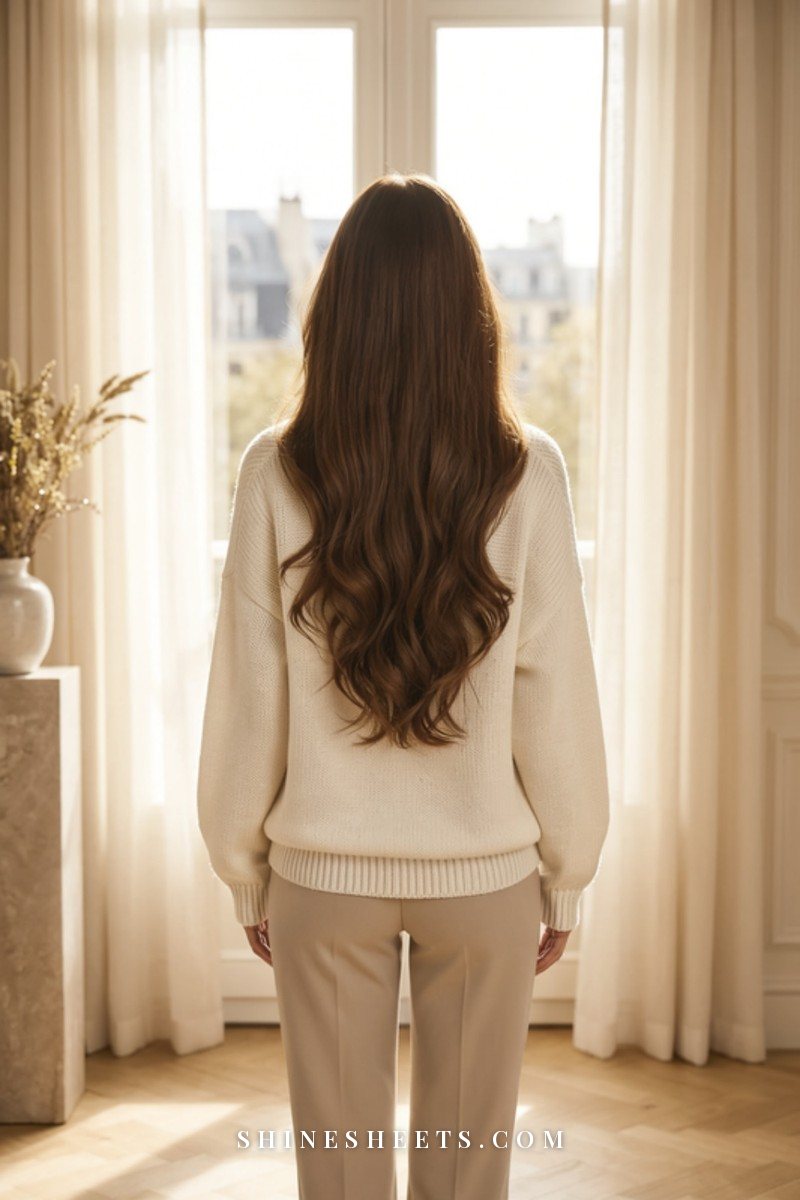
Think of your scalp as a garden. Density is how closely the plants are planted. Thickness (stylists also say strand width or texture) is how sturdy each stem is. The two are measured separately, and neither one is "better" than the other.
- Density is usually described as low, medium or high. It's about the number of strands per square inch of scalp.
- Thickness is usually described as fine, medium or coarse. It's about the diameter of one hair.
Here's why the difference matters. When someone says "I have thick hair," they might mean they have a lot of it (high density) or that every strand feels strong and wiry (coarse). Product advice built for one can be completely wrong for the other. Lots of fine strands still bend under heavy butters. A few coarse strands still want moisture and slip.
One more thing before we start: density and thickness are not the same as curl pattern. Straight, wavy, curly and coily hair can all be low or high density, fine or coarse. If you want to work out your curl pattern too, my hair type chart guide walks through that separately, so this article can stay focused on strand count and strand width.
How To Check Your Hair Density at Home
Density is easiest to judge when your hair is clean, completely dry and in its natural state (no volumizing spray, no fresh blowout). Try all three tests below. If two of them agree, that's your answer.
The Scalp Visibility Test
Stand in front of a bright window or under good daylight and let your hair fall in its usual way. Without parting it, look at the top and the crown (a second hand mirror helps for the back).
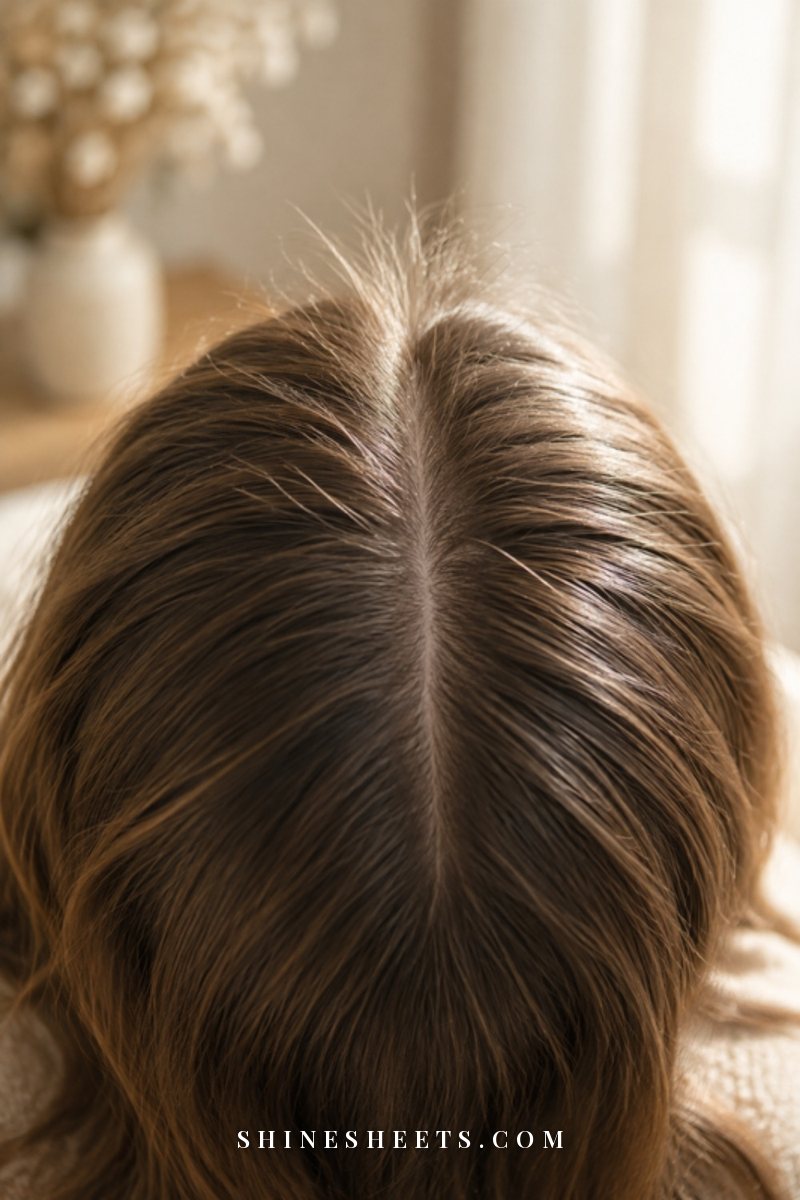
- Low density: you can see your scalp easily even without moving the hair.
- Medium density: you see some scalp when your hair moves or when you shake it out a little.
- High density: you can barely see your scalp at all, even when you push the hair around.
Be kind with yourself here. Almost everyone sees a bit of scalp at the part and the crown, especially under harsh overhead light. That's normal and not a sign of anything.
The Ponytail Circumference Test
Gather all your hair into a ponytail at the back of your head, the way you normally would. Then measure the base of the ponytail with a soft measuring tape, or simply notice how many times you wrap your usual hair tie.
- Under about 2 inches around (or three or more wraps of a tie): usually low density.
- About 2 to 3 inches (two wraps): usually medium density.
- Over about 3 to 4 inches (one wrap, sometimes a struggle): usually high density.
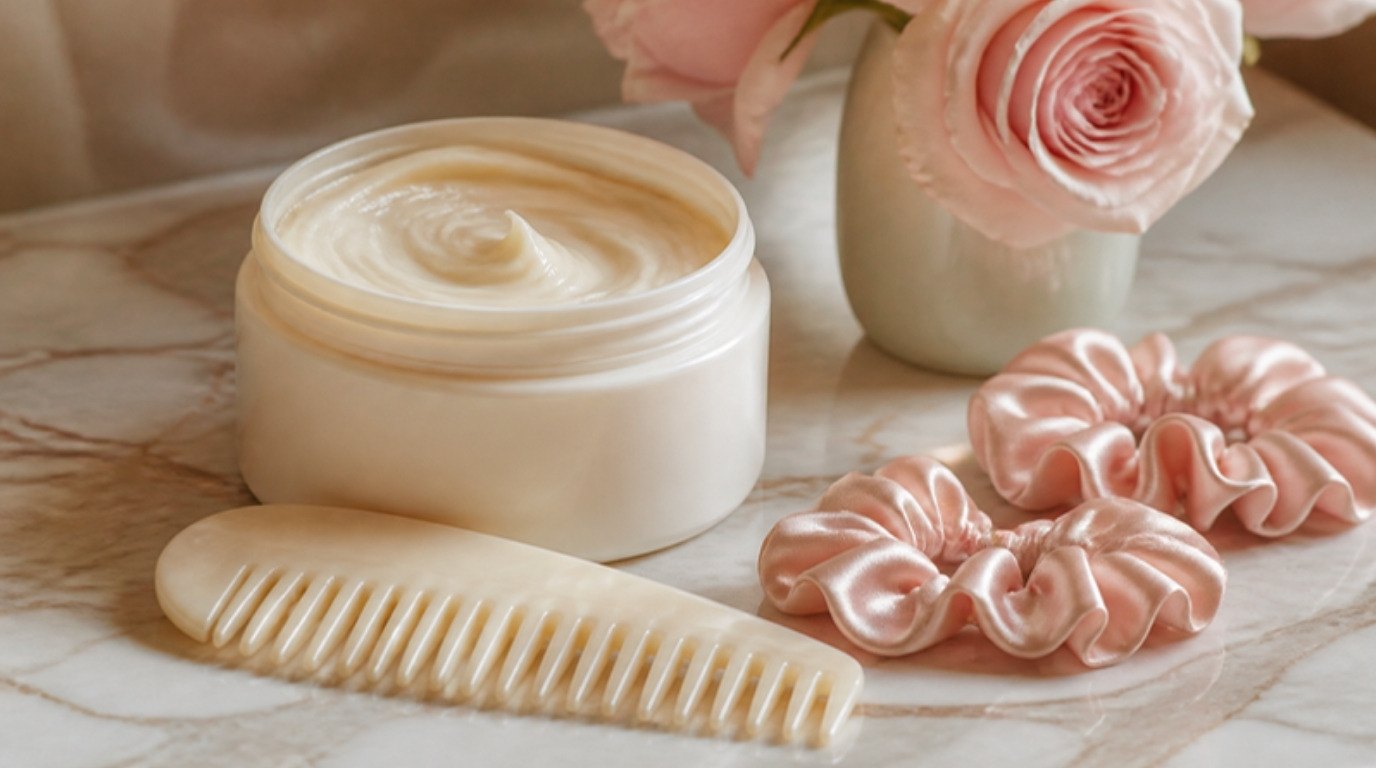
This test is a little rough, because coarse strands take up more room than fine ones. A medium-density head of coarse hair can make a surprisingly chunky ponytail. That's exactly why it helps to pair it with the next test. And while you're tying it up, soft silk scrunchies are a kinder choice than tight elastic bands, especially for fine strands that snap easily.
The Part Width Test
Make a clean center part with the tail of a comb and look at how wide the line of visible scalp is.
- Wide, very visible part: low density.
- Clear but narrow part: medium density.
- Thin, barely-there line that closes up quickly: high density.
Check your part in two or three different spots (center, side, near the crown). Density is rarely perfectly even, and many people have fuller sides and a slightly lighter top.
How To Check Your Strand Thickness
Thickness is about a single hair, so you'll want one strand to work with. Take a hair that has naturally shed (from your brush or your shoulder) rather than pulling one out. Clean, dry and unstyled is best, since products can coat the strand and make it feel bigger.
The Single-Strand Feel Test
Hold the strand between your thumb and index finger and gently roll it back and forth.
- Fine: you can barely feel it, or it seems to disappear between your fingertips.
- Medium: you can feel it, but it's smooth and not wiry.
- Coarse: it feels clearly there, a little firm, sometimes slightly rough, almost like fishing line.
Try this with hairs from two or three places on your head. Strands near the hairline and nape are often finer than strands at the crown, and that's completely normal.
The Thread Comparison
Lay your strand next to a piece of ordinary sewing thread on a white surface (a sheet of paper or a pale towel works). Look at them side by side in daylight.
- Thinner than the thread: fine.
- About the same width: medium.
- Wider than the thread: coarse.
If you're torn between two categories, go with the finer one when you choose products. It's much easier to add a little more richness later than to rescue limp, weighed-down hair.
The 4 Density and Thickness Combinations
Medium density and medium thickness sit comfortably in the middle and usually tolerate most products, so here I'm focusing on the four "edges" where hair care gets tricky. If you're medium in one area, read the two combinations closest to you and borrow from both.
1. Low Density + Fine Strands
This is the combination that gets flat the fastest. There aren't many strands, and each one is delicate, so heavy oils and rich creams cling to it and pull it down. It can also look greasy by day two, simply because the oil from your scalp travels quickly along fine hair.
What usually helps:
- Lightweight, watery textures: gel-cream conditioners on the ends only, volumizing foams, light sprays.
- A small puff of lightweight volumizing mousse at the roots on damp hair, about the size of an egg for shoulder-length hair.
- Washing as often as your scalp needs (for many people that's every day or every other day).
- Gentle handling, since fine strands break more easily when wet.
My full guide to fine hair care goes deeper into volume without damage if this is you.
2. Low Density + Coarse Strands
Each strand is strong and wide, but there aren't a lot of them, so you might see your scalp while your hair still feels sturdy and sometimes dry. This combination often gets mislabeled as "thick hair" because each strand feels substantial.
What usually helps:
- Moisture without bulk: a medium-weight leave-in or a light cream rather than heavy butters.
- Products that smooth the outer layer of the strand, because coarse hair can look frizzy or rough at the ends.
- Avoiding heavy layers of product at the roots, which can separate strands and show more scalp.
- A wash routine that doesn't strip, like a gentle, sulfate-free shampoo concentrated on the scalp.
3. High Density + Fine Strands
Lots and lots of delicate strands. From a distance it looks full and soft, but it tangles easily, knots at the nape and can feel heavy as a whole even though each hair is light. It may also take longer to dry than you'd expect.
What usually helps:
- Slip, slip, slip: a lightweight conditioner with good glide and a spray detangler.
- Detangling in sections (four sections is plenty for most people) instead of brushing all at once.
- Light leave-ins rather than rich ones, applied from mid-lengths down.
- Patience with drying: blotting first, then air-drying or a low heat setting.
4. High Density + Coarse Strands
This is the classic "so much hair" combination: many strands, and each one is wide. It's beautiful and full, and it can also be thirsty, slow to dry and a workout to detangle.
What usually helps:
- Richer textures: creamy conditioners, thicker leave-ins and a small amount of oil to seal the ends.
- Working in sections (often six or more) so product actually reaches every strand.
- A wide-tooth detangling comb used from the ends upward while conditioner is still in.
- Blotting with a microfiber hair towel to cut drying time without rough rubbing.
If this sounds like you, my thick hair care routine covers softness, frizz and faster drying in more detail.
Density and Thickness Combination Table
Here's everything in one place. Screenshot it for the next time you're standing in the hair care aisle wondering which bottle is for you.
| Combination | How it looks and feels | Common struggle | Best product textures |
|---|---|---|---|
| Low density + fine | Scalp visible, strands barely felt, soft and silky | Goes flat and oily fast | Foams, light sprays, gel-cream conditioner on ends only |
| Low density + coarse | Some scalp visible, each strand feels sturdy, can look dry | Dryness and rough ends without bulk | Light creams, medium leave-ins, smoothing lotions |
| High density + fine | Full, soft, little scalp showing, knots easily | Tangles and slow drying | Slippy conditioners, spray detanglers, light leave-ins |
| High density + coarse | Very full, heavy, strong strands, big ponytail | Dryness, long drying time, hard detangling | Rich creams, thicker leave-ins, a few drops of oil on ends |
| Medium density + medium | Balanced, some scalp at the part | Usually minor, depends on porosity | Most textures, adjust by season and feel |
Use the table as a starting point, not a rulebook. Your hair gets the final vote. If a product feels good for a full day and your hair moves freely, it's working.
Where Porosity and Curl Pattern Fit In
Density and thickness tell you how much hair you have and how sturdy each strand is. They don't tell you how well your hair absorbs and holds water. That's porosity, and it's the third piece of the puzzle.
A fine strand can be highly porous (soaks up water fast, dries fast, frizzes easily) or low porosity (water beads on top, products sit on the surface). Two people with the same density and thickness can need different routines because of this. If your hair still behaves strangely after you've matched products to your combination, read my guide to hair porosity and run the simple tests there too.
A quick way to put all three together:
- Density decides how much product you need and how many sections to work in.
- Thickness decides how heavy the product texture can be.
- Porosity decides how you apply it (on soaking wet hair, with gentle warmth, or sealed with oil).
Can Hair Density Change?
Yes, it can. Your strand thickness is mostly set by genetics, but the number of strands actively growing can shift over time. Hair often gets a little less dense with age, after a stressful period, after an illness, after pregnancy or with hormonal changes. Strands can also get slightly finer over the years.
Some daily shedding is completely normal (most people lose somewhere around 50 to 100 hairs a day). A gradual, gentle change over many years is also common. What deserves attention is something sudden or patchy:
- Clumps of hair coming out in the shower or on your pillow over a few weeks.
- A part that has widened noticeably in a few months.
- Bald patches, or thinning with itching, redness, scaling or pain.
If you notice any of these, please see a dermatologist. Many causes of sudden thinning can be looked into and treated, and the earlier you go, the more options you usually have. This is not something to fix with a shampoo or a supplement from a social media ad. My article on hair shedding vs hair loss can help you tell the normal kind from the kind worth a doctor's visit.
How To Build a Simple Routine Around Your Result
You don't need a whole new shelf of products once you know your combination. Most of the change happens in how much you use, where you put it and how you handle your hair. Here's a gentle way to adjust over the next few washes.
- Write down your combination. Something like "medium density, fine strands" in your phone notes or journal. It sounds small, but it stops impulse buys built for someone else's hair.
- Look at what you already own. Sort your products into light (sprays, foams, gel-creams), medium (lotions, light creams) and rich (butters, thick creams, oils). Keep the ones that match your table row in front.
- Change one thing at a time. Swap your conditioner first, wear it for a week, then adjust your leave-in. If you change everything at once, you won't know what helped.
- Adjust the amount, not just the product. Fine hair often needs half of what the bottle suggests. Dense, coarse hair may need a little more and better sections.
- Check in after two weeks. Does your hair move freely by evening? Does it feel soft, not coated? Are tangles easier? If yes, you've found your rhythm.
And if something that "should" work for your combination simply doesn't, trust your hair over any chart, mine included.
Common Myths About Thick Hair
A few ideas float around that make this topic more confusing than it needs to be. Here are the ones I hear most.
- "Shaving or cutting makes hair grow back thicker." It doesn't. A trim makes the ends look blunter and fuller, but it doesn't change density or the width of new strands.
- "Thickening shampoos add new hair." They can coat strands so each one feels a touch fuller, which is lovely, but they don't increase the number of hairs on your head.
- "Fine hair means unhealthy hair." Fine is a texture, not a problem. Fine hair can be perfectly healthy and shiny.
- "Thick hair doesn't need care." Coarse and dense hair often needs more moisture and more patient detangling, not less.
- "Brushing 100 strokes a day builds volume." Over-brushing mostly causes breakage. Brush enough to detangle, and stop there.
The more realistic goal is to make the hair you have look and feel its best. That's very doable once you know your combination.
Final Thoughts
Knowing the difference between hair density and thickness won't change the hair you were born with, but it changes how you treat it. Fewer strands ask for lightness, wider strands ask for moisture, and a lot of hair asks for patience and good sections.
Run the tests on a calm evening, write your combination somewhere you'll see it, and let it guide your next few product choices. Your hair isn't difficult. It just has its own language, and now you speak a little more of it.