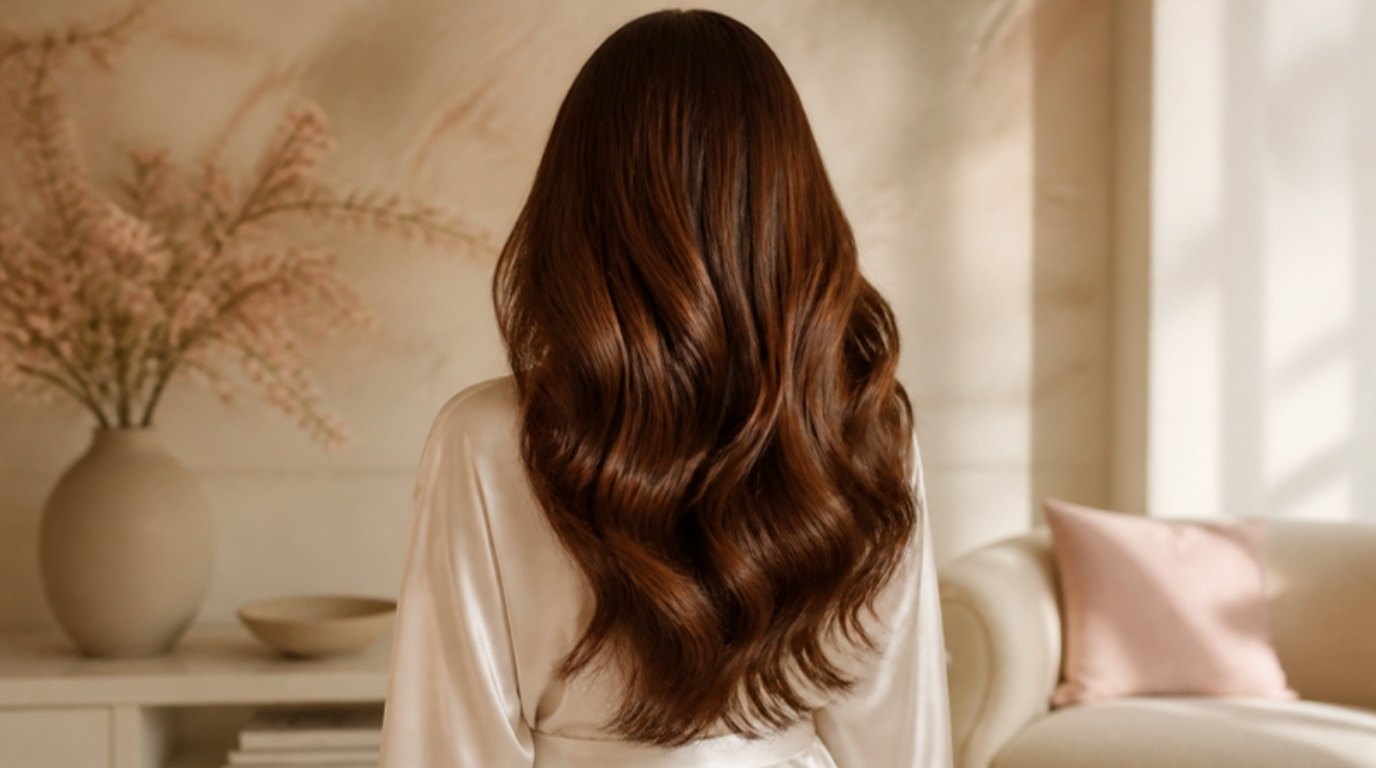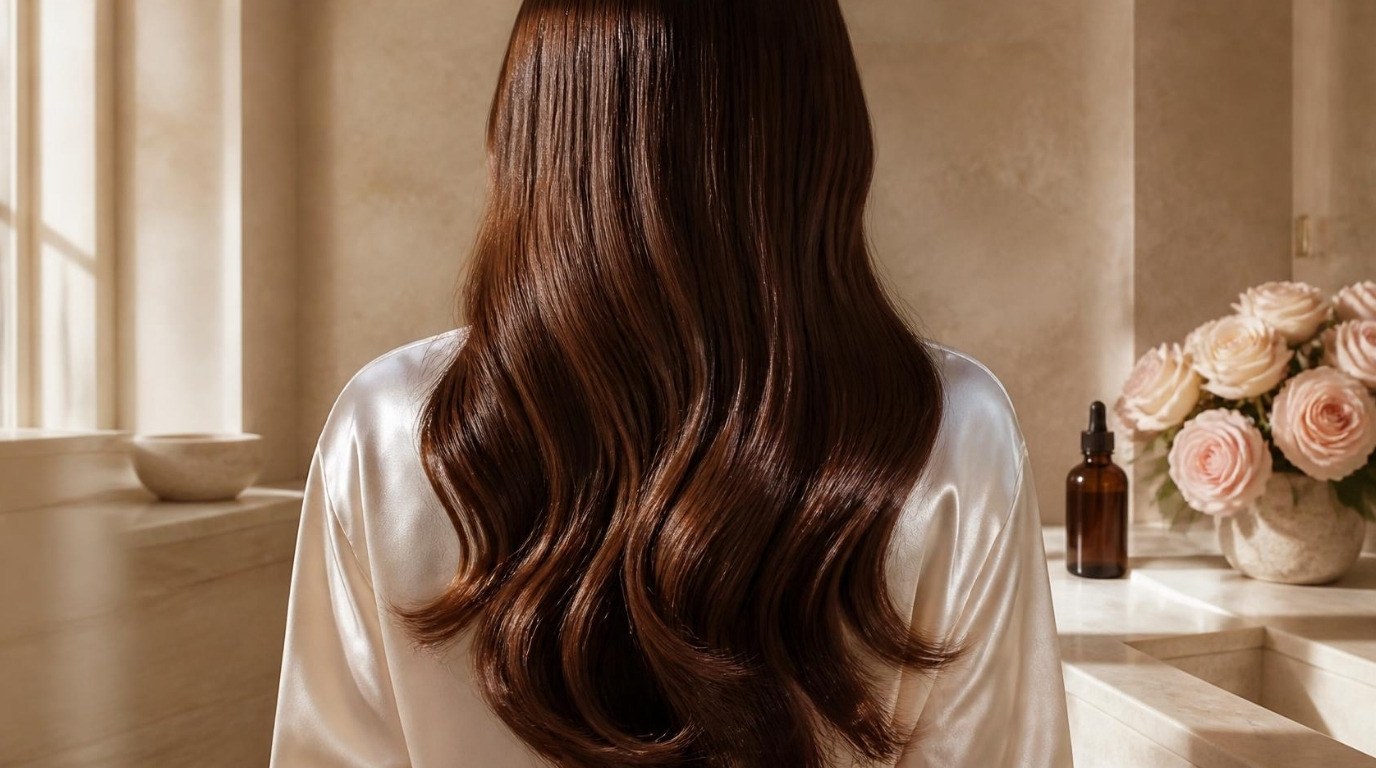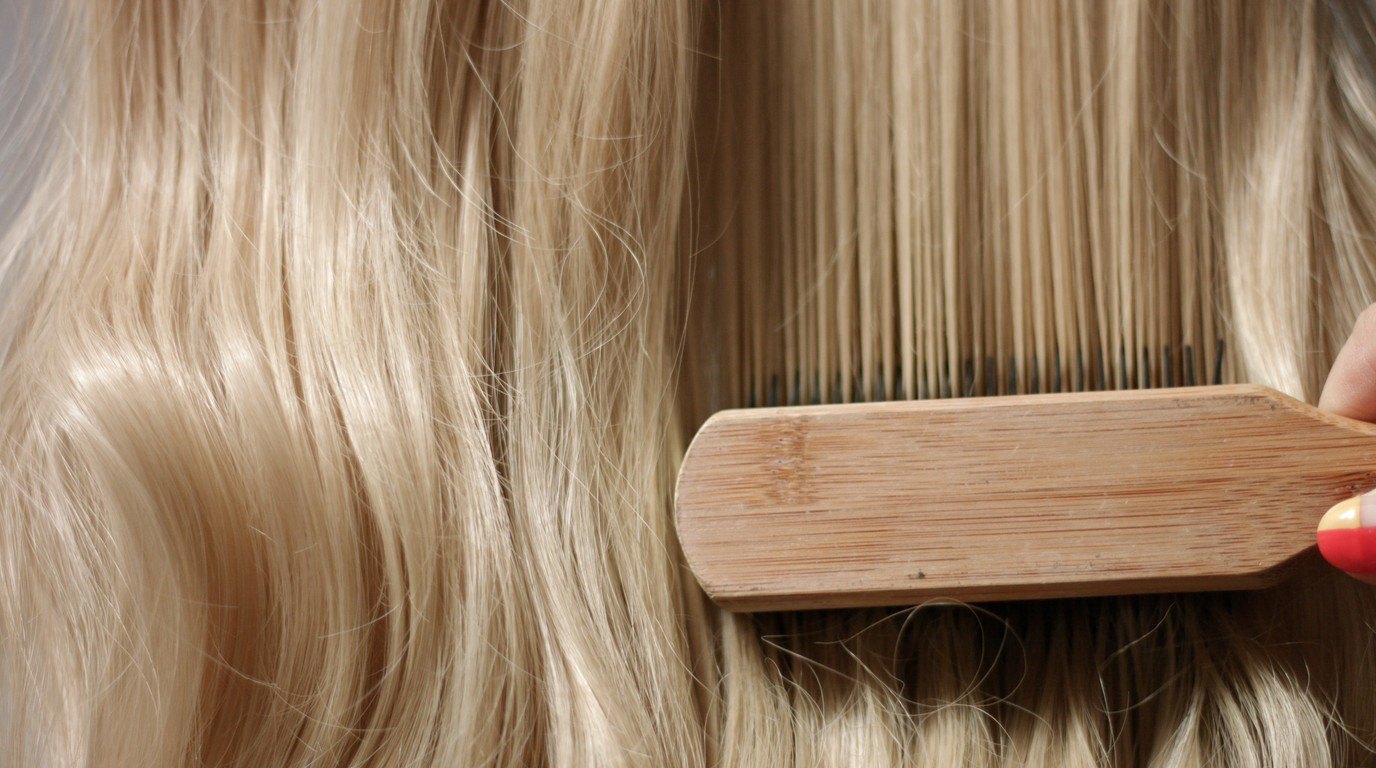
Shiny hair isn't really about adding shine. It's about how flat the outermost layer of each strand is lying. When that layer is smooth, light bounces off it evenly and your hair looks glossy and feels soft. When it's lifted or chipped, the same hair looks dull, frizzes faster and tangles the second you look at it.
That outer layer is the hair cuticle, and once you understand it, a lot of hair advice suddenly makes sense. Why conditioner matters, why heat protectant matters, why the way you towel dry matters – it all comes back to keeping those tiny scales lying down.
In this guide I'll walk you through what the cuticle is, what a raised versus closed cuticle looks like, the 7 everyday things that lift or chip it, 6 cuticle-friendly habits, what acidic rinses and glossing treatments can (and can't) do, plus a simple table to help you read your own hair. No miracle claims, just the gentle, practical stuff that actually adds up.
What Is the Hair Cuticle?
Each strand of hair has three layers. In the very center there's the medulla (not every hair has one). Around it sits the cortex, which holds most of the strand's strength, moisture and pigment. And wrapped around the outside is the cuticle: several layers of thin, flat, overlapping cells that look a lot like roof shingles or the scales on a pinecone.
Those scales all point from the root toward the ends. That's why hair feels smoother when you run your fingers down a strand and slightly rougher when you go the other way.
The cuticle's job is protection. It shields the cortex from friction, heat, sunlight and chemicals, and it helps control how much water moves in and out of the strand. Think of it as the hair's raincoat. When the raincoat is intact and lying flat, everything underneath stays happier.
One thing worth knowing early: hair is not living tissue once it leaves the scalp. The cuticle can't heal itself the way skin can. That's not meant to sound gloomy – it simply means prevention and smoothing are where your effort pays off most.
Why a Smooth Cuticle Looks Shiny and Feels Soft
Shine is just light reflection. A flat, closed cuticle acts like a smooth surface, so light hits it and bounces back in one direction. Your eye reads that as gloss.
A lifted or rough cuticle scatters light in lots of directions, which reads as matte or dull – even if the hair is perfectly clean and the color is lovely.
Softness works the same way. Smooth scales glide past each other, so strands slip apart instead of catching. Raised scales act like tiny hooks: they grab neighboring strands, which is where knots, rough texture and that "straw" feeling on the ends come from.
If you want the bigger picture on shine – including styling and finishing tricks – my guide to simple ways to get shiny hair pairs nicely with this one.
Raised vs Closed Cuticle: Porosity, Frizz and Tangles
Your cuticle isn't simply "open" or "closed" like a door. It's more of a spectrum, and where your hair sits on it shapes how it behaves day to day.
A Closed, Flat Cuticle
Hair with tightly packed, flat scales tends to look shiny and feel smooth, but it can be slow to absorb water and products. Water beads on it, products sometimes sit on top, and it can take ages to dry. This is what people usually call low porosity hair.
A Raised or Damaged Cuticle
Hair with lifted, chipped or missing scales absorbs water quickly and loses it just as fast. It often feels dry soon after conditioning, frizzes in humidity (water from the air swells the strand unevenly), and tangles easily. This is usually described as high porosity hair, and it's very common on colored, bleached or heat-styled lengths.
Most heads of hair are a mix: the newer growth near the roots tends to have a more intact cuticle, while the ends – which have been brushed, washed and styled for years – are more worn. If you'd like to figure out where your hair sits, my guide on hair porosity and how to care for low, medium or high porosity hair walks you through it.
And if frizz is the main thing bothering you, the cuticle is usually part of the story. My guide to making frizzy hair smooth and sleek again goes deeper into the styling side.
How To Read Your Hair Cuticle: A Quick Table
Here's the table I wish I'd had years ago. It's not a diagnosis, just a gentle way to connect what you see and feel with what might be going on – and what tends to help. Screenshot it for wash day.
| Cuticle state | How hair looks and feels | Likely cause | What helps |
|---|---|---|---|
| Flat and intact | Shiny, smooth, slips through fingers, slow to get wet | Healthy, mostly unprocessed hair | Light conditioner, occasional clarifying, gentle handling |
| Slightly raised | Less shine, a little frizz in humidity, mild tangles | Everyday wear, hard brushing, skipped conditioner | Conditioner every wash, wide-tooth comb, microfiber towel |
| Lifted on the ends | Dull, rough ends, knots near the bottom, fast drying | Heat styling, friction, age of the lengths | Heat protectant, trims, silk scrunchies, leave-in on ends |
| Chipped or worn away | Straw-like, very porous, split ends, breaks when stretched | Bleach, frequent color, high heat, chlorine | Regular trims, richer conditioner, very gentle detangling, less heat |
| Coated or weighed down | Shiny but limp, waxy or heavy, products stop working | Buildup from heavy products or hard water | An occasional clarifying wash, lighter products |
That last row surprises a lot of people: hair can look shiny and still feel "off" because something is sitting on top of the cuticle rather than the cuticle itself being smooth.
7 Things That Lift or Chip the Cuticle
None of these are things you have to give up completely. It's about knowing which habits wear the cuticle down, so you can soften the impact where it matters most to you.
1. High Heat Without Protection
Flat irons, curling wands and blow dryers on the highest setting can heat the water inside the strand quickly, and repeated high heat can crack and lift the cuticle over time. Bubbled, rough patches on the ends are often heat-related.
What to do: lower the temperature (many hair types don't need the top setting at all), keep the tool moving, and always use a protectant first. A lightweight heat protectant spray misted section by section is the easiest habit to build. My full guide on how to use heat protectant right before styling covers the details.
2. Rough Towel Drying
Wet hair is at its most fragile. Rubbing it back and forth with a rough cotton towel drags against the scales and roughs them up, which is why so many people step out of the shower with smooth hair and end up with frizz ten minutes later.
What to do: squeeze and press instead of rubbing. Wrap your hair, hold for a few minutes, and let the towel soak up water without friction.
3. Bleach and Frequent Color
Lightening and permanent color work by opening the cuticle so the chemicals can reach the cortex. Bleach in particular is hard on the cuticle, and repeated sessions on the same lengths add up.
What to do: you don't have to stop coloring. Ask your colorist about only touching up the roots instead of pulling color through all the lengths every time, spacing out sessions where you can, and using a bond-building or deep conditioning step they recommend.
4. Harsh Brushing on Wet Hair
Ripping a fine-bristle brush from the roots down through wet, knotted hair stretches the strand and scrapes the scales. Each little snag can lift or chip a few more of them.
What to do: detangle with plenty of conditioner in, using a wide-tooth comb and starting at the ends. More on this in the habits below.
5. Very Alkaline Products
The cuticle tends to lie flatter in slightly acidic conditions and swell or lift in alkaline ones. Very alkaline products – some harsh soaps, certain old-school bar shampoos and chemical processes like relaxers and perms – can leave it raised and rough.
What to do: most modern shampoos and conditioners are formulated in a hair-friendly pH range, so you don't need a lab kit. Just notice if a product consistently leaves your hair squeaky, rough and hard to comb, and follow it with conditioner every time.
6. Chlorine and Salt Water
Pool chlorine can oxidize and dry out hair, and salt water plus sun leaves strands rough and tangle-prone. Swimmers often notice their ends getting brittle over a summer.
What to do: wet your hair with clean tap water and a little conditioner before swimming (hair that's already full of water soaks up less pool water), wear a swim cap if you swim often, and rinse well and condition straight afterwards.
7. Friction From Cotton Pillowcases and Tight Hair Ties
Every time you turn over at night, your hair rubs against your pillowcase. Cotton has more grip than smooth fabrics, so it can add friction. Tight elastic hair ties do something similar in one concentrated spot, leaving a dented, rough band where breakage often starts.
What to do: switch to a smoother pillowcase – a blush silk pillowcase is a pretty pick – and swap tight elastics for soft silk scrunchies worn loosely. Change where you place your ponytail now and then, too.
6 Cuticle-Friendly Habits
These are small, repeatable things. None of them will transform your hair overnight, but together they keep the cuticle lying flatter for longer – and that's where the shine and softness come from.
1. Conditioner Every Wash
Conditioner is the single most cuticle-friendly step in any routine. Conditioning ingredients are attracted to the damaged, slightly negatively charged spots on the hair surface, so they cling exactly where the cuticle is roughest, add slip and help the scales lie flatter.
How to do it: after every shampoo, apply conditioner mostly from mid-lengths to ends, leave it for two to three minutes, then rinse. If your ends are very porous, add a small amount of leave-in afterwards.
2. A Cool Final Rinse
You've probably heard that a cold rinse "seals the cuticle". In reality the effect is modest – your hair's cuticle doesn't snap shut like a lid with cold water. A cooler final rinse can feel refreshing, may slightly reduce frizz while you style, and at the very least means you're not blasting your hair with very hot water.
How to do it: finish your shower with ten to twenty seconds of cool (not icy) water over your lengths. Do it because it feels nice, not because it's magic.
3. A Microfiber Towel
A smooth microfiber towel absorbs water quickly with far less friction than a thick, looped cotton one. It's one of the easiest swaps with the most noticeable difference in frizz.
How to do it: wrap or scrunch your hair in a cream microfiber hair towel for five to ten minutes, press out the excess water, then let it air dry or style. No rubbing.
4. Heat Protectant Every Time
If you heat style, protectant is non-negotiable for your cuticle. It adds a thin film that slows heat transfer and adds slip, so tools glide instead of dragging.
How to do it: mist it evenly on damp or dry hair (whatever the label says), comb it through so every section is covered, and let it settle for a minute before you start. Then keep your tool temperature as low as still gets the job done.
5. Wide-Tooth Detangling From the Ends Up
Starting at the roots pushes every small knot down into one big one at the ends, which is where hair is oldest and most fragile. Working from the bottom up loosens tangles before they gather.
How to do it: with conditioner still in, hold a section a few inches from the ends and comb just the bottom. Once that glides, move a few inches up and repeat until you reach the roots. A blush wide-tooth comb is ideal here. If you're seeing lots of short snapped pieces, my guide on hair breakage causes and how to stop it is worth a read.
6. Regular Trims for Split Ends
Once the cuticle at the tip has worn away, the cortex underneath can start to fray and split. No product can glue a split end back together permanently, and splits tend to travel further up the strand if left alone.
How to do it: a light trim every 8 to 12 weeks is a good rhythm for most people, or more often if your ends are very processed. Ask for "just the damaged ends" if you're growing your hair out.
Acidic Rinses and Glossing Treatments: What They Can and Cannot Do
Acidic rinses and in-shower glossing treatments are lovely, and they're popular for a reason. They just get oversold.
What They Can Do
- Help the cuticle lie a little flatter after washing, especially after an alkaline process.
- Add noticeable shine for a few washes by smoothing and coating the surface.
- Make detangling easier and reduce flyaways for a while.
- Refresh dull, brassy or faded-looking hair (tinted glosses add a sheer wash of color too).
What They Cannot Do
- Rebuild cuticle cells that have chipped or worn away.
- Fix split ends permanently.
- Replace conditioner, heat protection or gentle handling.
- Last forever – the effect fades as you wash.
If you'd like to try one, a lightweight in-shower hair gloss used every week or two is plenty. Follow the timing on the pack, rinse well, and patch test first if your scalp is sensitive. DIY vinegar rinses should always be well diluted and kept away from your eyes.
Can Cuticle Damage Be Repaired?
This is the honest part: true repair isn't possible. Because hair is not living tissue, lost cuticle layers don't grow back on that strand. What products can do – and do quite well – is smooth, coat and temporarily fill in rough spots so the hair behaves and looks healthier.
Conditioners, leave-ins, oils, silicones and bond-building treatments all fall into that "smooth and support" category. They make a real difference to how your hair feels and looks between washes, but the only way to get a completely fresh cuticle is new growth and trimming away the worn lengths over time. If you're curious how silicones fit into that picture, my guide to silicones in hair care explains it without the scare stories.
I find that reassuring rather than discouraging. It means you don't need to chase the next miracle product. Gentle, consistent habits protect every new inch that grows.
A kind note: the cuticle is about the hair shaft, not the scalp. If you notice sudden shedding, patchy thinning or a sore, flaky or itchy scalp, that's a different story – please see a doctor or dermatologist rather than trying to fix it with hair products.
A Simple Weekly Cuticle Care Routine
If you'd like everything above in one easy rhythm, here's a gentle week that works for most hair types. Adjust the wash days to your own hair.
- Wash days: shampoo the scalp, condition the lengths for two to three minutes, detangle from the ends up with a wide-tooth comb, and finish with a cool rinse.
- Straight after the shower: press water out with a microfiber towel, then add a pea-sized amount of leave-in to the ends.
- Styling days: heat protectant first, medium heat, one smooth pass rather than many.
- Every night: loose silk scrunchie or loose braid, smooth pillowcase.
- Once a week or two: a gloss or deep conditioning treatment, following the pack timing.
- Every 8 to 12 weeks: a light trim to take off split ends.
I like to do my treatment night as a slow evening ritual – a mug of tea, a glass candle on the bathroom shelf (never left unattended), and ten quiet minutes while the mask sits. It turns a hair chore into something I genuinely look forward to.
Final Thoughts
Your hair cuticle is tiny, but it shapes almost everything you notice about your hair: the shine, the softness, the frizz, the knots. You can't rebuild it once it's gone, and that's okay. Every gentle habit – a little conditioner, a softer towel, a lower heat setting, a looser scrunchie – protects the next inch that grows in.
Start with one or two swaps that feel easy, give them a few weeks, and let your hair show you the difference. Smooth, shiny hair is mostly a matter of being kind to it, wash after wash.