Decluttering with a partner who doesn't want to declutter is rarely about the stuff. It's about two people who feel calm in different amounts of space, who attach different meanings to objects, and who both want home to feel like home. When you see it that way, the goal stops being "win the argument about the garage" and becomes "build a shared space that works for both of us." That's a much kinder (and much more doable) project.
The good news is that you don't need your partner to suddenly love minimalism. You need a few clear agreements, a little patience and a plan that respects that some things in your home simply aren't yours to decide about. Calm, steady progress beats one dramatic weekend purge every single time.
This guide walks you through how to declutter when your partner won't, without fights, ultimatums or sneaky trips to the donation center. You'll find the one golden rule, the most common reasons people resist, 7 gentle steps, a "mine, yours, ours" table for every room, 5 kind scripts, small-space ideas, and what to do when you're truly stuck.
Take a breath. Nobody here is the villain, and your home can feel lighter without anyone feeling bulldozed.
The Golden Rule: Never Toss Their Things Without Consent
Before any tip, any basket or any system, there's one rule that everything else depends on: you never throw away, donate, sell or hide your partner's things without their clear yes. Not the faded concert T-shirt, not the box of cables, not the mug with the chipped handle. Even if it "obviously" doesn't matter. Even if they'll "never notice."
Here's why this matters so much. When someone discovers that their belongings disappeared, the conversation is no longer about clutter. It becomes about trust. And a partner who feels their things aren't safe usually starts holding on even tighter, which is the exact opposite of what you want.
Keeping this rule also takes pressure off you. You're not the household clutter police. You're one half of a team, responsible for your own things and for helping set fair rules in the spaces you share. That's it. It took me a while to understand that respecting someone's things is often what makes them willing to let some of those things go.
Why Your Partner Might Resist Decluttering
Resistance usually has a reason, and the reason is almost never "I want to annoy you." Understanding what's underneath makes it so much easier to find a solution that feels good to both of you. Here are the most common ones:
- Sentimental value. To you it's an old shoebox. To them it holds ticket stubs from a trip that changed their life. Objects can be anchors for memories, people and versions of ourselves we miss.
- Scarcity worries. If someone grew up without much, or went through a stretch where money was tight, letting go of "perfectly good" things can feel genuinely unsafe. Keeping spares is a way of feeling prepared.
- Overwhelm. A full closet can feel so big that the only way to cope is not to start. "I'll do it later" is often "I don't know where to begin."
- Different upbringing. Some people grew up in homes with full shelves and lots of life on every surface, and that's what comfort looks like to them. Others grew up with bare counters. Neither is wrong.
- Feeling judged. If past conversations were full of sighs and "why do you even keep this?", decluttering may now feel like criticism, so saying no protects their dignity.
- Different clutter tolerance. Some people truly don't see the pile on the chair. It's not laziness – their brain just isn't flagging it the way yours is.
You don't need to diagnose your partner (please don't). Just keep these in mind, so you can respond to the real feeling instead of the surface argument.
7 Steps To Declutter When Your Partner Won't
These steps build on each other, but you don't have to rush through them. Some couples spend a month on step one and that's completely fine. Think of this as a slow, respectful process rather than a project with a deadline.
1. Start With Your Own Things and Lead by Example
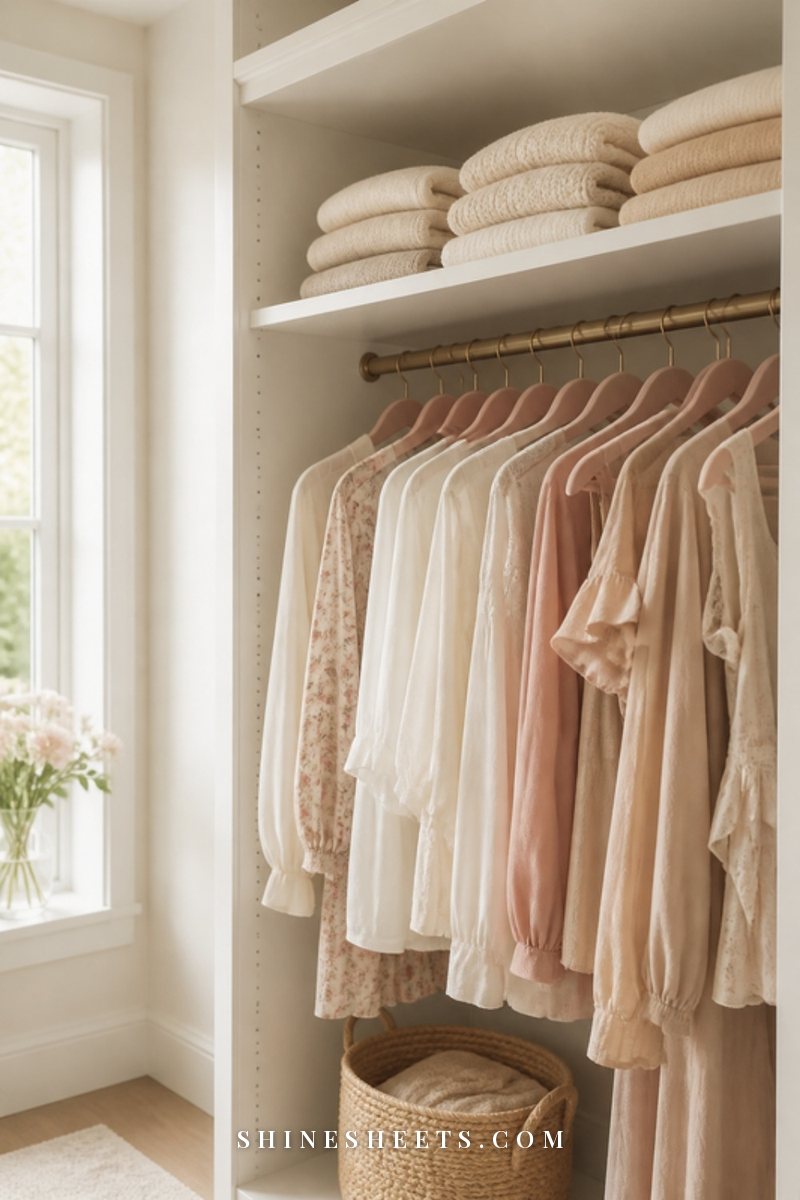
The fastest way to make decluttering feel less threatening is to do it quietly, on your own belongings, first. Your side of the closet, your bathroom drawer, your books, your craft supplies, your shoes. Most of us have more to let go of than we'd like to admit (I definitely did).
Give yourself two weeks and one small area at a time: 15 minutes, one drawer or one shelf. If you want a structured way to go about it, my guide to decluttering methods that suit different personalities can help you pick one that feels natural.
Don't announce it, don't narrate it and definitely don't use it as evidence ("See? I got rid of six bags, what about you?"). Just let the results speak. A calmer closet, an easier morning and a visibly lighter mood are much more persuasive than any lecture. Many partners start asking questions on their own once they see how good it feels.
2. Ask About Their Reasons With Curiosity
Once things feel calm, invite a conversation, not a negotiation. Pick a relaxed moment (not when you're both tired, and never in the middle of tripping over the pile), and ask open questions you genuinely want answers to:
- "What does this collection mean to you?"
- "How do you feel when the house is really full? And when it's really empty?"
- "Is there anything about the way we live right now that stresses you out?"
Then listen. Really listen, without planning your rebuttal. You might discover that your partner feels just as overwhelmed as you do, or that one particular box is precious for a reason you never knew. If these talks tend to get tense, my guide on how to communicate better in a relationship has some lovely tools for keeping things soft.
3. Agree on Shared-Space Zones
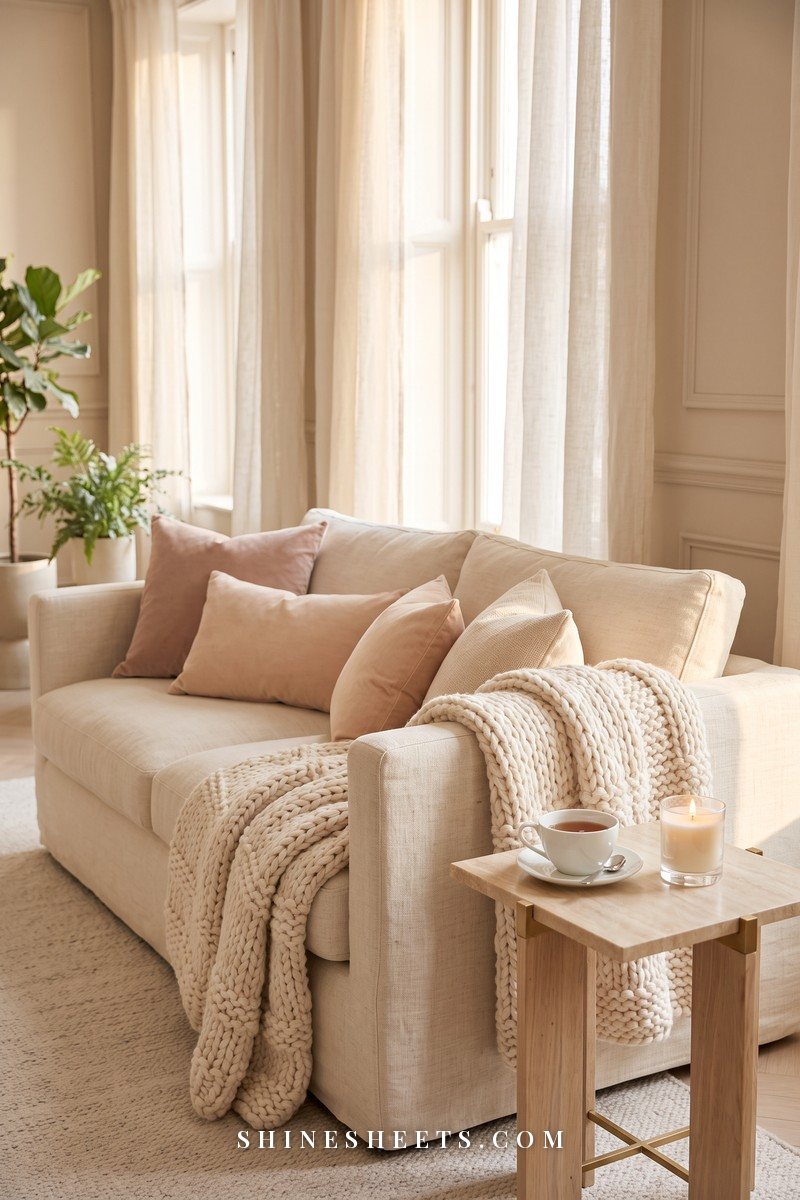
Shared spaces are where most clutter tension lives: the living room, kitchen counters, the entryway, the bathroom. Instead of fighting about every item, agree together on what each shared zone is for and roughly how it should look.
For example: "The coffee table holds a candle, a book and the remote basket. The kitchen counter holds the coffee maker, the fruit bowl and the knife block. Everything else lives somewhere else." Keep it to a short, specific description per zone. It's much easier to agree on a picture of the space than to argue about individual objects.
Write your zone agreements in the notes app you both use, so nobody has to remember who said what. The table further down can help you fill this in room by room.
4. Give Each Person a No-Judgment Personal Zone
This step is quietly magical. Each of you gets a space that is entirely yours – a closet, a shelf, a desk, a corner of the garage, a drawer if you live somewhere tiny. Inside that zone, the other person doesn't remark, sigh, suggest or tidy. Ever.
Personal zones work because they give the less tidy partner real security: their things have a safe home, and nobody is coming for them. Interestingly, that security often makes people more relaxed about shared spaces. The deal is simple – personal stuff that spills beyond the shared-zone rules goes back into the personal zone.
Try to make the zones roughly fair in size. If one person gets the walk-in closet and the other gets a drawer, it's going to feel like a punishment rather than a compromise.
5. Set Simple House Rules Together
House rules sound strict, but they actually prevent fights, because you're arguing with a shared agreement rather than with each other. Keep them few and easy to remember. Three that work for most couples:
- One in, one out. When something new comes into a shared space, something similar leaves. My post on the one in, one out rule explains how to make it feel natural rather than strict.
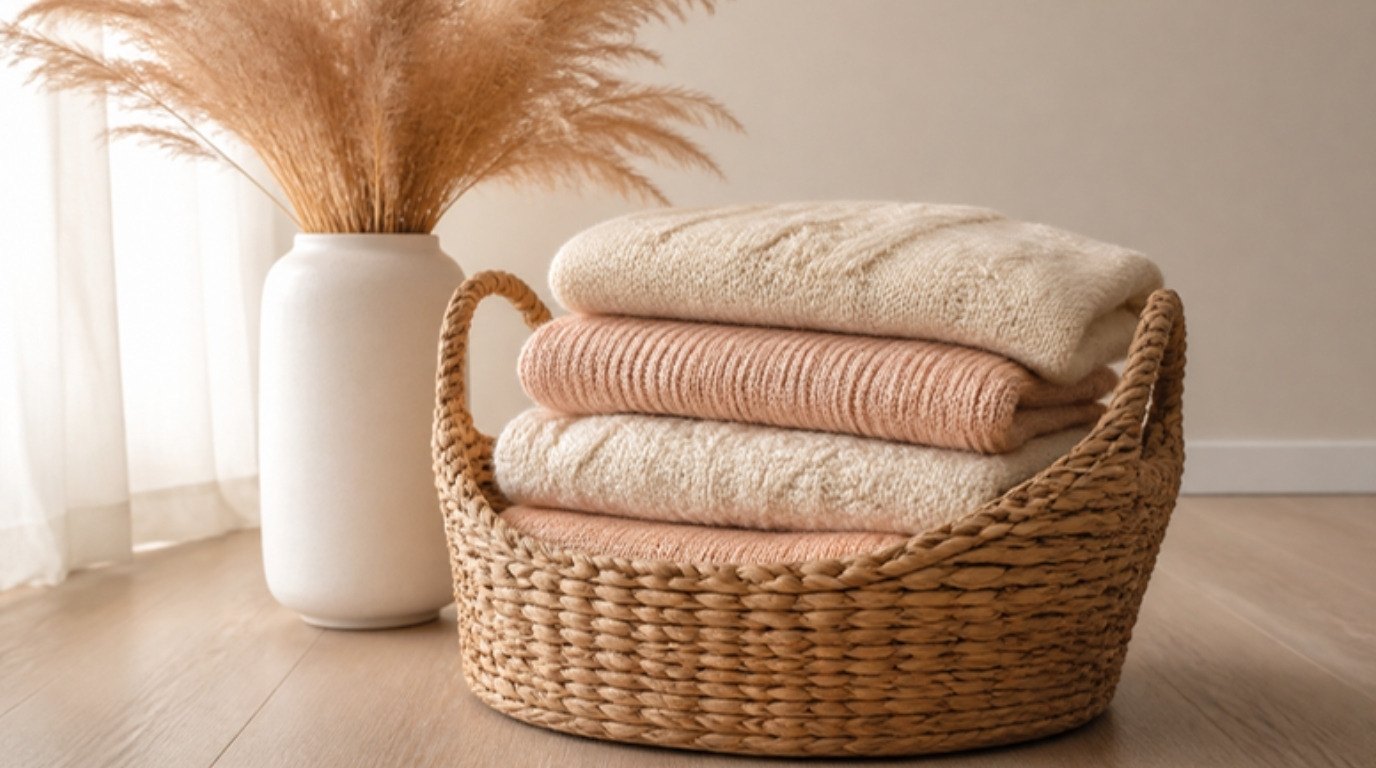
- A donation box that's always open. Keep a sturdy fabric donation box in a closet or by the door. Anyone can drop their own things in anytime, and it goes to the donation center when it's full. No questions asked.
- A 24-hour landing rule. Things can land on a shared surface, but they move to their home within a day.
Agree on the rules together and revisit them after a month. Rules you both chose are rules you'll both actually follow.
6. Schedule Short Joint Sessions
Long decluttering marathons are where couples fight. Short sessions are where couples make progress. Try 20 to 30 minutes, once a week, on a single shared area: the junk drawer, the bathroom cabinet, the hallway shelf.
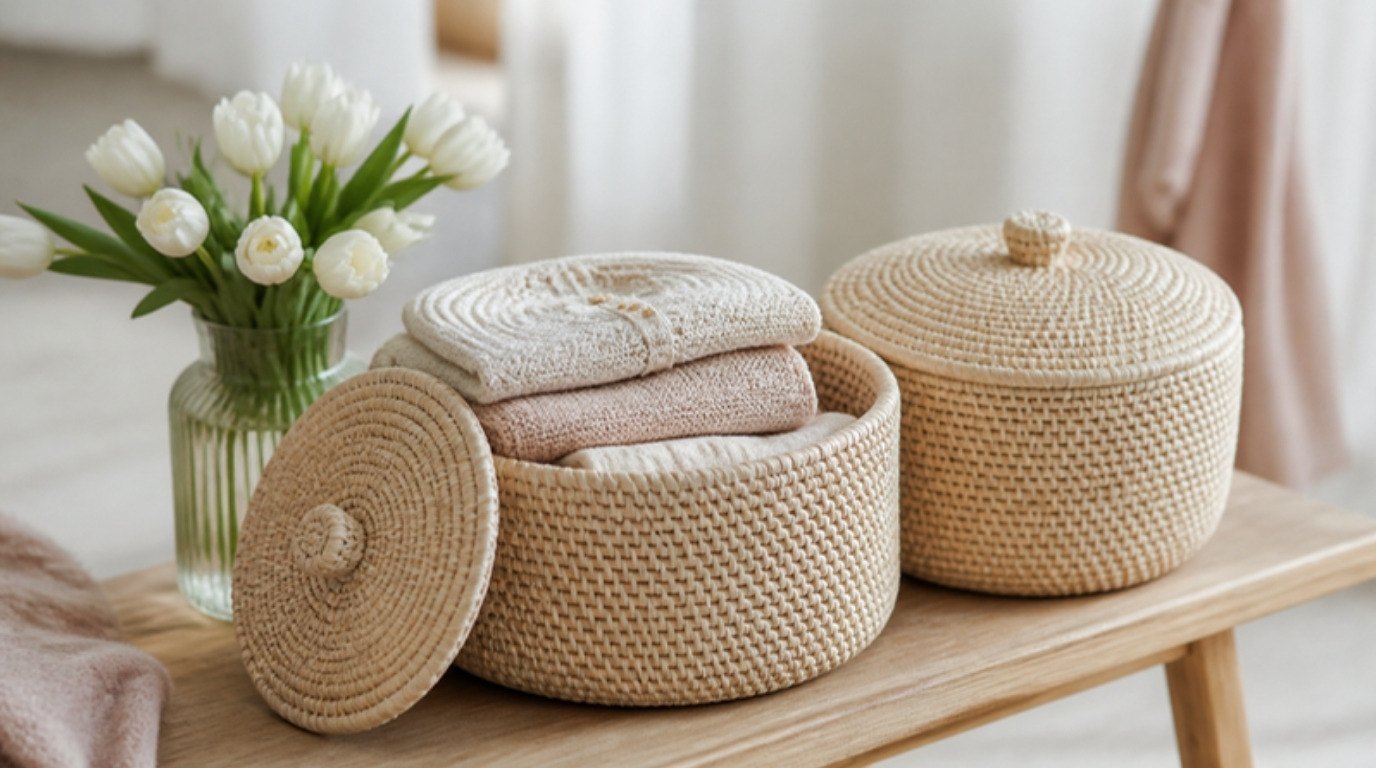
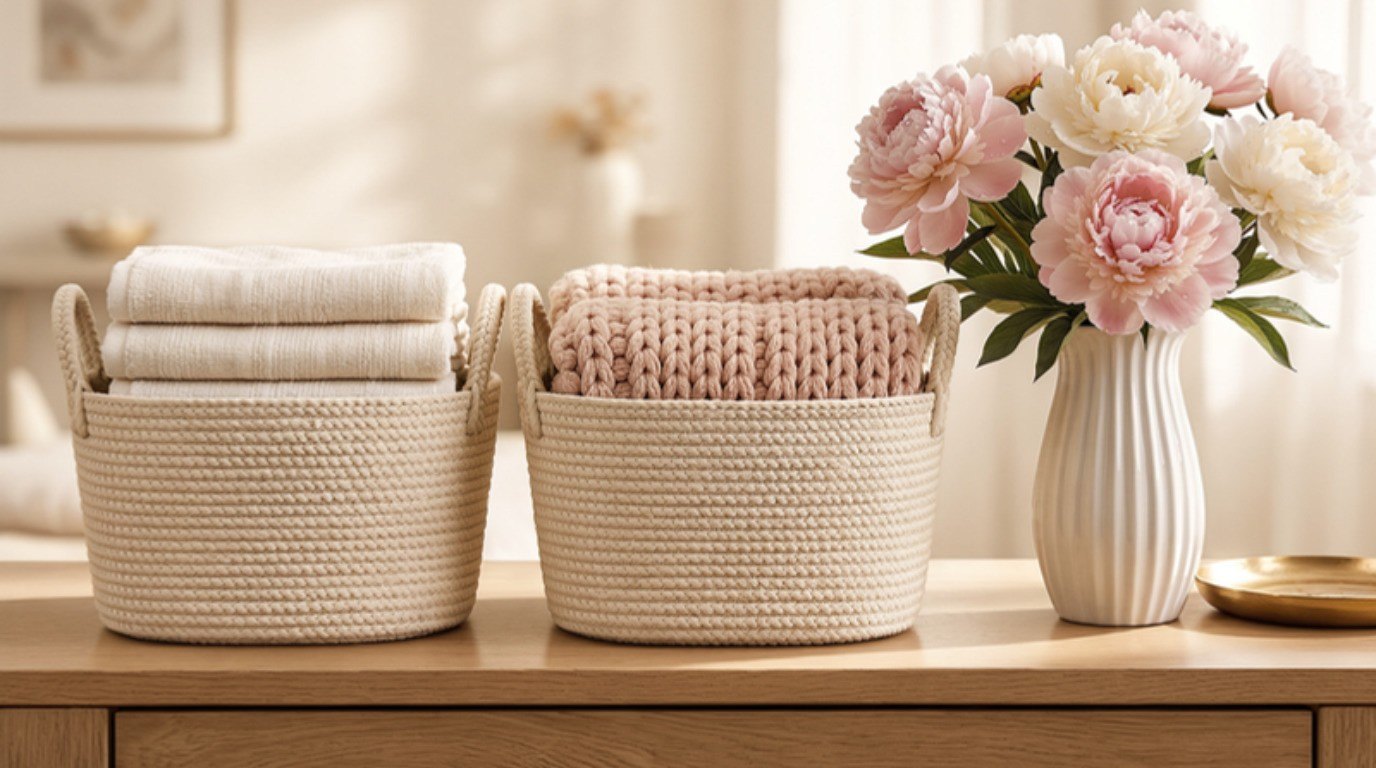
Make it pleasant. Put on music, make a cup of tea, set a timer and stop when it rings, even if you're mid-drawer. Each of you decides about your own items; shared items get a joint yes or they stay. Having a few cream woven storage baskets on hand helps a lot, because "keep, but somewhere tidier" is often an easier answer than "keep" or "go."
If chores in general are already a sore spot, it can help to look at the bigger picture of sharing chores fairly as a couple, so tidying doesn't quietly become one person's job.
7. Celebrate What Works
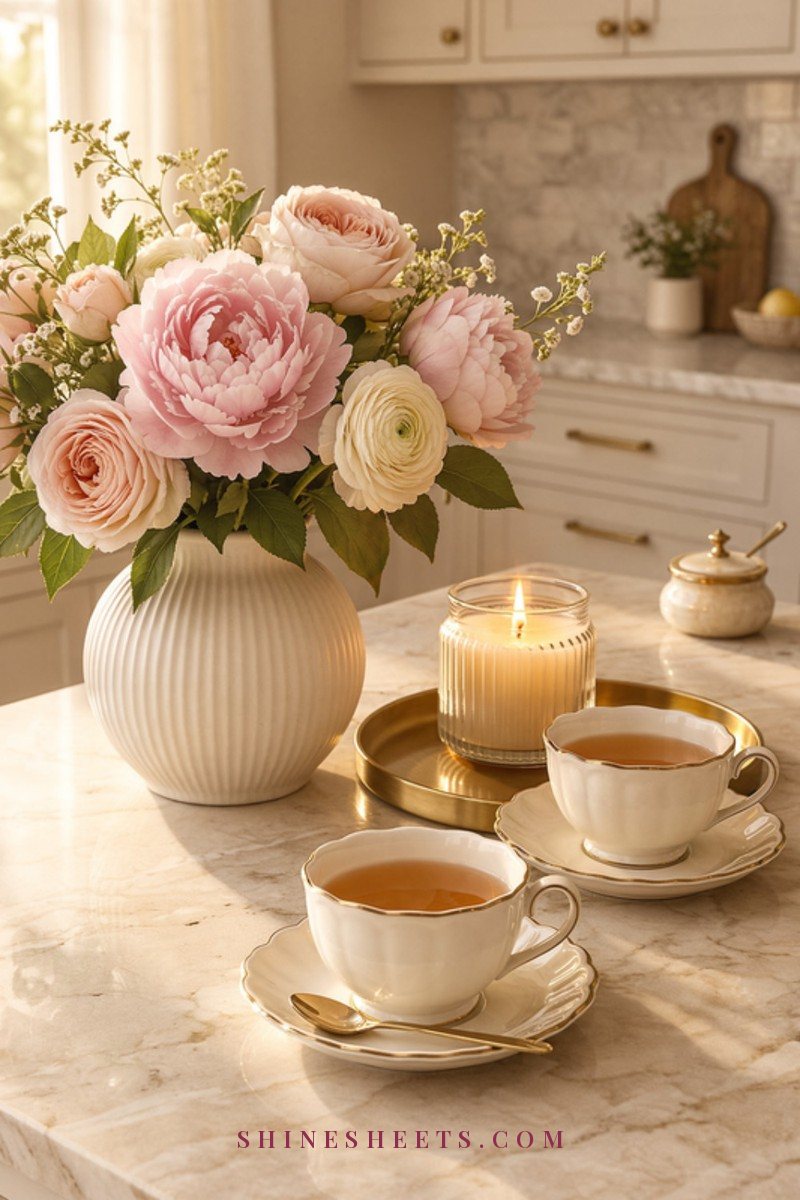
When the hallway finally stays clear for a week, notice it out loud. "I love walking in the door now. Thank you for doing this with me." Appreciation is a far stronger motivator than criticism, and it reminds both of you that this is a team effort.
Celebrate in small, cozy ways too: a nice dinner at the newly cleared table, a movie night on the tidy sofa, a fresh bunch of flowers on the counter you rescued together. You're building a positive memory around decluttering, which makes the next session easier to say yes to.
The Shared Home Table: Mine, Yours, Ours
This is the heart of the whole approach. Fill in a table like this together, one room at a time, and keep it somewhere you can both see it (a screenshot on both phones works well). Here's an example to get you started:
| Space | My things | Your things | Shared rule |
|---|---|---|---|
| Living room | One basket for my books and blanket | One shelf for your games and records | Coffee table holds only a candle, a book and the remote basket |
| Kitchen counters | My tea caddy | Your coffee grinder | Only daily-use items stay out; everything else goes in cabinets |
| Entryway | Two pairs of shoes, one bag | Two pairs of shoes, one bag | Mail goes into one tray; tray gets sorted every Sunday |
| Bedroom | My nightstand and left side of the closet | Your nightstand and right side of the closet | Nothing lives on the floor or the bed overnight |
| Bathroom | Top drawer and one shelf | Second drawer and one shelf | Counter holds soap, toothbrushes and one candle |
| Garage or storage closet | My labeled bins | Your labeled bins | Shared items (tools, holiday boxes) go on the middle shelf |
| Personal zone | My desk corner | Your hobby corner | No remarks, no tidying, no suggestions from the other person |
A few tips for filling it in: keep each rule to one sentence, use "we" language, and let your partner write their own column. If a row turns into an argument, leave it blank and come back next week. An unfinished table you both agree on is better than a "finished" one only one of you believes in.
Clear labels make the table easier to live by. A small blush label maker turns "your bin" and "my bin" into something you can both see at a glance, and labeled sage green fabric storage bins make personal shelves look calm even when they're full.
5 Kind Scripts for Tricky Clutter Conversations
Words matter so much here. These scripts help you say what you need without blaming or pushing. Adjust them so they sound like you.
- To open the topic: "I've been feeling a bit overwhelmed by how full the house feels lately, and I'd love for us to find a way to make it feel good for both of us. Could we talk about it this weekend?"
- When they get defensive: "I'm not asking you to get rid of anything you love. I'm asking if we can find homes for things so the shared spaces feel calmer."
- When you're curious about an item: "Tell me about this one. What do you like about keeping it?" (Then listen, and don't follow up with "but…")
- When proposing a zone: "What if we each had one space that's completely ours, no remarks from the other person, and we kept the living room to just a few things?"
- When you need a pause: "I can feel us both getting frustrated. Let's stop here, and pick it up next Sunday. I'm on your side."
Notice what these have in common: they start with your feeling, they protect your partner's dignity, and they offer a next step rather than a demand. If you find you often meet in the middle on other things too, my guide on how to compromise in a relationship without losing yourself goes deeper.
Small-Space and Renter-Friendly Ideas
When you share a small apartment, every object competes for space, so the tension can feel sharper. A few ideas that don't need drilling, renovating or a bigger budget:
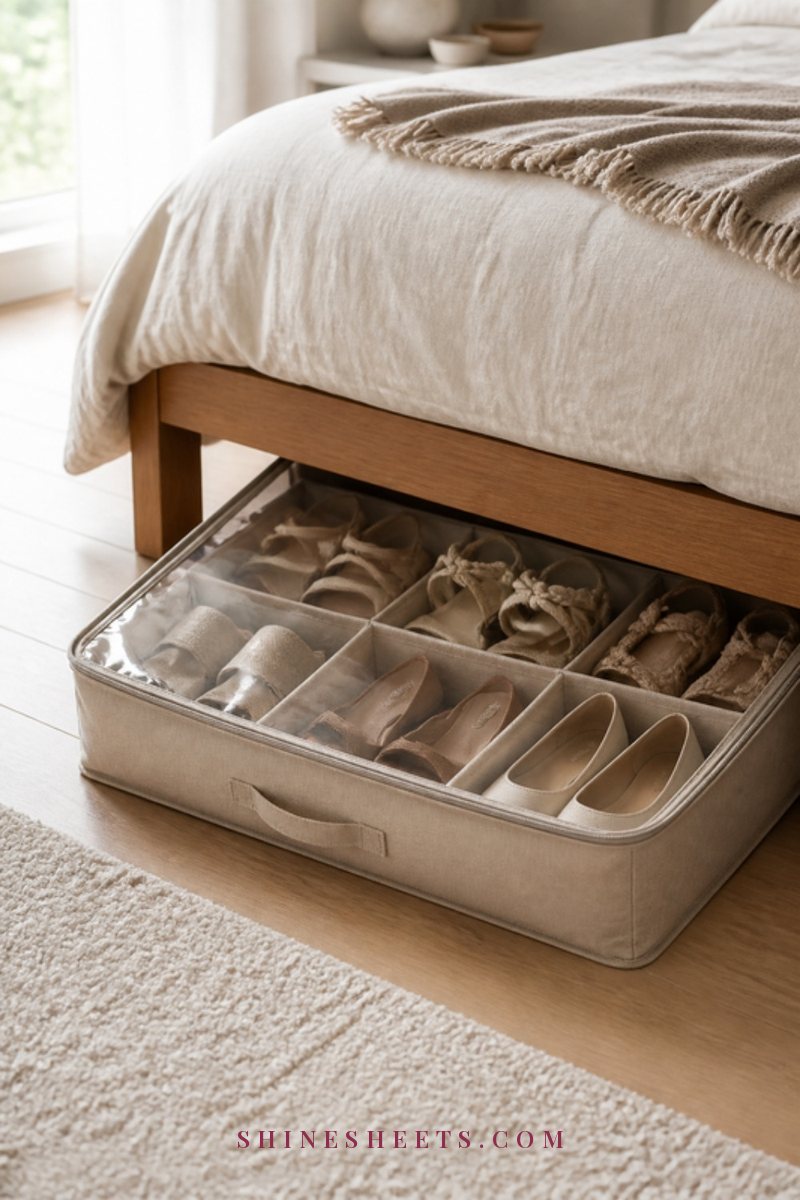
- Use the space under the bed. Zippered cream under-bed storage bags are perfect for each person's seasonal clothes or sentimental items. Keep one side of the bed for each of you.
- Divide drawers, don't share them. Simple adjustable drawer dividers turn one shared dresser drawer into two personal halves.
- Go vertical behind doors. Over-the-door hooks and pockets hold bags, scarves or cables without taking up floor space.
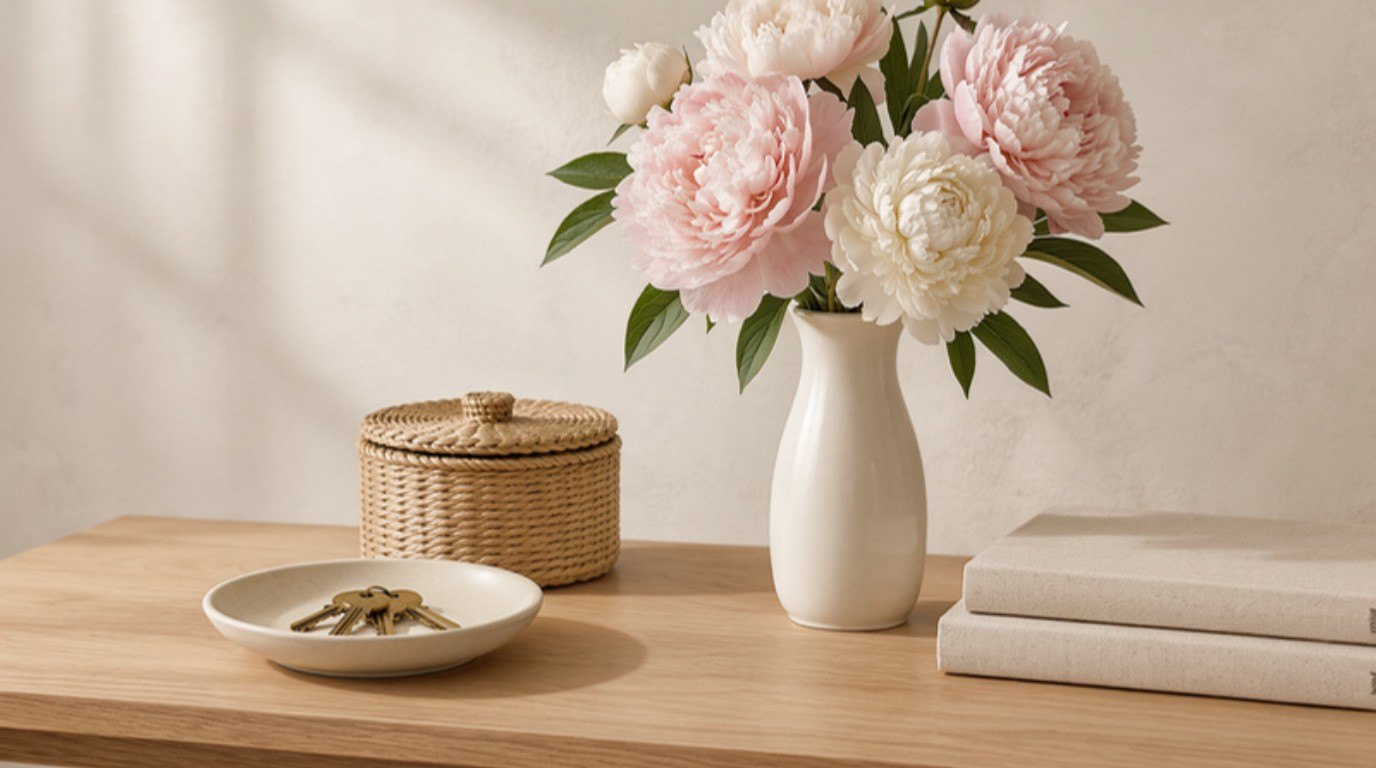
- Pick one "landing basket" each. A basket by the door for each partner catches keys, mail and small things before they spread.
- Rotate collections. If your partner loves a big collection, suggest displaying a few favorites and storing the rest in labeled bins, swapping them every few months.
- Know your hotspots. Most homes have three or four spots where clutter piles up. My guide to clutter hotspots shows you how to spot yours and give them a gentle reset routine.
In a small home, personal zones may be tiny (a single shelf each), and that's fine. What matters is that each person has a space that's truly theirs.
What To Do When You're Truly Stuck
Sometimes you do everything kindly and you still hit a wall. One room, one collection or one closet becomes the stalemate. Here's how to handle it without it turning into a battle:
- Find a middle option. Not "keep all of it" or "get rid of all of it," but "keep the best ten" or "keep it, but in two bins instead of six."
- Add storage, thoughtfully. Sometimes the answer really is a better shelf, a storage unit for a season, or a closet system that makes things fit. It's not failure – it's a practical compromise.
- Revisit later. Agree to set the topic aside for three months. Feelings about objects change, especially once the rest of the home feels calmer.
- Accept a little imperfection. You may always care about bare counters more than your partner does. That's okay. A home that's 80% the way you like it, with a partner who feels respected, is a lovely home.
And please, no ultimatums. "Either the boxes go or I do" puts both of you in a corner, and it almost never leads to the calm home you actually want.
When Clutter Is About More Than Stuff
For some people, holding on to things is tied to real distress: strong anxiety at the thought of letting anything go, rooms that can no longer be used for their purpose, or clutter that creates safety concerns like blocked exits. If that sounds like your home, it's not a matter of willpower or a better basket.
In that case, gently suggest support. A therapist can help with the feelings underneath, and a professional organizer (ideally one experienced in working with couples or with hoarding tendencies) can help with the practical side, without judgment. Frame it as something you'd do together: "I think we both deserve some help with this."
The same goes if decluttering conversations keep turning into bigger, painful arguments. A couples counselor can help you both feel heard. And if a relationship ever feels unsafe, please reach out for help right away.
Final Thoughts
Learning how to declutter when your partner won't is really learning how to share a home with someone who sees it a little differently. Start with your own things, keep the golden rule, give each other a personal zone, and let short, kind sessions do the slow work.
Your home doesn't have to look like a magazine page. It just has to feel like a place where both of you can breathe, rest and feel at home. With patience and a little teamwork, it absolutely can.