A messy home is rarely messy everywhere. Most of the time, a handful of the same spots fill up again and again while the rest of the house stays mostly fine. The entry table, the corner of the kitchen counter, that one chair in the bedroom. Fix those few places and your whole home suddenly feels calmer, without a weekend-long cleaning marathon.
These spots are not a character flaw. They are a design problem. Things pile up where there is a flat surface, a lot of foot traffic and no clear home for what lands there. Once you see it that way, the fix becomes small and very doable.
This guide is all about clutter hotspots: what they are, how to find yours in ten minutes, a table of the eight most common ones, a simple five-step fix formula, a five-minute evening reset and how to make it work with everyone you live with. Everything is renter-friendly, small-space-friendly and gentle on your budget.
What Clutter Hotspots Are (and Why They Keep Coming Back)

A clutter hotspot is any spot in your home that collects stuff on a daily basis. Usually it is a flat surface near a door, a walkway or a place where you pause: a table, a counter, a chair, a shelf at hand height. You put something down "just for now", and an hour later something else joins it.
Hotspots come back for three main reasons:
- The items have no home. If the mail, the hair clips or the charger do not have a set place nearby, they will land on the closest empty surface.
- The surface is too easy. A clear, open table at hip height is basically an invitation. Dropping something there takes zero effort, while putting it away takes a few steps.
- A routine is missing a step. You come home and drop your bag, but there is no step for unpacking it. You get changed, but there is no step for what happens to the clothes you wore once.
This is why a big decluttering session alone does not fix hotspots for long. Clearing a surface is satisfying, but if nothing about the home, the surface or the routine changes, the pile is back by Friday. The real fix is to adjust whichever of those three is missing. If your whole home needs a deeper reset first, my step-by-step guide to decluttering your home is a good place to start, and you can come back to the hotspots after.
How To Find Your Clutter Hotspots in 10 Minutes
You probably know two or three of your hotspots already. A quick walk-through helps you catch the rest, and it is calmer than it sounds. No tidying allowed yet, only noticing.
- Pick a normal day. Do this in the evening of an ordinary weekday, before you tidy, so you see your home as it really lives.
- Walk your daily route. Start at the front door and follow the path you actually take: door, kitchen, living room, bedroom, bathroom, desk.
- Look at every flat surface. Tables, counters, chairs, shelves, the top of the dresser, even the floor next to the bed.
- Write down where things pile up and what the pile is made of: mail, clothes, cups, receipts, toiletries, cables.
- Mark your top three. These are the spots that bother you most or fill up fastest. You will start there.
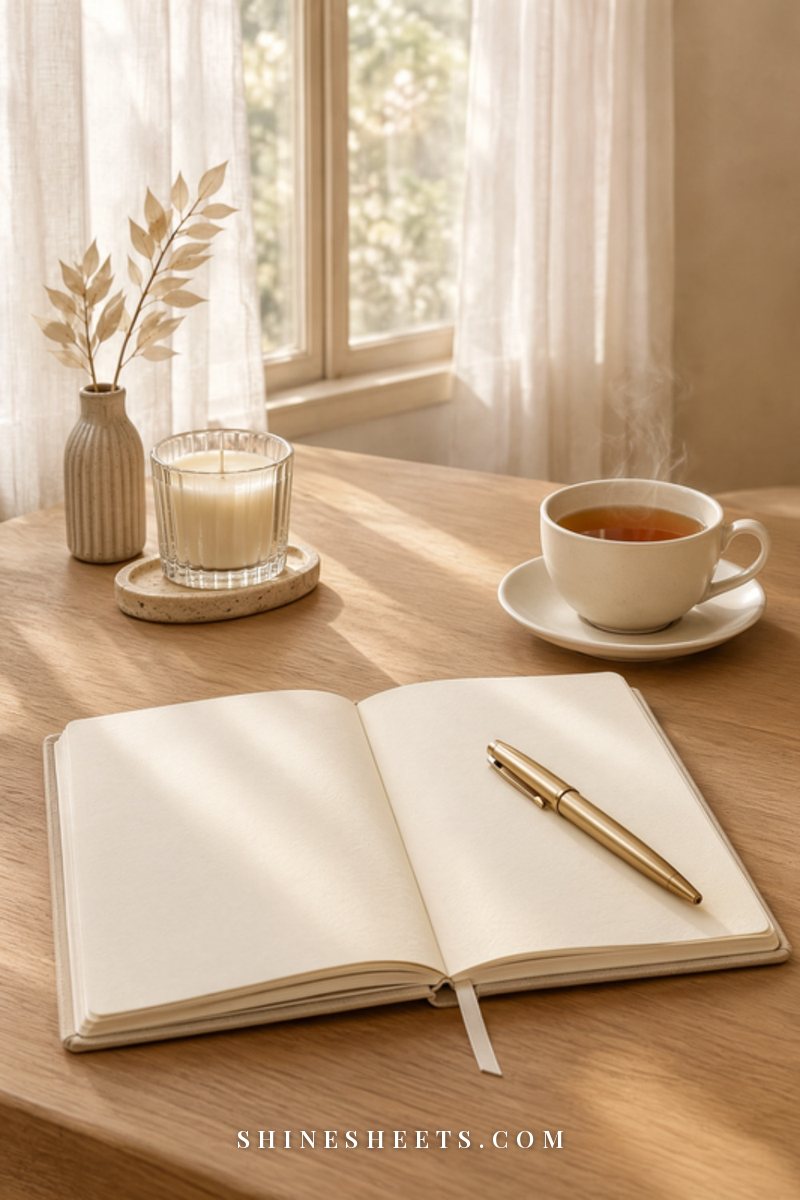
A small tip: take a quick photo of each hotspot during the walk-through. A week later, after you have tried the fix, a second photo is a lovely reminder that the small changes are working. I like doing the notes part in my journal after evening tea, when the house is quiet and I can look at it with kind eyes rather than frustrated ones.
Clutter Hotspots at a Glance
Here are the eight hotspots that show up in almost every home, with what tends to pile up, why it happens and a simple fix. Screenshot it and use it as your plan for the week.
| Hotspot | What piles up | Why it happens | Simple fix |
|---|---|---|---|
| Entryway | Keys, mail, bags, shoes, scarves | Everything enters here and there is no landing spot | Hooks, a catch-all tray, a basket for shoes, mail sorted at the door |
| Kitchen counter | Mail, receipts, chargers, water bottles, random gadgets | It is the busiest surface in the home | One small "landing zone", a home for every non-kitchen item |
| Dining table | Paperwork, shopping bags, laptops, projects | Big, flat and in the middle of everything | A basket for in-progress items, cleared before every meal |
| Bedroom chair | Worn-once clothes, bags, laundry | No home for clothes that are not clean, not dirty | Hooks or a basket for worn-once clothes, a weekly limit |
| Nightstand | Cups, books, hand cream, hair ties, receipts | Last stop before sleep, so everything ends up here | A small tray for the essentials, a drawer for the rest |
| Bathroom counter | Skincare, makeup, hair tools, empties | Daily products are left out after use | Keep only daily items out, store the rest in a caddy or drawer |
| Coffee table | Remotes, cups, blankets, magazines, snack wrappers | Everyone uses it and nobody owns it | A tray for the remotes and a candle, a basket for throws |
| Home office desk | Papers, notebooks, cables, mugs | Unfinished tasks live on the surface as reminders | An inbox tray, a cable clip, an end-of-day clear-off |
You do not need to tackle all eight. Pick the ones that appeared in your walk-through and work through them one at a time, ideally one per day or one per weekend.
The 5-Step Hotspot Fix Formula
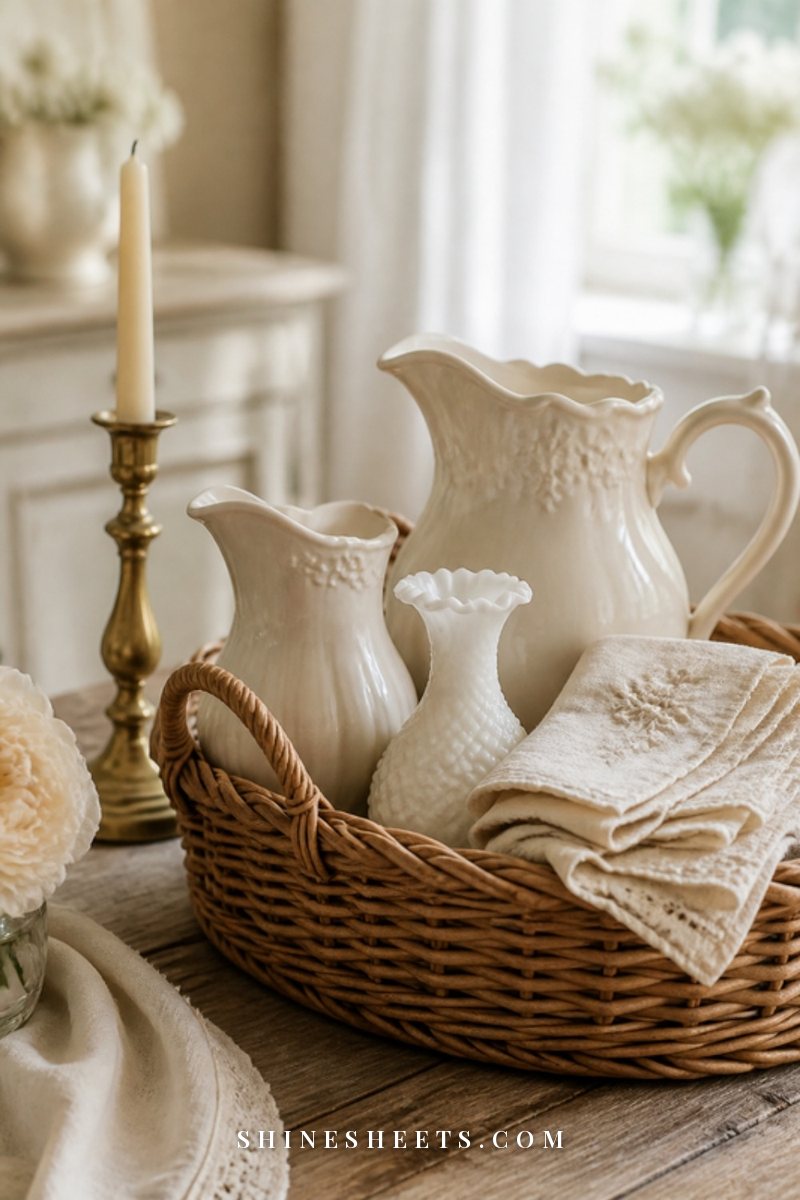
Every hotspot can be fixed with the same five steps. Once you know the formula, you can use it anywhere, including spots that are not on the list above.
- Clear it completely. Take everything off the surface and put it in a box or basket. Wipe the surface down. Seeing it empty resets your eyes.
- Ask what lands here and why. Sort what you removed into little groups (mail, clothes, cups, beauty bits). Each group tells you a story: what you need near this spot and what is just passing through.
- Give each item a nearby home. Things that belong here get a tray, a hook, a basket or a wall pocket right at the hotspot. Things that do not belong here go back to their real home, and if they do not have one, give them one within a few steps.
- Add one small rule. Something short and easy to remember, like "nothing stays here overnight" or "only three things on this table".
- Close it with a 5-minute evening reset. The hotspot gets a quick reset every evening before it can grow into a pile again.
The magic is in step three. A home that is close to where the item lands beats a "perfect" home that is two rooms away. Your future tired self will choose the easy option every time, so make the easy option the tidy one.
8 Common Clutter Hotspots and How To Fix Each One
Here is how the formula looks for each of the eight most common hotspots. Take what fits your home and leave the rest.
1. The Entryway
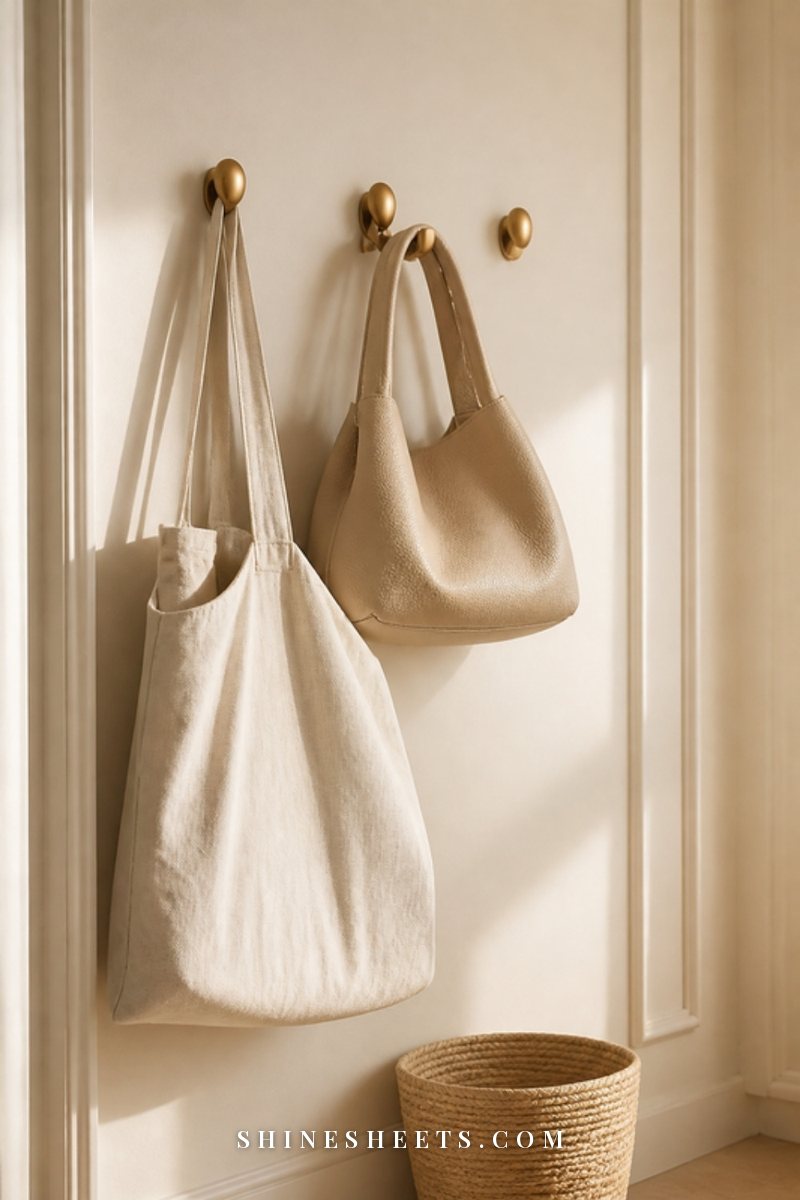
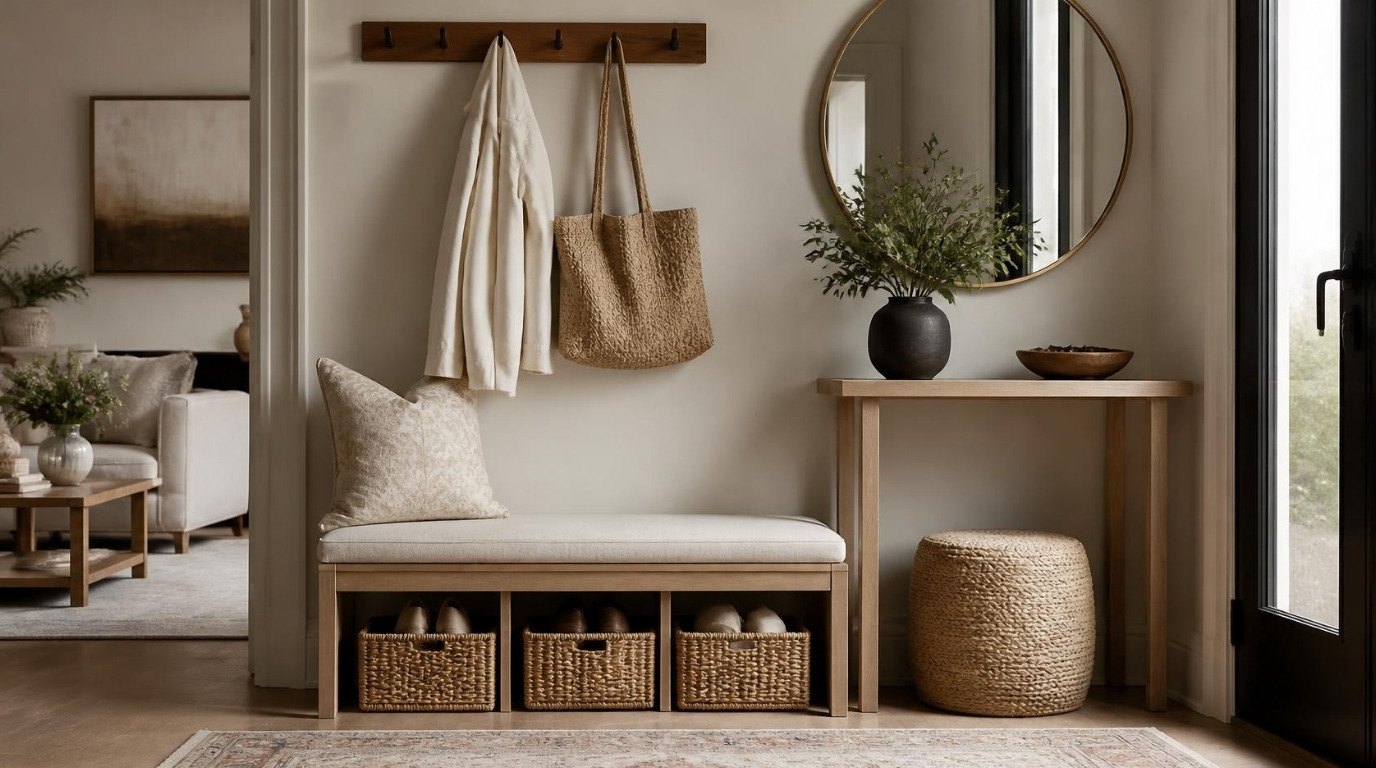
The entryway is where your whole day enters the house, so it collects the most. The goal is to give everything a landing spot within arm's reach of the door.
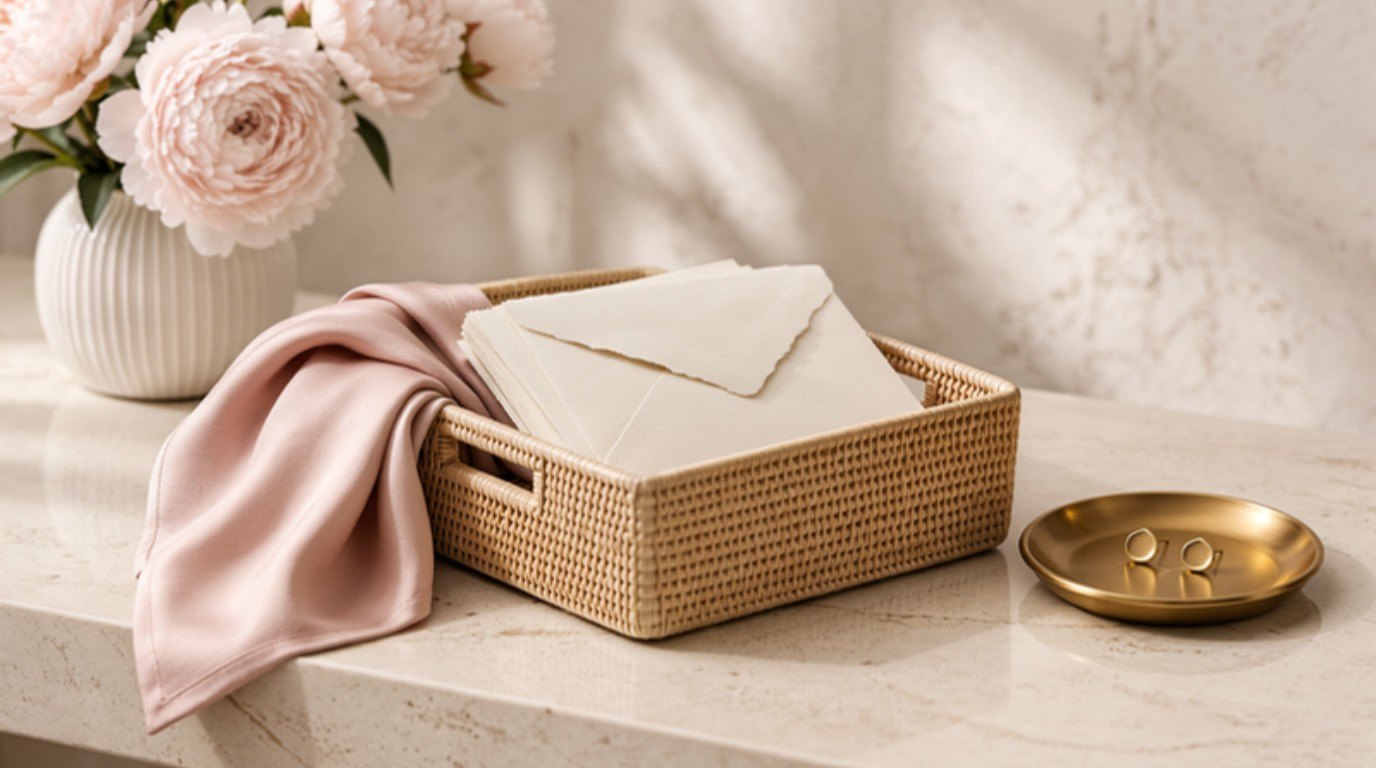
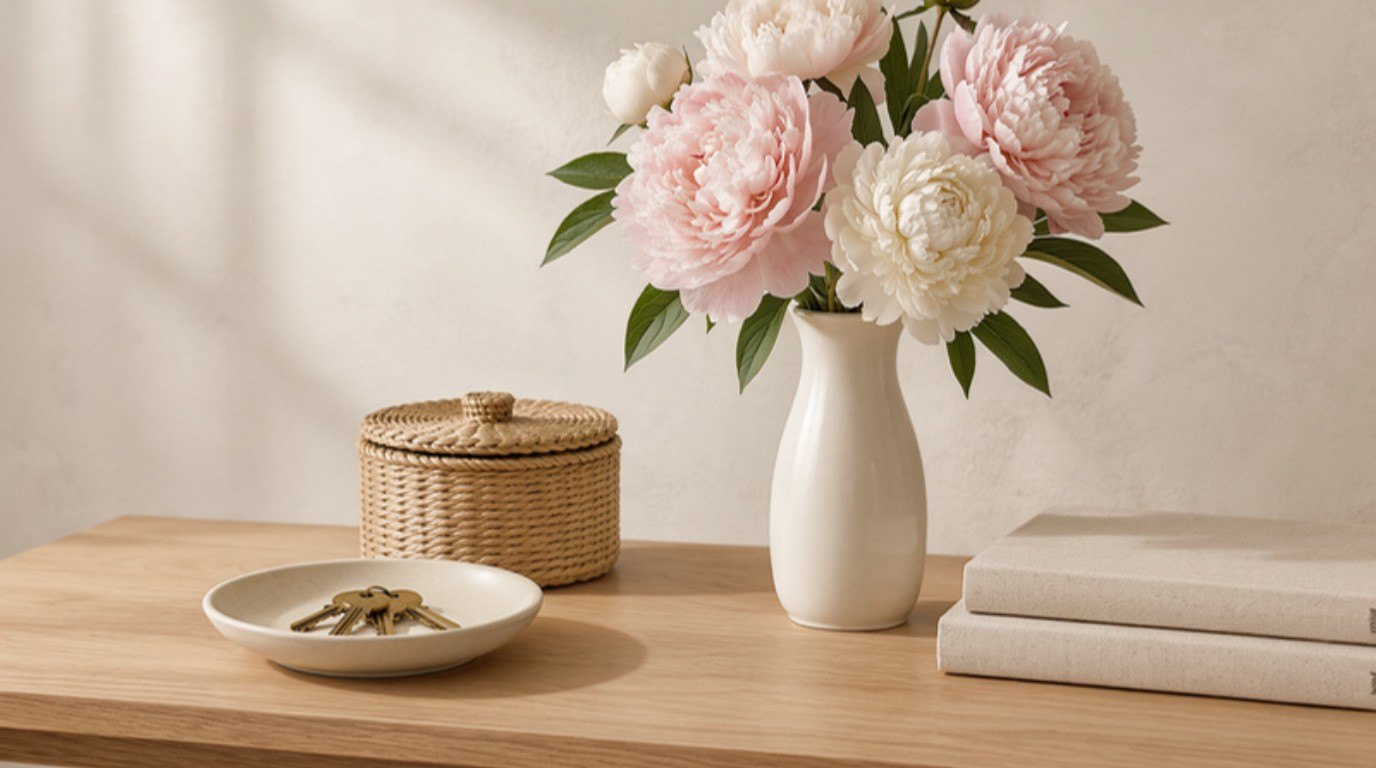
- Keys and small things: a cream ceramic catch-all tray on a console, shelf or even a wall-mounted ledge.
- Bags, coats and scarves: removable white wall hooks at shoulder height. They are renter-friendly and leave walls clean when you move.
- Shoes: a basket or a slim rack, with a limit of one or two pairs per person by the door.
- Mail: sort it right away, standing at the door. Recycle the junk immediately and put the rest in one spot.
Rule idea: "Bag on the hook, keys in the tray, shoes in the basket." If you want more layout ideas for a tiny hallway, my guide to entryway ideas for a drop zone that stays tidy goes into it in detail.
2. The Kitchen Counter
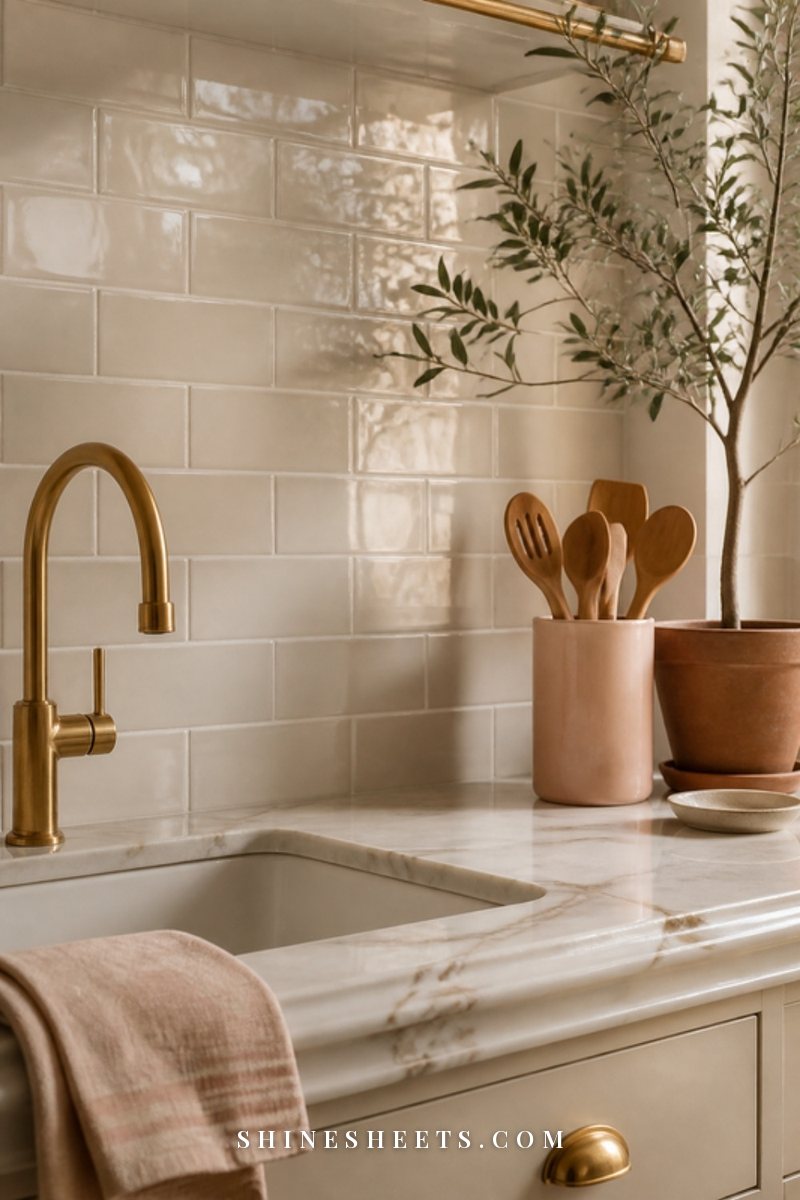
The kitchen counter is the busiest surface in most homes, which is why it attracts things that have nothing to do with cooking. Mail, sunglasses, chargers, a hair clip, a stack of receipts.
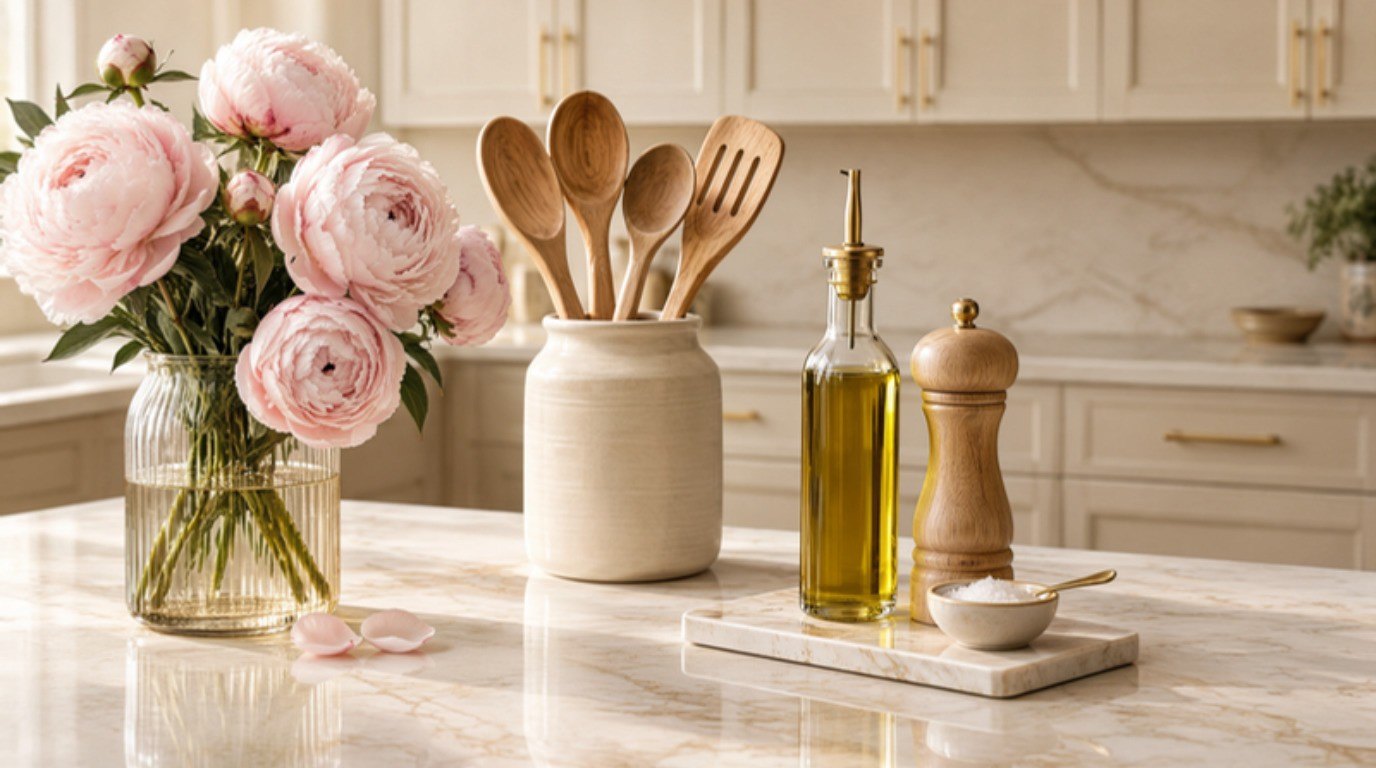
Start by deciding what truly belongs on the counter. For most kitchens that is a few daily-use items: the kettle or coffee maker, a utensil holder, a cutting board and maybe a fruit bowl. Everything else gets a cabinet, a drawer or another room.
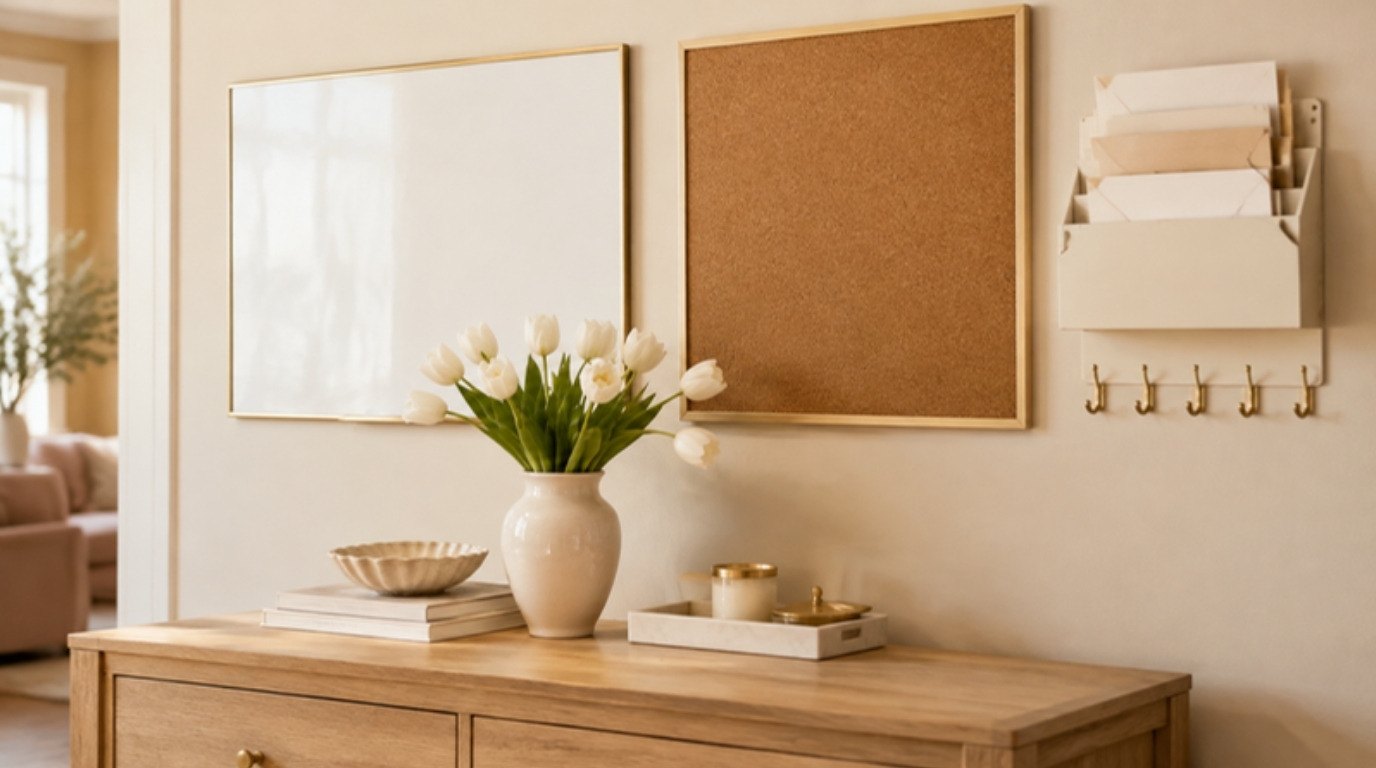
Then create one small "landing zone" for the non-kitchen things that will inevitably arrive. A beige wall-mounted mail organizer near the kitchen door keeps paper off the counter completely, and a small dish in one corner can hold the odds and ends until the evening reset.
Rule idea: "The counter is for cooking; the landing zone is for everything else, and it is empty by bedtime."
3. The Dining Table
A dining table is big, flat and usually right in the middle of the home, so it turns into a desk, a mail station and a craft table without anyone deciding it should.
Give in-progress items a basket instead of a surface. A woven storage basket with handles can hold the paperwork, the knitting or the laptop and charger, and it lifts off the table in one move. Keep it on a nearby shelf or the floor under a sideboard.
Rule idea: "The table is cleared before every meal." Even if you eat on the sofa most nights, clearing it once a day keeps it from becoming permanent storage. A simple centerpiece (a candle or a small vase) also helps, because it makes the table feel finished, and people are less likely to drop things around it.
4. The Bedroom Chair
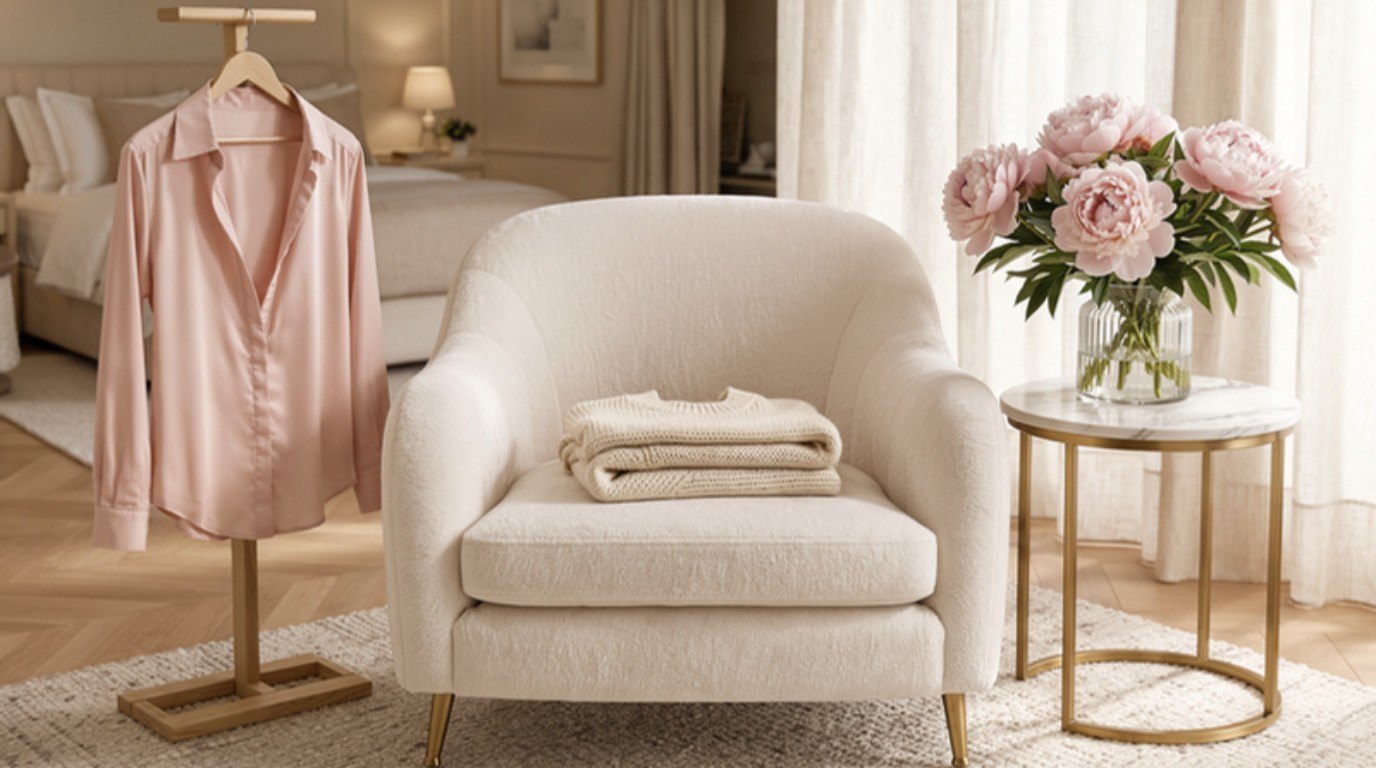
The bedroom chair is a classic. It holds clothes that are not clean enough for the closet and not dirty enough for the laundry, plus the bag from yesterday and the sweater you might wear tomorrow.
The fix is to give those worn-once clothes a real home. A couple of hooks on the back of the door, a slim rack or a lidded basket all work. Then add a limit: hang no more than three or four items, and anything beyond that gets a decision (wash it or put it away).
If this one is your main battle, my sister guide on the clothes chair and what to do instead goes deeper into why it happens and how to break the habit gently.
5. The Nightstand
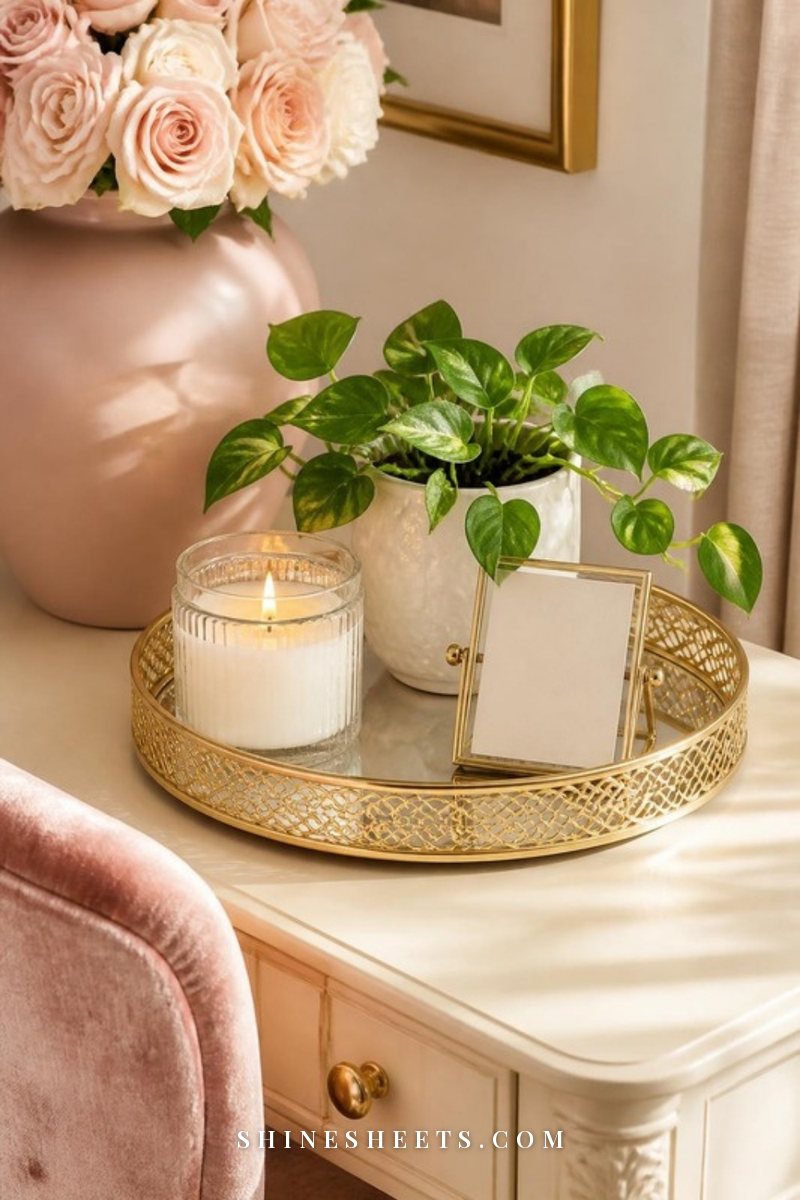
The nightstand is the last stop of the day, so everything you touched in the evening ends up there: the mug, the book, the hand cream, hair ties, a receipt from your pocket, the glasses.
Decide what earns a spot on top. For most people that is a lamp, one book, a glass of water and maybe a candle. Corral the small daily bits on a small tray with gold accents so they look intentional, and put everything else in the drawer.
Rule idea: "Cups go back to the kitchen every morning." That one habit alone stops the nightstand from turning into a little café. A calm nightstand also makes bedtime feel softer, which matters a lot to me as someone who sometimes takes the day's anxiety to bed.
6. The Bathroom Counter
Bathroom counters fill up with products used once a day and then simply left out. Over time, empties, samples and backups join them.
Keep out only what you use every single day, ideally on a tray so you can lift everything at once and wipe the counter. Store the rest in a drawer, a cabinet or a caddy under the sink. Go through the counter once a month and toss empties and expired products.
Rule idea: "If I did not use it today, it goes in the cabinet." For hair tools, let them cool completely and store them in a heat-safe holder or drawer, never wrapped tightly while still warm.
7. The Coffee Table
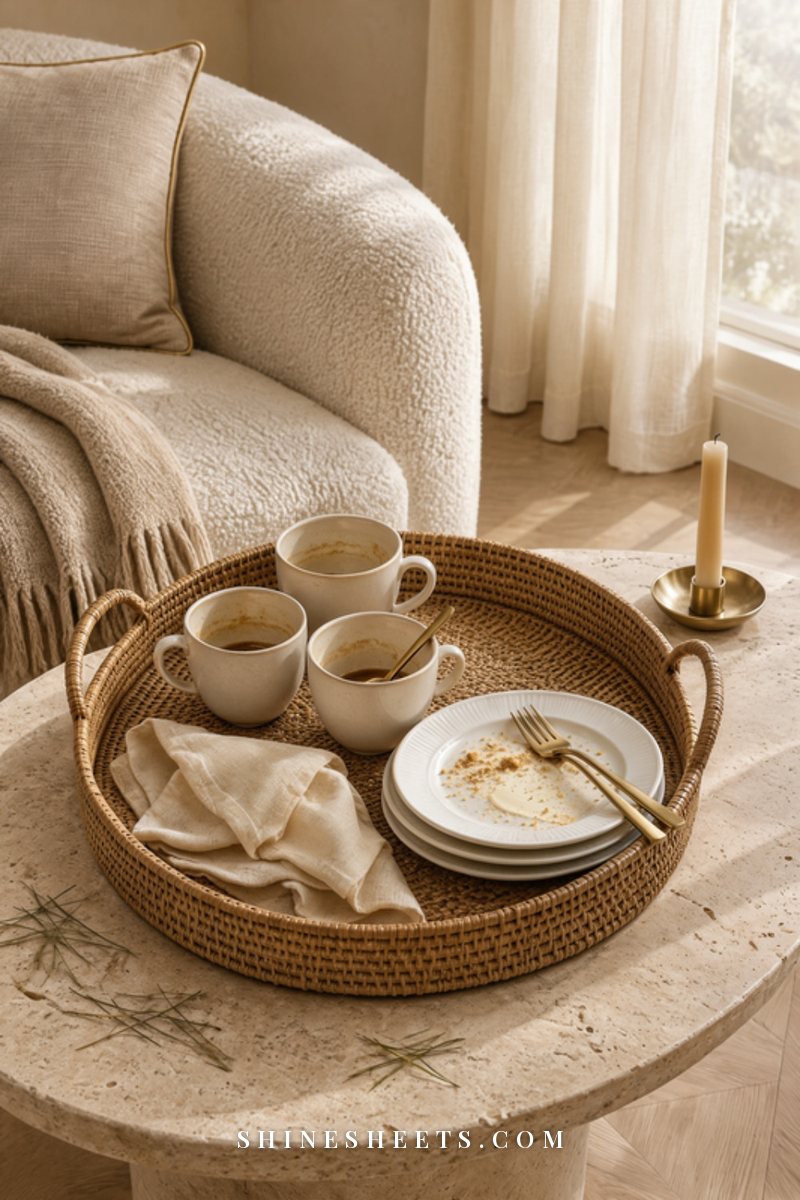
The coffee table belongs to everyone, which means nobody feels responsible for it. Cups, remotes, blankets, magazines, chargers and the occasional wrapper all gather here.
Give the essentials a tray (remotes, coasters and a candle), add a basket nearby for throws, and keep a small spot for one or two books or magazines. The rest goes back to its room in the evening reset.
Rule idea: "Only the tray and one stack live here." It also helps to keep the table slightly decorated. A tray with a candle tells everyone that this surface has a look, and people naturally keep it that way.
8. The Home Office Desk
A desk often holds unfinished tasks as physical reminders: papers to sign, notebooks to go through, mugs from three meetings ago. The trouble is that a full desk makes it harder to focus on the one thing you are actually doing.
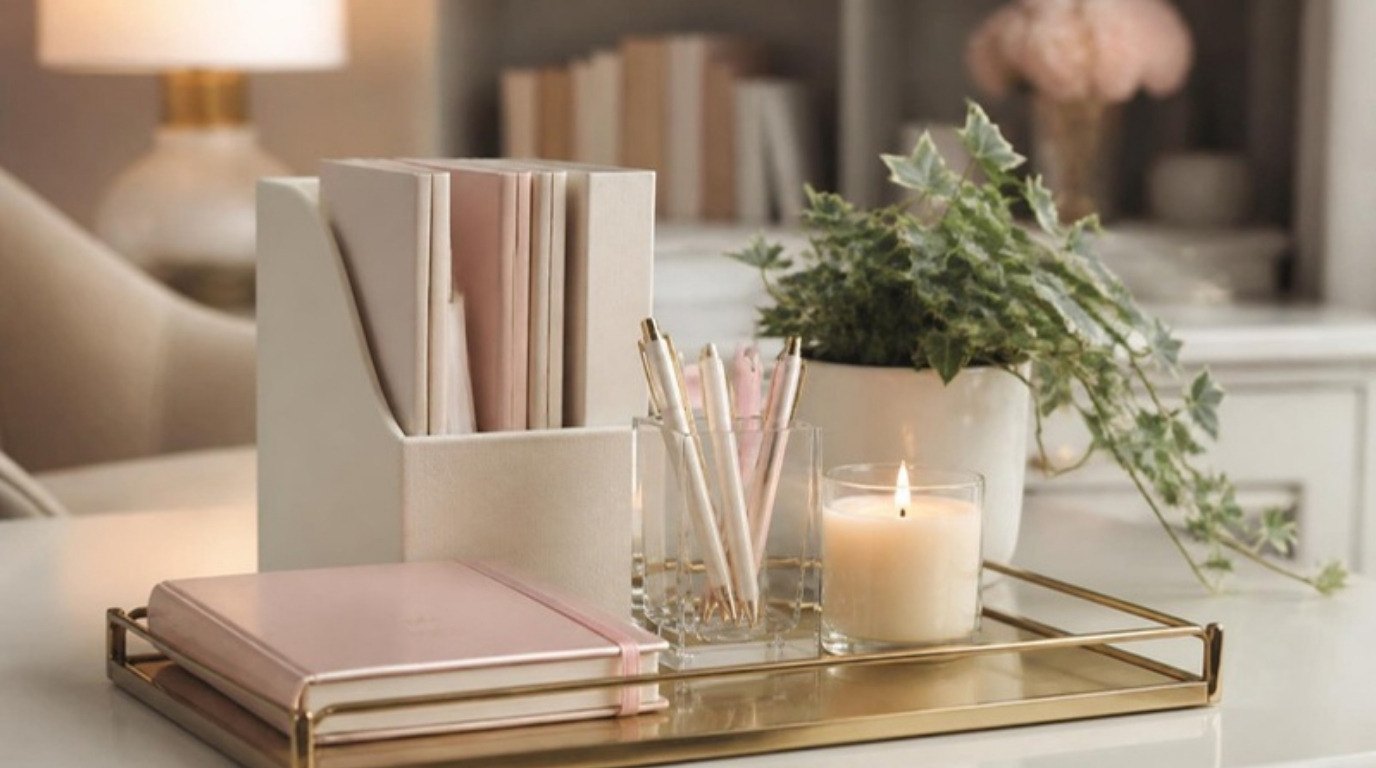
Give paper a single landing spot, like one inbox tray, and process it once a week. Clip cables to the back of the desk. Keep only what you need for today on the surface and store the rest in a drawer or on a shelf.
Rule idea: "The desk ends the day empty except for tomorrow's first task." Leaving one note or one notebook open on the clear desk makes starting the next morning so much easier.
The 5-Minute Evening Reset
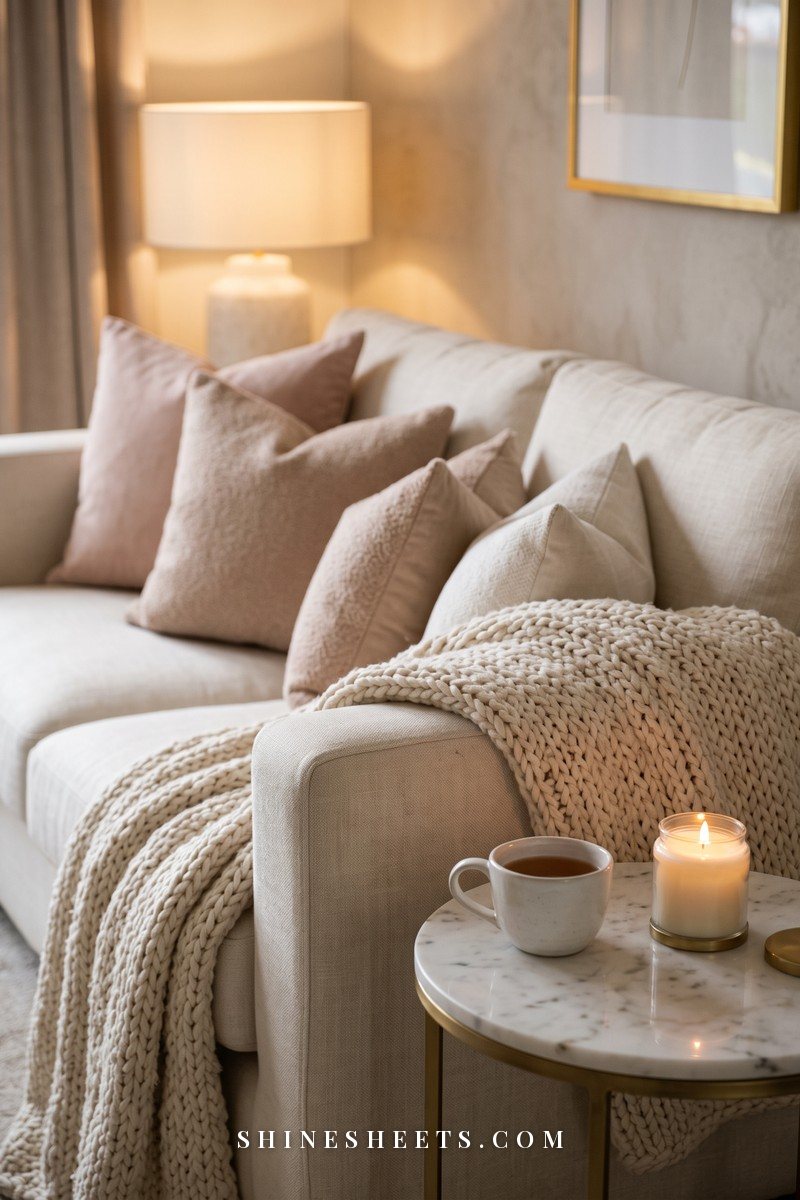
The evening reset is what keeps the fixes working. It is not cleaning. It is a short, gentle sweep of your hotspots to send things back to their homes before they can turn into piles.
- Set a timer for five minutes. A short, fixed time makes it feel easy to start.
- Grab a basket and walk your hotspots in the same order every night.
- Collect everything that does not belong and drop each item back in its room as you pass.
- Reset each surface to its "finished" look: the tray, the candle, the one stack.
- Stop when the timer ends, even if you are not done. Tomorrow's reset will catch the rest.
I like to light a candle, put the kettle on and do the reset while the water heats. By the time the tea is ready, the house looks calm again and I can sit down without the quiet nag of a messy counter. For more small daily habits like this, my guide on simple habits that help you keep a clean house fits beautifully alongside it, and a weekly cleaning schedule handles the deeper jobs so the reset can stay short.
Making It Work With Everyone at Home (Without Nagging)
If you live with other people, hotspots are a shared project, and nagging rarely works. What does work is making the tidy option the easiest one for everyone.
- Talk about the spot, not the person. "The entry table gets so full by Wednesday, can we figure out a better setup?" feels very different from "You always leave your stuff there."
- Ask what they need there. If someone always drops their gym bag by the door, give the gym bag a hook by the door.
- Give everyone their own spot. A hook, a tray or a basket per person makes it clear what belongs where.
- Agree on one or two shared rules, like "nothing on the dining table overnight", instead of a long list.
- Never toss someone else's things. Put stray items in their basket or on their spot, and let them decide.
- Do the reset together sometimes. Five minutes with music on feels more like a little ritual than a chore.
A small script for a calm conversation: "I have noticed a few spots in the house always get cluttered, and it stresses me out more than I would like. Can we try a hook and basket setup for two weeks and see if it helps?" Short, specific and open to their ideas.
Why You Shouldn't Buy Organizers First
It is so tempting to start with a shopping cart full of pretty baskets. Please wait a little. Organizers bought before you clear a hotspot often end up holding things you do not need, or they turn out to be the wrong size, and then they become clutter themselves.
Follow the formula first. Clear the spot, sort what lands there and live with a rough setup for a week, using bowls, boxes or baskets you already own. Once you know exactly what needs a home and how much space it takes, buy only the one or two pieces that solve it. If your home feels overwhelming right now, my guide on how to clean a messy house fast can help you get to a clean starting point before you change anything.
When you do buy, choose pieces that fit your style, because you will keep using something you find pretty. Cream ceramics, natural woven baskets, clear or white hooks and a touch of gold all blend into most homes and look calm even when they are full.
Final Thoughts
Clutter hotspots are not proof that you are messy. They are simply the spots where your home is asking for a better system. Clear one, give its things a nearby home, add one small rule and protect it with a five-minute reset.
Start with your top hotspot this week and let the rest wait their turn. One calm surface at a time is how a whole home starts to feel lighter, and you deserve to walk into a space that feels like a deep breath.