You don't have to love your body to treat it well. That one idea takes a surprising amount of pressure off, because most of us have been told there are only two options: dislike how you look, or work hard until you adore it. There's a calmer middle ground, and it's where a lot of real, everyday peace lives.
That middle ground is called body neutrality. It shifts the focus away from how your body looks and toward what it does, how it feels and how you can care for it today, whatever mood you woke up in. No affirmations you don't believe, no forced cheerfulness in front of the mirror.
In this guide I'll walk you through what body neutrality means, how it differs from body positivity, why it can feel more honest, 10 small daily practices, a list of judgment-to-neutral phrase swaps, and a reframe table you can screenshot for the harder days.
Take whatever pieces feel useful and leave the rest. Neutral is allowed to be slow.
What Body Neutrality Actually Means

Body neutrality is the practice of respecting your body for what it does, rather than needing to love (or even like) how it looks. Your body is the place you live. It carries you to work, hugs the people you care about, digests your lunch, heals small cuts without being asked and lets you smell rain on the pavement. That's worth respect on any day, including the days you feel nothing warm toward your reflection.
The key word is neutral. Not negative, not glowing, just steady. A neutral thought sounds like "this is my body, and it's getting me through today." It doesn't argue with you, and it doesn't demand that you feel a certain way first.
It also means your appearance becomes one small part of your life rather than the headline. You still get to enjoy a nice outfit or a good hair day. Those things just stop deciding whether the whole day counts.
Body Neutrality vs Body Positivity
Both ideas come from a kind place, and you don't have to pick a team. They simply ask different things of you:
- Body positivity invites you to love and celebrate your body as it is. For many people it's healing and joyful.
- Body neutrality invites you to stop needing an opinion about your body at all, and to focus on function, comfort and care.
If you'd like the warmer, love-focused side of this conversation, my guide on gentle ways to love your body is a lovely companion. This article is for the days when love feels out of reach and you'd simply like to stop fighting with yourself.
Many people move between the two. You might feel positive on a sunny Saturday and neutral on a tired Tuesday. Both count as progress.
Why Body Neutrality Can Feel Easier and More Honest
Here's a small honest admission: positive affirmations sometimes make my anxious brain argue back. If I tell myself "I love everything about my body" on a day I don't, a little voice lists every reason that's not true. A neutral sentence, on the other hand, slips past that voice, because there's nothing to argue with.
Body neutrality can feel easier because:
- It's believable. "My legs walked me to the bus" is simply true.
- It doesn't depend on your mood. You can practice it on a grumpy day as well as a good one.
- It clears mental space. Less time spent evaluating your reflection means more time for friends, hobbies, rest and the things you actually care about.
- It's kinder to changing bodies. Bodies change with age, illness, hormones, stress and seasons of life. Neutral respect doesn't need to be renegotiated every time.
It also pairs beautifully with self-compassion, which is less about feeling amazing and more about treating yourself the way you'd treat a friend who's having a hard day.
10 Daily Body Neutrality Practices
None of these needs more than a few minutes. Pick two or three to start, try them for a week, and add more only if you'd like to. There's no score.
1. Soften Your Body Language
Notice how you hold yourself when body thoughts show up. Many of us tug at clothes, cross our arms over our stomach or hunch to take up less space. Once a day, try a neutral reset: drop your shoulders away from your ears, unclench your jaw, let your hands rest open on your lap and take three slow breaths.
You're not posing or performing confidence. You're just letting your body stop bracing. If it helps, set a gentle phone reminder for mid-afternoon with one word on it, like "shoulders."
2. Thank Your Body for One Task
Pick one thing your body did today and name it, quietly or in writing. "Thank you, hands, for making that cup of tea." "Thank you, lungs, for that long walk up the stairs." It can feel a little silly at first (I won't pretend otherwise), but it trains your attention toward function.
A simple place to collect these is a guided reflection journal with short daily prompts. One line a day is plenty. After a month, you'll have a page full of quiet evidence that your body has been on your side all along.
3. Check the Mirror a Little Less
Mirrors are useful for practical things: checking for lipstick on your teeth, fixing a collar, making sure your shirt isn't inside out. The trouble starts when a quick glance turns into a long inspection.
Try this for one week: use the mirror for a task, then step away. If you catch yourself scanning or picking apart details, say "task done" in your head and leave the room. You might also move a full-length mirror somewhere less central, like the inside of a wardrobe door, so it isn't the first thing you see every morning.
4. Wear Clothes That Feel Good Today
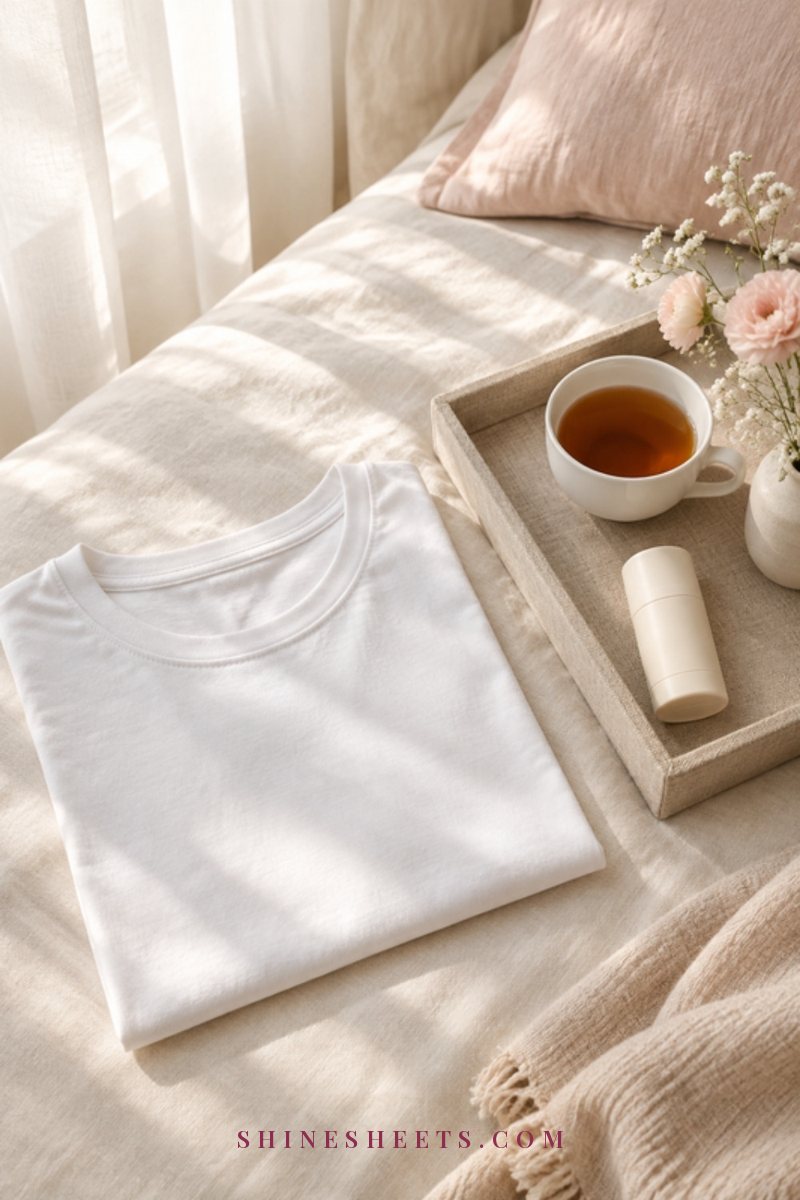
Clothes that pinch, dig in or need constant adjusting keep your attention glued to your body all day. Clothes that feel soft and comfortable let you forget about your body and get on with living. That's the whole goal.
Go through your wardrobe once and set aside anything that only feels good on rare "perfect" days. Keep the pieces that work on an ordinary Wednesday. A soft cream lounge set in a breathable knit is a pick for evenings and lazy weekends; look for stretchy waistbands, smooth seams and a fabric you'd happily nap in.
You're dressing the body you have this morning, not a version of it from the past or the future. That's a quietly powerful shift.
5. Move for How It Feels

Movement doesn't need to be a project to fix anything. Try asking a different question before you move: "How do I want to feel afterward?" Looser, calmer, more awake, less stiff from sitting? Then choose movement that matches.
- For stiffness: five minutes of slow stretching on the floor.
- For a foggy head: a ten-minute walk outside, no headphones if you can.
- For a heavy mood: one song to dance to in the kitchen.
- For stress: gentle yoga with long exhales.
A pastel yoga mat left rolled out in a corner makes gentle movement feel like an invitation instead of a chore. Look for one with a non-slip surface and enough cushioning for your knees.
6. Mute the Comparison Accounts
Your feed shapes your thoughts more than it seems. If certain accounts leave you picking at your appearance afterward, you're allowed to mute or unfollow them, even if the person behind them is lovely.
Do a ten-minute feed tidy once this week. Go through it slowly, and for each account ask, "Do I feel calmer or more critical after seeing this?" Mute anything that leans critical. Then follow a few accounts about things that have nothing to do with bodies at all: ceramics, gardening, old films, interior design, bookshops. Your brain needs other things to look at.
7. Swap Harsh Self-Talk for Neutral Words
You don't have to jump from a cruel thought straight to a shiny compliment. Aim for the step in between: a plain, factual sentence. "I hate how I look in this" becomes "This outfit isn't working for me today, so I'll change." The thought loses its sting because it's about the outfit and the day, not your worth.
There's a full list of phrase swaps further down, so you can borrow the exact words while the habit is new.
8. Eat and Rest Without Judgment

Many of us narrate our meals and our rest with little judgments, or hear them from others. Body neutrality invites you to let eating and resting simply be things your body needs, without a running list of judgments attached.
When you eat, try just noticing: warm or cool, crunchy or soft, satisfying or not quite. When you rest, let it be rest, not something you have to earn first. If someone else remarks on your plate or your nap, a calm "I'm happy with it, thanks" and a change of subject is plenty.
An evening herbal tea sampler can make this feel like a small ritual: pick a flavor based on how you feel, sit down, and let your body have ten quiet minutes. For deeper rest, a blush silk sleep mask is a pick for light sleepers; look for a soft, wide band that doesn't press on your eyes.
9. Notice Your Senses
Your senses are a lovely, neutral doorway back into your body. They're about experiencing, not evaluating. A few times a day, pause and name one thing for each sense: the warmth of a mug, the smell of clean laundry, birdsong outside, the soft heaviness of a blanket, the taste of your tea.
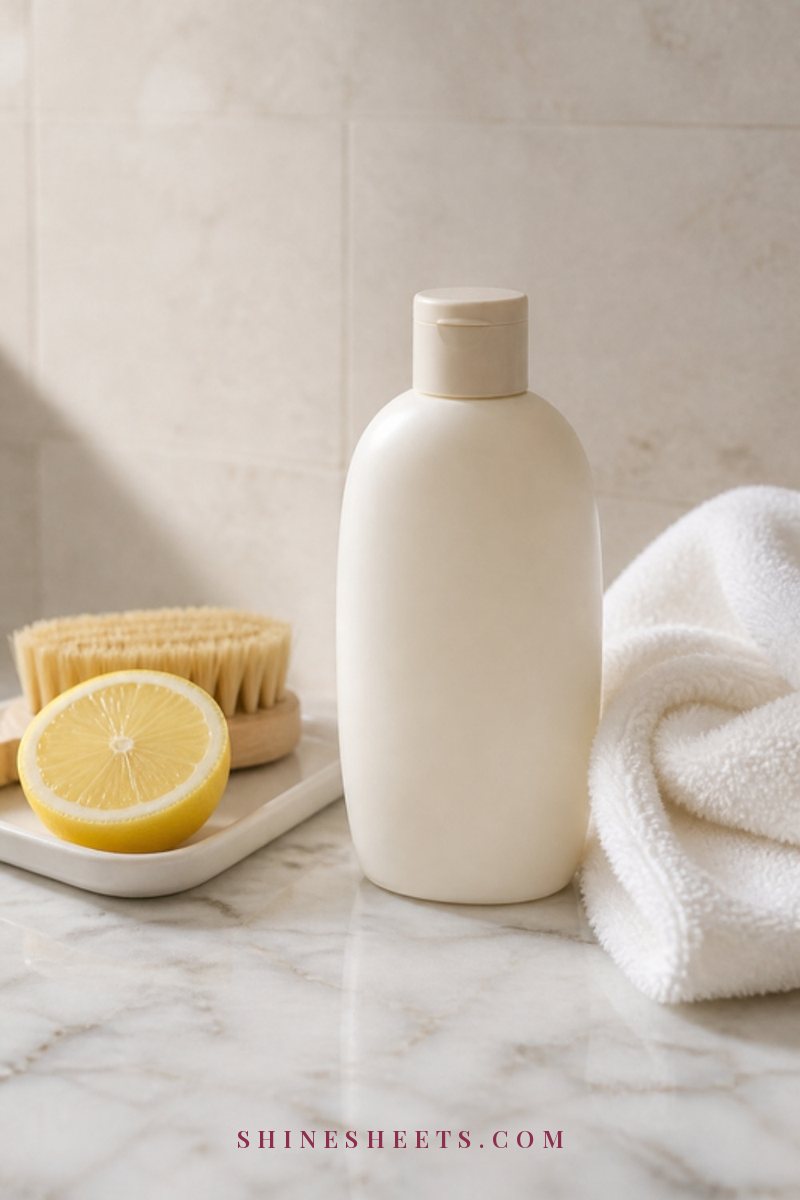
After a shower, try applying a lavender body lotion slowly and with attention on the feeling rather than inspection. Notice the scent, the temperature, the texture. Look for a gentle, fragrance-light formula if your skin is sensitive. This is care, not assessment, and your hands will learn the difference.
If your body sometimes feels like an unsafe or uncomfortable place to be, my guide on gentle grounding practices to feel safe in your body goes deeper into this sense-based approach.
10. Let Compliments Be About More Than Looks
This one works in both directions. When you compliment others, try reaching past appearance: "You always make people feel welcome," "That was such a thoughtful idea," "I love how you tell stories." When people compliment you, you can receive a looks-based compliment with a simple "Thank you," without deflecting or inspecting yourself afterward.
Over time, the people around you start noticing more of each other, and appearance becomes one small, pleasant detail instead of the main event.
Judgment-to-Neutral Phrase Swaps
Keep these handy for the moments a harsh thought pops up. The goal isn't to feel wonderful, just to soften the edges:
- "I look awful today" → "I'm having a low day, and that's allowed."
- "I hate my arms" → "My arms carried my groceries and hugged my friend."
- "I can't wear that" → "That doesn't feel comfortable today. I'll wear something that does."
- "Everyone is looking at me" → "Most people are busy thinking about themselves."
- "I need to fix my body" → "I can care for my body without fixing it."
- "I don't deserve rest" → "My body is asking for rest, and I can listen."
- "I wish I looked like her" → "Comparing isn't helping me. I'll look at something else."
- "I ruined today" → "Nothing is ruined. I can do one kind thing now."
If many of these thoughts trace back to a deeper sense that you're never quite enough, my article on feeling not good enough is a gentle place to keep exploring.
The Body Neutrality Reframe Table

This is the heart of the practice. When a critical thought shows up, move across the row: reframe it, remember one thing your body did, then do one small kind action. Screenshot it and keep it for the days when your own words feel hard to find.
| Critical thought | Neutral reframe | What my body did today | Kind action |
|---|---|---|---|
| "I look so tired." | "I am tired. My body is telling me something." | Got me through a long day | Go to bed 20 minutes earlier |
| "My skin looks terrible." | "My skin is having a sensitive day." | Protected me from the cold wind | Wash gently and moisturize |
| "I hate how I look in photos." | "Photos catch one second, not who I am." | Laughed with friends | Look at the memory, not the details |
| "These clothes look wrong on me." | "These clothes don't suit today's body." | Walked me to every errand | Change into something soft |
| "I'm not as strong as I was before." | "My body is in a different season." | Climbed the stairs at home | Stretch for five minutes |
| "I don't want to be seen today." | "I'd like some privacy, and that's okay." | Kept breathing through a stressful meeting | Take a quiet walk alone |
| "Why can't I just like my body?" | "I don't have to like it to respect it." | Healed a small scratch on my hand | Make a warm cup of tea |
You can also use the table as a short evening practice. Pick one critical thought from the day, write a row for it in your journal after your tea, and close the notebook. One row is enough.
A Gentle Body Neutrality Day
If you like having a loose shape to follow, here's how the practices can fit into an ordinary day without adding much to your plate:
- Morning: Before you get up, notice one sensation (the warm duvet, cool air on your face). Dress in something that feels good today. Use the mirror for the task, then leave.
- Midday: Do one shoulder-drop reset. Eat lunch away from your screen and just notice how it tastes.
- Afternoon: Move for how you'd like to feel, even if it's only a short walk around the block.
- Evening: Write one thank-you line to your body, or one row of the reframe table. Apply lotion slowly. Rest without needing to earn it.
Some days you'll do all of it. Some days you'll forget completely. Neither day means anything about you. You just pick it up again tomorrow.
When Body Thoughts Feel Too Loud
Body neutrality is a gentle everyday practice, not a cure for everything. If thoughts about your body feel constant, distressing, or start to shape what you eat, wear or whether you leave the house, please consider talking to a therapist or your doctor. That isn't a failure. It's simply getting the right kind of support, the same way you'd see someone for a sore knee that won't settle.
A therapist who specializes in body image can help you untangle where these thoughts come from and give you tools tailored to you. You deserve that kind of care.
And if you're slowly working toward simply feeling more at ease day to day, my guide on how to feel comfortable in your own skin pairs nicely with everything here.
Final Thoughts
Your body doesn't need your approval to keep taking care of you. It breathes while you sleep, steadies you when you trip and carries you through every single day, good ones and hard ones alike.
Body neutrality is just a way of returning the favor quietly. You don't have to love every part of yourself. You only have to stop treating your body like a problem to solve, one small, neutral moment at a time. That's more than enough for today.