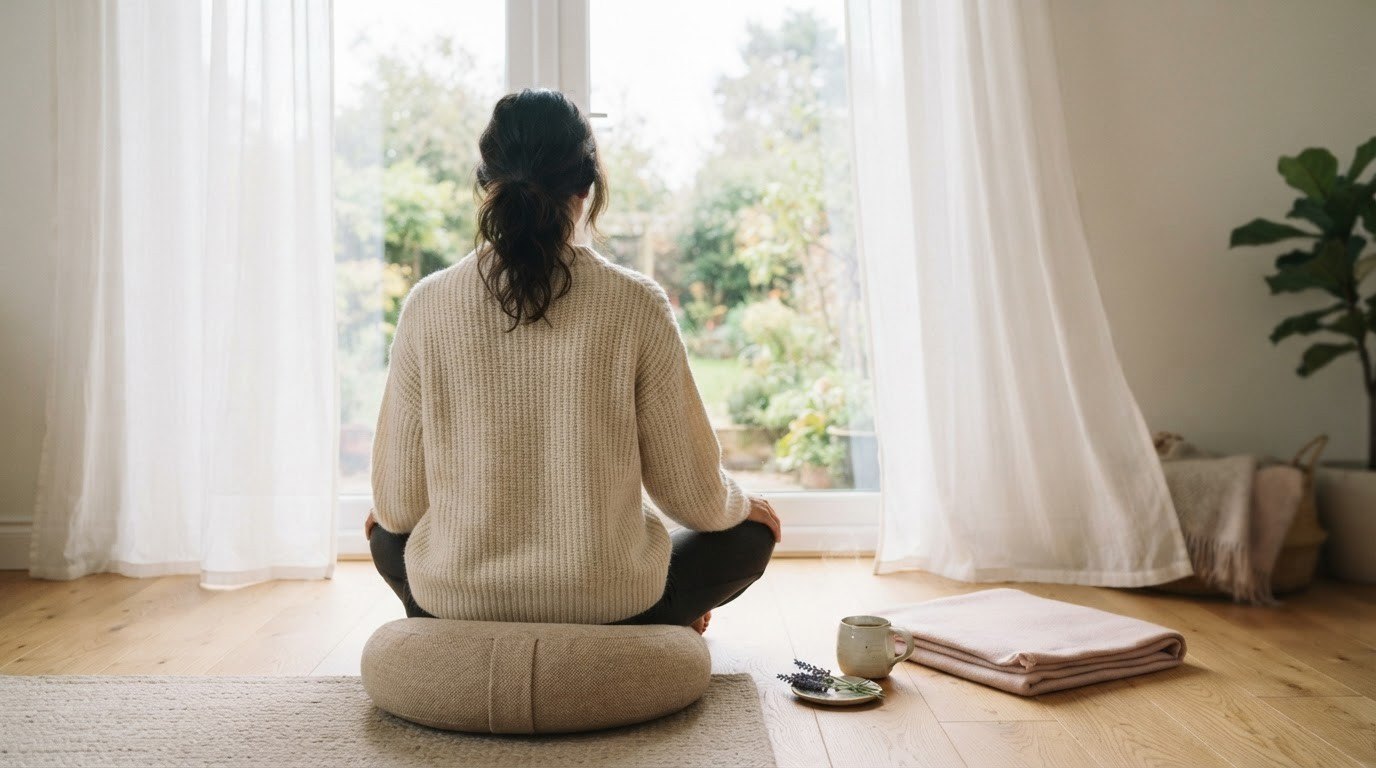
Feeling safe in your body isn't about being calm all the time. It's about your body learning, again and again, that a racing heart or a tight chest is information, not an emergency. Safety is something you can practice in small, physical ways, and the smaller the practice, the more likely it is to stick.
A lot of us live from the neck up. We think, plan, worry and check our phones, and the body just carries us around like a tired assistant nobody thanks. Then one day it starts sending louder signals (a clenched jaw, shallow breathing, a stomach that never quite unknots), and it feels like the body has turned against us. It hasn't. It's asking for attention in the only language it has.
This guide is all about how to feel safe in your body with gentle grounding practices you can do at your desk, in bed or on a walk. You'll find what body safety actually means, why we disconnect in the first place, 12 simple practices, a "safe body menu" table with 2, 5 and 15-minute options for real-life situations, and a tiny daily routine to tie it all together.
One kind note before we start: this is not therapy, and it's not a replacement for it. Think of it as a set of soft tools for ordinary stressful days, the kind you can reach for in the moment.
What Feeling Safe in Your Body Actually Means
When people talk about feeling safe in your body, they usually mean a nervous system that can settle. Your body is always scanning for danger in the background, without asking your permission. When it decides things are fine, your breathing slows, your muscles soften, digestion works and you can think clearly. When it decides something is wrong, it speeds everything up to protect you.
That protective mode is useful when you actually need it. The trouble starts when it stays switched on for weeks because of deadlines, conflict, constant notifications or old worries that never had a place to land. Your body stays braced, and bracing becomes your normal.
Feeling safe in your body looks less dramatic than you might expect. It often feels like:
- Noticing a sensation (tight shoulders, a fluttery stomach) without immediately panicking about it.
- Being able to sit still for a minute without feeling restless or trapped.
- Recognizing what you need, whether that's water, warmth, rest or space, and giving it to yourself.
- Coming back to calm a little faster after something stressful happens.
- Feeling at home in your own skin, even on a day you don't love how you look.
None of this means you'll never feel anxious again. It means anxiety becomes a visitor instead of the person running the house.
Why We Disconnect From Our Bodies
Disconnecting is usually a clever survival move, not a flaw. If paying attention to your body felt uncomfortable or overwhelming, tuning it out made sense. Here are some of the most common reasons it happens:
- Chronic stress. When you're always rushing, your body becomes something to push through, not listen to.
- Anxiety. Physical symptoms can feel scary, so you start avoiding them, which makes them feel even scarier when they show up.
- Busyness and screens. Hours of looking at a screen pull your attention into your head and away from your senses.
- Ignoring basic needs. Skipping meals, holding off on the bathroom, staying up too late. Small things that teach your body its signals don't matter.
- Harsh self-talk about your body. It's hard to feel safe somewhere you're constantly criticizing.
- Painful past experiences. For some people, disconnection started as protection after something genuinely hard. That deserves professional, gentle support (more on that below).
Here's my small honest admission: I'm prone to anxiety, and for a long time my strategy was to ignore my body until it got loud. Learning to check in while things were still quiet has done more for me than any big, dramatic reset.
12 Gentle Grounding Practices To Feel Safe in Your Body
You don't need all twelve. Read through, notice which ones make your shoulders drop a little just reading about them, and start there. Each one takes a few minutes at most, and you can do most of them without anyone noticing.
1. Orient to the Room

Orienting is one of the simplest ways to tell your body "we're okay right now." Slowly turn your head and let your eyes land on things around you. Don't rush it. Notice a color you like, the shape of a lamp, light on the wall, a plant.
Try this: name five things you see, out loud or in your head, and let your gaze rest on each for a few seconds. Let your head move with your eyes, gently, side to side. Many people find they take a spontaneous deep breath or a yawn halfway through. That's a good sign.
When to use it: walking into a new place, after a stressful email, or any time you feel stuck in your own thoughts.
2. Lengthen Your Exhale
You don't need a complicated technique. Making your exhale a little longer than your inhale is one of the most reliable ways to signal calm. Breathe in through your nose for a count of four and out through softly pursed lips for a count of six. Repeat five to eight times.
If counting makes you feel more tense (it does for some people), skip the numbers and simply sigh out slowly, like you're letting air out of a balloon. For more variations, my guide to breathing exercises for calm walks through box breathing and a few softer techniques.
3. Feel Your Feet on the Floor
Press your feet into the floor and notice the contact. Is the floor cool or warm? Do you feel more weight on your heels or toes? Rock forward and back very slightly, then side to side, and let yourself settle in the middle.
This works sitting or standing, and it's quietly brilliant in meetings, queues and waiting rooms. If you're at home, try it barefoot on a rug or wooden floor. Thirty seconds is enough to bring your attention down from your racing head into something solid.
4. Hand on Heart or a Self-Hug
Place one hand on your chest and the other on your belly, or cross your arms and hold your upper arms in a gentle hug. Feel the warmth and the weight of your own hands. Breathe slowly into the place where your hands are.
It may feel a little silly the first few times, and that's fine. Supportive touch is one of the oldest calming signals there is, and you can give it to yourself. Add a quiet phrase if you like, something like "I'm here, I've got you." If kind words to yourself feel awkward, keep it simple. Even "this is hard, and I'm okay" counts.
5. Get Warm and Comfortable

Temperature is an underrated grounding tool. A body that's cold and tense rarely feels safe, while warmth tends to soften muscles and slow everything down. This is one of the easiest practices because it doesn't ask you to do anything clever.
- Wrap your hands around a warm mug of tea and focus on the heat for a full minute. Evening tea is my own favorite signal that the day is winding down.
- Put on something soft. A soft fleece robe after a shower feels like a hug you didn't have to ask for.
- Rest a heated shoulder wrap across your neck and shoulders for 10–15 minutes, where many of us hold the most tension.
- Take a warm shower and stand under the water for one minute just noticing the sensation on your skin.
A quick note: coffee sometimes perks me up and sometimes makes me jittery, so on anxious days I swap the second cup for tea. If caffeine makes your heart race, it's worth noticing that pattern too.
6. Gentle Shaking
Animals literally shake off stress after a scare, and gentle shaking can help you release some of that buzzy, restless energy. Stand with soft knees and start bouncing lightly on your heels. Let your hands, arms and shoulders loosen and shake. Keep it small and easy.
Do it for 30 seconds to two minutes, then stand still and notice how your body feels. Tingly, warmer, lighter? Put on a song you love if it helps. If you want more moves like this, my guide to somatic exercises for beginners has ten gentle ways to release tension.
7. Hum
Humming creates a gentle vibration in your chest, throat and face, and many people find it surprisingly soothing. Take a breath in, then hum on the exhale for as long as feels comfortable. Try a low, easy note rather than a high one.
Hum a song in the shower, hum while you wash the dishes, or do five slow hums before a hard conversation. It's one of the quick tricks I also mention in the vagus nerve reset exercises, and it's easy to do when you're alone in the car.
8. Walk Slowly and Notice
Mindful walking is just walking with your attention on purpose. Slow down to about half your usual pace. Feel your heel touch the ground, then the ball of your foot, then your toes. Notice the air on your face and the sounds around you.
Five minutes is enough. You can do it in your hallway, around the block or on the way to your car. Walking also gives anxious energy somewhere to go, which is why it often works when sitting still feels impossible. Along the way, look for small moments of comfort, like sun on a wall or a dog wagging its tail. I call those glimmers, and collecting them is a lovely habit for a nervous system that's used to scanning for trouble.
9. Move in a Way That Feels Safe

Movement doesn't need to be a workout to count. The goal here is to move in ways that feel good and predictable, so your body gets a clear message that it's in charge.
- Roll your shoulders slowly backward five times, then forward five times.
- Reach your arms overhead and lean gently to one side, then the other.
- Lie on your back with your knees bent and let them sway slowly side to side.
- Rest in child's pose for six slow breaths.
A thick cream yoga mat by the bed or in a quiet corner makes this easier to start, because it's already there waiting for you. Stop any movement that hurts or feels wrong. Comfort is the whole point.
10. A Body Scan Lite
A traditional body scan can feel long and intense, especially if certain areas feel uncomfortable to focus on. This lighter version takes about two minutes and keeps things easy.
- Close your eyes or soften your gaze toward the floor.
- Notice your feet, then your hands, then your face. Just those three areas.
- For each, ask: what do I feel here? Warm, cool, tingly, heavy, tight, nothing at all?
- If you find tension, breathe toward it once, without forcing it to let go.
- Finish by noticing one part of your body that feels neutral or okay.
That last step matters. Anxious minds love to zoom in on what's wrong, and finding a place that feels okay (even just your earlobes) teaches your attention a new habit.
11. Boundaries With Touch
Feeling safe in your body includes deciding who touches it, how and when. You're allowed to prefer a wave over a hug, to step back when someone stands too close, or to say "not right now" even to people you love.
A few simple scripts that stay warm:
- "I'm not a big hugger, but it's so good to see you!" (with a smile and a wave)
- "Could we sit side by side instead? I need a bit of space today."
- "I love you, I'm just feeling a bit overstimulated. Can I have a few minutes?"
Every time you honor a no and nothing bad happens, your body learns something important: it gets a say. Start with the people and situations that feel easiest, and let the harder ones come later.
12. Rest Without Guilt

A body that never gets to rest stays on guard. Rest is not a reward for finishing everything. It's how your nervous system recovers enough to handle the next thing.
Try one guilt-free rest moment a day: ten minutes lying down with your eyes closed, no phone, nothing to accomplish. Many people find that gentle pressure helps them settle, which is why a soft weighted blanket is a pick worth considering for this kind of rest (choose one around 10% of your body weight and skip it if you have breathing or circulation concerns). If resting still feels like you're doing something wrong, you'll find gentle reminders in how to stop feeling guilty for resting.
The Safe Body Menu: 2, 5 and 15-Minute Practices
This is the part I'd screenshot. When you're stressed, deciding what to do is hard, so a menu takes the thinking out of it. Find your situation, then pick the time you actually have.
| Situation | 2 minutes | 5 minutes | 15 minutes |
|---|---|---|---|
| Racing heart or sudden panic | Long exhales (in 4, out 6) | Feet on the floor + orienting | Slow walk outside, then warm tea |
| Tense shoulders after a long workday | Shoulder rolls, 5 each way | Gentle shaking + humming | Heated wrap on shoulders while lying down |
| Overthinking at night | Hand on heart and belly | Body scan lite in bed | Warm shower, soft robe, weighted blanket |
| Feeling numb or far away | Name five things you see | Hold something warm or cool and describe it | Mindful walk, noticing three glimmers |
| Overstimulated (noise, crowds, people) | Step away and close your eyes | Quiet room, dim light, slow humming | Lie on your mat with knees swaying side to side |
| Before a hard conversation | Five slow hums | Self-hug + one kind phrase | Short walk, then write down your one main point |
| Restless and can't sit still | Bounce lightly on your heels | Shake out arms and legs to a song | Gentle stretching sequence on the floor |
You'll probably find that two or three practices become your go-to. That's exactly how it should work. A small, familiar toolkit is far more useful than twelve options you never use.
How To Build a Tiny Daily Safety Habit

Grounding works best when it's practiced on ordinary days, not only during a crisis. Think of it like stretching: a little bit often keeps you flexible. Here's a simple rhythm that takes less than ten minutes in total:
- Morning (1 minute): before you check your phone, put your feet on the floor and take three long exhales.
- Midday (2 minutes): orient to the room and roll your shoulders. Set a gentle reminder if you tend to forget.
- After work (2 minutes): shake it out or hum through a song as a transition between work mode and home mode.
- Evening (5 minutes): warm tea, the body scan lite, and one sentence in your journal about how your body felt today.
Scent can become part of the routine too. Rolling a calming essential oil roller on your wrists at the same moment each evening can turn into a little cue that says "we're winding down now." Choose a gentle scent you like, and patch test first if your skin is sensitive (mine is, so I always do).
I like journaling after my evening tea, and noting just one body observation, like "jaw tight after the call" or "felt lighter after the walk", helps me spot patterns over time. If you want to go further with that, my guide to emotional regulation pairs nicely with these body-based practices.
If a practice ever makes you feel worse, stop. That isn't failure. It's useful information about what your body doesn't need right now.
When To Get Extra Support
Gentle grounding can help with everyday stress, but it has limits. Please reach out to a doctor or a licensed therapist if:
- You often feel disconnected, numb or unreal for long stretches.
- Panic attacks are frequent or keep you from daily life.
- Paying attention to your body brings up memories or feelings that feel overwhelming.
- You have physical symptoms you're unsure about. It's always worth ruling out a medical cause.
If you've been through something traumatic, working with a trauma-informed therapist matters. They can help you reconnect with your body slowly and at a pace that feels safe, without pushing you into anything too soon. And if you're ever in crisis in the US, you can call or text 988 to reach the 988 Suicide & Crisis Lifeline any time.
Final Thoughts
Your body has been trying to protect you all along, even on the days it felt like it was working against you. Every slow exhale, warm mug and gentle no is a small way of answering it back: I hear you, and we're okay.
Start with one practice, keep it tiny, and let safety build the way trust does between friends, slowly and through small moments of showing up. You deserve to feel at home in yourself, and you can get there one gentle minute at a time.