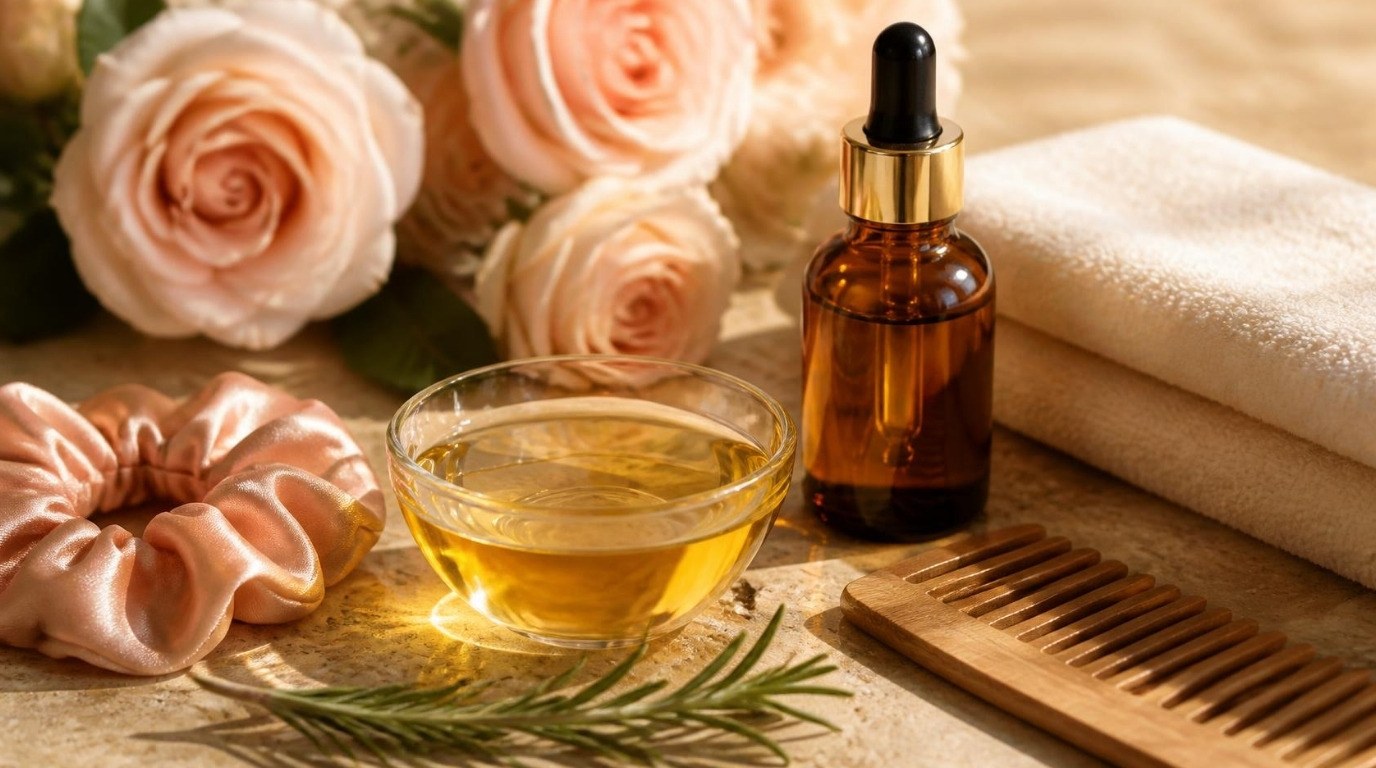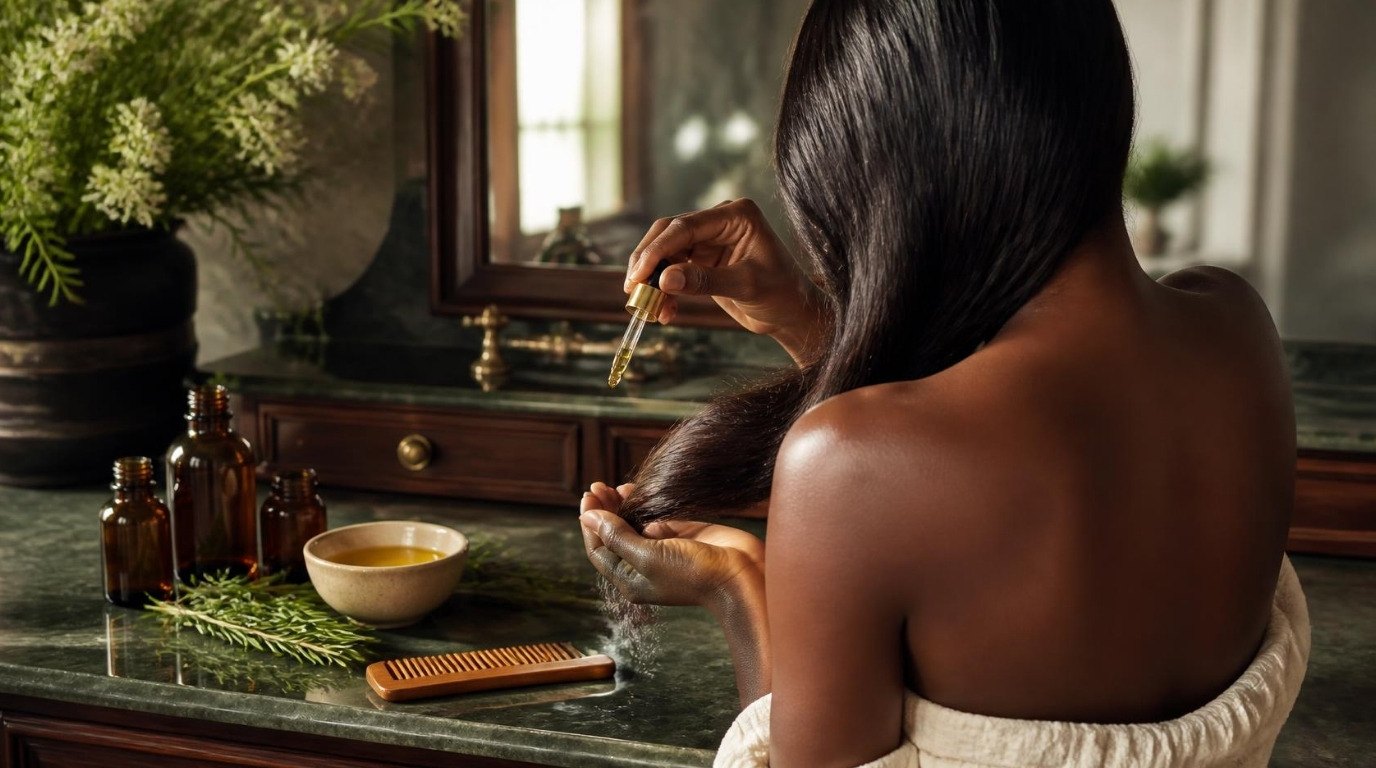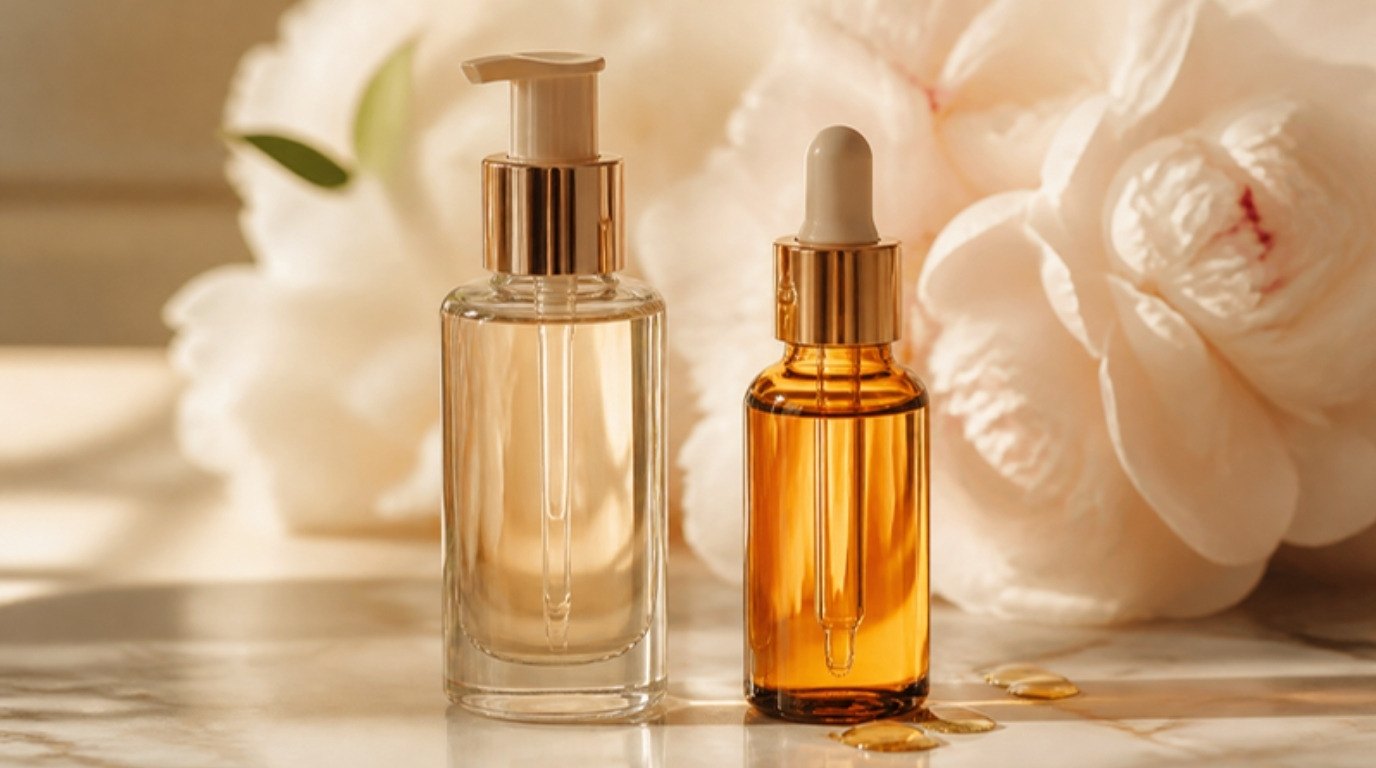
Hair serum and hair oil look almost identical in the bottle, and they both promise shinier, smoother hair. But they work in completely different ways. A serum mostly sits on the surface and smooths it, like a light coat of polish. An oil softens and conditions the hair itself, especially dry, thirsty ends. Choosing the right one depends less on the label and more on what your hair is actually asking for.
That's why one person swears by serum for sleek, frizz-free hair, while another finds it makes her hair flat and coated and prefers a few drops of oil. Neither is wrong. They just have different hair, and different goals.
This guide explains hair serum vs hair oil in plain language: what each one is, a side-by-side comparison table, which hair types benefit from each, how to apply both (wet and dry), whether you can use them together, the difference between pre-wash oiling and styling, and the mistakes that make either one feel greasy.
By the end, you'll know exactly which bottle belongs on your shelf, or whether you'd be happiest with both.
The Short Answer
If you only read one section, make it this one:
- Choose a serum if your main goal is smoothness, frizz control, shine and easier styling, especially before or after heat.
- Choose an oil if your main goal is softness and nourishment for dry, rough or brittle-feeling ends, or a pre-wash treatment.
- Use both if your hair is dry and frizzy: oil for softness, serum for a smooth, polished finish.
Fine hair usually prefers a light serum or a very light oil in tiny amounts. Thick, coarse and curly hair can usually handle more of either.
What Is Hair Serum?
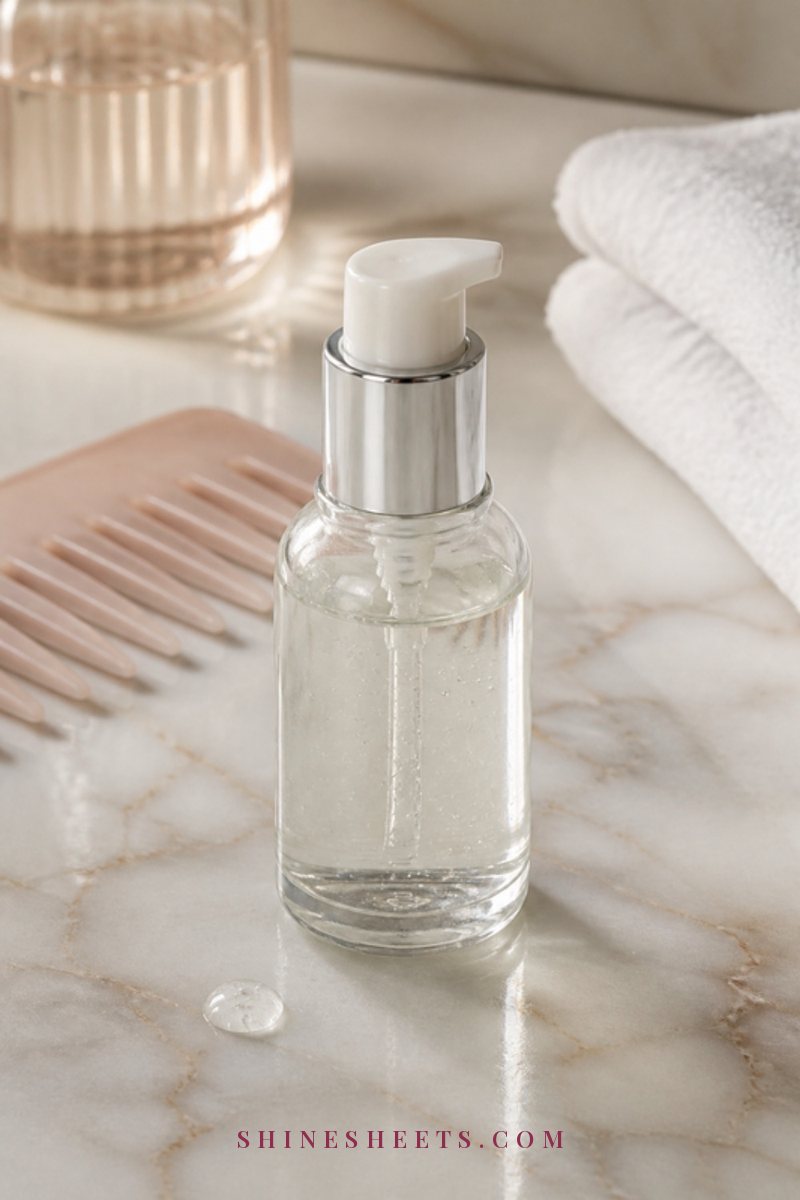
A hair serum is a lightweight styling product, usually silicone-based, that forms a thin, flexible film over the outside of each strand. You'll often see ingredients like dimethicone, cyclopentasiloxane or amodimethicone near the top of the list.
That film does a few helpful things:
- Smooths the cuticle so hair lies flatter and reflects more light, which reads as shine.
- Controls frizz by slowing down how quickly humidity gets into the hair.
- Adds slip, so brushes and combs glide instead of snagging.
- Offers some protection from friction and, in formulas labeled for it, from heat.
What a serum doesn't really do is nourish. It works on the surface, which is exactly why it works so fast: you see the smoothing effect the moment you apply it. It also washes out with regular shampoo, so the effect lasts until your next wash. Some serums now include a little oil, too, which blurs the line, but the main job is still smoothing.
A good everyday anti-frizz hair serum should feel silky rather than sticky, spread easily between your palms and leave hair soft to the touch, not crunchy or wet-looking.
What Is Hair Oil?
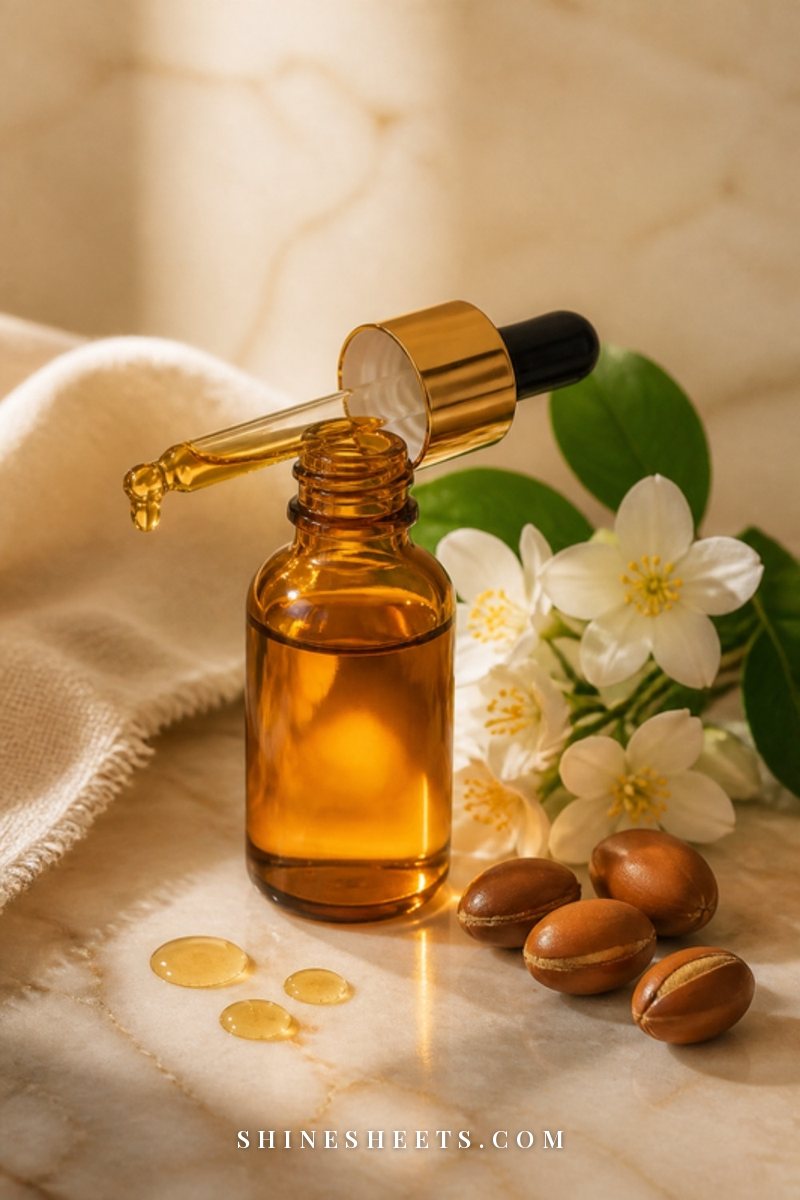
Hair oil is made from plant oils, sometimes on their own, sometimes as a blend. Popular ones include argan, jojoba, sweet almond, coconut, camellia, squalane and marula. Some "oils" on the market are actually silicone serums with a little plant oil added, so it's worth checking the first few ingredients.
Pure and plant-based hair oils:
- Soften and condition, especially dry, rough ends.
- Help reduce moisture loss by sealing in the water and leave-in you've already applied.
- Add a soft, natural-looking shine rather than a glossy, polished one.
- Can be used before washing as a treatment, which serums can't.
Oils vary a lot in weight. Coconut and castor are heavy and rich; argan, camellia and jojoba sit in the middle; squalane and grapeseed are very light. A classic argan hair oil is a versatile middle-weight choice that suits most medium to thick hair types.
Hair Serum vs Hair Oil: Side-by-Side Comparison
This table is the heart of the guide. Screenshot it for the next time you're standing in the hair aisle.
| Hair serum | Hair oil | |
|---|---|---|
| Main base | Silicones (sometimes with a little oil) | Plant oils (argan, jojoba, camellia and more) |
| Main job | Smooth, de-frizz, add glossy shine | Soften, nourish and seal dry ends |
| How it works | Coats the surface of each strand | Softens the surface and helps reduce moisture loss |
| Feel | Silky, slippery, weightless when used lightly | Richer, softer; light to heavy depending on the oil |
| Shine | Glossy, polished, mirror-like | Soft, natural, healthy-looking |
| Best on | Frizzy, straight to wavy, heat-styled hair | Dry, coarse, curly, coily or brittle-feeling hair |
| When to apply | Damp hair before styling or dry hair to finish | Damp hair, dry ends or before washing as a treatment |
| Pre-wash treatment | No | Yes |
| Typical amount | 1–2 pumps | 2–4 drops |
| Risk if overused | Flat, coated, stringy hair; buildup | Greasy, heavy, limp hair |
| Washes out with | Regular shampoo (heavier silicones may need clarifying) | Regular shampoo, sometimes two rounds after a pre-wash treatment |
Which One Does Your Hair Need?
Your hair type and your main concern decide the answer. Here's how it usually plays out:
Fine or Thin Hair
Fine hair is easily weighed down, so less is always more. A very light serum, one pump on the ends, smooths frizz without flattening. If you prefer oil, choose a lightweight hair oil for fine hair such as a squalane, camellia or dry-oil spray, and use one or two drops only. My fine hair care guide has more tips for keeping volume.
Thick or Coarse Hair
Thick hair can usually handle both, and often loves both. Oil softens the coarse texture; serum tames puffiness and speeds up styling. Richer oils like argan or marula work beautifully here. You'll find a full routine in my thick hair care guide.
Curly and Coily Hair
Curls tend to be drier, because natural scalp oils travel down a twisting strand more slowly. Oil is usually the hero, used on damp hair to seal moisture, or after drying to soften a gel cast. A light serum can help smooth frizz on top, but heavy silicones can build up and weigh curls down, so choose water-soluble or lightweight formulas.
Frizzy Hair
For frizz caused by humidity, serum is often faster and more effective, because its film slows down moisture coming in from the air. For frizz caused by dryness and damage, oil plus a good leave-in tackles the root of the problem.
Color-Treated or Damaged Hair
Both help, in different ways. Oil softens and makes damaged hair feel less rough; serum protects against friction and heat and makes broken ends look smoother. Many people with colored hair do best with a light oil on damp hair and a heat-protecting serum before blow-drying.
Oily Scalp, Dry Ends
Keep both well away from the roots. A tiny amount of serum or a light oil on the bottom few inches only, applied on dry hair, gives smoother ends without speeding up oiliness at the top.
How To Apply Hair Serum
Serums are easy to overdo. Follow this method for smooth, never stringy results:
- Start with one pump. For long or thick hair, two at most. You can always add more.
- Rub it between your palms until your hands feel slippery and the serum is spread thin.
- On damp hair: glide your palms down the mid-lengths and ends after your leave-in, then comb through with a wide tooth comb for even coverage. Then blow-dry or air-dry.
- On dry hair: use half the amount and lightly smooth over the surface and ends to tame flyaways and add a finishing shine.
- Avoid the roots and the crown, where serum flattens hair fastest.
- If using heat, check that the serum is labeled as a heat protectant before relying on it.
How To Apply Hair Oil
There are two very different ways to use hair oil: as a styling and finishing step, and as a pre-wash treatment.
Styling and Finishing With Oil
- Warm two to four drops between your fingertips (one to two for fine hair).
- On damp hair: press the oil into your ends and mid-lengths after your leave-in, to seal in moisture.
- On dry hair: pat a single drop onto the very ends and over any frizzy patches.
- Keep it below the ears unless your hair is very thick, coarse or coily.
Pre-Wash Oil Treatment
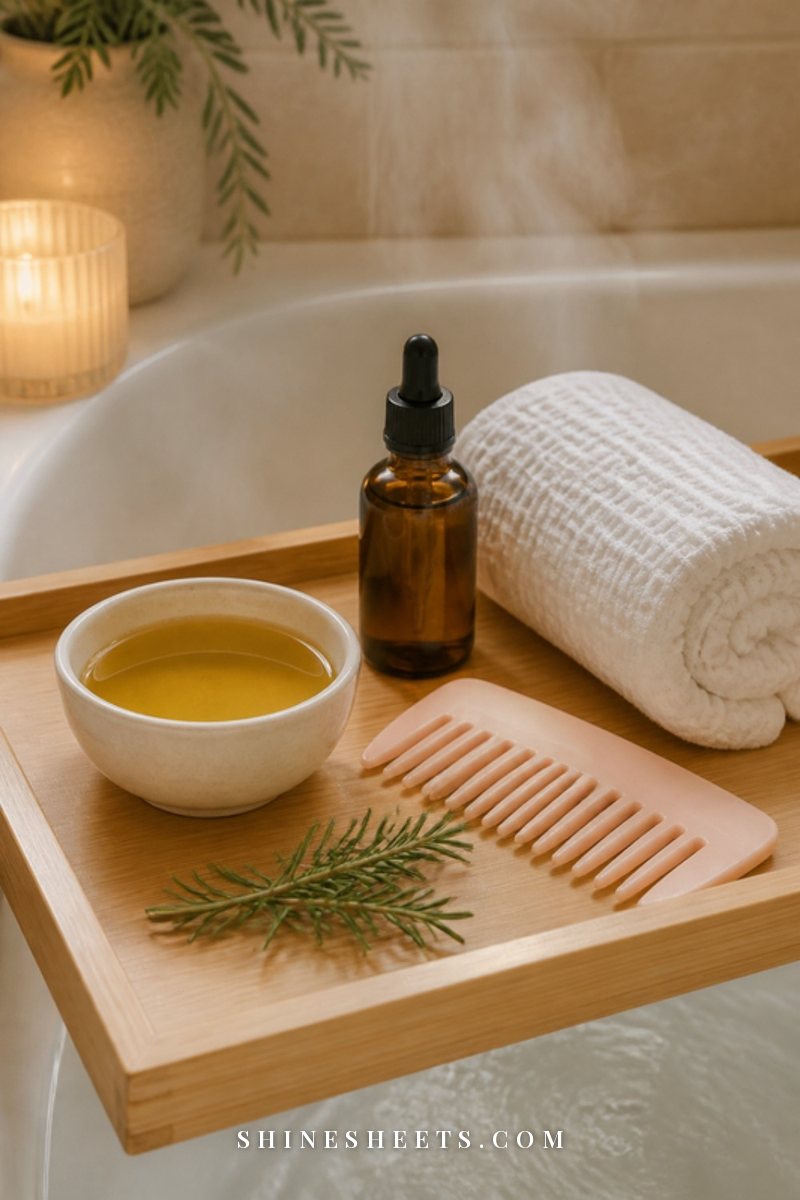
This is where oil really shines and serum can't follow. Apply a generous amount (a teaspoon or two, depending on length) to dry hair, focusing on the lengths and ends, and leave it on for 30 minutes to a few hours before shampooing. Some people also massage a little into the scalp. Shampoo twice to remove it fully, then condition as usual.
Pre-wash oiling is lovely once a week for dry, coarse, curly or damaged hair. My full hair oiling guide walks through it step by step for every hair type, including how long to leave it on and which oils to pick.
Can You Use Hair Serum and Hair Oil Together?
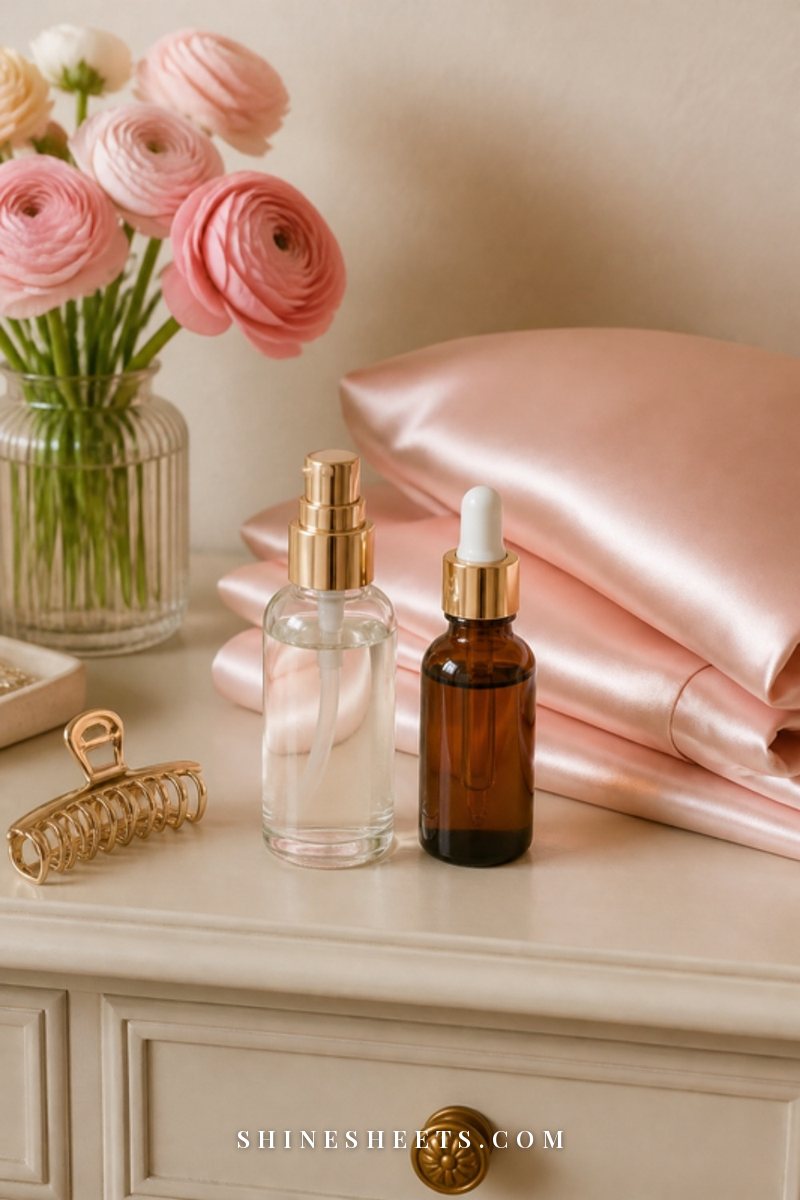
Yes, and for dry, frizzy hair it's often the best combination. The order matters:
- Leave-in conditioner on damp hair first, for water-based moisture. My leave-in conditioner guide shows how to choose and apply one.
- Oil next, two drops pressed into the ends, to soften and seal.
- Serum last, one pump smoothed over the surface, for shine, frizz control and slip.
- Style as usual.
Use smaller amounts of each when layering. Two drops of oil and one pump of serum together is usually plenty for shoulder-length hair. If your hair feels heavy, drop the oil on wash day and use it only as a dry-end finisher.
One more helper that works alongside both: a satin pillowcase. Less friction overnight means less frizz and fewer tangles in the morning, so you need less product to begin with.
Pre-Wash Oiling vs Styling: Not the Same Job
A lot of confusion comes from using the word "hair oil" for two very different steps:
- Pre-wash oiling is a treatment. You use a lot, leave it on for a while and wash it out. Its job is to soften and condition the lengths before shampoo, which can be drying, gets a chance to strip them.
- Styling oil is a finisher. You use a few drops, leave it in and don't wash it out until your next wash day. Its job is softness, shine and frizz control.
Heavy oils like coconut or castor are often better as pre-wash treatments, because they can feel greasy as a leave-in. Light oils like argan, camellia and squalane are better for styling. If you're curious about oil and growth claims, my article on hair oil and hair growth takes a realistic look at what oils can and can't do.
Do Silicones in Hair Serum Damage Your Hair?
This is one of the most common worries, and the short answer is no. Silicones don't damage hair. They're among the most studied and widely used conditioning ingredients in hair care, and they're the reason serums feel so silky.
The real issue is buildup. Some heavier silicones don't rinse away completely with gentle or sulfate-free shampoos, so over weeks they can layer up and leave hair feeling coated, flat or dull. That's easy to manage:
- Use small amounts, so there's less to build up in the first place.
- Choose lighter, water-soluble or "lightweight" formulas if your hair is fine or curly.
- Use a clarifying shampoo every two to four weeks to reset.
If you simply prefer to avoid silicones, a light plant oil or a silicone-free smoothing cream can give you a softer version of the same effect. It's a preference, not a must.
How Much To Use by Hair Length
Amount is where most people go wrong, so here's a simple starting point for medium-thick hair. Go a little lower for fine hair and a little higher for very thick or coily hair.
- Short hair (chin length or shorter): half a pump of serum or one to two drops of oil.
- Shoulder length: one pump of serum or two to three drops of oil.
- Long hair (past the shoulder blades): one and a half to two pumps of serum or three to five drops of oil.
- Pre-wash oil treatment: one to two teaspoons for shoulder length, more for long or very thick hair.
Always apply in stages. Use half, look and feel, then add the rest only if your ends still seem dry or frizzy. It's much easier to add another drop than to wash out too much.
Serum and Oil Through the Seasons
Your hair's needs shift with the weather, and so can your choice of bottle.
- Cold, dry months: indoor heating and wind pull moisture from your hair, and static shows up. Oil becomes more useful here, especially on the ends, and a satin pillowcase plus a light serum helps with flyaways under hats and scarves.
- Humid, warm months: frizz is the main enemy. A serum on damp hair before drying creates a light barrier against moisture in the air. Keep oil light and use it mainly as a weekly pre-wash treatment.
- Swimming or lots of sun: a light coat of oil or serum on the lengths before you head out can make hair easier to detangle afterward. Rinse with fresh water as soon as you can.
It's completely normal to keep both on your shelf and lean on one more than the other depending on the season.
Common Hair Serum and Hair Oil Mistakes
Most "this made my hair greasy" stories come back to one of these six:
- Using too much. One pump of serum or two to four drops of oil is enough for most hair. Start low.
- Applying at the roots. Both belong on the mid-lengths and ends. The roots get plenty of natural oil from the scalp.
- The wrong oil for fine hair. Coconut, castor and heavy blends on fine hair almost always mean limp, flat strands. Choose squalane, camellia or a dry-oil spray.
- Using oil instead of moisture. Oil seals in moisture but doesn't add water. On very dry hair, use a leave-in first, then oil.
- Never clarifying. Silicones and oils can build up over weeks. A clarifying wash every two to four weeks keeps hair light and bouncy.
- Assuming every serum protects from heat. Only formulas that are labeled and tested for heat protection can be relied on before hot tools.
A small safety note: if any product makes your scalp itchy, red or irritated, rinse it out and stop using it. If you have a nut allergy, check the label carefully, because many hair oils contain almond, macadamia or other nut-derived oils.
How To Choose a Good Serum or Oil
Once you know which type you need, a few quick label checks help you find a good one:
- For serums: look for lightweight silicones like cyclopentasiloxane or amodimethicone near the top, and "heat protection" on the label if you style with heat. Avoid sticky, gel-like textures if your hair is fine.
- For oils: check that the first ingredient is the oil you're paying for (argan, jojoba, camellia), not a silicone with a dash of oil. A dark or amber bottle protects oils from light.
- For sensitive scalps: choose fragrance-free or lightly scented formulas and keep both products off the scalp.
- For curls: look for "lightweight," "water-soluble" or "curl-friendly" on serums to avoid heavy buildup.
Store oils away from heat and direct sunlight, and close the lid tightly after each use. Most plant oils keep well for about a year after opening; if an oil starts to smell sharp or like crayons, it has gone off and it's time to replace it.
A Simple Routine Using Both
If you'd like to see how serum and oil fit into a real week, here's an easy rhythm for dry, frizz-prone, shoulder-length hair washed two or three times a week:
- Once a week, before washing: a pre-wash oil treatment on the lengths for 30 to 60 minutes, then shampoo twice and condition.
- Every wash day: leave-in conditioner on damp hair, two drops of oil on the ends, one pump of serum over the surface, then dry and style.
- Second and third day: a single drop of oil or half a pump of serum smoothed over the ends and flyaways, nothing at the roots.
- Every two to four weeks: a clarifying wash to remove buildup, followed by a hair mask.
Fine hair can skip the oil on wash day and keep it for the very ends on day two. Thick or coily hair can use a little more of both.
Final Thoughts
Hair serum and hair oil aren't rivals. A serum smooths and polishes the surface; an oil softens and nourishes from the outside in. Frizzy, heat-styled hair often loves serum, dry and coarse hair often loves oil, and plenty of hair is happiest with a little of both.
Start with tiny amounts, keep them on the lengths and ends, and pay attention to how your hair feels by the end of the day. Your hair will tell you which one it likes, and that's the right answer for you.