The best after-party cleanup doesn't start with a scrub brush. It starts with a decision: tonight you only do what keeps your home safe and stops messes from setting, and tomorrow you clean in a smart order so nothing gets done twice. That one split turns a three-hour slog into a calm, very doable morning.
Holiday hosting leaves a particular kind of mess behind: glasses in every room, a crumb trail under the table, a mystery spot on the rug, wax on the tablecloth and a kitchen that looks like a small storm passed through. None of it is a sign you hosted badly. It's simply proof that people stayed, ate, talked and had a lovely time.
This guide is only about the after. You'll find a 15-minute night-of reset, a next-morning order of work, stain first aid for carpets, sofas and tablecloths, a time-and-supplies table you can screenshot, plus the safety basics that matter when you're tired and tempted to cut corners. If you're still on the before side of the party, my guide to getting your home guest-ready for the holidays covers that part.
Put the kettle on (tomorrow, anyway). Let's make this the easiest cleanup you've had all season.
The Golden Rule: Tonight Is for Safety, Tomorrow Is for Cleaning
When the last guest leaves, there's a strong pull to either collapse on the sofa and ignore everything, or to power through and clean the whole house at midnight. Neither is ideal. Collapsing means candles may still be burning and food sits out all night. Cleaning until 2 a.m. means you wake up exhausted and resentful, and you probably did half of it in the wrong order anyway.
The middle path is a short, focused reset with a strict time limit. You're not trying to make the home look nice tonight. You're trying to do three things:
- Keep everyone safe (no burning candles, no food left out, nothing plugged in that shouldn't be).
- Stop messes from setting (spills, stuck-on food, sticky rings).
- Make tomorrow-you's job lighter (soaked pans, an empty trash can, a clear path to the sink).
Everything else can wait for daylight, coffee and fresh air. It took me a few hosting seasons to accept that a slightly messy living room overnight is completely fine, while a forgotten candle is not.
The 15-Minute Night-Of Reset: 5 Things Only

Set a timer for 15 minutes. When it rings, you stop, even if you're mid-task. These five are in order of importance, so if you only get through three, you still did the right three.
- Blow out every candle (2 minutes). Walk through every room, including the bathroom and the entryway, and check each candle and tea light. Look for anything still glowing, and keep smoking wicks away from napkins, greenery and curtains. Battery candles can be switched off now too, so they don't run all night.
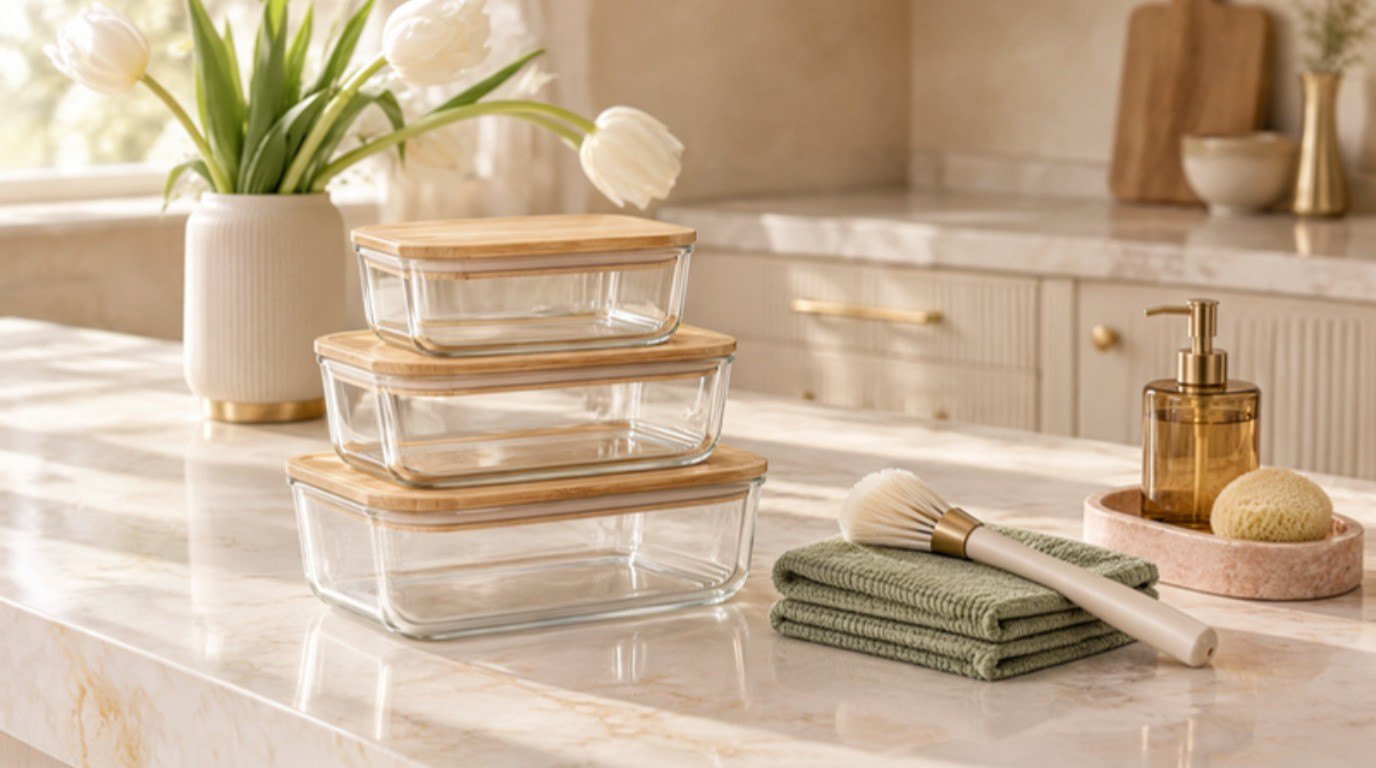
- Get food into the fridge (4 minutes). Perishable leftovers shouldn't sit out at room temperature for more than about two hours, so this one isn't optional. Scoop everything into lidded containers (a stackable set of freezer-safe storage containers makes this so much faster than hunting for matching lids), and throw away anything that has been sitting out all evening and you're unsure about.
- Empty the trash and recycling (3 minutes). Tie the bags and take them out or at least to the door. Food scraps overnight are what make a house smell stale in the morning.
- Soak the pans (3 minutes). Scrape roasting pans and baking dishes into the bin, then fill them with hot water and a squeeze of dish soap. Leave them overnight. Stuck-on food that would take 20 minutes of scrubbing tomorrow will mostly slide off with a sponge.
- Wipe wet spills before they set (3 minutes). Blot anything on the rug or sofa with a clean white cloth, wipe sticky drips on the counter and floor, and lift glasses off wooden surfaces. You're not treating stains yet, just stopping them from soaking in further.
That's it. Turn off the lights, have a glass of water and go to bed. Seriously, the rest is a morning job.
After-Party Cleanup Table: What, When and How Long
Here's the whole cleanup laid out in one place. Screenshot it, or just glance at it in the morning so you know exactly how long things really take (it's usually less than it feels like).
| Task | Time needed | Tonight or tomorrow | Supplies |
|---|---|---|---|
| Blow out and check every candle | 2 min | Tonight | None (a candle snuffer is nice) |
| Leftovers into the fridge | 4 min | Tonight | Lidded containers |
| Trash and recycling out | 3 min | Tonight | Spare bin bags |
| Soak pans and baking dishes | 3 min | Tonight | Hot water, dish soap |
| Blot fresh spills | 3 min | Tonight | White cloths, cool water |
| Open windows and air the rooms | 10 min (passive) | Tomorrow | None |
| Collect dishes room by room | 10 min | Tomorrow | A tray or basket |
| Load and run the dishwasher, hand-wash the rest | 20–30 min | Tomorrow | Dish soap, gloves, drying rack |
| Kitchen counters, stovetop and table | 15 min | Tomorrow | All-purpose spray, microfiber cloths |
| Bathroom refresh | 10 min | Tomorrow | Spray, cloth, fresh towels |
| Stain treatment (carpet, sofa, linens) | 10–20 min | Tomorrow | White cloths, mild dish soap, cool water |
| Floors: vacuum, then mop | 15–20 min | Tomorrow | Vacuum, mop, bucket |
Add it up and the morning is roughly two hours of actual work, and a lot of it (dishwasher running, pans soaking, windows open) happens while you're doing something else. Break it into two sessions with a tea in between if that feels kinder.
The Next-Morning Order of Work: 6 Steps
The order matters more than the speed. Clean from high to low and from "stuff" to "surfaces" to "floors", so dust and crumbs never land on something you've already finished. Keep everything you need in one place: a woven storage basket for cleaning supplies that you carry from room to room saves a surprising number of trips back to the kitchen.
1. Open the Windows for Ten Minutes

Before you touch a single dish, crack a window in the main rooms for about ten minutes. Cooking smells, candle smoke and that warm, crowded-room air clear out much faster than any room spray can manage. Even in December, a short burst of cold fresh air works; just close the windows again before the rooms get chilly.
While the air changes, put on comfortable clothes, tie your hair back and make your morning drink. This is your gentle start, not wasted time.
2. Collect Dishes Room by Room
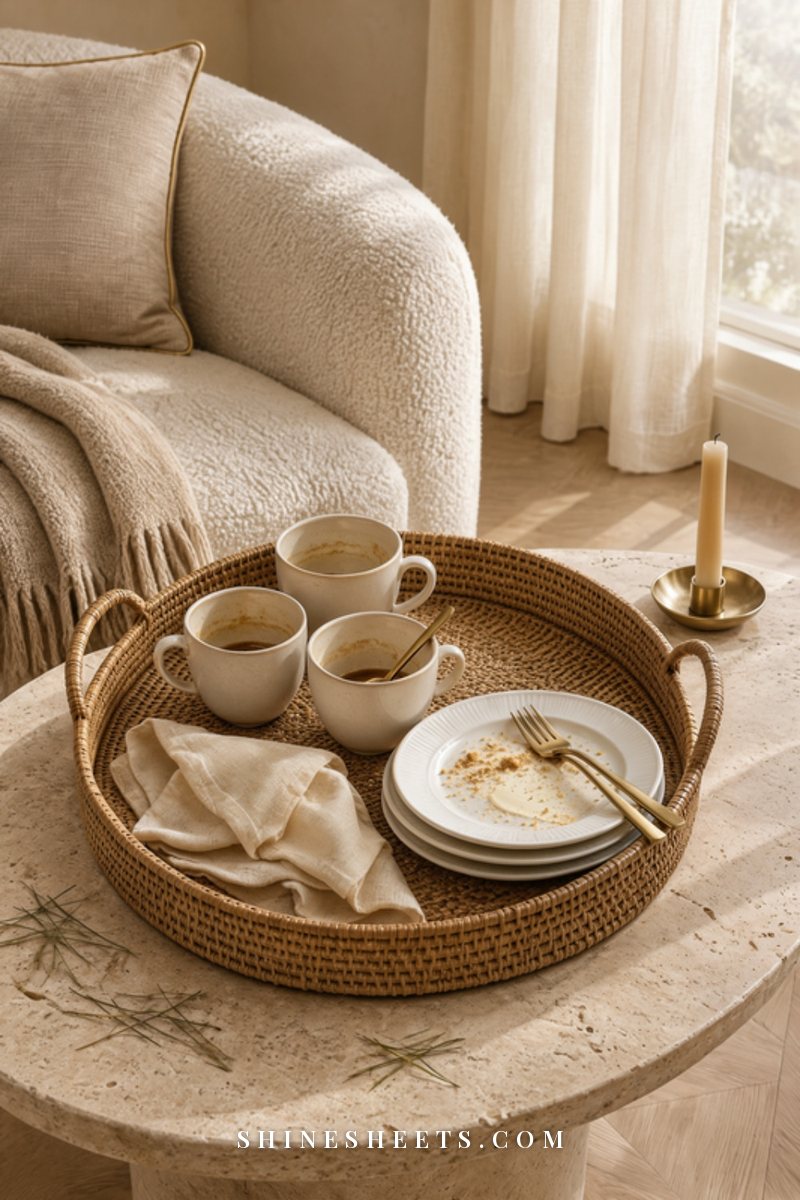
Take a large tray or basket and do one lap of the home: living room, dining area, entryway, bathroom, anywhere guests wandered. Pick up every glass, cup, plate, napkin and stray fork. Check windowsills, bookshelves and the floor beside armchairs, because that's where the forgotten ones hide.
Drop everything at the sink, scrape leftovers into the bin and stack by type (glasses together, plates together, cutlery in one container of soapy water). Sorting first makes loading the dishwasher much quicker.
3. Run the Dishwasher and Tackle Handwash Items
Load the dishwasher fully and start it right away, so it works while you clean everything else. If you hosted a big group, you'll likely need two loads; run the first now and the second after lunch.
Hand-wash anything delicate or not dishwasher safe: wooden boards, good knives, cast iron, crystal, metallic-rimmed plates and anything with hand-painted details. Pull on a pair of cream rubber cleaning gloves (your hands will thank you after a long stretch in hot water), then wash in warm water with a gentle soap. A plant-based dish soap in a pretty glass bottle is a nice pick for this, and it looks lovely enough to leave out by the sink.
By now the overnight pans have done most of the work themselves. Drain them, refill with fresh hot soapy water, and wipe with a sponge. Anything still stubborn can soak another 30 minutes while you move on. If your dishwasher starts to smell or leaves residue after all the extra loads, this guide on how to clean a dishwasher so it smells fresh walks you through the filter and the rest.
4. Wipe Kitchen Surfaces

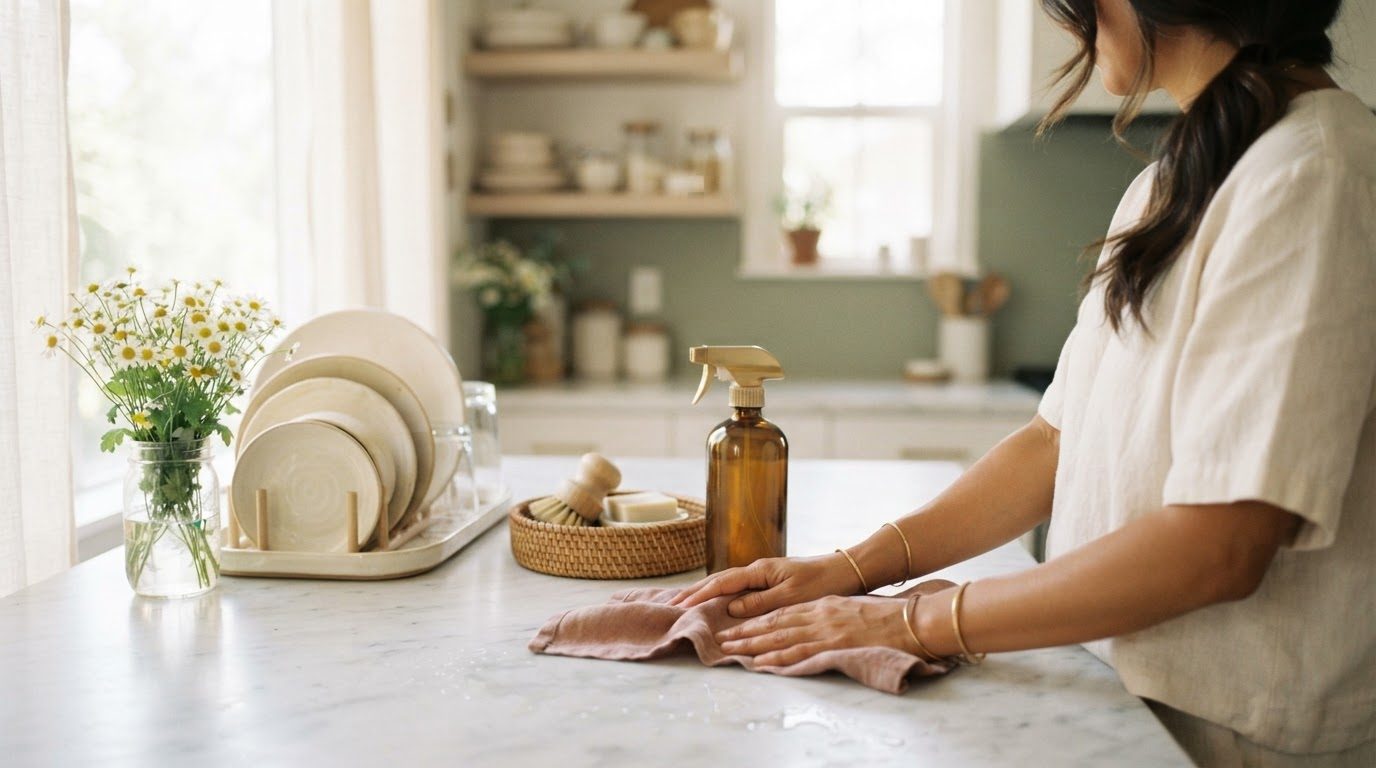
Once the dishes are moving, clear the counters completely and work from top to bottom: open shelves and cabinet fronts first (look for sticky fingerprints near handles), then the stovetop, then counters, then the dining table and chairs.
- Counters: spray with an all-purpose cleaner that's safe for your surface, leave it for the dwell time on the label (often 1–5 minutes for sanitizing), then wipe with a clean cloth. Stone like marble or granite needs a pH-neutral cleaner, never vinegar.
- Stovetop: make sure it's off and fully cool. Lay a hot, soapy cloth over dried spills for 5 minutes to soften them, then wipe.
- Table and chairs: wipe the tabletop, then the chair seats and backs, where little sticky hands and spilled sauces love to land.
A set of microfiber cleaning cloths makes this faster than paper towels and leaves fewer streaks. Use one for wet wiping and a separate dry one for buffing shiny surfaces.
5. Refresh the Bathroom

The guest bathroom gets heavy use during a party, but it usually needs a refresh, not a deep clean. Give it ten minutes:
- Swap hand towels for fresh ones and toss the used ones in the laundry.
- Wipe the sink, faucet and counter, where water spots and makeup smudges gather.
- Clean the toilet seat, rim and handle, and swish the bowl with a toilet cleaner.
- Empty the small bin, refill soap and toilet paper, and give the floor a quick wipe around the toilet.
Open the window or run the fan while you clean, and keep your gloves on.
6. Floors Last
Floors always come last because everything you did before dropped crumbs, drips or dust onto them. Vacuum first, including under the dining table, along the sofa base and in corners where glitter and pine needles collect. Then mop hard floors with warm water and a floor cleaner suited to your floor type, wringing the mop well, especially on wood.
When the floor is done, the house will suddenly feel finished, even if a few small things are still waiting. That feeling is the reward for doing it in this order.
Stain First Aid: Carpet, Upholstery and Tablecloths
Party stains are rarely as permanent as they look. The three rules that save most of them: blot, never rub (rubbing pushes the stain deeper and frays fibers), use cool water (hot water can set protein and sugar stains), and test on a hidden spot first (inside a hem, the back of a cushion, a carpet corner under furniture). Always work from the outer edge of a spot toward the center so it doesn't spread.
Carpet and Rug Spills
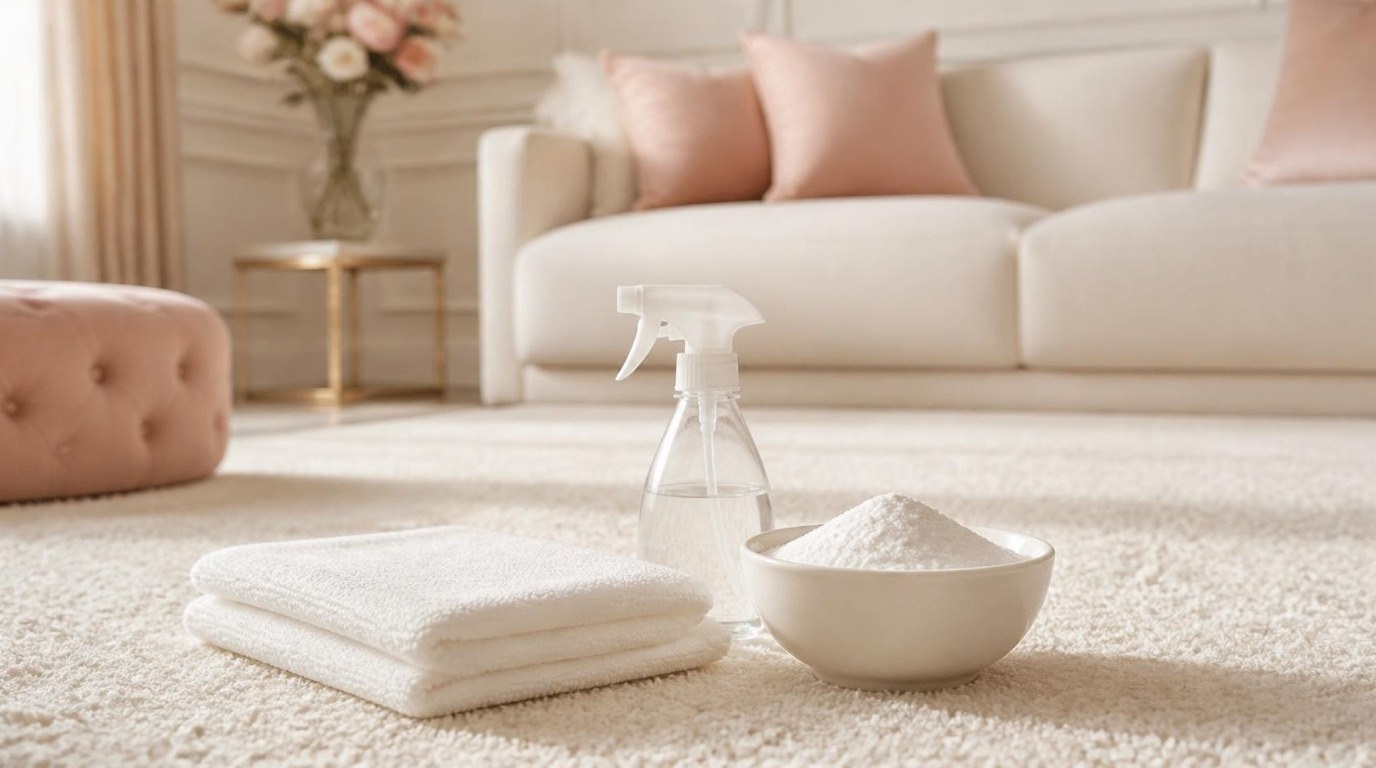
For most food and drink spills (coffee, juice, gravy, chocolate), blot up as much as you can with a dry white cloth. Then mix a teaspoon of mild, clear dish soap into two cups of cool water, dab the solution on, leave it for 5 minutes and blot again with a clean damp cloth. Repeat until no more color transfers. Finish by blotting with plain cool water to rinse out the soap, then press a dry towel on top for a few minutes.
For greasy spots or older, set-in marks, my calm guide on how to clean carpet stains of every type has a step-by-step for each kind of spill.
Sofa and Upholstery
Before using any liquid on a sofa, check the care tag. W means water-based cleaners are fine, S means solvent only, W/S means either, and X means vacuum only. Get that wrong and you can end up with a water ring that's bigger than the original stain.
For W or W/S fabric, use the same cool-water-and-mild-soap blotting as for carpet, but use even less liquid, since cushions soak it up. Let the area air-dry fully before anyone sits on it. For a full fabric-by-fabric walkthrough, here's how to clean a couch for any fabric.
Tablecloths and Napkins

Shake crumbs off outdoors or over the bin, then check for spots before anything goes in the washer (heat in the dryer can set a stain for good). Rinse food and drink marks from the back of the fabric under cool running water to push the stain out the way it came in. Rub a drop of mild dish soap into greasy spots, leave for 10 minutes, then wash on the warmest setting the care label allows.
Air-dry and check again. If a faint mark remains, repeat before ironing. A natural cream linen tablecloth is a forgiving pick for future hosting, since linen releases most food stains easily and looks even nicer a little rumpled.
Candle Wax
Let wax harden completely first; warm wax only spreads. On fabric or carpet, firm it with an ice cube in a plastic bag for a few minutes, then gently lift off the brittle bits with a dull edge, like the back of a butter knife. The remaining film can usually be lifted with a brown paper bag and a warm (not hot) iron, moving the paper as it absorbs the wax. Test on a hidden spot first with synthetic fibers, which can melt.
For wood, glass and tricky colored wax, my full guide on how to remove candle wax from fabric, wood and glass covers each surface.
Glass Rings on Wood

White, cloudy rings mean moisture is trapped in the finish, not in the wood itself, which is good news. Try the gentlest fix first: lay a clean, dry cotton cloth over the ring and press a warm iron (no steam, low setting) on it for 5–10 seconds at a time, lifting to check after each pass. Many rings fade within a few rounds.
A hairdryer on a low, warm setting held a few inches away for a couple of minutes can also coax the moisture out. Dark rings are a different story: they mean water got into the wood itself, and that's worth asking a furniture restorer about rather than sanding at home. Going forward, a small stack of coasters within reach of every seat prevents almost all of this.
Small Appliances and Safety Basics
When you're tired, it's easy to skip steps that feel fussy. These are the ones worth keeping, every time:
- Unplug or switch off first. Before you wipe a coffee maker, slow cooker, warming tray, kettle or electric griddle, turn it off at the switch, unplug it and let it cool fully. Never put a base with electrical parts in water or in the dishwasher.
- Never mix cleaning products. Bleach must never be mixed with vinegar, ammonia or other cleaners, since the combination releases harmful gases. Use one product, rinse the surface with water, then switch to another if you need to.
- Gloves and ventilation. Wear gloves for anything stronger than dish soap, and keep a window open or the fan running while you use sprays.
- Test before you treat. New cleaner, new surface? Try it on a hidden spot and wait the full dwell time before committing.
- Candles and cords. Do one last candle check before you leave the house or go to bed, and coil and store any extension cords used for party lights so nobody trips.
None of this takes long, and it keeps the cleanup from causing a bigger problem than the party did.
Sharing the Work and Knowing When To Stop
If you live with someone, split the morning by zone rather than by task, so nobody is waiting on anybody. One person takes the kitchen and dishes; the other takes the living areas, bathroom and floors. Agree on it before you start, something as simple as: "Want to take the kitchen while I do the rooms and floors? Let's meet back in an hour." A clear, friendly ask beats quietly doing everything and feeling resentful later.
If you live alone, use the table above as your map and stop at natural breaks. Two 45-minute sessions with a rest in between are far more pleasant than one long push.
And then there's the most underrated skill in after-party cleanup: knowing when it's good enough. The dishes are done, the food is put away, the bathroom is fresh and the floors are clean? You're finished. Polishing the silver and washing every throw blanket can wait for another week. If you're running on empty after a busy stretch of hosting, my gentle guide to low-energy cleaning has more ways to get the essentials done without pushing yourself too hard.
Final Thoughts
A messy morning after a gathering means your home was full of people you care about, and that's worth a few dirty pans. Keep the night short and safe, follow the order in the morning, and treat stains gently instead of frantically.
By lunchtime your home will feel calm and fresh again, and you'll have the energy to enjoy the leftovers, the quiet and the memory of a lovely evening.