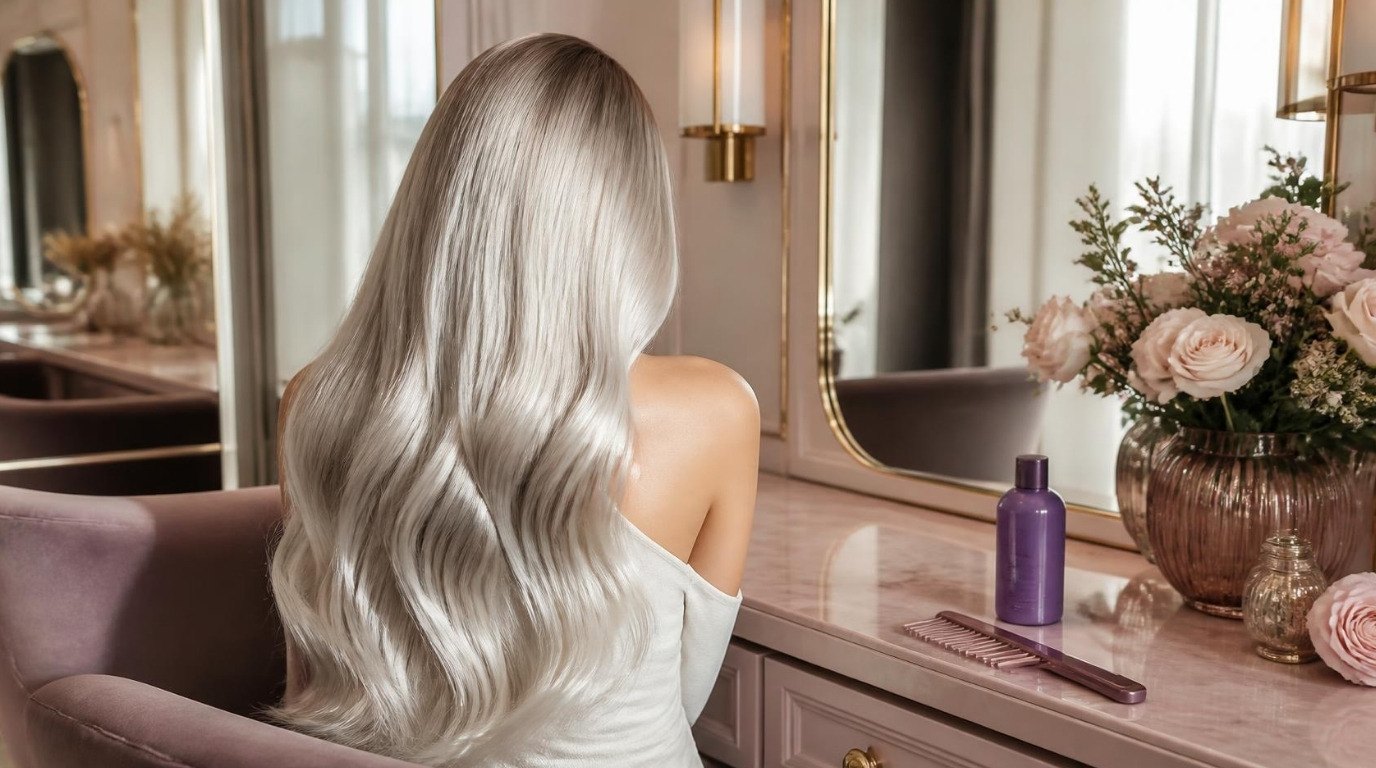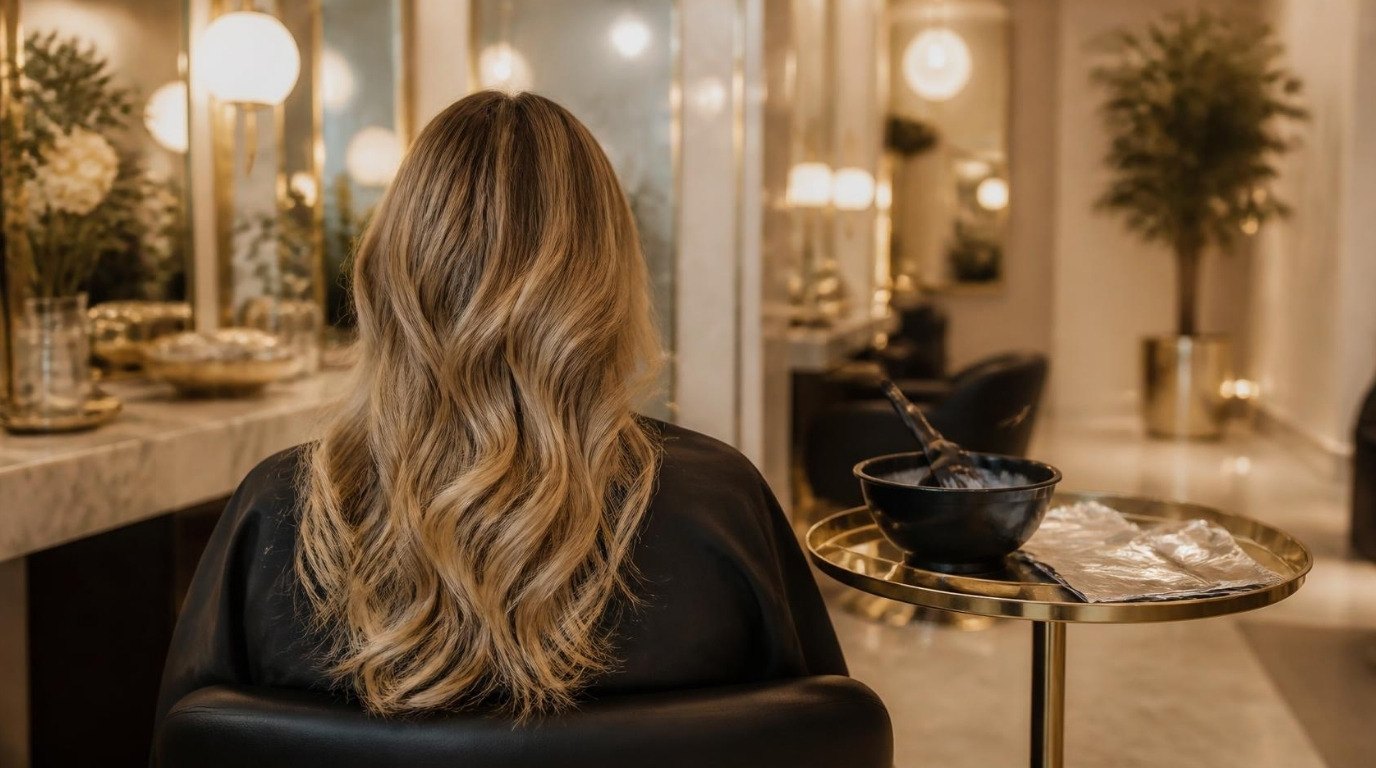
Blonde hair needs a slightly different kind of care than darker shades. Lighter strands show every hint of yellow or orange, they lose moisture faster, and whether your blonde came from nature or from lightener, sun, chlorine, minerals and heat all show up on it first. The good news is that keeping blonde bright isn't about using more products. It's about using a few of the right ones at the right time.
It took me a while to understand that most "blonde problems" fall into just two groups: color problems (brassiness, dullness, a greenish cast) and condition problems (dryness, rough ends, breakage). Once you know which one you're looking at, the fix becomes simple.
This guide walks you through a complete blonde hair care routine for both natural and colored blondes: why blonde turns brassy and dry, how to use purple shampoo without overdoing it, gloss and toner between salon visits, bond care for lightened hair, heat and sun protection, chlorine and hard water, nighttime care and a weekly blonde routine table you can screenshot and follow.
Why Blonde Hair Gets Brassy and Dry
Understanding the "why" makes every step of the routine make sense, so here's the short version.
Why Blonde Turns Brassy
When hair is lightened, the darker pigments are broken down first and the warmer ones are left behind. That means underneath almost every lightened blonde sits a layer of yellow or orange. A toner from your colorist neutralizes those warm tones, but toner fades with washing, heat and sunlight, so the warmth slowly comes back. That's brassiness.
Natural blondes can get brassy too. Sun exposure, minerals in tap water and styling products can build up on the hair and make it look yellow or dull over time.
If you'd like to understand which tone cancels which, my guide to fixing unwanted undertones with the color wheel trick explains it in a really simple way. The short rule: purple cancels yellow, blue cancels orange.
Why Lightened Hair Feels Dry
Lightener works by opening the outer layer of the hair (the cuticle) and breaking down pigment inside. That process also weakens some of the internal bonds that keep hair strong and elastic. The result is hair that absorbs water quickly, loses it just as fast, tangles more easily and feels rough at the ends.
Natural blonde hair is often finer than darker hair, which means each strand is more delicate and shows damage sooner. Either way, blonde hair benefits from gentler washing, more moisture and protection from heat.
Natural Blonde vs Colored Blonde: What Changes
Most of this routine works for every blonde, but the priorities are a little different:
- Natural blonde: focus on keeping it shiny and clear. Your main concerns are sun fading, mineral buildup and chlorine. You may only need purple shampoo occasionally, or not at all.
- Highlighted or balayage blonde: you have two kinds of hair on one head. Treat the lightened pieces like colored hair (bond care, more moisture) and keep products that tone away from your natural roots if they're dark.
- Fully lightened or platinum blonde: this hair needs the most care. Bond treatments, regular masks, minimal heat and very gentle handling become non-negotiable.
If you're thinking about going lighter at home, please read my guide on what to consider before you bleach your hair at home first. Big lifts, very dark starting colors and previously colored hair are much safer in a salon.
Tone Problem or Condition Problem? A Quick Check
Before you change anything in your routine, take a minute to look at your hair in daylight (near a window, not under bathroom bulbs, which often make everything look warmer). Then ask yourself which of these sounds most like you:
- It looks yellow, golden or "warmer" than when you left the salon, but it feels fine. That's a tone problem. Purple shampoo or a gloss is your main tool.
- It looks orange or copper, especially near darker roots. That's still tone, but it needs blue-toned products or a visit to your colorist.
- It feels rough, tangles easily or looks fuzzy at the ends, even if the color is fine. That's a condition problem. Masks, bond care and less heat come first.
- It looks dull, flat or slightly greenish, and feels coated or heavy. That's usually buildup from minerals, chlorine or styling products. A clarifying wash comes first.
- It snaps when you brush it or feels gummy when wet. That's a sign of serious damage. Stop all heat and lightening, focus on bond care, and talk to a stylist about trimming the weakest ends.
Most of us have a mix of two. That's completely normal. Start with whichever bothers you most, and give one change at least three or four washes before you judge it, because hair responds slowly.
How To Use Purple Shampoo the Right Way
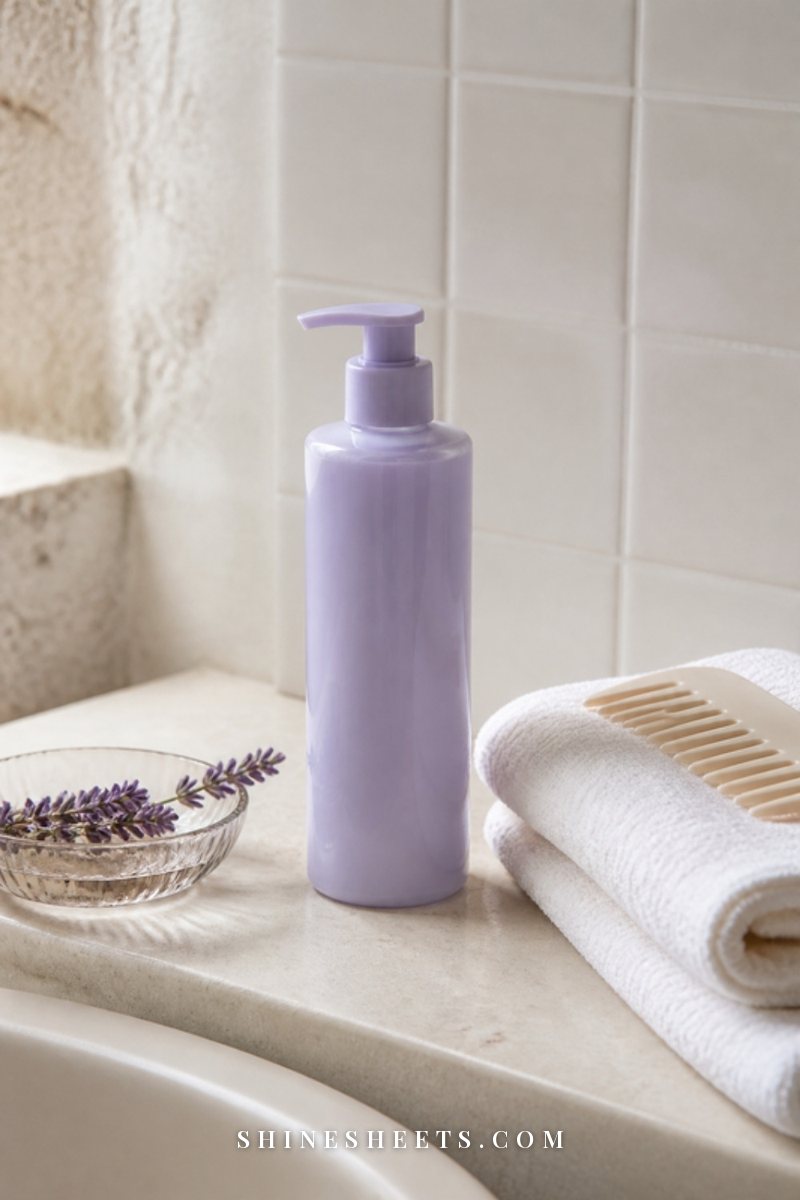
Purple shampoo deposits a tiny amount of violet pigment onto the hair, which cancels out yellow tones. It's the easiest way to keep blonde looking fresh between salon visits, but it's also very easy to overuse.
A good purple shampoo for blonde hair should feel gentle and not strip your hair. Look for one that is sulfate-free or labeled for color-treated hair, with a pigment strength that suits your shade (lighter blondes usually need a softer formula).
How often:
- Once a week is a good starting point for most lightened blondes.
- Every other week (or only when you notice yellow) for natural blondes.
- Twice a week only if your hair turns brassy very quickly and isn't getting dry from it.
How long to leave it on:
- Wash once with your regular gentle shampoo to remove oil and product.
- Apply purple shampoo to damp (not dripping) hair, focusing on the brassiest areas.
- Leave it on for one to two minutes the first time. You can slowly go up to five minutes if needed.
- Rinse well and follow with conditioner, because purple shampoo can feel drying.
If your hair starts to look dull, gray or slightly lilac, you're using it too often or leaving it on too long. Skip it for a couple of washes and the tint will fade. If your brassiness looks more orange than yellow, a blue-toned shampoo will do a better job than purple.
Gloss and Toner Between Salon Visits
A gloss is a sheer, shine-boosting treatment that can also refresh tone. At the salon, your colorist can apply a toner or gloss between lightening appointments, often every six to eight weeks, to bring back the exact shade you love without lifting your hair again.
At home, there are tinted glosses and toning masks designed for blondes. Some general guidance to keep it safe and simple:
- Choose a product made specifically for blonde or lightened hair, in a shade close to the tone you want.
- Do a strand test on a hidden piece first to see the result before you commit.
- Follow the timing on the package exactly. More time does not mean a better result.
- If you're unsure, ask your colorist which at-home gloss works with the formula they use.
A clear gloss is the gentlest option if your tone is already right and you just want more shine. It adds softness and reflectiveness without changing color.
Bond Care for Lightened Hair
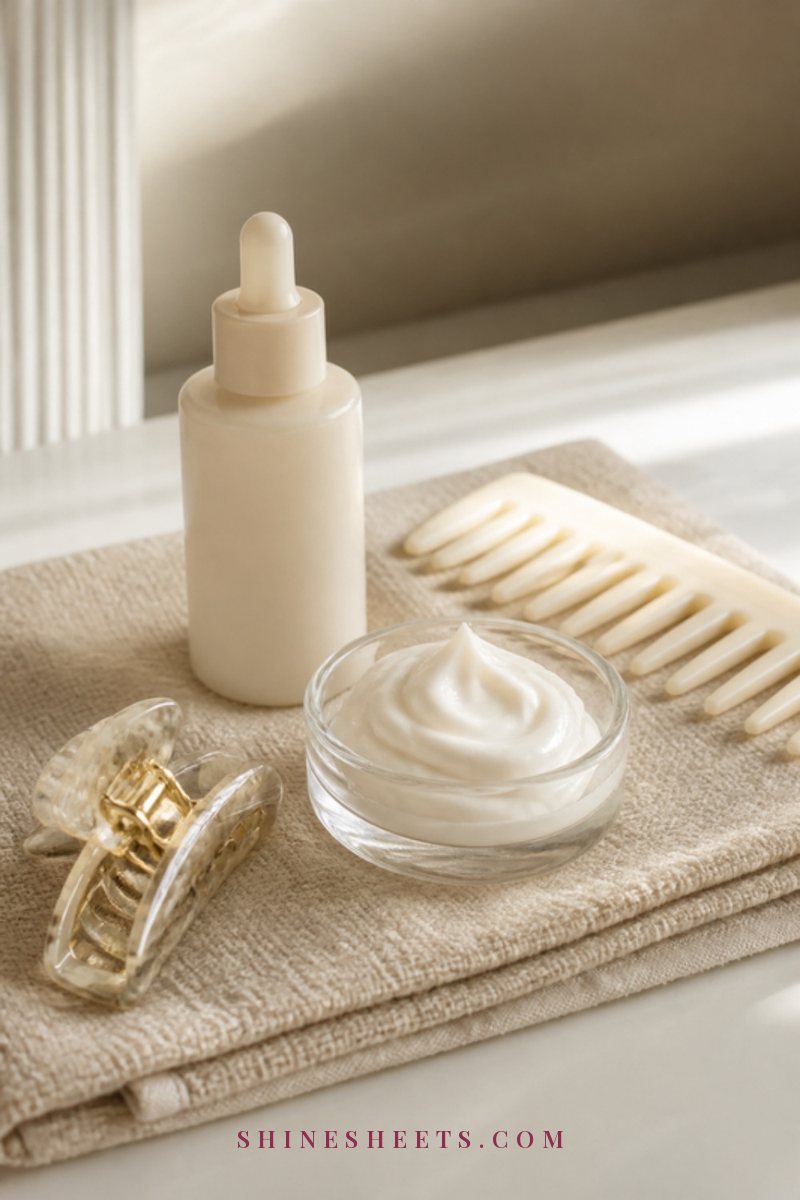
Bond repair treatments are one of the most helpful additions to a lightened blonde routine. They're designed to support the internal bonds that lightener weakens, which makes hair feel stronger, less stretchy when wet and less prone to snapping.
A bond repair hair treatment is usually used before shampooing or as a leave-in. Look for one designed for bleached or color-treated hair and follow the timing on the label. A simple way to fit it in:
- Once a week for fully lightened or platinum hair.
- Every one to two weeks for highlights or balayage.
- Before and after a lightening appointment, if your colorist agrees.
Bond care pairs well with a moisturizing mask on a different day. Bond treatments focus on strength, while masks focus on softness and moisture. My guide to hair masks shows how to choose one based on what your hair needs most.
Gentle Washing and Conditioning
How you wash matters as much as what you wash with. Blonde hair, especially lightened blonde, does best with a gentle approach:
- Wash two to three times a week if your scalp allows it. Every wash fades toner a little.
- Use lukewarm water instead of hot. Hot water opens the cuticle and lets color and moisture escape.
- Shampoo the scalp, not the lengths. The suds that run down are enough to clean the ends.
- Condition every time, from mid-length to the ends, and leave it on for two to three minutes.
- Detangle with conditioner in, using a wide-tooth comb, starting at the ends and working up.
- Pat, don't rub, with a soft microfiber or cotton towel.
A lightweight leave-in conditioner after washing helps with tangles and gives your ends a protective layer before styling. For the bigger picture on washing, conditioning and treatments, my hair care routine guide covers every step for all hair types.
Heat Protection for Blonde Hair
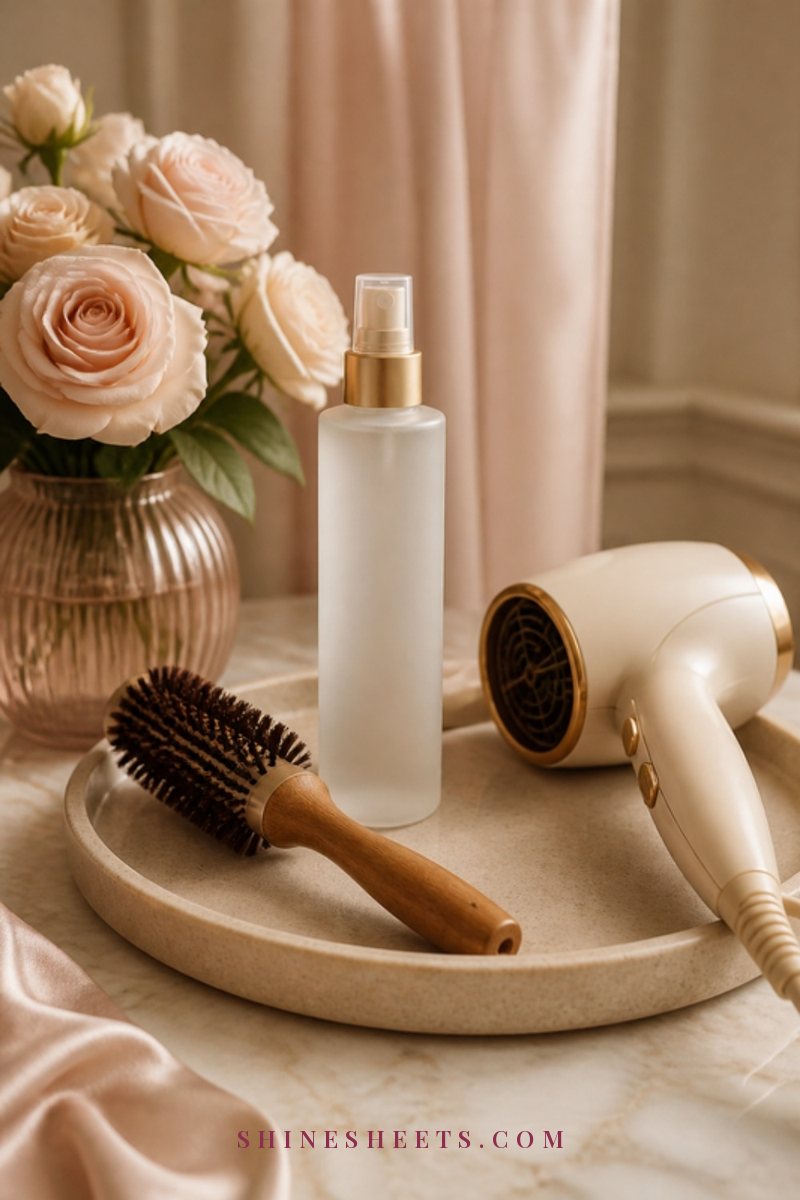
Heat is one of the fastest ways to turn bright blonde dull and yellow. High temperatures can shift tone and dry out lightened hair quickly, and you'll often notice the ends looking warmer and rougher after a lot of hot tool use.
Always use a heat protectant spray before blow-drying, curling or straightening. Look for one that lists the temperature it protects up to and feels light rather than sticky. Then:
- Let your hair air-dry until it's about 70 percent dry before using a dryer.
- Keep the dryer on medium heat and keep it moving.
- Set hot tools to the lowest temperature that works for you. Lightened and fine blonde hair rarely needs the highest setting.
- Avoid passing the same section over and over. One slow pass beats five fast ones.
- Give your hair a few heat-free days every week.
Sun, Chlorine and Hard Water
These three are the sneakiest causes of brassy, dull or greenish blonde. They do their damage slowly, so it's easy to miss until the color looks off.
Sun Protection
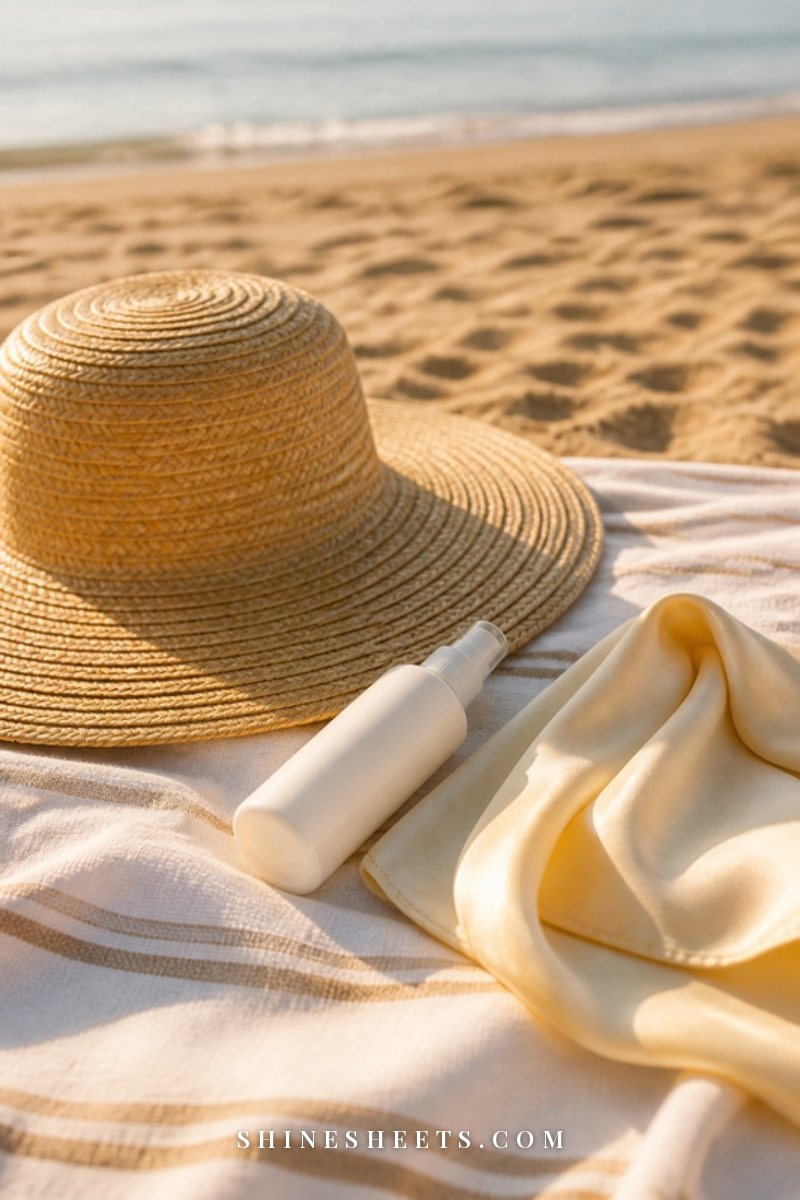
UV light breaks down both natural pigment and toner, which is why blonde hair often turns warmer and drier in summer. A UV protection spray for hair adds a light shield on sunny days. Look for a lightweight mist you can reapply after swimming. On long days outside, a wide-brimmed hat or a silk scarf is the most reliable protection of all.
Chlorine
Chlorine dries hair, and the copper found in some pool water can give lightened blonde a green tint. Before you swim:
- Wet your hair with clean tap water so it soaks up less pool water.
- Apply a little conditioner or leave-in to the lengths.
- Wear a swim cap if you swim often.
- Rinse your hair with clean water as soon as you get out.
Use a clarifying or chelating shampoo occasionally (about once every two to four weeks if you swim regularly) to remove chlorine and mineral buildup, and always follow it with a mask, because clarifying can be drying.
Hard Water
Hard water leaves minerals on the hair that can make blonde look dull, flat or slightly orange. If your shower leaves white spots on the glass, your hair is probably collecting the same minerals.
A shower head filter is a simple fix that helps reduce some of those minerals and chlorine. Look for one that fits a standard shower arm and has easy-to-replace cartridges. Combine it with a clarifying wash once or twice a month and you'll often see your blonde look brighter within a few weeks.
Nighttime Care for Blonde Hair
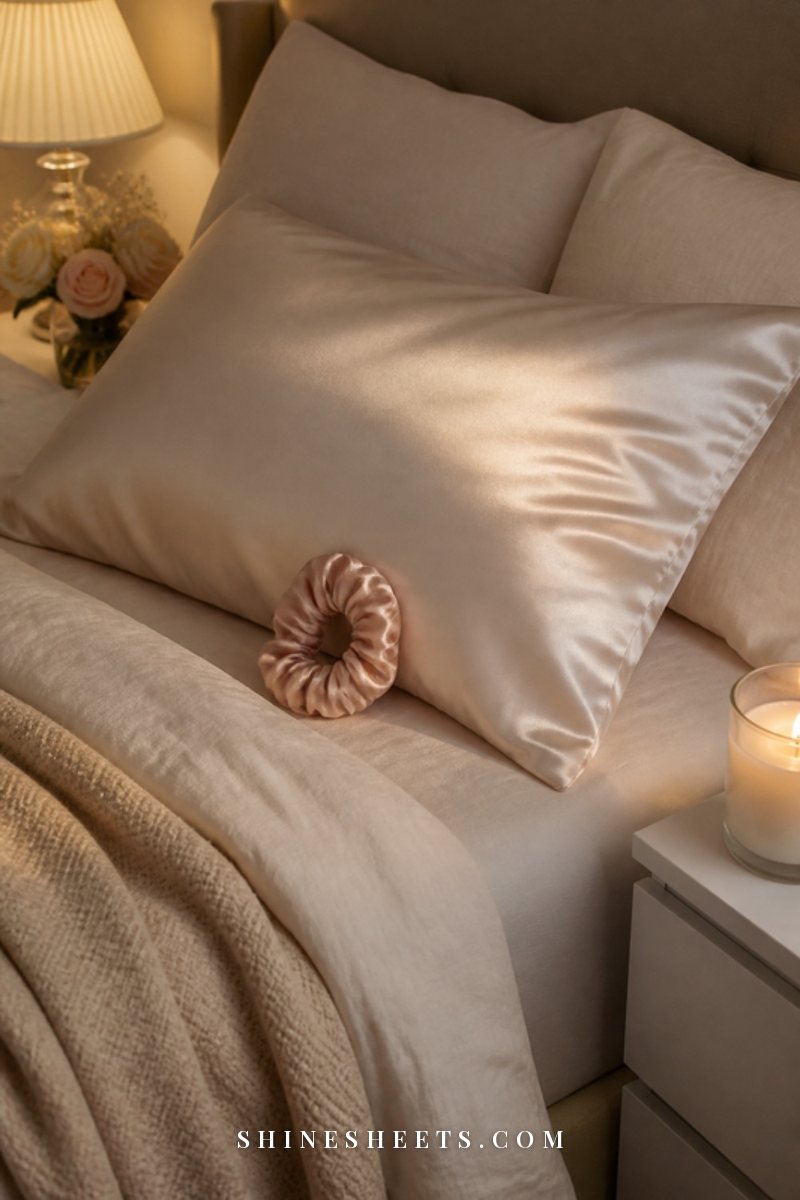
Lightened blonde hair is fragile, and the hours you spend sleeping can add friction and tangles. A few small nighttime habits protect it:
- Sleep on silk or satin. An ivory or champagne silk pillowcase creates less friction than cotton, so you wake up with fewer tangles and less frizz. Look for a smooth weave and a hidden zipper or envelope closure.
- Never sleep with wet hair. Wet hair stretches and breaks more easily. If you wash at night, dry it fully first.
- Loosely gather long hair with a soft scrunchie at the top of your head, never a tight elastic.
- Add a drop of hair oil or leave-in to dry ends once or twice a week.
If you're curious about why silk makes such a difference, my post on silk pillowcase benefits explains it for both hair and skin.
Your Weekly Blonde Hair Routine
Here's how all of this comes together in a simple week. Adjust the days to your own schedule, and if you're a natural blonde, you can skip the bond step and use purple shampoo less often.
| Day | Step | Why |
|---|---|---|
| Monday | Gentle wash with lukewarm water, condition, leave-in | Cleans without fading tone, keeps ends soft |
| Tuesday | No wash, heat-free style, UV spray if outside | Gives hair a break from water and heat |
| Wednesday | Bond repair treatment before washing, then purple shampoo for 1–3 minutes | Strengthens lightened hair and cancels yellow |
| Thursday | No wash, a drop of oil on dry ends | Seals in moisture and smooths rough ends |
| Friday | Gentle wash, heat protectant before any styling | Protects tone and condition from hot tools |
| Saturday | No wash, sun or swim protection if needed | Shields color from UV, chlorine and copper |
| Sunday | Moisturizing mask for 10 minutes, silk pillowcase at night | Restores softness and reduces overnight friction |
Every two to four weeks: a clarifying wash (followed by a mask) to remove mineral and product buildup. Every six to eight weeks: a gloss or toner refresh, ideally with your colorist.
How To Make Your Salon Blonde Last Longer
Lightening and toning take time and money, so it's worth stretching the time between appointments. These habits help your color stay closer to the shade you walked out with:
- Wait 48 to 72 hours before the first wash after a toning appointment, if your colorist recommends it. It gives the toner time to settle.
- Use dry shampoo on in-between days to stretch washes, and brush it through well so it doesn't build up at the roots.
- Turn the water temperature down for the final rinse. Cooler water helps the cuticle lie flat, which means more shine.
- Keep a simple product lineup. A gentle shampoo, a purple shampoo, a conditioner, a mask, a bond treatment and a heat protectant are enough. Layering many styling products creates buildup that dulls blonde.
- Book a trim every 8 to 12 weeks. Removing rough, porous ends makes the whole head look brighter, because damaged ends reflect less light and grab warm tones faster.
- Tell your colorist what you use at home. They can adjust the formula or recommend a matching gloss so the tone stays consistent.
If you're working on a softer, more natural grow-out, ask about a root smudge or a slightly deeper toner near the scalp. It blends the line between your roots and lightened lengths, so you can go longer between appointments without the regrowth looking harsh.
7 Blonde Hair Care Mistakes To Avoid
- Using purple shampoo every wash. It builds up a lilac or gray cast and can dry hair out.
- Washing with hot water. It fades tone faster and roughens the cuticle.
- Skipping heat protection "just this once." Lightened hair remembers every hot pass.
- Brushing wet hair from the roots down. Start at the ends with a wide-tooth comb instead.
- Going into the pool with dry hair. Dry blonde soaks up chlorinated water like a sponge.
- Clarifying too often. Once or twice a month is plenty, and always follow with moisture.
- Ignoring hard water. If your hair looks dull no matter what you use, minerals are often the reason.
Final Thoughts
Bright, soft blonde hair comes from a handful of steady habits: gentle washing, purple shampoo in moderation, bond care if you lighten, and protection from heat, sun, chlorine and minerals. You don't need a shelf full of products, just the right few used at the right time.
Start with the step that matches your biggest concern, whether that's brassiness or dryness, and build from there. Your blonde will thank you with more shine and softness every single week.