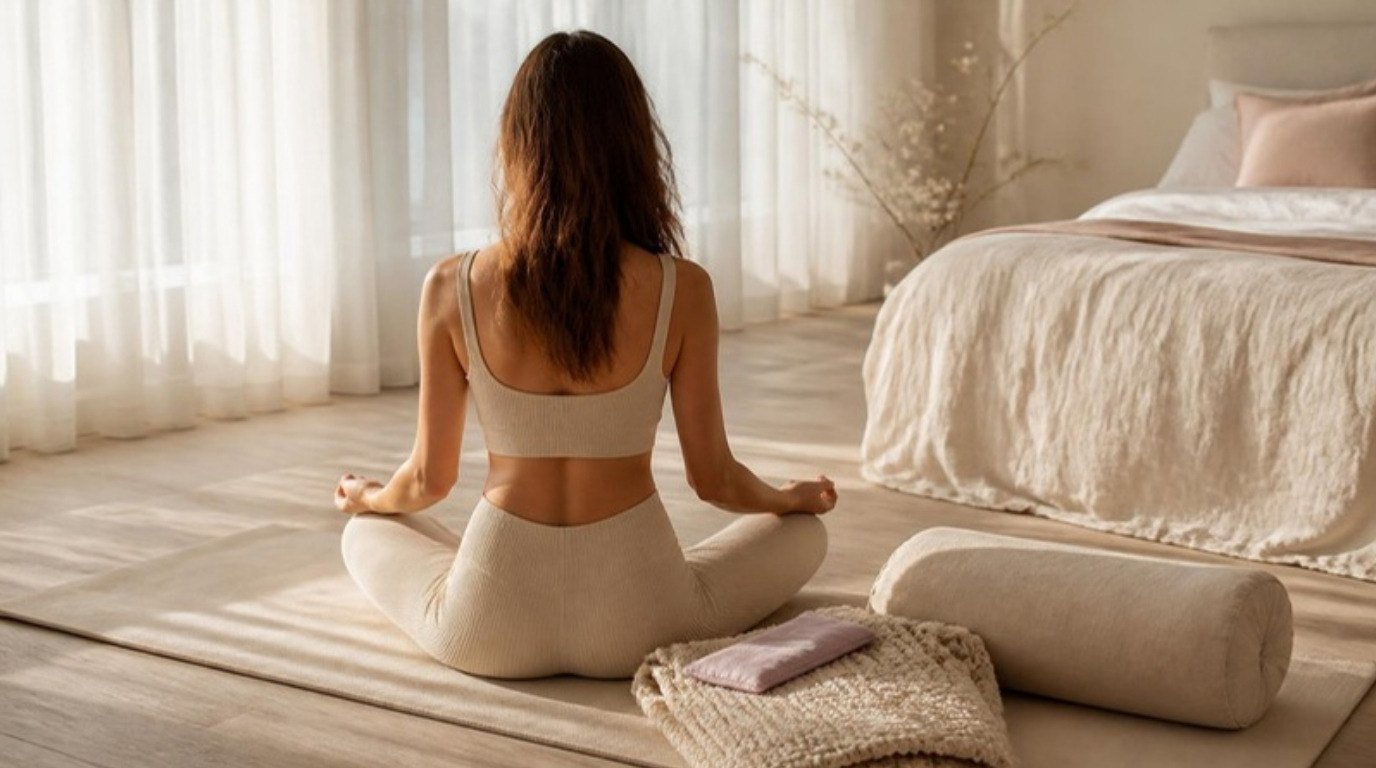
Your body often knows you're stressed before your mind admits it. The shoulders creep up, the jaw tightens, the breath gets shallow and high in the chest. You can tell yourself to relax all day long, but tension that lives in the body usually needs the body to let it go.
That's the whole idea behind somatic movement. Instead of pushing through a workout or forcing a deep stretch, you move slowly, you pay attention to what you feel and you let your nervous system catch up. It's quiet, it's simple and it asks for nothing more than a few minutes and a soft surface.
This guide to somatic exercises for beginners covers what somatic work actually is, how to set up a calm little practice space, 10 gentle exercises with exact steps, a 10-minute routine table you can follow tonight and what you might notice along the way. Everything here is meant to feel kind, never forced.
It took me a while (and a fair amount of anxiety) to understand that calming down isn't always a thinking job. Sometimes it's a shaking-out-your-hands job. Let's start there.
What Are Somatic Exercises?
"Soma" comes from the Greek word for body, and somatic exercises are movements done with your attention turned inward. The point isn't how far you stretch or how many reps you do. The point is noticing: where you feel tight, where you feel warm, what changes when you move slowly.
A few things make somatic movement different from a regular workout:
- It's slow on purpose. Moving slowly gives your brain time to register what your muscles are doing, which helps habitually tight areas soften.
- It's internal, not visual. You don't need a mirror or a perfect shape. Your eyes can be closed the whole time.
- It works with your nervous system. Many somatic practices focus on helping your body shift from "on alert" to "safe enough to rest."
- Less is often more. A tiny movement done with full attention usually does more than a big movement done on autopilot.
If you've ever tried breathing exercises for calm and noticed your whole body settle, you've already had a taste of somatic work. This simply adds gentle movement to the mix.
Why Somatic Movement Feels So Good
Stress isn't only a feeling. It's a physical state: faster heartbeat, braced muscles, shallow breath. When stress becomes a habit, the bracing can stick around long after the stressful moment has passed. You might notice it as a stiff neck, clenched teeth, a tight belly or a general sense of being "wired but tired."
Gentle somatic movement gives your body a different message. Slow, rhythmic, attentive movement tends to feel safe, and safety is what lets muscles stop guarding. Many women find that a regular practice helps them:
- Notice tension earlier, before it turns into a headache or a sleepless night.
- Feel more present in their body instead of living entirely in their head.
- Wind down more easily in the evening.
- Recover a little faster after a hard conversation or a long day.
- Feel steadier when big emotions show up.
That last one connects closely to emotional regulation skills, because so much of handling big feelings starts with calming the body first.
A gentle note: somatic exercises are a self-care practice, not a treatment. If you're living with trauma, chronic pain, a heart condition, pregnancy or an injury, talk with your doctor or a trauma-informed therapist before starting, and skip anything that doesn't feel right. If any exercise brings up strong emotions, dizziness or panic, stop, open your eyes, look around the room and come back to it another day (or not at all). Your comfort always wins.
How To Set Up a Calm Practice Space
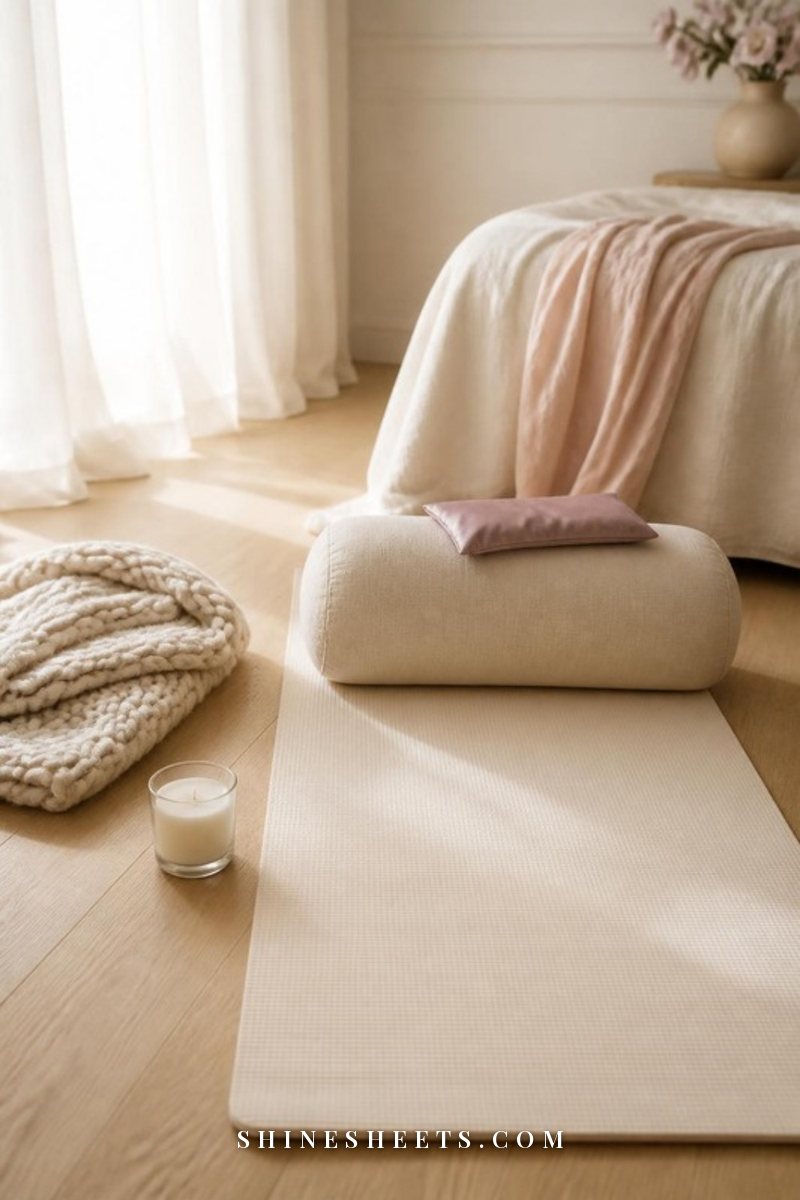
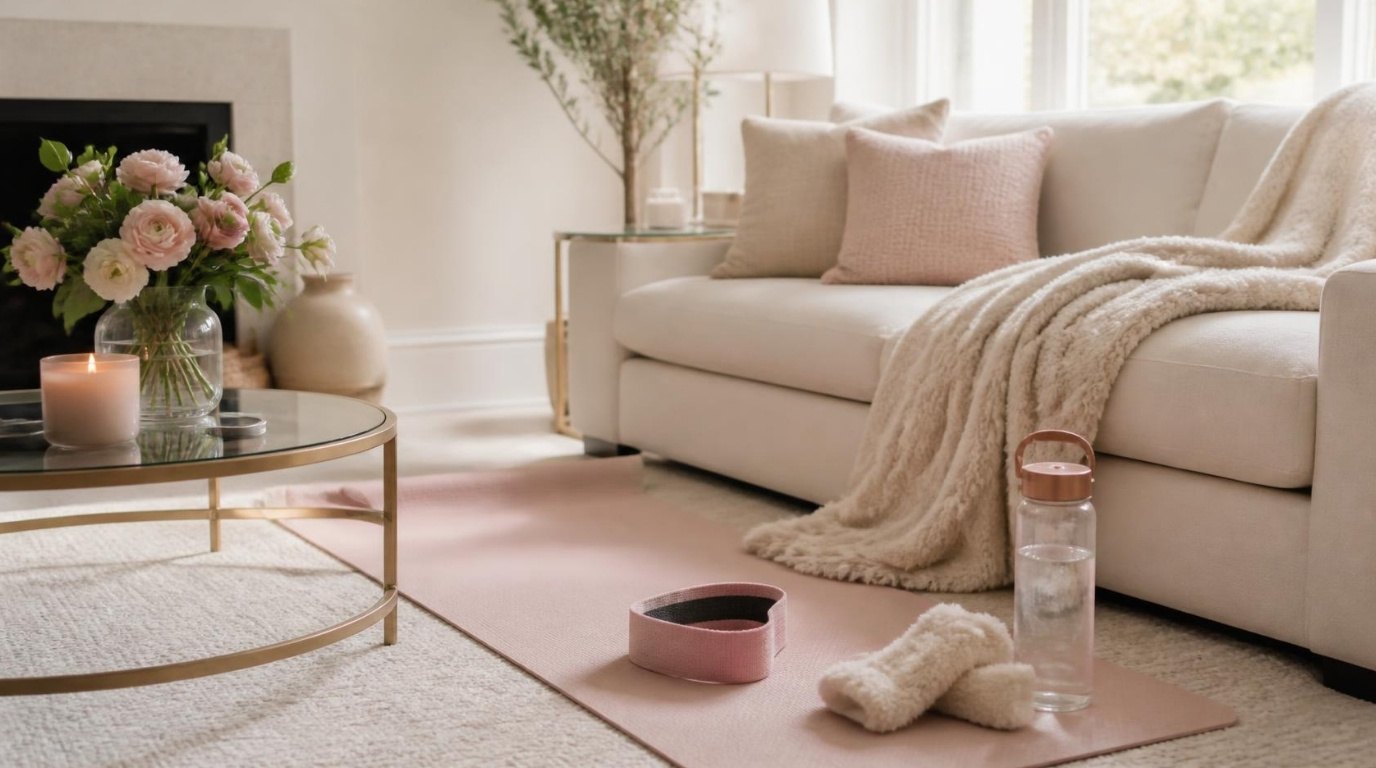
You can do somatic exercises on your bed, on a rug or even in a chair. Still, a small dedicated space makes it easier to show up, because your brain starts to associate that spot with slowing down.
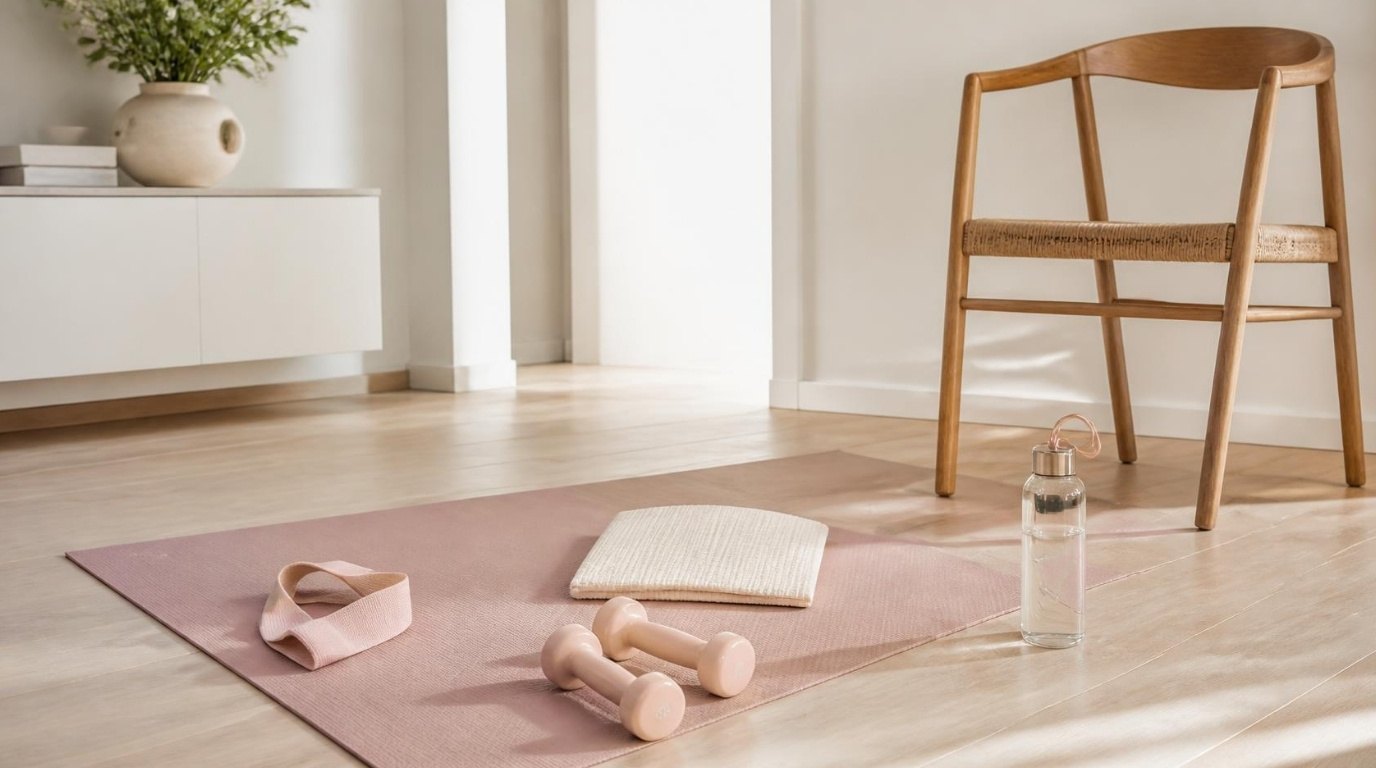
- A soft surface. A thicker mat is kinder for lying-down moves. Look for one at least 6mm thick with a non-slip base, like this thick cream yoga mat.
- Something to lean on. A firm, round cushion supports your knees in the body scan and your hips in legs up the wall. A round linen bolster pillow is a pick for anyone who likes to feel held.
- Darkness for your eyes. A light, weighted cover over your eyes helps you turn inward faster. I'd choose a lavender eye pillow with a removable, washable cover.
- Warmth. Your body temperature drops when you lie still, and feeling cold keeps you on alert. Keep a soft knit throw blanket within reach.
- Soft light. Dim the overhead lights, open the curtains during the day or light a glass candle in the evening (on a stable surface, away from fabric, and blow it out before you get sleepy).
Silence your phone, or put it in another room. Even ten undisturbed minutes feel very different from ten minutes with one ear listening for a notification.
10 Gentle Somatic Exercises for Beginners
Read through each exercise once before you try it. Move at about half the speed you think you should, and remember that every exercise has an "opt out" option: stopping is always allowed.
1. The Gentle Body Scan
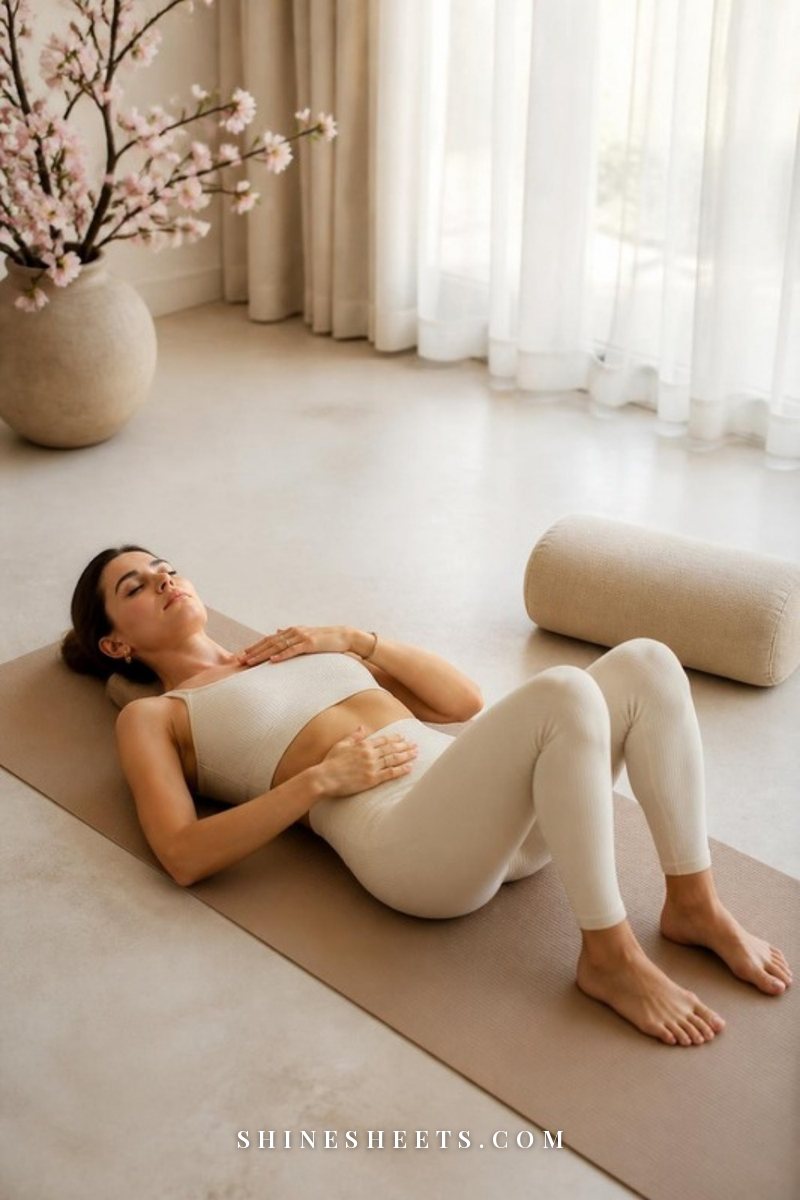
This is the foundation of somatic work, and it's the best place to begin because you don't have to move at all.
- Lie on your back with your knees bent and feet flat, or with a bolster under your knees. Rest one hand on your chest and one on your belly.
- Take three easy breaths without trying to change them.
- Bring your attention to your feet. Notice temperature, pressure against the floor, any tingling or nothing at all.
- Slowly move your attention up: calves, knees, thighs, hips, belly, chest, hands, arms, shoulders, neck, jaw, face. Spend about 10 to 15 seconds on each area.
- When you find tension, don't fight it. Just name it in your head ("tight shoulders") and let your breath move toward it.
How long: 3 to 5 minutes. Good to know: if closing your eyes feels uncomfortable, keep them open and rest your gaze softly on one spot on the ceiling.
2. Shaking It Out
Animals shake after a scare to release the extra energy, and a gentle version works beautifully for humans too. It looks a little silly, which is part of the charm.
- Stand with your feet hip-width apart and knees slightly soft.
- Start by shaking your hands loosely at the wrists, like you're flicking off water.
- Let the shake travel up into your forearms, then your shoulders.
- Add a light bounce through your knees so your whole body jiggles gently. Let your jaw hang loose.
- After 60 to 90 seconds, slow down gradually and stand completely still. Notice the buzzing, warm feeling in your body for a few breaths.
How long: 1 to 2 minutes. Good to know: you can do this seated by shaking only your hands and arms. It's a lovely reset after a stressful call.
3. Pandiculation: The Slow, Yawning Stretch
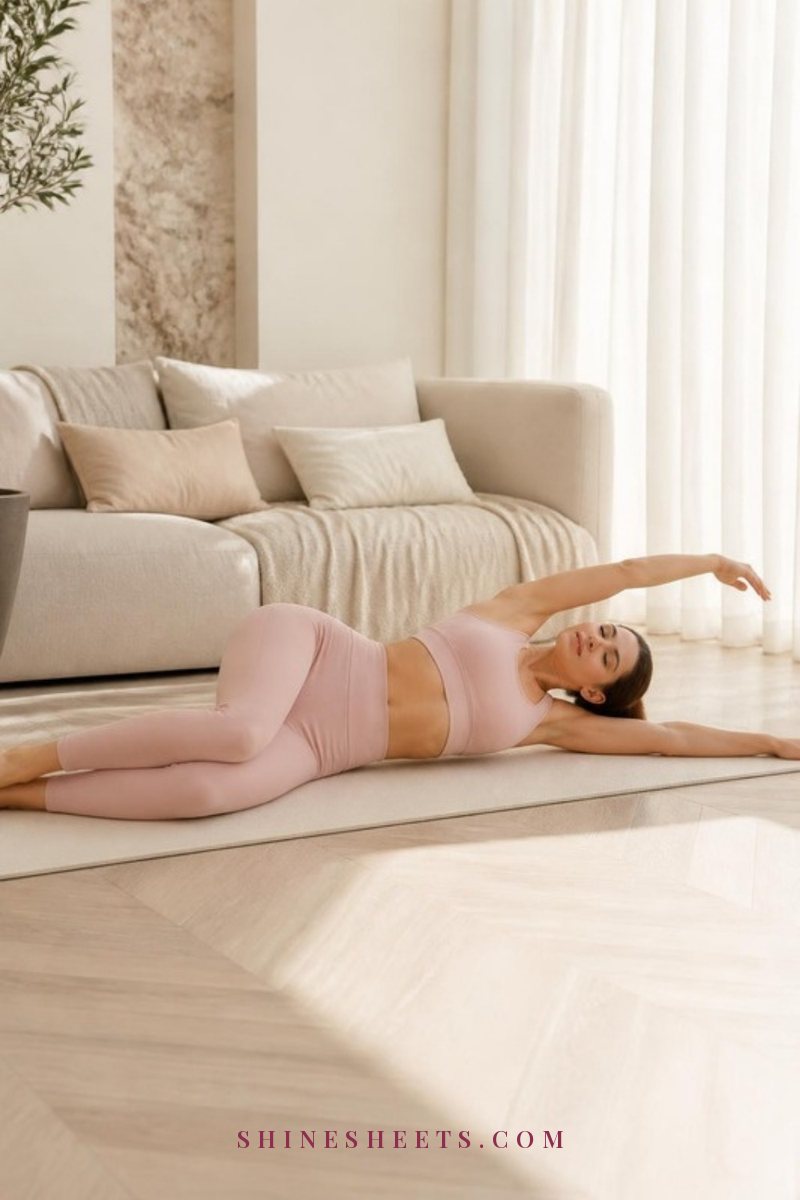
Pandiculation is the stretch your body does on its own when you wake up: a slow contract, a long reach and a soft release, often with a yawn. Doing it on purpose helps your brain "reset" muscles that have been holding on all day.
- Lie on your side with your knees slightly bent and your head resting on your bottom arm or a cushion.
- Gently curl inward, tightening your belly and drawing your top knee and elbow toward each other. Hold the gentle squeeze for 3 seconds, at about 30 percent effort.
- Very slowly, over 5 to 8 seconds, reach your top arm long overhead and your top leg long away from you, like a lazy morning stretch.
- At the end, let everything go completely limp for a few breaths.
- Repeat 3 times, then switch sides.
How long: 2 to 3 minutes. Good to know: the slow release is the important part. If you rush it, it becomes a regular stretch.
4. Gentle Neck Release
The neck and shoulders are where most of us store everyday stress (hello, laptop posture). This release is tiny, slow and surprisingly effective.
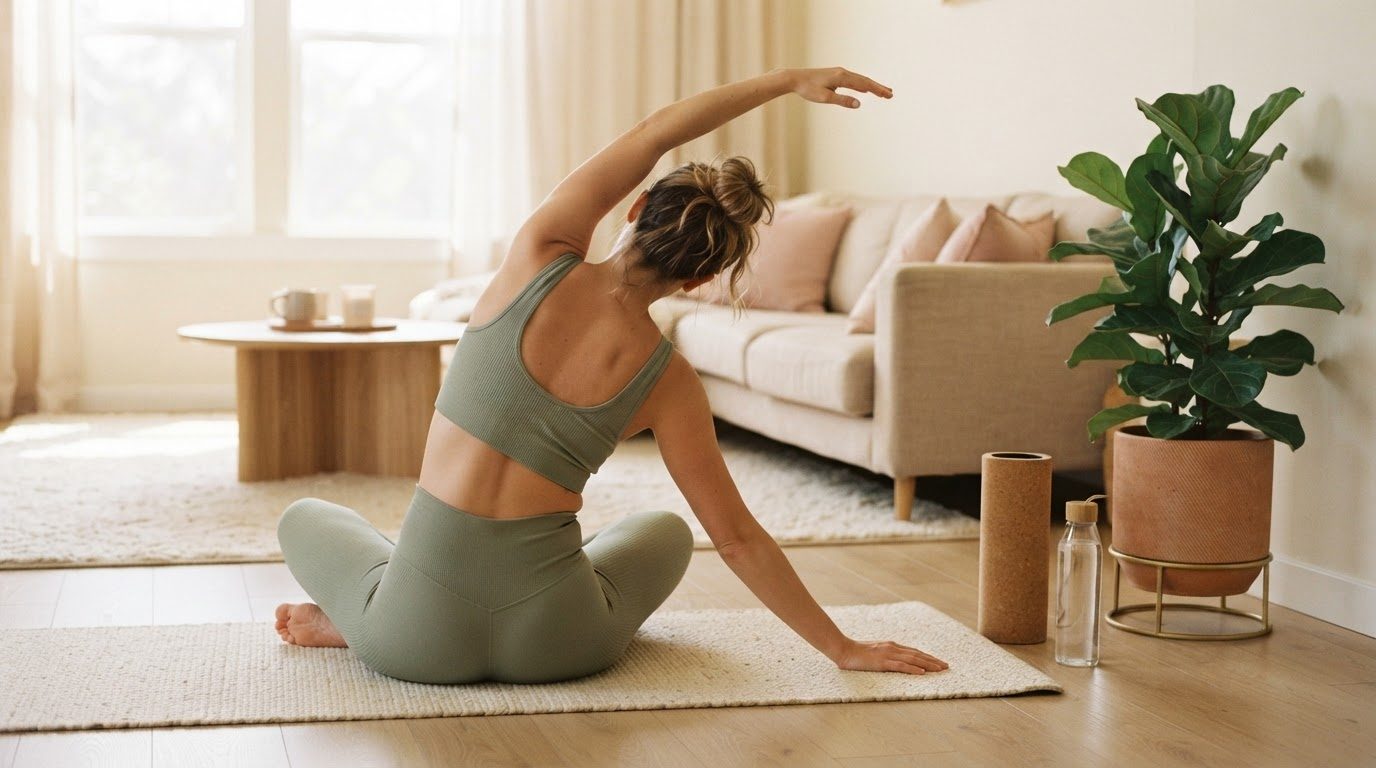
- Sit tall in a chair or cross-legged on your mat, shoulders relaxed down.
- Slowly tip your right ear toward your right shoulder, only as far as feels easy. Stop well before any strain.
- Pause there for three breaths and notice the left side of your neck.
- Bring your head back to center as slowly as you can, taking a full 5 seconds.
- Repeat on the left side. Then slowly nod your chin down toward your chest and back to neutral, three times.
How long: 2 minutes. Good to know: skip big head circles, especially rolling your head backward. Small and slow is the goal. If desk days leave you stiff, my gentle posture exercises pair well with this one.
5. The Butterfly Hug
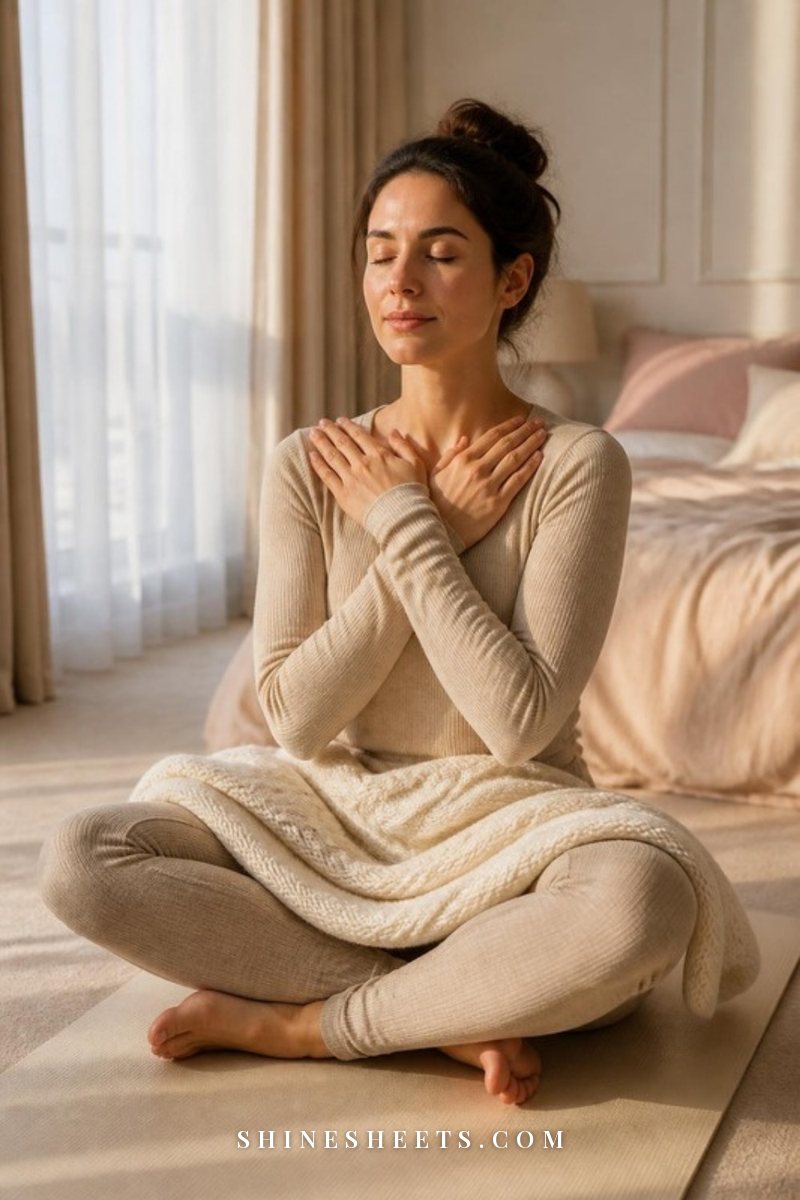
The butterfly hug is a self-soothing technique that uses slow, alternating taps. It feels a bit like being held, and it's discreet enough to do almost anywhere.
- Sit comfortably and cross your arms over your chest so each hand rests just below the opposite collarbone, fingertips pointing toward your shoulders.
- Close your eyes or lower your gaze.
- Slowly tap your hands, alternating left and right, like the gentle flap of butterfly wings. Aim for about one tap per second.
- Breathe slowly through your nose while you tap.
- After 30 to 60 seconds, stop, keep your hands resting where they are and notice how you feel.
How long: 1 to 2 minutes. Good to know: you can pair it with a calming phrase in your head, like "I'm here, I'm okay right now."
6. Humming and the Voo Breath
Sound creates vibration in your throat and chest, and many people find it calms them faster than silent breathing. The "voo" sound is a low, foghorn-like tone that feels wonderfully grounding.
- Sit or lie down comfortably and take a slow breath in through your nose, letting your belly expand.
- As you breathe out, make a long, low "voooo" sound, like a distant foghorn. Let it come from your belly, not your throat.
- Keep the sound going until you've comfortably run out of air (don't strain).
- Pause, let the next breath come in naturally and repeat.
- Do 5 to 8 rounds, then sit quietly and notice the vibration fading.
How long: 2 minutes. Good to know: if "voo" feels too odd, a closed-mouth hum works too. For more ideas along these lines, my guide to a quick vagus nerve reset has a few 60-second options.
7. Orienting
Orienting is one of the gentlest somatic tools, and it's especially helpful if turning inward feels like too much. Instead of focusing on your body, you let your eyes explore the room. It reminds your nervous system that you're in a safe place right now.
- Sit comfortably with your eyes open.
- Let your head and eyes slowly turn to look around the room, as if you've just arrived somewhere new.
- Let your gaze land on something pleasant: a plant, the light on a wall, a soft texture. Stay there for a few breaths.
- Name three things you can see, slowly, in your head.
- Notice any small changes: a deeper breath, a sigh, your shoulders dropping.
How long: 1 to 2 minutes. Good to know: orienting is a lovely way to finish any practice, because it brings you back to the room gently.
8. Slow Hip Rolls
Hips and lower back hold a surprising amount of tension, especially if you sit a lot. These rolls are slow enough to feel like a massage from the inside.
- Lie on your back with your knees bent and feet flat, hip-width apart. Arms rest at your sides.
- Slowly let both knees drift to the right, only a few inches at first. Let your head roll gently to the left if that feels nice.
- Take 5 seconds to bring your knees back to center, then let them drift to the left.
- With each round, let your knees travel a little farther, only if it feels easy.
- After 6 to 8 slow rounds, rest your knees in the center and notice your lower back against the floor.
How long: 2 minutes. Good to know: if you have tight hips, roll out your outer thighs and glutes beforehand with a soft-density foam roller, moving slowly and staying away from bony areas.
9. Somatic Cat-Cow
You may know cat-cow from yoga, but the somatic version is much slower, almost in slow motion. The goal is to feel each part of your spine move, one at a time. If you'd like to build toward a full flow later, my gentle yoga for beginners routine is a natural next step.
- Come onto your hands and knees, hands under shoulders and knees under hips. Place a folded blanket under your knees if they're sensitive.
- On an inhale, begin at your tailbone and slowly tilt it up, letting your belly soften down and your chest open. Your head lifts last.
- On an exhale, begin again at your tailbone, tucking it under and rounding your back one vertebra at a time. Your head drops last.
- Take 6 to 8 seconds for each direction.
- After 5 rounds, sit back on your heels and rest.
How long: 2 minutes. Good to know: if kneeling isn't comfortable, do the same movement seated on the edge of a chair with your hands on your knees.
10. Legs Up the Wall
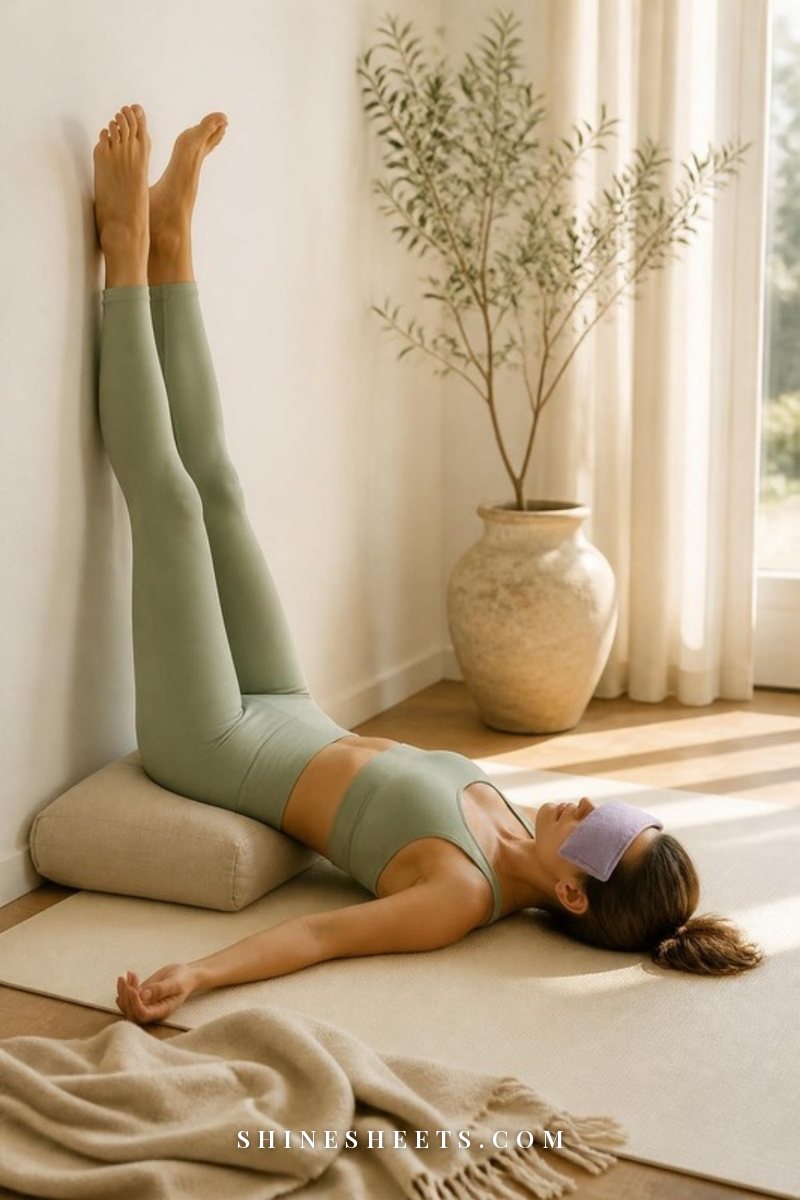
This restful pose is a classic for a reason. It's an easy, passive way to signal "we're done for the day" to your whole body, and it makes a wonderful last step before sleep.
- Sit sideways next to a wall with one hip touching it.
- Gently swing your legs up the wall as you lower your back to the floor. Scoot your hips as close to the wall as feels comfortable (a few inches away is completely fine).
- Slide a bolster or folded blanket under your hips if you'd like extra support.
- Let your arms rest open at your sides, palms up. Place your eye pillow over your eyes.
- Breathe slowly and simply rest. To come out, bend your knees, roll to one side and pause before sitting up.
How long: 3 to 5 minutes. Good to know: skip this one if you're pregnant, have glaucoma or uncontrolled blood pressure unless your doctor says it's fine. For a full wind-down sequence, try my bedtime yoga flow.
Your 10-Minute Somatic Routine
Here's a simple routine that strings together the gentlest moves into one calm sequence. Screenshot it, prop your phone somewhere you can't easily reach it (so you're not tempted to check messages) and follow along at your own pace.
| Minute | Move | Cue | What You May Notice |
|---|---|---|---|
| 0–1 | Orienting | Look slowly around the room and let your eyes land on something pleasant. | A deeper breath or a small sigh |
| 1–2 | Shaking It Out | Loose hands, soft knees, gentle bounce, then stand still. | Tingling, warmth, a buzzy feeling |
| 2–3 | Gentle Neck Release | Ear toward shoulder, three breaths, return in 5 seconds. | Softer shoulders, a lighter head |
| 3–4 | Butterfly Hug | Alternate slow taps below your collarbones, one per second. | A held, comforted feeling |
| 4–5 | Voo Breath | Long, low "voooo" on every exhale, 5 rounds. | Vibration in your chest, a calmer heartbeat |
| 5–6 | Somatic Cat-Cow | Move from your tailbone, one vertebra at a time. | Warmth along your spine |
| 6–7 | Slow Hip Rolls | Knees drift side to side, 5 seconds each way. | Lower back releasing into the floor |
| 7–8 | Pandiculation | Gentle curl, slow long reach, full release. One side each. | A yawn, heavy limbs |
| 8–10 | Legs Up the Wall | Arms open, eye pillow on, just breathe. | Stillness, sleepiness, a quiet mind |
If ten minutes feels like too much right now, do just the first three rows. Three minutes of attention is still three minutes of your body feeling safe.
What To Expect When You Start
Somatic work is subtle, especially at first. Here's what's completely normal:
- Feeling nothing. Very common in the first few sessions. Noticing takes practice, like a muscle that hasn't been used in a while.
- Yawning, sighing or watery eyes. These are often signs your body is shifting into rest.
- Tingling or warmth. Usually just increased awareness and circulation.
- Emotions bubbling up. Sometimes a little sadness or relief appears out of nowhere. You don't need to analyze it. Let it pass through, and if it feels like too much, open your eyes, orient to the room and stop for the day.
- Feeling restless. If slowing down feels unbearable, start with the more active moves (shaking, orienting) before the still ones.
Some women like to jot a line in a notebook afterward ("shoulders softer, sleepy, a bit teary"), which makes it easier to see small changes over a few weeks. I love doing this after my evening tea, when everything already feels slower.
Tips To Make Somatic Exercises a Habit
- Attach it to something you already do. Right after brushing your teeth at night, or as soon as you close your laptop for the day.
- Start embarrassingly small. One exercise for two minutes counts. Small and consistent beats long and occasional.
- Keep your space ready. A mat that's already rolled out is far more inviting than one buried in a closet.
- Pick moves for your mood. Wired and anxious? Shaking and the voo breath. Heavy and tired? Pandiculation and hip rolls. Can't sleep? Body scan and legs up the wall.
- Drop the performance mindset. There's no "good" or "bad" somatic session. If you showed up and paid attention, you did it right.
- Be extra gentle on hard days. When you're overwhelmed, orienting alone is enough, and so is lying under a warm blanket doing nothing at all.
Final Thoughts
Somatic exercises won't fix every stressful day, but they give you something precious: a way back into your body when your mind is running too fast. A few slow minutes on a mat, a hand on your chest, a long low hum. That's all it takes to start.
Begin with one exercise tonight, move at half speed and let it be imperfect. Your body has been carrying a lot, and it deserves a little patience and a soft place to land.