Breathing is the one calming tool you always have with you. You don't need an app, a quiet room or even a free minute. A few slower breaths can't fix everything, but they can gently tell your body that it's safe enough to settle, and that small shift often makes the next step feel easier.
The trick is knowing which breath to use when. A technique that helps you fall asleep might not be the right one in the five minutes before a presentation, and a breath that feels lovely on a slow Sunday might feel like too much during a panicky moment.
This guide walks you through six breathing exercises for calm: box breathing, a gentle 4-7-8 style breath, the physiological sigh, extended exhale breathing, belly breathing and simple alternate nostril breathing. For each one you'll find how to do it, how long, when to use it and who should go gently. There's also a "which breath for which moment" table and a one-minute breathing card at the end.
As someone prone to anxiety, I can tell you that the best technique is simply the one you'll actually remember when you need it. Try a few, and keep the one that feels like home.
A Gentle Safety Note First
Breathing exercises are generally gentle, but bodies are different. Please keep these simple guidelines in mind:
- Stop if you feel dizzy, lightheaded, tingly or short of breath. Go back to normal breathing and rest for a moment.
- Skip breath holds if you're pregnant, have a heart condition, high or low blood pressure, or a lung condition like asthma or COPD, unless your doctor has said they're fine for you. Every technique here can be done without holds.
- Never practice while driving or in water, especially the slower, sleepier techniques.
- Don't force it. Breathing should feel easy. If counting makes you more anxious, let go of the numbers.
- Breathing is support, not treatment. If anxiety, panic or low mood feel frequent or overwhelming, please talk to a doctor or mental health professional.
Why Slow Breathing Can Help You Feel Calmer
When you feel stressed, your body often switches into a quicker, shallower breathing pattern. That's part of the natural "get ready" response, and it isn't something wrong with you. The problem is that fast breathing can also keep the alarm going, even after the stressful thing has passed.
Slowing your breath, and especially making your exhale a little longer, is a gentle way of sending the opposite message. Many people notice their shoulders drop, their thoughts slow and their heartbeat feel steadier after a few minutes. It won't feel dramatic every time, and that's okay. Think of it as turning the volume down a few notches, not switching it off.
Two small things make every technique work better:
- Breathe through your nose when you can. It naturally slows the breath and feels calmer for most people.
- Soften your body. Unclench your jaw, drop your shoulders and let your belly relax. It's hard to breathe slowly with a tight stomach.
If you're often looking for something to do in an anxious moment, my guide on how to calm anxiety fast pairs beautifully with the techniques below.
6 Breathing Exercises for Calm
Read through all six once, then pick two to practice this week: one quick option for stressful moments and one slower option for evenings. That's a lovely little toolkit to start with.
1. Box Breathing
Box breathing is the steady, even one. Four equal sides: breathe in, hold, breathe out, hold. The structure gives a busy mind something simple to follow, which is why it's so popular before stressful moments.
- How: Sit upright with your feet on the floor. Breathe in through your nose for a count of 4. Hold gently for 4. Breathe out slowly through your mouth or nose for 4. Hold with empty lungs for 4. That's one round. If you like, trace a square with your finger on your knee while you count.
- How long: 4 to 6 rounds, which is about one to two minutes. If 4 counts feels too long, try 3.
- When to use it: Before a meeting, a phone call, an exam, a hard conversation, or any moment when you want to feel focused instead of frazzled.
- Go gently if: breath holds make you feel tense or lightheaded. Simply skip the holds and breathe in for 4, out for 4. If you're pregnant or have a heart or lung condition, leave out the holds unless your doctor says they're fine for you.
A small honest admission: the holds used to make me feel more anxious, not less. Shortening them to two counts was what made box breathing click for me, so give yourself permission to adjust.
2. 4-7-8 Style Breathing (Gently)
This pattern stretches the exhale and adds a pause, which many people find soothing at bedtime. The classic version is in for 4, hold for 7, out for 8, but you don't need to follow those exact numbers. The ratio matters more than the length.
- How: Rest the tip of your tongue lightly behind your top teeth. Breathe in quietly through your nose for 4. Hold gently for 7. Breathe out through your mouth with a soft whoosh for 8. If that feels like too much, try in for 2, hold for 3, out for 4, and build up only if it stays comfortable.
- How long: 3 to 4 rounds to start. There's no need to go longer at first.
- When to use it: In bed with the lights off, when your thoughts are racing at night, or during a slow wind-down routine.
- Go gently if: you feel dizzy, short of breath or uneasy. Skip the hold, shorten the counts or return to normal breathing. This one is best done sitting or lying down, never while driving.
3. The Physiological Sigh
This is the quickest reset on the list, and it's something your body already does naturally when you sigh deeply or after a good cry. Two inhales, one long exhale. It's ideal when you need relief in under a minute.
- How: Breathe in through your nose until your lungs feel almost full. Then take a second, shorter sip of air through your nose on top of it. Now let it all out slowly through your mouth, as long as is comfortable, like a relaxed sigh.
- How long: 1 to 3 sighs. Then return to normal breathing and notice how your shoulders feel.
- When to use it: A sudden wave of stress, a panicky moment, right after reading an upsetting message, or when you notice you've been holding your breath.
- Go gently if: you have asthma or another breathing condition and fast inhales feel uncomfortable. Make the inhales slower and smaller, and focus on the long, easy exhale.
4. Extended Exhale Breathing
If you only learn one technique, make it this one. Simply breathing out longer than you breathe in is one of the easiest ways to help your body shift toward rest. No holds, no complicated counting.
- How: Breathe in through your nose for a count of 4. Breathe out through slightly pursed lips, like blowing gently through a straw, for a count of 6. If 6 feels like a stretch, try in for 3, out for 5. The only rule: the out-breath is a little longer than the in-breath.
- How long: 1 to 5 minutes. Even 5 breaths can make a difference.
- When to use it: Anytime, anywhere. It's discreet enough for a meeting, a queue, a commute or a doctor's waiting room.
- Go gently if: you start to feel lightheaded. Shorten both counts and breathe a little more naturally. It's always fine to stop.
5. Belly Breathing
When we're stressed, we tend to breathe high and shallow into the chest. Belly breathing (sometimes called diaphragmatic breathing) brings the breath lower and slower. It feels a bit strange at first, which is completely normal.
- How: Lie on your back or sit comfortably. Place one hand on your chest and one on your belly. Breathe in slowly through your nose and let your belly rise into your hand, while the hand on your chest stays fairly still. Breathe out slowly and feel your belly soften back down. Keep it relaxed, not forced.
- How long: 3 to 10 minutes. Start with 3 and add a minute when it feels natural.
- When to use it: In the morning before getting up, during a gentle evening routine, or as a daily practice to make other techniques easier.
- Go gently if: you've recently had abdominal surgery or you're pregnant and lying flat isn't comfortable. Practice sitting up or on your side with pillows, and keep the breath easy.
A soft lavender eye pillow resting over your eyes makes belly breathing in bed feel extra restful, especially if light tends to keep your mind busy.
6. Simple Alternate Nostril Breathing
This one comes from yoga practice and has a gentle, balancing feel. Breathing through one nostril at a time naturally slows you down, and the small hand movement gives your attention something to focus on.
- How: Sit comfortably with a straight back. Rest your left hand in your lap. Use your right thumb to gently close your right nostril and breathe in slowly through the left. Close the left nostril with your ring finger, release your thumb and breathe out through the right. Breathe in through the right, close it, and breathe out through the left. That's one round.
- How long: 5 to 10 rounds, roughly two to three minutes.
- When to use it: Midafternoon when your mind feels scattered, before journaling, or as a calm start to a weekend morning.
- Go gently if: your nose is blocked, you have a cold or allergies are acting up. Just breathe normally through both nostrils instead. There's no need to hold the breath between sides.

Which Breath for Which Moment
When you're stressed, the last thing you want is to choose from six options. Use this table as your shortcut. Screenshot it, or copy your favorite rows into your notes app.
| Moment | Try this breath | How long | Little extra |
|---|---|---|---|
| Before sleep | Gentle 4-7-8 style or belly breathing | 3 to 10 minutes | Lights low, phone away, eye pillow on |
| Panicky moment | Physiological sigh, then extended exhale | 1 to 3 sighs, then 1 to 2 minutes | Feet on the floor, name five things you see |
| Before a meeting or call | Box breathing (holds optional) | 4 to 6 rounds | Sit tall, shoulders down, sip of water |
| After an argument | Extended exhale | 2 to 5 minutes | Step outside or into another room first |
| Morning | Belly breathing | 3 to 5 minutes | Before you check your phone |
| Scattered afternoon | Alternate nostril breathing | 5 to 10 rounds | Then write your next three tasks |
| On the go | Extended exhale | 5 to 10 breaths | Nobody will notice, so do it anywhere |
Your 1-Minute Calm Breathing Card
For the moments when even the table feels like too much, here's a simple one-minute sequence. It combines the quickest techniques in a gentle order and works almost anywhere.
- Arrive (10 seconds): Feet flat, shoulders down, unclench your jaw. Notice that you're breathing.
- Sigh (15 seconds): Two physiological sighs. In through the nose, a little extra sip, long slow breath out.
- Lengthen (30 seconds): Three slow breaths: in for 4, out for 6.
- Return (5 seconds): Say quietly, "I'm okay right now. I can take the next small step."
That's it. One minute, four steps. You can repeat it as many times as you like. If you'd like some gentle words to add to step four, my list of affirmations for anxiety has plenty to choose from.
A Gentle 5-Minute Bedtime Breathing Routine
Evenings are when many of us feel our worries most, because the day finally goes quiet and there's room for every thought to show up at once. A short breathing routine gives your mind something soft to hold onto instead. Here's a simple sequence for when you're already in bed:
- Settle in (30 seconds): Lie on your back or side, lights low, phone out of reach. Let your arms rest heavy by your sides.
- Two slow sighs (30 seconds): Use the physiological sigh to release the day. Let the out-breaths be loose and unhurried.
- Belly breathing (2 minutes): One hand on your belly, breathing slowly into it. No counting, just noticing the rise and fall.
- Gentle 4-7-8 style (1 minute): Three or four rounds at whatever counts feel comfortable. Skip the hold if you prefer.
- Let go (1 minute): Stop guiding the breath. Let it find its own easy rhythm and allow yourself to drift.
If you fall asleep halfway through, that's a success, not a failure. For more ways to help your evenings feel restful, my sleep hygiene checklist covers the small habits that make a big difference.
How To Build a Simple Breathing Habit
Breathing exercises are easiest to reach for in hard moments when you've practiced them on easy ones. You don't need much time. A few minutes a day is plenty.
Attach It to Something You Already Do
Pair your practice with a daily anchor: while the kettle boils, before you open your laptop, after brushing your teeth at night. A cup of chamomile herbal tea in the evening is a sweet cue for a few minutes of belly breathing while it steeps.
Create a Small Calm Spot
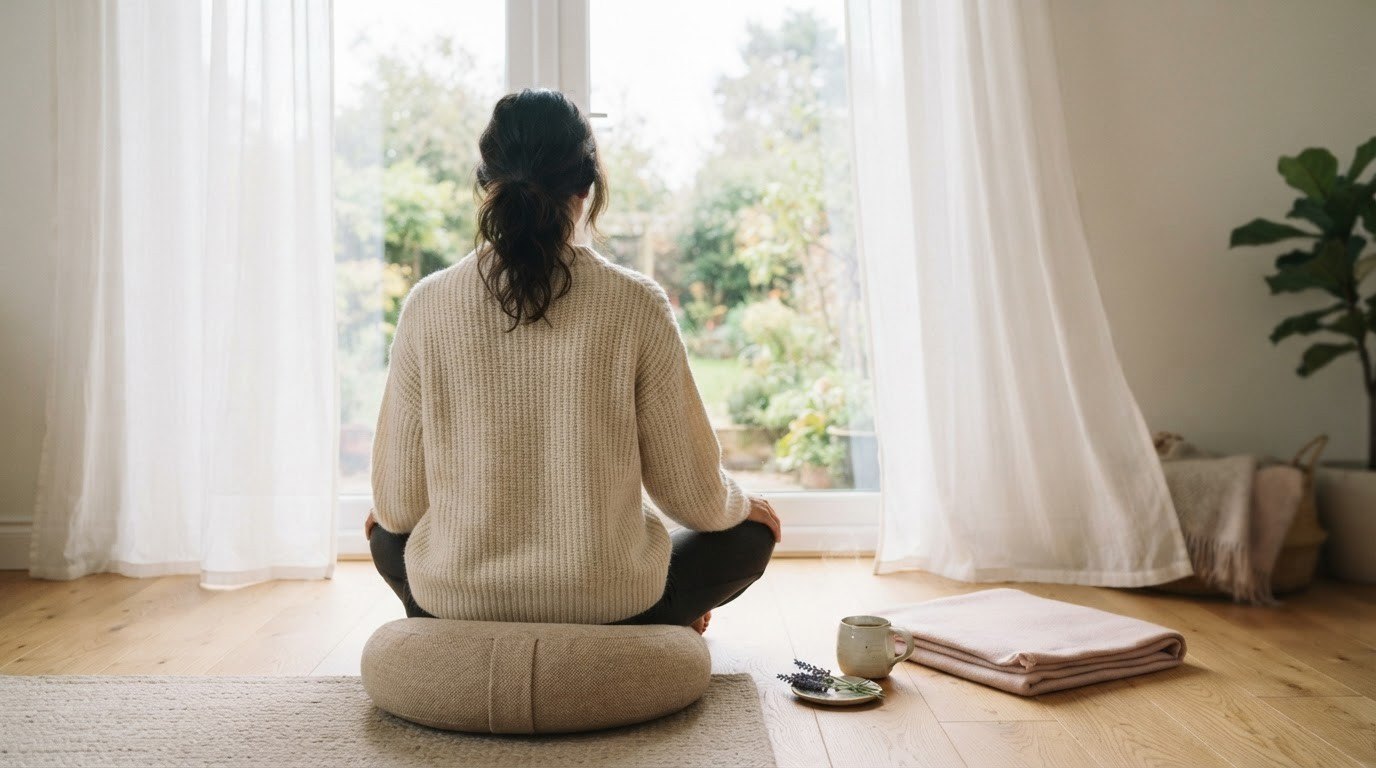
Having one spot that signals "slow down" helps your body settle faster. It might be the corner of your bed, a chair by the window or a cushion on the floor. A beige meditation cushion makes sitting cross-legged more comfortable, and a white essential oil diffuser with a soft scent like lavender can become a lovely part of the ritual. Keep scents light, and skip them if they bother your breathing.
Notice What Changes
After a week, jot down which technique felt best and when. A small cream linen journal is perfect for a line or two each evening: "Box breathing before my call today. Felt steadier." Over time, you'll see your own patterns, and that's much more useful than any general rule.
Combine It With Gentle Movement
Breathing and slow stretching work wonderfully together, especially at night. If you'd like to try that, my bedtime yoga routine weaves easy breath work into simple poses you can do on your bed.
Common Breathing Mistakes (and Easy Fixes)
- Breathing too deeply. Calm breathing is slow, not huge. If you're gulping air, make each breath smaller and softer.
- Forcing the counts. Numbers are a guide, not a test. Shorten them whenever you need to.
- Only trying it during a crisis. A brand-new skill is hard to use in a panic. Practice on calm days first.
- Expecting instant results. Some days one minute helps a lot. Other days it just takes the edge off. Both count.
- Tensing up while you breathe. Check your jaw, shoulders and hands. Relax them on every out-breath.
- Giving up after one try. Every technique feels a bit awkward at first. Give it three or four goes before deciding.
And when breathing becomes part of a slower, kinder way of living, it starts to feel less like an emergency tool and more like a small daily gift. My guide to finding inner peace has more gentle ideas in that direction.
Final Thoughts
You don't need to master all six breathing exercises for calm. One or two familiar techniques, practiced a little each day, are enough to give you a steadier place to return to when life feels loud.
Start tonight with five slow breaths, each out-breath a little longer than the one before. It's a small thing, and it's also a quiet way of telling yourself that you're worth slowing down for.