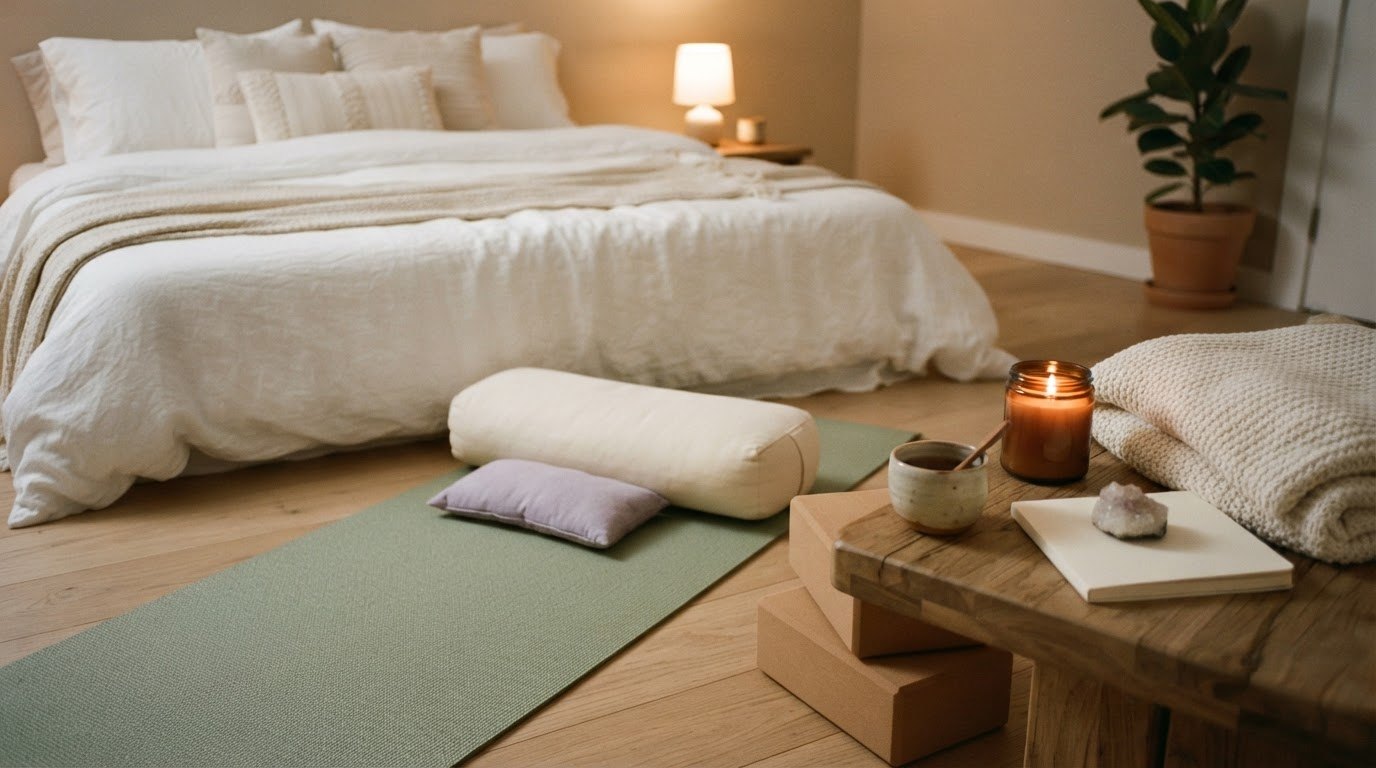
You know the moment. The lights are off, your body is tired, and your brain decides this is the perfect time to replay a conversation from Tuesday, draft tomorrow's to-do list and wonder whether you actually locked the door. You roll over. You check the time. You roll over again. Your body wants sleep, but your mind is still running laps.
On nights like that, I'd always try to think my way to sleep, which (as you can probably guess) never worked. What finally helped was getting out of my head and into my body for a few minutes before bed. Not a sweaty workout, not a complicated sequence, just slow, gentle stretches with long exhales. My anxious mind doesn't switch off on command, but it does settle when my breathing slows down and my shoulders finally drop.
That's what this guide is for. Below you'll find a gentle 10-minute bedtime yoga flow with eight easy poses you can do on a mat or right in bed, a pose-by-pose table with timings, a simple breathing card for busy minds, and tips for turning it into a calming nightly habit. No flexibility required, no fancy outfits, no pressure to do it "right."
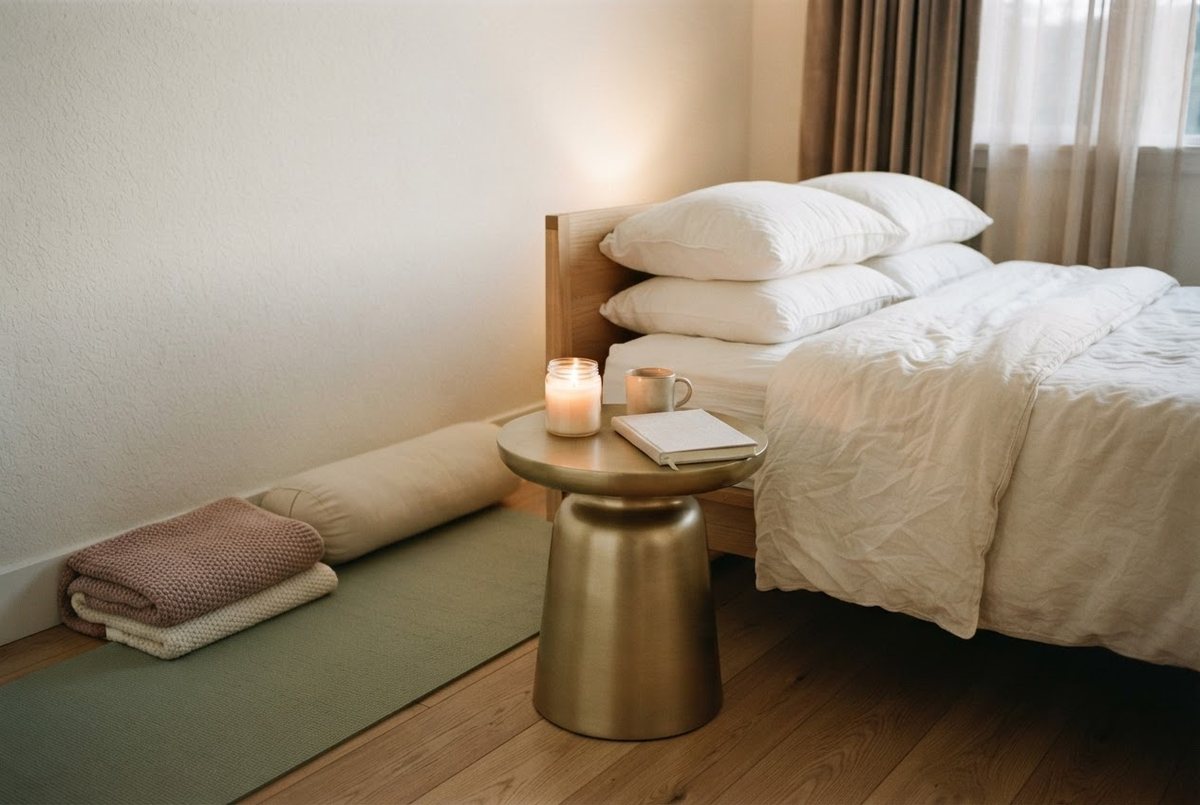
Why Bedtime Yoga Helps a Busy Mind
When your thoughts are racing at night, your body is often still in "daytime mode": shoulders tight, jaw clenched, breathing quick and shallow. Gentle yoga gives you a way to signal that the day is over. Slow movement releases some of the physical tension you've been carrying, and long, unhurried exhales are one of the simplest ways to help your nervous system shift toward rest.
There's also a lovely mental side effect. When you're focused on where your knee is going and how long your exhale lasts, there's less room for the mental to-do list. You're not fighting your thoughts, you're just giving your attention somewhere softer to land.
A few things bedtime yoga is not:
- Not a workout. You're not trying to build strength or burn energy. If something feels effortful, make it smaller.
- Not a flexibility test. Bent knees, pillows under hips and half-versions of poses are all completely welcome.
- Not a cure for sleep problems. It's a calming ritual that can make winding down easier, but if you're struggling with sleep for weeks, please talk to your doctor.
If you like the idea of gentle movement in general, my post on lazy girl workouts has more low-effort ways to move during the day, which can also help you feel more ready for sleep at night.
Before You Start: Setting Up Your Space
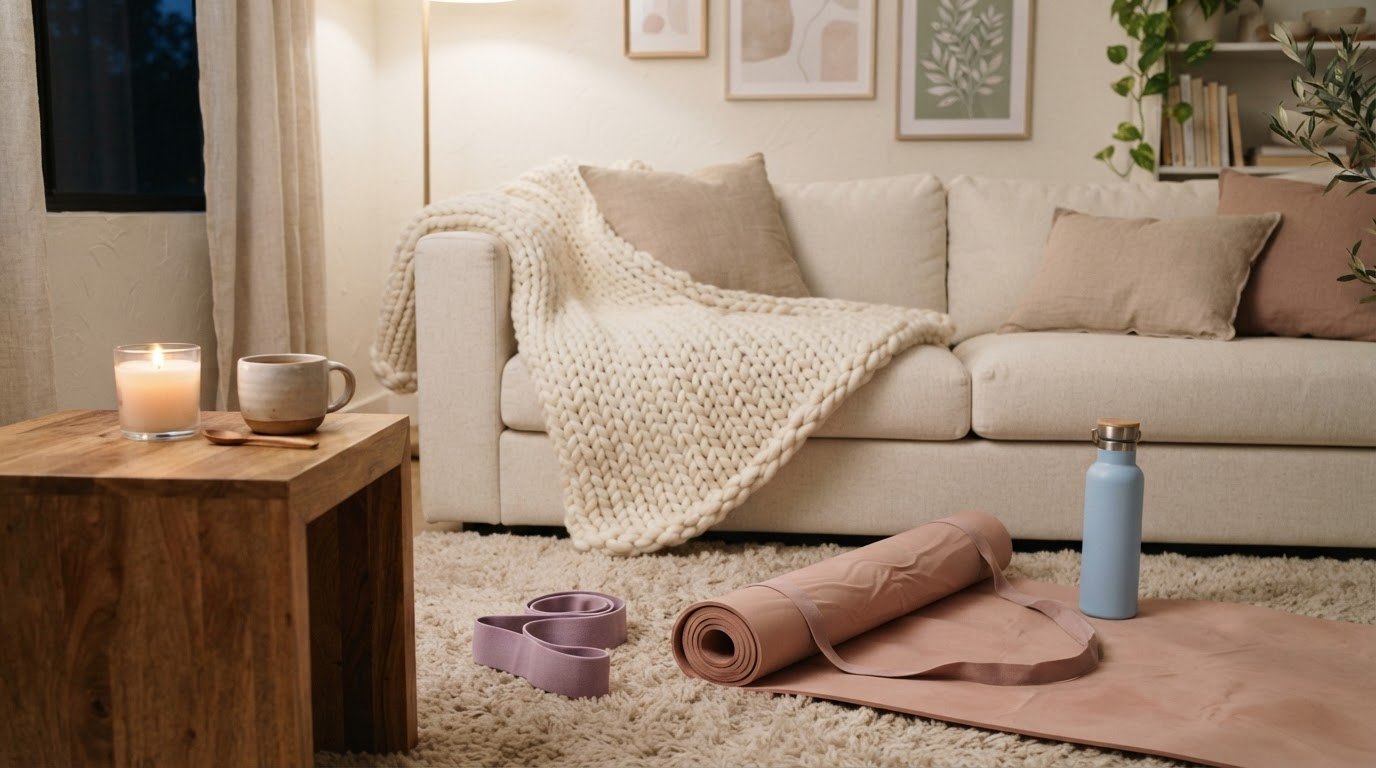
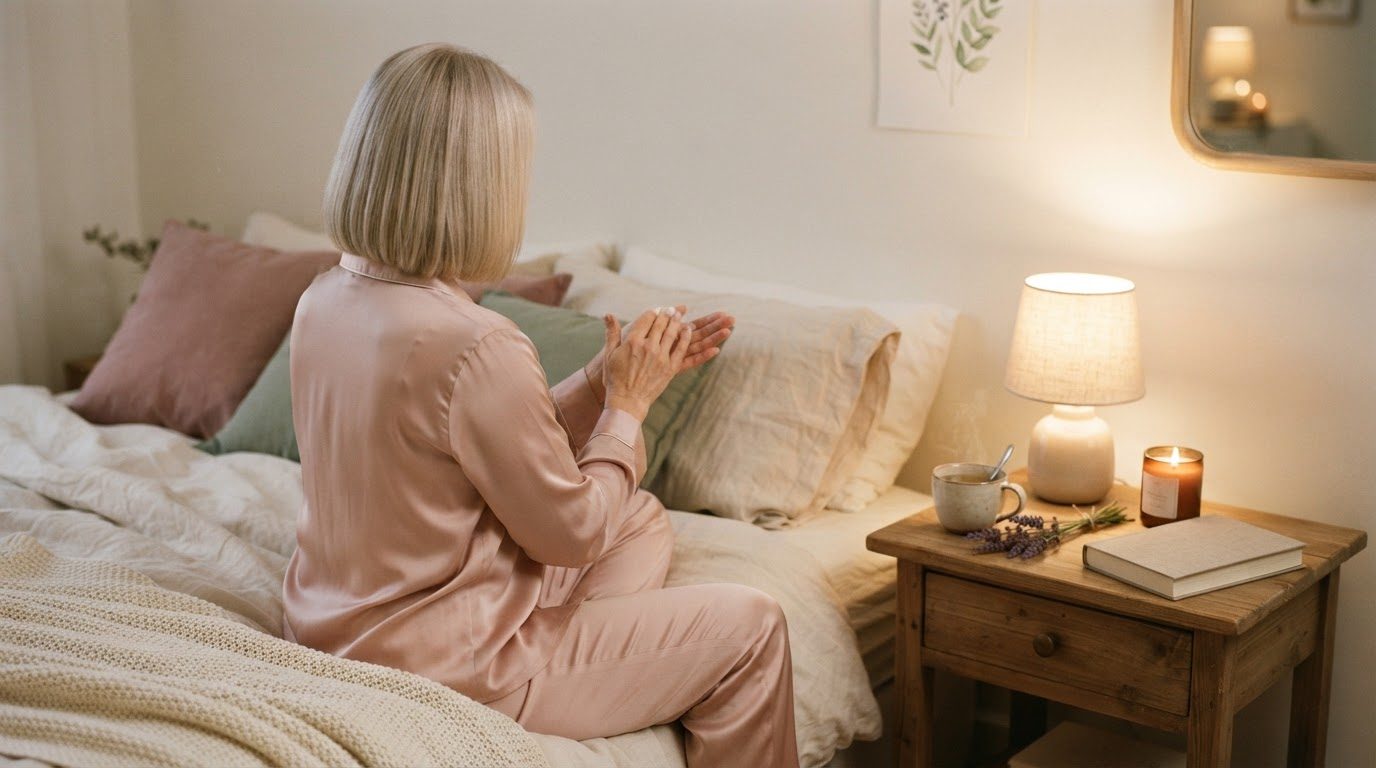
You can do this flow in bed, and on some nights that's exactly what I'd suggest. But if you have a little floor space, a few small things make it feel more like a ritual:
- Dim the lights. Turn off the overhead light and switch to a lamp or a candle about thirty minutes before you start. Blow the candle out before you lie down in the last pose.
- Put your phone away. Set it face down across the room, or use it only to play a soft playlist. No "one quick check" between poses.
- Choose a soft surface. A thick yoga mat in sage green is lovely for your knees. Look for one at least 6 mm thick with a non-slip surface. If you're in bed, a firm mattress works best; very soft mattresses make some poses wobbly.
- Grab your props. A pillow or two, a blanket and anything that makes poses feel more supported (more on props below).
- Wear something comfy. Your pajamas are perfect. Just make sure nothing pinches at the waist when you fold forward.
The 10-Minute Bedtime Yoga Flow
Here's the full sequence. Move slowly, breathe through your nose if that's comfortable, and make every exhale a little longer than the inhale. If a pose doesn't feel good in your body, skip it or stay longer in the one before. The timings add up to ten minutes, but there's no need to watch a timer. Counting breaths (about six slow breaths per minute) works beautifully.
| Pose | Time | How To Do It | Why It Feels Good |
|---|---|---|---|
| 1. Easy Seat With Long Exhales | 1 minute | Sit cross-legged on a pillow, hands on your knees. Inhale for 4, exhale for 6. | Signals "the day is done" and starts slowing your breath. |
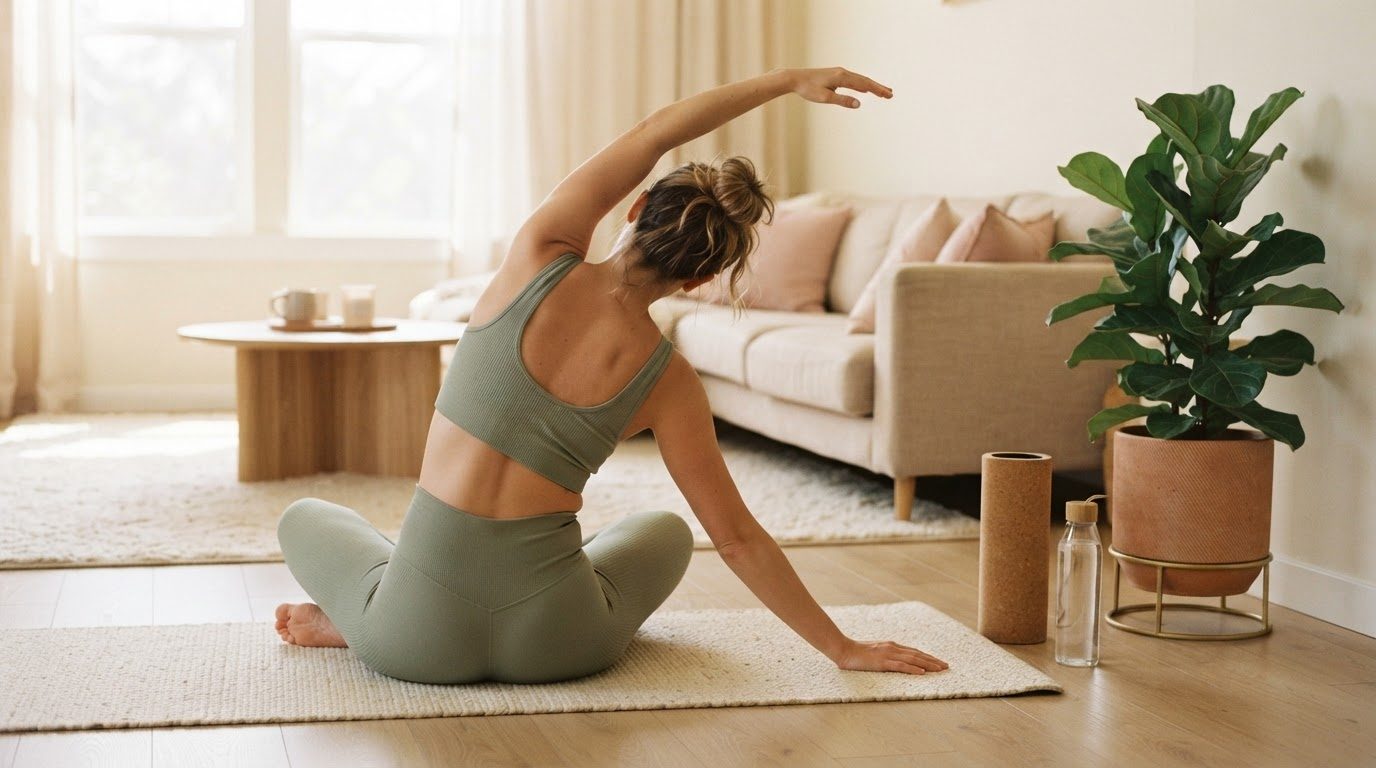
| 2. Seated Neck and Side Stretch | 1 minute | Drop right ear to right shoulder for 3 breaths, then left. Reach one arm overhead and lean gently to each side. | Releases neck and shoulder tension from screens and stress. |
| 3. Cat-Cow | 1 minute | On hands and knees, arch your back as you inhale, round it as you exhale. Move slowly. | Loosens a stiff spine and links movement with breath. |
| 4. Child's Pose | 1.5 minutes | Knees wide, big toes together, sit back toward your heels and rest your forehead on a pillow or bolster. | Deeply calming; it feels like a gentle hug for your back. |
| 5. Reclined Twist | 1.5 minutes | Lie on your back, drop both bent knees to the right, arms wide. 45 seconds each side. | Softens the lower back and hips and feels like wringing out the day. |
| 6. Happy Baby | 1 minute | On your back, hold the outsides of your feet (or your shins) with knees wide. Rock gently side to side. | Opens tight hips and is a little silly in the best way. |
| 7. Legs Up the Wall | 2 minutes | Scoot your hips close to a wall or headboard and rest your legs up it. Arms by your sides, palms up. | Restful for tired legs and one of the most soothing poses there is. |
| 8. Final Rest | 1 minute | Lie flat (or on your side), cover yourself with a blanket, close your eyes and let your breath be natural. | Lets everything settle before sleep. |
Screenshot the table if you'd like to keep it by your bed for the first few nights. After a week or so, you'll know the flow by heart.
8 Gentle Bedtime Yoga Poses, Step by Step
Here's a little more detail on each pose, including easier options. Remember: a stretch should feel like a pleasant pull, never sharp, pinching or painful.
1. Easy Seat With Long Exhales
Sit cross-legged on the edge of a folded pillow so your hips are slightly higher than your knees. This tilts your pelvis forward and makes sitting tall much easier. Rest your hands on your knees, palms up or down, and close your eyes. Inhale through your nose for a count of four, then exhale slowly for a count of six. Do this about six times. If sitting cross-legged is uncomfortable, sit on the edge of your bed with your feet on the floor instead.
2. Seated Neck and Side Stretch
Still sitting, let your right ear drop toward your right shoulder. Don't pull, just let the weight of your head do the work. Stay for three breaths, then switch. Next, place your left hand on the floor beside you, reach your right arm up and over your head and lean gently left. Three breaths, then switch sides. This one is wonderful after a long day at a laptop. If your neck and shoulders feel tight most evenings, my gentle posture exercises can help ease that tension during the day, too.
3. Cat-Cow
Come onto your hands and knees, wrists under shoulders and knees under hips. If your knees are sensitive, fold your blanket under them. As you inhale, let your belly drop and lift your gaze slightly (cow). As you exhale, round your back, tuck your chin and press the floor away (cat). Move slowly, letting your breath set the pace. Six to eight rounds is plenty. In bed, you can do a smaller version or skip this one.
4. Child's Pose
From hands and knees, bring your big toes together, widen your knees and sit back toward your heels. Walk your hands forward and rest your forehead down. This is where props really shine: a firm rectangular yoga bolster in cream placed lengthwise under your chest and head turns child's pose into something you could almost fall asleep in. Look for a bolster with a washable cotton cover and side handles. A couple of stacked pillows work too. Breathe into your back and feel it rise and fall.
5. Reclined Twist
Lie on your back, hug your knees into your chest, then let both knees fall to the right. Stretch your arms out wide in a T and, if it's comfortable for your neck, turn your head to the left. If your knees don't reach the floor, tuck a pillow under them so you can fully relax. Stay for about six breaths, then bring your knees back to center and switch sides. Twists feel especially lovely if you've been sitting most of the day.
6. Happy Baby
Still on your back, bring your knees toward your armpits and hold the outer edges of your feet. If that's too much, hold your ankles, your shins or the backs of your thighs. Let your lower back stay heavy on the floor and rock gently side to side. It looks a bit silly, and that's part of the charm. If your hips are tight, try one leg at a time with the other leg resting on the floor.
7. Legs Up the Wall
Sit sideways with one hip touching the wall, then swing your legs up as you lie back. Scoot your bottom as close to the wall as feels comfortable; it doesn't need to touch. In bed, you can use the headboard, or simply rest your calves on a stack of pillows. Let your arms fall by your sides, palms up. A lavender silk eye pillow resting over your eyes blocks out light and adds a gentle weight that many people find soothing. Look for a washable cover and a soft, unscented filling if you're sensitive to fragrance. Stay for two minutes or longer.
8. Final Rest
Slide your legs down and lie flat on your back, or curl onto your side if that's how you sleep. Pull a soft blanket over yourself. A cream chunky knit throw feels lovely here and doubles as decor at the foot of your bed. Let your breath return to normal. Notice where your body touches the floor or mattress. If thoughts pop up, label them gently ("planning," "worrying") and let your exhale carry them out. If you're in bed, you can simply stay here and drift off.
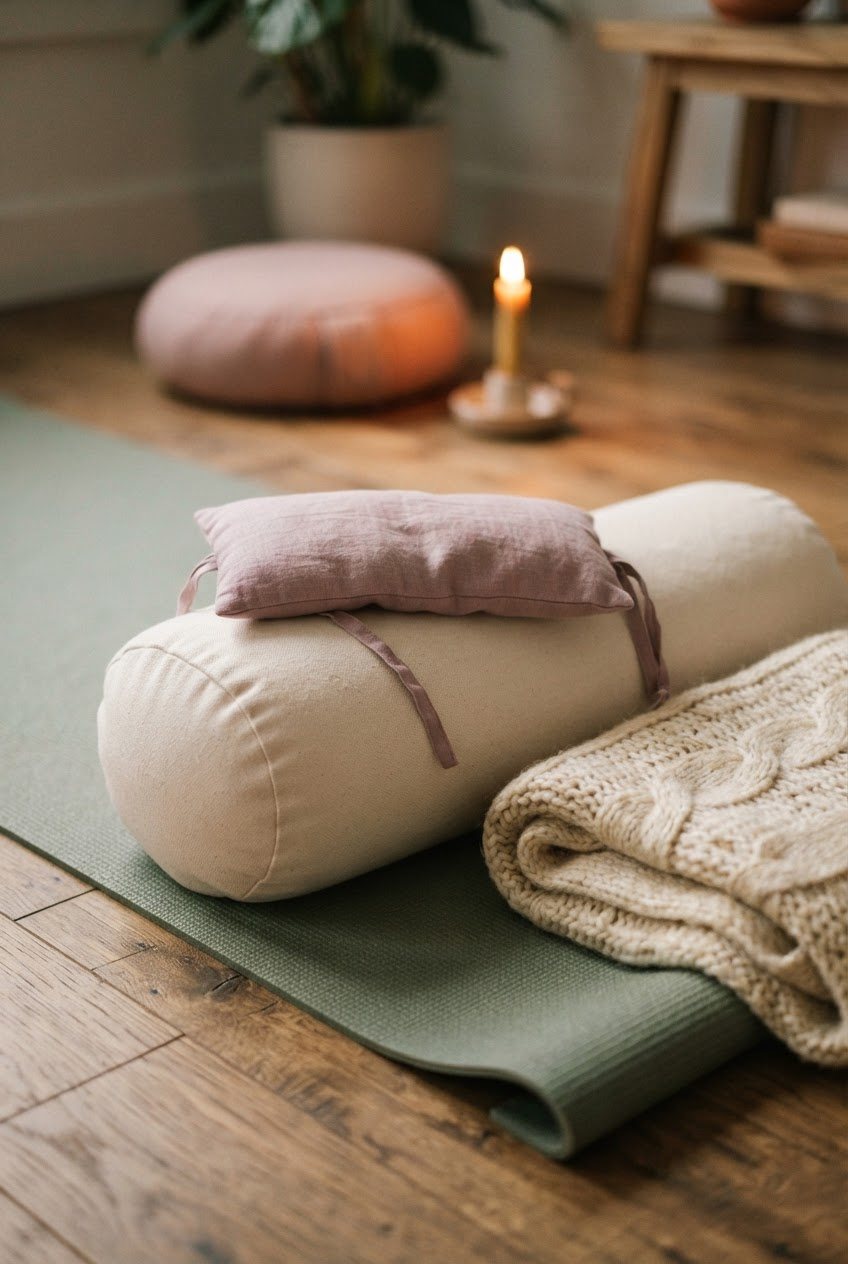
Your Bedtime Breathing Card
On nights when your mind is extra busy, breathing is the anchor. Here's a little card you can come back to during any pose, or on its own if even ten minutes feels like too much.
- The 4–6 breath: Inhale through your nose for 4 counts, exhale slowly through your nose or softly parted lips for 6 counts. Repeat for 6 to 10 rounds.
- The sigh: Take a normal breath in, then a small second sip of air on top, and let it all out in a long, slow sigh. Do it 2 or 3 times when your chest feels tight.
- The belly hand: Rest one hand on your belly and feel it rise as you inhale and fall as you exhale. No counting, just noticing.
- The thought label: When a thought pulls you away, quietly name it ("tomorrow," "that email") and return to the next exhale.
- The rule of kindness: If you lose count, start again at one. There is no failing at this.
If anxious thoughts are what keep you up most nights, my guide on how to calm anxiety fast has more grounding techniques that pair beautifully with this card.
Three Ways To Adapt the Flow
Some nights you'll have energy for all ten minutes, and some nights you'll barely make it to the pillow. The flow is meant to bend around your evening, not the other way around. Here are three versions to keep in your back pocket:
- The all-in-bed version (8 minutes). Skip cat-cow and do easy seat leaning against your headboard. Do child's pose with your forehead on a pillow, the twist and happy baby on your mattress, and rest your calves on stacked pillows instead of a wall. You never have to leave the covers.
- The two-minute version. One minute of child's pose, one minute of legs up the wall (or calves on pillows), with the 4–6 breath the whole time. Perfect for nights when you're so tired that ten minutes feels like a mountain.
- The extra-long version (20 minutes). Double every timing in the table, and stay in legs up the wall and final rest for as long as you like. Lovely for Sunday evenings or after a particularly stressful day.
There's no "real" version that's better than the others. The one you'll actually do tonight is the right one.
Helpful Props for Bedtime Yoga
You truly don't need anything special to start. A pillow, a blanket and your bed are enough. But if you'd like to make the ritual feel extra inviting, these are the props that make the biggest difference:
- A thick, non-slip mat for knees and spine if you practice on the floor.
- A bolster for child's pose and for supporting your knees in final rest.
- Two blocks to bring the floor closer. A pair of soft beige foam yoga blocks can sit under your hips in easy seat or under your knees in the twist. Foam is gentler than cork for evening practice.
- An eye pillow to block light and soften your face in legs up the wall and final rest.
- A soft blanket because your body temperature drops when you lie still.
Keep everything in a basket near your bed. If you have to dig your mat out of a closet, the habit tends to fade within a week.
How To Make Bedtime Yoga a Habit
The flow is short on purpose, because a ten-minute ritual is far easier to keep than an hour-long one. A few tips that help it stick:
- Attach it to something you already do. Right after brushing your teeth, or straight after your evening tea, is a natural cue.
- Have a two-minute version. On exhausted nights, do only child's pose and legs up the wall. That still counts.
- Do it at the same time. Your body loves predictability, and a regular wind-down helps it learn when sleep is coming.
- Keep the lights low afterward. Go straight from final rest to bed. No bright bathroom light, no phone in bed.
- Pair it with a warm drink. A caffeine-free cup beforehand makes the whole thing feel like a ritual. My list of calming bedtime drinks has plenty of ideas.
Bedtime yoga fits beautifully into a bigger evening routine, too. If you'd like the full wind-down, from dimming the lights to what to do when you wake at 3 a.m., my winter sleep routine walks you through it step by step.
A Gentle Safety Note
This flow is designed to be very gentle, but every body is different. Please listen to yours:
- Skip any pose that causes pain, pinching, numbness or dizziness. Discomfort is a signal, not a challenge.
- If you're pregnant, recovering from an injury or surgery, or have back, neck, hip or knee problems, check with your doctor or a physical therapist before starting. Some poses, like lying flat on your back or deep twists, may need changing.
- If you have high or low blood pressure, glaucoma or reflux, ask your doctor whether legs up the wall and lying flat are right for you.
- Come up slowly from lying poses, especially legs up the wall, so you don't feel lightheaded.
- If you've had trouble sleeping for several weeks, or you snore loudly or wake up gasping, please talk to your doctor. Yoga can be part of a calm evening, but it isn't a replacement for proper care.
Final Thoughts
A busy mind doesn't switch off just because the lights do. It needs a gentle bridge from the day to the night, and ten slow minutes on a mat or in bed can be exactly that bridge. A few long exhales, a soft child's pose, your legs resting up the wall, and suddenly your shoulders aren't up by your ears anymore.
Start tonight with just the breathing card and one or two poses. Keep your props close, keep the lights low and keep it kind. Your body already knows how to rest; this flow simply reminds it that it's allowed to.