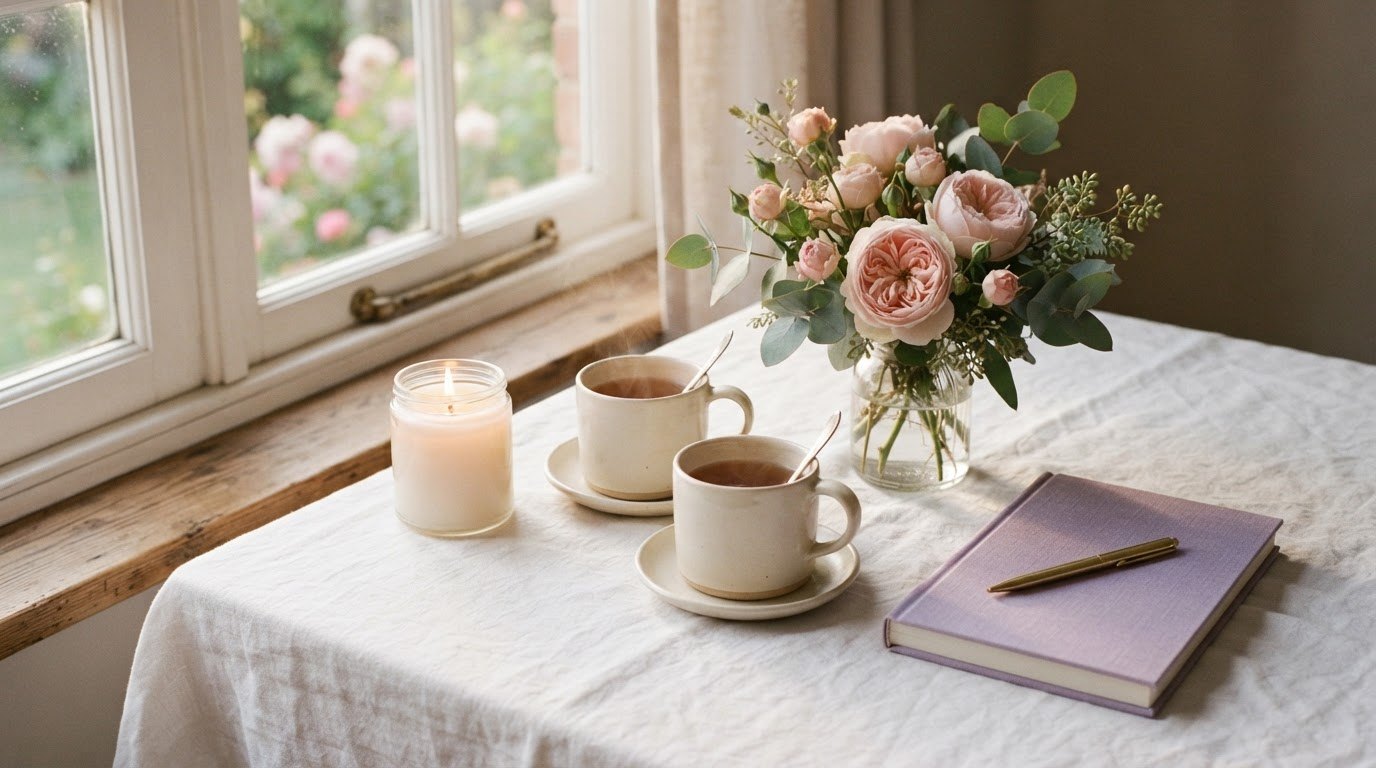
Emotional regulation isn't about feeling less. It's about having a few gentle ways to move through a big feeling so it doesn't make every decision for you. Anger, sadness, worry and overwhelm are all allowed. The skill is learning to stay with yourself while they pass, instead of being swept away by them or pushing them down until they burst out sideways.
If you've ever snapped at someone you love, cried in the car without quite knowing why, or lain awake replaying one small remark, you already know how strong feelings can be. That doesn't mean something is wrong with you. It means you're human, and humans can learn new ways to respond.
This guide covers what emotional regulation really means, why feelings sometimes feel so huge, ten gentle skills you can practice for big feelings, a "feeling to skill" table for the first two minutes and afterward, and a short pocket script you can say to yourself when things get loud.
It took me a long time (and a fair amount of anxiety) to understand that calming down is something you practice, not something you either have or don't. Be patient with yourself while you learn.

What Emotional Regulation Is (and What It Isn't)
Emotional regulation is your ability to notice a feeling, understand it a little, and choose how to respond. It's the space between "I feel furious" and sending the angry text.
Here's what it is not:
- It's not suppressing. Pushing feelings down usually makes them come back stronger later.
- It's not being calm all the time. Regulated people still cry, get frustrated and feel anxious. They just recover a bit faster.
- It's not "good vibes only." Every feeling carries information. Sadness can point to something you care about. Anger can point to a boundary that was crossed.
- It's not something you do perfectly. You'll still have days when a feeling wins. That's part of learning, not proof you've failed.
Think of it like steering a boat in waves. You can't stop the waves, but you can learn to hold the wheel.
Why Feelings Sometimes Feel So Huge
Some days a small thing barely registers. Other days, the same small thing feels like the last straw. Usually, that difference has less to do with the event and more to do with what your body is already carrying. A few simple culprits:
- Stress stacking up. When your nervous system is already busy with deadlines, money worries or family tension, there's less room for anything else.
- Not enough sleep. A tired brain is quicker to react and slower to calm down. Everything feels more personal after a short night.
- Hunger. Being "hangry" is real. Low energy makes patience disappear fast.
- Too much caffeine. Coffee sometimes perks me up and sometimes makes me jittery and anxious, and on those days every feeling is turned up a notch.
- Old hurts. Sometimes a present moment touches an old wound, and the feeling belongs partly to then, not just now.
A useful habit is a quick body check before you judge the feeling: Have I eaten? Have I slept? Have I had a lot of coffee? Am I carrying a lot this week? Often the answer explains more than you expect, and it's easier to be kind to yourself when you see the whole picture.
10 Gentle Emotional Regulation Skills for Big Feelings
You don't need all ten. Pick two or three that feel natural and practice them on easy days, so they're ready on hard ones. A skill you've rehearsed when calm is much easier to reach when you're upset.
1. Name It To Tame It
Putting a feeling into words can soften its intensity. Instead of "I'm fine" or "I'm a mess," try to be specific: "I feel embarrassed." "I feel lonely." "I feel disappointed and a bit scared."
How to practice: say it quietly to yourself, or write it down in one sentence. If you can, add a number from 1 to 10 for how strong it feels. Then check again five minutes later. Watching the number drop, even a little, reminds you that feelings move.
A small guided feelings journal on your nightstand makes this easier, because the words are already in reach when you need them.
2. Pause and Breathe
When a feeling spikes, your breathing usually gets shallow and fast. Slowing it down tells your body it's safe enough to settle.
Try this for one to two minutes: breathe in through your nose for a count of four, then out through your mouth for a count of six. The longer exhale is the part that helps most. If counting feels stressful, just make each breath out a little longer than the breath in.
The pause itself is the skill. Even ten seconds between the feeling and your reaction gives you a chance to choose.
3. A Gentle Sensory Reset
Changing what your body feels can interrupt a spiral. Keep this kind and comfortable, never harsh:
- Run cool (not icy) water over your hands and wrists for 30 seconds.
- Wrap both hands around a warm mug and notice the heat.
- Wrap yourself in a soft, heavy blanket for a few minutes.
- Smell something calming, like a lavender hand lotion or a candle you love.
- Press your feet into the floor and notice five things you can see.
A soft weighted blanket in cream or beige is a gentle option for evenings when your body feels wired. Choose one that's comfortable for your size and never feels restrictive.
4. Move It Out
Big feelings come with energy, especially anger and anxiety. Giving that energy somewhere to go can help it settle.
Try a brisk five-minute walk, shaking out your hands and arms for 30 seconds, dancing to one song in the kitchen, or a few slow stretches. Squeezing a soft stress ball at your desk is a quiet option when you can't leave the room. The goal isn't exercise. It's letting your body finish the "alarm" it started.
5. Try the Opposite Action
Every feeling has an urge attached. Sadness wants to hide. Anger wants to attack. Anxiety wants to avoid. Sometimes following the urge helps, but when it makes things worse, gently doing the opposite can shift the feeling.
- Sadness urges you to isolate: send one text to a friend or sit in a room with other people.
- Anger urges you to snap: lower your voice, unclench your jaw, step away kindly.
- Anxiety urges you to avoid: take one tiny step toward the thing, like opening the email without replying yet.
Small is fine. Opposite action works best in tiny doses.
6. Check the Facts
Feelings are real, but the story behind them isn't always accurate. When you're upset, ask yourself three questions:
- What exactly happened? (Just the facts, like a camera would record it.)
- What story am I telling myself about it?
- Is there another way to see this?
For example: Fact: my friend didn't reply for a day. Story: she's annoyed with me. Other possibility: she's busy, tired or hasn't seen it. The feeling might not disappear, but it often shrinks to a more fitting size.
7. Use a Kind Self-Talk Script
The way you speak to yourself during a hard moment matters. Harsh self-talk ("Get it together, this is ridiculous") usually adds a second layer of pain. Kind self-talk gives you something to hold onto.
Try: "This is hard right now. It makes sense that I feel this way. I can take care of myself while it passes." If self-kindness feels awkward, my guide to practicing self-compassion has gentle ways to make it feel more natural. You'll also find a longer pocket script below.
8. Reach Out to Someone Safe
Feelings often feel lighter when someone else knows about them. You don't need advice, just a little company.
A simple message works: "Having a rough moment. Can I call you for five minutes?" or "No need to fix anything, I just wanted to tell someone." Choose people who make you feel calmer, not more stirred up. If talking feels too much, even sitting near someone or being in a public place like a café can help.

9. Plan Ahead for Your Triggers
Most of us have predictable hard moments: a certain family member, Sunday evenings, a busy work week, scrolling late at night. Planning ahead doesn't remove the feeling, but it means you're not starting from zero.
Write a short plan for one trigger: "When I start feeling overwhelmed on Sunday night, I will make tea, write tomorrow's top three tasks and go to bed 30 minutes earlier." Keep it to one or two sentences. Review it after it happens and adjust.
A few of these trigger moments are easier with a steady evening ritual. A cup of chamomile and lavender herbal tea after dinner is one of my favorite signals to my body that the day is winding down.
10. Recover Gently Afterward
Big feelings are tiring, even when you handled them well. After the wave passes, take care of yourself like you would after a long day:
- Drink a glass of water and eat something if you haven't.
- Rest for 10 to 20 minutes without your phone.
- Write two lines: what happened, and what helped even a little.
- If you said something you regret, plan a short repair: "I was overwhelmed earlier and I'm sorry I snapped. Can we try again?"
Recovery is part of regulation. It's how you build trust with yourself that you can get through hard feelings and come out okay.
Feeling to Skill: What To Do in the First 2 Minutes and After
When you're in the middle of a big feeling, it's hard to remember a list of ten. This table gives you one simple starting move for the first two minutes, and one or two ideas for once the wave has calmed. Screenshot it and keep it somewhere easy to find.
| Feeling | First 2 minutes | After it settles |
|---|---|---|
| Anger | Step away, unclench your jaw, breathe in for 4 and out for 6. Don't send messages yet. | Brisk walk or shake it out, then check the facts. Decide calmly if a boundary needs saying. |
| Anxiety | Feet on the floor, long exhales, cool water on your hands, name five things you can see. | Write the worry down, check the facts and take one tiny step toward what you're avoiding. |
| Sadness | Name the feeling, wrap up in a blanket, hold a warm mug. Let yourself cry if you need to. | Reach out to one safe person, rest, and do one small kind thing for yourself. |
| Overwhelm | Stop and breathe. Say "one thing at a time." Put the phone face down. | Write everything on paper, circle just one task and give the rest a later time. |
| Shame or embarrassment | Hand on your chest, kind self-talk: "Everyone has moments like this." | Check the facts, talk to someone who loves you, and plan a small repair if needed. |
| Loneliness | Soft sensory comfort: a candle, a blanket, a calming playlist. | Send one text, plan one small social thing, or spend time somewhere with other people. |
If anxiety is the feeling that shows up most often for you, my guide on how to calm anxiety fast goes deeper into quick, practical techniques for those first few minutes.
Your Pocket Script for Big Feelings
When everything feels loud, it helps to have words ready so you don't have to think. Save this in your notes app or write it on a small card for your wallet:
- Stop: "I'm having a big feeling right now."
- Name: "This feels like (anger / worry / sadness / overwhelm), about a (number) out of 10."
- Breathe: "In for four, out for six. Three times."
- Allow: "It makes sense that I feel this way. Feelings rise and fall."
- Choose: "What is one small, kind thing I can do in the next five minutes?"
- Remember: "I don't have to decide anything big while I feel like this."
Read it slowly, even if it feels a little silly at first. The more you use it on medium days, the more automatic it becomes on hard ones. Pairing it with a few gentle affirmations for anxiety can make it feel even more personal.
Building Emotional Regulation Day by Day
The skills above work best when your everyday life gives your nervous system a little support. You don't need a perfect routine, just a few steady habits:
- Protect your sleep. A consistent bedtime is one of the kindest things you can do for your mood.
- Eat regularly. Long gaps without food make feelings sharper.
- Notice your caffeine. If coffee makes you edgy, try a smaller cup or switch to tea in the afternoon.
- Move a little every day. A short walk counts.
- Journal for five minutes. Writing down feelings regularly makes them easier to name in the moment. My list of journaling ideas has plenty of easy starting points.
- Create a calm corner. One chair, one blanket, one candle in a cream glass jar. Somewhere your body learns to associate with slowing down.

Over time, these small things add up. Emotional regulation is closely tied to emotional maturity, and both grow quietly, one handled moment at a time.
How To Practice When You're Already Calm
The secret most people miss is that these skills are learned on ordinary days, not in the middle of a storm. A fire drill works because you practiced it when nothing was burning. Feelings are similar. Here's a gentle one-week practice plan, about five minutes a day:
- Day 1: Three times today, pause and name what you feel in one word. No fixing, just noticing.
- Day 2: Practice two minutes of longer exhales while your tea steeps or your coffee brews.
- Day 3: Try one gentle sensory reset, like cool water on your hands, and notice how your body responds.
- Day 4: Think of a small thing that annoyed you this week and run it through the three "check the facts" questions.
- Day 5: Read the pocket script out loud once, slowly.
- Day 6: Write a one-sentence plan for your most predictable trigger.
- Day 7: Look back. Which skill felt most natural? That's your first go-to.
Repeat the week whenever you need a refresher. You're not aiming for perfect calm. You're building a small, familiar toolkit that your body recognizes when it matters.
A Kind Note on Getting Support
These skills are everyday tools, not a replacement for professional care. If your feelings regularly feel unmanageable, last for weeks, get in the way of work, sleep or relationships, or you're turning to things that hurt you to cope, please reach out to a doctor, therapist or counselor. Asking for help is a strong, sensible thing to do.
If you ever feel unsafe or in crisis in the US, you can call or text 988 to reach the Suicide and Crisis Lifeline any time. Outside the US, your local emergency number or a trusted person nearby is the right first step.
Final Thoughts
Big feelings don't mean you're too much. They mean you're paying attention to your life. Emotional regulation simply gives you a few soft handholds, so you can feel everything and still treat yourself and others with care.
Pick one skill from this guide and try it this week, maybe the next time you notice your shoulders creeping up. Every time you pause, name it and breathe, you're teaching yourself that you can stay steady, even when the waves are high.