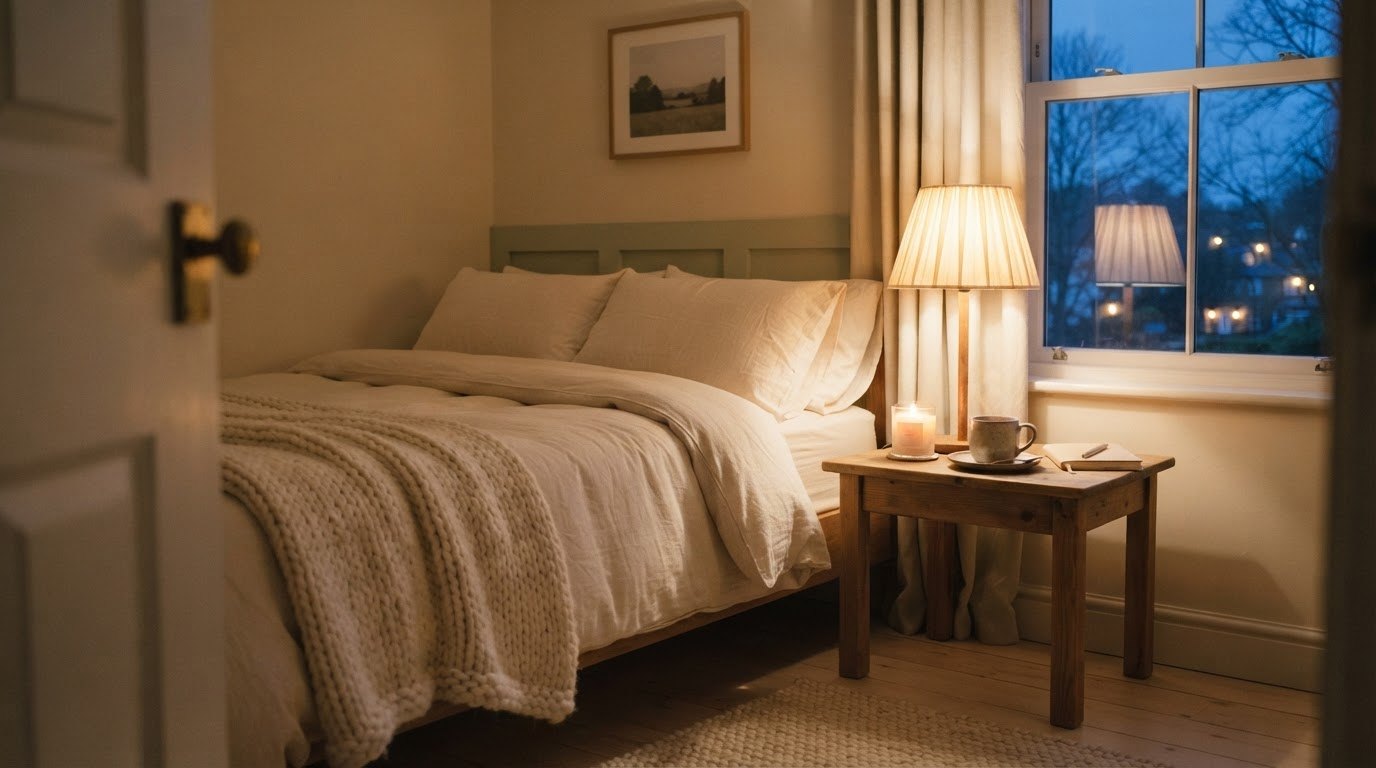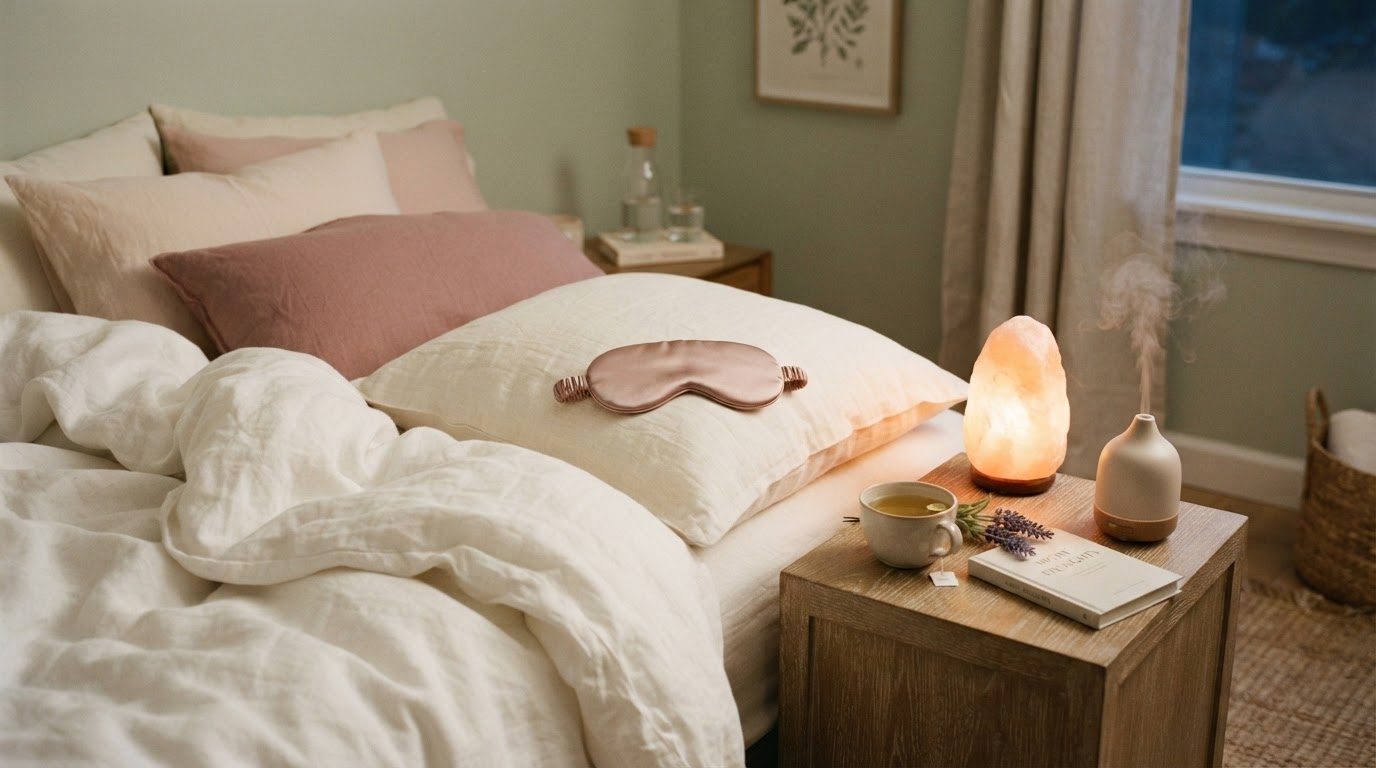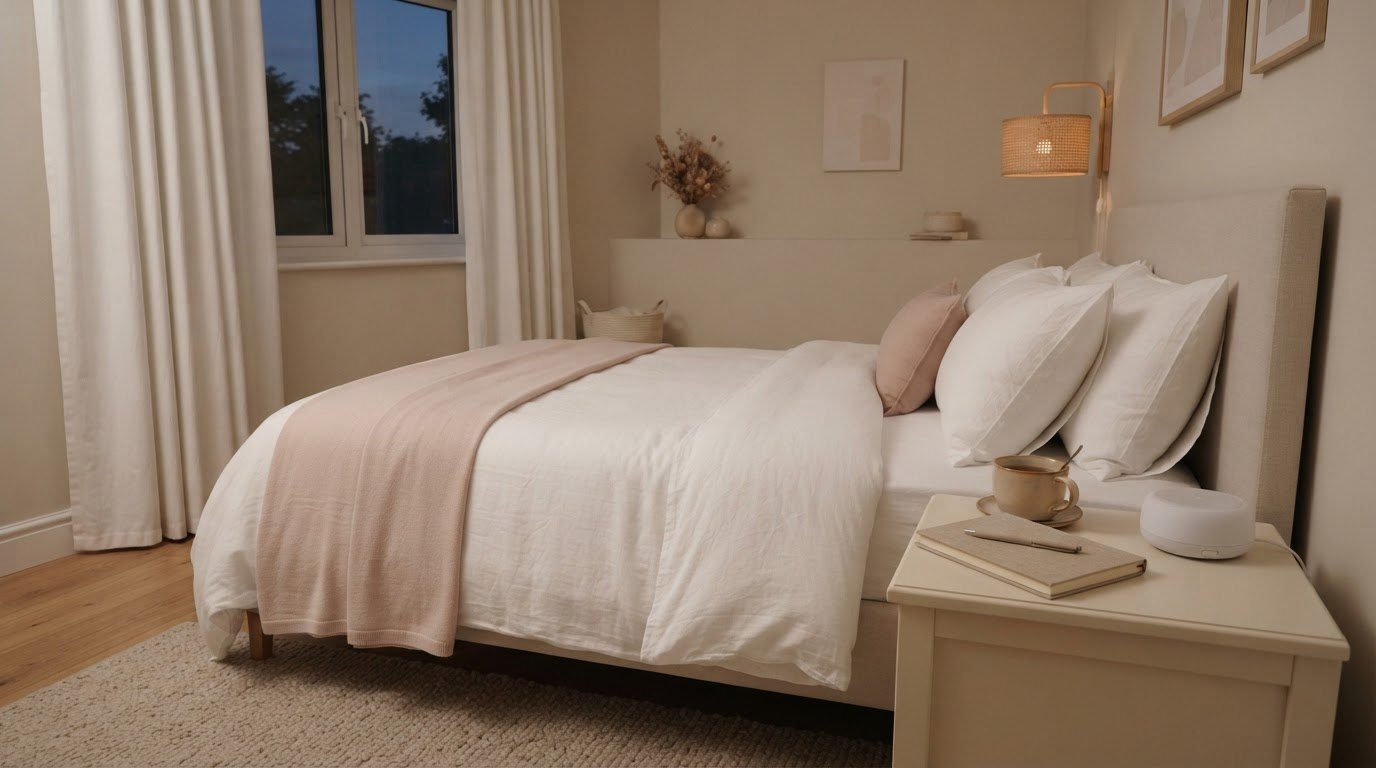
Good sleep is rarely about one magic trick. It's built quietly, across the whole day: the light you see in the morning, the time of your last coffee, how you wind down, what your bedroom feels like at midnight. Each habit is small, but together they tell your body, very clearly, when it's time to be awake and when it's time to rest.
That's what sleep hygiene really means. It's not about being perfect or strict. It's a set of everyday habits and bedroom choices that make falling asleep and staying asleep a little easier, night after night.
This sleep hygiene checklist gathers 15 habits for better sleep, grouped by when they happen: during the day, in the evening, in your bedroom and in the middle of the night. You'll also find a bedroom sleep setup table (light, temperature, sound and bedding) and a short guide to starting small, so you never have to change everything at once.
It took me a while to understand that my evenings started at breakfast. The habits earlier in the day matter as much as the ones at bedtime, and that's a hopeful thing: it means there are many small places to begin.
What Is Sleep Hygiene (and Why It Helps)
Sleep hygiene is simply the collection of habits and surroundings that support restful sleep. Your body runs on an internal clock that responds to light, routine, food, movement and temperature. When those signals are consistent, your body gets better at predicting when to feel sleepy. When they're scattered (a late coffee here, a bright screen at midnight there, a different wake-up time every day), the clock gets confused.
Good sleep hygiene won't solve every sleep problem, and some sleep issues need medical help. But for the everyday kind of poor sleep, the restless, "why am I still awake" kind, these habits are a gentle, reliable place to start.
A Kind Note Before You Begin
This checklist is for everyday sleep support, not a diagnosis or treatment. Please talk to your doctor if poor sleep lasts more than a few weeks, if you feel very tired during the day no matter how long you sleep, or if you (or someone who shares your room) notice loud snoring, gasping or pauses in breathing at night. These can be signs of sleep conditions that deserve proper care, and asking for help is a sensible, caring thing to do for yourself.
The Sleep Hygiene Checklist at a Glance
Here are all 15 habits in one place. Screenshot this list, then read on for the how and why behind each one.
Daytime
- ☐ Wake up at the same time every day
- ☐ Get daylight within an hour of waking
- ☐ Move your body during the day
- ☐ Keep caffeine to the morning and early afternoon
Evening
- ☐ Keep naps short and early
- ☐ Finish big meals and alcohol a few hours before bed
- ☐ Dim the lights after sunset
- ☐ Put screens away 30 to 60 minutes before bed
- ☐ Follow a short, repeatable wind-down routine
Bedroom
- ☐ Keep your bedroom dark
- ☐ Keep it cool and quiet
- ☐ Save your bed for sleep and rest
Middle of the night
- ☐ Don't check the time
- ☐ Get up if you can't sleep after about 20 minutes
- ☐ Keep a notebook by the bed for racing thoughts
Daytime Habits
These first four habits happen long before bedtime, and they set the rhythm for everything that follows.
1. Wake Up at the Same Time Every Day
If you change just one thing, make it this. A consistent wake-up time anchors your body clock more than a consistent bedtime does, because you can control when you get up far more easily than when you fall asleep. Try to stay within about 30 to 60 minutes of your usual time, weekends included. A sleep-in on Sunday that pushes your wake-up two or three hours later can make Sunday night's sleep harder and Monday morning heavier.
If dark mornings make getting up feel impossible, a sunrise alarm clock that slowly brightens before your alarm sounds can make waking feel gentler, especially in winter.
2. Get Daylight Within an Hour of Waking
Morning light is one of the strongest signals your body clock receives. Step outside for 5 to 15 minutes, open the curtains and sit by a window with your breakfast, or take a short walk. Even on cloudy days, outdoor light is much brighter than indoor lighting. Pair it with something you enjoy, like a warm drink on the balcony, so it becomes a ritual instead of a task.
3. Move Your Body During the Day
Regular movement tends to make it easier to feel sleepy at night. It doesn't have to be intense: a brisk walk, a dance around the kitchen, some gentle stretching or a short workout all count. If vigorous exercise leaves you wired in the evening, schedule it earlier and keep the last few hours before bed for slower movement.
4. Keep Caffeine to the Morning and Early Afternoon
Caffeine can stay in your system for many hours, so an afternoon latte may still be working at bedtime. A simple rule is to have your last caffeinated drink by early afternoon, around 8 hours before you plan to sleep. Remember that caffeine also hides in tea, cola, energy drinks and chocolate. Coffee sometimes perks me up and sometimes just makes me anxious, so for me an early cutoff helps with more than sleep.
Evening Habits
As the day winds down, the goal is to send your body clear, calm signals that rest is coming.
5. Keep Naps Short and Early
Naps aren't the enemy, and on a tired day a short one can be lovely. Keep it to 20 or 30 minutes and finish it by mid-afternoon, so it doesn't eat into your sleep pressure at night. If you're struggling to fall asleep at bedtime, try skipping naps for a week and see if it helps.
6. Finish Big Meals and Alcohol a Few Hours Before Bed
A heavy meal right before bed can make lying down uncomfortable, and alcohol, while it may make you drowsy at first, often leads to lighter, more broken sleep later in the night. Aim to finish dinner two to three hours before bed. If you're hungry later, a small, light snack is fine. A warm, caffeine-free drink is a lovely evening signal too; my list of bedtime drinks has calming ideas.
7. Dim the Lights After Sunset
Bright overhead lights in the evening tell your body it's still daytime. After dinner, switch to lamps, warm-toned bulbs or the soft glow of a candle (blown out before bed, of course). I love glass candles for this hour, because the light feels warm and low. Dimming the house is one of the easiest ways to make evenings feel calmer.
8. Put Screens Away 30 to 60 Minutes Before Bed
Phones, tablets and laptops keep your brain alert, both from the light and from the content: messages, news and endless feeds are designed to hold your attention. Try charging your phone outside the bedroom or across the room, and swap the last half hour of screen time for a book, a bath, some journaling or gentle stretches. If going screen-free feels hard, start with 15 minutes and build up.
9. Follow a Short, Repeatable Wind-Down Routine
A wind-down routine works like a lullaby for adults: the same few steps, in the same order, every night. Over time, your body starts to associate them with sleep. It doesn't need to be long. Twenty to thirty minutes is plenty. My own looks like this: evening tea, a few lines in my journal, skincare, then lights out.
Here's a simple formula you can borrow: one warm thing + one calm thing + one closing thing. A warm drink or shower, then reading or a few slow stretches (my bedtime yoga sequence works beautifully here), then your closing signal, like brushing your teeth and turning off the lamp. For a fuller seasonal version, see my winter sleep routine.
Bedroom Habits
Your bedroom should feel like it was designed for one purpose: rest. These three habits shape the space itself.
10. Keep Your Bedroom Dark
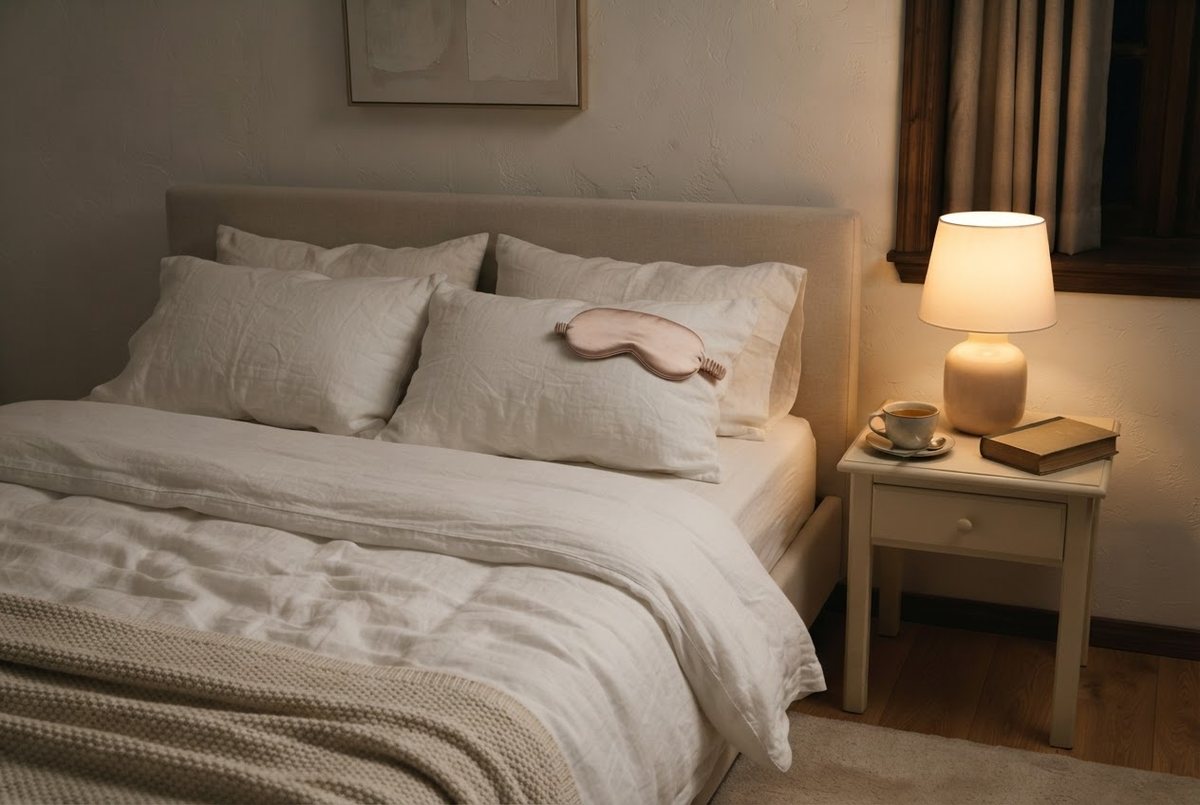
Even small amounts of light, from a streetlamp, a charger or a gap in the curtains, can make sleep lighter. Aim for a room dark enough that you can barely see your hand. White blackout curtains with a thermal lining block outside light while still looking soft and airy during the day. Cover tiny standby lights with a strip of tape, and if your room can't get fully dark, a silk sleep mask with a gentle, contoured fit is an easy fix.
11. Keep It Cool and Quiet
Your body temperature naturally dips as you fall asleep, and a cool room supports that. Many sleep experts suggest roughly 60 to 67°F (about 16 to 19°C), but find what feels comfortable for you. Light, breathable bedding helps; if you tend to wake up warm, a cooling pillowcase in a breathable fabric can feel lovely against your face.
For noise, steady background sound masks the sudden bumps and voices that wake you. A small white noise machine with a soft, consistent sound (fan, rain or plain white noise) is a simple choice. Earplugs are another option if you prefer silence.
12. Save Your Bed for Sleep and Rest
When the bed doubles as an office, a dining table and a movie theater, your brain starts linking it with being awake and busy. Try to keep work, long phone sessions and stressful conversations out of bed. Reading a calm book or cuddling up with a journal is fine for most people, but if you find yourself lying awake often, keep the bed for sleep only for a few weeks. A beautifully made bed also helps; my guide to creating a hotel bed at home shows how to make yours feel like a retreat.
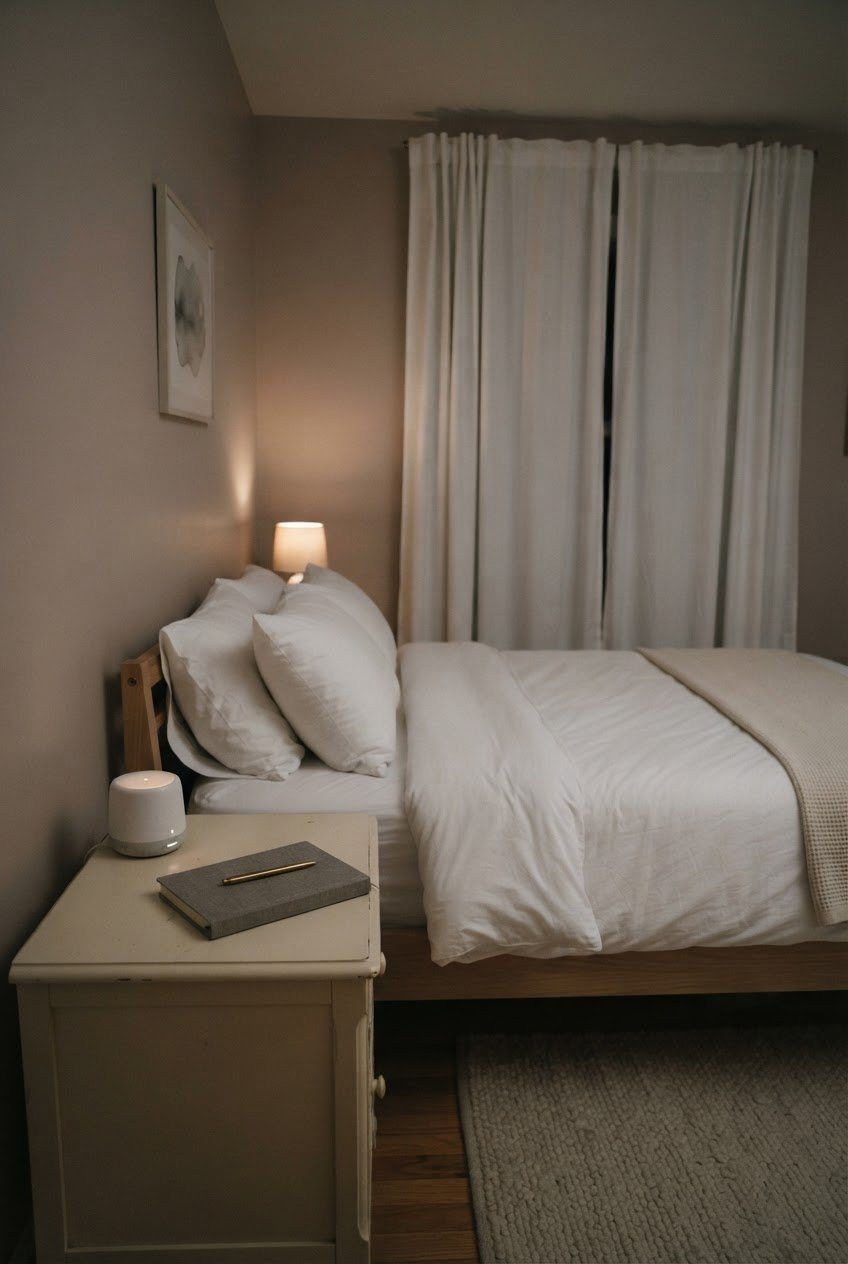
The Bedroom Sleep Setup Table
Use this table to check your bedroom in one quick walk-through. Each row lists what to aim for, simple fixes and what to avoid.
| Element | Aim for | Easy fixes | Avoid |
|---|---|---|---|
| Light | Dark enough that you can barely see your hand | Blackout curtains, a sleep mask, tape over standby lights, a dim warm night-light for bathroom trips | Bright overhead lights at night, glowing chargers, screens in bed |
| Temperature | Cool, roughly 60–67°F (16–19°C), adjusted to your comfort | Open a window briefly before bed, lighter duvet, breathable pajamas, warm socks if your feet get cold | Heavy bedding in a heated room, a radiator right next to the bed |
| Sound | Quiet or a steady, gentle background sound | White noise machine, a fan, soft earplugs, a rug to soften echoes | TV or podcasts playing all night, phone notifications |
| Bedding | Comfortable, breathable and clean | Cotton or linen sheets, a pillow that supports your neck, sheets washed weekly | A worn-out pillow, scratchy fabrics, piles of clothes on the bed |
| Calm and clutter | A room that feels restful when you walk in | Clear the nightstand, keep work out of sight, add one calming touch like a soft throw | Laundry piles, work papers, visible to-do lists |
You don't have to fix every row tonight. Pick the one that bothers you most, and start there.
Middle-of-the-Night Habits
Waking up at night is normal, and most people do it briefly several times without remembering. These habits help you drift back off instead of lying there frustrated.
13. Don't Check the Time
Seeing "3:12" on a screen almost always starts mental math ("if I fall asleep now, I'll get four hours…"), and that worry wakes you up even more. Turn your clock away from the bed and leave your phone out of reach. If you need an alarm, set it and then stop looking at it until morning.
14. Get Up If You Can't Sleep After About 20 Minutes
Lying in bed tossing and turning teaches your brain that bed is a place for being awake and frustrated. If you've been awake for what feels like 20 minutes or so (estimate, don't check), get up and go somewhere dimly lit. Do something quiet and a little boring: read a few pages of a familiar book, fold some laundry, sip water. Go back to bed when you feel sleepy again.
15. Keep a Notebook by the Bed for Racing Thoughts
Many sleepless nights are really thinking nights: to-do lists, worries, conversations replaying. Keep a small notebook and pen on your nightstand and write down whatever is spinning, then close it. It's a way of telling your mind, "this is saved, we can deal with it tomorrow." You can also do a five-minute "brain dump" before bed so fewer thoughts show up at 2 a.m. If anxious thoughts are a regular visitor, my guide on how to calm anxiety fast has grounding techniques that work in bed too, and a little lavender pillow mist can make the notebook-and-breathe ritual feel more soothing.
Signs Your Sleep Habits Need a Little Care
Not sure where your sleep habits stand? These everyday signs suggest the checklist could help:
- Your bedtime drifts. Some nights you're asleep at 10, others at 1, and your body never quite knows what to expect.
- You feel wired at night but foggy in the morning. That often points to too little morning light, late caffeine or bright evenings.
- Your phone is the last thing you see. If falling asleep usually happens mid-video, your wind-down routine is waiting to be built.
- You need the weekend to catch up. Long weekend sleep-ins are often a sign of a weekday sleep debt.
- Your bedroom doesn't feel restful. Too warm, too bright or too cluttered, it quietly works against you.
Recognizing yourself in a few of these is completely normal. It simply shows you where to begin.
How To Start Without Overwhelm
Reading a list of 15 habits can feel like homework. Please don't try to adopt them all on Monday. Sleep responds best to small, steady changes. Here's a gentle way to begin:
- Week 1: Pick a wake-up time and stick to it every day, and get some morning daylight.
- Week 2: Add a caffeine cutoff and dim the lights after dinner.
- Week 3: Build your wind-down routine and move your phone away from the bed.
- Week 4: Check your bedroom against the setup table and fix the weakest row.
Give each change at least a week before deciding whether it helps. Sleep habits often take time to show their effect, and a single bad night doesn't mean a habit isn't working.
A small permission, too: you'll have nights that don't go to plan. A late dinner with friends, a movie that runs long, a night when your mind just won't settle. That's life, not failure. Get up at your usual time the next morning, and your rhythm will find its way back.
Final Thoughts
Better sleep isn't something you force. It's something you make room for, a little at a time, with steady wake-ups, softer evenings and a bedroom that feels like a quiet harbor at the end of the day.
Choose one habit from this checklist tonight and one more next week. Be patient with your body while it learns the new rhythm. Rest is not a reward you have to earn; it's something you deserve every single night.