Skin elasticity isn't something you lose overnight, and it isn't something a single cream gives back. It's the quiet result of years of small things: how much sun your skin has seen, how well its barrier is looked after, how you sleep. The kind news is that the same is true in reverse. Small, steady habits started at any age can help your skin stay springy and comfortable for longer.
That's the angle of this guide. Instead of quick lifting tricks, we'll look at what elasticity actually is, why it changes and which daily habits support it over the long run. No miracle promises, just the basics that skin science agrees on, explained in plain words.
You'll find a simple explanation of collagen and elastin, the gentle pinch test (and what it can't tell you), seven habits that support firm skin, the ingredients worth knowing, what facial tools can and can't do, a factor table you can screenshot and realistic timelines. Let's talk about skin elasticity the calm, honest way.
What Skin Elasticity Actually Is
Elasticity is your skin's ability to stretch and then bounce back. Smile, and your skin folds; relax, and it returns to smooth. Press a cheek gently, and it springs back into shape. That snap-back is elasticity, and it's one of the main things that makes skin look and feel youthful, whatever your age.
It's closely linked to firmness (how tight and supported skin feels) and to the way light reflects off it. When elasticity is good, skin tends to look smoother and fresher. As it softens, lines from expressions stay visible a little longer, and skin can start to look looser around the jaw, neck and eyes.
Collagen and Elastin, Simply Explained
Two proteins in the deeper layer of your skin (the dermis) do most of the work:
- Collagen is the scaffolding. It gives skin its strength and structure, a bit like the frame of a mattress.
- Elastin is the spring. It lets skin stretch and recoil, like the coils inside that mattress.
They sit in a gel-like base full of water-holding molecules, including hyaluronic acid, which keeps everything plump and cushioned. Healthy elasticity depends on all three: enough collagen, working elastin and good hydration around them.
Why Elasticity Declines
Some change is simply time. From early adulthood, the body gradually makes less collagen each year, and elastin is renewed very slowly, so the springs we have need to last. But time is only part of the story. The factors that speed things up are largely about daily life:
- UV exposure is the big one. Sunlight breaks down collagen and damages elastin fibers, and dermatologists consider it the main cause of visible skin aging (often called photoaging).
- Smoking reduces blood flow to the skin and is linked to faster collagen breakdown.
- Poor or short sleep gives skin less time for overnight repair.
- A damaged moisture barrier leaves skin dehydrated, which makes it look and feel less bouncy.
- Hormonal shifts, especially around menopause, can lower collagen more quickly for a while.
Genetics play a role too, and that part isn't in your hands. Everything else on that list, though, is at least partly something you can support.
The Pinch Test: How To Check Skin Elasticity Gently
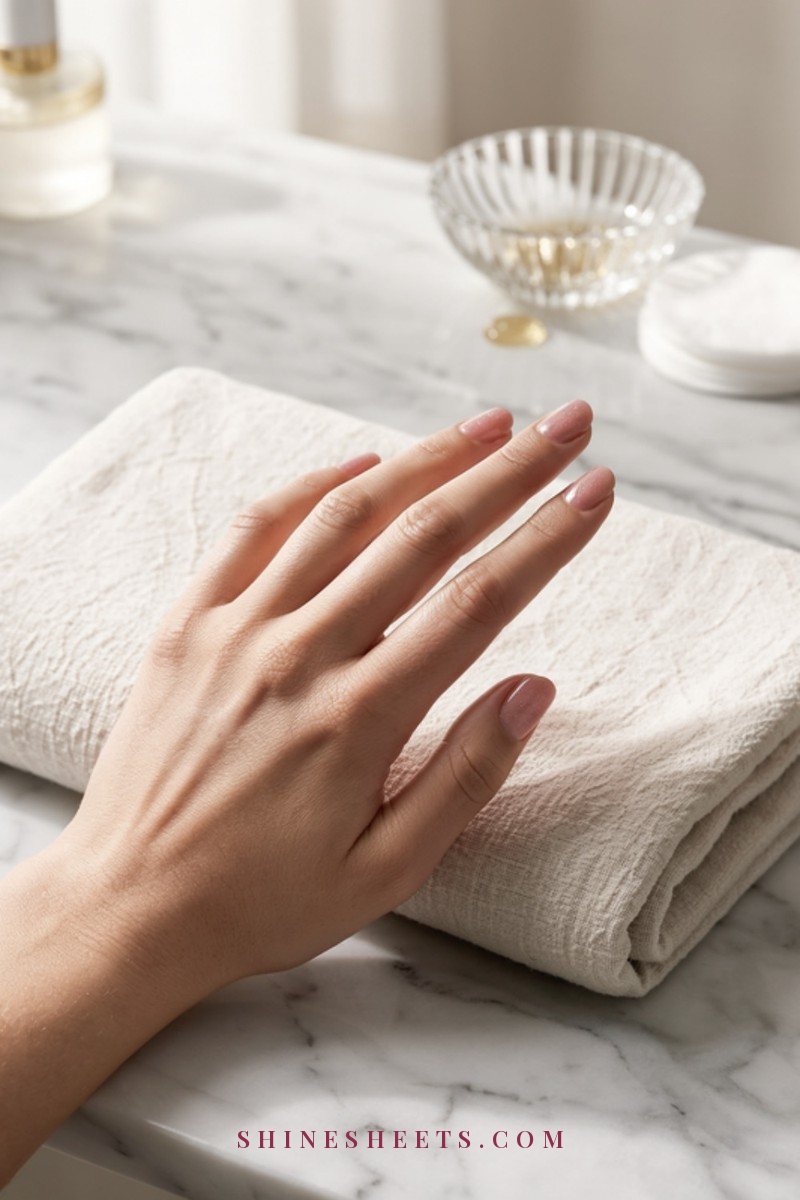
There's an easy at-home check people often use as a rough sign of elasticity. Here's how to do it gently:
- Rest one hand flat on a table, palm down and relaxed.
- With the thumb and index finger of your other hand, lightly pinch a little skin on the back of the hand.
- Hold it for about five seconds. No squeezing hard, no twisting.
- Let go and watch how quickly the skin flattens back.
Skin that springs back almost instantly is showing good recoil. If it takes a few seconds to smooth out, that's simply a sign that elasticity, hydration or both are lower than they used to be. Try it every couple of months, at the same time of day and with your hands at room temperature, so the comparison is fair.
What It Can and Cannot Tell You
The pinch test is a rough, fun sign, not a diagnosis. Its result can change with how much water you've had, how warm your hands are and even how hard you pinch. It also only tests the back of the hand, which ages differently from the face because it sees a lot of sun and has thinner skin.
What it can do is make you more aware of your skin and give you a simple way to notice change over time. What it can't do is tell you your "skin age," predict wrinkles or replace a look from a dermatologist. Please don't pinch your face to test it; facial skin is more delicate and doesn't need the stress.
7 Habits That Support Firm Skin
These are the habits with the strongest evidence behind them. None of them work overnight, and all of them work better together.
1. Daily Broad-Spectrum Sunscreen

If you do only one thing for elasticity, make it this. Because UV is the main driver of collagen and elastin damage, sunscreen is the most effective long-term habit for firmer-looking skin. Choose broad-spectrum SPF 30 or higher, every morning, even on cloudy days and even if you mostly stay indoors near windows.
Use about two finger-lengths for the face and neck, and reapply every two hours when you're outside. If your skin is sensitive like mine, a mineral sunscreen with SPF 50 (zinc oxide or titanium dioxide) is often the gentlest pick. Look for a lightweight, non-greasy finish if you have a shiny T-zone. Don't forget the neck and the backs of your hands, which age just as quickly; my guide to neck and décolleté care walks through that area.
2. A Retinoid or Bakuchiol, Introduced Slowly
Retinoids (the vitamin A family, including over-the-counter retinol) are among the most researched ingredients for aging skin. They encourage faster cell turnover and are linked to supporting collagen over time. They can also be irritating, so the secret is going slowly:
- Start with a low-strength retinol two nights a week, applied to dry skin after cleansing.
- Use a pea-sized amount for the whole face, avoiding the corners of the nose, eyes and mouth.
- After two to three weeks without irritation, go to every other night.
- Always pair it with daily sunscreen, as retinoids make skin more sensitive to the sun.
If retinol is too much for your skin, bakuchiol is a plant-derived alternative that's generally gentler, and early studies suggest it may offer some similar benefits. I wrote a whole guide to bakuchiol and how to use it. One important note: if you're pregnant, trying to get pregnant or breastfeeding, please ask your doctor before using any retinoid.
3. Vitamin C in the Morning
Vitamin C is an antioxidant, which means it helps protect skin from some of the daily stress caused by UV and pollution. It also plays a role in the skin's own collagen production. Used under sunscreen in the morning, it's like a second layer of defense.
A vitamin C serum goes on after cleansing and before moisturizer, two or three drops for the face. Pure vitamin C (L-ascorbic acid) is effective but can sting sensitive skin, so if you're new to it, start every other morning or choose a gentler derivative. Keep the bottle closed and away from light and heat, because vitamin C breaks down quickly. If it turns dark orange or brown, it's time to replace it.
4. A Strong Moisture Barrier
Your skin barrier is the outer layer that holds water in and keeps irritants out. When it's healthy, skin looks plumper and more elastic. When it's damaged (from harsh cleansers, too many actives or over-exfoliating), skin gets tight, flaky and red, and every other step works less well.
Barrier first, always:
- Wash with a gentle, low-foam cleanser and lukewarm water, never hot.
- Exfoliate no more than once or twice a week, and not on retinoid nights.
- Moisturize morning and night, while skin is still slightly damp.
- Introduce only one new product at a time, two weeks apart, so you know what your skin likes.
At night, a rich ceramide night cream is a lovely way to support the barrier while you sleep, especially on the evenings you use a retinoid.
5. Enough Sleep

Skin does a lot of its repair work overnight, and short sleep tends to show up quickly as dullness and puffiness. Most adults do best with roughly seven to nine hours. Regular timing helps as much as the total, so try to go to bed and wake up at similar times most days.
Small extras: sleeping on your back can mean fewer pillow creases in the morning, and a smooth silk or satin pillowcase may feel gentler on skin. My evening tea ritual is part of how I wind down, and a calm routine like that does more for my skin than any overnight mask.
6. Not Smoking
Smoking is one of the clearest outside factors linked to faster skin aging. It reduces blood flow and oxygen to the skin and is associated with collagen and elastin breakdown, plus the repeated pursing of the lips adds lines around the mouth. If you smoke, stopping is one of the kindest things you can do for your skin and the rest of your body. You don't have to do it alone, either; your doctor can talk you through support options.
7. Gentle Movement
Regular movement supports circulation, which brings oxygen and nutrients to the skin, and it's wonderful for stress and sleep, both of which show up on your face. You don't need intense workouts. A brisk 20- to 30-minute walk most days, a gentle yoga session or a dance around the kitchen all count. Wear sunscreen if you're moving outdoors, and cleanse after sweating so it doesn't sit on your skin. If you want more slow, sustainable ideas, my guide to anti-aging habits that actually work covers lifestyle in more depth.
Ingredients Worth Knowing
Beyond sunscreen, retinoids and vitamin C, three supporting ingredients come up again and again in routines for firmness. They're gentle for most people, but please patch test each one first: apply a little behind your ear or on your inner arm once a day for a few days and watch for redness or itching.
- Peptides. Short chains of amino acids that act as messengers in the skin. Some are thought to encourage collagen support. They're very gentle and work well in a peptide moisturizer used morning or night. For a deeper look, see my guide to peptides in skincare.
- Niacinamide. A form of vitamin B3 that helps strengthen the barrier, calm redness and even out tone. Concentrations of around 2–5% are usually comfortable for sensitive skin; higher isn't always better.
- Ceramides. Lipids that naturally make up a large part of your barrier. Topping them up helps skin hold moisture, which makes it look smoother and more supple.
You don't need every ingredient at once. A sensible, simple routine might be: morning cleanser, vitamin C, peptide moisturizer and sunscreen; evening cleanser, retinoid or bakuchiol (on some nights) and a ceramide cream.
What Massage and Facial Tools Can and Can't Do
Facial massage, gua sha and rollers are lovely, relaxing rituals, and I'm all for anything that makes you slow down at the end of the day. It helps to know what to expect from them, though.
What they can do: gentle massage can temporarily reduce morning puffiness by moving fluid, make skin look a little brighter for a few hours thanks to increased circulation, and help you release tension in the jaw and forehead. A rose quartz gua sha stone used with a few drops of face oil, in light upward and outward strokes, three to five times per area, feels wonderful.
What they can't do: tools don't rebuild collagen or elastin, and they won't permanently lift or tighten skin. Pressing hard or dragging can irritate skin or break small blood vessels, so keep the pressure feather-light, always use a slip (oil or serum), clean the tool after each use and skip any areas with active breakouts or irritation. If you're specifically worried about loose skin on the face, my guide to sagging skin on the face covers that in more detail.
Skin Elasticity Factors at a Glance
Here's the whole picture in one table: what affects elasticity, what helps and how quickly you can expect to notice anything. Screenshot it for your bathroom shelf.
| Factor | Effect on elasticity | What helps | How quickly you see change |
|---|---|---|---|
| UV exposure | Breaks down collagen and damages elastin; the main outside cause of skin aging | Daily broad-spectrum SPF 30+, hats, shade | Prevention is gradual; it shows over years |
| Natural aging | Collagen production slowly decreases over time | Retinoid or bakuchiol, peptides, vitamin C | Often 3–6 months of consistent use for subtle changes |
| Dehydration and a weak barrier | Skin looks less bouncy, tighter and duller | Gentle cleanser, ceramides, niacinamide, moisturizer on damp skin | Days to a few weeks |
| Short sleep | Less overnight repair; dullness and puffiness | Seven to nine hours, regular timing | A few nights for freshness |
| Smoking | Linked to faster collagen and elastin breakdown | Stopping, with support from your doctor | Skin color and texture can improve over months |
| Inactivity and stress | Lower circulation; stress affects sleep and skin | Gentle movement most days, calming routines | A few weeks for a fresher look |
| Puffiness | Can make skin look less defined | Light facial massage, cool water, good sleep | Minutes to hours (temporary) |
Realistic Timelines and When To See a Dermatologist
Here's the honest timeline. Better hydration and a calmer barrier can make skin look smoother within days or weeks. Retinoids, vitamin C and peptides usually need at least three months of steady use before you notice subtle changes, and often longer. Sunscreen won't show a visible difference next month, but it's the habit that protects everything else you're doing, and its effect adds up over years.
Take a photo in the same spot and light every few months. Change is slow enough that you may not see it in the mirror day to day, but side-by-side photos tell a kinder story.
A board-certified dermatologist is worth seeing if:
- Your skin changes suddenly or a lot in a short time.
- You have ongoing irritation, redness or breakouts from actives.
- You notice a new or changing spot or mole (please don't wait on this one).
- You'd like a personalized routine or want to hear about in-office options; a dermatologist can talk you through what's available and whether anything suits your skin.
And a gentle reminder: changes in elasticity are a normal part of having skin, not a flaw to fix. Caring for it is about comfort and health first.
Final Thoughts
Skin elasticity is built slowly and protected slowly, which is exactly why small daily habits matter so much. Sunscreen every morning, a strong barrier, one well-chosen active introduced with patience, good sleep and a bit of movement will do more over time than any quick fix.
Start with the one habit you're not doing yet, give it a few months, and let your skin take its time. Kind, steady care is always enough of a beginning.