Retinal and retinol look like a typo of each other, but that one little letter changes how fast they work and how much your skin notices them. Both belong to the same vitamin A family, both can smooth rough texture and soften the look of fine lines over time, and both can leave you flaky and pink if you rush in too quickly.
The good news is that choosing between them is much simpler than the skincare aisle makes it look. It mostly comes down to two questions: how used to vitamin A your skin already is, and whether you care more about quicker results or a calmer, slower start.
In this guide to retinal vs retinol, I'll walk you through what retinoids actually are, how each one works inside your skin, typical strengths, a side-by-side comparison table, who each one suits best and a slow, gentle way to begin. My skin is combination and sensitive (hello, shiny T-zone and cheeks that turn pink if you look at them wrong), so you'll find plenty of patience built into every step.
What Are Retinoids, Exactly?
Retinoids is the umbrella name for vitamin A derivatives that are used on the skin. They encourage healthy cell turnover, help keep pores from clogging and, over months, support collagen in the deeper layers of the skin. That's why they're so loved for fine lines, uneven texture, dark spots and breakouts all at once.
The family is bigger than most people realize. Here are the main members, roughly from gentlest to strongest:
- Retinyl esters (like retinyl palmitate): the gentlest option, often found in day creams. They need several conversion steps, so they're mild but slow.
- Retinol: the most common over-the-counter retinoid, found in countless serums and night creams.
- Retinal (also called retinaldehyde): the less famous sibling that sits one step closer to the active form.
- Retinoic acid (tretinoin): the form your skin can actually use. In the US it's prescription only.
There's also adapalene, a separate retinoid sold over the counter for acne, but it works a little differently and deserves its own conversation. For this guide, we're focusing on the two you'll see side by side on shelves: retinol and retinal.
The key thing to remember is this: your skin can only use retinoic acid. Everything else has to be converted first, and each conversion step makes an ingredient gentler but also slower.
How Retinol and Retinal Work in Your Skin
Once you understand the conversion chain, the whole retinal vs retinol question suddenly makes sense. It's one of those small "aha" moments that makes shopping so much easier.
The Conversion Chain
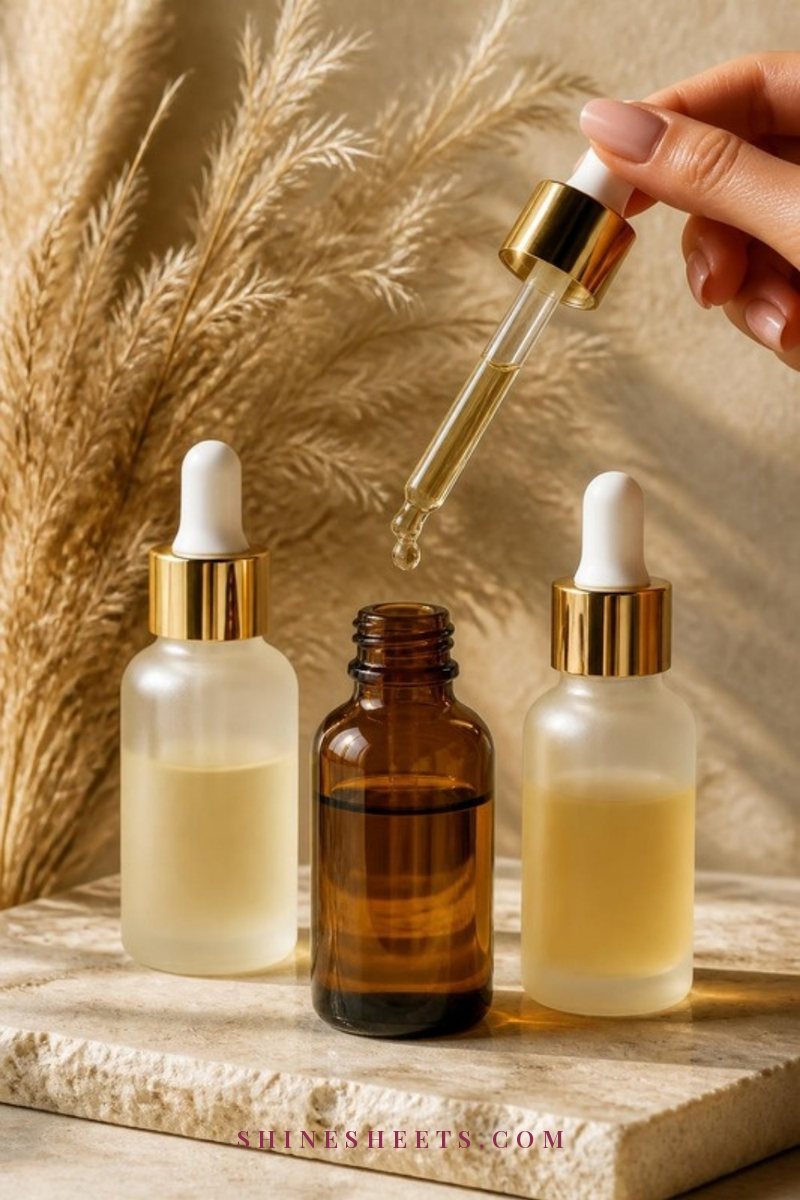
When you put retinol on your skin, enzymes in your skin cells first turn it into retinal. Then retinal is turned into retinoic acid, which is the form that actually talks to your skin cells. So the chain looks like this:
Retinol → Retinal → Retinoic acid
Retinol needs two steps. Retinal needs just one. I like to picture it like a relay race: retinol starts at the very beginning of the track, while retinal is handed the baton halfway around.
Why One Step Makes a Difference
Because retinal skips a step, it generally works faster and can do more at a lower percentage. That's why you'll see retinal serums at strengths like 0.05% or 0.1%, which would sound tiny for a retinol.
Some research also suggests retinal has an antibacterial effect on the bacteria linked to acne, which is one reason it's popular with people who deal with clogged pores and breakouts. That said, retinal isn't magic. Your skin still needs time to respond, and how efficiently each person converts these ingredients varies.
A realistic timeline for either one: many people notice smoother texture and a brighter look in about 4–8 weeks, while softer fine lines and more even tone usually take 3–6 months of consistent use. Retinal may get you to the first changes a little sooner, but neither is an overnight fix.
Typical Strengths at a Glance
Percentages on the label are useful, but only within the same ingredient. You can't compare them directly across the two. A 0.1% retinal is not "weaker" than a 0.3% retinol; it's often roughly as effective or more, because it's one step closer to the finish line.
Here's a rough guide to typical over-the-counter strengths:
- Retinol, gentle start: about 0.1–0.3%.
- Retinol, intermediate: about 0.3–0.5%.
- Retinol, advanced: about 0.5–1%.
- Retinal, gentle start: about 0.05%.
- Retinal, intermediate to strong: about 0.1–0.2%.
Formula matters as much as percentage. An encapsulated or time-released retinol in a creamy, ceramide-rich base can feel gentler than a lower-strength one in a thin, alcohol-heavy serum. If your skin is sensitive, look for words like "encapsulated," "slow release" or "with ceramides" on the box.
Retinal vs Retinol: Side-by-Side Comparison
This is the part I'd screenshot. It puts everything in one place so you can see which column sounds more like your skin.
| Factor | Retinol | Retinal |
|---|---|---|
| Steps to retinoic acid | Two (retinol → retinal → retinoic acid) | One (retinal → retinoic acid) |
| Typical strength | About 0.1–1% | About 0.05–0.2% |
| Speed of visible results | Slower and steady; often 8–12 weeks for clear change | Usually faster at lower strengths; some notice texture changes within a few weeks |
| Irritation risk | Low to moderate, especially at 0.1–0.3% | Moderate; can feel stronger for new users |
| Extra perk | Huge choice of textures and prices | May help with acne-related bacteria |
| Stability | Sensitive to light and air | Even more delicate; best in opaque, airless packaging |
| Best for | Beginners, sensitive or dry skin, slow and steady results | Experienced users, acne-prone skin, anyone who has plateaued on retinol |
| Good first retinoid? | Yes, for most people | Sometimes, at 0.05% with a slow start |
If you're still unsure after reading the table, start with retinol. You can always move up to retinal later, and your skin will have had time to build tolerance.
Who Should Choose Retinol
Retinol is the classic first step, and there's a reason it's so popular. It's forgiving, easy to find and comes in every texture imaginable. Retinol is probably your match if:
- This is your very first retinoid.
- Your skin is sensitive, dry or easily flushed.
- You'd rather see slow, steady progress than risk a rough few weeks.
- You want lots of options, from light serums to rich night creams.
- You're mostly focused on texture, glow and early fine lines rather than active breakouts.
Look for a gentle beginner retinol serum at around 0.1–0.3%, ideally with soothing helpers like ceramides, squalane or niacinamide listed near the top of the ingredients. If you want the full step-by-step for your first months, my guide on how to use retinol for beginners goes deeper into the gentle start.
Who Should Choose Retinal
Retinal is a lovely next step once your skin has made friends with vitamin A. It's not automatically "better," it's just a little more efficient. Retinal could be your match if:
- You've used retinol for several months without much irritation and feel like your results have plateaued.
- Your skin is acne-prone or you get regular clogged pores and want a bit of extra help.
- You'd like quicker visible changes and your skin tolerates actives well.
- You're happy to start low (0.05%) and build up carefully.
When you're ready, I'd choose a retinal serum in opaque or airless packaging, because retinal breaks down easily with light and air. Store it in a cool cupboard, close it tightly and don't keep it for a year after opening.
A quick honest note: if you have very sensitive skin, rosacea or eczema, I'd talk to a dermatologist before reaching for either one. Retinal especially can feel like a lot for reactive skin.
How To Start Either One Slowly
Whichever you choose, the starting rules are almost the same. The most common reason people give up on retinoids isn't that they don't work. It's that they went too fast, too soon and their skin protested.
A Gentle 8-Week Start Plan
Here's the pace I'd suggest for most people, especially sensitive and combination skin:
- Weeks 1–2: two nights a week, with at least two nights in between (for example, Monday and Thursday).
- Weeks 3–4: three nights a week, if your skin feels comfortable.
- Weeks 5–8: every other night.
- After week 8: nightly if your skin is happy, or stay at every other night. Both are perfectly fine.
Use a pea-size amount for your whole face. Truly, that's enough. Dot it on your forehead, cheeks and chin, then spread it gently. If your skin feels tight, stingy or flaky, step back to the previous week's pace for a while. Going slower is never a failure; it's how you end up still using it six months later.
Start with a calm canvas, too. A gentle, hydrating cream cleanser is a pick for retinoid nights because it won't strip your skin before an active goes on. Pat your face completely dry before applying.
The Sandwich Method
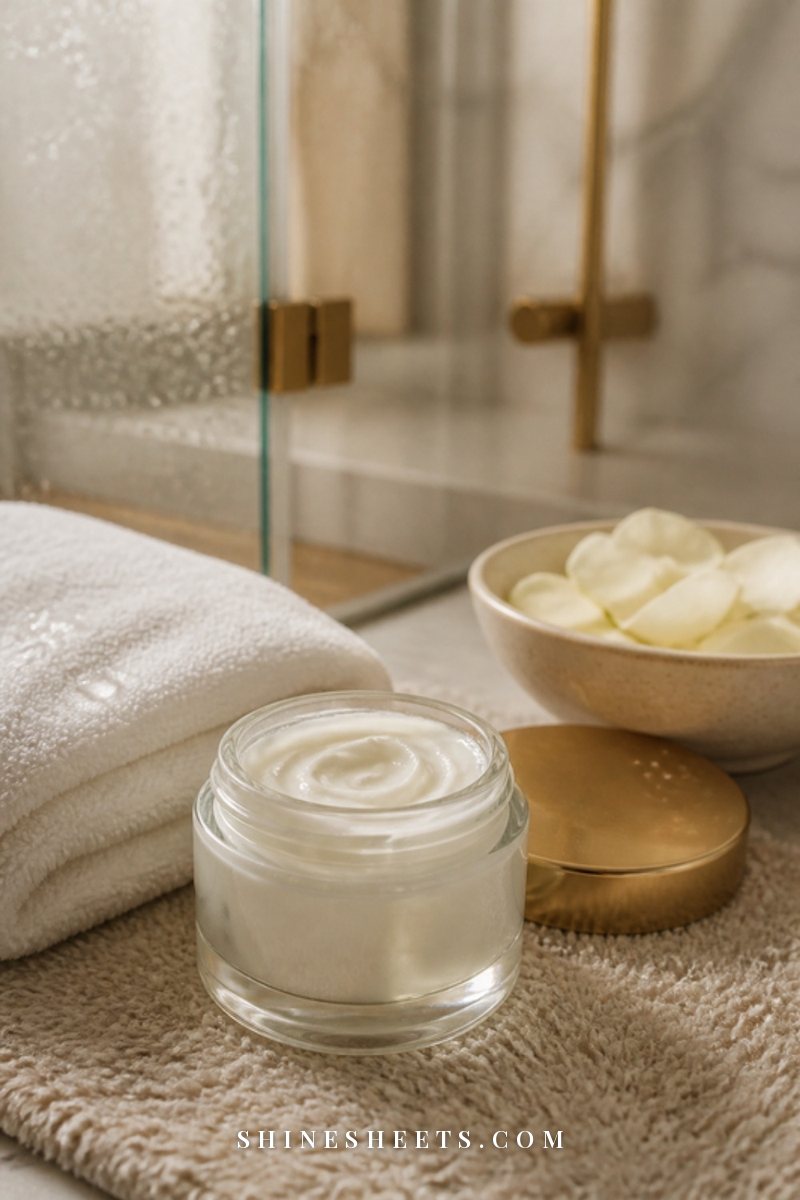
The sandwich method is the kindest trick I know for sensitive skin. It's simple:
- A thin layer of moisturizer first.
- Your pea-size amount of retinol or retinal.
- Another layer of moisturizer on top.
The first layer acts as a light buffer, and the top layer seals in comfort. You may get slightly slower results, but far less irritation, which is a trade I'd make every single time. Look for a fragrance-free ceramide moisturizing cream for this; ceramides help support your skin barrier while it adjusts. If you're not sure which texture suits you, my moisturizer guide breaks down gel, cream and balm.
Where Not To Apply
Some areas are thinner or more delicate and get irritated quickly. Skip or protect these:
- The corners of your eyes and the thin skin right under the lash line.
- The creases around your nostrils.
- The edges of your lips.
- Any broken, sunburned or freshly waxed skin.
Before applying, you can pat a thin layer of a soothing cica balm or plain moisturizer onto the corners of your nose and lips as a little shield. And if you get your brows or upper lip waxed, many estheticians ask you to pause retinoids for about a week beforehand, so mention it at your appointment.
Patch Test First
Before you put anything new on your whole face, patch test it. Apply a small amount to a spot along your jawline or just below your ear for three to five evenings. If there's no burning, rash, swelling or itching, you can move to the full face at the slow pace above. Mild dryness is normal; anything that feels angry is not.
What Not To Mix on the Same Night
Retinoids get along with gentle hydrators, but they don't love sharing the night with other strong actives. To keep irritation low, avoid layering these on the same evening:
- Strong exfoliating acids: glycolic, lactic or salicylic acid toners, peels and pads.
- Benzoyl peroxide: keep it for mornings or alternate days unless a dermatologist tells you otherwise.
- Physical scrubs: grainy scrubs plus retinoids are a fast way to a raw, sore face.
- Vitamin C: it's not dangerous together, but most people do better with vitamin C in the morning and retinoids at night.
If you'd like the full answer on that last one, here's my explainer on whether you can use retinol and vitamin C together. And if you love your acids too much to give them up, a rotating schedule like skin cycling (one exfoliation night, one retinoid night, two recovery nights) keeps everyone in their own lane.
Your Morning Routine: Daily SPF Is Non-Negotiable
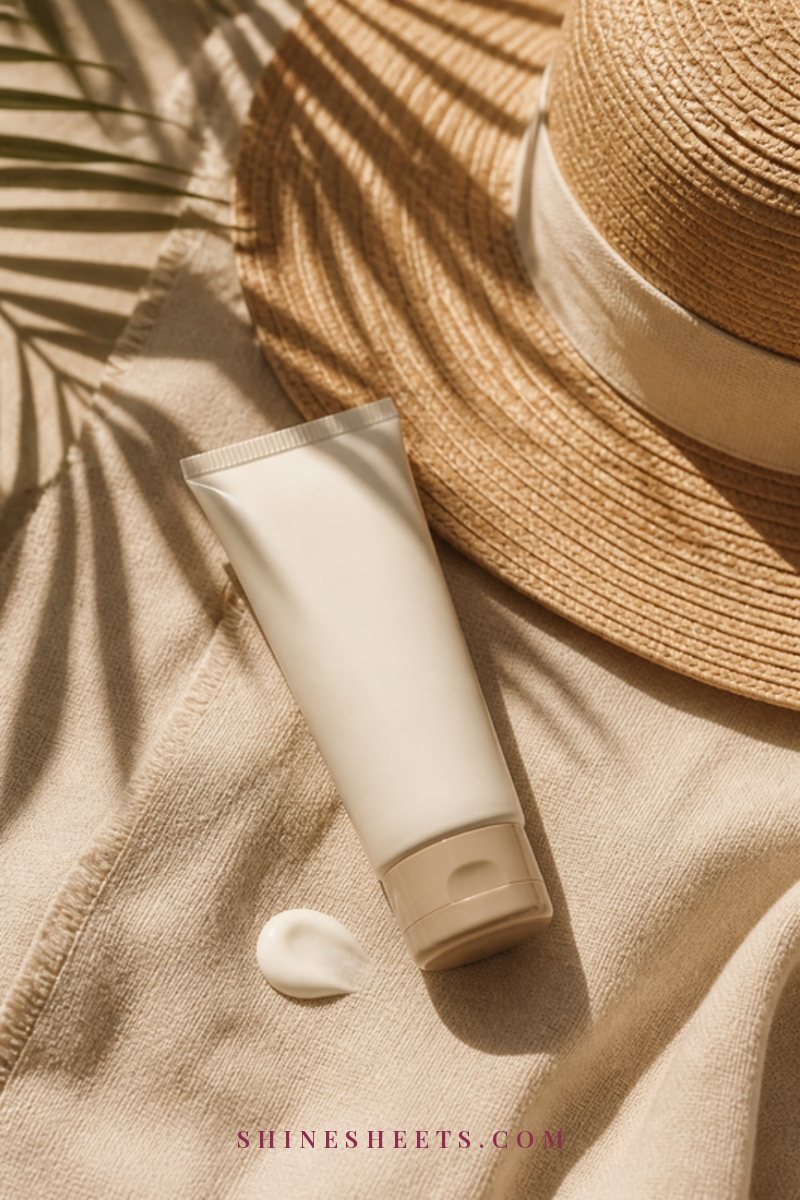
Here's the deal I make with my skin: retinoid at night means sunscreen every single morning, no exceptions. Retinoids can make your skin more sensitive to the sun, and UV exposure undoes much of the good work you're doing in the evening.
Every morning, cleanse gently (or just rinse with water if your skin is dry), moisturize, and finish with a broad-spectrum SPF of at least 30. A lightweight broad-spectrum SPF 50 face sunscreen is a great pick if you'll be outside a lot or near big windows. Use about two finger-lengths of product for your face and neck (roughly a quarter teaspoon for the face alone), and reapply every two hours when you're outdoors. If you're never quite sure you're using enough, here's how to measure how much sunscreen to put on your face.
A wide-brimmed hat and shade on bright days are your sunscreen's best friends, especially in summer and on snowy winter days when light bounces back up at you.
Normal Adjustment vs Signs To Stop
The first few weeks are often a little bumpy. People call this "retinization," and it's simply your skin getting used to faster turnover. Normal signs include:
- Mild dryness, light flaking or a slightly tight feeling.
- A little pinkness that fades within a day.
- A few small breakouts in places you usually break out, for a few weeks.
Not normal, and a reason to stop and check in with a doctor or dermatologist:
- Burning or stinging that lasts long after you apply.
- Swelling, blisters, oozing or raw patches.
- An itchy rash or hives.
- Breakouts in brand-new areas that keep going beyond about six weeks.
If you can't tell whether new spots are a temporary purge or a reaction, my guide to purging vs breakouts walks you through the differences. And please be kind to yourself if your skin needs a break. Pausing for a week and coming back slower is completely fine.
Pregnancy, Breastfeeding and Prescription Options
This part matters, so I'll keep it clear: if you're pregnant, trying to get pregnant or breastfeeding, avoid retinoids, including retinol, retinal, adapalene and prescription tretinoin. Talk to your doctor or midwife about gentler options that are considered safe for you during this time.
On the other end of the scale, if you've tried over-the-counter retinol and retinal and want something stronger, or you're dealing with persistent acne, pigmentation or any skin condition, see a dermatologist. They can talk you through prescription tretinoin, which is retinoic acid itself, and help you use it safely. Prescription strength means prescription-level guidance, and that's a good thing.
7 Common Retinoid Mistakes To Avoid
Most retinoid "disasters" come from the same handful of mistakes. Avoid these and you're already ahead:
- Using too much. More product doesn't mean faster results, just more irritation. A pea-size amount covers the whole face.
- Going nightly in week one. Start with two nights a week and build up over a couple of months.
- Layering with strong acids on the same night. Keep exfoliants and retinoids on separate evenings.
- Skipping moisturizer. A comfortable barrier is what lets you keep going long enough to see results.
- Applying on damp skin straight after washing. Damp skin can let actives in faster, which may sting. Pat dry first; sensitive skin can wait a few extra minutes.
- Quitting at week three. The adjustment phase is the hardest part, and real results usually arrive after it.
- Forgetting sunscreen. Daily broad-spectrum SPF protects both your skin and all your effort.
Final Thoughts
Retinal vs retinol isn't really a competition. They're two steps on the same path, and the right one is simply the one your skin can enjoy consistently. Retinol is a beautiful, gentle place to begin. Retinal is a smart next step when your skin is ready for a little more.
Go slow, use less than you think, cushion it with moisturizer and never skip your morning sunscreen. Give it a few months of quiet consistency, and your skin will thank you in the softest, smoothest way.