PDRN sounds like something out of a lab, and in a way it is. But the reason it has become one of the most talked-about ingredients in Korean skincare is surprisingly gentle: it's mostly loved as a calming, hydrating "repair" step for skin that feels tired, dry or stressed, without the sting of acids or retinoids.
The hype around it is a lot louder than the evidence, though, so this guide keeps things honest. You'll learn what PDRN skincare actually is, why it's often called "salmon DNA," what topical PDRN can and cannot do, how it differs from in-clinic treatments, who it suits, who might skip it, how to fit it into your routine and 5 myths worth letting go of.
Think of this as the calm, clear explanation you can read before deciding whether it deserves a spot on your shelf at all.
What Is PDRN, Exactly?

PDRN stands for polydeoxyribonucleotide. In plain words, it's a mix of purified DNA fragments, most often taken from salmon or trout (which is where the "salmon DNA" nickname comes from). The fragments are cleaned and processed so they're no longer anything like fish in the way you'd imagine. There's no fishy smell and no fish oil.
On an ingredient list, you'll often see it written as sodium DNA or simply PDRN. You may also see a close cousin called PN (polynucleotides), which are longer DNA chains used in some in-clinic treatments. And some brands now sell plant-based "PDRN-style" ingredients. Those are different ingredients with their own, even smaller, body of research, so read the label rather than the front of the box.
In skincare, PDRN is usually included in serums, ampoules, essences and creams, typically alongside hydrators and soothing ingredients.
Why Korean Skincare Made PDRN Popular

PDRN first made its name in clinics, not in serum bottles. In-clinic injectable treatments based on DNA fragments (often nicknamed "salmon injections") became popular in Korea for skin quality, and the buzz naturally spilled over into everyday skincare.
Korean skincare also loves exactly the kind of step PDRN fits into: lightweight, layerable, focused on hydration and a healthy barrier instead of aggressive resurfacing. It sits comfortably next to snail mucin, centella and ceramides in that "soothe and strengthen" category. If you're curious about the philosophy behind that approach, my guide on why Korean skincare and glass skin are worth trying explains it nicely.
Add social media before-and-after videos (which usually mix several treatments together) and a catchy nickname, and PDRN went from clinic menu to drugstore shelf very quickly.
What Topical PDRN Can and Cannot Do

This is the part most product pages skip, so let's slow down here.
What the Research Suggests
Most of the strongest research on PDRN comes from wound healing and in-clinic use, where it's delivered beneath the skin. In those settings, studies suggest it may support the skin's natural repair processes and calm inflammation.
For topical products (the serums and creams you apply at home), the evidence is much thinner. The studies that exist are mostly small, often short-term and sometimes funded by the companies making the products. What they generally point to is:
- Better hydration and skin that feels softer and more comfortable.
- A soothed, calmer look, especially for skin that feels tight or stressed.
- A healthier-looking barrier, meaning less dryness and less of that rough, flaky texture.
Those are lovely, realistic benefits. They're also benefits you can get from many well-formulated hydrating products.
What It Can't Do
DNA fragments are large molecules, and it's not clear how far they travel into intact skin when you simply apply them on top. A serum at home is not the same as a treatment delivered under the skin by a professional. So, based on what we know today, topical PDRN is unlikely to:
- Erase wrinkles, deep lines or acne scars.
- Rebuild collagen the way in-clinic treatments are designed to.
- Replace proven ingredients like sunscreen, retinoids or vitamin C for sun damage and texture.
- Treat skin conditions such as rosacea, eczema or acne.
None of that makes PDRN useless. It just means it's a nice supporting step, not the main event.
Topical PDRN vs In-Clinic Treatments
You'll often see the two mixed together online, so here's the simple difference. Topical PDRN is a skincare ingredient you apply yourself. In-clinic PDRN or PN treatments are medical procedures performed by trained professionals, with their own risks, aftercare and costs.
If you're interested in the in-clinic version, please book a consultation with a board-certified dermatologist and ask them whether it's right for your skin. Never try to inject, needle or "push in" a product at home, and never use a skincare serum with a microneedling tool unless a professional has told you that specific product is safe for it. Your skin deserves more care than a home experiment.
How To Read a PDRN Label
"PDRN" on the front of a box can mean a lot of different things, so the back of the box is where the real story is. A few minutes with the ingredient list saves money and disappointment:
- Look for the actual name. Search the list for sodium DNA, PDRN or polydeoxyribonucleotide. If you only see PN or polynucleotides, it's the related longer-chain ingredient.
- Check where it sits. Ingredients are listed from highest to lowest amount (above roughly 1%). If PDRN shows up after the fragrance or preservatives, there's likely only a small amount.
- Notice the source. Salmon or trout is the classic source. "Plant PDRN" or "vegan PDRN" usually means a different DNA-based or plant-derived ingredient with its own, smaller research history.
- Read the rest of the formula. For sensitive skin, the supporting cast matters as much as the star. A short list with hydrators, soothing extracts and no added fragrance is usually the gentlest choice.
- Be wary of big claims. Words like "DNA repair," "injection in a bottle" or "erases wrinkles" are marketing, not results you can count on.
A simple rule I'd follow: choose the formula you'd be happy to use even if the PDRN did nothing at all. If the hydration, texture and gentleness are right, any extra benefit is a bonus.
PDRN Formats Compared
PDRN shows up in lots of different product types, and each one does a slightly different job. Here's an honest overview so you can choose without guessing. Screenshot it before you go shopping.
| Format | Typical use | What to expect | Who it suits | Caution |
|---|---|---|---|---|
| Serum or ampoule | A few drops after toner, morning or night | More hydration, a calmer, more comfortable feel over a few weeks | Dry, dull or stressed skin wanting one "repair" step | Patch test first; start once a day |
| Essence or toner | Patted in after cleansing, before serum | A light hydration boost, very gentle | Combination or oily skin that dislikes heavy layers | Often a lower amount of PDRN; check the ingredient list |
| Cream or moisturizer | Last step at night, or before sunscreen in the morning | Softer, less tight skin, especially overnight | Dry or mature-feeling skin | Rich textures may feel heavy on an oily T-zone |
| Sheet mask | 10–20 minutes, once or twice a week | A temporary plump, dewy look | Anyone wanting an occasional pick-me-up | Don't leave it on until it dries out |
| Eye cream | A rice-grain amount around the orbital bone | A more hydrated, comfortable eye area | Dry under-eyes | Keep away from the lash line and eyes |
| In-clinic injections | Performed by a professional only | Ask a dermatologist | Discussed case by case with a dermatologist | Medical procedure; never DIY |
For most people, one product is plenty. A serum is the easiest place to start, because you can add it to the routine you already have without replacing anything.
Who PDRN Skincare Suits
PDRN tends to make the most sense if your skin needs comfort more than correction. It may be a good fit if you have:
- Dry or dehydrated skin that feels tight after cleansing.
- Dull, tired-looking skin that's missing that soft, healthy bounce.
- Stressed skin after too much exfoliation, a harsh product or a change in climate.
- Sensitive skin that doesn't tolerate acids or retinoids well and wants a gentle "repair" step instead.
My own combination, sensitive skin (with its predictably shiny T-zone) is exactly the type that appreciates gentle, barrier-friendly steps more than anything strong. If that sounds like yours, ingredients in the PDRN category are worth a look, alongside basics like ceramides. If your barrier feels truly upset, start with my guide on signs of a damaged skin barrier and how to restore it before adding anything new.
Who May Want To Skip It
PDRN is generally described as gentle, but gentle doesn't mean right for everyone. Consider skipping it, or checking first, if:
- You have a fish allergy. PDRN is highly purified, but because it's usually sourced from salmon or trout, please check with your doctor or an allergist before trying it.
- Your skin is very reactive and tends to flare with almost any new product. Every extra product is one more chance for irritation, and the rest of the formula (fragrance, essential oils, preservatives) matters too.
- You avoid animal or fish-derived ingredients. Salmon-derived PDRN won't fit, and plant-based alternatives are a different ingredient.
- You're pregnant, breastfeeding or under treatment for a skin condition. Ask your doctor or dermatologist before adding new actives.
- You're on a tight budget. PDRN products are often priced as premium. A simple hydrating serum and a good moisturizer can give similar comfort for less.
How To Use PDRN in Your Routine

PDRN is easy to slot in. It usually goes on after toner and before moisturizer, the same spot as any watery serum. If you're never sure what goes first, my guide to toner vs essence vs serum clears up the layering order.
Morning
- Cleanse gently, or simply rinse with lukewarm water if your skin is dry.
- Apply a toner or a hydrating essence, patting it in with your palms.
- Use 2 to 3 drops of a PDRN serum in a dropper bottle, pressed gently over the face.
- Follow with a light moisturizer.
- Finish with a broad-spectrum SPF 30 or higher. A gentle mineral sunscreen is a lovely pick for sensitive skin.
Night
- Cleanse, then pat your face mostly dry with a clean, soft towel. A set of cream cotton face towels makes it easy to use a fresh one often.
- Apply toner or essence.
- Press in your PDRN serum.
- Seal everything in with a ceramide barrier cream, especially on dry or tight areas.
Once a day is a perfectly good place to start. If your skin loves it after two weeks, you can use it morning and night. Give it at least 4 to 6 weeks before deciding whether it's doing anything for you, and take a quick photo in the same window light at the start so you can compare fairly.
What It Pairs Well With
PDRN plays nicely with other calm, supportive ingredients. Good partners include:
- Niacinamide for a more even look and a balanced T-zone.
- Peptides for that smooth, comfortable feel. My guide on what peptides do and who they suit covers them in detail.
- Centella asiatica for soothing redness-prone skin.
- Hyaluronic acid and glycerin for extra hydration.
- Ceramides to support the barrier.
Many PDRN products already contain one or two of these, so check the ingredient list before buying a separate product for each.
What To Be Careful Pairing
There's no known reason PDRN can't be used with stronger actives, but stacking lots of products at once makes it hard to tell what's helping and what's irritating. If you use retinoids or exfoliating acids, keep them on alternate nights at first, and introduce PDRN on a night without them. Only add one new product every two weeks.
5 Honest Myths About PDRN

A trendy ingredient always collects a few myths. Here are the ones worth gently setting aside.
Myth 1: It Changes Your Skin's DNA
It doesn't. The DNA fragments in PDRN don't rewrite, replace or "upgrade" your own DNA. The name sounds dramatic, but in a skincare product it behaves as a supportive, skin-conditioning ingredient, not genetic engineering.
Myth 2: A Serum Works Like the Injections
A topical serum and an in-clinic treatment are completely different experiences. The research behind the injections can't simply be applied to a product you pat on at home, so expect a hydrating, soothing step, not clinic-level results.
Myth 3: It Erases Wrinkles and Scars
Softer, better-hydrated skin can make fine lines look a little less visible, and that's a real, pleasant change. But no current evidence shows topical PDRN removing wrinkles or scars. If those are your main concerns, a dermatologist can talk you through options with stronger evidence.
Myth 4: More Product Means Faster Results
Layering three PDRN products or using half the bottle each night won't speed anything up. It mostly raises the cost and the chance of irritation. A few drops, used consistently, is the sweet spot.
Myth 5: It's All Hype With Nothing Behind It
The opposite extreme isn't true either. PDRN has a real research history in medical settings, and early topical studies point toward hydration and soothing benefits. The honest view sits in the middle: promising, gentle, under-researched as a topical, and not essential.
How To Patch Test and Start Slowly
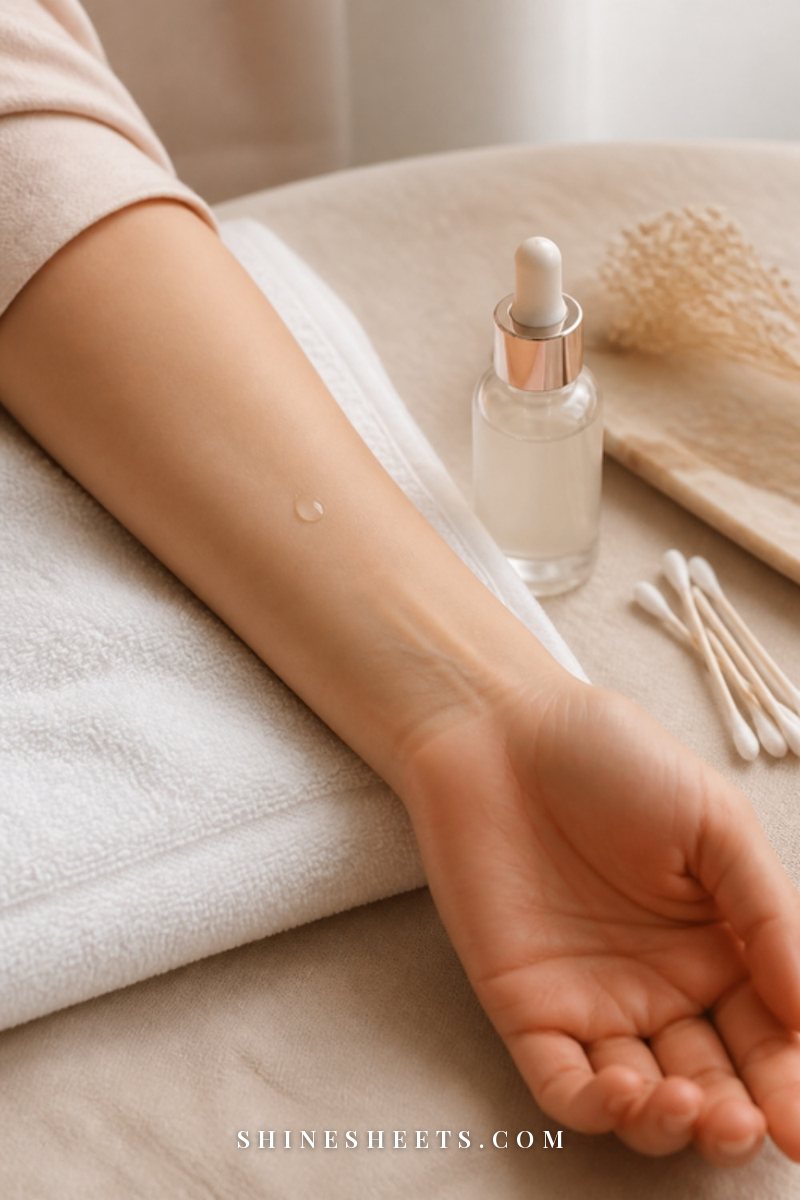
Any new product deserves a patch test, even a gentle one. Here's the simple version:
- Apply a small amount to your inner forearm or just behind your ear.
- Leave it on and repeat once or twice a day for 5 to 7 days.
- If there's no redness, itching, burning or bumps, try it on a small area of your face, like along the jawline, for a few more days.
- Only then use it on your whole face, once a day.
If you notice stinging, rash, swelling or itchiness at any point, wash it off with lukewarm water, stop using it and let your skin settle. My full guide on how to patch test skincare walks through every step, including how to read a delayed reaction.
When To See a Dermatologist
A serum can make skin feel more comfortable, but it can't diagnose or treat what's going on underneath. Please see a dermatologist if:
- Redness, dryness or breakouts last longer than a few weeks despite a gentle routine.
- You notice a reaction that spreads, swells or doesn't calm down after stopping a product.
- You're considering in-clinic PDRN or PN treatments.
- You have a fish allergy and want to know whether PDRN products are safe for you (your doctor or allergist can help with this one too).
This article is for general information and isn't a substitute for advice from a doctor or dermatologist who knows your skin.
Final Thoughts
PDRN skincare isn't a shortcut and it isn't a scam. It's a gentle, hydrating, barrier-friendly ingredient with a fascinating backstory and a research base that's still catching up with the hype. If your skin feels tired or stressed and you'd like a calm "repair" step, it can be a lovely addition.
And if you skip it, your skin will be just fine. A kind cleanser, a good moisturizer and daily sunscreen will always do more than any trending bottle, and that's a comforting thing to remember.