A Korean body scrub works because of what it leaves out. There is no gritty paste, no sugar, no salt, no clever formula. It's warm water, time and a rough little mitt called an Italy towel, and that simple combination lifts off more dead skin than most scrubs in a jar ever will.
The secret is the soak. Skin that has softened in warm water for a good while lets go of its dull outer layer with surprisingly little effort, so the towel does the work and you don't have to scrub hard at all. Get the soak right, keep the pressure firm but kind, and your skin comes out smooth in a way that feels almost silly the first time.
This guide walks you through a Korean body scrub at home, start to finish: what it is, what you need, when to skip it, the exact steps, a body-area scrub map with pressure and stroke direction, how often to do it and how to care for your towel afterwards. Think of it as a slow, steamy evening ritual rather than a chore.
If you've never done one, start with a single set of Korean Italy towel exfoliating mitts (they usually come in packs of several, which is handy because you'll want a fresh one every few months anyway).
What Is a Korean Body Scrub?
In Korean bathhouses (called jjimjilbang), a body scrub is known as seshin. You soak in hot pools for a while, then lie on a table while an attendant scrubs you from head to toe with an Italy towel. It's thorough, a little intense and very much a normal part of life there, the same way a monthly haircut is for many people.
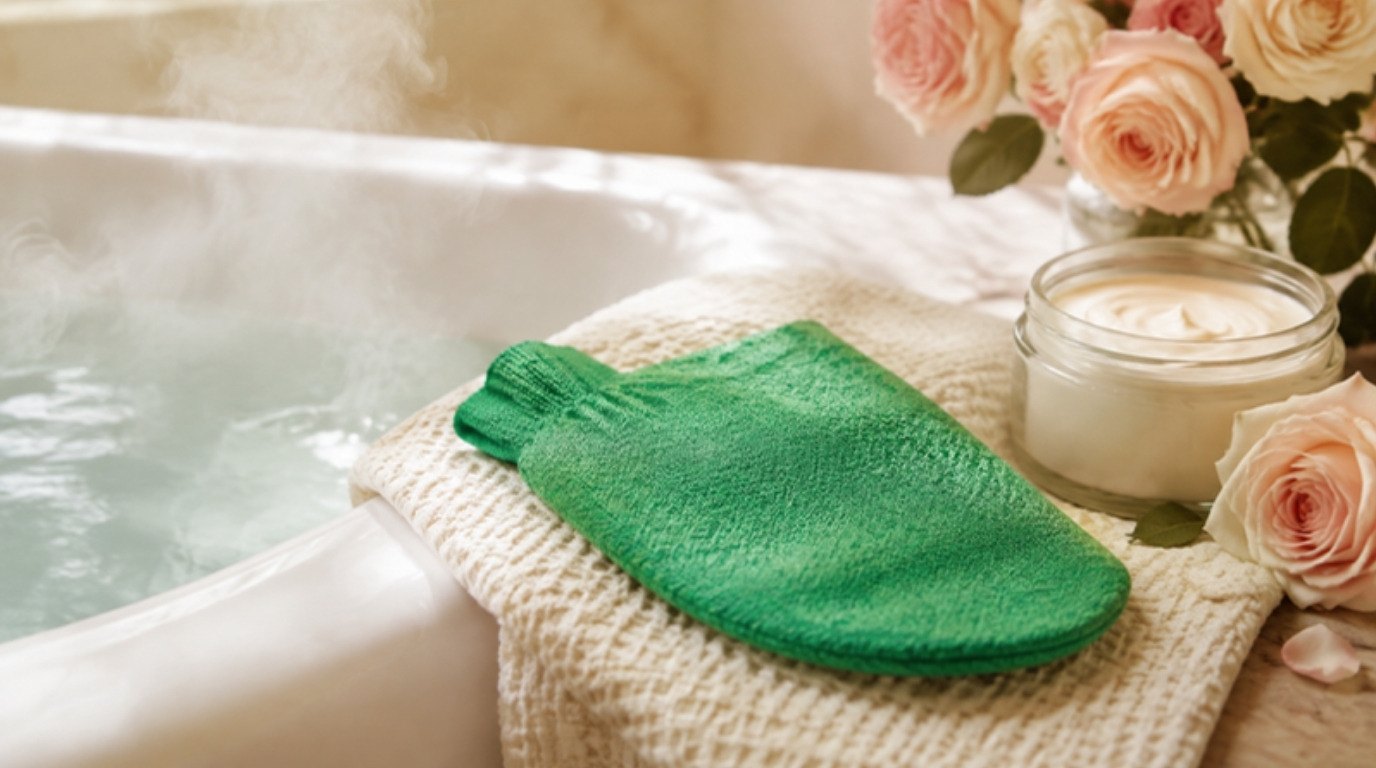
The Italy towel itself is a rough, textured mitt, traditionally made from viscose. The name comes from the fabric, which was originally imported from Italy, not from anything Italian about the ritual. You'll usually see them in bright green, red or yellow, and they're thin, slightly scratchy and surprisingly durable.
At home, you obviously don't have an attendant (or a heated stone floor). But the core of seshin translates beautifully to a regular bathtub or even a shower: soften the skin, scrub in long strokes, rinse, moisturize. That's it.
If you want a broader look at all the ways to exfoliate, from gentle washcloths to chemical body lotions, my guide on how to exfoliate your body covers the whole menu. This article stays focused on one thing: the Italy towel ritual.
Why an Italy Towel Removes So Much Dead Skin
Your skin sheds dead cells all the time, but plenty of them cling on and build up, especially on elbows, knees, heels, the backs of arms and anywhere clothing rubs. A long warm soak makes that outer layer swell and soften. The Italy towel's textured weave then grips those loosened cells and rolls them away.
That's why people are often startled by the little gray rolls that appear during a Korean scrub. They're a mix of softened dead skin and everyday grime that ordinary washing leaves behind. They're completely normal, they don't mean you're "dirty" in any way, and seeing them is a sign that your soak was long enough.
A few honest notes so your expectations stay realistic:
- You won't always see rolls. Thinner, drier skin or a shorter soak may simply leave your skin smoother without any dramatic show.
- More rolls is not the goal. If you keep scrubbing one spot to chase them, you're removing more than you should.
- Results are about texture. Skin feels softer and looks a little brighter, and body lotion sinks in better. It won't change your skin type or fix a skin condition.
What You Need for an At-Home Korean Body Scrub
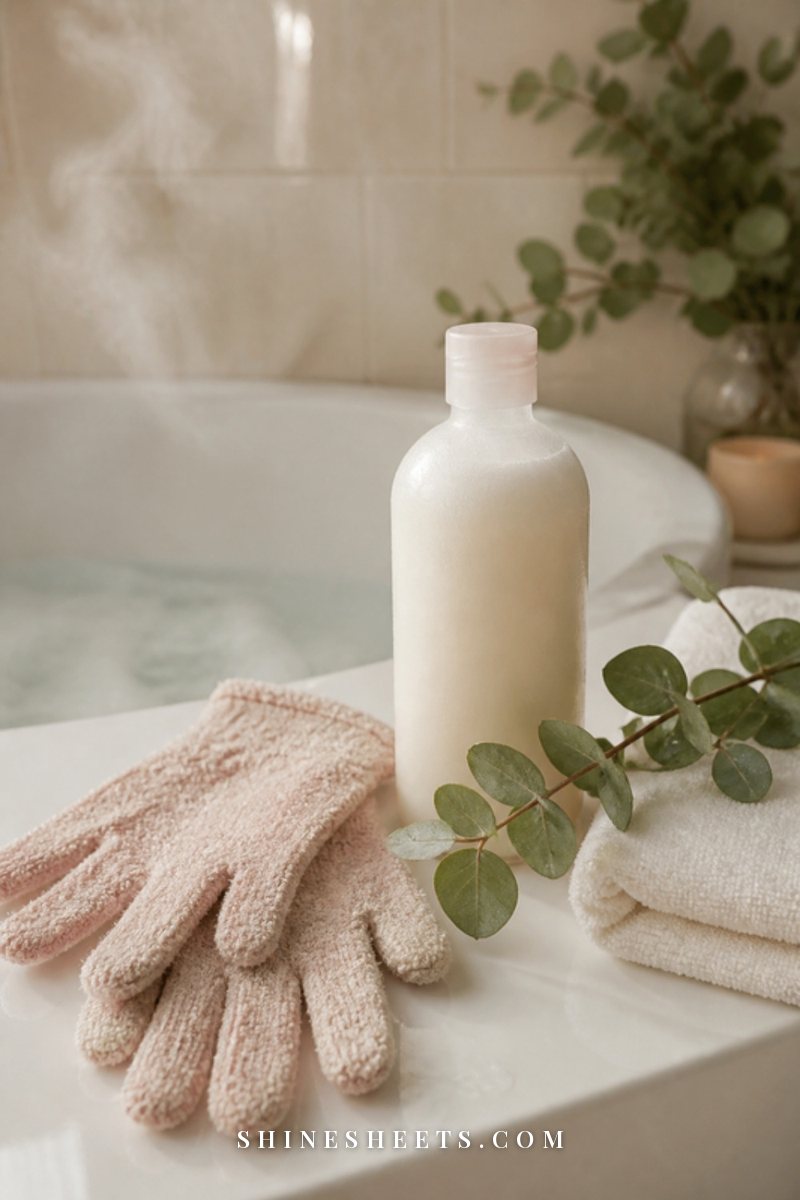
The kit is short, which is part of the charm. Gather everything before you get in the water, because you'll want to move straight from rinsing to moisturizing.
- An Italy towel mitt. One per person. Mitts that slip over your hand are easier than flat towels for a first try.
- A bathtub or a hot shower. A bath is ideal for softening, but a long shower works too (more on that in the steps).
- A thick towel for afterwards. A white waffle weave bath towel is a lovely pick here because it dries quickly and you can pat rather than rub, which freshly scrubbed skin appreciates.
- A rich body cream. Look for a fragrance-free or lightly scented cream with ingredients like shea butter, glycerin or ceramides.
- Something warm to wear. A soft robe so you can let the cream settle before getting dressed.
- Optional extras. A cup of herbal tea, a glass candle and a playlist, because this takes about an hour and it should feel nice.
You don't need body wash with exfoliating acids, a scrub or any special soap. In fact, skip exfoliating products on scrub day entirely. A plain, gentle body wash at the end is plenty.
When To Skip a Korean Body Scrub
This part matters more than any technique, because the Italy towel is genuinely abrasive. Skip the scrub, or skip the affected area, if any of these apply:
- Sunburn, even a mild one that feels "mostly fine."
- Broken skin: cuts, scratches, scabs, blisters or healing piercings.
- An eczema or psoriasis flare, or any patch that's red, itchy or inflamed.
- Right after shaving or waxing. Give it at least two or three days so the skin can settle.
- If you use a retinoid or exfoliating acid on your body. Those already thin the outer layer, so adding an Italy towel can leave you raw. Pause the body retinoid for a few days before and after, or skip the scrub on those areas.
- Active breakouts, rashes or warts, since scrubbing can irritate them or spread them around.
If you have very sensitive skin (mine is sensitive, so I relate), start with one small area like your lower legs and see how it feels the next day before doing your whole body. And if dryness, roughness or bumps keep coming back no matter what you do, a dermatologist can tell you what's going on. Scrubbing harder is never the fix.
One more kind reminder: patch test any new body cream or lotion you plan to use afterwards on your inner arm first, because freshly exfoliated skin is more reactive than usual.
How To Do a Korean Body Scrub at Home: 8 Steps
Plan for about an hour from filling the tub to slipping on your robe. Rushing is the most common reason an at-home scrub feels harsh or doesn't work, so give yourself the time.
1. Soak for 15 to 20 Minutes

Fill the bath with warm water, comfortably warm rather than scalding. Hot water that leaves you flushed and dizzy isn't needed, and it dries out your skin more. Soak for 15 to 20 minutes, letting your shoulders and back go under now and then.
In the shower instead? Run it warm, close the door so the room fills with steam and let the water run over each area for a few minutes. Stay in for at least 10 to 15 minutes before you start. The skin should look a little wrinkly on your fingertips when it's ready.
A rolled-up towel or a sage green bath pillow behind your neck makes the soak much more relaxing, and relaxed you is more patient you.
2. Wet and Wring Out the Towel
Dip the Italy towel in warm water, then wring it out well. It should be damp, not dripping. A soaking wet towel slides over the skin instead of gripping it, and you'll end up pressing harder to compensate.
Slip it over your hand and keep the fabric fairly snug. Loose, bunched fabric makes uneven pressure.
Important: no soap yet. A Korean scrub is done on clean, wet, bare skin. Soap makes the towel slippery and you'll lose the grip that makes it work.
3. Start With Your Legs and Arms
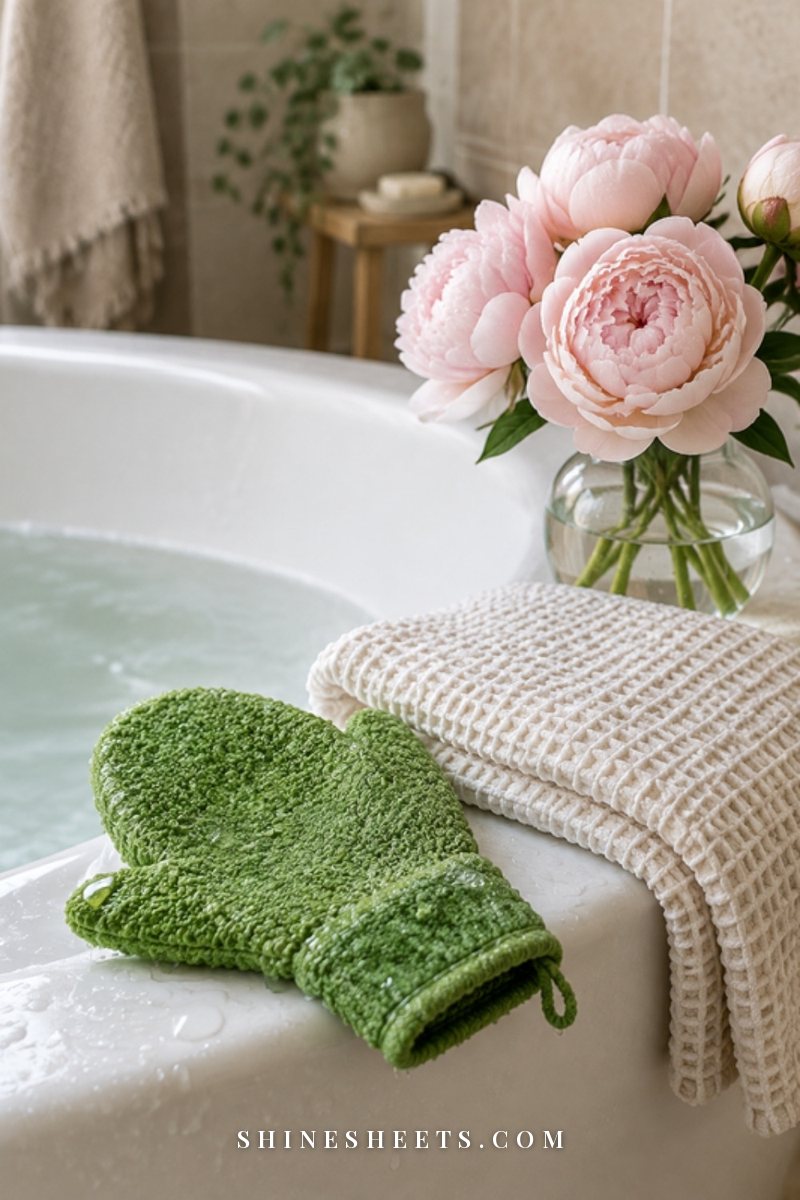
Begin with your lower legs because they're the easiest to reach and the least sensitive. Sit on the edge of the tub or stand in the warm water and scrub in long, firm strokes, from ankle up to knee. Do each area about five to ten times, then move on.
Next, work up to your thighs, then your arms: wrist to elbow, elbow to shoulder. Many Korean attendants scrub in one direction along the length of the limb, and that's a good habit for beginners because it keeps you from scrubbing back and forth over the same small spot.
Splash the area with water between passes so the loosened skin rinses off and you can see how it's going.
4. Move to Your Back
The back is the trickiest part to reach alone. A few options:
- Use a long, flat Italy towel (not a mitt) and hold one end in each hand, then pull it diagonally across your back like you'd dry yourself with a towel.
- Reach over your shoulder for the upper back and behind you for the lower back, doing what you comfortably can.
- Ask a partner or a friend to help, the way people do at bathhouses. It's a lovely shared ritual.
Don't twist or strain to reach every inch. Whatever you miss today, you can get next time.
5. Go Gently on Your Chest and Stomach
The skin on your chest, stomach and sides is thinner and softer, so lighten your pressure here. Use smaller, slower strokes, and skip your breasts' delicate skin and any intimate areas entirely. Underarms can be scrubbed very lightly if they're not freshly shaved, but they're optional.
6. Skip Your Face and Neck
An Italy towel is far too rough for facial skin. Keep it below your collarbone. Your neck is a gray area: if you include it, use the lightest touch possible, or leave it out and give your face and neck their own gentle routine.
7. Rinse Everything Away
Once you're done, rinse from top to bottom with warm water. If you're in the bath, drain the tub first and finish under the shower so you're not sitting in the rolls you just removed.
Now is the time for a gentle body wash if you want one, used with your hands rather than the towel. Then finish with a slightly cooler rinse, which feels refreshing after all that warmth.
8. Moisturize Right Away
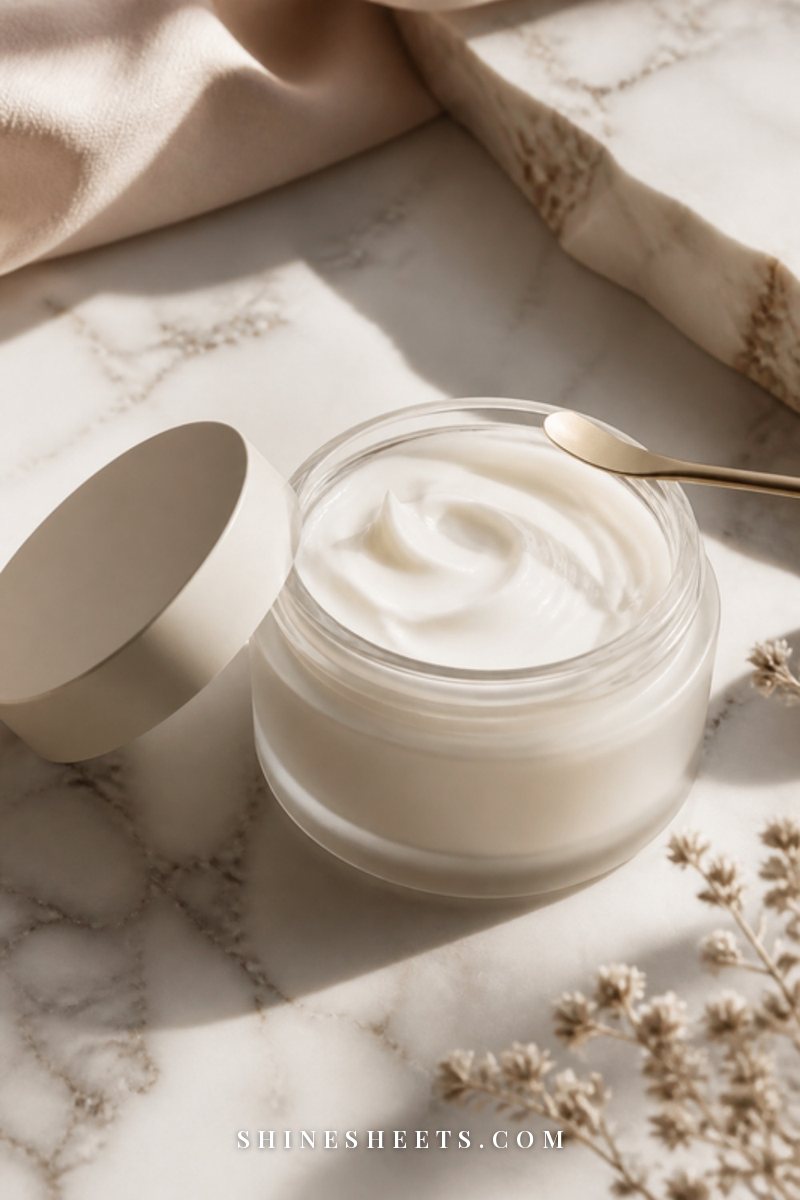
Pat your skin dry, leaving it a tiny bit damp, and moisturize within a few minutes. This is the step that makes the whole ritual worth it, because freshly scrubbed skin drinks in cream like nothing else.
A rich shea butter body cream is my pick for scrub night, especially for legs, elbows and knees. If you prefer something lighter, my body lotion guide breaks down how to choose between lotions, creams and butters for your skin type.
Skip anything strongly fragranced, acid-based or with retinol for at least a day. Simple and soothing wins.
The Italy Towel Scrub Map: Pressure and Strokes by Body Area
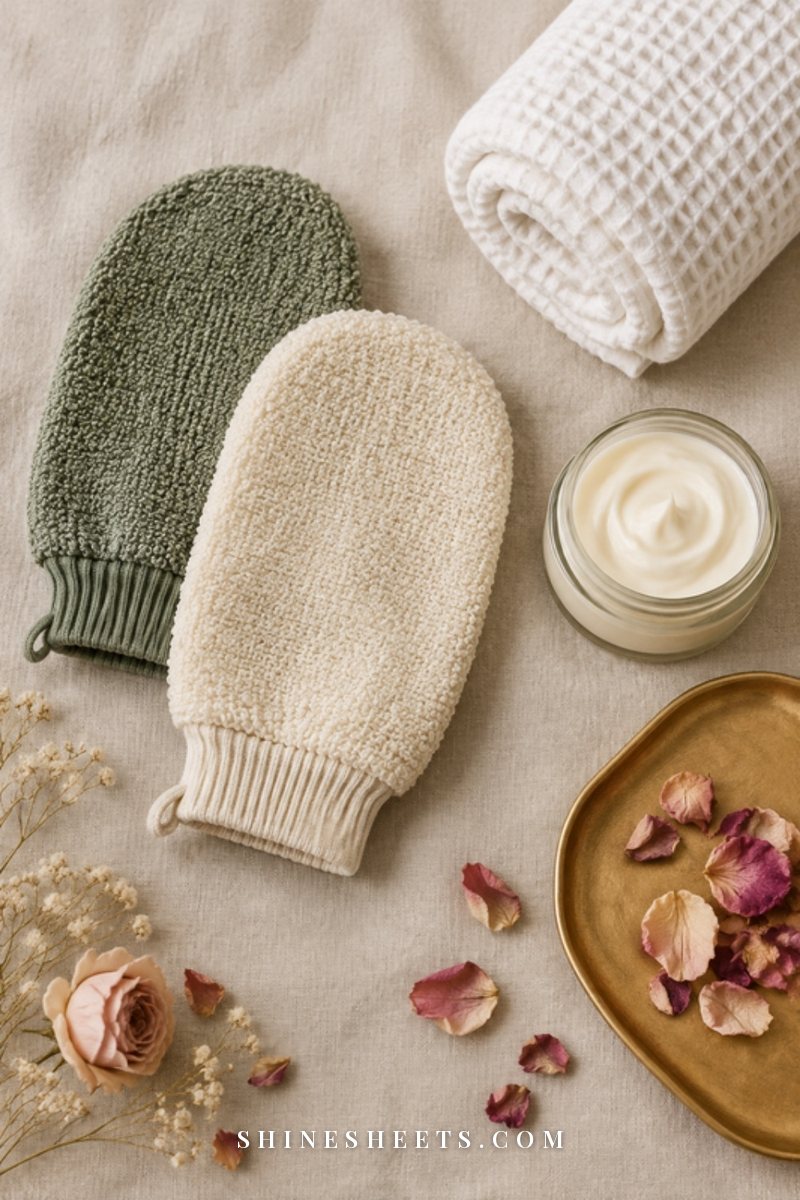
Different parts of your body want very different pressure. Here's the map I'd keep in mind (screenshot it if you like having it handy on scrub night).
| Body area | Pressure | Stroke direction | Extra tip |
|---|---|---|---|
| Lower legs | Firm | Long strokes, ankle up to knee | Start here, it's the easiest place to learn how the towel feels |
| Thighs | Medium to firm | Long strokes, knee up to hip | Go lighter on inner thighs, the skin is softer |
| Knees and elbows | Medium | Small circles | Bend the joint slightly so the skin is stretched smooth |
| Arms | Medium | Wrist to elbow, elbow to shoulder | Backs of arms often have the most buildup |
| Back | Firm | Diagonal pulls with a long towel | Ask for help or use a flat towel instead of a mitt |
| Chest and stomach | Light | Short, slow strokes | Skip delicate skin entirely |
| Hands and feet | Medium | Short strokes, toward the fingers or toes | Skip between toes and around nails |
| Face and neck | None | Do not scrub | Use your usual gentle face routine instead |
How Much Pressure Should It Feel Like?
Firm, never painful. Think of the pressure you'd use to dry yourself briskly after a swim, not the pressure you'd use to scrub a stuck pan.
A simple test: your skin should look a little pink right after a pass and fade back to normal within about 10 to 15 minutes. If it stings, burns, stays red for hours or looks shiny and raw, that's too much. Lighten up, shorten the session or skip that area next time.
Signs you've got it right:
- The towel grips the skin without dragging or catching.
- You see small rolls lifting off without pressing hard.
- Your skin feels smooth and slightly warm, not sore.
- It feels normal the next morning, with no tenderness or tiny red marks.
Small honest admission: the urge to keep going is real, especially when you're seeing results. I've learned that stopping while skin still feels comfortable is what keeps this a treat rather than a recovery project.
How Often To Do a Korean Body Scrub
Every two to four weeks is the sweet spot for most people. Your skin needs time to rebuild its outer layer, and scrubbing too often just removes healthy cells you actually need.
- Normal or oily body skin: every two to three weeks.
- Dry or sensitive skin: every three to four weeks, or a lighter version on legs only in between.
- Never more than once a week, even if your skin seems to handle it.
Between scrubs, keep the smoothness going with gentler habits: lukewarm showers, a soft washcloth if you like, and moisturizer every day. If you also enjoy dry brushing, keep it on different days and go lightly the week of your scrub. My guide to dry brushing technique has the gentle version.
Aftercare for the Next 24 Hours

Freshly scrubbed skin is soft and a little more vulnerable for a day or so. A few small habits help it settle:
- Slip into a cream waffle knit robe for 10 to 15 minutes so the cream can sink in before tight clothes go on.
- Wear soft, loose fabrics the rest of the evening.
- Skip shaving, waxing, self-tanner, body acids and retinoids for at least 24 hours.
- Use sunscreen on any scrubbed skin that will see the sun the next day.
- Moisturize again the next morning.
- Drink something warm, go to bed early and enjoy how your sheets feel. (This is honestly the best part.)
Planning a self-tan? A Korean scrub two days before is a classic prep step, because the tan goes on smoother over freshly renewed skin. Just leave that 24-hour gap.
Caring for Your Italy Towel

An Italy towel is cheap, but it's worth looking after because a damp, dirty mitt is the last thing you want on freshly scrubbed skin.
- Rinse it well under warm water right after each use, rubbing the fabric against itself to release any skin.
- Wash it with mild soap, then rinse until the water runs clear.
- Wring it out and hang it somewhere it can dry fully, ideally outside the steamy shower.
- Keep it personal. Each person in the house should have their own.
- Replace it every two to three months, or sooner if it smells musty, looks frayed or feels softer than it did.
That's another reason the multipacks are handy: you can keep a fresh one in the drawer and never feel tempted to stretch an old one.
6 Common Korean Body Scrub Mistakes
Most at-home scrubs that go wrong go wrong in the same few ways. Avoid these and you're most of the way there:
- Skipping or shortening the soak. Dry or barely softened skin needs much more pressure, which means more irritation.
- Using soap during the scrub. It makes the towel slide and you'll press harder without realizing.
- Scrubbing back and forth on one spot. Move along the limb in long strokes and keep going.
- Chasing rolls. Once an area feels smooth, it's done.
- Scrubbing too often. Weekly is the absolute limit, and every few weeks is better.
- Forgetting moisturizer. Skin that's scrubbed and left bare can feel tight and dry by the next day.
Turning It Into a Bathhouse Evening at Home
Part of why seshin feels so good in Korea is the whole experience around it: the warmth, the quiet, the sense of having nowhere else to be. You can borrow that mood at home with a few small touches.
Pick an evening when you won't be rushed. Light a glass candle, dim the main light, put on calm music and set a cup of tea or a glass of cold water within reach on a bamboo bathtub caddy tray. Lay out your towel, cream and robe before you step in, so you never have to drip across the floor looking for something.
If you'd like more ideas for making bath time feel special, my list of relaxing bath ideas has plenty, and the full everything shower routine shows how a scrub night can slot in with hair masks, shaving and body care when you want the whole reset.
And when you're done, wrapped in your robe with soft skin and warm cheeks, sit for a moment before you reach for your phone. That pause is part of the ritual too.
Final Thoughts
A Korean body scrub is proof that the simplest routines can be the most satisfying. Warm water, patience, a rough little mitt and a good cream are all it takes to bring back skin that feels truly soft.
Go gently, give your skin a few weeks between sessions and treat the whole thing as a slow evening for yourself rather than a task. Your skin will feel the difference, and so will you.