Overstimulation isn't a sign that you're too sensitive or bad at coping. It's what happens when your brain receives more sound, light, movement, information and demands than it can sort at once. The volume of the world turns up, and your nervous system responds the only way it knows: by pushing you to get out, shut down or snap at the next small thing.
The most helpful shift is to treat it like being too cold or too hungry. It's a state, not a personality flaw, and it has a fairly simple fix: reduce the input, give your body a signal of safety and wait a few minutes for the wave to pass. As someone prone to anxiety, I've learned that the sooner I notice it, the faster it settles, and that ignoring it almost always makes the rest of the day harder.
This guide to overstimulation covers what it feels like, the most common triggers, eight calming steps for the moment, a sensory reset menu you can screenshot, daily habits that prevent it, gentle notes for introverts and highly sensitive people, and when it's worth talking to a professional.
What Overstimulation Feels Like
It can look different for everyone, and it often sneaks up on you. You might notice:
- Sudden irritability. Small sounds, questions or touches feel unbearable, and you snap more than you mean to.
- Brain fog. You can't follow a conversation, make a simple decision or remember why you walked into the room.
- An urge to hide. You want to leave, lock a door, put a hood up or lie in the dark.
- Physical tension. Tight jaw, raised shoulders, a racing heart, shallow breathing or a headache.
- Sensitivity spikes. Lights seem brighter, fabrics feel scratchy and background noise feels loud.
- Tears or shutdown. Sometimes it builds into crying for no clear reason, or going quiet and blank.
Recognizing your personal early signs is the most powerful step. For some people it's a clenched jaw; for others it's suddenly finding every sound annoying. That first signal is your cue to act.
Common Triggers of Overstimulation
Triggers usually stack up. One noisy café is fine; a noisy café after a crowded commute, a long meeting and a pile of notifications is too much. Common ones include:
- Noise: overlapping conversations, music in shops, traffic, a TV on in the background.
- Bright or flickering light: overhead fluorescents, screens, harsh shop lighting.
- Crowds: busy stores, parties, public transport and events.
- Notifications: constant pings, group chats and the pull to check them.
- Multitasking: trying to cook, talk, answer a message and keep track of time all at once.
- Visual clutter: busy rooms, overflowing surfaces and too many open tabs.
- Being touched a lot or needed by several people at once.
- Low reserves: poor sleep, skipped meals, too much caffeine (coffee sometimes perks me up and sometimes tips me straight into jittery), illness or hormonal shifts.
Overstimulation is closely tied to your social battery. If you'd like to understand how your energy drains and refills, my guide on the social battery is a lovely companion to this one.
How To Calm Overstimulation in the Moment: 8 Steps
When you're already overwhelmed, you don't need a long list. Pick one or two of these, in whatever order is possible where you are. Each one lowers the input or tells your body it's safe.
1. Step Away, Even for Two Minutes
The fastest relief comes from leaving the source. Go to the bathroom, step outside, sit in your car or walk to a quieter hallway. Two minutes away from the noise is often enough to stop the wave from building.
A simple line helps you exit without explaining: "I'm just going to grab some air, back in a few minutes." Nobody needs more than that.
2. Turn Down the Light
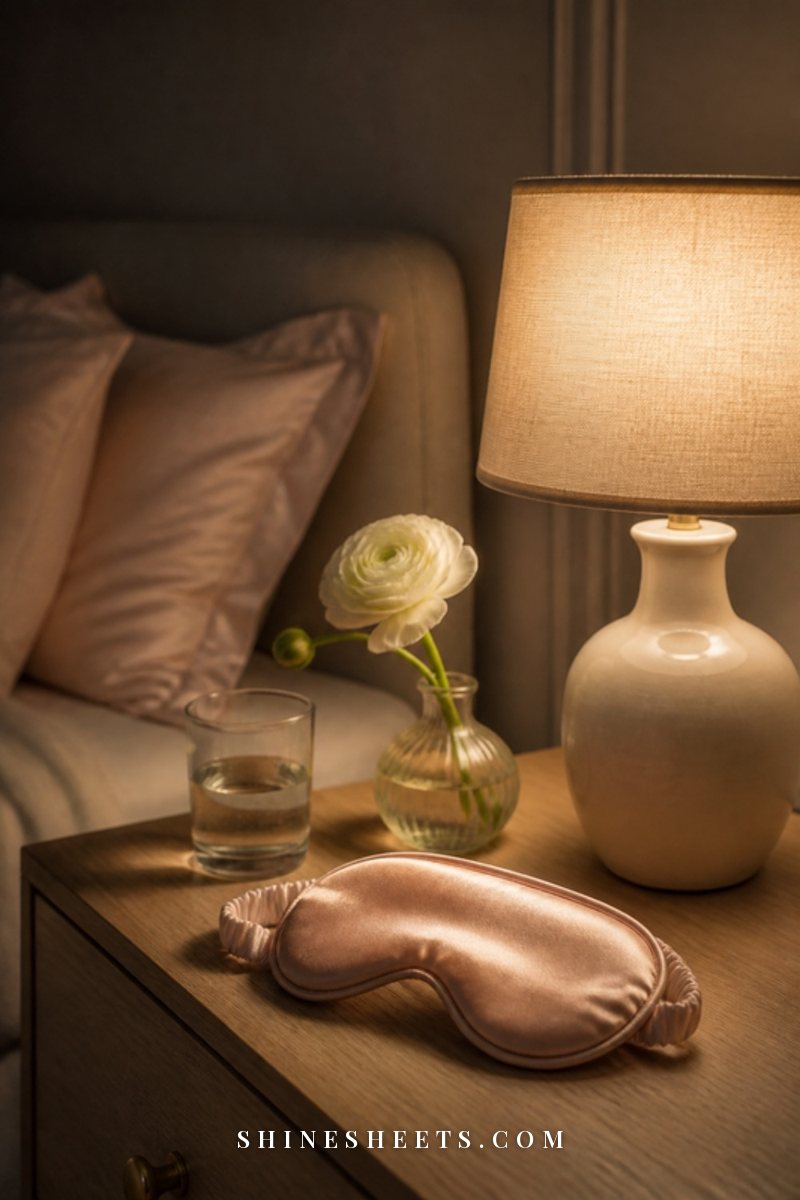
Bright light makes everything feel louder. Switch off overhead lights and use one soft lamp instead, close the curtains or simply close your eyes for a minute. At home, a dimmable warm lamp set low is one of the calmest things you can add to a room.
If you can lie down, a soft silk sleep eye mask blocks light completely and feels gentle on tired eyes. Even five minutes in the dark can bring your shoulders down.
3. Turn Down the Sound
Sound is often the biggest trigger. Turn off music or the TV, close the door or move to the quietest room. Out and about, discreet noise-reducing earplugs soften loud environments without blocking speech completely, which makes them easy to wear in restaurants, concerts or on a busy commute.
If quiet isn't possible, choose one steady, gentle sound over many competing ones: soft rain, brown noise or a calm instrumental track.
4. Breathe With a Longer Exhale
A longer exhale tells your nervous system to slow down. Try breathing in through your nose for a count of four and out through your mouth for a count of six to eight. Repeat for about one minute (six to eight breaths).
If counting feels like too much, place a hand on your chest and just let each breath out be slow, like fogging up a window. My guide to breathing exercises for calm has more simple patterns to try.
5. Cool Water on Your Wrists

Cold gives your senses a single, clear signal that cuts through the noise. Run cool water over your wrists for 30 seconds, splash your face or hold a cold glass in both hands. Many people find a cool, damp cloth on the back of the neck especially soothing.
It's a small reset, but it's very portable: any bathroom sink will do.
6. Add Deep Pressure
Firm, even pressure helps many people feel grounded. At home, a weighted blanket over your lap or body for ten minutes can feel like a full-body exhale. Choose one that's around 10 percent of your body weight and feels comfortable, not heavy or hot.
No blanket nearby? Cross your arms and give your upper arms a firm squeeze, press your palms together for ten seconds or lean your back against a wall. Pressure, not movement, is what helps here.
7. Do One Thing at a Time
Overstimulation often comes from doing three things at once. Pause everything except one. Put the phone face down, stop the second task and finish one simple action slowly: drink a glass of water, fold one towel, wash one cup. Single-tasking gives your brain a break from sorting.
8. Say What You Need in One Sentence
The people around you can't see the overload, so a short, kind sentence helps everyone. A few you can borrow:
- "I'm feeling overwhelmed. I need ten quiet minutes and then I'll be back."
- "Can we turn the music down a little? It's a lot for me right now."
- "I can't think clearly right now. Can we talk about this in an hour?"
- "I love you, I just need some space for a bit."
You don't owe a long explanation. If anxiety tends to tag along with overstimulation for you, my guide on how to calm anxiety fast has more quick tools.
The Sensory Reset Menu

When you're overwhelmed, deciding what to do is hard in itself. This menu does the deciding for you. Pick the sense that feels most overloaded, then choose a 2-minute option if you're out or a 10-minute option if you're at home. Screenshot it and keep it on your phone.
| Sense | 2-minute reset | 10-minute reset |
|---|---|---|
| Sound | Earplugs in, or step into a quiet bathroom and close the door | Noise-cancelling headphones with brown noise or soft rain, lying down |
| Sight | Close your eyes, or look at one still thing (a plant, the sky) | Lights off, one dim lamp, eye mask, rest with eyes closed |
| Touch | Cool water on wrists, or firm squeeze of your upper arms | Weighted blanket, soft clothes, a warm shower |
| Smell | Step outside for fresh air, or smell something neutral and familiar | Open a window, unscented candle or simply clean air, no strong fragrances |
| Movement | Slow walk down a hallway, or shake out your hands for 20 seconds | Gentle stretching, a slow walk outside, or lying with legs up the wall |
| Mind | Long-exhale breathing, six slow breaths | Brain dump on paper, then one calm activity like tea or a puzzle |
For the smell row, an unscented candle in a glass jar gives you soft, flickering light without adding another sensation to process. For the sound row, a pair of white noise-cancelling headphones turns any room into a quiet one.
How To Prevent Overstimulation Day to Day
Calming tools are wonderful, but it's even kinder to keep the input from piling up in the first place. These habits work quietly in the background.
Build in Sensory Breaks
Schedule short quiet pauses before you need them: five minutes with no screen after every hour or two of busy work, a walk after a long meeting, a quiet ten minutes when you get home before talking to anyone. Breaks work best when they're boring on purpose.
Set Notification Limits
Turn off all non-essential notifications, mute busy group chats and use a focus mode during work and evenings. Check messages in batches, for example three or four times a day, rather than every time your phone lights up. Fewer pings mean fewer tiny jolts to your nervous system.
Create a Calm Corner

Choose one spot at home that's always low-input: a chair by a window, a corner of your bedroom, even one side of the sofa. Keep it uncluttered, with soft light, a blanket and maybe a book. When you start to feel overloaded, that's where you go. Your body will learn to relax there faster over time.
Add Buffer Time
Back-to-back plans are a fast route to overstimulation. Leave 15 to 30 minutes between meetings, errands and social plans. After a big event, plan a quiet evening or morning. Buffers aren't wasted time; they're where your senses recover.
Say No a Little More Often
You don't have to attend every gathering, answer every message right away or say yes to every errand. Choosing fewer, better-spaced commitments is one of the most protective things you can do. A simple script: "Thank you for thinking of me. I can't make it this time, but I'd love to see you another week."
Protect the Basics
Sleep, regular meals, enough water and a moderate amount of caffeine all raise your threshold. On days when one of them is low, expect to get overwhelmed more easily and plan a little less. It's not weakness, just biology.
For a deeper look at calming your body day to day, my guide on nervous system regulation explains why these small habits work so well together.
A Gentle Note for Introverts and Highly Sensitive People
If you've always noticed sounds, textures, moods and small details more than people around you, you might be more prone to overstimulation. That isn't a flaw. Sensitive nervous systems often come with real strengths: empathy, creativity, attention to beauty and a deep appreciation for quiet moments.
What helps most is planning your life around your nervous system instead of against it:
- Choose smaller gatherings, quieter restaurants and off-peak times for errands.
- Bring your tools with you: earplugs in your bag, sunglasses, a soft scarf.
- Give yourself more recovery time after big events than you think you need.
- Let go of comparing your energy with friends who thrive on busy weekends.
- Make your home your softest, quietest place.
My guide to self-care for introverts has more ideas for building a life that feels good to a quieter nervous system.
Overstimulation at Work, at Home and Out and About
The triggers and the fixes shift a little depending on where you are. A few setting-specific ideas:
At Work
Open-plan offices, back-to-back calls and constant messages are a classic recipe for overload. Wear earplugs or headphones during focus blocks, ask to move a recurring meeting so you have a gap, and dim or tilt your screen away from glare. Use the bathroom or a stairwell as a two-minute reset room. If you work from home, close extra tabs and apps when you finish a task, so the next one starts on a clean screen.
At Home
Home can be surprisingly loud: a TV, a dishwasher, someone talking, a pet asking for dinner, a phone buzzing on the counter. Agree on one quiet hour in the evening with the people you live with, keep the TV off when nobody's watching it and tidy one surface at a time to reduce visual clutter. When you walk in the door after a busy day, give yourself ten quiet minutes before starting chores or conversations.
Out and About
Shops, events and travel are full of light, sound and crowds. Go at off-peak times when you can, keep earplugs and sunglasses in your bag, and plan where the quiet spots are (a café corner, a bench outside, the car). At parties and events, step outside every hour or so for a few minutes of fresh air. Leaving early is always an option, and it's often the kindest one.
A Gentle Evening After an Overstimulating Day
Sometimes the overload has already happened, and what you need is a soft landing. Here's a simple evening that helps your senses settle:
- Lights low as soon as you get home. One lamp, no overhead lights.
- Change into your softest clothes. Remove anything tight, scratchy or with a waistband.
- Take a warm shower. Let the water run over your shoulders for a few minutes without rushing.
- Make a cup of tea. A calm, warm drink in both hands is grounding in a quiet way.
- Phone on silent and in another room for at least an hour.
- Do one quiet thing. Journal for five minutes, read a few pages or simply lie under a blanket.
- Go to bed a little earlier. Sleep is the most complete reset there is.
You don't need to do all seven. Even two or three of them turn an overloaded evening into a recovering one.
What Not To Do When You're Overstimulated
- Don't push through to "finish quickly." It usually ends in a bigger crash later.
- Don't reach for more input. Social media, loud music or a busy show might feel like escape, but they add to the load.
- Don't make big decisions or have hard conversations. Your brain is in protection mode; wait until you've settled.
- Don't add more caffeine. A cup of herbal tea or a glass of water is a calmer choice.
- Don't judge yourself. Telling yourself to "stop being dramatic" only adds stress. Treat yourself the way you'd treat a tired friend.
When To Talk to a Professional
Feeling overstimulated sometimes is a normal part of being human. But if it happens most days, if it leads to panic attacks, meltdowns or shutdowns, if it's affecting your work, relationships or sleep, or if you avoid many everyday places because of it, it's worth talking to someone.
A therapist or doctor can help if it feels overwhelming. Frequent overstimulation can be linked with anxiety, sensory processing differences, ADHD, autism, burnout or stress, and understanding what's going on can make life feel much more manageable. Asking for support is a smart, caring step, not a dramatic one.
Final Thoughts
Overstimulation is your nervous system saying "too much, too fast." It's not something to be ashamed of, and it's not something you have to just endure. Notice your early signs, lower the input, give your body a calming signal and build a life with a little more quiet in it.
Keep the reset menu close, protect your buffers and remember that stepping away is not giving up. It's taking care of the person who has to get through the rest of the day: you.