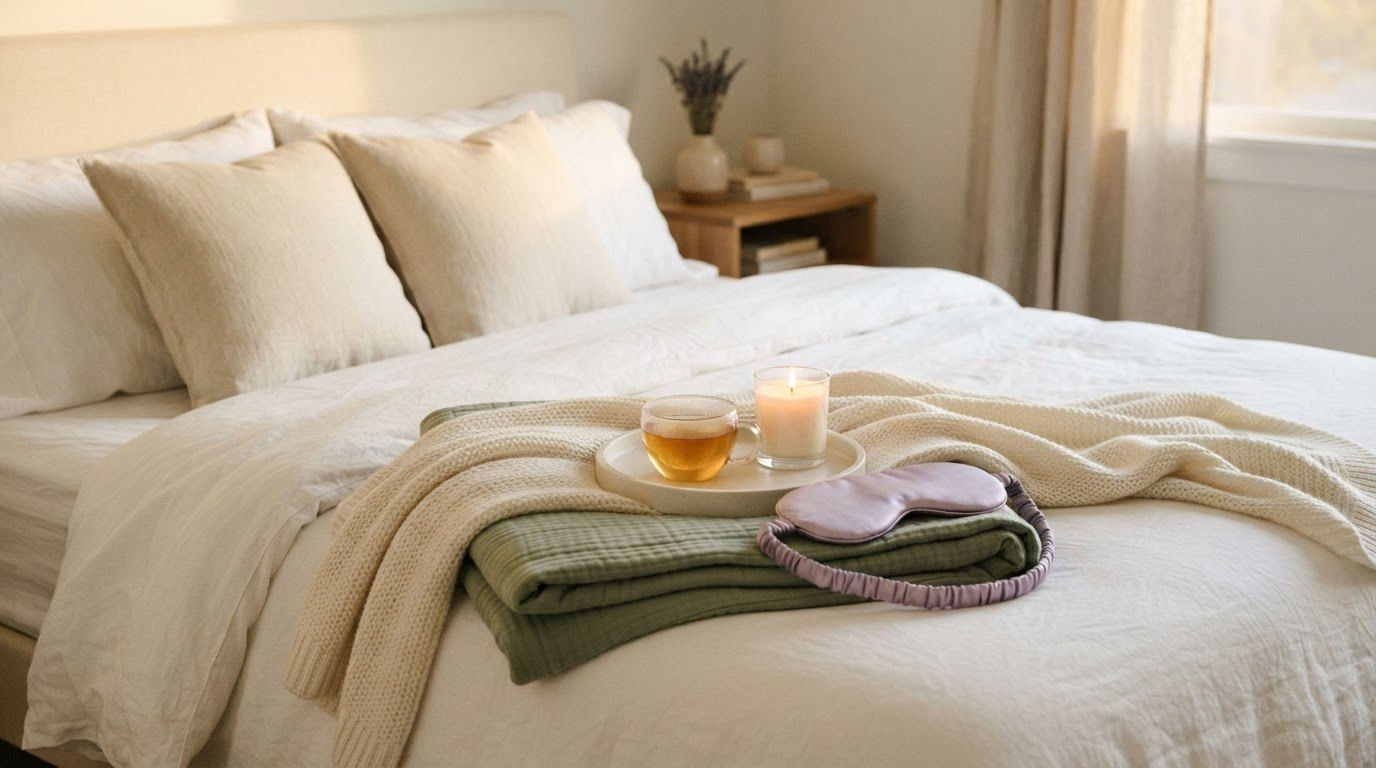
Introverts don't need less self-care than anyone else. They need a different kind: self-care that refills energy instead of spending it. A lot of popular advice (a big night out, a group class, a busy brunch to "treat yourself") is lovely for some people and quietly draining for others. If you come home from a fun evening feeling like your battery is at two percent, nothing is wrong with you. Your recharge just happens in quiet.
The trouble is that many introverts feel guilty about needing that quiet. Turning down plans can feel rude, wanting a night alone can feel antisocial, and resting after a busy week can feel lazy. I'd love for you to drop that guilt, because time alone isn't a flaw to manage. It's how you stay kind, focused and fully yourself with the people you care about.
This guide is all about self-care for introverts: why recharge time is maintenance, how to plan around your social battery (with a social battery planner you can screenshot), how to recover after big events, how to create a calm home sanctuary, quiet hobbies, protecting your mornings, polite scripts for declining and leaving early, self-care at work and a gentle note on when solitude starts to turn into isolation.
Recharge Time Is Maintenance, Not Avoidance
Introversion is mostly about where your energy comes from. Extroverts often feel energized by people and activity. Introverts can enjoy people and activity just as much, but they use up energy in those situations and refill it in calm, low-stimulation time.
That means quiet time isn't you hiding from life. It's the same as charging your phone overnight so it works the next day. Nobody calls that avoidance.
A helpful shift is to see your alone time as part of your schedule, not as leftover time when nothing else is happening. When you plan it on purpose, you stop feeling like you have to justify it, and you show up more present when you do see people.
If you've been feeling guilty about needing space, here are a few gentle reminders to keep close:
- Wanting to be alone doesn't mean you don't love the people in your life.
- Leaving early from a party you enjoyed is still enjoying the party.
- A quiet weekend is a full weekend if it gave you what you needed.
- You can be a wonderful friend, partner and colleague and still need recovery time.
Plan Around Your Social Battery
Your social battery is the amount of energy you have for social interaction before you need to recharge. It isn't fixed. It depends on sleep, stress, who you're with and how much quiet time you've had lately. If the idea is new to you, my guide to the social battery explains how it works in more detail.
Know Your Energy Costs
Not all social plans drain you equally. A walk with one close friend may barely touch your battery, while a loud work party with people you don't know can empty it in an hour. Start noticing which situations cost the most for you. Common high-cost situations include:
- Large groups and loud, crowded places
- Events with lots of small talk or new people
- Situations where you have to perform or be "on," like presentations or hosting
- Long days with no break between social plans
- Unexpected plans or last-minute changes
Lower-cost situations often include one-on-one time, shared activities where you don't have to talk constantly (a movie, a walk, a class), and time with people you already feel safe with.
Space Out Your Plans
Once you know your costs, spread your plans so high-cost ones don't land back to back. A simple rule many introverts find helpful: no more than one big social plan per day, and at least one quiet evening after every two busy ones.
Look at your week on Sunday and mark the plans that will take the most energy. Then protect the time around them.
Build In Buffers
A buffer is a small pocket of quiet before or after a draining event. Twenty minutes alone in your car before walking into a party, a slow walk home after dinner, or a quiet hour before guests arrive can make a big difference in how you feel afterward.
Buffers are easy to skip because they feel optional. Treat them like part of the plan.
Your Social Battery Planner
This planner helps you see how much energy different events will take and plan your recovery ahead of time. Screenshot it, then fill in your own version in your notes app or journal for the week ahead.
| Event | Energy cost | Recovery plan |
|---|---|---|
| Coffee or a walk with one close friend | Low | Nothing special needed; maybe ten quiet minutes afterward |
| Dinner with a small group of friends | Medium | A quiet morning the next day and no plans until lunch |
| Full workday with back-to-back meetings | Medium to high | Walk home or sit in the car for ten minutes, a quiet evening with no calls |
| Family gathering | High | A buffer walk before, a step-outside break in the middle, a calm evening after |
| Party with lots of new people | High | Arrive with a plan to leave by a set time, a slow evening routine at home, a free morning |
| Wedding, conference or all-day event | Very high | Block the whole next day as light as possible: no plans, simple meals, a nap if you can |
| Hosting guests overnight | Very high | Plan one hour alone each day while they stay, and a full quiet day after they leave |
| Traveling with others | High | Short solo walks or early mornings alone, headphones on the journey home |
The point isn't to avoid high-cost events. Many of them are meaningful and joyful. The point is to know what they'll take from you and make sure you give it back.
How To Recover After a Big Event

After a wedding, a holiday gathering or a long day of people, your nervous system is often buzzing, even if you had fun. A short recovery routine helps you come back to yourself. Here's one you can follow the same evening:
- Lower the stimulation. Dim the lights, turn off the TV and put your phone on do not disturb.
- Change into soft clothes. Taking off "social" clothes is a simple signal that you're off duty.
- Do something warm. A shower, a bath or a cup of herbal tea helps your body relax.
- Light a candle. A glass jar candle with a soft, warm scent turns any room into a calm space. Look for one with a cotton or wooden wick and a scent that isn't too strong, like vanilla or cashmere.
- Let your thoughts settle. Write down a few things you enjoyed and anything still bouncing around your head. Getting it on paper stops the late-night replay.
- Go to bed a little earlier than usual. Sleep is the deepest recharge of all.
Then keep the next day light if you can. One quiet morning often does more than a whole week of trying to "push through."
Create a Home Sanctuary

For introverts, home isn't just where you sleep. It's where you recharge. Having even one corner that feels calm and fully yours makes a big difference, especially if you live with others.
A few ideas for your sanctuary:
- Choose one spot that's only for rest: a chair by the window, a corner of your bedroom or a spot on the couch.
- Add warm, soft light. A cream reading lamp beside your chair creates a calm pool of light for evenings. Look for one with a warm bulb and an adjustable arm or shade.
- Bring in texture. A cream knit throw blanket makes any corner feel inviting. Look for a soft, washable one that's big enough to wrap around your shoulders.
- Reduce noise. Rugs, curtains and cushions soften sound, and a small fan or white noise can mask background noise.
- Keep it uncluttered. A calm space has room to breathe. Keep only what you use and love nearby.
- Set gentle boundaries at home. If you live with others, agree on a signal that means "I'm recharging," like headphones on or a closed door.
Quiet Hobbies That Refill You
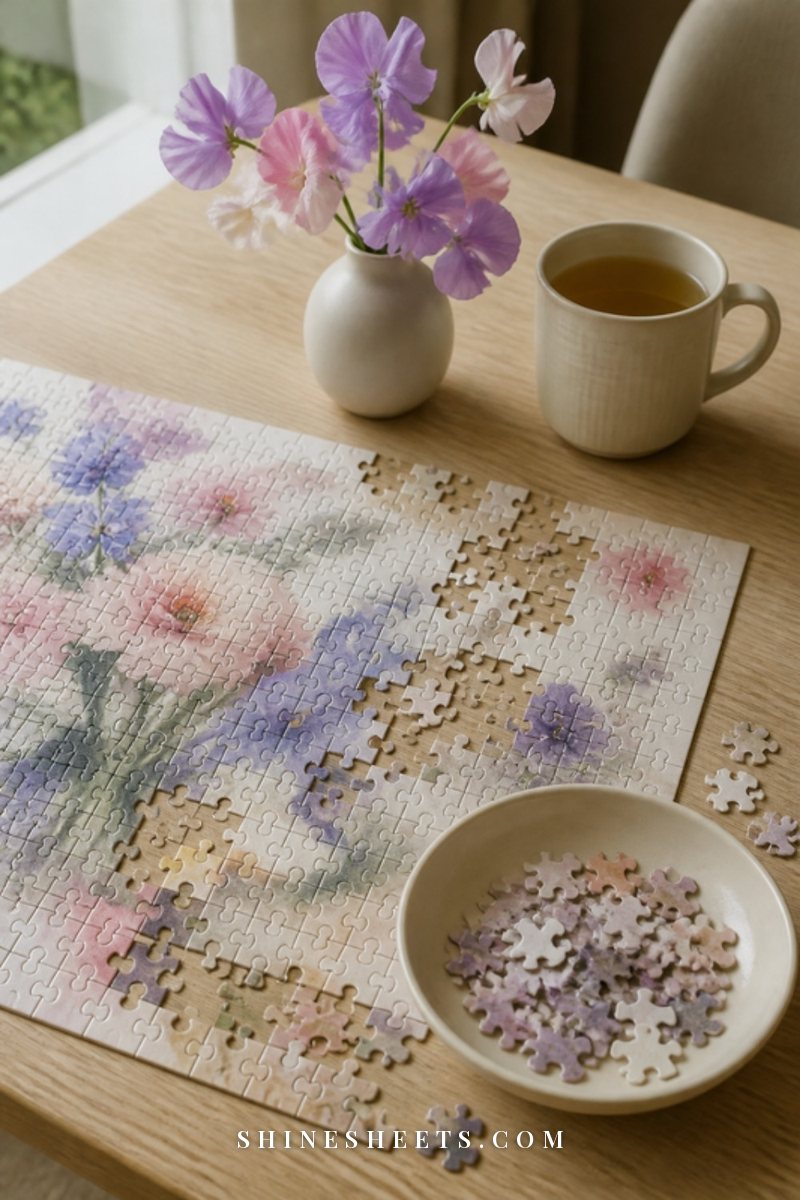
The best recharge activities are absorbing enough to quiet your mind but don't require you to perform or talk. Some introvert favorites:
- Reading, especially fiction you can get lost in.
- Puzzles. A pastel 1000-piece puzzle is a lovely way to spend a quiet evening, and it's easy to pick up and put down. Look for thick pieces and a soft, calming image.
- Journaling. A few lines after a cup of tea helps you understand your own thoughts and feelings. Any notebook works, but a blush linen-covered journal makes the habit feel special. Look for thick pages that don't let ink bleed through.
- Gentle crafts like knitting, embroidery or painting.
- Gardening or caring for houseplants.
- Solo walks, ideally somewhere green.
- Baking or cooking slowly with music on.
- Learning something through books, podcasts or an online class you take at your own pace.
For more ideas, my list of hobbies for introverts has plenty of options for every budget and mood, and these stress relief activities for introverts are perfect for evenings when your mind feels too full.
Protect Your Mornings

For many introverts, the first hour of the day sets the tone for everything after. If the day starts with notifications, noise and other people's needs, you begin already a little drained.
A few ways to protect that first hour:
- Wait 20 to 30 minutes before checking your phone. Let your own thoughts arrive first.
- Wake up a little earlier than the rest of your household, if that's realistic, to enjoy a few quiet minutes.
- Keep one simple ritual you do alone: a warm drink by the window, a short stretch, a few lines in your journal.
- Prepare the night before so the morning doesn't start with rushing. Lay out clothes, pack your bag and tidy the kitchen.
- Use quiet transport time for music, a podcast or simply looking out the window.
Even ten protected minutes can make you feel steadier for the whole day.
Polite Exit and Decline Scripts
A lot of introvert guilt comes from not knowing what to say. Having a few kind, ready-made phrases makes it much easier to protect your energy without hurting anyone.
Declining an Invitation
- "Thank you so much for inviting me. I can't make it this time, but I'd love to catch up another way soon."
- "I've got a quiet weekend planned that I really need. Could we do coffee next week instead?"
- "That sounds lovely, but I'm running on empty this week. I hope it's wonderful."
Leaving Early
- "I've had the best time. I'm going to head home now, but thank you for having me."
- "I need to call it a night. Let's do something one-on-one soon."
- Tell the host at the start: "I can stay until about nine tonight," so leaving doesn't feel like a surprise.
Asking for Quiet Time at Home
- "I love spending time with you. I just need an hour to recharge, and then I'm all yours."
- "I'm feeling a bit peopled out today. Would you mind if I read in the bedroom for a while?"
Notice that none of these include long excuses or apologies. A short, warm answer is enough. If saying no still feels hard, my guide on how to be happy alone touches on enjoying your own company without guilt.
Self-Care for Introverts at Work

Workplaces often reward being loud, fast and always available, which can wear introverts down by midweek. A few small habits make the day much more manageable:
- Use headphones as a focus signal. Noise-canceling headphones help you concentrate in open offices and give you a gentle bubble of quiet. Look for a comfortable, lightweight pair with soft ear cushions for long wear.
- Take lunch alone when you need it. A solo walk or a quiet bench is a perfectly good lunch break.
- Block focus time on your calendar, ideally in the morning when your energy is highest.
- Prepare for meetings. Many introverts think best before speaking, so read the agenda early and jot down a point or two you'd like to make.
- Follow up in writing. If you didn't get a chance to share an idea in a meeting, send it in a short message afterward.
- Find small breaks. A trip to refill your water, a few minutes outside or simply closing your eyes for a minute can top up your battery.
Self-Care for Introverts in Busy Seasons
Some times of year are simply louder than others. The holidays, wedding season, family visits and travel can stack up social plans faster than any battery can handle. A few ways to get through them without running on empty:
- Decide your "yes" list early. Look at the season ahead and choose the gatherings that matter most to you. It's easier to decline the rest when you know what you're saving your energy for.
- Stay somewhere with a door you can close. When visiting family or traveling with friends, a hotel room, a guest room or even a long bath can become your recharge spot.
- Offer to help. Washing dishes, walking the dog or running a quick errand gives you a few quiet minutes while still being part of things.
- Step outside. A five-minute walk around the block in the middle of a long gathering is often enough to reset.
- Keep one ritual that's only yours. Your morning tea, a few journal lines before bed or a short stretch keeps you anchored when everything else is busy.
- Plan a quiet day after the busiest one. Mark it on your calendar ahead of time so nobody fills it for you.
Busy seasons don't last forever. Knowing that a quiet day is coming can make even the fullest week feel manageable.
A Gentle Weekly Rhythm for Introverts
If you like having a simple structure, here's a rhythm many introverts find balanced. Adjust it to your own life and energy:
- Two or three social plans a week, mixing one low-cost plan (a walk with a friend) with one bigger one.
- At least two fully quiet evenings with no calls, plans or errands.
- One longer solo block on the weekend, like a slow morning, a solo café visit or an afternoon with a book.
- A short daily pocket of quiet, even fifteen minutes, that nobody else gets to schedule.
Some weeks will look nothing like this, and that's fine. It's a guide to come back to, not a rule to keep perfectly.
When Solitude Turns Into Isolation
Healthy alone time leaves you feeling refreshed and ready to reconnect. Isolation feels different. It can creep in slowly, especially during long winters or stressful seasons. A few gentle signs to watch for:
- You've stopped reaching out to anyone, even the people you feel safe with.
- Time alone doesn't refresh you anymore. You feel flat, heavy or lonely instead.
- You're avoiding things you used to enjoy, not because they cost energy but because nothing feels worth it.
- Your sleep, appetite or mood have changed for more than a couple of weeks.
If this sounds familiar, try one small step toward connection: a message to a friend, a walk with someone you trust or a low-pressure group activity built around a shared interest. And if low mood or loneliness lasts or feels heavy, please talk to your doctor or a mental health professional. Needing support is not a failure of being an introvert. It's simply being human.
Final Thoughts
Self-care for introverts isn't about avoiding people. It's about understanding your energy and giving yourself the quiet you need to show up as your best, most present self. Recharge time is maintenance, your social battery deserves planning, and a kind, short "no" is always allowed.
Start with one change this week, whether it's a protected morning, a recovery evening after a big plan or a calm corner at home. You deserve to feel rested in your own life, without guilt.