Your nervous system doesn't need a dramatic fix. It needs small, boring, repeated signals of safety, spread through the whole day, so it never has to climb all the way up to panic before you notice. That's the quiet secret most people miss: calm is less about one perfect breathing trick and more about rhythm.
When your body gets a little daylight in the morning, a little movement at midday and a little darkness and warmth at night, it learns what a safe day feels like. And a body that knows what a safe day feels like bounces back from stress much faster.
This guide is all about nervous system regulation in plain language. You'll find what's actually happening in your body when you feel wired or shut down, the window of tolerance (a concept I wish I'd learned years earlier), the signs of a dysregulated day, a simple daily regulation rhythm table you can screenshot, and quick resets for the moments when everything feels like too much.
I'm prone to anxiety that I mostly manage these days, and what helped most wasn't a big overhaul. It was learning to give my body small doses of calm before it asked for them. Let's start with what regulation really means.
What Nervous System Regulation Actually Means
Your autonomic nervous system runs quietly in the background, deciding (without asking you) whether you're safe or under threat. It has two main settings, and you need both of them.
Stress Mode vs Rest Mode
Stress mode (the sympathetic branch) is your gas pedal. Your heart beats faster, your breath gets shallower, your muscles tense and your focus narrows. It's brilliant when you need to catch a bus or give a presentation. It's exhausting when it stays switched on because of a full inbox and a tense text message.
Rest mode (the parasympathetic branch, where the vagus nerve does a lot of the work) is your brake. Your breath slows, digestion switches back on, your shoulders drop and your thinking gets wider and kinder. This is the state where your body repairs itself.
There's also a third, less talked-about response: shutdown. When stress feels too big for too long, some bodies don't speed up, they power down. You feel flat, foggy, numb or like you can't get off the couch. It isn't laziness. It's protection.
Being "regulated" doesn't mean being calm all the time. It means your system can move into stress when it needs to and then find its way back to rest without getting stuck.
Your Window of Tolerance
The window of tolerance is a simple picture that makes all of this click. Imagine a band in the middle of your day where you can handle things. You feel emotions, even hard ones, but you can still think, talk and choose what to do next.
Above the window is hyperarousal: racing thoughts, irritability, a tight chest, snapping at people you love. Below it is hypoarousal: numb, heavy, zoned out, everything feels pointless. Everyone slips out of the window sometimes. The goal of daily regulation is to make your window a little wider and your way back into it a little faster.
Poor sleep, skipped meals, too much caffeine (coffee sometimes perks me up and sometimes sends me straight above my window), loneliness and constant notifications all make the window narrower. Light, movement, rhythm, connection and rest make it wider. That's the whole philosophy of the routine below.
Signs of a Dysregulated Day
A dysregulated day doesn't always look like a breakdown. Often it's a collection of small signals your body sends long before you'd call yourself stressed. Here are 10 common ones:
- You wake up already feeling behind, with your heart beating a little too fast.
- Small noises (a dropped spoon, a phone buzz) make you jump.
- You reread the same email three times and still can't take it in.
- Your jaw is clenched or your shoulders are up near your ears without you noticing.
- You're snappy, then guilty for being snappy.
- You reach for your phone every few minutes without a reason.
- You feel wired at night and exhausted in the morning.
- Simple decisions (what to eat, what to wear) feel strangely heavy.
- You feel numb or far away, like you're watching your day from behind glass.
- You forget to eat, drink water or go to the bathroom until it's urgent.
If you recognize several of these, nothing is wrong with you. Your body is simply running on its gas pedal (or its emergency brake) for longer than it was designed to. If it has been going on for weeks and you feel completely drained, my gentle burnout recovery plan is a good companion to this routine.
Your Daily Regulation Rhythm
This table is the heart of this guide. It's a full day of small regulation practices, most of them under ten minutes. You don't need to do all of them. Even three, done most days, will make a noticeable difference within a couple of weeks.
| Time | Practice | Minutes | Why it helps |
|---|---|---|---|
| On waking | Gentle light, five slow breaths before your phone | 2 | Starts the day in rest mode instead of alarm mode |
| First hour | Daylight by a window or outside | 5–10 | Anchors your body clock so energy and sleepiness arrive on time |
| Before coffee | A full glass of water | 1 | Mild dehydration can feel a lot like anxiety |
| Mid-morning | Body check: jaw, shoulders, belly | 1 | Catches tension before it builds into a headache |
| Late morning | Movement snack (stairs, stretches, a dance song) | 2–5 | Uses up stress energy so it doesn't sit in your muscles |
| Lunch | Eat away from your screen, then step outside | 10–15 | Gives your eyes distance and your mind a real pause |
| Mid-afternoon | Long-exhale breathing (in for 4, out for 6) | 2 | Longer exhales nudge your body toward its brake |
| End of work | A closing ritual: tidy, list tomorrow, shake out | 5 | Tells your body the "on" part of the day is over |
| After dinner | Dim the lights, switch to lamps | 1 | Lower light signals evening to your whole system |
| Evening | Warm shower and a caffeine-free tea | 10–15 | Warmth relaxes muscles, the ritual signals safety |
| In bed | Something heavy, something dark, a slow body scan | 5–10 | Pressure and darkness help you settle into sleep |
A small tip: pick one practice from the morning, one from midday and one from the evening, and do only those for the first week. A rhythm you actually keep beats a perfect routine you abandon by Thursday.
Morning: Light, Water and a Slow Breath
Mornings set the tone for your whole nervous system. If your first moments are an alarm blaring, a phone full of news and coffee on an empty stomach, your body starts the day already above its window. A few small swaps change that.
Get Daylight in the First Hour

Morning light is one of the strongest signals your body clock gets. Open the curtains as soon as you're up, drink your water by the window, or step onto a balcony or doorstep for five to ten minutes. On cloudy days, stay a little longer, because outdoor light is still far brighter than indoor light.
You don't need to stare at the sky. Just be where the light is. If you can, turn it into a short, slow stroll around the block.
Wake Up Gently Instead of Jolting Awake
A loud alarm in a dark room is a tiny emergency every single morning. If you can, let light wake you up first. A sunrise alarm light is a pick for anyone who wakes up in the dark half of the year: look for one that brightens gradually over 20–30 minutes, has a soft warm color at the start and offers gentle sounds instead of a beep.
Then give yourself one quiet minute before you sit up. Feel the weight of your body on the mattress. Notice three things you can hear. That's it.
Drink a Glass of Water Before Coffee
A racing heart, a foggy head and a slightly shaky feeling can come from simple dehydration after a night's sleep, and they feel remarkably like anxiety. Drink one full glass of water before your coffee or tea. Keeping a glass water carafe with a cup on your nightstand makes it automatic.
If coffee tends to make you jittery, try having it after breakfast rather than on an empty stomach, or switch your second cup to something gentler.
Take Five Slow Breaths Before Your Phone
Before you look at a single notification, take five slow breaths: in through your nose for four counts, out through your mouth for six. The longer exhale is the part that matters. If you'd like more techniques to rotate through, my guide to breathing exercises for calm has box breathing and five other gentle options.
Midday: Movement Snacks and a Step Outside
Midday is where most of us slip quietly out of our window. Hours of sitting, screens and small stresses pile up in the body. The fix isn't a full workout. It's tiny, regular releases.
Take a Two-Minute Movement Snack
Stress mode prepares your body to move. When you don't move, all that energy sits in your muscles as tension. A movement snack uses it up. Every 60–90 minutes, do one of these for two minutes:
- Walk up and down a flight of stairs twice.
- Roll your shoulders back ten times, then shake out your hands and arms.
- Put on one song you love and move however you want.
- Do ten slow squats while the kettle boils.
Shaking in particular is underrated. Animals literally shake off stress after a scare. My post on somatic exercises for beginners walks you through shaking, swaying and other gentle moves that help tension leave the body.
Step Outside for Five Minutes

Fresh air, natural light and a wider view do something a screen never can. When your eyes look into the distance (a tree line, the sky, the end of the street), your body tends to relax out of its narrow, focused stress state.
After lunch, step outside for at least five minutes. Leave your phone in your pocket. Notice the temperature on your skin and the farthest point you can see. If you can't leave the building, stand by an open window and do the same thing.
Eat Lunch Away From Your Screen
Eating while answering emails keeps your body half in stress mode, and digestion is one of the first things to pause when that happens. Take even ten minutes to eat somewhere else, with no screen. It feels unproductive. It's actually one of the most regulating things you can do all day.
Do a Quick Body Check
Set a gentle reminder for mid-morning and mid-afternoon and run this 60-second check:
- Jaw: Are your teeth touching? Let them part and let your tongue rest.
- Shoulders: Lift them to your ears, then let them drop with a sigh.
- Belly: Are you holding it in? Let it soften for three breaths.
- Hands: Unclench them and open your palms on your thighs.
You'll be surprised how often you catch yourself bracing for something that isn't happening.
Evening: Dim, Warm and Slow
Evenings are where you teach your body that the day is safely over. A dysregulated evening (bright overhead lights, work emails, an intense show and a phone in bed) keeps your system on alert right up until you try to sleep.
Dim the Lights After Dinner

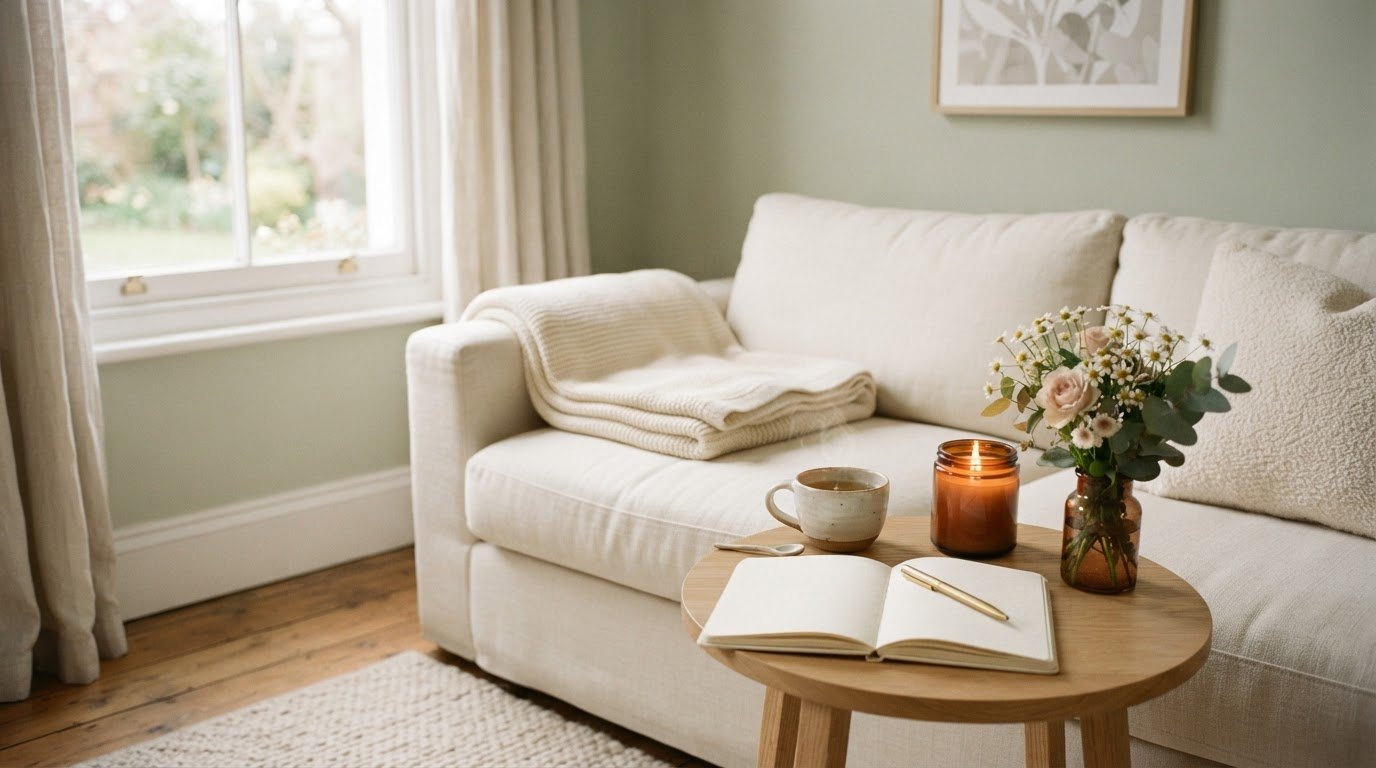
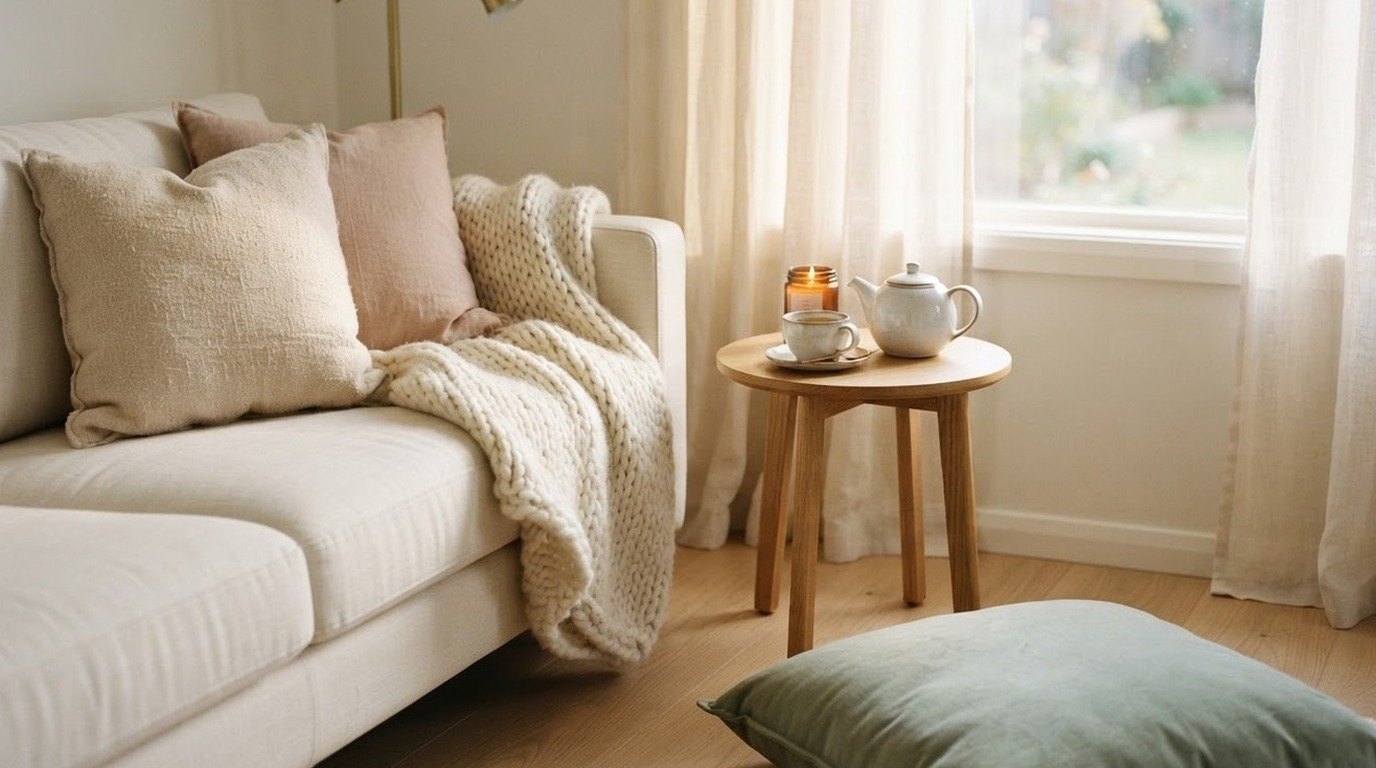
Switch off the overhead lights after dinner and use lamps, warm bulbs and a candle instead. Low, warm, below-eye-level light is one of the clearest "evening now" signals you can give your body. I love a glass candle on the coffee table for this (always on a stable surface, away from fabric, and blown out before you leave the room).
Around the same time, put your phone on charge somewhere that isn't right next to you. Fewer pings means fewer tiny jolts of alertness.
Take a Warm Shower
A warm shower or bath in the evening helps tense muscles let go, and the gentle drop in body temperature afterwards can make you feel sleepy. Ten minutes is plenty. Let the water run over the back of your neck and shoulders, and breathe slowly while it does.
Make a Wind-Down Ritual With Tea
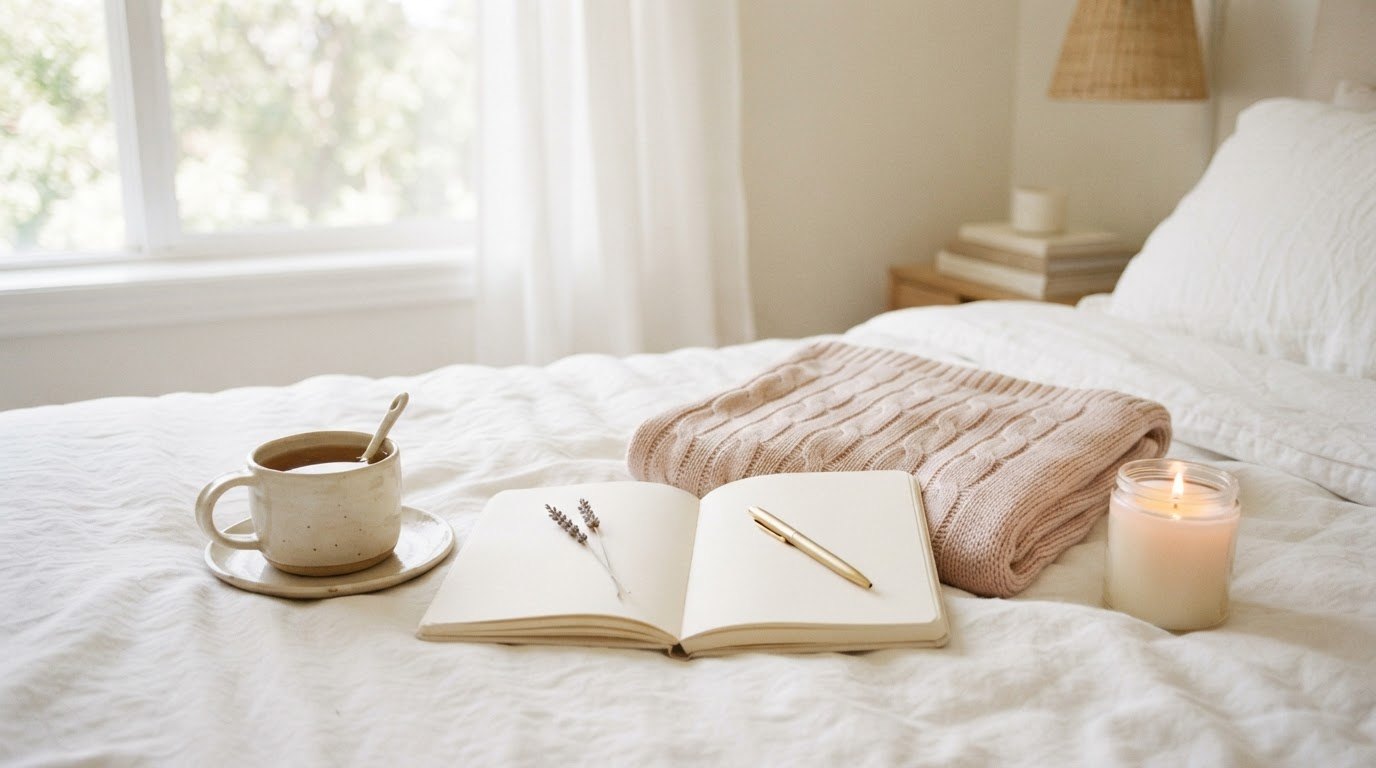
Rituals work because they're predictable, and predictability is what a nervous system loves most. Evening tea and a few lines in my journal is my own version. Choose a caffeine-free tea and make the same cup at roughly the same time each night. A herbal tea sampler box is a nice way to find out whether you prefer chamomile, peppermint, rooibos or lemon balm before buying a big box of one.
Sip it slowly, sitting down, without a screen. That cup becomes a signal: when the tea arrives, the day is done.
Lie Down Under Something Heavy

Gentle, even pressure helps many people feel held and settled. A cream weighted blanket is a pick if you love the feeling of being tucked in: look for one around 10% of your body weight, with a soft, breathable cover you can wash. Start with 20 minutes on the couch before you try sleeping under it.
Add darkness, too. A soft linen eye mask blocks streetlight and early sunrise, and the light pressure on your eyes feels calming in itself. Then do a slow body scan from your toes to your forehead, softening each part as you go.
If you like a stronger sensation, an acupressure mat is an option to try for 5–10 minutes before bed, lying on it with a thin T-shirt at first. It feels prickly for the first minute and then warm and heavy for a lot of people. Skip it if you have sensitive skin conditions or circulation concerns, and check with your doctor first if you're pregnant.
For the rest of your evening setup, my sleep hygiene checklist covers bedroom temperature, light and timing in more detail.
Quick Resets for Overwhelming Moments
Even with a lovely rhythm, some moments will knock you out of your window. A hard conversation, bad news, a crowded store. These resets work in a minute or two and don't need any equipment. Pick the one or two that feel right for you and practice them on calm days, so they're familiar when you need them.
Lengthen Your Exhale
Breathe in through your nose for four counts and out through slightly pursed lips for six to eight, as if you're blowing through a straw. Do it for one minute. A long exhale is one of the fastest ways to tap the brake.
Hold Something Cold

Hold a cold glass of water, run cool water over your wrists or press a cold pack to the back of your neck for 30 seconds. The sudden sensation pulls your attention into your body and out of the spiral in your head. For more one-minute options like this, my vagus nerve reset has six exercises you can do anywhere.
Press Your Feet Into the Floor
Sit or stand and press both feet firmly into the ground for five seconds, then release. Repeat three times. Feel the floor holding you. This is especially helpful when you feel floaty or far away.
Hum or Sigh Out Loud
Humming on a long exhale gently vibrates your throat and chest, and a loud, unapologetic sigh releases tension in one go. Do three sighs in a row. It feels silly. It works.
Name Five Things You Can See
Look around slowly and name five things you can see, out loud or in your head. Turn your whole head, not just your eyes. Orienting to your surroundings tells your body there's no immediate danger. If you want a bigger toolbox for anxious moments, my guide on how to calm anxiety fast has twelve grounding techniques.
Put a Hand on Your Chest
Place one hand on your chest and one on your belly. Feel the warmth of your own hands and breathe into the lower one. Say something kind and simple to yourself, like "I'm okay right now. This will pass."
Signs Your Nervous System Is Getting Better at This
Regulation is quiet progress, so it helps to know what to look for. After a few weeks of small daily practices, many people notice:
- You bounce back from a stressful moment in minutes instead of hours.
- You notice tension earlier, while it's still small.
- Falling asleep takes less effort, and mornings feel less frantic.
- You pause before reacting a little more often.
- You crave quiet moments instead of filling every gap with noise.
- Hard days still happen, but they don't take over the whole week.
None of this means you'll never feel stressed again. A regulated nervous system still gets activated. It just knows the way home.
When To Ask for More Support
Daily practices are a lovely foundation, but they aren't a replacement for care. Please talk to your doctor or a licensed therapist if you feel anxious, numb or exhausted most days for more than two weeks, if panic attacks are becoming frequent, if you're struggling to sleep, eat or work, or if past experiences keep flooding back. Therapies that work with the body and nervous system are widely available, and asking for help is a regulating act in itself.
If you're ever in crisis or having thoughts of harming yourself, please reach out right away. In the US, you can call or text 988 to reach the 988 Suicide & Crisis Lifeline, any time of day.
Final Thoughts
Nervous system regulation isn't about becoming a person who never feels stressed. It's about giving your body enough small moments of safety that it remembers how to come back to calm on its own.
Start with one practice from each part of the day. Open the curtains, step outside after lunch, dim the lights after dinner. Let it be simple and a little imperfect. Your body is listening, and every gentle signal you send it adds up to a steadier, softer you.