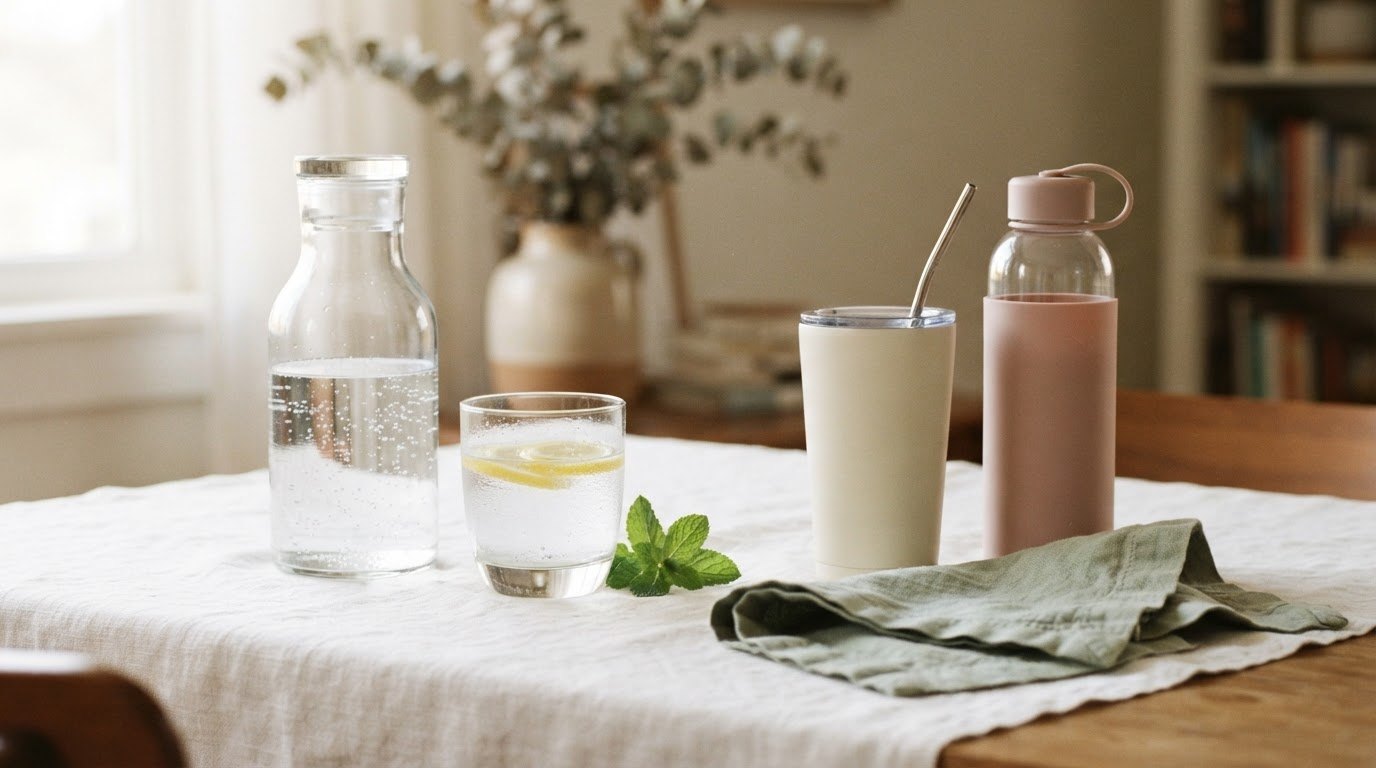
Some afternoons I notice I'm a little foggy, a bit headachy and weirdly snacky, and I can't figure out why. Then I look at my desk and see the glass of water I poured at breakfast, still full, sitting there like it's waiting for an apology. It happens more than I'd like to admit, especially on cold days when water is the last thing I crave and a second coffee is calling my name.
For years I thought drinking more water was a willpower thing. It isn't. It's a setup thing. When water is right there, tied to things I already do, I drink it without thinking. When it's in the kitchen and I'm on the couch, I don't. That's really the whole secret.
So this guide is all about how to drink more water in small, easy ways that actually stick. You'll find 15 simple tricks, a "water anchors" day timeline that links sips to moments you already have (waking up, coffee, meals, your commute, winding down), and a bottle-size table so you can see what your daily refills look like without counting every glass. No strict rules, no giant jugs you have to finish by noon. Just gentle, doable habits.
How Much Water Do You Actually Need?
Here's the honest answer: it depends. Your body size, how active you are, the weather, whether you're unwell, and even what you eat all change how much fluid you need. That's why I'm not going to hand you one magic number.
As a gentle reference point, the U.S. National Academies of Sciences, Engineering, and Medicine suggest a total daily fluid intake of roughly 2.7 liters (about 11 cups) for most adult women. That total includes water from all drinks and from food, which provides around a fifth of it. So you don't need to drink 11 glasses of plain water on top of everything else.
A simpler everyday guide many people find helpful:
- Drink when you're thirsty, and don't wait until you're very thirsty.
- Check the color. Pale straw-yellow urine is usually a sign you're doing fine. Darker yellow can be a nudge to drink a little more.
- Add more on hot days, when you exercise, in dry heated rooms, or when you're unwell.
A kind safety note: if you have a heart or kidney condition, are pregnant or breastfeeding, take medication that affects fluids, or have been told by a doctor to limit fluids, please follow their advice over any general guide (including this one). And more isn't always better; drinking very large amounts quickly can be harmful, so think "steady sips through the day" rather than "chug a bottle."
15 Easy Tricks To Drink More Water
You don't need all fifteen. Pick two or three that sound easy for your life right now, try them for a week, and add more when they feel automatic.
1. Drink a Glass Before Your Feet Hit the Floor
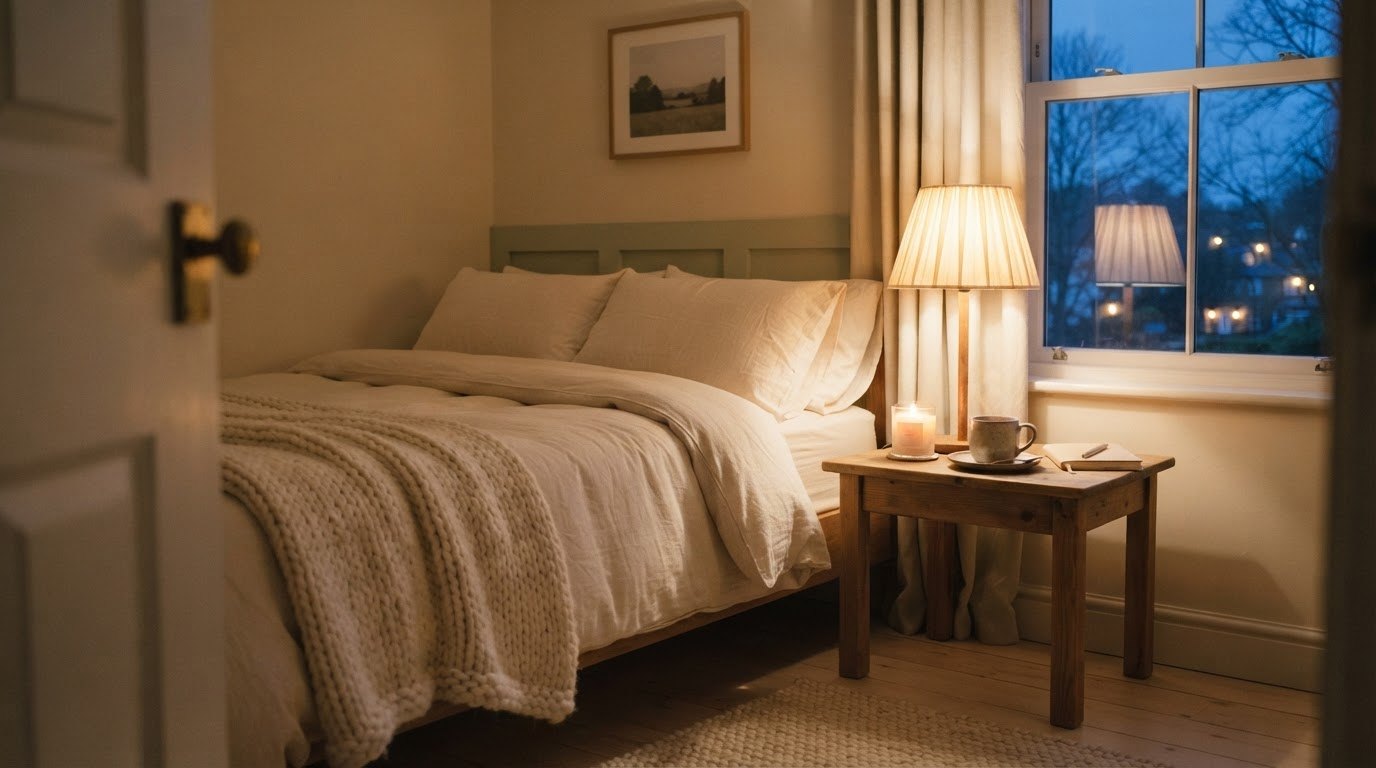
Put a glass or small bottle of water on your nightstand before bed. When you wake up, drink it before you even get up. It's the easiest win of the day, because you haven't had time to get distracted yet.
A glass water carafe with a lid on your nightstand looks lovely and keeps water clean overnight. Fill it in the evening as part of your wind-down.
2. Pair Water With Your Coffee or Tea
This one changed my mornings. Every time I make a coffee, I pour a glass of water next to it, and I drink the water first. Coffee sometimes perks me up and sometimes makes me jittery and anxious, and having water alongside seems to take the edge off a little.
Make it part of your setup: keep glasses right next to the kettle or coffee maker. If you're building a little station, my coffee corner ideas include a spot for a water glass too.
3. Carry a Bottle You Actually Love
It sounds superficial, but it works. A bottle you love the look and feel of is a bottle you'll carry everywhere. Think about what bothers you about water bottles (too heavy, leaks, hard to clean, metallic taste) and choose the opposite.
A pastel glass water bottle with a silicone sleeve is a sweet pick if you dislike the taste of plastic. Look for a wide mouth for easy cleaning and a leak-proof lid if it lives in your bag.
4. Use a Straw
Many people drink noticeably more when they sip through a straw, because it's effortless and you barely notice you're doing it. A cream insulated tumbler with a straw keeps water cold for hours, which also makes it more appealing.
Keep it on your desk, your bathroom counter while you get ready, or next to the couch in the evening. If you'd rather skip plastic, a set of clear glass drinking straws works in any glass or jar and feels a little fancier.
5. Try a Bottle With Time Markers
If you like a visual nudge, a bottle with little time markers down the side ("10 a.m.," "noon," "3 p.m.") turns drinking water into a gentle game. A lavender water bottle with time markers is a cheerful option.
One honest caution: if the markers start to make you feel stressed or behind, ignore them. They're a nudge, not a test.
6. Drink a Glass Before Every Meal
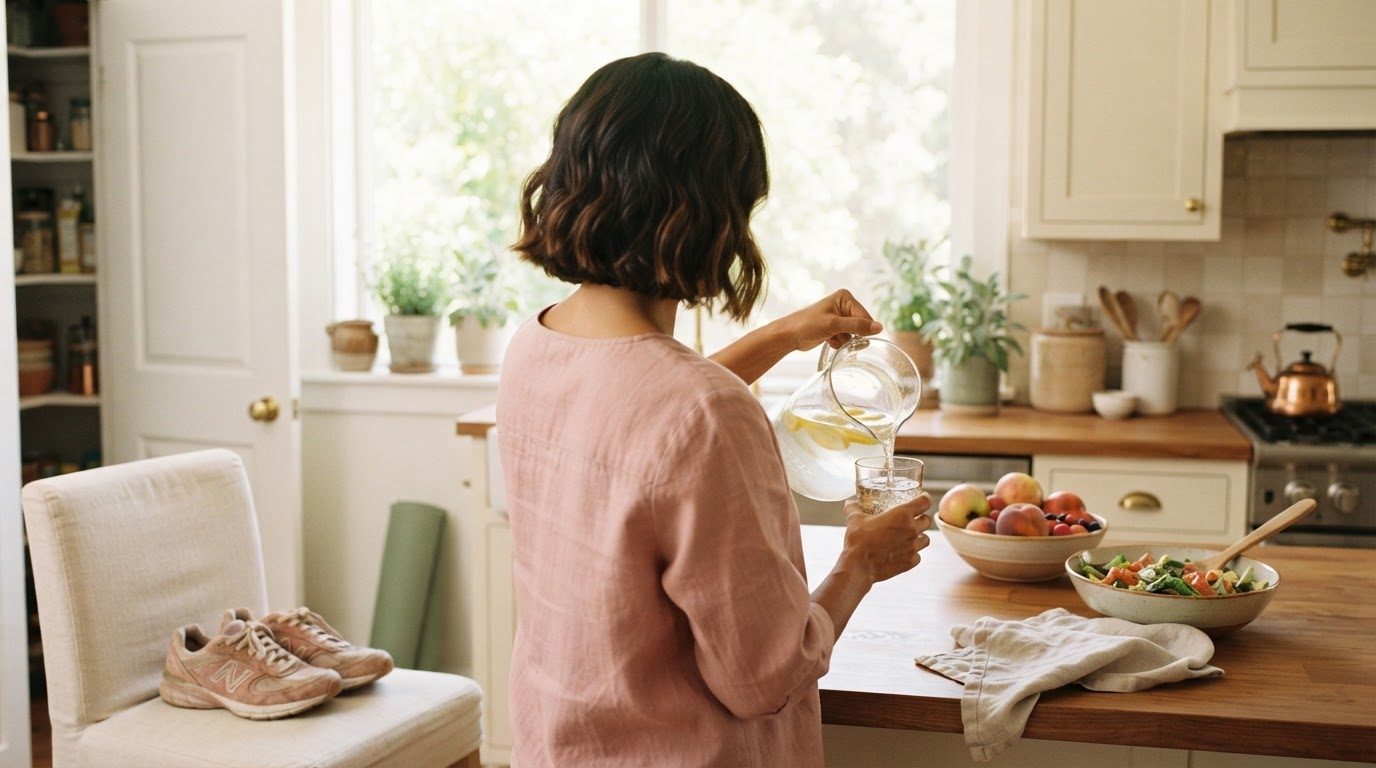
Three meals, three glasses, done without much thought. Pour water before you sit down, and finish it while your food is cooking or arriving. It's one of the simplest anchors there is, because meals already happen at fairly predictable times.
Eating out? Ask for a glass of water as soon as you sit down, before you even look at the menu. It's a tiny habit that quietly works anywhere.
7. Eat Your Water Too
Remember that food counts toward your daily fluids. Juicy fruits and vegetables like cucumber, watermelon, oranges, berries, lettuce and tomatoes are mostly water. Soups and broths count too. Adding a few water-rich foods to your day is a quiet way to stay hydrated without feeling like you're constantly drinking.
8. Make It Taste Like Something
If plain water bores you, change it up gently. A few cucumber slices or a squeeze of lemon in your glass is enough to make it feel different. Sparkling water counts, too, and can make water feel like more of a treat.
Herbal tea is another lovely option, especially in colder months when cold water feels unappealing. A box of caffeine-free peppermint herbal tea or chamomile is perfect for evenings. For more warm ideas, my bedtime drinks guide has plenty.
9. Keep It Cold (or Warm, If You Prefer)
Temperature changes everything. Some people only drink water when it's ice-cold; others find warm water much easier in winter. Notice which one you naturally reach for and make it easy: a jug in the fridge, or warm water from the kettle in a favorite mug.
10. Set Two or Three Gentle Reminders
Not twenty. Just two or three phone reminders at times you tend to forget, like mid-morning and mid-afternoon. Label them with something kind ("Sip break" or "Water and a stretch") instead of something that sounds like a scolding.
11. Stack It Onto Habits You Already Have
Habit stacking means linking a new habit to something you already do every day. "After I brush my teeth, I drink a glass of water." "When I get back from a walk, I refill my bottle." Your existing habit becomes the reminder.
If you'd like more on how this works, my guide on how to create new habits goes into the whole idea gently.
12. Refill Every Time You Get Up
Every time you stand up from your desk or the couch, take your glass or bottle with you and top it up. You'll be surprised how many refills you get through simply by moving around.
It also gives you a natural reason to stretch and rest your eyes for a minute, which is a small gift on long screen days.
13. Track It Loosely
Some people love tracking; others find it stressful. If you're a tracker, try something simple: a tally mark in your journal or planner for each bottle refill. If you'd like a pretty way to do it, my tracking journal ideas include a little water tracker layout.
Track for one or two weeks to learn your pattern, then stop if it starts to feel like homework.
14. Drink a Little Extra on "Thirsty" Days
Some days need more water: hot days, workout days, travel days, days in a dry heated office, or when you've had a bit more coffee or a glass of wine. On those days, add one extra refill. No complicated math required.
15. Slow Down in the Evening
Front-load your water so most of it happens before late afternoon. Then sip more lightly in the evening so you're not waking up at night to use the bathroom. Good sleep matters too, and a glass by the bed for small sips is plenty.
Your "Water Anchors" Day Timeline
This is the unique part of this guide, and honestly the trick that makes everything else work. Instead of remembering to drink water all day, you attach it to five moments you already have. Each anchor is just one glass or a few big sips, and together they add up quietly.
| Anchor moment | What to do | Roughly how much | Make it easy |
|---|---|---|---|
| 1. Wake up | Drink the glass from your nightstand before getting out of bed | 1 glass (about 8 oz) | Fill a carafe or glass the night before |
| 2. Coffee or tea | Drink a glass of water next to every coffee or tea, water first | 1 glass per cup | Keep glasses beside the kettle or coffee maker |
| 3. Meals | Pour a glass before breakfast, lunch and dinner | 1 glass each meal | Set a glass at your place before you start eating |
| 4. Commute or errands | Sip from your bottle on the way out and refill when you arrive | Half to one bottle | Keep the bottle by your keys or in your bag |
| 5. Wind-down | A warm herbal tea or a few sips of water, then fill the bedside carafe | Small cup or a few sips | Make it part of your evening tea ritual |
That's roughly six to eight glasses of water just from moments you're already living through, before counting other drinks and water-rich foods. Screenshot the timeline and try it for one week. Start with the two anchors that feel easiest (wake up and meals are usually simplest), then add the rest.
Bottle-Size Table: How Many Refills Is That?
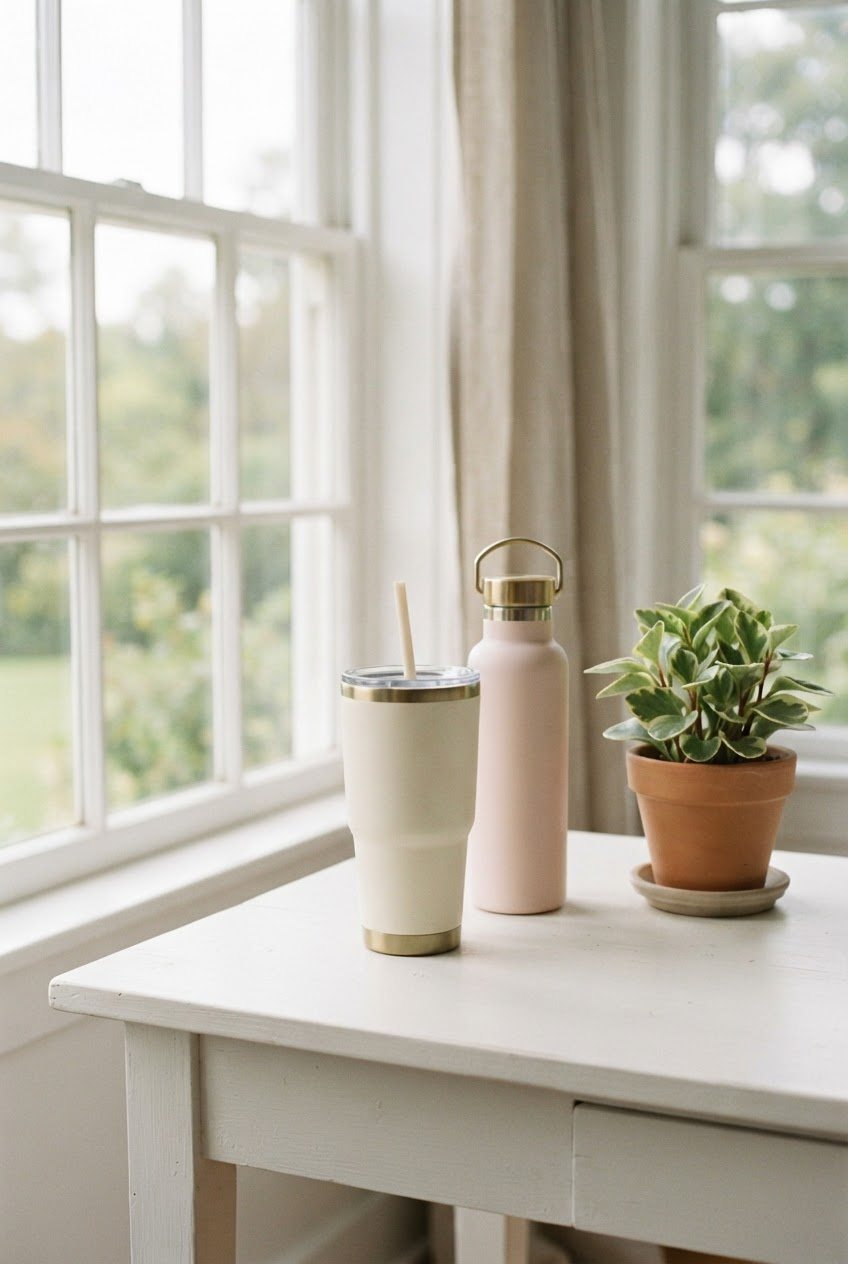
Counting glasses gets old fast. It's much easier to think in refills of the bottle you carry. Here's a quick table to see what different bottle sizes add up to. Treat it as a rough guide, and remember that other drinks and food count toward your total too.
| Bottle size | About | 4 refills a day | Good for |
|---|---|---|---|
| 12 oz | 350 ml (1.5 cups) | 48 oz (about 1.4 L) | Small bags and short outings |
| 16 oz | 475 ml (2 cups) | 64 oz (about 1.9 L) | Everyday handbag carry |
| 20 oz | 600 ml (2.5 cups) | 80 oz (about 2.4 L) | Desk days, car cup holders |
| 24 oz | 700 ml (3 cups) | 96 oz (about 2.8 L) | Long days out, office, gym |
| 32 oz | 950 ml (4 cups) | 128 oz (about 3.8 L) | Hot days and active days; often 2 to 3 refills is plenty |
For most people, a 16 to 24 oz bottle is the sweet spot: big enough that you're not refilling every hour, small enough to carry comfortably. If you choose a large bottle, don't feel you have to finish four of them. Two or three refills plus your other drinks is often enough.
A Gentle One-Week Water Starter
If fifteen tricks and a timeline feel like a lot, here's a tiny one-week plan instead. Each day adds just one small thing, and by the end of the week you'll have a routine without ever feeling like you started a challenge.
- Day 1: Put a glass or carafe on your nightstand tonight. That's it.
- Day 2: Drink the bedside glass before you get up, and pour a glass next to your first coffee or tea.
- Day 3: Add a glass before lunch.
- Day 4: Carry your bottle when you leave the house, even on a short errand.
- Day 5: Add a glass before dinner, and refill your bottle every time you stand up from your desk.
- Day 6: Notice how you feel in the afternoon. A little clearer? Less snacky? Jot a line in your journal.
- Day 7: Swap one evening drink for a warm herbal tea, then fill the bedside carafe for tomorrow.
If you miss a day, simply pick up where you left off. Habits are built by coming back, not by never slipping. I like to do my little journal check-in after my evening tea, when the house is quiet and it feels more like a ritual than a task.
And be patient with yourself. It usually takes a few weeks before reaching for water feels automatic, especially if you're used to coffee, soda or nothing at all for long stretches. Every glass still counts on the days it doesn't feel easy yet.
Signs You Might Need a Little More Water
Your body gives quiet hints when it would like more fluid. Common ones include:
- Feeling thirsty or having a dry mouth
- Darker yellow urine, or going less often than usual
- Feeling tired, sluggish or a little foggy in the afternoon
- A mild headache
- Dry lips or skin that feels extra tight (especially in winter)
These can have lots of other causes, so they're not a diagnosis, just a nudge to reach for your glass. If you feel very dizzy, confused, have a racing heart, or can't keep fluids down, please seek medical help. And on the beauty side, water alone won't fix dry winter skin, but it pairs well with a good routine; my winter skincare routine covers the rest.
Common Water Habit Mistakes
I've made all of these at some point, and they're very normal:
- Trying to drink it all at once. Finishing a huge bottle in one go isn't more effective. Steady sips through the day are kinder to your body.
- Making it too strict. If your plan feels like a punishment, you'll drop it. Keep it light and flexible.
- Leaving water out of reach. If the bottle is in another room, you won't drink it. Keep water where you spend the most time.
- Forgetting on cold days. We often feel less thirsty in winter, but heated rooms dry us out. Warm water or herbal tea helps.
- Drinking most of it at night. Then sleep suffers. Front-load the day.
If you're working on a few healthy habits at once, my gentle guide to healthy habits during the holidays has more small, realistic ideas that fit busy weeks.
Final Thoughts
Learning how to drink more water isn't about forcing down a giant jug or tracking every sip. It's about making water the easy choice: a glass by the bed, a glass next to your coffee, a bottle you love in your bag, and a few anchors woven into your day.
Start with one or two tricks this week, keep it gentle, and let it build. Your body will quietly thank you, one glass at a time.