Sunscreen isn't only a beach-day product. The rays that cause dark spots and early fine lines don't take the day off when the sky is gray, and some of them pass straight through window glass. The good news is that you don't need to panic or reapply every hour at your desk. You just need to know which days and which situations actually call for it.
A lot of the confusion comes from mixing up two very different questions: "Do I need sunscreen when it's cloudy?" (usually yes) and "Do I need sunscreen inside my home?" (it depends). The answers are calmer and simpler than the internet sometimes makes them sound.
This guide answers do you need sunscreen indoors and on cloudy days in plain language: UVA vs UVB, what windows block, what we know (and don't) about screens, who benefits most, a quick "do I need it today?" table, what to use, how much to apply and when reapplying matters. My own skin is combination and sensitive, with a shiny T-zone, so I'm picky about formulas that feel light.
The Short Answer
Here it is in two lines:
- Cloudy days: yes. A large share of UV light passes through clouds, especially thin or broken ones. If you're going outside, wear sunscreen just like you would on a sunny day.
- Indoors: it depends on windows and time. If you spend hours near a sunny window, sit by a window at work, or drive a lot, daily sunscreen makes sense. If you're in a room far from windows all day, it matters much less.
For most people with a normal routine (a commute, a few errands, some time by a window), the simplest habit is one layer of broad-spectrum SPF 30 or higher every morning as the last step of your skincare. Then you never have to make the decision at all.
UVA vs UVB in Simple Terms
Sunlight contains two kinds of ultraviolet rays that matter for your skin. You don't need the physics, just this simple memory trick:
- UVB = B for burning. These rays cause sunburn. They're strongest in the middle of the day and in summer, and ordinary window glass blocks most of them.
- UVA = A for aging. These rays reach deeper into the skin and are linked to dark spots, loss of firmness and fine lines. They're present all year, from morning to evening, and they pass through clouds and much of ordinary window glass.
Both types contribute to skin damage over time. That's why the label you want is broad-spectrum: it means the product protects against both UVA and UVB, not just burning. If you'd like to understand the filters behind those labels, my guide to choosing the right active sunscreen ingredients breaks them down simply.
Do You Need Sunscreen on Cloudy Days?

Yes, if you're spending time outside. Clouds feel protective because they block heat and brightness, but heat and UV aren't the same thing. You can feel cool and still be getting a meaningful dose of UV, which is exactly why people get surprised by sunburn on overcast beach days.
A few details worth knowing:
- Thin, patchy clouds let most UV through and can even scatter it around.
- Heavy, dark rain clouds block more, but rarely all of it.
- UVA stays fairly steady across seasons and weather, which matters for dark spots and long-term skin changes.
The easy check: your weather app's UV index. When it's 3 or higher, sunscreen is a good idea for time outdoors, whatever the sky looks like. On gray days it's often lower, but the habit of putting sunscreen on every morning saves you from checking.
Do You Need Sunscreen Indoors?
Indoors is where the answer becomes "it depends." Your exposure comes almost entirely through windows, so the questions are how close you sit to them, for how long and at what time of day.
Windows: What Glass Blocks and What It Doesn't

Standard window glass blocks most UVB, so you're very unlikely to burn indoors. UVA is a different story: a good portion of it passes through ordinary glass. Some newer or coated windows block more, but most of us have no idea what our windows are made of.
- Sitting right by a sunny window for a few hours a day? Daily sunscreen makes sense, especially on the side of your face nearest the glass.
- Working in the middle of a room or in a space with small or north-facing windows? Exposure is much lower.
- Sunlight falling directly on your skin through the glass is the clearest sign. If you can feel the warmth of the sun on your face, some UVA is reaching it too.
Sheer curtains or blinds can soften direct sun at your desk, and they make the light prettier too.
Screens and Blue Light: What We Know
Let's keep this calm. Phones, laptops and TVs give off visible light, including blue light, but in tiny amounts compared with the sun. The evidence that screen light harms skin is limited, and you don't need special "anti-blue-light" products for your laptop time.
What researchers have noticed is that strong visible light from the sun may play a part in stubborn dark patches, especially for people with melasma or deeper skin tones. Tinted sunscreens made with iron oxides can help with that. That's a reason to love tinted formulas, not a reason to worry about checking your email.
Driving and Car Windows

Windshields are usually made of laminated glass, which blocks much more UVA than side windows. Side and rear windows often let more UVA through. If you drive a lot, especially with the sun on one side, you may notice more freckles or dark spots on that side of your face over time.
If you drive daily, sunscreen on your face, neck and the backs of your hands is a sensible habit. Keep a small tube in your bag along with UV-protective sunglasses (look for a label that says UV400 or 100% UV protection) to protect the delicate skin around your eyes.
Do I Need It Today? A Quick Table
Here's a quick guide for everyday situations. Screenshot it and you'll never have to think twice on a gray morning:
| Situation | Need SPF? | Why |
|---|---|---|
| Sunny day, going outside | Yes | Full UVA and UVB exposure; reapply every 2 hours outdoors |
| Cloudy day, going outside | Yes | A large share of UV passes through clouds |
| Rainy day, a quick errand | A good habit | UV is lower but rarely zero; your morning layer covers it |
| Working by a sunny window | Yes | UVA passes through most ordinary glass |
| Home all day, away from windows | Optional | Exposure is minimal; skip it if you like |
| Driving for 30+ minutes | Yes | Side windows let UVA through |
| Winter walk, snow on the ground | Yes | Snow reflects UV back up at your face |
| Using retinoids or exfoliating acids | Yes, every day | Skin is more sun-sensitive |
| Treating dark spots or melasma | Yes, every day | Even small exposure can undo progress |
| Evening at home | No | No UV after dark; cleanse it off |
Who Benefits Most From Daily SPF Indoors

For some people, a daily indoor layer isn't just nice to have. It protects all the effort they're putting into their skin:
- Anyone fading dark spots or melasma. Pigment is very sensitive to light. Even a little daily UVA can keep spots from fading, so daily sunscreen is the backbone of any plan to fade dark spots.
- Retinoid users. Retinol and other retinoids can make skin more sensitive to the sun. If you're starting out, my guide to retinol for beginners explains how to pair it with SPF.
- Exfoliating acid users. AHAs such as glycolic and lactic acid can also increase sun sensitivity.
- People who sit by windows. Home offices, window seats, sunny kitchens.
- Frequent drivers. Especially on long commutes.
- Anyone focused on long-term skin aging. UVA is a big factor in fine lines and loss of firmness over the years.
If you have melasma, very sensitive skin or reactions to sunscreen, it's worth asking a dermatologist which formula and routine suits you best.
What To Use
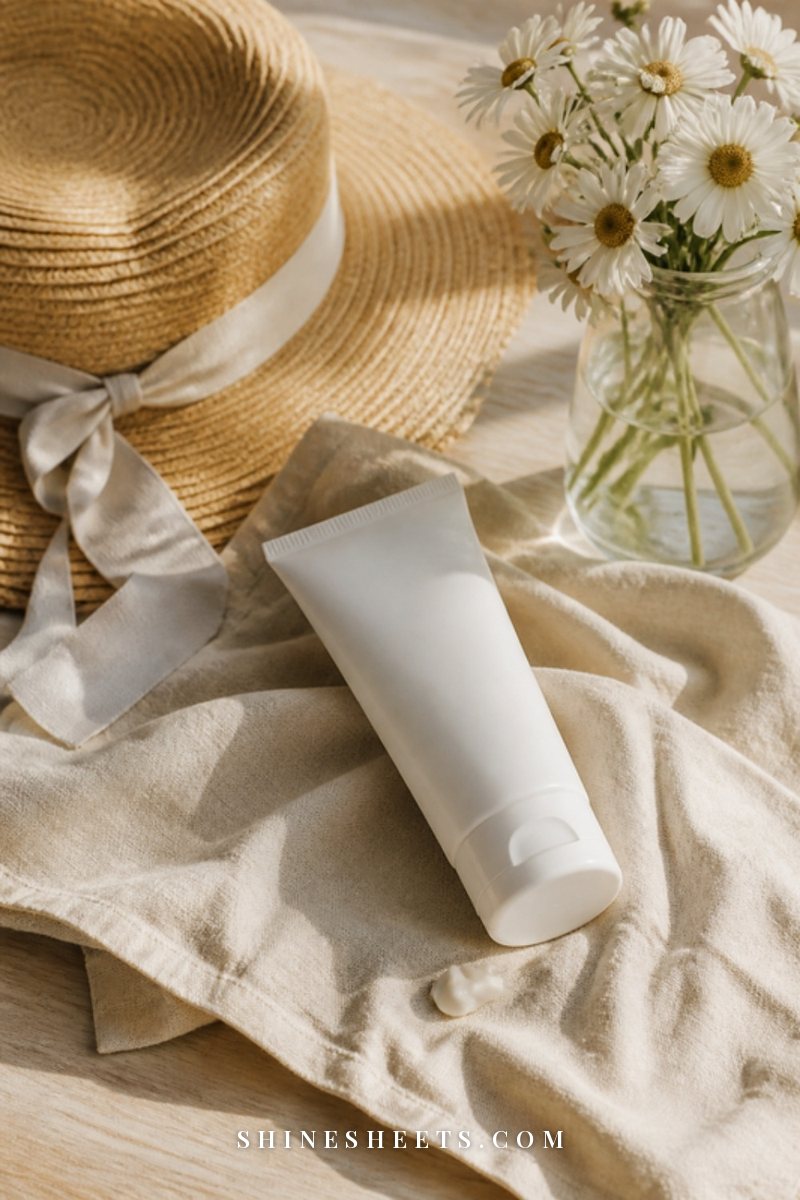
The best sunscreen is the one you'll actually wear every day. For indoor and everyday use, that usually means something light, comfortable and invisible under makeup. The non-negotiables: broad-spectrum and SPF 30 or higher.
Lightweight Daily Sunscreen
For everyday wear, I'd choose a lightweight Korean daily sunscreen. The best-selling ones have a thin, serum-like or watery texture that sinks in fast, leaves no white cast and sits nicely under makeup. They're especially good if your skin is combination or oily, because they don't add heaviness to the T-zone.
Look for: broad-spectrum on the label, SPF 30–50, "lightweight," "fluid" or "essence" texture, and fragrance-free if your skin is reactive. Patch test any new sunscreen on a small area of your jaw or inner arm for a couple of days before using it on your whole face.
Mineral Options for Sensitive Skin
If chemical filters tend to sting your eyes or redden your cheeks, try a mineral sunscreen for sensitive skin with zinc oxide and/or titanium dioxide. These sit on the skin and are often gentler for reactive or post-procedure skin.
The trade-off: some mineral formulas leave a whitish tint. Tinted versions or sheer "invisible zinc" textures solve most of that. Rub them in with a light patting motion rather than heavy rubbing.
Tinted and Lip SPF
Two easy add-ons make daily protection more complete:
- Tinted SPF. A tinted moisturizer with SPF 30 evens out your skin and adds visible light protection thanks to its iron oxides. On low-makeup days it can replace foundation. Just make sure you apply enough (most people use too little of tinted products to get the full SPF on the label), or wear it over a regular sunscreen.
- Lips. Lips have very little natural protection and are easy to forget. An SPF lip balm takes two seconds and keeps them soft, which is especially helpful in winter.
How Much To Apply
This is where most of us fall short. The SPF number on the bottle is tested with a fairly generous layer, so using a tiny dab gives you much less protection than you think.
- The two-finger rule: squeeze two full lines of sunscreen along your index and middle fingers. That's roughly the right amount for your face and neck.
- Don't forget: ears, the sides of your neck, your hairline and the backs of your hands if they sit in the sun at your desk or on the steering wheel.
- Order: sunscreen goes last in your morning skincare, after moisturizer and before makeup. Give it 2–3 minutes to set before foundation.
If two fingers feels heavy on your skin, apply it in two thin layers a minute apart. It sinks in more easily that way.
Do You Need To Reapply Indoors?
For most indoor days, no. The usual advice to reapply every 2 hours is meant for time outdoors, swimming or sweating. Here's a calm way to think about it:
- Home or office, away from windows: your morning layer is enough.
- Sitting by a sunny window all afternoon: a midday top-up is a kind extra, especially if you're treating dark spots.
- Going outside after lunch: reapply before you head out.
- Wearing makeup: an SPF powder or SPF mist can top you up without ruining your base.
Reapplying over makeup gets its own guide in this series, how to reapply sunscreen over makeup, if that's your daily puzzle.
A Simple Morning Routine With SPF
Daily sunscreen becomes effortless once it has a fixed place in your routine. Here's a gentle five-step morning order that works for most skin types:
- Cleanse or rinse (1 minute). Lukewarm water or a mild cleanser. If your skin is dry, a splash of water is often enough in the morning.
- Treatment serum (30 seconds). Vitamin C, niacinamide or a hydrating serum, if you use one. Let it absorb for a minute.
- Moisturizer (30 seconds). Lighter gel textures for combination and oily skin, richer creams for dry skin. On my combination skin I go lighter on the T-zone and a little richer on the cheeks.
- Sunscreen (1 minute). Two finger-lengths for face and neck, patted and smoothed in. Wait 2–3 minutes.
- Makeup or lip SPF (optional). Tinted products, concealer, then lip balm with SPF.
Keep your sunscreen right next to your toothbrush or moisturizer so you see it every morning. The easiest habit is the one you can't miss.
Common Myths About Sunscreen Indoors
A few ideas float around that make sunscreen feel either pointless or scary. Let's clear them up kindly:
- "I can't burn indoors, so I'm fine." You're right that burning is unlikely, because glass blocks most UVB. But UVA, the one linked to dark spots and aging, doesn't cause a burn you can feel, so the absence of redness doesn't tell you much.
- "My makeup has SPF, so I'm covered." Foundation with SPF is a nice extra, but most of us apply far less of it than the amount used in SPF testing. Treat it as a bonus layer, not your main protection, on days when you're near windows or heading out.
- "Darker skin doesn't need sunscreen." Deeper skin tones have more natural protection from burning, but they're often more prone to stubborn dark patches. Daily sunscreen, especially tinted, is a lovely friend for even tone.
- "My laptop is damaging my skin." There's no need to worry about normal screen time. The sun is the main source of light that matters for skin.
- "Sunscreen is only for summer." UVA is around all year. Summer just makes the burning kind more obvious.
- "Higher SPF means I can skip reapplying." SPF 50 offers a bit more protection than SPF 30, but it doesn't last longer on your skin. Outdoors, reapplying still matters.
Don't Forget Your Neck, Chest and Hands
Faces get all the attention, but the neck, chest and backs of the hands show sun damage just as clearly, and they're often the areas closest to a window or resting on a steering wheel.
- Neck and chest: smooth whatever is left on your fingers down your neck after your face, then add a little more for the front of your chest if your neckline is open.
- Hands: after washing your hands at midday, a hand cream with SPF is an easy top-up on sunny desk days.
- Forearms: if you drive with your arm near the side window, give it a quick layer before longer trips.
These areas have thinner skin and fewer oil glands than the face, so a slightly richer sunscreen or a moisturizing body formula usually feels more comfortable there.
Winter Sunscreen

Winter is when sunscreen gets forgotten most, and it's when a few things quietly increase your exposure:
- Snow reflects UV, so you get it from above and below.
- Altitude increases UV, which matters for ski trips and mountain walks.
- UVA keeps going even when the days are short.
In cold, dry weather, choose a slightly richer sunscreen or wear yours over a nourishing moisturizer. You'll find more ideas for keeping skin comfortable in my winter skincare routine. And keep that SPF lip balm in your coat pocket, because wind and sun together are hard on lips.
Final Thoughts
You don't need to fear the sun, your windows or your laptop. One layer of broad-spectrum SPF 30 in the morning covers almost every ordinary day, cloudy ones included.
Think of it as a small, steady act of care: thirty seconds each morning that quietly protects your skin for years to come. Simple habits like that are the ones that truly add up.