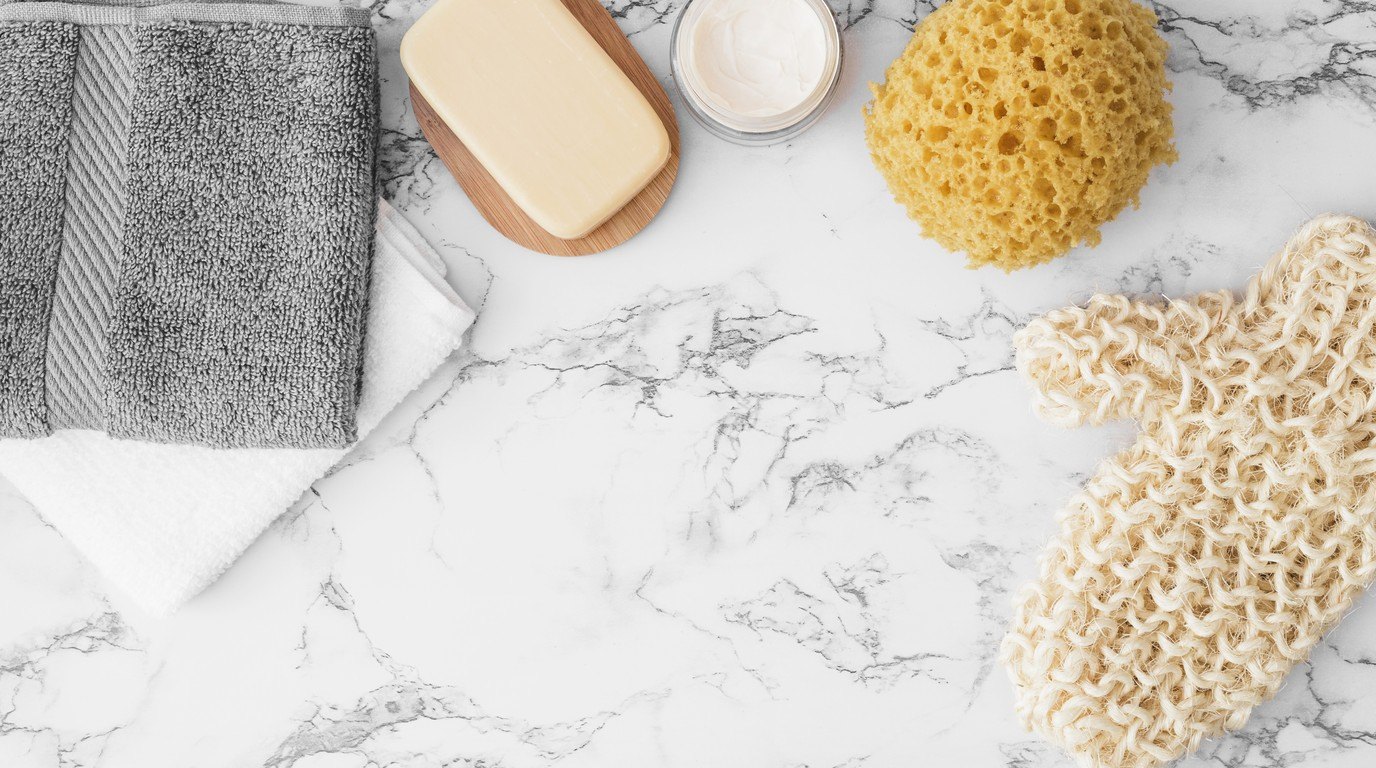
A loofah only feels clean because it's covered in soap. Underneath the bubbles, it lives in one of the warmest, wettest spots in your home, full of tiny nooks where water, skin cells and soap residue settle in. That's exactly the kind of place where bacteria and mildew are happy to grow.
None of this means you need to throw your pouf away in a panic. It just means body tools need a little care and a regular replacement date, the same way your toothbrush does. With a few easy habits, a loofah or body sponge can stay fresh, gentle and pleasant to use.
This guide covers everything about loofah hygiene: why it matters, four common body tools compared, exactly how often to replace each one, six care habits that keep them clean, and how to use them kindly on your skin. There's a comparison table you can screenshot, too, so you never have to guess again.
Why Loofah Hygiene Matters
Your shower is warm, steamy and wet for a good part of the day. A body tool that stays damp in that environment for hours becomes a comfortable little home for microbes. Natural loofahs and mesh poufs are especially good at trapping water, because they're made of hundreds of tiny layers and fibres.
A few things happen over time:
- Bacteria and mildew build up. Dead skin cells and soap residue get caught in the fibres. Add warmth and moisture, and microbes multiply.
- The tool gets rougher. Natural fibres break down and fray, and old mesh can get scratchy at the edges.
- Your skin notices. A worn or dirty tool can irritate skin, especially if you have small nicks from shaving, sensitive skin or a broken barrier.
- It starts to smell. A musty smell is often the first sign that a tool has been staying wet for too long.
The good news: you're in control of almost all of this. Drying, rinsing and replacing on time do most of the work. And if you've already read my guide on kitchen sponge hygiene, you'll recognise the same logic – except here, the tool touches your skin every single day, so it deserves even more care.
4 Types of Body Tools Compared
Not all body tools are equal when it comes to hygiene. Here's how the four most common ones compare.
1. Natural Loofah
A natural loofah comes from a dried gourd, and it has a firm, fibrous texture. It feels satisfyingly scrubby, which is exactly why it suits less sensitive skin and rougher areas like heels and elbows. But those dense fibres hold water deep inside, and they take a long time to dry. That makes natural loofahs the tool that needs replacing most often.
If you love the texture, soak a new one in warm water for a few minutes before the first use to soften it, and keep it for body areas that can handle a firmer touch.
2. Plastic Mesh Pouf
The classic shower pouf is made of nylon mesh, folded into lots of soft layers. It creates a rich lather with very little body wash and feels gentler than a natural loofah. Those many layers, though, can hide moisture in the centre, especially if the pouf hangs in the steam.
A soft blush mesh bath pouf is a lovely everyday pick if you like lots of bubbles. Choose one with a long cord so it's easy to hang somewhere airy.
3. Silicone Body Scrubber
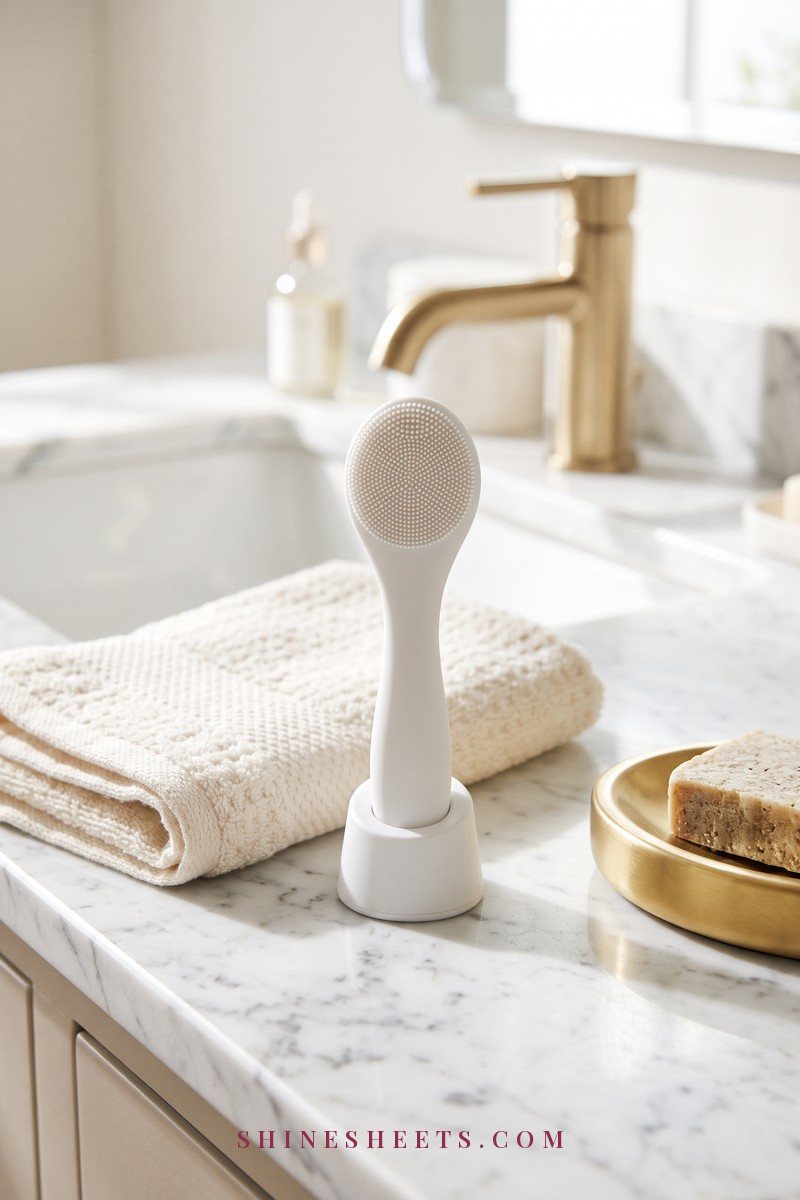
Silicone scrubbers have soft, flexible bristles and a smooth, non-porous surface. That's their big hygiene advantage: water doesn't soak in, so they dry quickly and are much easier to keep clean. They also last a lot longer than fibrous tools.
A white silicone body scrubber is the pick I'd choose for sensitive skin or anyone who wants a lower-maintenance option. Look for food-grade or medical-grade silicone and soft, rounded bristles. The lather is lighter than a pouf, but you won't need to replace it every few weeks.
4. Exfoliating Cloth
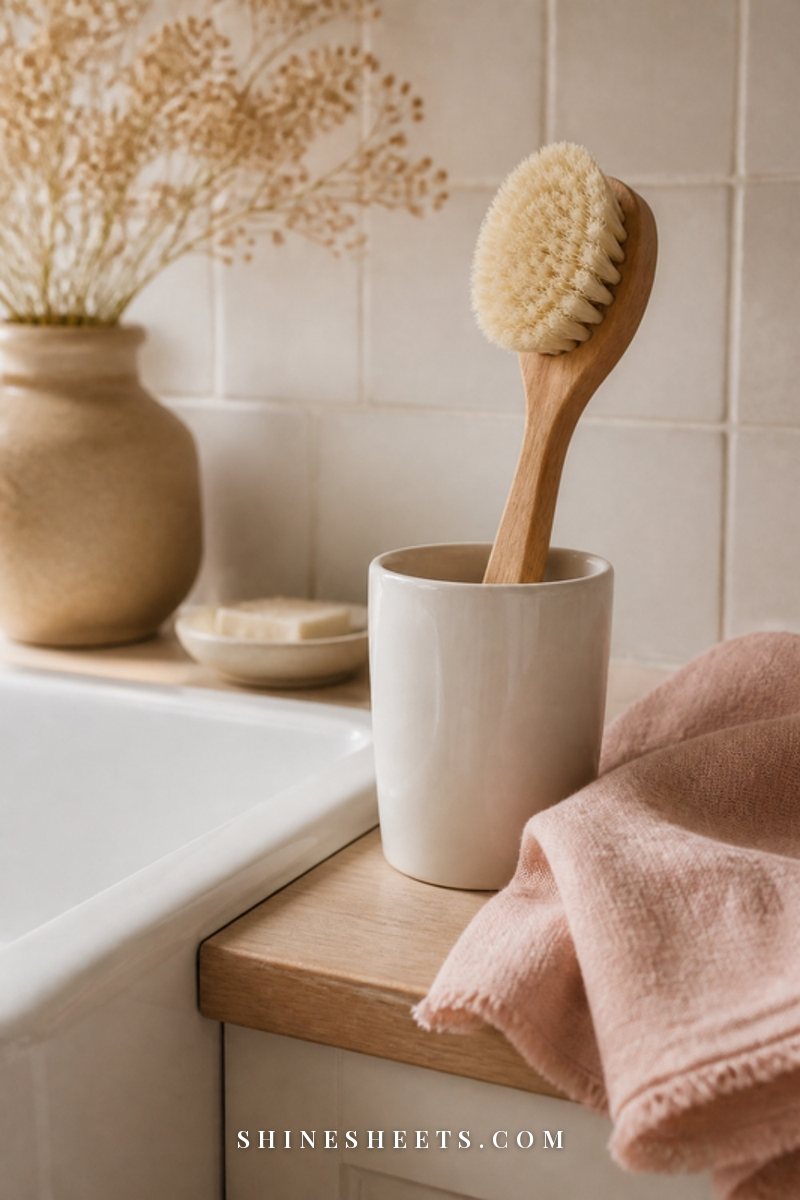
Exfoliating washcloths are woven with a slightly textured fabric, from soft cotton to more scrubby nylon blends. They're flat, so they dry faster than a pouf, and they can go straight in the washing machine. That makes them very easy to keep fresh – you simply rotate a few.
A cream exfoliating washcloth is a good choice if you like a gentle texture and want to wash your tool as often as your towels. Keep three or four in rotation so there's always a clean, dry one ready.
How Often To Replace Your Loofah or Body Sponge
Here's the part most of us never think about. Each tool has its own lifespan, and the general rule is simple: replace it sooner if it smells, darkens, gets slimy or starts falling apart, whatever the calendar says.
| Tool type | How often to clean | When to replace | Best for which skin |
|---|---|---|---|
| Natural loofah | Rinse after every use, hot water rinse weekly | Every 3–4 weeks | Normal, less sensitive skin; heels and elbows |
| Plastic mesh pouf | Rinse after every use, hot water rinse weekly | About every 2 months | Normal and combination skin that likes a rich lather |
| Silicone scrubber | Rinse after use, wash with mild soap and hot water weekly | Lasts much longer; replace if it tears, gets sticky or discoloured | Sensitive, dry and easily irritated skin |
| Exfoliating cloth | Machine wash weekly (or after every few uses) | When the texture wears thin or it stays musty after washing | Most skin types, depending on the texture you choose |
A tiny trick: when you start a new loofah or pouf, set a reminder on your phone for its replacement date. It takes ten seconds, and you'll never wonder how old it is again.
Signs It's Time for a New One
Even if the calendar says you have a few weeks left, these signs mean it's time to let it go:
- It smells musty or sour, even right after rinsing.
- It has dark spots or a grey, pink or black tint anywhere in the fibres or layers.
- It feels slimy rather than just wet.
- It's falling apart – loose threads, a flattened pouf, crumbling fibres or a torn silicone edge.
- It feels scratchy in a way it didn't when it was new.
- You've been unwell or had a skin irritation – starting fresh is a kind reset.
If you'd like the same rhythm for your beauty tools, my guide on how to clean a makeup sponge and when to replace it follows the same simple rules.
6 Care Habits That Keep Your Body Tools Clean
These habits take seconds, and together they make the biggest difference to how fresh your tool stays between replacements.
1. Rinse It Well After Every Use
Once you've finished washing, hold the tool under running water for about 15–20 seconds, moving it around so the water flows through every layer. You want to rinse out all the soap and skin cells, not just the surface bubbles. Leftover body wash keeps the tool slippery and gives microbes something to feed on.
2. Squeeze Out the Water
After rinsing, squeeze the tool firmly a few times until no more water drips out. A pouf or loofah that's merely "shaken" can still hold a surprising amount of water in the centre. The less water it holds, the faster it dries.
3. Hang It Outside the Shower To Dry
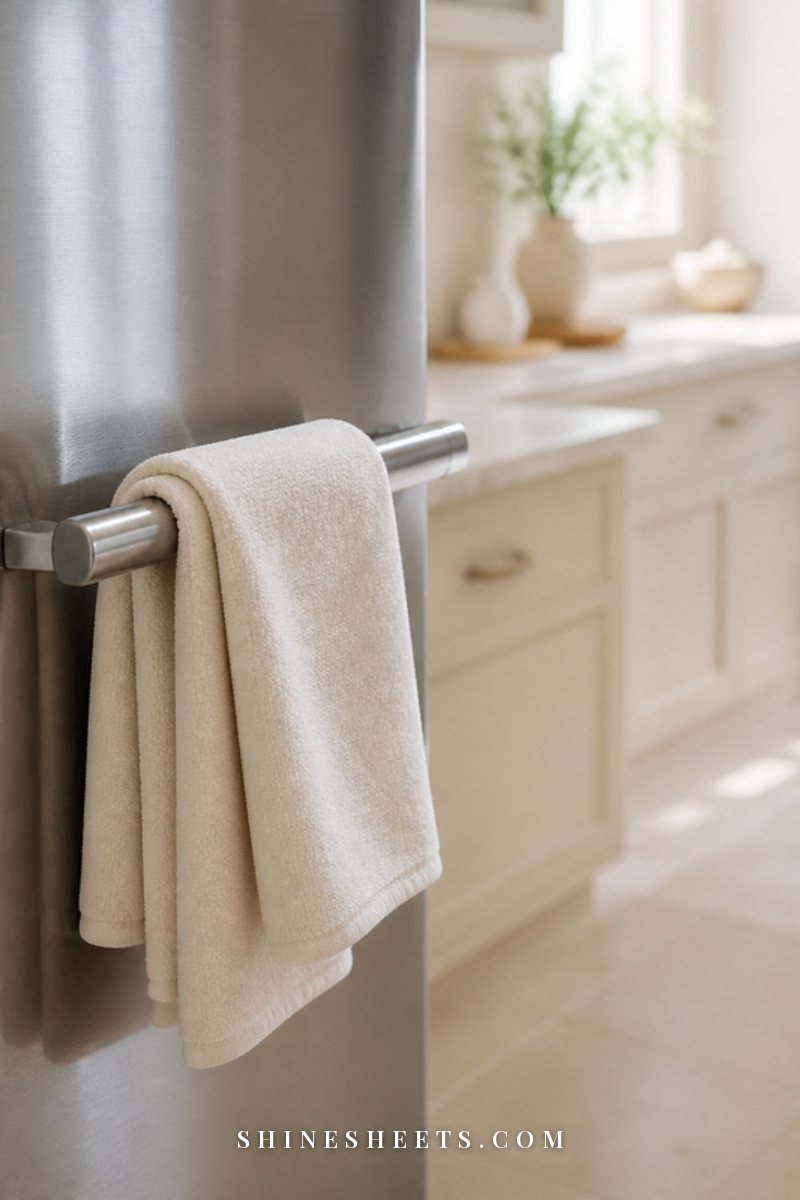
This is the single most helpful habit. Inside the shower, the air stays steamy long after you've finished. Hang your tool somewhere with airflow instead – on a hook by the bathroom door, by a window or on a towel bar. A gold-accent wall hook outside the shower makes this easy and looks pretty, too. Open a window or run the extractor fan after your shower to help everything dry.
4. Never Share Your Body Tool
Body tools are personal, like a toothbrush. Sharing one passes along bacteria and skin cells from one person to another. If several people use the same bathroom, give each person their own tool in a different colour so there's never any confusion.
5. Rinse It in Hot Water Once a Week
Once a week, give your tool a deeper rinse. Soak a loofah or pouf in hot water from the tap for a few minutes, squeeze it out and let it dry completely. Silicone scrubbers can be washed with a little mild soap and hot water, then rinsed. Exfoliating cloths simply go in the washing machine with your towels. Always follow any care instructions that came with the tool, and never mix cleaning products, especially bleach with vinegar or ammonia.
6. Skip It on Freshly Shaved or Irritated Skin
Freshly shaved skin has tiny micro-cuts, and irritated skin already has a weakened barrier. Using a loofah there can sting and invite irritation. On those days, wash with your hands and a gentle cleanser instead. The same goes for sunburn, rashes, cuts or any area that feels sore.
How To Use a Loofah Gently on Your Skin
Clean tools are only half the story. How you use them matters just as much for keeping your skin barrier happy.
- Lather, don't scrub. Squeeze a small amount of body wash onto the damp tool and work up a lather. Then glide it over your skin with gentle, circular motions. The lather does the cleaning – you don't need pressure.
- Choose a gentle body wash. A mild, low-fragrance formula is kind to most skin types. A lavender gentle body wash is a soft, calming pick for evening showers, as long as your skin tolerates light scents. Patch test anything new on your inner arm first.
- Keep it short. About a minute or two of washing is plenty. Over-scrubbing strips natural oils and can leave skin tight and itchy.
- Use lukewarm water. Very hot water dries out your skin faster. My list of shower habits that dry out your skin has easy swaps if your skin often feels tight after showering.
- Moisturise right after. Pat your skin dry with a towel and apply a body lotion or cream within a few minutes, while it's still slightly damp. This helps lock in hydration.
- Don't confuse washing with exfoliating. A daily pouf wash isn't the same as an exfoliation routine. If you want smoother skin, my guide on how to exfoliate your body gently explains how often and how to do it without overdoing it.
A small honest note from someone with combination, sensitive skin: I'd always rather be a little too gentle than a little too rough. Your skin doesn't need to feel "scrubbed" to be clean.
Common Loofah Hygiene Mistakes
These are the habits almost all of us have had at some point. None of them are a big deal on their own, but swapping them out makes your body tool last longer and stay fresher.
- Leaving it on the shower floor or caddy. It sits in a puddle and never fully dries. Hanging it up, even inside the shower, is already better than lying flat.
- Hanging it right under the shower head. It gets splashed every time anyone showers, so it stays wet all day.
- Using the same tool on your face and body. Facial skin is thinner and more delicate. Keep a separate soft cloth or just use your fingertips for your face.
- Keeping it "just a little longer." A pouf that's been in the shower since you can't remember when has done its job. Let it go.
- Microwaving or boiling a pouf to clean it. You'll see this tip online, but it can melt synthetic mesh, damage natural fibres and is a fire risk. A hot tap-water soak is safer and enough for a weekly reset.
- Storing it in a closed bag or drawer while damp. Without air, moisture stays trapped and mildew grows quickly.
Loofah Hygiene When Traveling or at the Gym
Body tools are trickier away from home, because they often get packed while still damp. A few easy adjustments:
- Pack a flat tool. An exfoliating cloth or silicone scrubber travels much better than a pouf. The cloth can be rinsed and hung over a towel rail, and silicone dries in minutes.
- Let it dry before packing. If you can, hang it overnight and pack it in the morning. If you have to pack it wet, use a breathable mesh pouch rather than a sealed plastic bag.
- Take it out as soon as you arrive. Unpack your body tool first and hang it up somewhere airy.
- Give it a reset when you get home. A hot water rinse (or a machine wash for cloths) and a full dry before it goes back into your normal routine.
- At the gym, keep it simple. Gym showers are shared and very humid. Many women find it easiest to use clean hands and body wash there, and save the pouf for home.
Small details like these are what keep a body tool feeling pleasant, rather than something you quietly avoid touching.
Who Might Prefer To Skip a Loofah
A body tool is a nice extra, not a must. For some people, clean hands and a gentle cleanser are simply the better choice:
- Very sensitive or reactive skin. If your skin turns red easily, try hands or a silicone scrubber instead.
- Dry or eczema-prone skin. Friction can make dryness and itching worse. Ask a doctor or dermatologist what suits you.
- Acne-prone areas. Scrubbing breakouts can irritate them further. Gentle washing works better.
- Anyone with cuts, wounds or a skin condition. Keep tools away from broken skin and follow your doctor's advice.
If your skin stays irritated, itchy or red despite gentle care, it's worth checking in with a doctor or dermatologist. They can help you work out what your skin actually needs. For a full shower routine built around kind habits, my everything shower routine puts all the steps in order.
A Simple Loofah Hygiene Rhythm
If you like having everything in one place, here's the whole routine as a gentle rhythm you can follow without thinking:
- After every shower: rinse for 15–20 seconds, squeeze firmly, hang it outside the shower somewhere airy.
- Once a week: a hot tap-water soak for loofahs and poufs, mild soap and hot water for silicone, a machine wash for cloths. Let everything dry completely.
- Every 3–4 weeks: replace a natural loofah.
- About every 2 months: replace a mesh pouf.
- Every few months: check your silicone scrubber and cloths for tears, stickiness or thin spots.
- Any time: replace sooner if it smells, darkens, feels slimy or starts to fall apart.
I like to pair the weekly reset with changing my bath towels. It's the same day, the same few minutes, and the whole bathroom feels fresher afterwards.
Final Thoughts
Loofah hygiene isn't about worrying over every bubble. It's about a few small, easy habits: rinse well, squeeze, hang it somewhere airy, wash it weekly and replace it on time. Do that, and your body tool stays exactly what it should be – a soft, pleasant part of your shower.
Pick a replacement date for the one hanging in your bathroom today, give it a proper place to dry, and let your shower feel a little fresher from now on. Your skin will thank you for the gentleness.