Japandi isn't about owning less for the sake of it. It's about keeping only the things that feel calm to look at and good to use, then giving them enough space to breathe. When it works, a room feels quiet but never cold, simple but never empty.
The style borrows from two traditions that happen to get along beautifully: the restraint and craftsmanship of Japanese design and the warmth and practicality of Scandinavian homes. You get clean lines and open space from one side, soft textiles and light wood from the other. The result is a home that feels like a long exhale at the end of the day.
This guide walks you through Japandi decor ideas you can actually use: the five principles behind the look, the palette and materials, a quick comparison of Japandi vs Scandi vs minimalist (so you know which one you're really after), room-by-room ideas, styling with single stems and branches, and budget swaps that get you most of the look for a fraction of the price.
No full renovation required. Just a few thoughtful edits, one corner at a time.
What Japandi Decor Actually Is
Think of Japandi as a meeting point. Japanese interiors tend to be low, sparse and deeply connected to nature, with darker woods, paper, stone and a respect for empty space. Scandinavian interiors are lighter and softer, built around long dark winters, with pale woods, wool throws and a lot of thought about comfort.
Put them together and you get a home with fewer things, better things and warmer things. Every piece earns its spot, the colors stay muted and natural, and imperfection is welcome. A slightly lopsided handmade bowl belongs here more than a perfectly glossy one.
What Japandi is not: stark white walls with nothing on them, a showroom where you're afraid to sit down, or a shopping list of expensive designer pieces. If a room feels sterile, it's missing the Scandinavian half. If it feels cluttered, it's missing the Japanese half. Most of the fun is finding that balance in your own space.
Japandi vs Scandi vs Minimalist: The Quick Comparison
These three styles get mixed up constantly, and that's understandable because they overlap. Here's how I'd tell them apart at a glance. Screenshot it before your next shopping trip so you can check whether a piece really fits the look you want.
| Feature | Japandi | Scandinavian | Minimalist |
|---|---|---|---|
| Overall feeling | Calm, grounded, quietly warm | Bright, soft, comfortable | Clean, crisp, edited |
| Color palette | Warm white, oak, clay, muted sage, one charcoal accent | Bright white, pale gray, soft pastels | White, gray, black |
| Wood tones | Light oak mixed with a darker wood or charcoal | Mostly pale birch, ash or pine | Often none, or one sleek finish |
| Furniture height | Low profile, close to the floor | Standard height, rounded edges | Standard, very simple shapes |
| Textiles | Linen, cotton, a little wool, all in natural tones | Lots of layered wool, sheepskin and knits | Very few, smooth fabrics |
| Decor amount | A few handmade pieces with space around them | Moderate, with candles, plants and cushions | As little as possible |
| Attitude to imperfection | Celebrated (wabi-sabi) | Relaxed | Avoided, everything looks precise |
| Best for you if | You want peace and warmth in equal measure | You want light and comfort first | You want the least possible visual noise |
If you already love a soft, earthy palette, my guide to neutral home decor that doesn't feel bland pairs nicely with this one. And if you're leaning toward the brighter, cuddlier end of the spectrum, the sister post on Scandinavian decor ideas goes deeper there.
The 5 Japandi Principles Behind Every Room
Once you understand these five ideas, you can make good choices in any room without following a strict rulebook. I find it helpful to run every new piece past them before it comes home.
1. Function First
Every object should have a job, even if that job is simply to bring you joy every day. Before you buy, ask yourself where it will live and how often you'll use it. A beautiful bench that also holds your shoes is very Japandi. A decorative tray that only collects dust is not.
A quick test: if you can't name the exact spot for something within five seconds, leave it in the store.
2. Natural Materials
Wood, linen, cotton, paper, clay, stone, rattan and jute. These materials age gently, feel good under your hands and bring a bit of the outdoors inside. Plastic and high-gloss finishes tend to break the spell, so swap them out slowly as things wear out (no need to toss everything at once).
3. Low-Profile Furniture
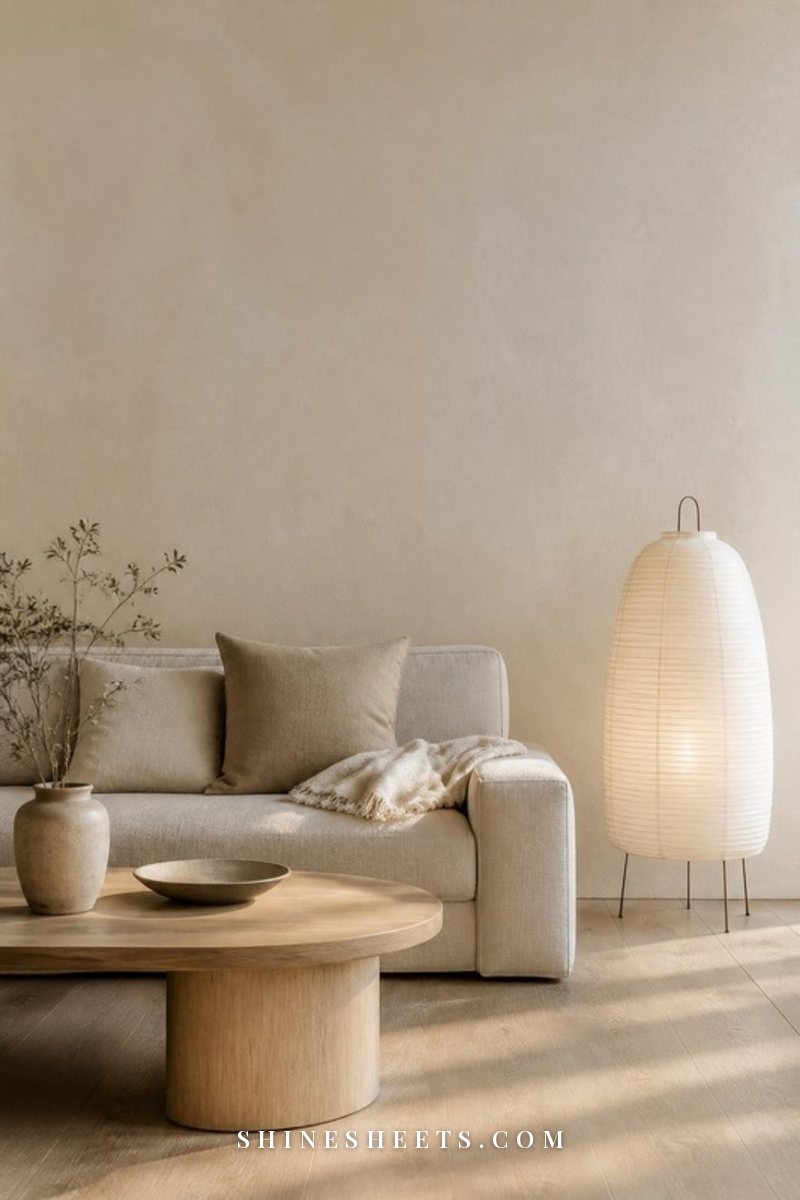
Japanese homes traditionally sit closer to the ground, and that low line instantly makes a room feel calmer and more spacious. Look for a sofa with a low back, a platform bed frame, a coffee table around 12 to 16 inches tall, and floor cushions you can pull out for guests.
Low furniture also leaves more visible wall above it, which reads as open space. That's why even a small room can feel airy in this style.
4. Negative Space
Empty space isn't wasted space. In Japandi, the gaps between objects matter as much as the objects themselves. A bare stretch of wall, a clear corner, a shelf with only two things on it: these give your eyes somewhere to rest.
My rule of thumb is to leave roughly a third of every surface empty. If a shelf feels "finished" but full, take one thing off and see how it breathes.
5. Wabi-Sabi Imperfection
Wabi-sabi is the Japanese idea of finding beauty in things that are imperfect, impermanent and a little worn. In practice, that means a hand-thrown mug with an uneven glaze, a wooden board with visible grain, linen that's softly wrinkled, a branch that bends in an unexpected direction.
This is the principle that keeps Japandi from looking like a catalog. It's also wonderfully forgiving. Your slightly chipped bowl and your crumpled linen throw are not mistakes. They're part of the look.
The Japandi Color Palette: 6 Shades To Build On
Japandi colors come straight from nature: wood, stone, clay and plants. Pick two or three as your base and use the others as small accents.
- Warm white. Your background color for walls and large textiles. Choose a white with a creamy, slightly yellow undertone rather than a cool blue-white, which can feel clinical.
- Oak. The honey-beige of light wood. It shows up in furniture, frames, shelves and cutting boards and does most of the warming.
- Ash and greige. A soft gray-beige for sofas, rugs and curtains. It bridges warm white and the darker accents.
- Clay. A muted terracotta or warm sand for stoneware, cushions or a single throw. It adds life without shouting.
- Muted sage. A dusty green that echoes your plants and stems. Lovely on a linen cushion, a vase or one painted cabinet.
- Charcoal. The grounding accent. One black picture frame, a dark ceramic bowl or a charcoal lamp base per room keeps everything from floating away.
A simple formula that works almost every time: 60% warm white and greige, 30% wood tones, 10% clay, sage or charcoal. If you're about to repaint, test two or three whites on large swatches and look at them morning and evening before you commit.
Japandi Materials: 6 Textures That Do the Heavy Lifting
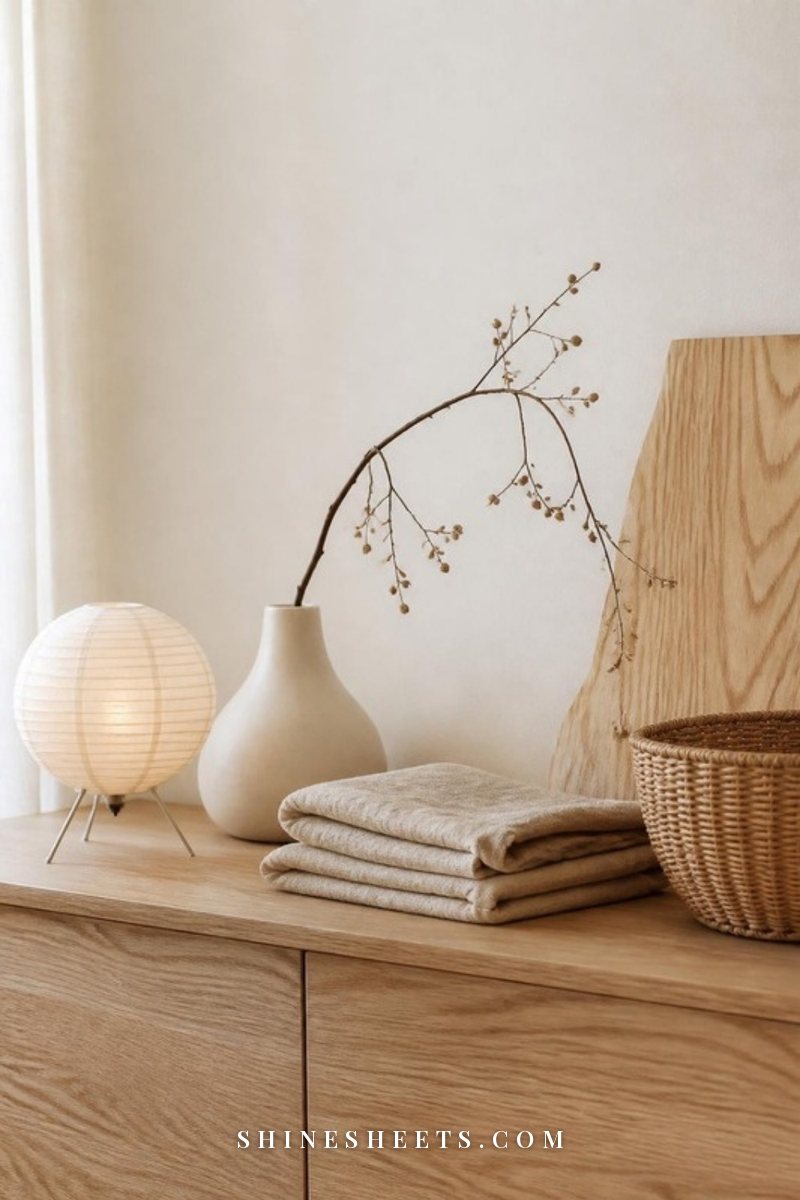
Because the palette is so quiet, texture is what keeps a Japandi room interesting. Aim for at least three of these in every space.
- Light wood. Oak, ash or beech in a matte or oiled finish. Mix two tones (light plus one darker piece) so it feels collected rather than matchy.
- Rattan and cane. Woven textures on chairs, headboards, baskets or cabinet doors add warmth and a handmade feel.
- Linen. Curtains, bedding, cushion covers, table runners. Washed linen softens with every wash and looks better slightly rumpled.
- Paper. Paper lanterns and shoji-style screens diffuse light into a soft glow. A round rice paper pendant shade is one of the easiest ways to signal the style instantly, and it's usually very affordable.
- Stoneware and clay. Matte vases, bowls, mugs and planters with visible texture. Look for handmade or handmade-looking pieces with small irregularities.
- Jute and wool. Natural-fiber rugs ground the room and add warmth underfoot.
One quick safety note on paper lamps: use LED bulbs (they stay cool), check the wattage limit on the fixture, and keep paper shades well away from candles and heaters.
Declutter First: The 3-Pass Japandi Edit
This is the part nobody wants to hear, but it's the real secret. Japandi furniture won't look calm in a cluttered room. Editing first will save you money too, because you'll see what you actually need before buying anything.
I like to do it in three passes, one room at a time, over a weekend or a few evenings:
- Pass one: clear the surfaces (20 minutes). Take everything off tables, counters, shelves and dressers. Only put back what you use weekly or love deeply. Everything else goes into a box for now.
- Pass two: hide the everyday (30 minutes). Chargers, remotes, mail, skincare, snacks. Give each category a closed home: a drawer, a lidded box or a woven basket. A couple of lidded rattan storage baskets are perfect for this, since they hide the mess and add texture at the same time.
- Pass three: let go (one week later). Open the box from pass one. Anything you didn't miss can be donated, sold or gifted. Anything you reached for gets a proper spot.
If you need a little motivation, my post on the subtle benefits of minimalist living explains why owning less often feels so freeing.
Japandi Decor Ideas Room by Room
You don't need to do the whole home at once. Start with the room you spend the most time in, then let the style flow into the others.
Japandi Living Room
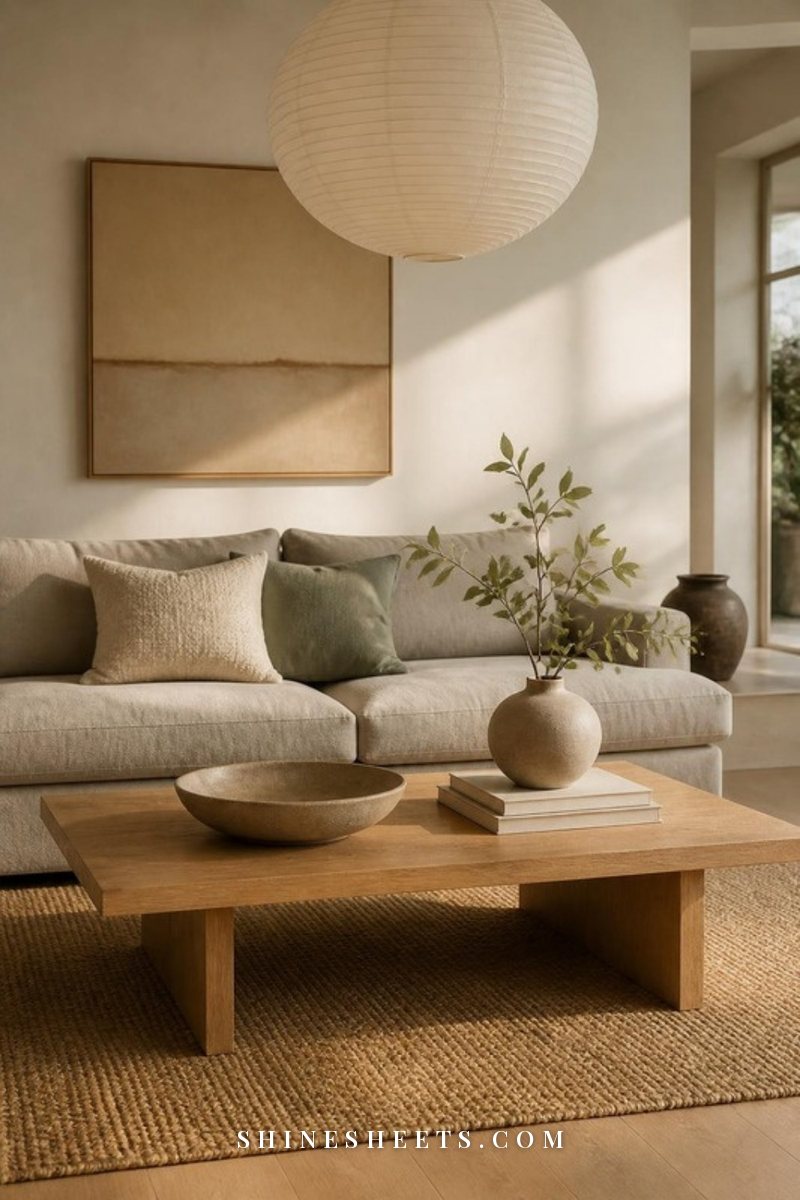
The living room is where Japandi shines, because it's all about creating a place to slow down.
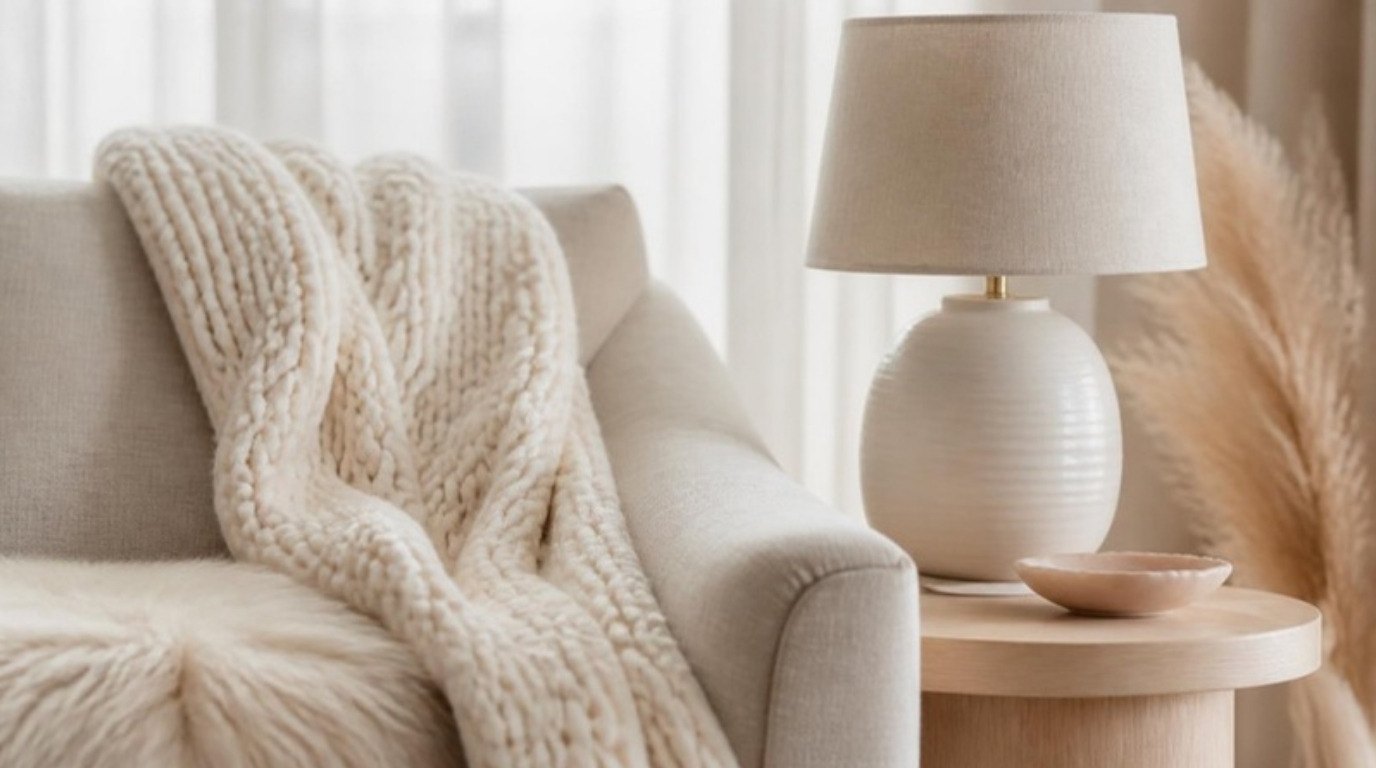
- Anchor with a low sofa in greige, oatmeal or warm white linen. Add two cushions in different textures rather than five matching ones.
- Choose a low wooden coffee table. A light oak low coffee table with simple, solid legs is the heart of the look. Style it with no more than three things: a stoneware bowl, a stack of two books and a small branch in a vase. For more ideas on that, see my guide to coffee table styling.
- Ground it with a natural rug. A beige jute area rug adds texture and warmth. Make sure at least the front legs of your sofa sit on it, or the room will look like it's floating. My rug size and material guide walks you through the measurements.
- Layer soft light. One paper floor lamp, one small table lamp and a candle or two. Avoid bright overhead light in the evening. My post on lighting ideas that make a room feel warm has more easy tricks.
- Keep the walls quiet. One large piece of art with lots of space around it, or a single wooden shelf with two objects, is plenty.
Japandi Bedroom
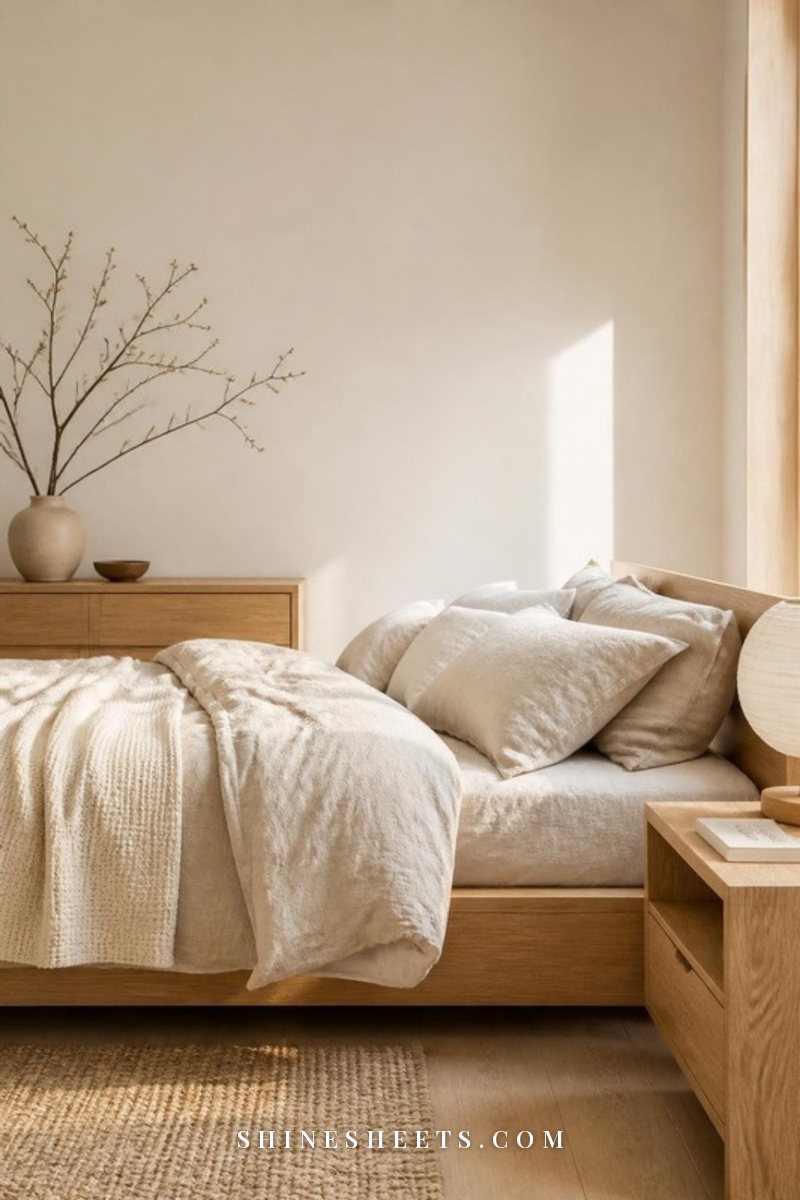
A Japandi bedroom should feel like a quiet retreat. Fewer objects here make a real difference to how restful the room feels at night.
- Go low with the bed. A platform frame in light wood, or even a mattress on a low slatted base, sets the tone instantly.
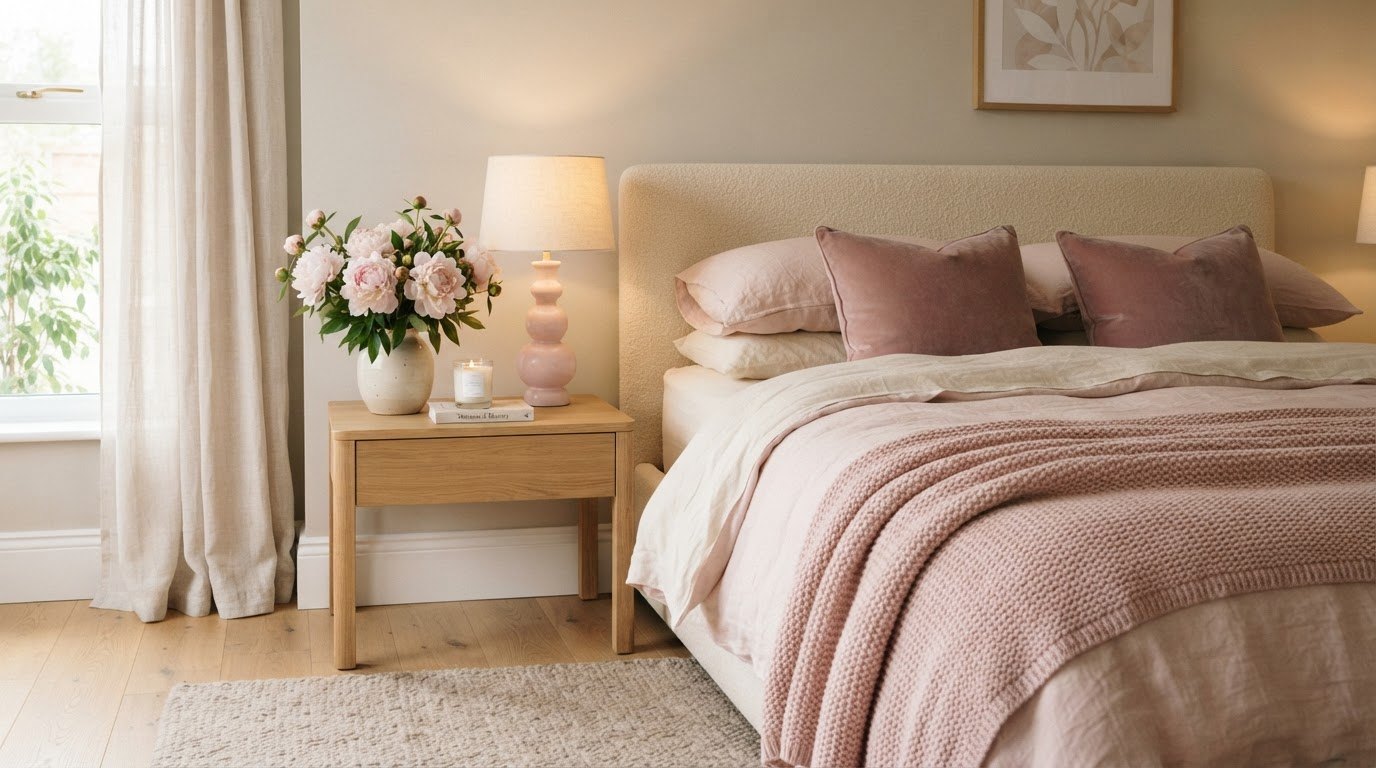
- Dress it in linen. Beige linen bedding in oatmeal or sand looks beautiful unmade, which takes the pressure off making the bed perfectly every morning. Add one textured throw folded at the foot.
- Simplify the nightstands. A lamp, one book and a small dish for jewelry. That's it. Chargers go in a drawer.
- Hide the wardrobe. Closed storage with plain fronts, or a linen curtain over open shelving, keeps visual noise down.
- Add one living thing. A single branch or a small plant on the dresser brings nature in without crowding.
Japandi Kitchen
Kitchens are tricky because they're full of things, so the goal is to keep the counters as clear as possible and let a few beautiful, useful objects stay out.
- Display what you use daily. A wooden cutting board leaning against the backsplash, a stoneware crock with wooden utensils, a ceramic teapot. Everything else goes inside cabinets.
- Swap plastic for natural. Glass jars for dry goods, a linen tea towel, a wooden dish brush. Do it gradually as old things wear out.
- Unify your dishes. Matte stoneware in two or three earthy tones looks calmer on open shelves than a mix of patterns.
- Soften the hardware. If you rent, renter-friendly swaps like matte black or wooden knobs make a big difference for very little money.
Japandi Bathroom
The bathroom is the easiest place to borrow the spa-like side of Japanese design.
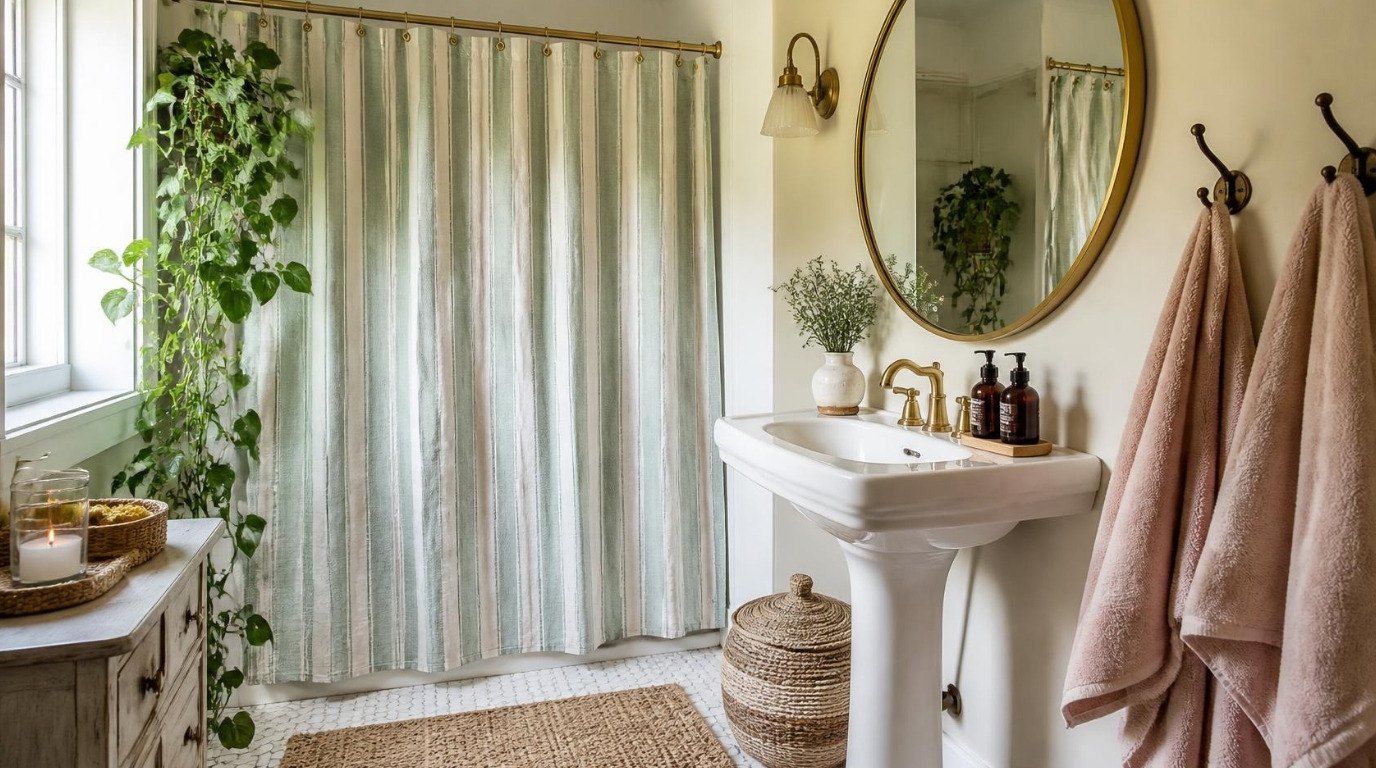
- Decant and hide. Keep only two or three products on the counter, ideally in plain ceramic or glass containers. The rest lives in a drawer or a woven basket under the sink.
- Add wood. A teak or bamboo bath mat, a small wooden stool next to the tub or a wooden tray for soap instantly warms up tile.
- Use linen and waffle cotton. Towels in warm white, sand or soft gray, hung neatly or rolled in a basket.
- Bring in one green thing. A pothos or a few eucalyptus stems near the shower handle the humidity well and smell lovely.
Styling With Branches and Single Stems
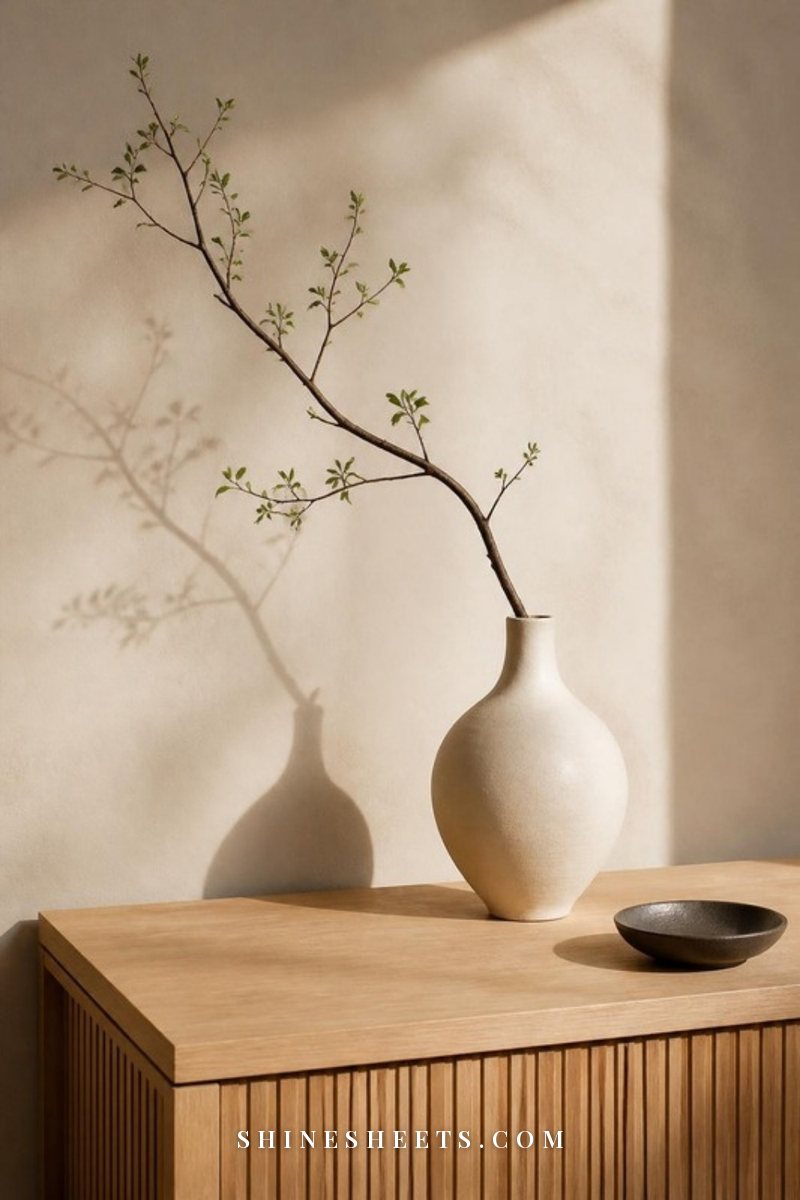
This is my favorite part of Japandi, because it's so simple and so effective. Instead of a full bouquet, you use one or two stems and let their shape do the talking, inspired by the restraint of ikebana (the Japanese art of flower arranging).
Here's an easy formula:
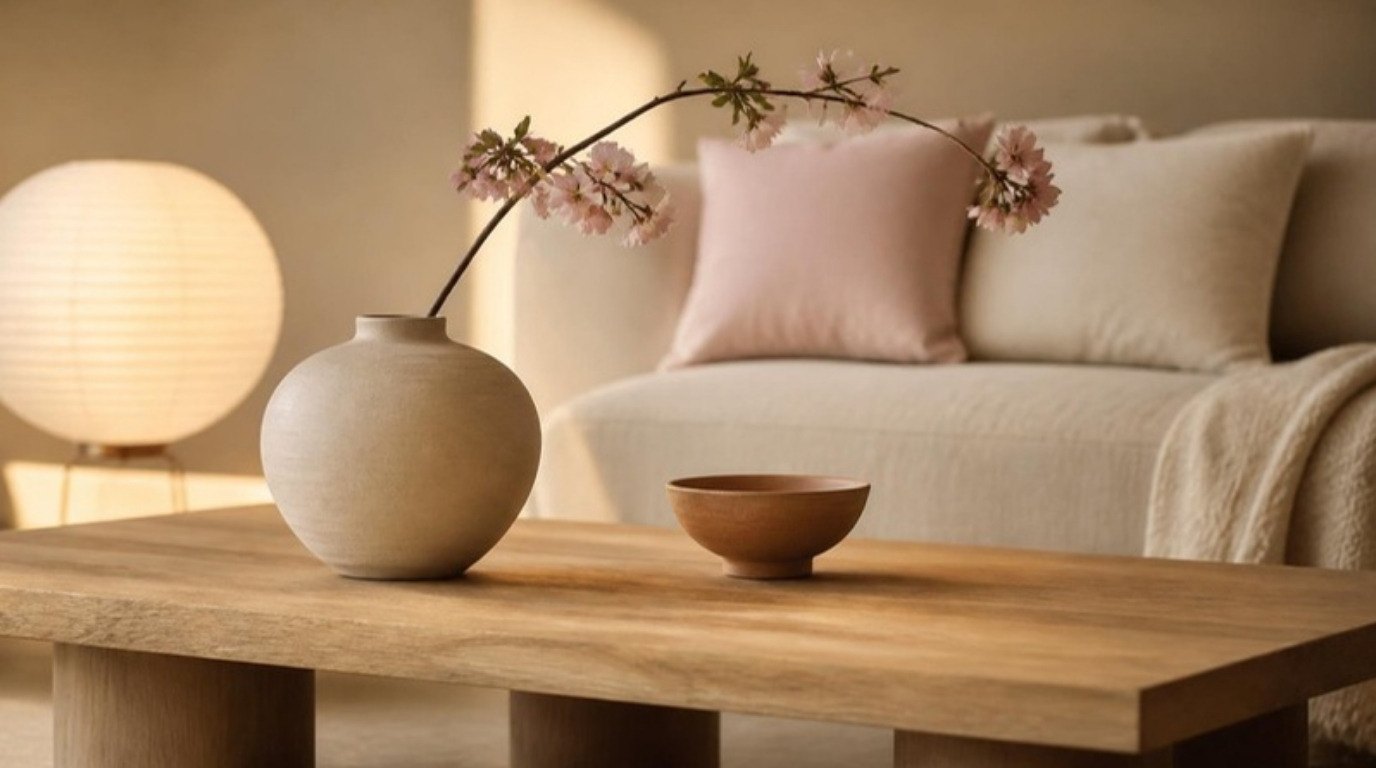
- One vessel. A matte cream stoneware vase with a narrow neck holds stems upright without any tricks. Clay, sand or charcoal tones work just as well.
- One to three stems. A curved branch, a single eucalyptus sprig, a dried grass, a few olive twigs. Odd numbers look more natural.
- Height ratio. Aim for the stem to be about one and a half to two times the height of the vase.
- Empty space around it. Give it at least a hand's width of clear surface on every side so it reads as intentional.
Where to find stems: your own garden, a walk (only pick fallen branches or ask first), the greens section at the grocery store, or a florist's offcuts. Dried branches can last for months. Fresh stems usually need fresh water every two or three days.
One more gentle safety reminder: dried branches and grasses catch fire easily, so keep them well away from candles and fireplaces.
Japandi on a Budget: 8 Smart Swaps
You don't need designer furniture to get this look. These swaps give you most of the feeling for a fraction of the price.
- Paper lantern instead of a designer pendant. A simple round paper shade delivers the same soft, diffused light.
- Linen-look cotton instead of pure linen. For curtains and cushion covers, a cotton-linen blend looks almost the same and costs less.
- Secondhand wood instead of new. Thrift stores and local marketplaces are full of solid wood side tables and stools. A light sanding and a coat of matte oil can transform them.
- Remove instead of add. Clearing a shelf costs nothing and often makes a room look more Japandi than any new purchase.
- Foraged branches instead of fresh flowers. Free, long-lasting and arguably more on-style.
- Lower your existing bed. If your frame allows it, removing risers or using a lower slatted base brings the line down without buying a new bed.
- Paint one dark accent. A charcoal picture frame or a sage-painted stool adds depth for the cost of a sample pot.
- Swap hardware and textiles first. New cushion covers, a jute rug and wooden knobs change the mood faster than big furniture purchases.
4 Japandi Mistakes To Avoid
A few common slip-ups can make the style feel cold or flat. Here's what to watch for:
- Going all white. Without wood, clay and texture, the room loses its warmth. Add at least two wood tones and one darker accent.
- Matching everything. A full furniture set in the same finish looks like a showroom. Mix woods, weaves and finishes for depth.
- Buying "Japandi decor" in bulk. Ten small ceramic objects is clutter, even if each one is lovely. Choose one larger piece instead of several small ones.
- Forgetting comfort. If no one wants to curl up on your sofa, the Scandinavian half is missing. Add a soft throw, a good reading lamp and cushions you actually lean on.
Final Thoughts
Japandi is less a set of rules and more a way of choosing. Fewer things, natural materials, soft light, a little imperfection and enough room to breathe. Start with one clear surface, one paper lamp or one branch in a vase, and you'll feel the difference before you change anything else.
Give yourself time. The calmest homes are rarely built in a weekend. They're edited slowly, with care, into spaces that feel like a quiet welcome every time you walk through the door.