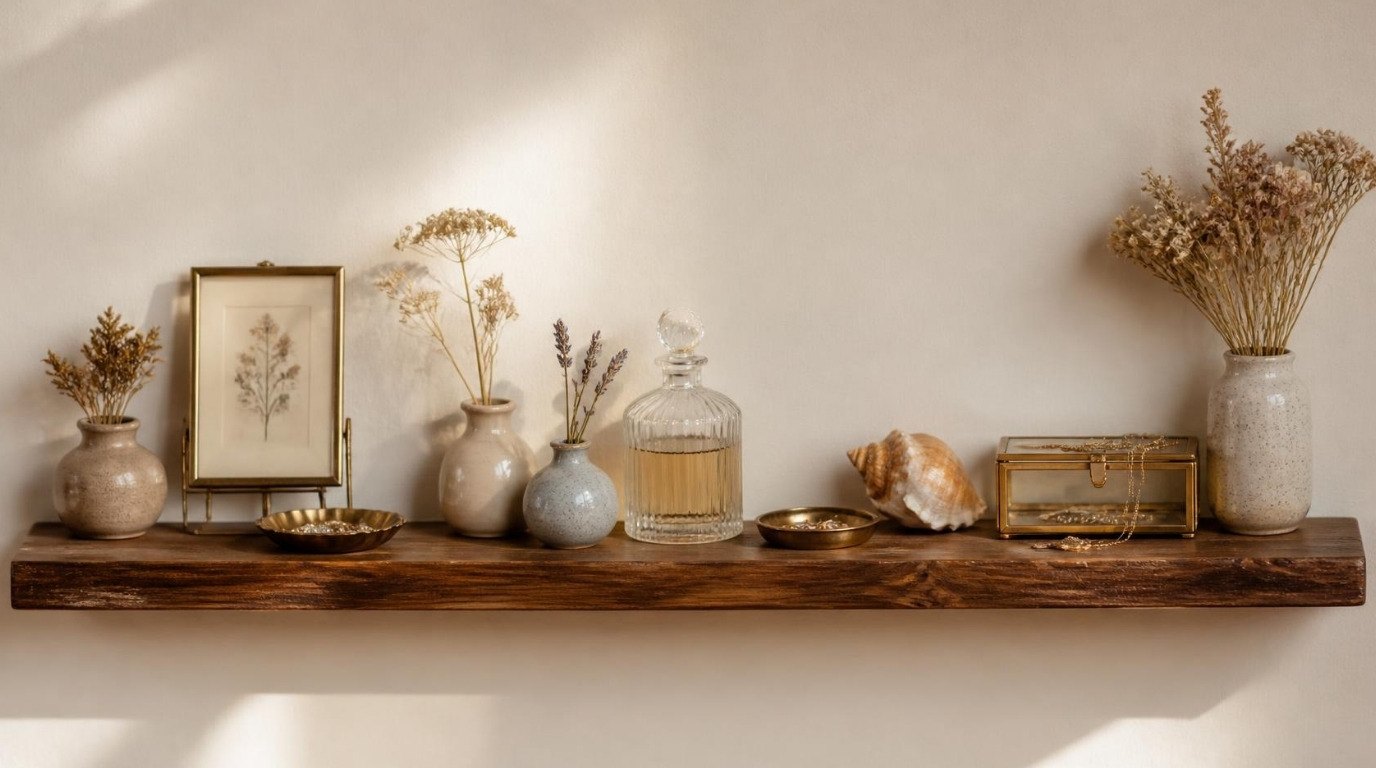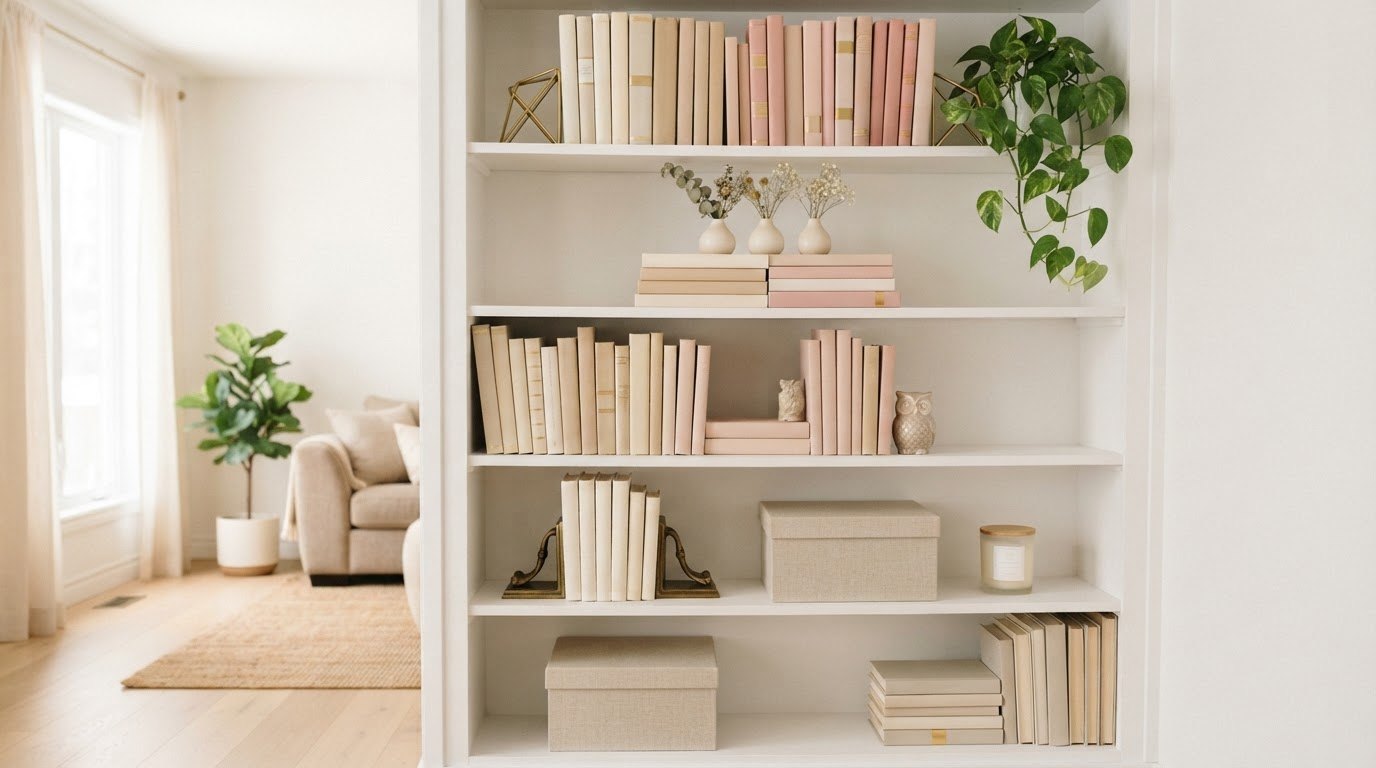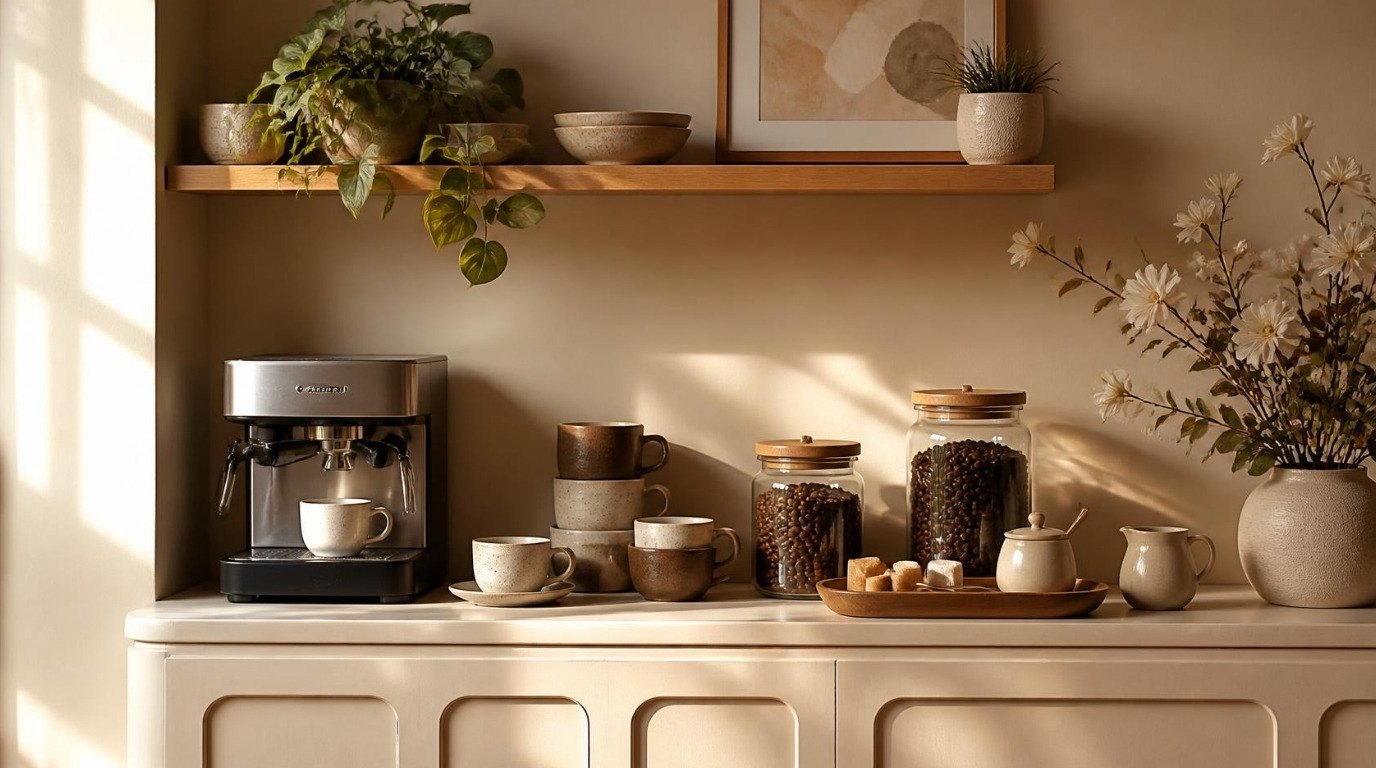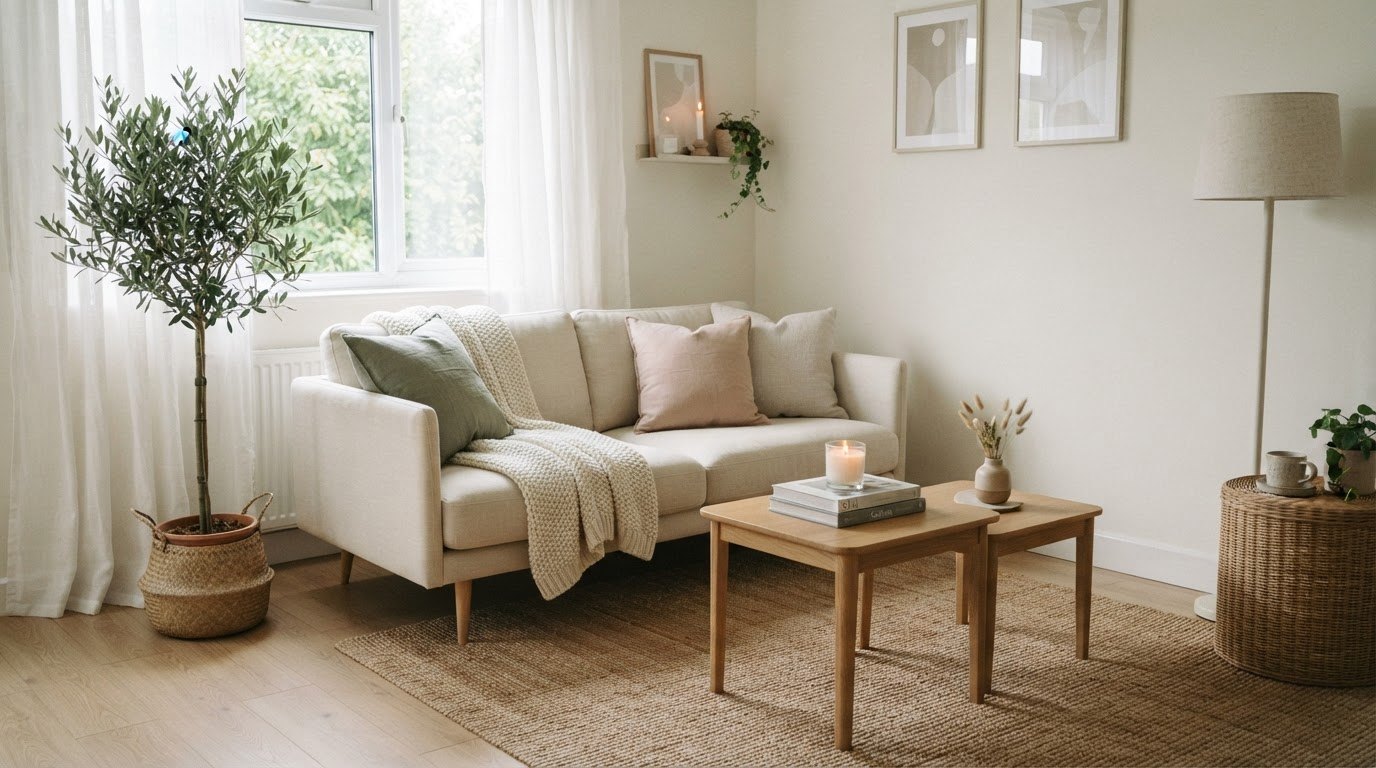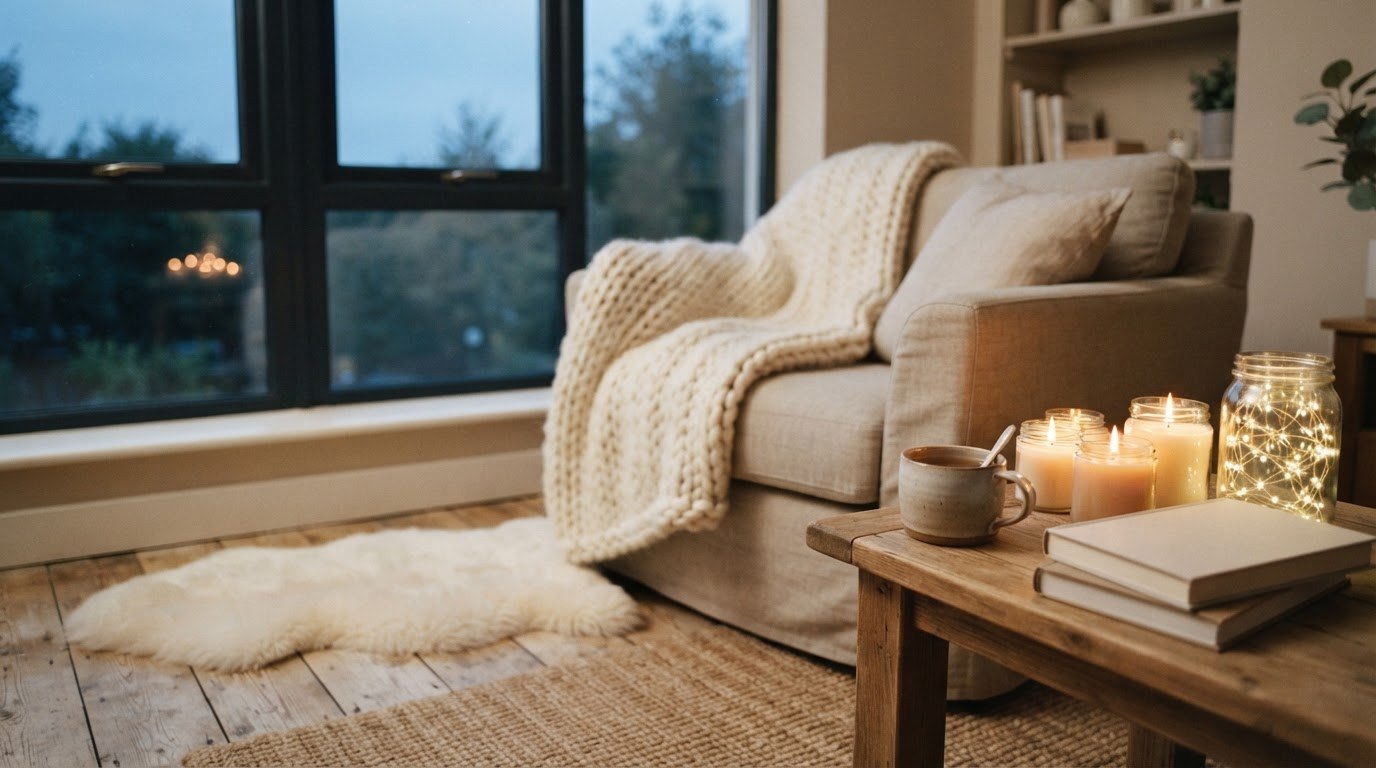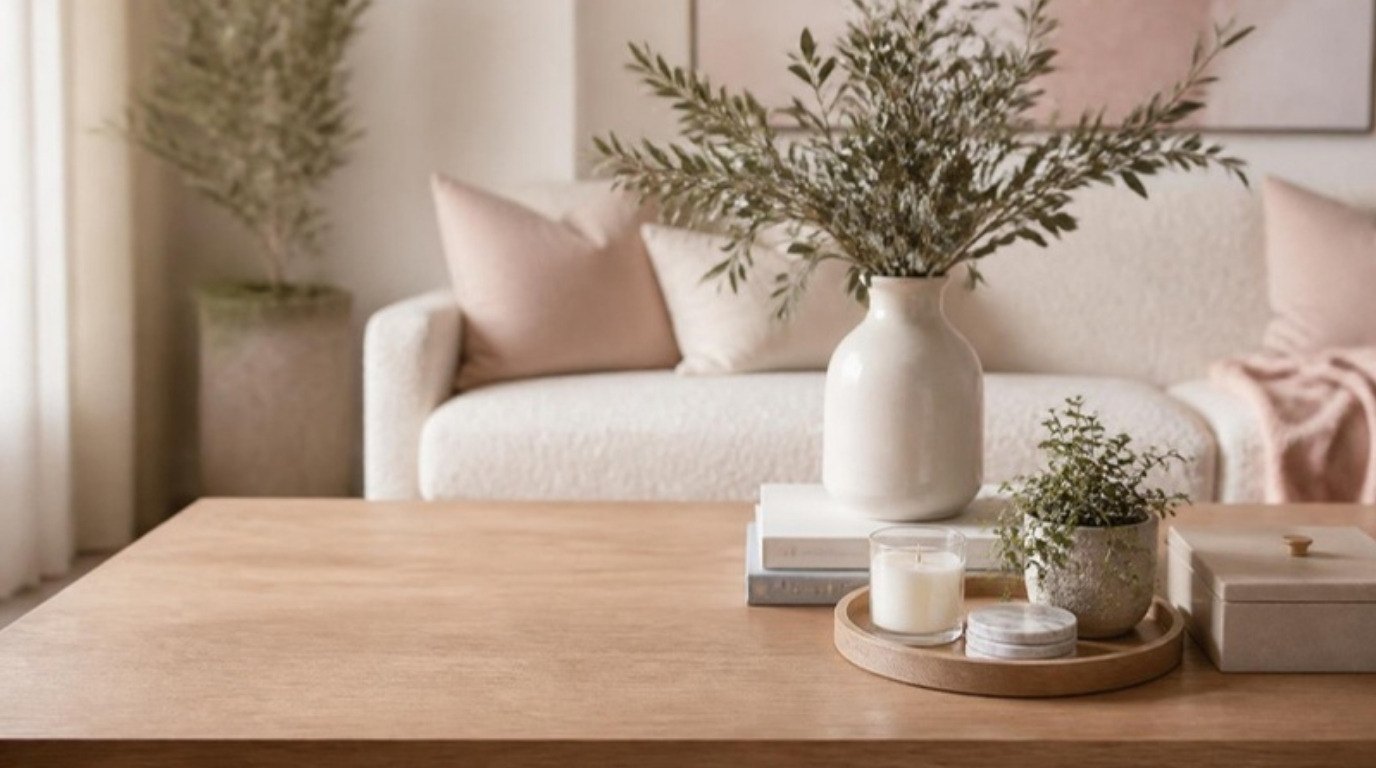
A beautiful coffee table is rarely about owning more pretty things. It's about choosing a few objects that do different jobs – one adds height, one stays low, one is alive, one tells a little story about you – and then giving them room to breathe. Once you see it that way, styling stops feeling like guesswork and starts feeling like a recipe you can repeat with whatever you already have.
This guide is all about coffee table styling that looks effortless but still works for real life. You'll find my 5-object formula, the one-third rule that keeps everything from looking crowded, a table-shape guide for round, rectangular, oval and nesting tables, how to style a table you actually put your mug and feet on, 12 styled looks by vibe, and how to swap things for the seasons without the clutter creeping back.
Clear the whole surface first (yes, everything, even the remote). Starting from an empty table is the single fastest way to see what it really needs.
The 5-Object Coffee Table Formula
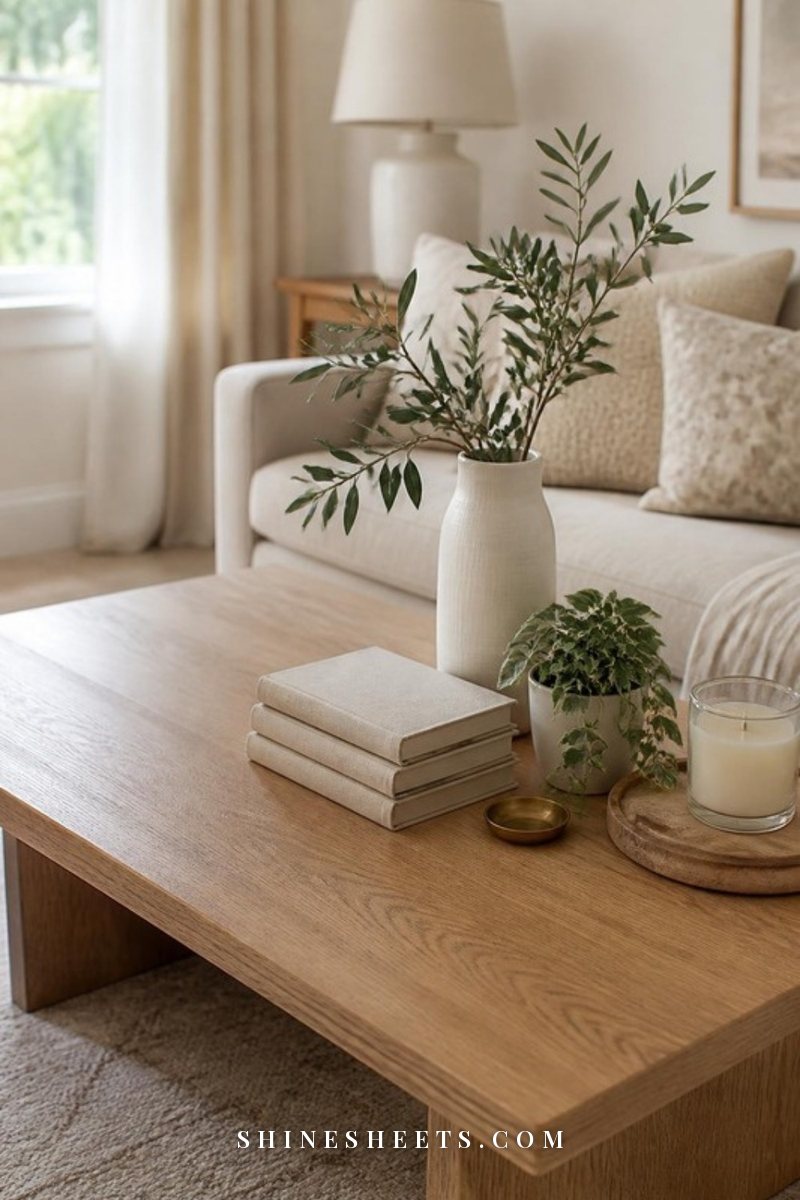
Almost every coffee table that makes you stop and look follows the same quiet structure. It has one element that goes up, one that lies flat, something living, something personal and something that pulls it all together. You don't need all five to be expensive. You just need all five to be there.
Here's the formula card. Screenshot it and keep it on your phone for the next time you rearrange.
- 1. Something tall (vertical). A vase with branches, a candlestick or a slim sculpture. Aim for roughly 12–18 inches tall so it draws the eye up without blocking the TV or the person across from you.
- 2. Something low (horizontal). A stack of two to four books, laid flat. This is your base layer, and it can double as a little pedestal for a smaller object.
- 3. Something living. Fresh stems, a small plant, a bowl of greenery or even a few clipped branches from outside. It's the element that keeps a styled table from feeling like a showroom.
- 4. Something personal. A seashell from a trip, your grandmother's tiny dish, a pretty matchbox, a favorite paperback. One object with a story beats five objects with none.
- 5. Something that groups (the tray). A tray, a shallow bowl or a large plate that corrals the small pieces so they read as one calm group instead of scattered bits.
If I could only buy one piece for a coffee table, it would be the tray. A round natural wooden tray works on almost any table shape and instantly makes a candle, coasters and one small object look intentional rather than forgotten. Look for one with a low lip (an inch or so) so things don't slide off, and a size that covers no more than a third of your tabletop.
For the tall piece, a cream ceramic vase is the easiest place to start. Choose a matte or softly ribbed finish over high gloss for a calmer look, and a narrow neck so a few stems stand up on their own. It looks finished even when it's empty, which matters more than people think (fresh flowers don't always make it into the weekly budget).
Books are the backbone of the low layer. A couple of large coffee table books on art, travel, interiors or fashion give you height variation and something to flip through while your tea cools. Pick covers in two or three colors that already live in your room, and stack the biggest on the bottom.
The One-Third Rule: Leave Space on Purpose
This is the step most people skip, and it's the reason so many coffee tables feel busy even when every object on them is lovely. Empty space isn't wasted space. It's what lets each piece be seen.
The rule is simple: leave about one-third of the surface completely empty. On a rectangular table, that often means styling two zones (say, a tray on one end and a book stack with a vase on the other) and leaving the middle clear. On a round table, group everything slightly off-center and leave a generous crescent of open surface.
A few small habits make this easier:
- Style in odd numbers – groups of three feel more relaxed than pairs.
- Keep the tallest object toward the back or one side, never dead center.
- Step back to the doorway and squint. If your eyes don't know where to land, remove one thing.
- Every time you add an object, ask what it's doing: height, texture, life, story or grouping. If it's none of those, it can live somewhere else.
If your living room is on the smaller side, the empty third matters even more, because the coffee table is usually the visual center of the room. My guide to small living room ideas has more tricks for making a compact space feel open.
Coffee Table Styling by Shape
The formula stays the same, but the arrangement shifts with the shape of your table. A layout that looks perfect on a long rectangle can look awkward on a round top, and nesting tables need a completely different approach. Here's a quick guide.
| Table shape | Best layout | Tray shape | Watch out for |
|---|---|---|---|
| Round | One cluster slightly off-center, objects in a loose triangle | Round or oval | Lining things up in a row – it fights the curve |
| Rectangular | Two or three zones along the length, middle left open | Rectangular or round | One long line of objects end to end |
| Square | Tray in the center with one corner stack, or four-quadrant grouping | Square or round | Overfilling – square tables look crowded fast |
| Oval | One main group near the center, one small accent toward one end | Oval or round | Sharp, boxy pieces that clash with soft edges |
| Nesting tables | Taller table gets the vase and books; lower table gets one tray or one object | Small round | Styling both tables fully – the lower one should stay light |
| Ottoman or upholstered | Everything on a sturdy, flat tray so nothing tips | Large rectangular | Candles or vases placed straight on fabric |
A quick note on height: keep anything taller than about 18 inches off a coffee table entirely. It blocks sightlines across the room and makes conversation feel a little like talking through a hedge.
Styling a Coffee Table You Actually Use
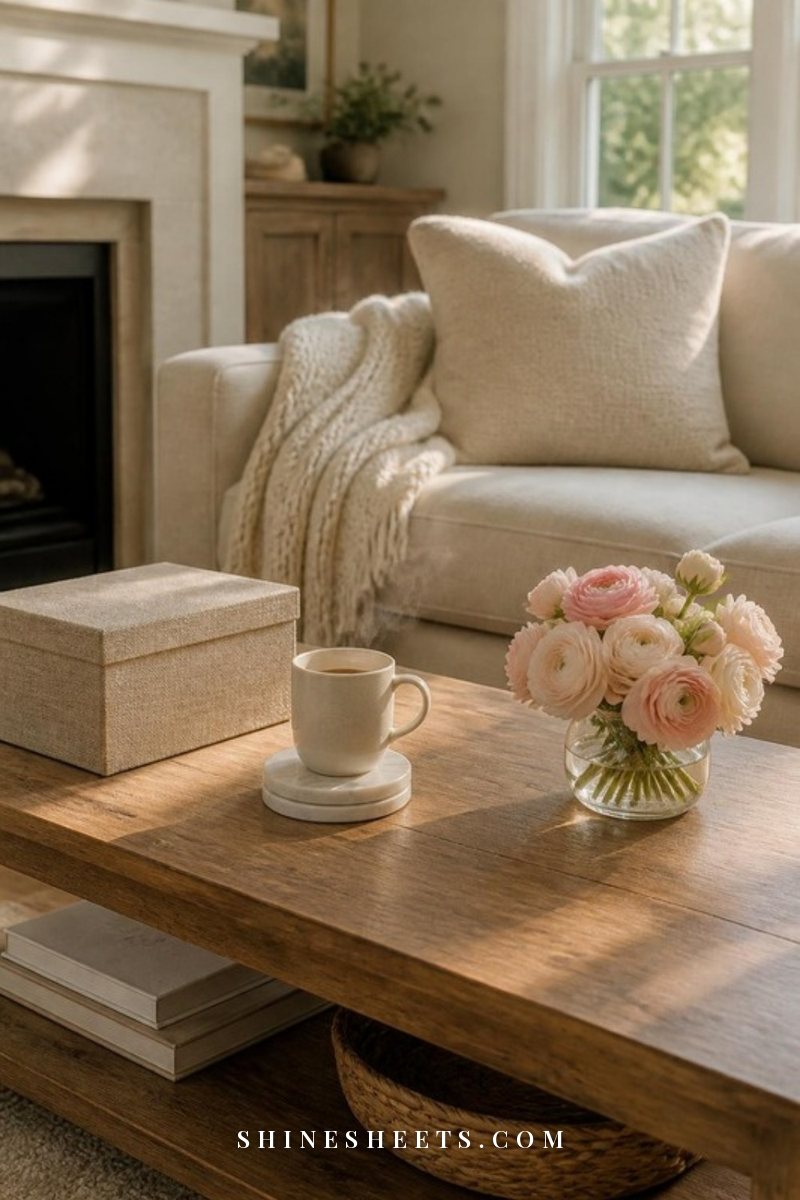
A coffee table isn't a museum shelf. It holds mugs, remotes, chargers, a laptop on Sunday mornings and sometimes your feet. The goal is a table that looks lovely and still lets you live. These are the tweaks that make that possible.
Hide the Everyday Stuff in a Box
Remotes, chargers, lip balm, all the little odds and ends – they all need a home that isn't the tabletop. A decorative box with a lid is the most graceful solution I know. Choose one in linen, wood or woven texture, big enough to fit your remote lying flat, and put it on the book stack or inside the tray. It reads as decor, and it's a two-second reset every evening.
Make Coasters Part of the Styling
If coasters are scattered around, they look like clutter. Stacked, they look like a choice. A set of stone coasters sitting neatly in the tray protects the wood and adds a cool, smooth texture against books and ceramics. Look for ones with a cork or felt backing so they don't scratch the surface.
Leave a Landing Zone
Choose one open spot for whatever comes and goes – a mug, a book you're halfway through, a plate on movie night. That's part of your empty third, so it does double duty. When the landing zone is free, the table looks styled. When it's full, it looks lived in. Both are fine.
Keep It Easy To Clear
Group everything on the tray and the book stack so you can lift two things and have a bare surface for a board game or a laptop. If clearing your table takes more than thirty seconds, there's probably one object too many.
12 Coffee Table Styling Ideas by Vibe
Each of these looks uses the same 5-object formula – the vibe just changes which objects you pick. Mix and match pieces between them, too. Most homes are a little bit of two or three.
1. Soft Neutral
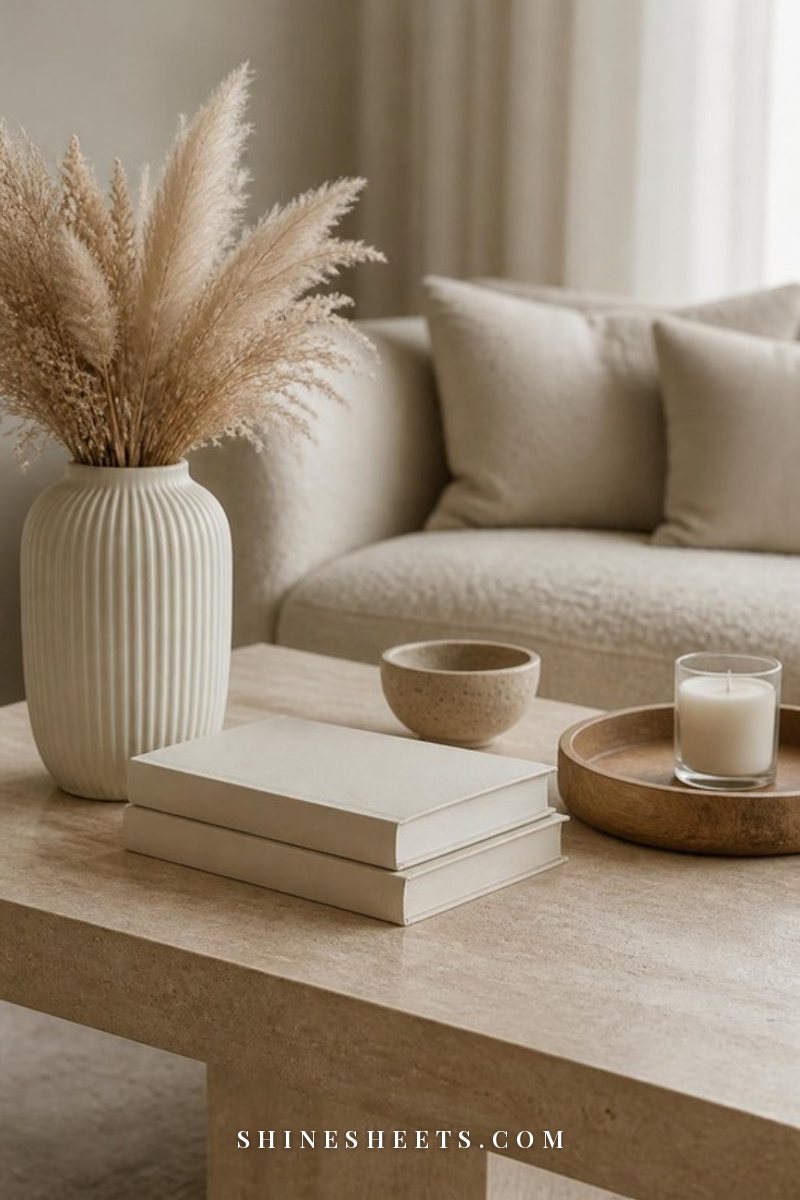
Think cream, ivory, oatmeal and warm wood. Pair a ribbed ivory vase of dried pampas with two cream books, a small stone bowl and a natural wood tray holding a candle. Because the colors are so close, texture does all the work: matte ceramic, rough stone, smooth wood, nubby linen.
If you love this palette but worry it might feel flat, my post on neutral home decor that never feels bland walks through layering tones so the room keeps its warmth.
2. Warm and Inviting
This is the table you want to sit around with a blanket. Use a low wooden tray, a chunky candle, a small stack of well-loved books, a bowl of pinecones or dried oranges and one sprig of eucalyptus. Add a soft knit throw draped over the sofa arm right beside it, and the whole corner feels like an invitation.
3. Clean Minimalist
Three objects, no more: one sculptural vase, one book, one small bowl. That's it. Minimalism works when each object has a strong shape, so pick pieces with clear silhouettes and leave at least half the table empty. Here, the empty space is the decor.
4. Blush and Romantic
Soft pink, cream and a little gold. Try a pale pink bud vase with a single garden rose, a stack of books with blush or white covers, a small gold dish for rings and a pretty glass candle. Keep the rest of the palette quiet so the pink reads as soft, not sugary.
5. Old Hollywood Glam
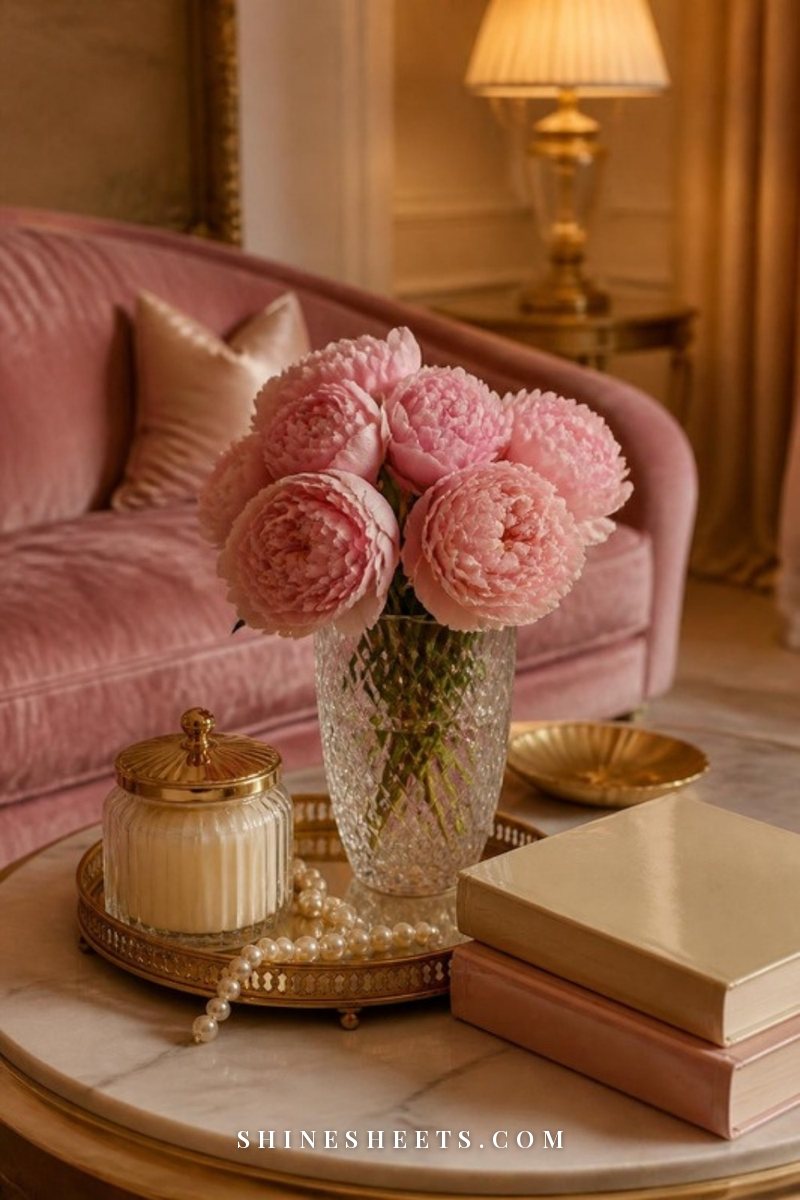
This is the one I'd choose for a living room that wants a little drama. Picture a gold-rimmed tray holding a ribbed glass candle and a strand of pearls, a crystal vase of blush peonies and two glossy books in cream and blush. The secret is restraint – glam looks expensive when it's edited, and costume-y when it's crowded.
6. Organic Modern
Raw wood, travertine, linen and greenery. A sculptural branch in a stoneware jug, a flat stack of design books, a hand-thrown bowl and a small plant in a terracotta pot. Lean into imperfect, handmade shapes; a little wobble in a ceramic piece is exactly what makes it feel human.
7. Coastal Calm
Pale blues, sandy beige and white. Use a woven tray, a white vase with a few stems of dried grass, a bowl of shells you actually collected, and a book about the sea or travel. Skip anything too literal (anchors, "beach" signs) and let texture and color suggest the mood.
8. Bookish and Lived-In
For the reader who always has three books going. Make two stacks of different heights, set a small brass bookend or a candle on one, and tuck a ribbon bookmark into the top book so it looks mid-read. A small plant and a coaster for your tea finish it. If your shelves are also overflowing, my guide to bookshelf styling helps the whole room feel curated.
9. Vintage Collected
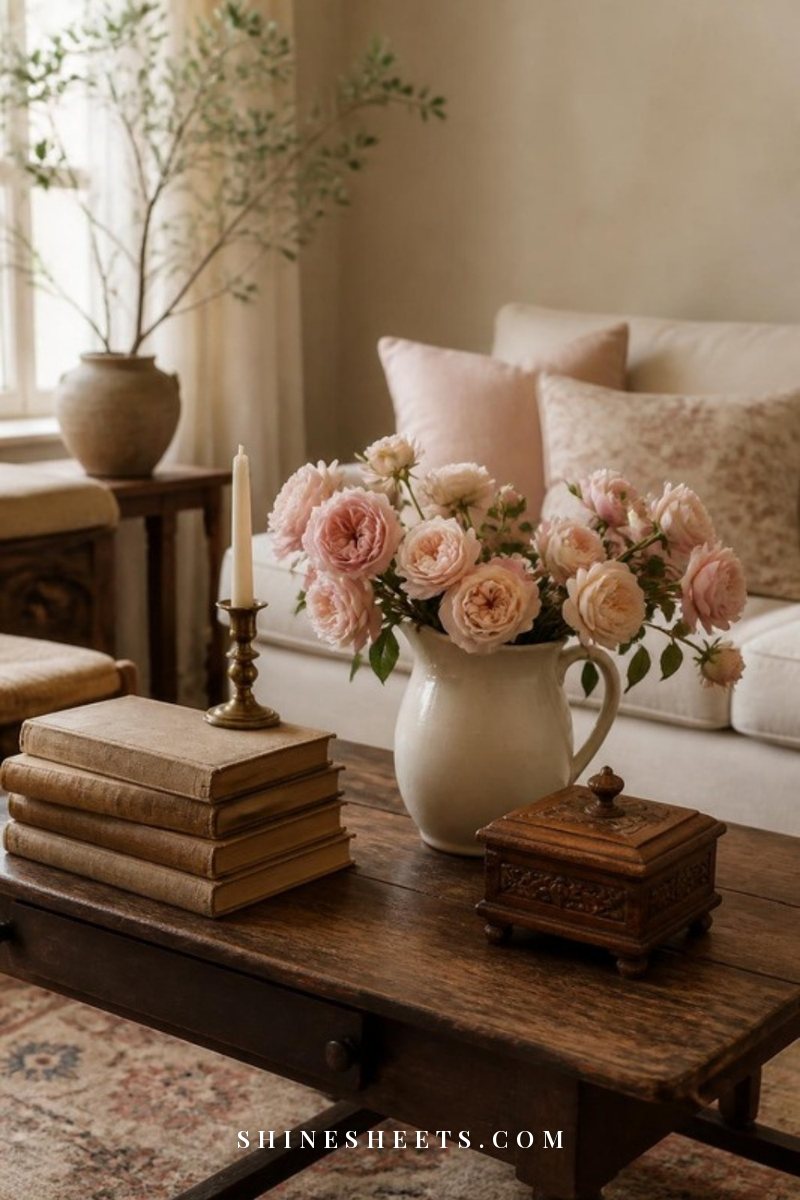
Faded linen-bound books, a brass candlestick with an ivory taper, a small ironstone pitcher of loose garden roses and an old wooden box. Thrift stores and flea markets are your best friends here. Mix only two or three eras so it feels collected over time, not like an antique shop exploded.
10. Parisian Apartment
A marble tray, a stack of fashion and art books, a tall glass vase with a few loose stems (no tight bouquets) and a small dish of matches beside a taper candle. The look is a little undone on purpose: one book left open, a flower slightly bent. Effortless, but carefully chosen.
11. Garden Fresh
Let the living element take the lead. A wide low bowl of floating blossoms, a potted herb or small fern, a garden or botany book and a simple wooden tray. This look changes with whatever is in season, which makes it the easiest one to keep feeling new.
12. Evening Candlelight
Built around warm light for the evening. Group three candles of different heights on a round tray, add a small vase of greenery for contrast and keep one book nearby for tea and reading time. A candle in a glass jar is the safest centerpiece for this look, because the flame sits inside the glass instead of standing on its own. For more ideas, my post on how to style candles at home has plenty.
A gentle safety note: never leave candles burning unattended, keep them at least a foot away from books, dried flowers and throws, and trim wicks to about a quarter inch before each burn. Dried pampas and an open flame should never share a tray.
Seasonal Swaps Without the Clutter
Seasonal styling is where most coffee tables slowly turn into storage. The fix is to keep your base and swap only one or two pieces. Your tray, book stack and decorative box stay all year. Only the living element and the personal touch change.
- Spring: tulips or blossoming branches in your tall vase, a lighter book on top, a pastel candle.
- Summer: a bowl of shells or lemons, a few stems of greenery, everything a little more spare.
- Autumn: dried wheat or eucalyptus, a small pumpkin or a few acorns in a dish, a warmer amber candle.
- Winter: evergreen clippings, a bowl of pinecones, a plaid or velvet-covered book and a few more candles.
A simple rule keeps it in check: one seasonal piece in, one everyday piece out. When the new thing arrives, something else goes into a cupboard until next year.
If you'd like the rest of the room to follow the seasons too, my post on aesthetic room decor ideas on a budget has easy swaps for walls, textiles and lighting.
5 Coffee Table Styling Mistakes To Avoid
- Everything at the same height. A table of small objects looks like a flat jumble. Always add one tall and one low piece.
- Centering one big thing. A single giant arrangement in the middle feels stiff. Shift it off-center and balance it with a smaller group.
- Too many tiny objects. Little things are lovely, but without a tray they look like clutter. Corral them or edit them.
- Ignoring the room's palette. Pull two or three colors from your rug, pillows or art so the table belongs to the room.
- Styling for photos, not life. If you can't put your mug down, it won't stay styled for more than a day.
Mixing materials is one of the easiest ways to dodge most of these. My guide to mixing patterns and textures explains how to combine wood, stone, glass and fabric so nothing feels matchy.
Final Thoughts
Your coffee table doesn't need to look like a magazine spread to feel beautiful. Give it something tall, something low, something living, something that's yours and a tray to hold it together, then leave a little space for real life to happen. That's the whole secret.
Start with what you already own, swap one piece when the season changes, and let the table grow with you. The best styled tables always look a little like the person who lives there.