A long to-do list can feel productive while quietly doing the opposite. Twenty items, no clear starting point, and by afternoon you've answered emails, tidied a drawer and somehow avoided the one task that actually mattered. More list rarely fixes that. A shorter, ranked list usually does.
That's the whole spirit of the Ivy Lee method, one of the simplest productivity systems ever written down. Six tasks, in order of importance, chosen the night before. In this guide, you'll find the short story behind it, the 5 rules step by step, why it works so well, how to choose the right six, what to do with meetings, emails and everything that doesn't make the cut, plus a weekly tracking table and gentle versions for busy days.
No hustle, no 5 a.m. alarms. Just a calmer way to know what comes first.
What Is the Ivy Lee Method?

The Ivy Lee method is a daily planning routine built on one rule: at the end of each day, you write down the six most important things to do tomorrow, rank them, and work through them one at a time, in order. That's it. There's no app, no color system and no complicated setup.
What makes it different from a normal to-do list is the combination of three limits. You plan ahead (the night before, not in the morning rush), you cap the list (six tasks, never more) and you follow the order (no skipping to the easy ones). Each limit is small. Together they take a surprising amount of stress out of your day.
The Short Story Behind the Method
The story goes that in the early 1900s, Charles M. Schwab, the head of Bethlehem Steel, one of the biggest steel companies in America at the time, wanted his team to get more of the right things done. He met with Ivy Lee, a well-known consultant of the era, who asked for fifteen minutes with each executive.
In those few minutes, Lee explained the six-task routine. When Schwab asked about his fee, Lee reportedly told him to try it for three months and then pay whatever he thought it was worth. According to the legend, Schwab later sent him a check for $25,000, a huge sum back then.
Whether every detail is exactly true is hard to say (good productivity stories tend to grow over time). But the method itself has lasted for more than a century, and that says something on its own.
The Ivy Lee Method in 5 Simple Steps

Here are the rules, almost exactly as Lee described them. Read them once, then try them for a week before you change anything.
1. Write Down 6 Tasks for Tomorrow at the End of Each Day
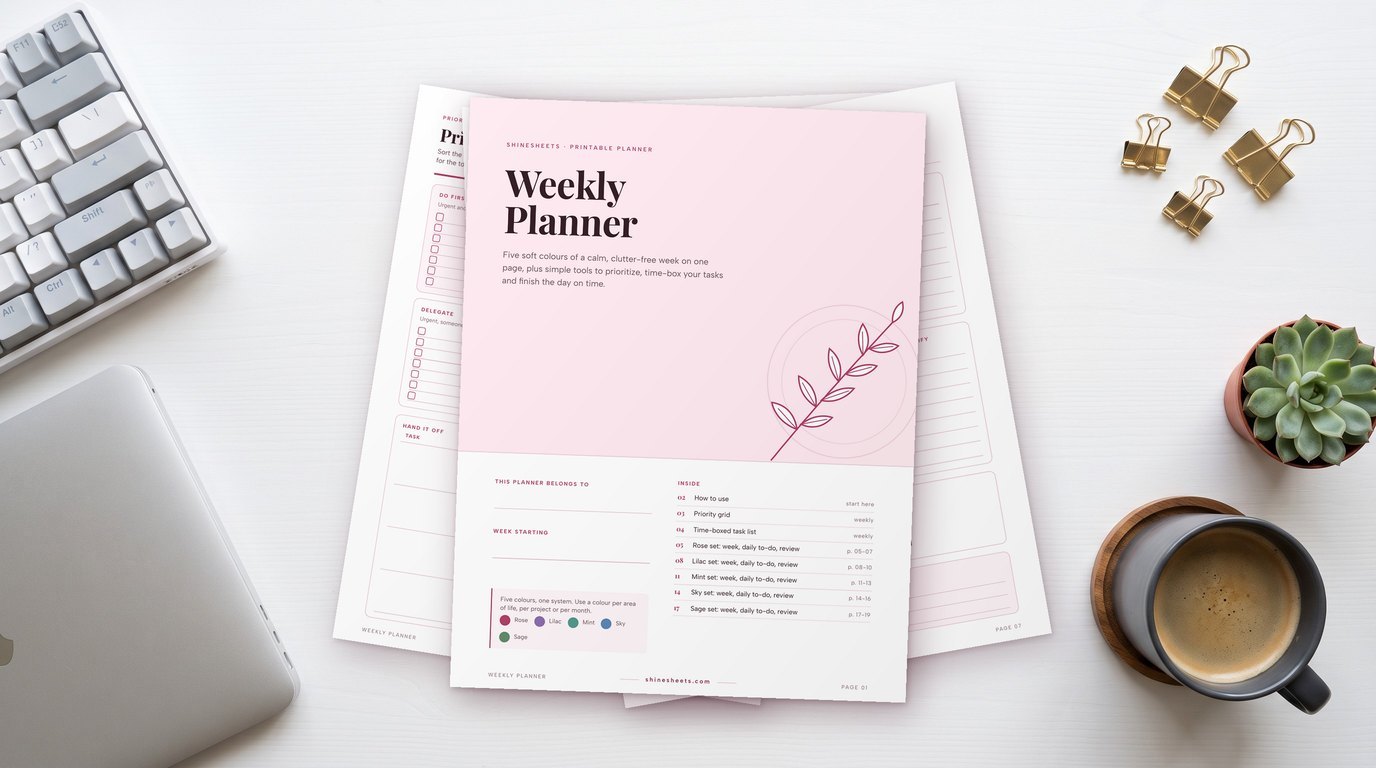
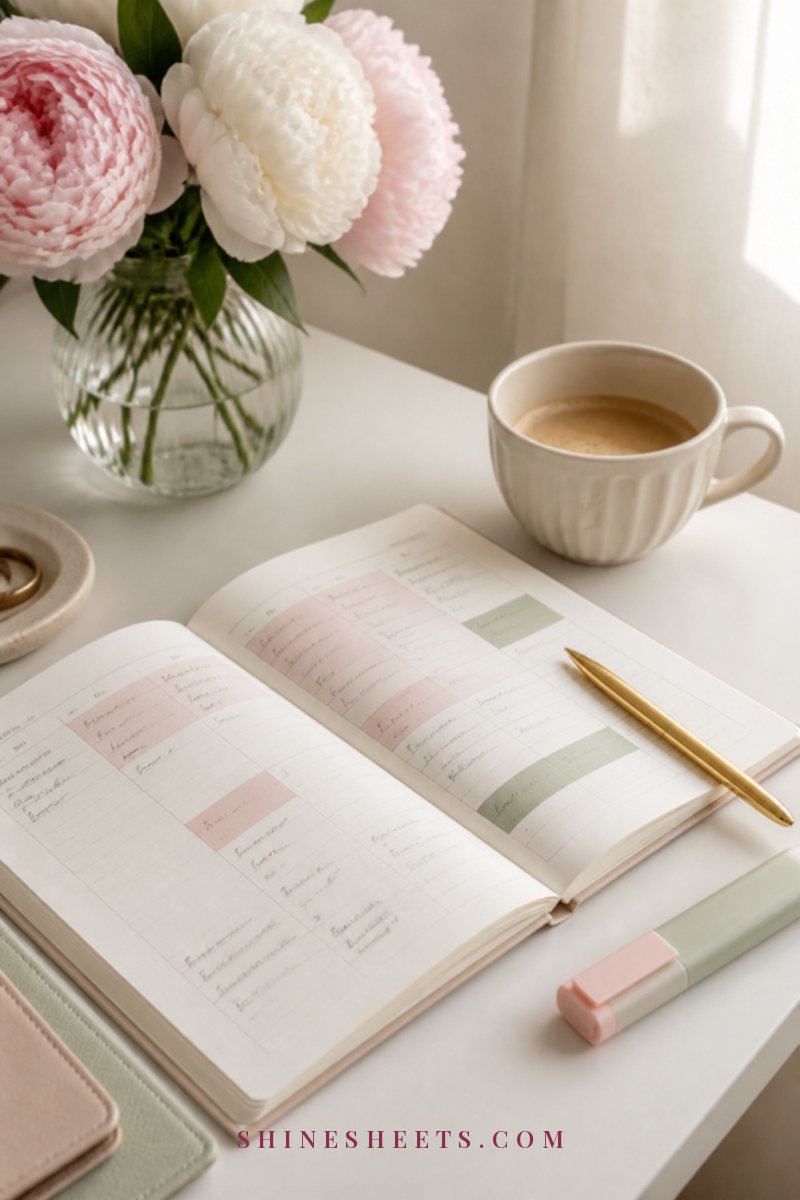
Before you finish work (or before bed, if your "work" is your whole life), take five to ten minutes and write down the six most important tasks for tomorrow. Paper works beautifully here. A cream undated daily planner gives each day its own page without wasting sheets on days you skip.
Six is a ceiling, not a target. If you only have four truly important tasks, write four.
2. Rank Them by True Importance
Now number them from 1 to 6. Number one is the task that would make the biggest difference if it were the only thing you finished tomorrow. Not the most urgent, not the loudest, the most important.
A quick question to rank with: "If I could only do one of these, which one would I be glad I did?" Ask it again for the remaining five until the order is clear. It usually takes less than two minutes.
3. Start on Number One and Work Until It's Done
Tomorrow, begin with task one. Don't warm up with the little ones. Work on it until it's finished (or until you've done everything you can for now, like waiting for someone's reply), then move on.
This is the hardest rule and the most powerful one. Your best energy goes to your most important work, before the day gets a chance to scatter you.
4. Move Down the List in Order
When task one is done, start task two. Then three. You don't jump to number five because it looks more fun. The order was decided by calm, rested, last-night you, and that version of you had a clearer view.
5. Carry Unfinished Tasks to the Next List
At the end of the day, whatever is left moves to tomorrow's new list of six, where you rank everything again. Unfinished tasks are not failures. They're simply next.
A small tip: if the same task gets carried over three days in a row, it's usually either too big (see the section on what counts as one task) or not really important. Break it down or let it go.
Why the Ivy Lee Method Works
It looks almost too simple, but each piece solves a real problem:
- The decision is made the night before. Mornings are full of tiny choices, and every one uses a bit of focus. Waking up to a ready list means you skip the "where do I even start" moment and go straight to task one.
- You single-task. Switching between jobs has a hidden cost: your attention needs time to settle every time you change direction. Working on one thing at a time is calmer and usually faster.
- Six is a hard limit. A short list forces you to choose. Choosing is uncomfortable for a minute, but it's far less stressful than carrying twenty items in your head all day.
- It ends the day with closure. Writing tomorrow's list is a gentle way to put work down. Many people find it helps them switch off in the evening, because the plan is safely on paper.
If starting is the part you struggle with most, my guide on how to stop procrastinating has small tricks that pair nicely with that number one task.
How To Pick the Right Six

The list only works if the right things are on it. Here's a simple way to choose:
- Empty your head first. Spend three minutes writing down everything on your mind. A quick brain dump before you choose makes it far easier to see what matters.
- Circle what moves something forward. Look for tasks connected to a goal, a deadline, your health or the people you love.
- Check your week. If you've already planned your week, glance at it so tomorrow's six support the bigger picture. My 20-minute weekly planning routine fits right alongside this.
- Include one thing for you. A walk, a doctor's appointment you keep postponing, an hour of your hobby. Your list is allowed to care about you too.
- Pick six or fewer and rank them. Stop there.
What Counts as One Task
This is where most people quietly sabotage the method. "Plan the wedding" or "sort out finances" are not tasks. They're projects, and putting them on the list as number one guarantees you'll feel stuck.
A good task is something you could finish in one sitting, usually between 20 minutes and 2 hours, and it starts with a clear verb. Here's how to break a big project down into first steps:
- Project: "Sort out finances" → Task: "Save last month's bank statement and list all subscriptions."
- Project: "Redo the bedroom" → Task: "Measure the window and pick three curtain options."
- Project: "Find a new job" → Task: "Update the top section of my résumé."
The formula is simple: verb + specific object + finish line. If you can't picture what "done" looks like, the task is still too big.
Handling Meetings, Emails and Interruptions
Real days aren't empty pages, so here's how the method fits around them:
- Meetings: fixed appointments aren't part of your six. Write them in the margin or keep them on your calendar, and treat the six as what you'll do in the time between. On a meeting-heavy day, plan three tasks instead of six.
- Emails and messages: unless a specific email is genuinely important ("Reply to the landlord about the lease"), don't list "check email." Instead, give inbox time two or three set windows a day. Grouping similar small jobs like this is the idea behind task batching, and it protects your list from the constant ping.
- Interruptions: when something unexpected pops up, ask, "Is this more important than my current task?" If yes, handle it, then go back to where you were. If no, jot it on a separate note for tomorrow's planning.
Keeping your notepad, pen and highlighters in a blush desk tray sounds like a small thing, but having one calm spot where your list always lives makes the habit easier to keep.
What To Do With Everything That Doesn't Make the List
The six aren't the only things you'll do in a day. You'll still make lunch, answer quick messages and water the plants. The method simply makes sure the important work doesn't get buried under the small stuff.
For everything else, try this:
- Keep a "later" list. One running page for ideas and tasks that aren't for tomorrow. Review it when you write your six.
- Do two-minute jobs in a batch. Tiny tasks can go into one short slot in the afternoon, after your top tasks are done.
- Let some things go. If something sits on the later list for a month and nothing bad happens, it may not need doing at all. Crossing it off without doing it is allowed.
A pastel pink notepad kept just for the "later" list keeps it separate from your six, so tomorrow's page stays short and clear.
A 10-Minute Evening Routine for Writing Your Six
The method lives or dies on the evening list, so it helps to turn it into a small ritual rather than one more chore. Here's a calm version that takes about ten minutes:
- Minutes 1 to 2: Close the day. Look at today's list and tick off what's done. Notice task one. If you finished it, that was a good day, whatever else happened.
- Minutes 3 to 5: Gather. Copy any unfinished tasks onto a fresh page, glance at tomorrow's calendar and check your "later" list for anything that's now due.
- Minutes 6 to 8: Choose and rank. Pick up to six, ask the "which one would I be glad I did" question and number them.
- Minutes 9 to 10: Set up the morning. Leave the planner open on your desk or counter, with the pen on top, so it's the first thing you see.
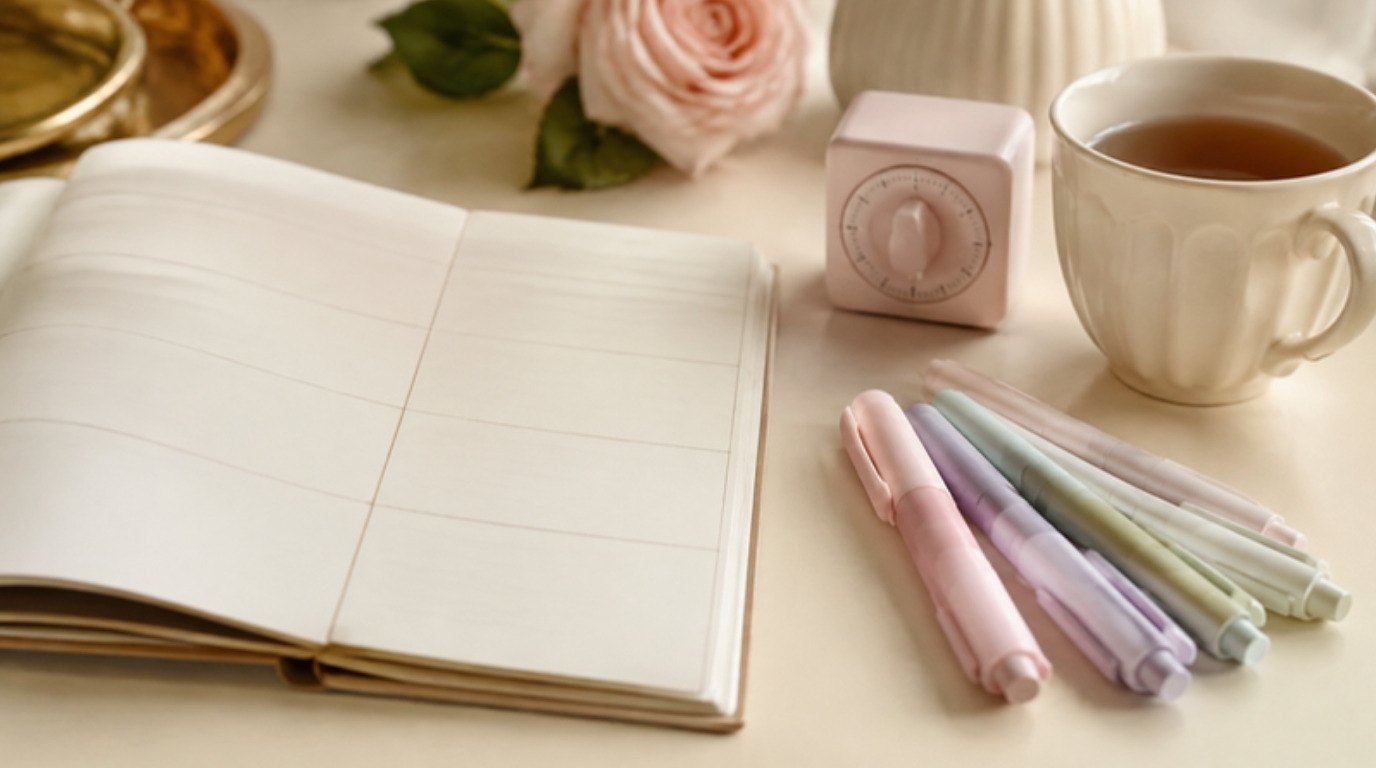
Some people like a little signal that the routine has started. A soft cream cube timer set to ten minutes keeps the planning short, so it never spills into your whole evening. When it rings, the list is done and the workday is officially over. That gentle line between "work" and "rest" is one of the nicest side effects of the method, especially if your mind likes to keep planning at bedtime.
If you miss an evening, don't skip the next day entirely. Write a quick list first thing in the morning instead, before you open any messages, and pick the evening habit back up that night.
The Ivy Lee Weekly Tracker
Here's a simple layout to see the method in action over a week. Copy it into your planner or screenshot it. The example below shows a normal week with a mix of work and home tasks.
| Day | My 6 tasks, ranked | Done | Carried over |
|---|---|---|---|
| Monday | 1. Finish project proposal draft; 2. Call the dentist; 3. Reply to Sara about the event; 4. Pay electricity bill; 5. 30-minute walk; 6. Order a birthday gift | 1, 2, 3, 4, 5 | 6 |
| Tuesday | 1. Order a birthday gift; 2. Edit proposal and send to team; 3. Prepare slides outline; 4. Grocery list for the week; 5. Return library books; 6. Read 20 pages | 1, 2, 3, 4 | 5, 6 |
| Wednesday | 1. Build first 5 slides; 2. Team meeting notes; 3. Return library books; 4. Book hair appointment | 1, 2, 3, 4 | none |
| Thursday | 1. Finish slides; 2. Practice presentation once; 3. Clean out inbox folder; 4. Yoga class; 5. Call Mom; 6. Read 20 pages | 1, 2, 4, 5 | 3, 6 |
| Friday | 1. Give presentation; 2. Send follow-up notes; 3. Weekly review and plan next week | 1, 2, 3 | none |
Notice two things. Wednesday and Friday have fewer than six tasks, because those days had meetings. And task one got done every single day. That's what success looks like here: not a perfect list, but the most important thing finished first. Marking completed tasks with a soft color from a pastel highlighter set makes the weekly view lovely to look back on.
Adapting the Ivy Lee Method for Real Life
The original rules were written for executives with assistants and quiet offices. You might have a much busier, messier life, and that's completely fine. The method bends well.
For Busy Moms

If your days are full of other people's needs, try splitting the list: three tasks for the family and home, three for you or your work. Write it in the evening once the house is quiet, and keep it somewhere visible, like on the kitchen counter. If the day explodes, finishing task one still counts as a good day.
For Students
Use the method for study sessions, not just chores. Instead of "study biology," write "Review chapter 4 notes and make 10 flashcards." Rank by deadline and difficulty, and put the hardest subject first while your brain is fresh. It pairs well with focus sprints from the Pomodoro technique: one sprint or two on task one before anything else.
For Low-Energy Days

On days when you're tired, unwell or simply low, three tasks is plenty. One tiny one is enough too. Make task one something kind and doable ("shower and get dressed," "reply to one message") and let that be a win. The method is a tool for focus, not a test of your worth. If tiredness sticks around for weeks, it's worth checking in with your doctor.
For Days Full of Fixed Appointments
If most of your hours are already booked, combine the method with your calendar. Block short slots for your top two or three tasks and leave the rest of the list as a bonus. My guide to time blocking for beginners shows how to fit tasks around fixed commitments without overpacking the day.
Common Ivy Lee Method Mistakes

- Six tiny tasks. If your list is "text Anna, buy stamps, water plants," you'll finish by 10 a.m. but nothing important moves. Make sure at least the top two tasks are meaningful.
- Six giant projects. The opposite problem. Break big things into first steps so each one can actually be finished.
- Reordering mid-day. When number three feels boring, it's tempting to jump to number six. Stick to the order unless something truly urgent appears. The order is the method.
- Planning in the morning. Morning planning works for some people, but it misses the main benefit: waking up with the decision already made.
- Adding a seventh. If you finish all six (lovely!), you can take something from the "later" list, but don't plan seven. The limit keeps the list honest.
- Treating carry-overs as failure. They're a normal part of the method. Rank them again and keep going.
Having a pen you like reaching for helps more than you'd think. A smooth gold accent pen that lives with your planner is a small invitation to sit down and write tomorrow's six.
Final Thoughts
The Ivy Lee method isn't about doing more. It's about doing the right thing first and letting that be enough. Six tasks, ranked, chosen the night before, and a little patience with yourself when the day doesn't go to plan.
Tonight, before you close your laptop or turn off the lamp, write down tomorrow's most important task and put a "1" next to it. That one small line is where a calmer, clearer day begins.