The task you keep avoiding is rarely the hardest task you have. It's usually the one with the most uncertainty, the most feelings attached or the least obvious first step. That's why it follows you around all day, quietly taking up space in your head while you answer emails and tidy your desk. The eat the frog method works because it removes that background weight early, before the day has a chance to fill up.
In this guide, I'll walk you through the eat the frog method: where the phrase comes from, what your "frog" really is, how to spot it with four simple questions, a frog-or-tadpole sorting table, the method step by step, what to do when the frog is too big, how to pair it with time blocking and Pomodoro, who it doesn't suit as written, how to adapt it on low-energy days, and a seven-day plan to try it gently.
A quick note before we start: this is a tool, not a test. If it works beautifully for you, wonderful. If you need to change it to fit your energy, your life and your brain, that's not cheating. That's using it well.
Where "Eat the Frog" Comes From

The phrase was popularized by productivity author Brian Tracy in his book Eat That Frog!, which turned it into a full approach to beating procrastination.
The idea behind it is often attributed to Mark Twain, in a line that goes something like: if you have to eat a live frog, do it first thing in the morning, and nothing worse will happen to you the rest of the day. There's no solid evidence Twain actually said it, though. A similar line about swallowing a toad in the morning is usually traced to the French writer Nicolas Chamfort, much earlier. Wherever it began, the image stuck because it's so vivid: get the unpleasant thing done first, and the rest of the day feels lighter.
Tracy also added a second half that people often forget: if you have to eat two frogs, eat the ugliest one first. In plain terms, when two hard things compete for your morning, start with the one that matters more.
What Your Frog Actually Is

Your frog is the task you're most likely to avoid that would make the biggest difference if it were done. Both parts matter.
- Most likely to avoid: it feels uncomfortable, vague, boring, emotionally heavy or a little scary.
- Biggest difference: finishing it moves an important goal forward, removes a source of stress or unblocks other work.
Your frog is not simply the longest task, or the most urgent one, or whatever someone else is shouting about. A thirty-second task you've been dreading for three weeks (an awkward email, a phone call, a form) can be a frog. A four-hour task you enjoy and will happily do anyway is not.
Most people have only one real frog per day, sometimes two. If your list has ten, some of them are tadpoles in disguise.
How To Spot Your Frog: 4 Questions
When you look at your task list and everything feels important, ask yourself these four questions:
- Which task have I been postponing the longest? The one that has moved from day to day, or week to week, is a strong candidate.
- Which task would bring the biggest relief if it were finished by noon? Notice your body here. The task that makes your shoulders drop when you imagine it done is often your frog.
- Which task matters most for my goals this week or month? Not for someone else's inbox, for what you're actually trying to build.
- Which task, if left undone, will make tomorrow harder? Some tasks grow teeth when ignored: deadlines, bills, replies that get more awkward with time.
If one task answers yes to two or more of these, that's your frog. If it's a tie, choose the one connected to your bigger goal.
Frog or Tadpole? A Sorting Table
Not every annoying task deserves your best hour. Use this table to sort what's really a frog from what's a tadpole (small, quick, low-stakes tasks that can wait until later in the day). Screenshot it for your planner.
| Ask | Frog | Tadpole |
|---|---|---|
| How do I feel about it? | Resistance, dread, "I'll do it later" | Mild boredom, no real resistance |
| Impact if done today | High: moves a goal, removes stress or unblocks others | Low: nice to have, small tidy-up |
| Thinking needed | Focused, fresh-brain work | Can be done half-distracted |
| Cost of delay | Grows: harder, later, more awkward | Stays the same |
| Time needed | Any length, from 5 minutes to 3 hours | Usually under 15 minutes |
| Examples | Writing the proposal, the hard conversation, starting the tax paperwork, the first draft | Replying to routine emails, filing, ordering supplies, quick updates |
| When to do it | Your best hour, ideally first | Batched later, in a lower-energy slot |
How To Eat the Frog, Step by Step

Here's the method broken into six simple steps.
1. Choose your frog the night before
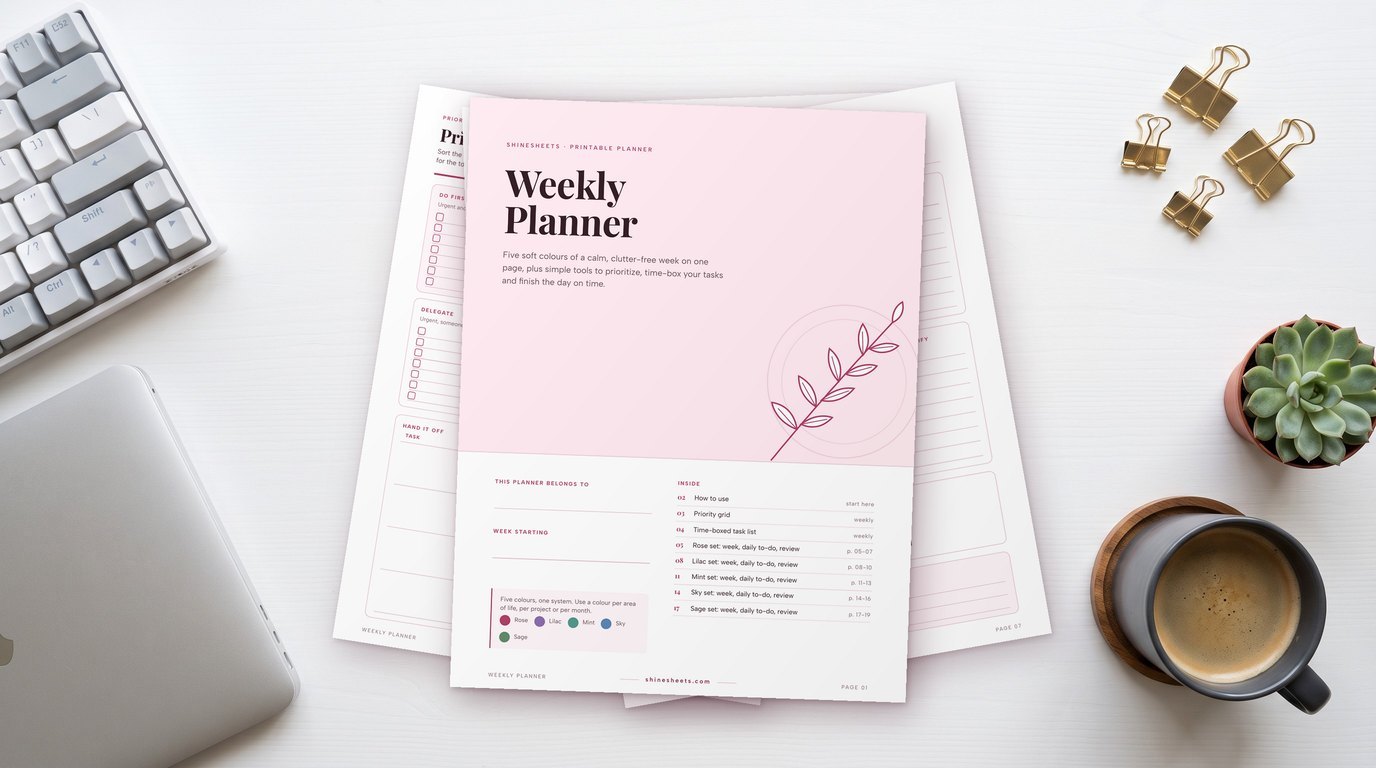
Before you finish for the day, take two minutes to decide tomorrow's frog. Write it at the top of your daily planner or on a single card on your desk. Deciding the night before means you don't spend your freshest morning energy choosing, and it gives your mind a little time to warm up to the idea. If your head feels crowded, a quick brain dump first makes it much easier to see which task really matters.
2. Make it concrete
Vague frogs are the hardest to eat. "Work on the website" is a fog. "Write the About page draft, 300 words" is a task. Rewrite your frog until it has a clear verb and a clear finish line. A good test: could someone else read it and know exactly what done looks like?
3. Eat it in your first 30–90 minutes

The heart of the method is timing. Give your frog the first 30–90 minutes of your working time, before smaller tasks crowd in. Make your coffee or tea in your favorite ceramic mug, sit down, and start. (Coffee sometimes perks me up and sometimes makes me jittery, so on anxious mornings I swap it for tea. Choose whatever helps you focus, not whatever you think you're supposed to drink.)
4. Don't open your inbox first
Email and messages are other people's priorities arriving in your day. Open them first and your frog quietly slides to the afternoon, then tomorrow. If you truly can't avoid checking, give yourself a strict five minutes, look only for genuine emergencies, and close it again.
5. Start before you feel ready
Resistance is part of the deal. You don't need motivation to start, you need a first small action: open the document, write the subject line, dial the number. Motivation usually arrives about ten minutes after you begin, not before.
6. Close the loop and move on
When the frog is done (or you've given it your full planned block), mark it finished in a way that feels satisfying. Tick it with a gold pen, cross it out, say "done" out loud. Then let the rest of the day be lighter. The point isn't to find another frog immediately. It's to enjoy the space you just created.
When the Frog Is Too Big: Slice It
Some frogs are simply too large for one morning: a thesis chapter, a full home move, a big work project. Trying to eat the whole thing at once is the fastest route back to procrastination.
Instead, slice it. Tracy calls a version of this "slice and dice." Here's an easy way to do it:
- Write the big project at the top of a page.
- List every step you can think of, in any order. Don't edit.
- Put the steps in order and cut any that are bigger than 90 minutes into smaller pieces.
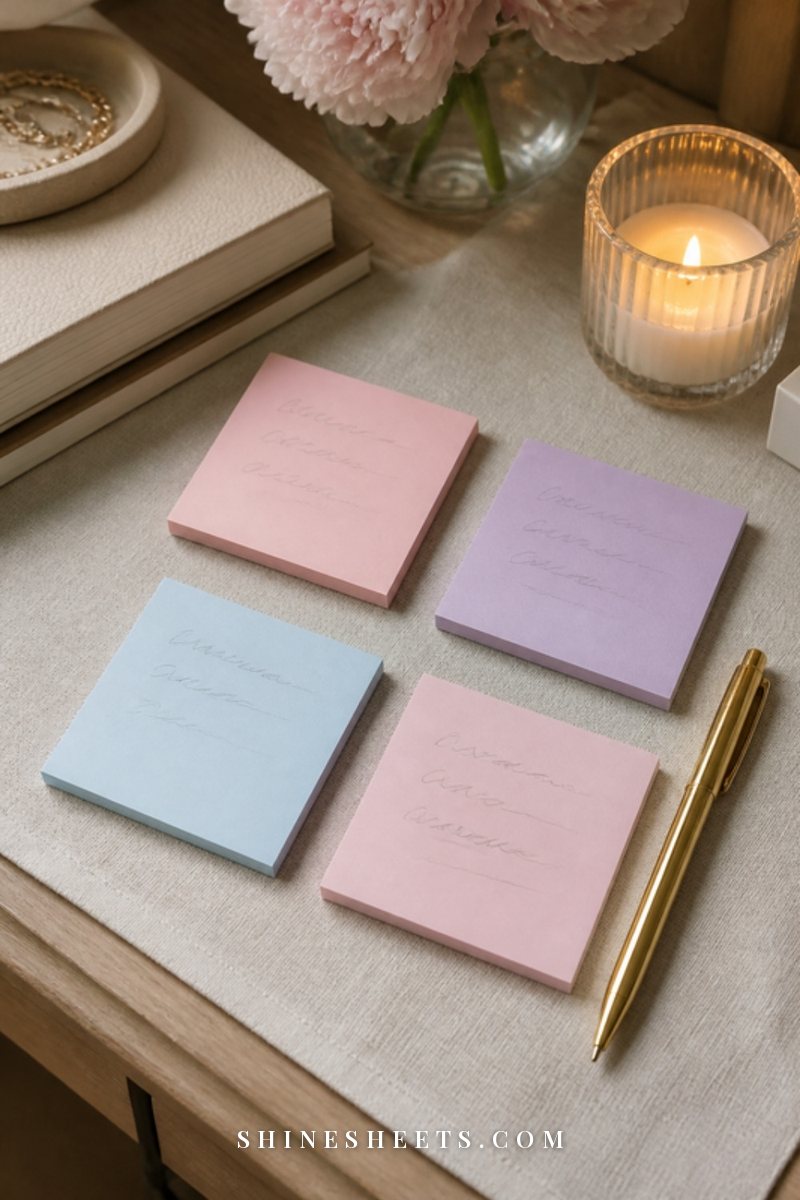
- Write each slice on a separate pastel sticky note and line them up.
- Each morning, today's frog is simply the next sticky note.
This turns one enormous, scary frog into a row of small, very manageable ones, and pulling a note off the wall each day is surprisingly motivating.
Eat the Frog Outside of Work
The method isn't only for jobs and deadlines. Personal frogs can weigh even more, because there's no boss reminding you about them. A few common ones:
- Life admin: the insurance call, the appointment you need to book, the form that's been sitting in a drawer. Many of these take under 20 minutes once you actually start.
- Money tasks: checking a bill you're unsure about, updating your budget, cancelling a subscription you don't use.
- Home tasks: the closet you keep closing quickly, the return you haven't mailed, the repair you need to arrange.
- Relationship tasks: the message you owe a friend, the thank-you note, the honest conversation you've been rehearsing in your head.
- Personal goals: the first session of a new habit, the first page of the project you've been dreaming about.
On weekends or days off, you can still use the same idea in a softer way. Choose one personal frog, give it the first 20–30 minutes after breakfast, and then let the rest of the day be entirely yours. That small trade (a little discomfort early for a lot of ease later) is the whole spirit of the method.
It also helps to keep a short "personal frogs" list in the back of your planner. When a free morning appears, you won't waste it deciding. You'll simply pick the top one and begin.
Pairing Eat the Frog With Other Methods
Eat the frog tells you what to do first. Other methods help with how to do it. These two pair especially well.
Time blocking
Block your frog into your calendar as the first appointment of the day, with a clear start and end time. Treat it like a meeting with someone important (because it is). If you're new to this, my guide to time blocking for beginners shows how to set up your day without over-scheduling it. On a bigger scale, choosing a few frogs for the week ahead when you plan your week makes each morning even simpler.
The Pomodoro Technique
If a 90-minute block feels impossible, work on your frog in 25-minute rounds with 5-minute breaks. A simple desk timer keeps you honest without the temptation of picking up your phone. The short, defined sprint makes starting feel much less daunting. My full guide to the Pomodoro Technique explains how to adjust the rounds to your attention span.
Who It Doesn't Suit As Written

"First thing in the morning" is a lovely rule for morning people. It isn't universal. The method works better when you adapt it to your energy:
- Night owls: Eat your frog at your best hour, not your earliest one. If your brain wakes up at 11 a.m. or in the evening, schedule the frog then and protect that time.
- People with caregiving mornings: If mornings belong to other people, your "first" might be the first quiet block after the rush. That counts.
- Anyone with fluctuating energy: If your energy varies day to day because of health, hormones or sleep, choose a frog and a "frog backup" (a smaller slice) every evening, and decide in the morning which one fits.
- Creative work: Some creative tasks flow better after a warm-up. A short, easy task first, then the frog, is a perfectly valid variation.
The principle that matters is this: give your most important, most avoided task your best energy, before the day gets a chance to eat it.
What To Do on Low-Energy Days

Some days, you wake up and the frog looks enormous. You're tired, anxious or simply not feeling it. You have a few kind options:
- Shrink the frog. Instead of "write the report," make it "write the first paragraph" or "open the file and write the headings." A tiny bite still counts.
- Use the ten-minute rule. Promise yourself just ten minutes. If after ten minutes you truly want to stop, you can. Often you won't.
- Swap the order, not the priority. Do one easy task to build momentum, then come back to the frog by mid-morning.
- Rest without guilt. If you're unwell or deeply depleted, rest is not wasted time. It's what makes tomorrow's frog possible. Move the frog to tomorrow on purpose, rather than avoiding it by accident.
Discipline isn't about never having a slow day. It's about coming back. If you'd like to build that gently, my guide on how to be more disciplined is all about consistency without harshness.
Common Eat the Frog Mistakes
A few habits quietly undo the method. Watch for these:
- Choosing too many frogs. One per day (two at most) is the whole point.
- Picking the frog in the morning. Decision-making eats the energy you need for the task. Choose the night before.
- Keeping it vague. "Work on" tasks invite avoidance. Use a verb and a finish line.
- Turning it into punishment. If every morning feels miserable, your frogs are too big or your timing is off. Adjust, don't push harder.
- Forgetting to enjoy the win. Notice how the rest of your day feels after the frog is gone. That feeling is what makes the habit stick.
If avoidance is a bigger pattern for you, my guide on how to stop procrastinating looks at the feelings underneath it, with kind, practical fixes.
A 7-Day Try-It Plan

Give the method a fair, gentle try for one week. Each step takes only a few minutes on top of your normal day.
- Day 1: Before bed, list your tasks for tomorrow, answer the four frog questions and circle one frog.
- Day 2: Eat the frog in your first 30 minutes of work. Notice how the rest of your day feels.
- Day 3: Rewrite tomorrow's frog until it has a clear verb and a clear finish line.
- Day 4: Keep your inbox closed until the frog is done (or after a strict five-minute check).
- Day 5: Choose a bigger frog and slice it into sticky-note pieces. Eat the first slice.
- Day 6: Try your frog at a different time of day and notice whether your energy is better.
- Day 7: Look back at the week. What helped? What felt forced? Keep what works and let the rest go.
By the end of the week, you'll know your best frog hour, your ideal frog size and the small rituals that make starting easier. That knowledge is worth more than any perfect system.
Final Thoughts
Eat the frog isn't about forcing yourself through unpleasant things for the sake of it. It's about giving your best energy to what matters most, and freeing yourself from the quiet weight of the task you keep putting off.
Start small. Choose one frog tonight. Make it concrete, eat it at your best hour, and then let yourself enjoy the lightness that follows. Day by day, those small wins add up to a life that feels more like your own.