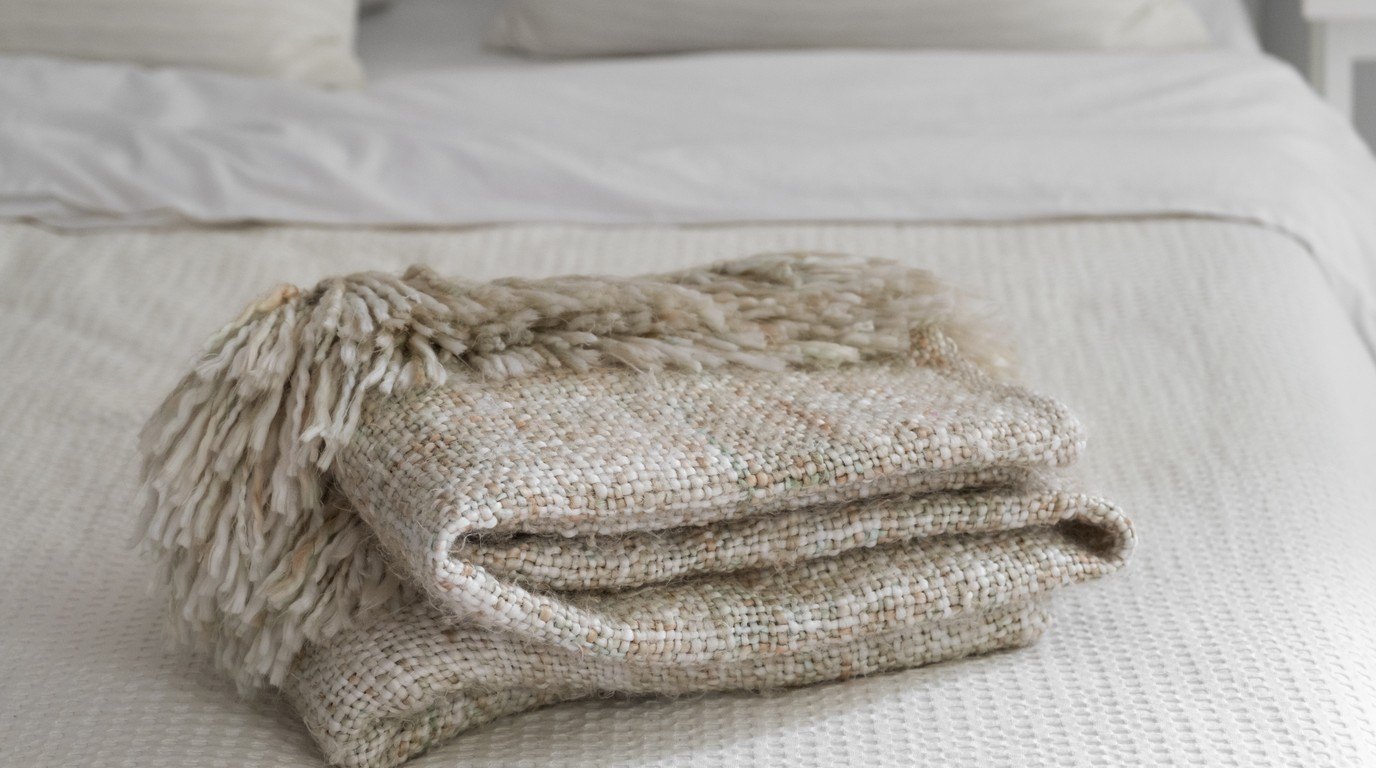
A weighted blanket is not just a heavy throw. It is a blanket full of tiny pellets or beads sewn into pockets, and it can weigh as much as a full load of laundry before it even gets wet. That is why the usual "toss it in and hope" approach can end with torn seams, clumped filling or a washing machine thumping across the floor.
The good news is that washing one is not hard once you know three things: what is inside it, how heavy it is, and whether your machine can carry that weight. Get those right and the rest is gentle, cool and slow.
This guide covers how to wash a weighted blanket step by step: the label and filling check, the weight rule for home machines, three washing methods (cover only, machine and bathtub), how to dry it without stretching the seams, spot cleaning between washes and a simple table for how often. It is just for heavy weighted blankets – light throws have their own, easier rules.
Before You Wash: Read the Label and Check the Filling

Five minutes of checking saves you from almost every weighted blanket disaster. Lay the blanket flat on a bed or a clean floor and look for these three things.
Check the Care Label
The care label is the single most important piece of information you have, so read it before anything else. It usually tells you the maximum water temperature, whether machine washing is allowed, whether tumble drying is allowed and at what heat, and whether the inner blanket should be spot cleaned only.
If the label says "spot clean only" or "do not wash", believe it. If the label is missing or faded, treat the blanket as delicate: cover only or hand wash, cool water, air dry.
Check the Filling
Most modern weighted blankets are filled with one of these:
- Glass beads – tiny, smooth and heavy for their size. They usually handle washing well and do not melt.
- Plastic poly pellets – slightly larger and lighter. Usually washable in cool water, but high heat in a dryer can damage them.
- Natural or other fillings – some older or handmade blankets use rice, beans, grains or sand. These should not be soaked or machine washed, because they can clump, swell or go moldy. Spot clean and air them only.
If you are not sure which filling yours has, the product listing or brand website usually says. Gently feeling a pocket helps too: glass beads feel like fine sand, poly pellets feel like small round plastic balls.
Check for a Removable Cover
Many weighted blankets come in two parts: a heavy inner blanket and a soft outer cover with a zip and ties or loops inside. If yours has one, you are lucky – the cover is the part that touches your skin and gets dirty, and it can go into the wash like a duvet cover.
If yours does not have a cover, it is worth considering one. A washable cream duvet-style weighted blanket cover in the right size is a pick that turns most future washes into an easy cover-only job. Check the measurements and the number of inner ties before ordering.
The Weight Check: Can Your Machine Handle It?
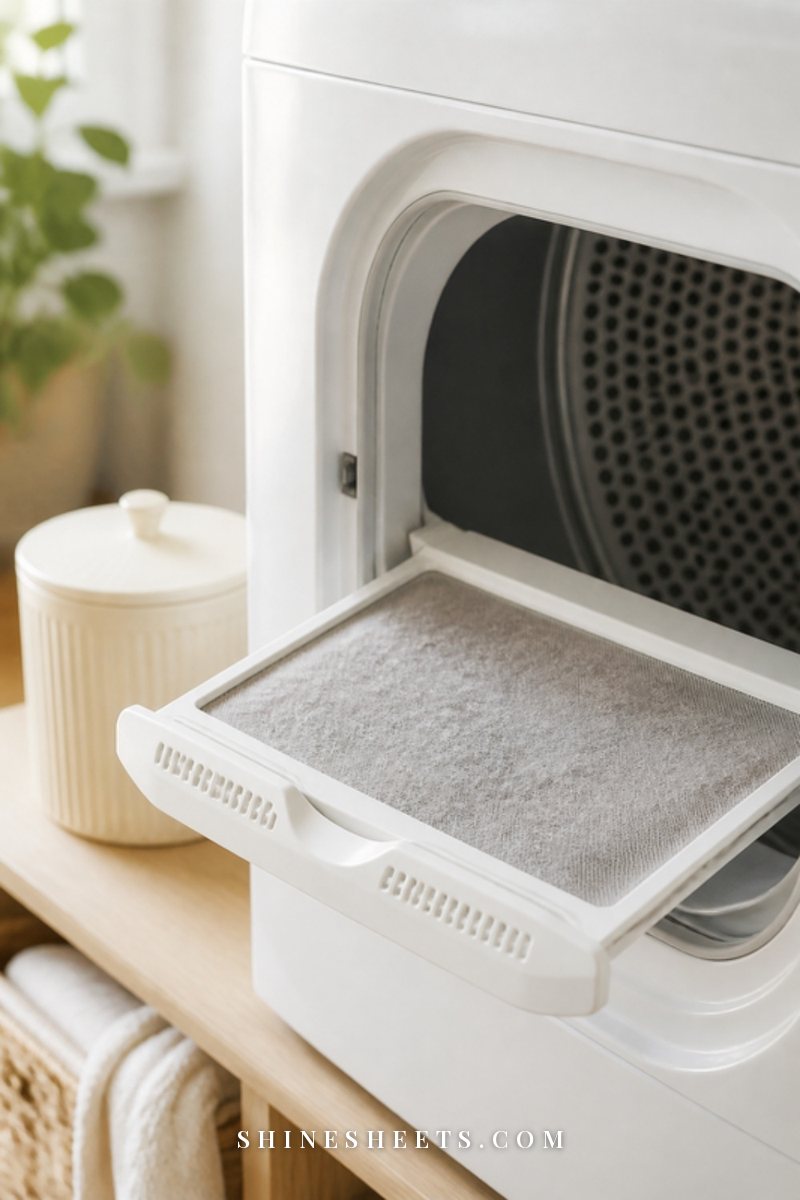
This step protects both the blanket and the machine. A common rule of thumb is that most standard home washing machines can handle a weighted blanket up to roughly 7 kg / 15 lb. Heavier blankets are often too much for a home drum, especially once they are soaked.
Remember that the weight on the label is the dry weight. Wet fabric and wadding hold a lot of water, so the blanket will be noticeably heavier during the cycle than it is on your bed.
Here is how I'd decide:
- Check your machine's capacity. It is in the manual or on a sticker inside the door or lid. If the blanket fills the drum completely, it is too big for it.
- Up to about 7 kg / 15 lb and your machine has room: machine wash at home on a gentle cycle, following the label.
- Heavier than that, or your machine is small: use a large-capacity machine at a laundromat, or hand wash it in the bathtub.
- Top loader with a central agitator: be extra careful. The agitator can twist and strain the seams. A front loader or an agitator-free top loader is gentler.
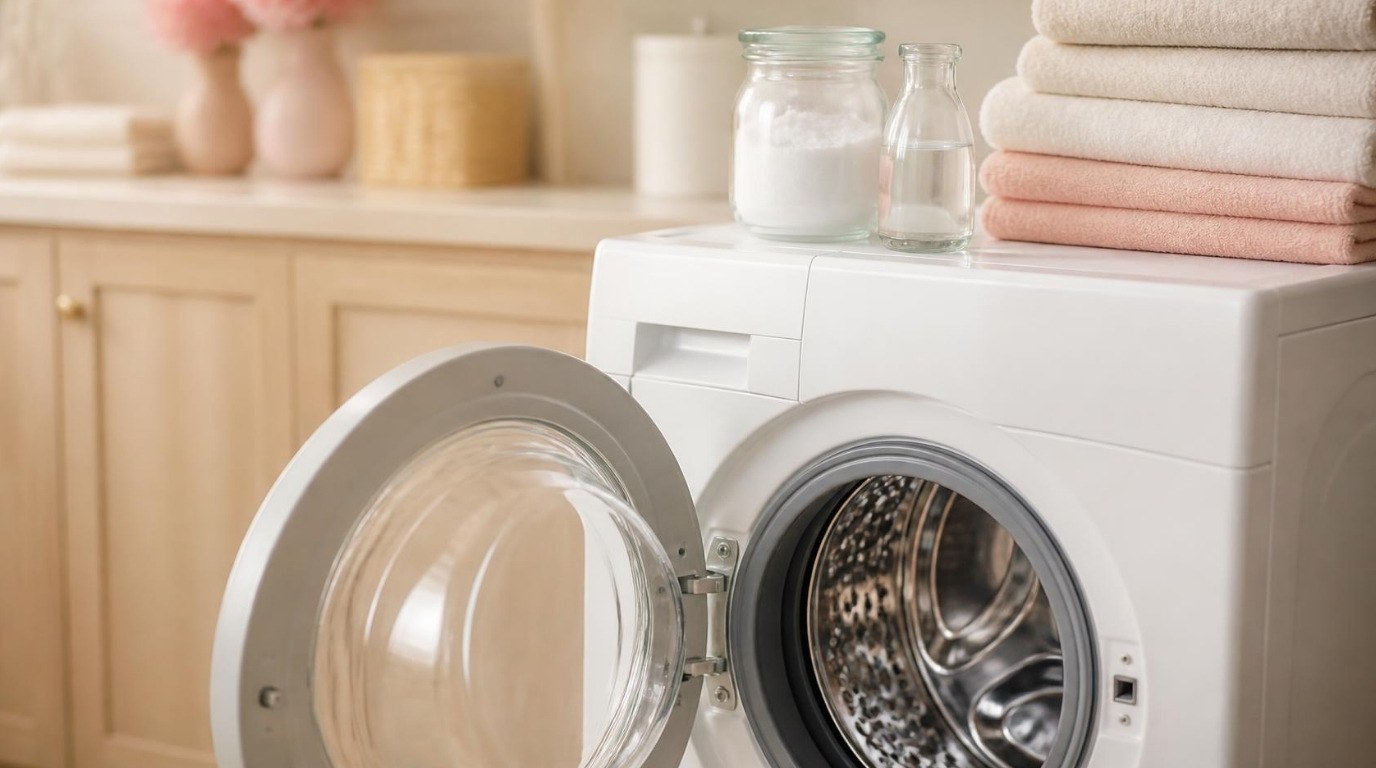
If your machine starts shaking, walking or knocking loudly during the spin, stop the cycle. That is a sign the load is too heavy or unbalanced. And if your washer has been smelling a little musty lately, give it a clean first using my guide on how to clean a washing machine – there is no point washing a blanket in a dirty drum.
Weighted Blanket Washing Table
Find your blanket in the left column and follow the row. Your care label always wins if it says something different.
| Blanket type | Weight | How to wash | How to dry | How often |
|---|---|---|---|---|
| Inner blanket with removable cover | Any | Wash the cover only; spot clean the inner blanket | Cover: low tumble or line dry per label; inner: air out flat | Cover every 2–4 weeks; inner 2–4 times a year |
| One-piece blanket, glass beads | Up to about 7 kg / 15 lb | Machine, gentle cool cycle, mild detergent | Lay flat or drape over a sturdy rack; low tumble only if the label allows | Every 1–3 months, or when it smells less fresh |
| One-piece blanket, plastic pellets | Up to about 7 kg / 15 lb | Machine, gentle cool cycle, mild detergent | Air dry; avoid high heat | Every 1–3 months |
| Any one-piece blanket | Over about 7 kg / 15 lb | Large laundromat machine or bathtub hand wash | Lay flat, turn often | 2–4 times a year, spot clean between |
| Knitted chunky weighted blanket | Any | Follow the label closely; often hand wash or cool gentle machine | Lay flat to keep its shape | 2–4 times a year |
| Natural filling (rice, beans, grains) | Any | Do not soak; spot clean only | Air out in a dry, airy room | Spot clean as needed |
3 Ways To Wash a Weighted Blanket
Pick the method that matches your label, your filling and your weight check. In order from easiest to most effort:
1. Wash the Cover Only

If your blanket has a removable cover, this is the method you will use most often.
- Undo the zip and untie or unbutton every inner tie or loop. (Count them as you go, so you know how many to redo later.)
- Turn the cover inside out and close the zip, so it does not snag.
- Wash on the temperature the cover's label recommends with a mild detergent. Minky and plush covers do best on cool and gentle.
- Shake out the inner blanket, lay it flat near an open window for an hour and spot clean any marks (see below).
- Once the cover is completely dry, put the inner blanket back in, starting with the corner ties.
A tip that makes step five easier: turn the clean cover inside out, lay it on the bed, place the inner blanket on top, tie the corners, then flip the whole thing right side out like you would with a duvet. My guide on how to wash sheets and duvets uses the same trick.
2. Machine Wash on a Gentle Cool Cycle
For a one-piece blanket that passed the weight check and whose label allows machine washing:
- Shake it out and check the seams. If a pocket is torn, stitch it before washing, or beads can escape into the machine.
- Use a laundry bag if it fits. A large white mesh laundry bag adds a layer of protection for smaller blankets and keeps any escaped beads contained.
- Wash it on its own. No towels, no jeans, nothing with zips.
- Choose a gentle or delicate cycle with cool water, around 30°C / 86°F or whatever your label says.
- Use a small amount of mild detergent. Less than you would for a full load – too much soap is hard to rinse out of a dense blanket.
- Add an extra rinse if your machine has one, and use a low or medium spin so the drum is not straining.
- Take it out promptly when the cycle ends, so it does not sit damp in the drum.
Lift it out with both arms, from underneath. A wet weighted blanket is heavy, so bend your knees and take your time.
3. Hand Wash in the Bathtub
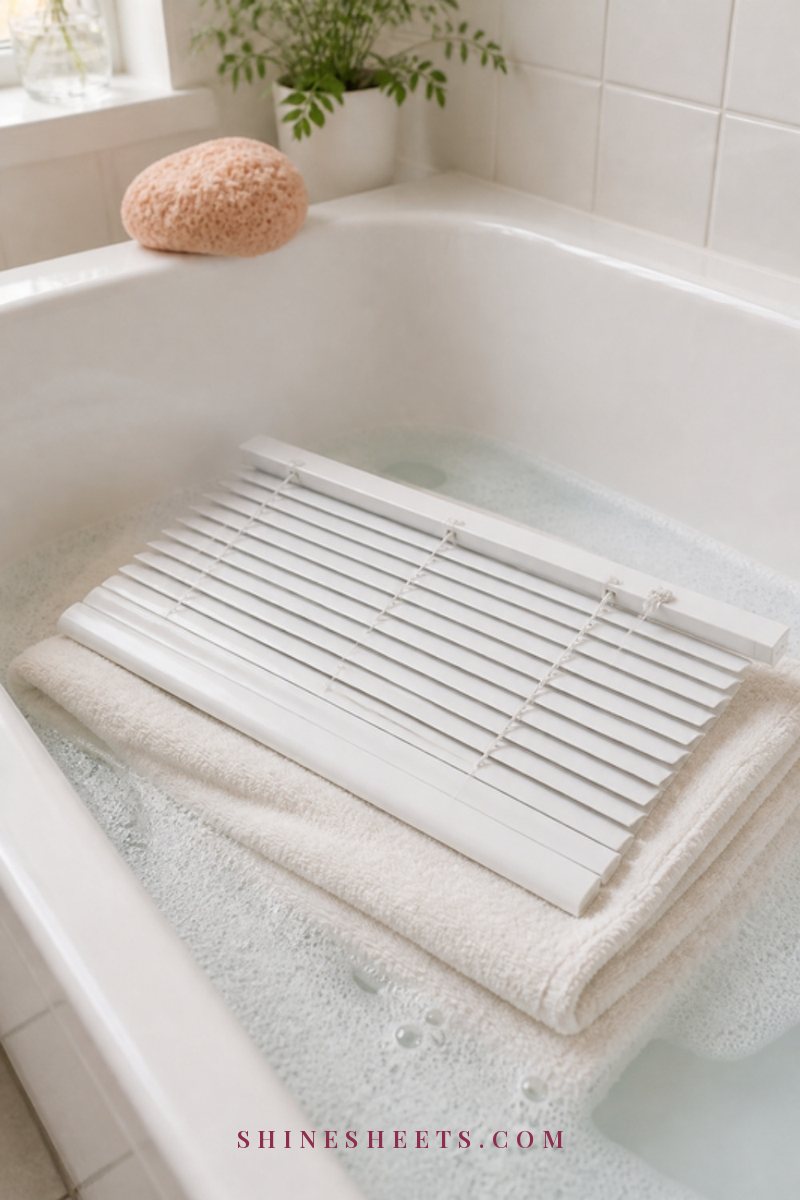
This is the method for heavy blankets, delicate knits, or any blanket whose label says hand wash. It takes a little effort, but it is the gentlest option.
- Clean the bathtub first and rinse away any cleaner, so nothing transfers to the blanket.
- Fill the tub with cool or lukewarm water, enough to cover the blanket.
- Mix in a small amount of mild detergent until it dissolves.
- Lay the blanket in and gently press it down with your hands so it soaks through. Swish and press for a few minutes, paying extra attention to any grubby areas.
- Let it soak for about 20–30 minutes.
- Drain the water, then refill with clean water and press again to rinse. Repeat until the water runs clear and there are no more suds – usually two or three rinses.
- Drain and press the water out by folding the blanket and pressing down with flat hands. Do not wring or twist it, as that can strain the inner pockets.
- Leave it in the empty tub for 30–60 minutes to drip before moving it to dry.
A small honest admission: this is a workout. Wear clothes you do not mind splashing, kneel on a folded towel, and do not try to lift it out of the tub all at once while it is soaked.
What To Use (and What To Skip)
Weighted blankets like the gentlest possible products. Here is the short list:
- Use a mild detergent. A gentle wool and delicates detergent is a pick for knitted and plush blankets, and a small amount of your regular mild, dye-free liquid detergent works for cotton ones.
- Skip bleach. It can weaken the fabric and the stitching between the pockets.
- Skip fabric softener. It coats the fibers, makes them less breathable and can build up in dense fabrics. Minky covers especially lose their softness with it over time.
- Skip harsh stain removers on the whole blanket. Use them only on the stain itself, after a test on a hidden spot.
And one safety rule for any laundry day: never mix bleach with vinegar or ammonia, not even in a bucket or a sink. The combination releases harmful fumes. Use one product at a time, rinse well between, and keep the room ventilated.
For more everyday laundry tricks that keep fabrics soft, my laundry tips guide has twenty of them.
How To Dry a Weighted Blanket
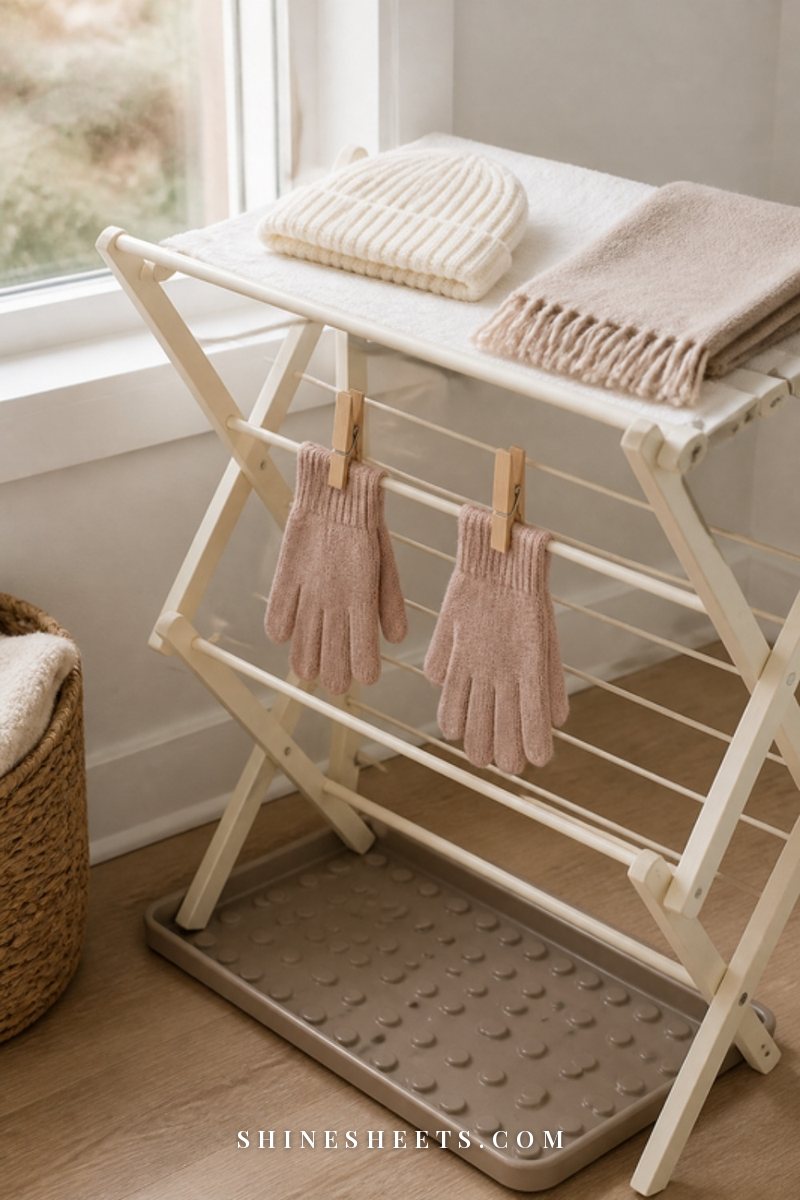
Drying is where most weighted blankets get damaged, because a heavy wet blanket hung by one edge pulls hard on the seams and lets the filling slide to the bottom.
The safest way is to spread the weight out:
- Lay it flat on a clean floor covered with towels, a bed covered with a waterproof layer or a large table.
- Or drape it over a sturdy drying rack so the weight is spread across several bars. A sage folding drying rack with wide, stable legs is a pick – flimsy racks can tip or bend under a wet blanket.
- Turn it every few hours and gently shake it, so the filling stays evenly spread across the pockets and both sides dry.
- Keep air moving. An open window, a fan or a dry, warm room helps a lot. A thick blanket can take one to two days to dry fully.
Tumble drying: only if your label allows it, and only on low heat. High heat can damage poly pellets, shrink covers and weaken stitching. Check the dryer's capacity too – the same weight rule applies. A few white wool dryer balls can help the blanket move and dry more evenly. Finish air drying if the center still feels cool or damp.
Make sure it is completely dry before you use it or store it. Damp inner layers can start to smell musty, and that is much harder to fix than a slightly longer drying time.
Spot Cleaning Between Washes
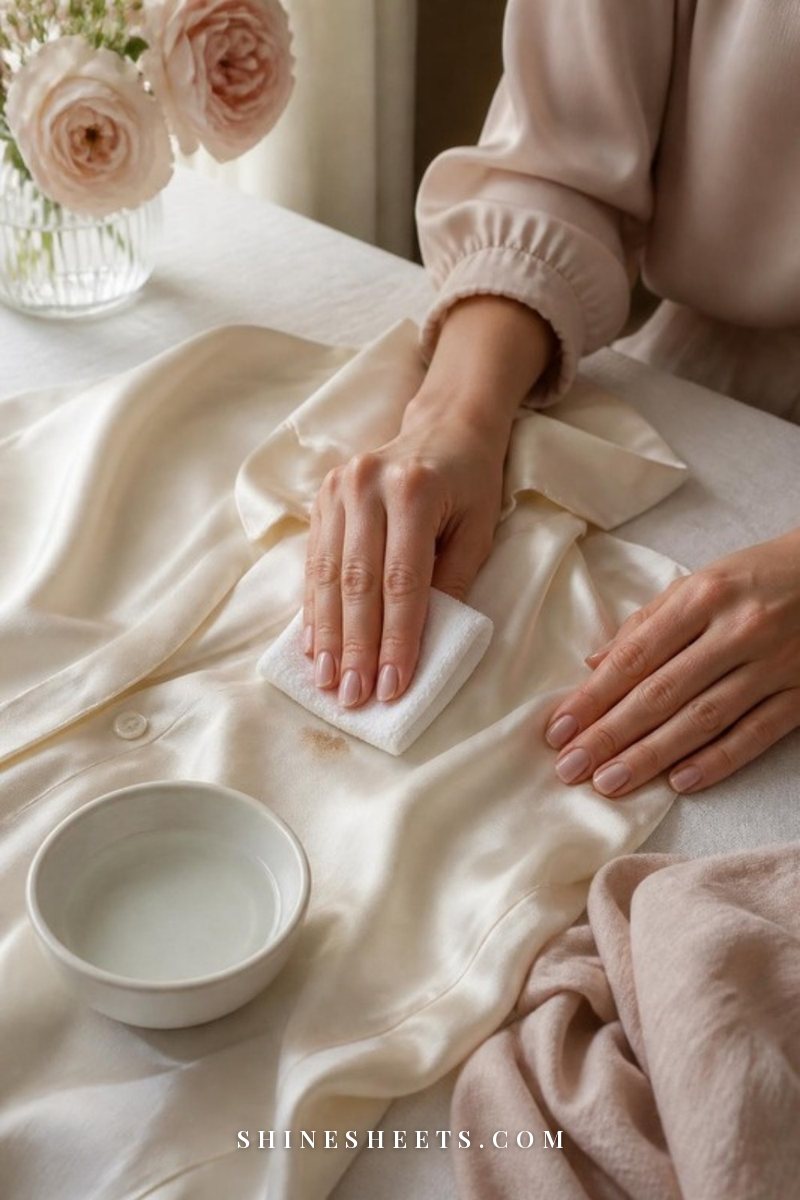
Most of the time, a weighted blanket does not need a full wash. It needs a spot clean and some fresh air. This keeps it fresher for longer and saves the seams from too many full cycles.
- Act quickly. Blot spills with a clean, dry cloth. Do not rub, which pushes the stain deeper.
- Mix a little mild detergent with cool water in a small bowl.
- Dab the stain with a soft cloth dipped in the soapy water, working from the outside in so it does not spread.
- Rinse the area by dabbing with a cloth dipped in plain water, then press with a dry towel.
- Let it air dry flat, with the spot facing up.
For small, fresh marks, a stain remover pen is handy to keep near the sofa. Test it on a hidden corner first and wait for it to dry, to make sure it does not leave a ring or fade the color.
To freshen the whole blanket without washing, shake it out well and leave it flat near an open window for a few hours. For other cushions and throws on the same sofa, my guide on how to clean throw pillows and blankets covers the lighter pieces.
How Often To Wash a Weighted Blanket
There is no single rule, because it depends on how you use it. A blanket you sleep under every night needs more care than one folded on the end of the sofa. A realistic rhythm:
- Removable cover: every two to four weeks if you sleep with it, monthly if it lives on the sofa.
- One-piece blanket used nightly: every one to three months, with spot cleaning in between.
- Inner blanket under a cover: two to four times a year.
- Straight away: after a spill, illness, a pet accident or if it starts to smell less than fresh.
If you sleep under it directly, using a top sheet between you and the blanket keeps it cleaner for longer. It is the same idea as protecting your mattress – my guide on how to clean your mattress has more small habits like that.
Mistakes That Ruin Weighted Blankets
- Overloading the machine. Too heavy a blanket strains the drum, the motor and the blanket's seams.
- Hot water and high heat. They can shrink fabric, weaken stitching and damage plastic pellets.
- Washing with other laundry. Zips and buttons snag, and the load becomes unbalanced.
- Too much detergent. It leaves residue that feels stiff and attracts dirt.
- Wringing or twisting. It can tear the inner pockets.
- Hanging it by one edge to dry. The weight pulls the seams and the filling shifts.
- Storing it damp. It leads to musty smells and mildew.
- Washing a torn blanket. Loose beads can end up in the machine's pump. Mend first.
When you store it for warmer months, fold it loosely and keep it in a breathable cotton bag rather than plastic, on a low shelf (it is heavy) in a dry place.
Final Thoughts
Washing a weighted blanket is mostly about respecting its weight: read the label, check the filling, make sure your machine can handle it, and keep everything gentle and cool. Spot clean often, wash fully only when it needs it, and give it the time it needs to dry flat.
Do that, and your blanket will keep its even weight and its softness for many seasons of quiet evenings under it.