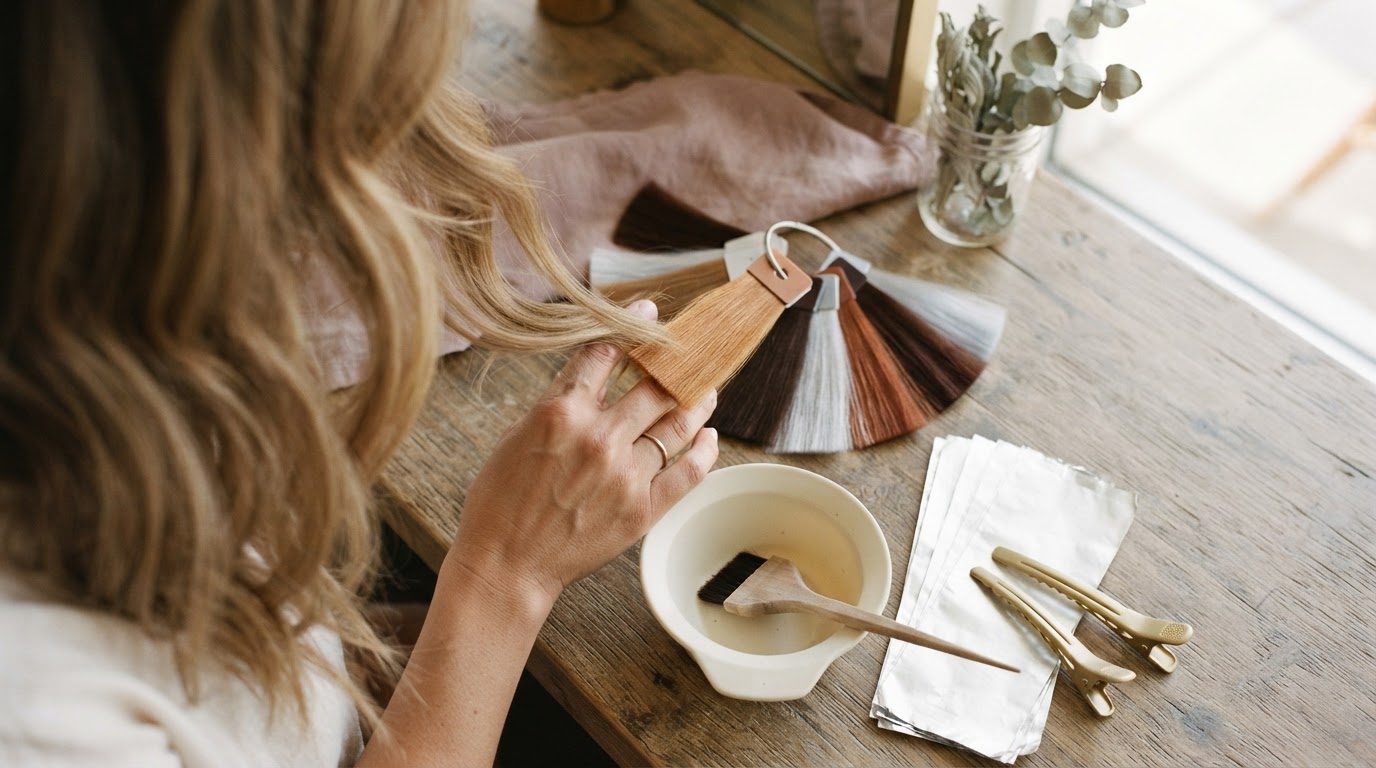
Changing your hair color can be as exhilarating as it is nerve-wracking. After all, a new hair color is not just about a new look; it’s about expressing your personality and boosting your confidence. (I’m a serial hair dyer myself!)
With so many shades to choose from, how do you pick the one that’s truly right for you? Here’s my comprehensive guide to help you navigate the colorful world of hair dye and find your perfect match!
How To Pick The Best Hair Color For You
1. Understand Your Skin Tone
The first step in choosing your best hair color is to determine your skin tone. Skin tones can be classified into three categories: cool, warm, and neutral. This classification will guide you in selecting hair colors that will look natural and flattering on you.
Cool Skin Tones
You likely have a cool skin tone if your arm veins appear blue or purple. You probably look great in silver jewelry and your skin may burn before it tans. Hair colors that often suit cool tones include jet black, ash blondes, and cool browns.
Warm Skin Tones
If your veins look greenish, you have a warm skin tone. Gold jewelry might be more flattering on you, and your skin usually tans easily. Consider hair colors like golden blonde, rich red, and warmer browns.
Neutral Skin Tones
With no obvious overtones of pink or sallow skin, neutral skin tones can vary. You might be neutral if your veins are blue-green and gold and silver jewelry suits you. You’re lucky – you can pull off a wide range of hair colors, from light to dark!
2. Consider Your Natural Hair Color
Your current hair color can determine how much work and maintenance your new color might require.
Enhancing Natural Color
Sometimes, the best color for you is not too far off from your natural hue. Enhancing your natural color with similar or slightly lighter shades can create a subtle yet significant impact.
Going Lighter or Darker
Drastic changes can require significant upkeep. Darkening your hair might be easier to maintain than going much lighter, which often involves more frequent root touch-ups and potential damage from bleaching.
3. Think About Maintenance and Commitment
Before you decide on a color, think about how much time and effort you’re willing to invest in maintaining it. For example, I dye my hair once a month.
High Maintenance Colors
Colors like platinum blonde or vibrant unusual colors (like pinks or blues) typically require frequent salon visits to keep them looking fresh.
Low Maintenance Options
Balayage, ombre, or darker hues generally require less upkeep and can be more forgiving as they grow out.
4. Choose a Color That Fits Your Lifestyle
Your hair color should reflect your personal style and fit into your everyday life.
Professional Environments
Natural colors might be more appropriate if you work in a conservative setting. However, more workplaces are embracing colorful hair, so consider what feels right for your industry.
Personal Style
Choose a color that feels true to your personal style. Whether you’re edgy, sophisticated, or prefer a minimalist look, your hair color should complement your overall aesthetic.
5. Seek Professional Advice
A professional colorist can provide personalized advice that takes into account your hair’s current condition, your coloring history, and your desired outcome.
- Custom Shades. Colorists can mix custom shades that perfectly suit your skin tone and preferences.
- Hair Health. They can also ensure that the coloring process is done safely to preserve the health of your hair.
6. Experiment with Temporary Colors
If you’re unsure about a color, try a temporary or semi-permanent dye first. These dyes wash out after several shampoos, allowing you to experiment with different colors without long-term commitment. This is particularly useful if you’re considering a radical change. You can see how different colors look with your skin tone and how they make you feel.
7. Consider Seasonal and Trending Colors
While choosing a color that suits you is important, it’s also fun to consider seasonal trends!
- Seasonal Shades. Lighter shades might be appealing in the summer, while richer, deeper tones might feel right in winter.
- Current Trends. While keeping an eye on current trends can provide inspiration, always tailor trends to suit your personal style and what feels comfortable for you.
Conclusion
Choosing the right hair color involves balancing aesthetic desires with practical considerations. Your skin tone, natural hair color, preference for the maintenance required, and fit of the color into your lifestyle should help you select a shade that not only looks fantastic but also feels uniquely yours.