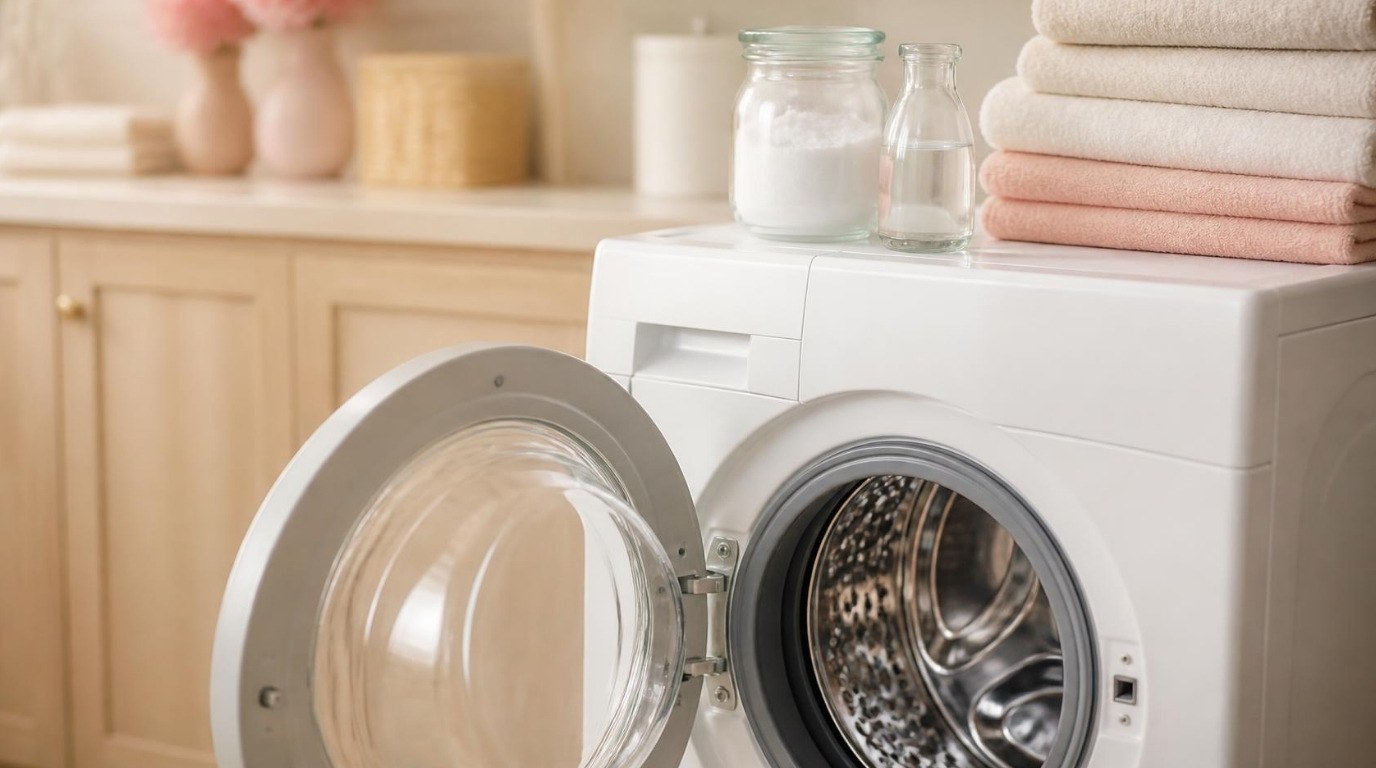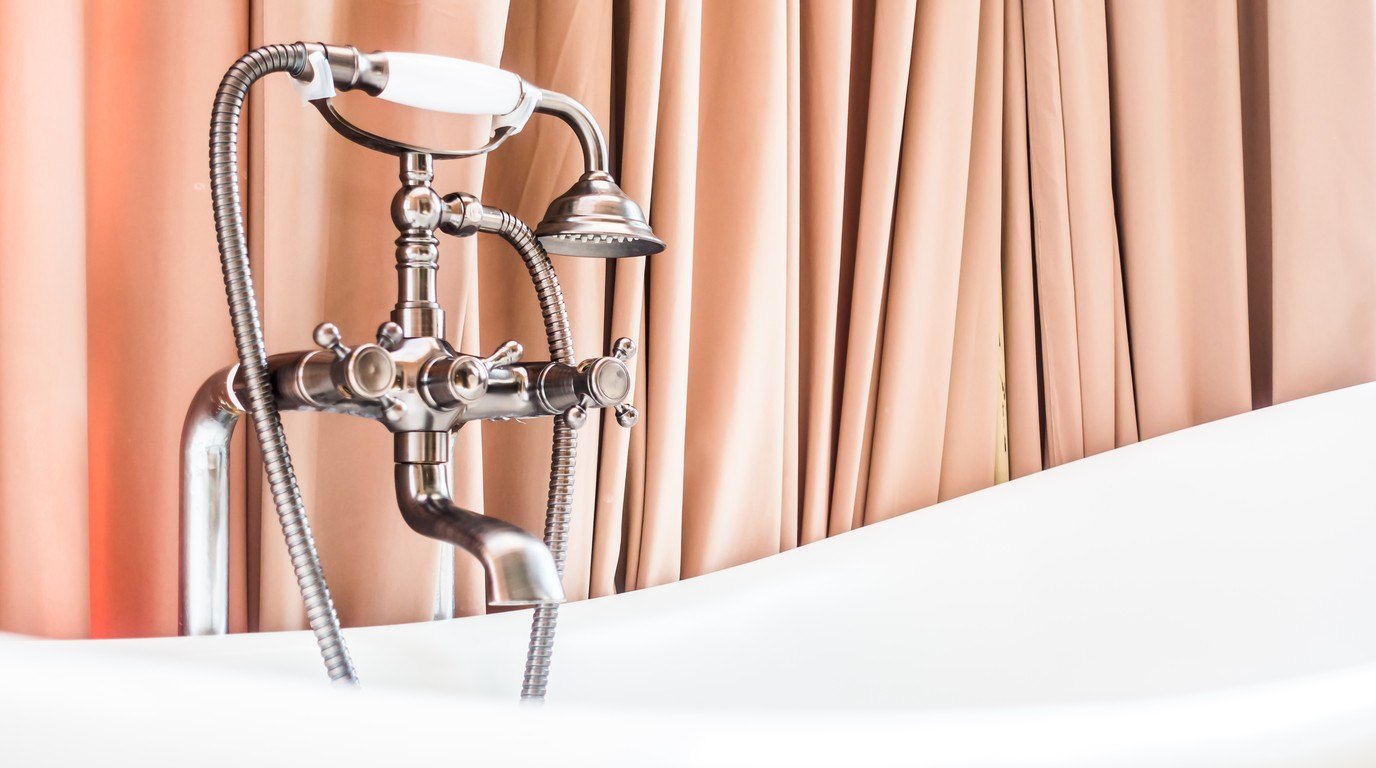
A shower curtain doesn't need scrubbing on your knees in the tub. Most fabric curtains and plastic liners can go straight into the washing machine, and a gentle cycle does in about 30 minutes what a sponge and a lot of elbow grease can't: it loosens soap scum, lifts that pink film along the hem and leaves the whole thing fresh and soft again.
The part most people skip is the setup. A few small choices (the right water temperature, two old towels in the drum, no spin for plastic) are what separate a clean, flat curtain from a crumpled, cracked one.
This guide walks you through how to clean a shower curtain and liner in the washing machine step by step: why curtains get grimy in the first place, what to check before you start, six simple steps, how fabric, PEVA and vinyl differ, a quick care table, what to do if you don't have a washer and the small daily habits that keep it fresh for longer. It's all renter-friendly, so no special tools or permanent changes needed.
Why Shower Curtains Get Pink, Filmy and Spotty

Your shower curtain lives in the perfect conditions for grime: warm, wet, folded and rarely moving. Three things usually build up:
- Soap scum. A cloudy, slightly waxy film that forms when soap and body wash combine with minerals in your water. It's worse with hard water.
- Pink or orange film. Usually not mold at all but a common airborne bacterium (often called Serratia marcescens) that loves damp, soapy surfaces. It's especially happy along the bottom hem, where water pools.
- Black or gray spots. Mildew and mold, which grow where the curtain stays bunched and damp, again mostly near the bottom and in the folds.
The good news: on a curtain or liner, all three are surface problems, which is exactly why a wash works so well. The bad news: if the curtain stays bunched up and wet after every shower, they come right back. That's what the habits section at the end is for.
Before You Start: Care Label, Rings and Hooks
Take two minutes for this part. It saves you from a melted liner or a broken washer drum.
- Read the care label. Most fabric curtains (polyester, cotton, linen blends) and many PEVA liners are machine-washable, but some say hand wash only or cold water only. The label wins over any general advice, including mine.
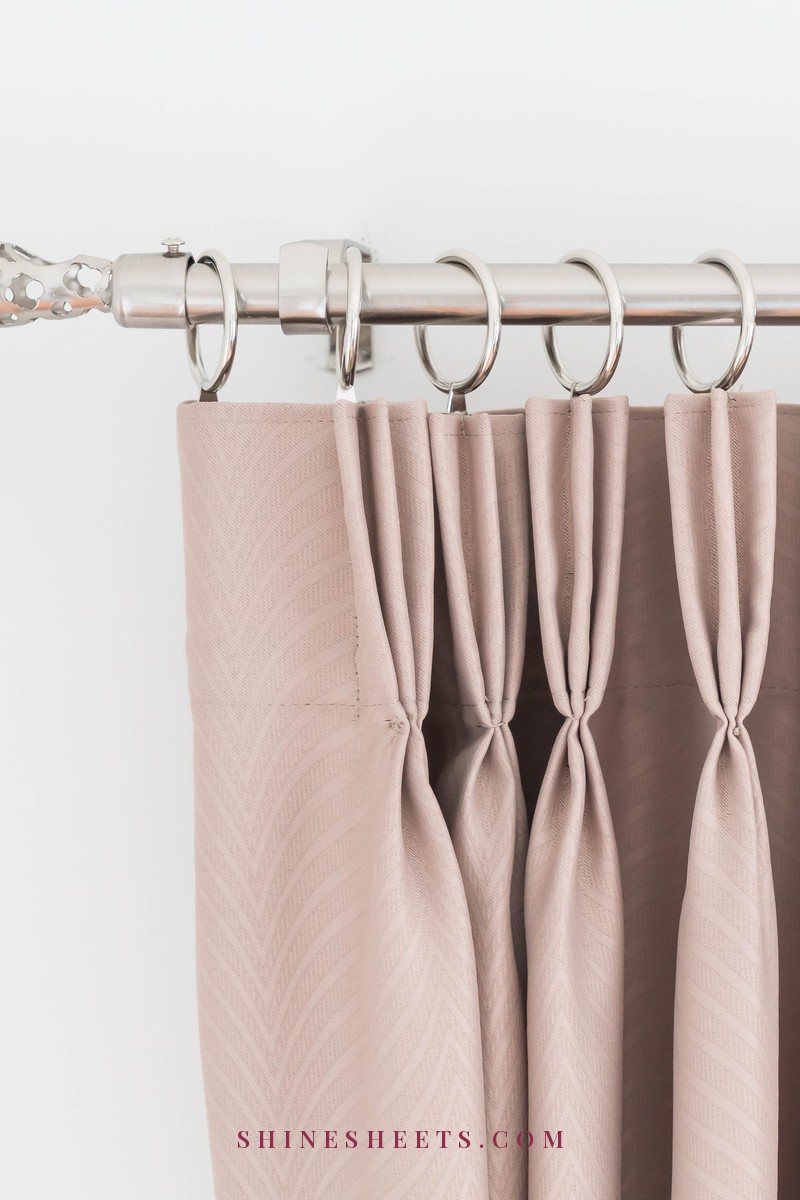
- Remove every ring and hook. Metal and plastic rings can scratch or crack your washer drum and tear the curtain grommets. Pop them in a small bowl with a little warm, soapy water to soak while the curtain washes.
- Check for heavy spots. If there's a thick, dark patch of mold on a liner, it may be easier and more hygienic to replace it (more on that below).
- Check your washer manual. Most modern machines handle a curtain easily, but some front-loaders have specific guidance on vinegar, bulky loads or plastics.
While the rings are off, it's a good moment to look at your hardware. If they're chipped or rusty, a fresh set of gold shower curtain rings with a smooth glide slides much more easily on the rod, which matters more than it sounds: curtains that glide get pulled open and closed properly, and that helps them dry.
What You Need
- Your regular laundry detergent (liquid is gentler on plastic than powder)
- Two old bath towels
- Baking soda or white vinegar (one, not both in the same step)
- Rubber gloves, if you're handling mildewed fabric (a pair of soft-lined rubber cleaning gloves is worth keeping under the sink)
- A bowl for the rings
That's genuinely it. If you like to keep your laundry area tidy, a cream laundry detergent dispenser makes measuring the right small amount easy, and decanting means fewer sticky drips down the side of the bottle.
How To Clean a Shower Curtain in the Washing Machine: 6 Steps
These steps work for both fabric curtains and machine-safe plastic liners. Where something differs, I'll say so.
1. Shake Off Loose Debris
Take the curtain or liner down, hold it over the tub and give it a good shake. Hair, dust and dried soap flakes fall away, so they don't end up stuck to the rest of your laundry. If there's a dry, crusty soap line along the hem, rub it gently between your fingers or with a soft brush over the tub first.
2. Add Two Old Towels
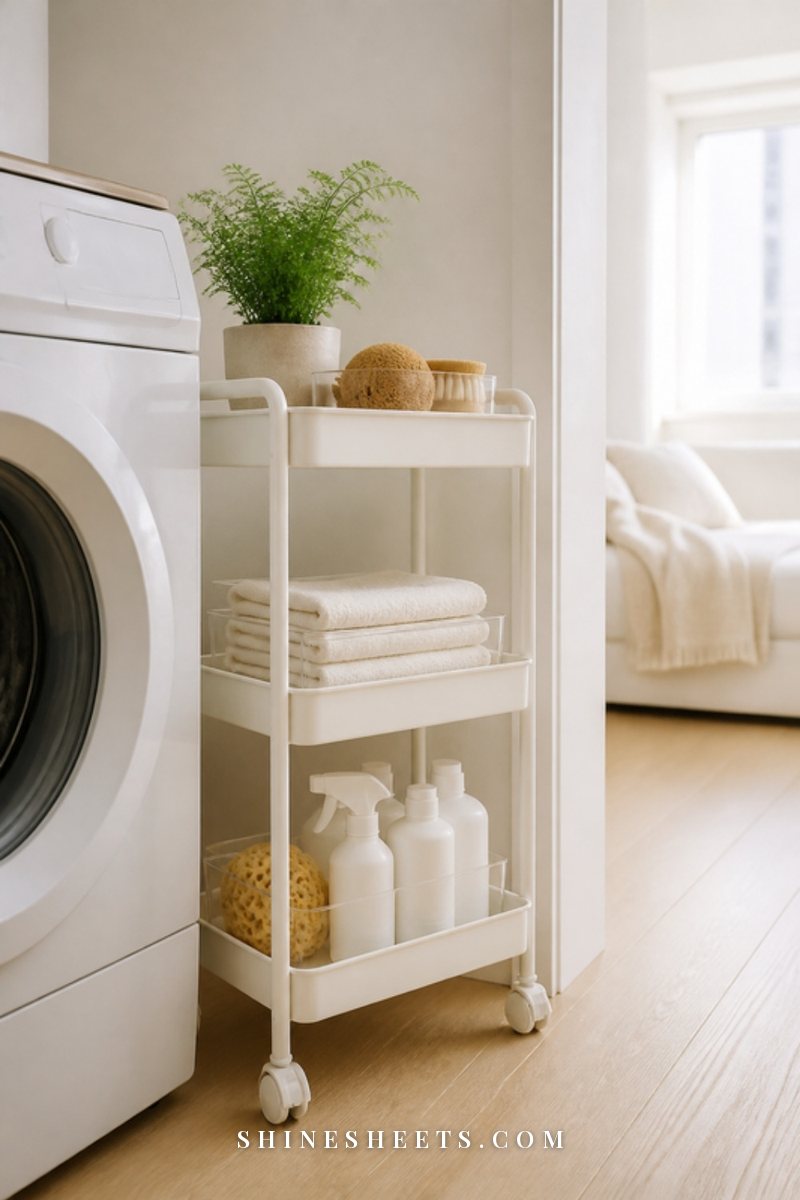
This is the clever part. Put the curtain in the drum loosely (don't fold it tightly or stuff it into a corner), then add two old bath towels. As the drum turns, the towels gently rub against the curtain and act like a soft scrubber, lifting soap scum and film from the surface. They also balance the load, which keeps your machine from thumping.
Use light-colored towels with a fabric curtain so nothing transfers, and wash the curtain on its own otherwise: no jeans with zippers or anything with hooks.
3. Use Warm Water, Regular Detergent and a Gentle Cycle
Choose a gentle or delicate cycle with warm water. Warm helps loosen soap scum, but very hot water can warp or wrinkle plastic liners permanently. As a rough guide:
- Fabric curtains: warm, or whatever the label allows.
- PEVA and vinyl liners: warm, never hot.
Add your usual amount of detergent for a small load. More detergent doesn't clean better here; it leaves residue that dries into, well, more film.
4. Add Baking Soda to the Wash or Vinegar to the Rinse
For an extra boost, choose one:
- About half a cup of baking soda added to the drum with the detergent, to help with soap scum and musty smells.
- Or about one cup of white vinegar in the rinse cycle (the fabric softener compartment works well), to help with mineral film and to leave the curtain soft.
Don't add them at the same moment; they simply cancel each other out and fizz. And the important safety rule: never combine vinegar or ammonia with bleach. If your care label allows bleach on a white fabric curtain and you choose to use it, use bleach alone, in a separate wash, with good ventilation. Mixing bleach with vinegar releases chlorine gas, and mixing it with ammonia creates toxic fumes. When in doubt, skip bleach entirely; a curtain that's washed regularly rarely needs it.
Some washer makers advise against frequent vinegar use because it can wear rubber seals over time, so if your manual says so, stick with baking soda or plain detergent.
5. Skip the Spin Dry for Plastic Liners
For PEVA and vinyl liners, stop the cycle before the final spin, or choose the lowest spin setting your machine has. A fast spin crumples plastic into tight creases that are hard to smooth out, and it can stress the grommets. Fabric curtains can usually handle a normal or low spin, so follow the label.
Never put a plastic liner in the dryer. Even low heat can melt, warp or crack it. Most fabric curtains do best air-dried too, though some polyester ones allow a tumble on low; check the label.
6. Hang It Straight Back on the Rod to Dry

Take the curtain out right away, slide the clean rings back on and hang it on the rod while it's still damp. Spread it out fully, not bunched. The weight of the water pulls out most wrinkles as it dries, and you skip the whole folding-and-ironing step.
Open a window or run the bathroom fan for an hour or so to speed things up. Fabric curtains usually dry in a few hours; plastic liners often in under an hour.
Fabric vs PEVA vs Vinyl: What Each One Tolerates

Not every shower curtain likes the same treatment. Here's what to know about the three most common types.
Fabric curtains (polyester, cotton, linen blends, waffle weaves) are the most forgiving. They handle warm water, regular detergent and normal washing, and they soften with every wash. A white waffle fabric shower curtain is a lovely choice if you want something that looks hotel-fresh and goes straight in the washer. On its own, though, fabric isn't waterproof, which is why most people pair it with a liner.
PEVA liners are a softer, chlorine-free plastic that's become the most common liner type. They're usually machine-washable on gentle with warm water, they don't have the strong "new plastic" smell and they're thin enough to dry quickly. A clear PEVA shower liner with weighted hem is easy to keep clean, and the weights help it hang straight and stay inside the tub.
Vinyl (PVC) liners are thicker and more rigid. They can often be washed on a gentle, warm cycle but are more prone to cracking with heat or high spin. Over time they can stiffen, so they may need replacing sooner.
Shower Curtain Care at a Glance
Here's the quick version. Screenshot it and keep it on your phone for wash day.
| Curtain material | Washer setting | Drying method | How often |
|---|---|---|---|
| Polyester fabric curtain | Gentle or normal, warm, regular detergent | Hang on the rod; some allow low tumble (check label) | Every 1–2 months |
| Cotton or linen blend | Gentle, cool to warm, check for shrinkage on the label | Hang on the rod, smooth by hand | Every 1–2 months |
| PEVA liner | Gentle, warm (never hot), with two old towels | Skip the spin, hang on the rod, no dryer | Monthly |
| Vinyl (PVC) liner | Gentle, warm, with two old towels, lowest spin | Hang on the rod, no dryer | Monthly, or replace when stiff or cracked |
Quick Fixes for Stubborn Spots
Sometimes a regular wash leaves a faint shadow behind, usually along the hem. Before you give up on the curtain, try one of these gentle fixes:
- Pink film that won't budge: make a soft paste of baking soda and a little water, rub it onto the spot with a damp microfiber cloth, leave it for 10 minutes, then rinse and wash again as usual.
- Cloudy soap scum on a liner: wipe the area with a cloth dampened in a half-and-half mix of white vinegar and warm water, leave it for 5 to 10 minutes, then rinse well with plain water.
- Faint gray mildew dots on fabric: pre-soak the hem in warm water with detergent for 30 minutes before the machine wash, and dry it in fresh air if you can.
- A musty smell after washing: run it through once more with baking soda in the drum, and make sure it dries fully spread out on the rod.
Use one method at a time and rinse in between, so different cleaners never meet on the same fabric. If dark spots are still there after two rounds, it's time to look at replacing the liner.
When a Liner Is Cheaper To Replace
I'm all for washing instead of throwing things away, but liners are a little different. They're inexpensive, and sometimes replacing one is the kinder choice for your time and your bathroom. Consider a new liner when:
- Dark mold spots are still there after two washes.
- The plastic is cracked, torn at the grommets or stiff and brittle.
- It smells musty even right after washing.
- The weighted hem has come loose and the liner no longer hangs inside the tub.
A fabric curtain, on the other hand, can last for years with regular washing, so that's where it makes sense to choose something you really like.
No Washing Machine? Clean It in the Tub
If you use a shared laundry room or a laundromat and don't want to carry a damp curtain around, the bathtub works well.
- Fill the tub with a few inches of warm water and add a small squeeze of laundry detergent or dish soap.
- Submerge the curtain or liner and let it soak for 30 minutes to an hour.
- Wearing gloves, gently scrub the hem and any spots with a soft brush or a microfiber cloth.
- Drain the tub, rinse the curtain thoroughly with the shower head and hang it straight back on the rod.
Rinse the tub afterward too, and while you're in there, it's a good moment to give the walls a quick wipe. My guide on how to clean shower tiles and remove soap scum has the details, and if you prefer simple, gentle cleaners, my post on natural cleaning swaps and combos never to mix is a good place to start.
Safety Notes That Matter
Cleaning a shower curtain is easy, but bathrooms are small, closed spaces, so a few rules are worth repeating:
- Never mix bleach with vinegar or ammonia, and don't use different cleaners one right after the other on the same spot without rinsing in between.
- Ventilate. Open a window or run the fan whenever you use any cleaning product, especially when soaking in the tub.
- Wear gloves when handling moldy fabric or scrubbing, and wash your hands afterward.
- Test first. If you're unsure how a colored or printed fabric curtain will react to vinegar or baking soda, test on a small hidden corner.
- Follow the care label and your washer's manual above anything else.
And when the curtain's done, give your machine a little care too, because a washer that's cleaning soap scum also collects some of it. My guide on how to clean a washing machine walks you through it in a few easy steps.
5 Habits That Keep Your Shower Curtain Fresh Longer
A clean curtain stays clean much longer with a few tiny habits. None of them takes more than a minute.
1. Spread It Flat After Every Shower
When you step out, pull the curtain closed across the full length of the rod instead of leaving it bunched at one end. Flat fabric dries in minutes; folds stay damp for hours, and damp folds are exactly where mildew starts.
2. Run the Fan or Open a Window
Keep the bathroom fan on for 20 to 30 minutes after a shower, or crack a window. Lower humidity helps the curtain, the grout and your towels all at once.
3. Wipe the Hem Weekly
Once a week, wipe the bottom few inches of the liner with a damp microfiber cloth, or quickly pull a sage shower squeegee down the inside of the liner after your shower. This is where the pink film shows up first, and catching it early means it never gets a chance to settle in.
4. Wash It Monthly
Pop the liner in the washer once a month and the fabric curtain every month or two. Put a recurring note in your phone, or tie it to something you already do monthly, like washing your bath mat. My guide on how to clean a bath mat makes a nice companion if you want to wash them together (just keep rubber-backed mats on their own gentle cycle).
5. Keep a Spare Liner
A second liner folded in the cabinet means you can swap it in on wash day and never have an unprotected shower. It also means each liner gets a full chance to dry between uses, which helps both last longer.
When Mold Is Bigger Than a Curtain Problem
Small surface spots on a curtain or liner are normal and very fixable. But if you notice mold that keeps returning on the walls, ceiling, window frame or the silicone seal around the tub, the curtain may just be the messenger. Persistent moisture, poor ventilation or a hidden leak can be behind it.
For blackened seals around the tub, my guide on how to remove mold from shower caulk covers what you can safely tackle yourself. For larger patches, a musty smell you can't trace or mold that comes back within days of cleaning, please let your landlord or a professional know. In a rental, that's their responsibility, and getting it looked at early is better for your home and your health.
Final Thoughts
Learning how to clean a shower curtain is one of those small home wins that pays off every single morning. Take it down, two old towels, a warm gentle cycle, no spin for plastic and straight back on the rod. Thirty minutes of mostly waiting, and your bathroom feels instantly lighter and fresher.
Add the tiny habits, a flat curtain and a little airflow, and you'll find you barely need to think about it at all. A fresh bathroom doesn't take perfection, just a little rhythm.