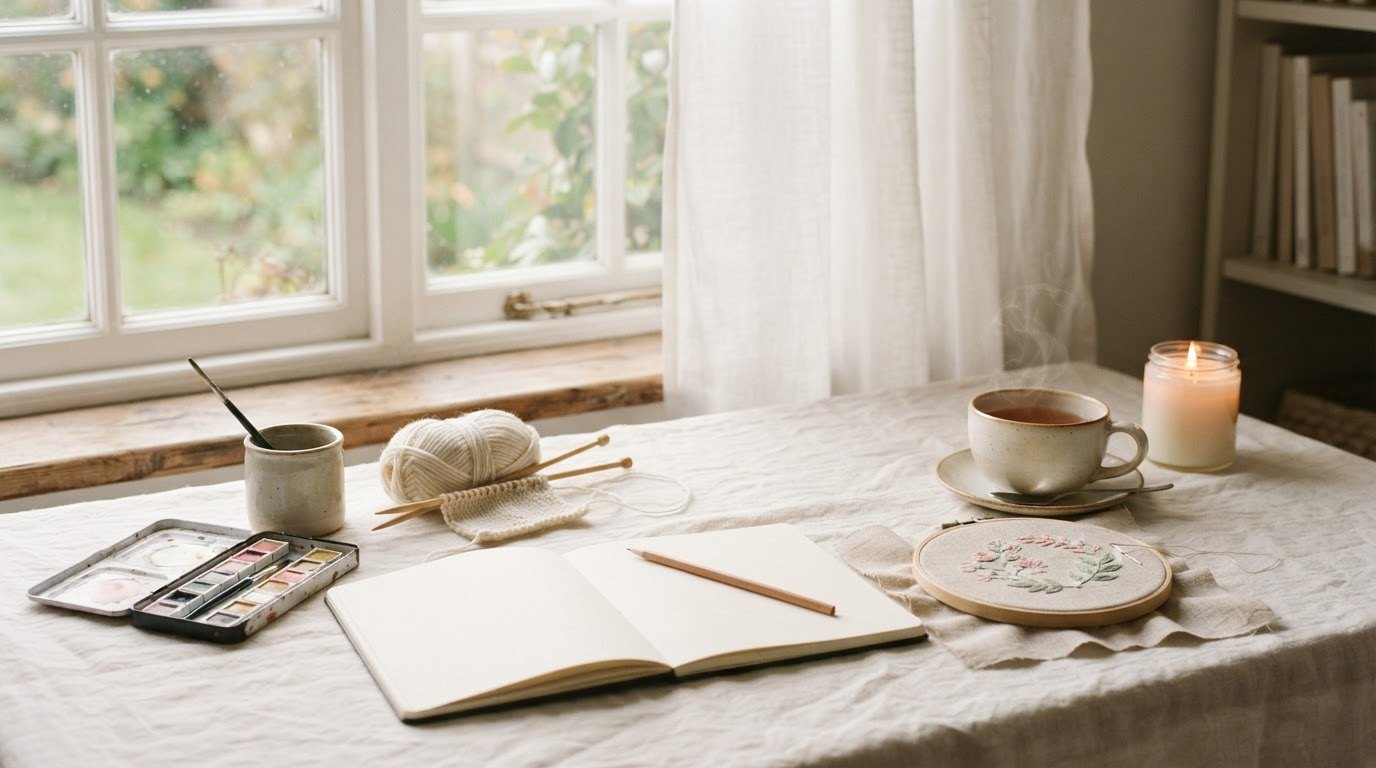
There's a very specific feeling I get on a Friday evening after a long, people-heavy week. It's not sadness and it's not boredom. It's more like my brain is a phone at 4% battery, quietly begging to be plugged in somewhere calm. For years I tried to "fix" that feeling by saying yes to more plans. It took me embarrassingly long to realize what I actually needed was something to do with my hands, my mind and my evening that asked nothing of anyone.
That's what a good hobby is for an introvert. Not another thing to be good at, not a side hustle, not a reason to post. Just a soft place to land where you can recharge and still feel like you made something, learned something or noticed something beautiful.
So I put together the list I wish I'd had back then: 30 hobbies for introverts, sorted by what kind of quiet you're craving. At the end you'll find a big comparison table with the starter cost of each one, how long it takes to see a first result and how much social battery it really needs (spoiler: none or very little). Screenshot it, pick two or three that make you curious and give yourself permission to be a beginner.
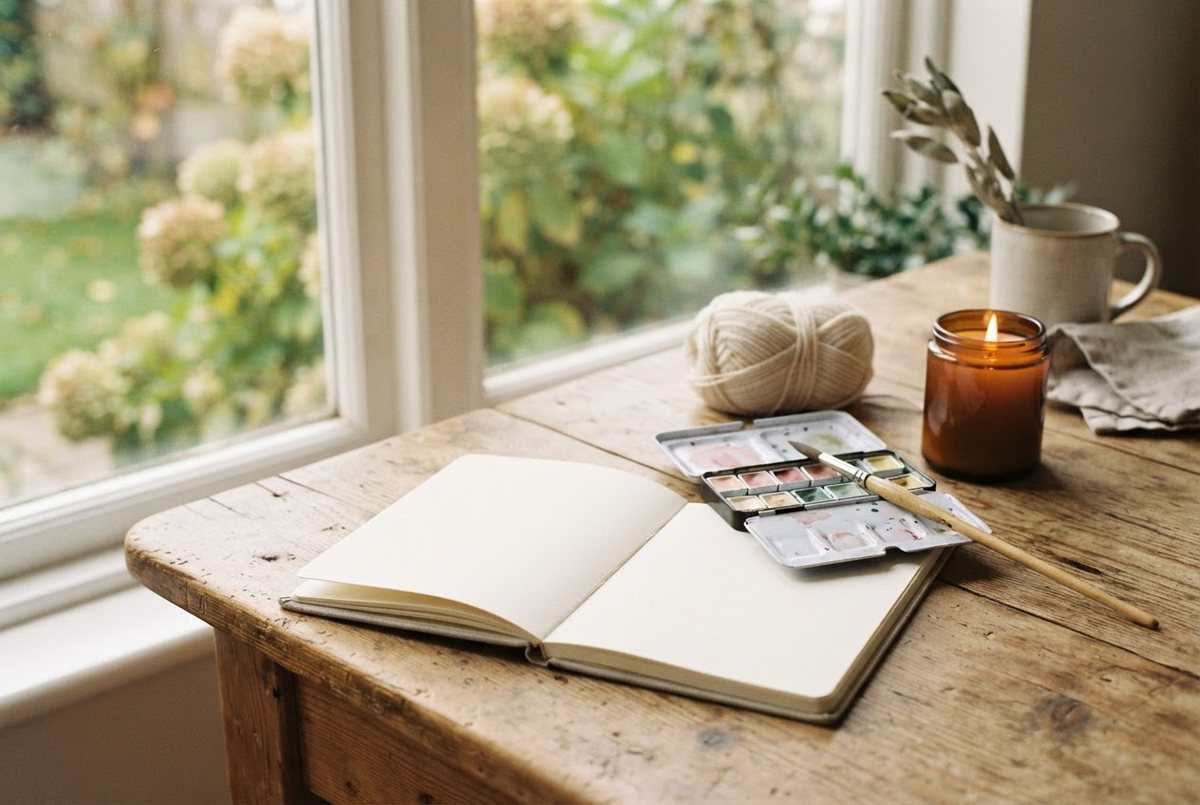
Why Introverts Need Their Own Kind of Hobbies
Introversion isn't shyness and it isn't disliking people. It's simply about where you get your energy. Extroverts tend to recharge around others; introverts tend to recharge alone or in very small, familiar company. Plenty of introverts love their friends deeply and still need an evening by themselves after a party, the way you'd need water after a run.
The trouble is that a lot of popular hobby advice is quietly built for extroverts: join a club, take a group class, find a team. Those can be lovely later, but if you're already running on empty, they can feel like one more performance. The hobbies below share a few things in common:
- You can start alone. No sign-ups, no small talk, no group chat required.
- They have a gentle rhythm. Repetitive, absorbing, often hands-on, which is exactly what a busy mind needs to settle.
- They give you something back. A page, a scarf, a photo, a plant that's still alive – a small, visible "I did that."
- They can grow social later, if you want. Many have quiet online communities or tiny meet-ups you can join on your own terms.
One small permission slip before we start: you don't need to be talented at any of these. You only need to enjoy the twenty minutes you spend on them. That's the whole job.
Creative Hobbies for Quiet Evenings
These are for the days when you want to make something just for yourself, with no audience and no deadline.
1. Journaling
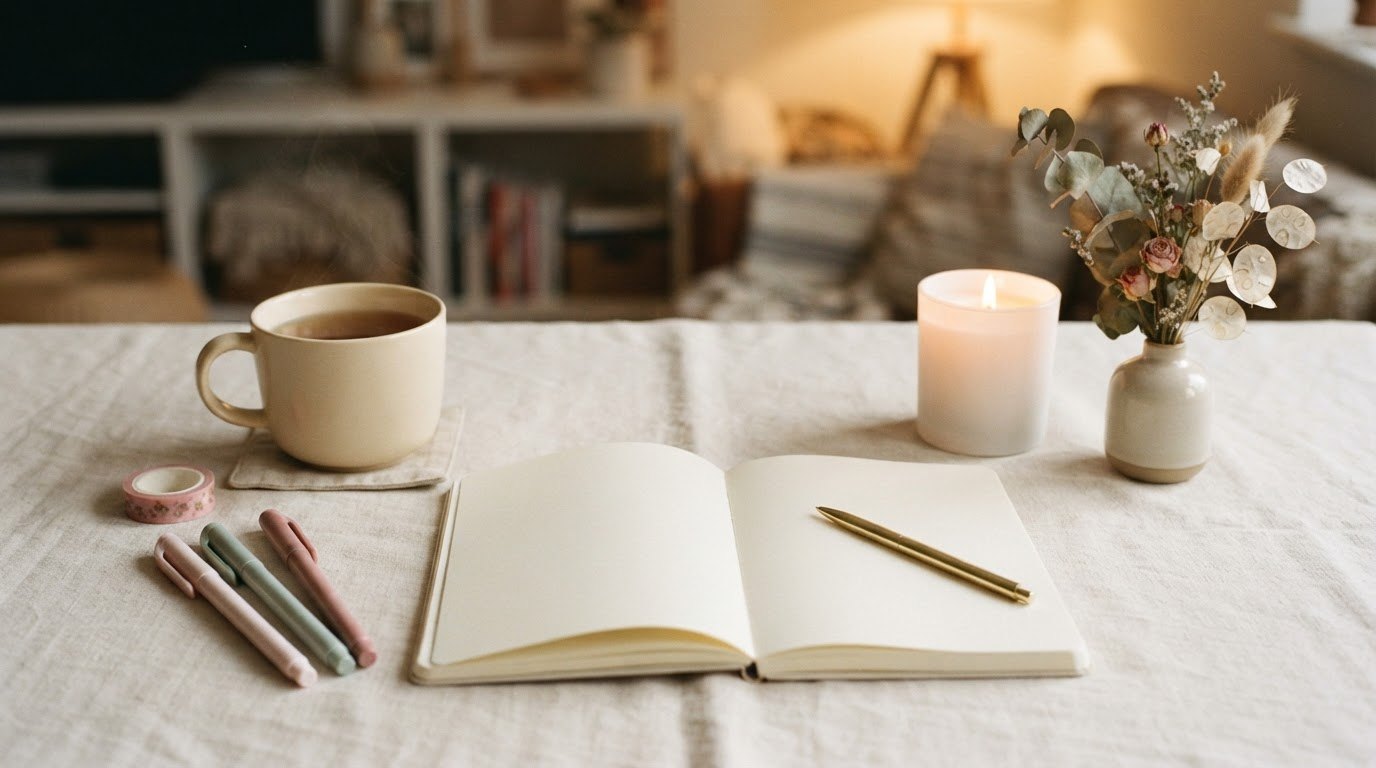
If I could only keep one hobby, it would be this one. I write most evenings after my tea, usually just a page, and it's the closest thing I have to an off switch for a racing mind. Start with three lines: what happened, how it felt, one thing you're looking forward to. That's it. A simple linen-covered journal that lies flat makes the habit feel a little more special. If you're stuck on what to write, my list of journaling ideas has prompts for every kind of mood.
2. Watercolor Painting
Watercolor is wonderfully forgiving for perfectionists because it's supposed to look a little loose. Start by painting simple shapes: a lemon, a leaf, a teacup. Give yourself fifteen minutes and three colors. For a first set, look for a compact palette with around 12–24 pans and a water brush pen, plus cold-press paper (regular printer paper buckles and will make you think you're bad at it).
3. Sketching
All you need is a pencil and whatever is in front of you. Try a "one object a day" habit: your mug, your keys, the plant on your windowsill. Draw it for ten minutes without erasing. You'll be surprised how quickly your eye improves, and how much more you start noticing in ordinary rooms.
4. Calligraphy and Hand Lettering
There's something deeply calming about slow, deliberate strokes. Begin with a brush pen and practice just the basic "thin up, thick down" rule on the alphabet. Ten minutes a day for two weeks and your grocery lists will look like wedding invitations. It's also lovely for writing birthday cards to friends.
5. Phone Photography
You don't need a fancy camera. Pick a theme for a week – "soft light," "things that are pink," "shadows" – and take one intentional photo a day. Turn on the grid, tap to focus and get closer than feels natural. It turns a solo walk into a treasure hunt.
6. Creative Writing
Short stories, poems, a novel you'll never show anyone – all of it counts. Try a "100-word story" once a week: exactly one hundred words, a beginning, a middle and an end. The limit makes it feel playful instead of overwhelming. Plenty of introverts discover they've been narrating their lives in their heads for years anyway.
7. Collage and Scrapbooking
Save tickets, magazine cutouts, pressed petals, receipts from a favorite café. Once a month, sit down with scissors and a glue stick and arrange them into a page. It's low-pressure because there's no "right" result, and it becomes a sweet little memory archive over time.
8. Air-Dry Clay
Pottery classes can be busy and loud; air-dry clay lets you get the same muddy, meditative feeling at your kitchen table. Start with a tiny ring dish or a trinket tray. Shape it, let it dry for a day or two, sand the edges, then paint it. You'll end up with small handmade gifts for friends, too.
Hands-On Crafts That Calm a Busy Mind
Repetitive handwork is a quiet superpower. Your hands stay busy, and your thoughts slowly stop running in circles.
9. Knitting
Knitting is basically meditation that ends with a scarf. Learn two stitches – knit and purl – and make a simple square or a dishcloth first, not a sweater (ask me how I know). Chunky yarn and bigger needles give you visible progress quickly, which helps a lot in the beginning.
10. Crochet
If knitting feels fiddly, crochet only uses one hook and mistakes are easier to undo. A beginner crochet kit in soft neutral yarn with a step-by-step guide is the easiest way in. Look for one that includes a few hooks, stitch markers and an easy first project like a coaster or a little flower. Most people can make a first wobbly coaster in an evening.
11. Embroidery
Embroidery is small, portable and endlessly pretty. You only need a hoop, fabric, floss and a needle. Start with three stitches: backstitch, satin stitch and French knots. A floral embroidery starter kit with a pre-printed pattern takes away the hardest part (deciding what to stitch). Later, try embroidering a tiny flower on the corner of a plain tote or a denim pocket.
12. Candle Making
This one is a little bit chemistry, a little bit art, and the result makes your home smell wonderful. Simple soy container candles are the easiest start. Melt, pour, wait, and the next evening you have a candle you made yourself. My guide to candle making for beginners walks you through it step by step, including the safety bits (never leave melting wax unattended, and keep a lid nearby).
13. Pressing Flowers
Pick a few flowers or leaves on a walk, place them between parchment paper inside a heavy book, and wait about two weeks. That's it. Use them for bookmarks, framed art or cards. It's a hobby that teaches patience in the gentlest way possible.
14. Simple Sewing
Hand-sewing a button, hemming a pair of trousers or making a basic tote bag is surprisingly satisfying. Start with mending: fix one thing in your wardrobe that's been waiting in the "someday" pile. If you love it, a small machine and a pillowcase pattern are a great next step.
15. Jigsaw Puzzles
Puzzles are the perfect "I want to do something, but not think too hard" hobby. Leave one on a side table and add a few pieces with your evening tea. A pastel floral 1000-piece puzzle is a lovely challenge without being frustrating; if you're new, start with 500 pieces so you get that first finished picture within a week.
Hobbies for Curious Minds
For the introverts who recharge by thinking, learning and getting completely lost in something.
16. Reading
The classic introvert hobby for a reason. If you used to read constantly and somehow stopped, start small: ten pages before bed, a book you actually want to read (not the one you think you should). My tips on how to read more books helped me get back into it after a long slump. And if you have a spare corner, a soft chair, a blanket and a good lamp turn reading into a ritual.
17. Learning a Language
Ten minutes a day on an app, a children's book in your target language or a show with subtitles – it all adds up. Choose a language connected to something you love (a cuisine, a country you dream of visiting, old films). You'll have a few phrases ready in about two weeks, and the brain-tickle of understanding something new is addictive.
18. Crosswords and Word Puzzles
A daily crossword is a five-to-twenty-minute ritual that asks nothing but your attention. Start with Monday-level puzzles (they're the easiest in most newspapers) and work your way up. Keep a pencil, not a pen. Nobody needs that pressure.
19. Chess
Chess sounds intense, but you can play against a computer at the gentlest level, solve a few puzzles a day or follow a beginner course at your own pace. It's quiet, strategic and endlessly deep. No opponent across the table required.
20. An Online Course Just for Fun
Art history, astronomy, interior design, psychology, the history of fashion – there are free and low-cost courses on almost anything. The trick is choosing one with zero career pressure. Watch one lesson a week with a notebook and a cup of tea, and let it be pure curiosity.
21. Classic Film Nights
I have a soft spot for Old Hollywood: the gowns, the dialogue, the lighting. Turn it into a hobby by working through a list – one decade, one actress or one director at a time. Keep a little film log with the title, year, a favorite line and a one-sentence review. It's movie night with a bit of purpose.
Slow Hobbies That Get You Outside
Being an introvert doesn't mean staying indoors forever. These get you moving and breathing fresh air without a crowd.
22. Gardening and Houseplants
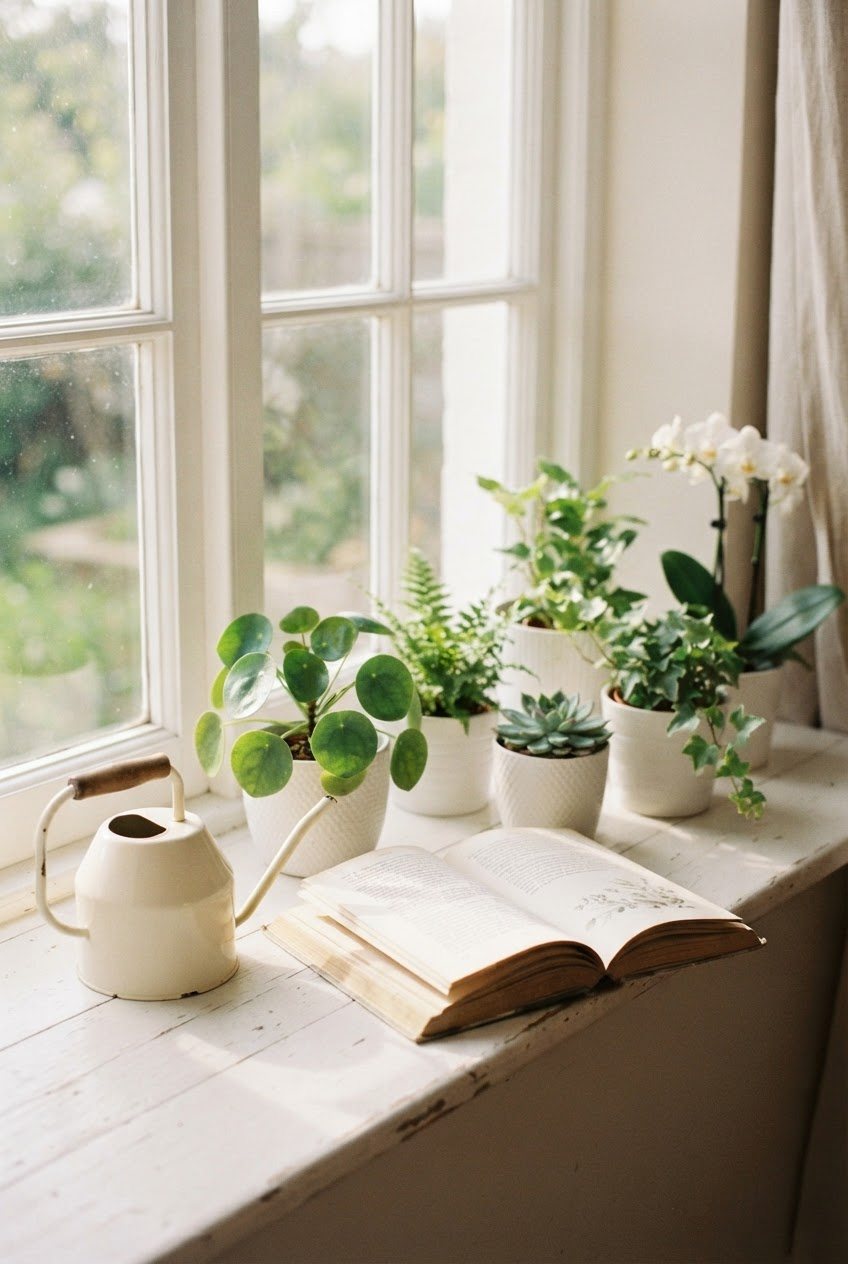
Even one plant on a windowsill counts. Start with forgiving ones: pothos, snake plant or a spider plant. Check the soil once a week with your finger and water only when the top inch is dry. Repotting into a white ceramic pot with a drainage hole is a simple first "project" (look for the hole – it's what keeps roots from rotting). If you have a balcony or a garden, herbs and flowers in pots are the next step.
23. Solo Walks
A walk becomes a hobby when you give it a little intention. Try a "same route, every season" walk, a new street every week, or a no-headphones walk where you just listen. Thirty minutes is plenty. I often come back with more clarity than an hour of overthinking ever gave me.
24. Birdwatching
Birdwatching is peaceful, a bit nerdy and wonderfully solitary. Start from your window: put out a feeder, keep a notebook nearby and use a free bird ID app. You'll be amazed at how many visitors you've been missing. Weekend mornings at a local park are perfect for the next step.
25. Yoga at Home
No studio, no mirrors, no one next to you in perfect form. Find a gentle beginner video, roll out a mat and do fifteen minutes. A non-slip yoga mat in a soft lavender shade with decent cushioning (around 6mm) makes the floor feel kinder on your knees. If you have any injuries or health conditions, check with your doctor before starting something new.
26. Solo Museum and Gallery Visits
Going to a museum alone is one of my favorite quiet luxuries. Choose weekday mornings when it's calm, pick just one room or exhibit, and stay as long as you like. No one is waiting for you to finish. Bring a pocket notebook and sketch or write about one piece you loved.
Homebody Hobbies With a Bit of Purpose
For when you want to stay in, but still feel like you're building something.
27. Baking Bread
Bread is slow, tactile and patient – an ideal match for an introvert's evening. Kneading dough is wonderfully grounding, and the waiting time is a built-in excuse to read. Start with a simple no-knead loaf from a trusted baking book or site, and save sourdough for once you're hooked.
28. Thrifting and Vintage Hunting
Wandering a quiet thrift shop on a weekday is surprisingly restful. Give yourself a mission: a pretty teacup, a picture frame, a vintage scarf. Set a small budget and enjoy the hunt more than the haul. You'll slowly fill your home with things that have stories.
29. Tracing Your Family History
Genealogy is detective work for quiet people. Start with what you know: write down names, dates and places for your parents and grandparents, then gently ask relatives for stories and old photos. Online records can fill in the gaps. It's absorbing, meaningful, and often brings unexpected tenderness.
30. Quiet Volunteering
Not all volunteering means big crowds. Walking dogs at an animal shelter, sorting books at a library sale, knitting blankets for a hospital or writing cards for a senior center are all low-key ways to give back. Many shelters let you come at the same time each week, so it becomes a calm routine with very little small talk.
The Introvert Hobby Table
Here's everything in one place. Starter cost is a rough guide: $ means under about $20 (or free with things you already own), $$ roughly $20–60, and $$$ over $60. "Time to first result" is how long it usually takes to have something to show for it. "Social battery needed" is either none (completely solo) or low (a little human contact, on your terms).
| # | Hobby | Starter cost | Time to first result | Social battery needed |
|---|---|---|---|---|
| 1 | Journaling | $ | Same evening | None |
| 2 | Watercolor painting | $$ | 1 evening | None |
| 3 | Sketching | $ | 10 minutes | None |
| 4 | Calligraphy and hand lettering | $ | About 2 weeks | None |
| 5 | Phone photography | $ | 1 day | None |
| 6 | Creative writing | $ | 1 evening | None |
| 7 | Collage and scrapbooking | $ | 1 afternoon | None |
| 8 | Air-dry clay | $ | 2–3 days (drying) | None |
| 9 | Knitting | $$ | 1–2 weeks | None |
| 10 | Crochet | $$ | 1 evening | None |
| 11 | Embroidery | $ | 1 weekend | None |
| 12 | Candle making | $$ | 1–2 days (curing) | None |
| 13 | Pressing flowers | $ | About 2 weeks | None |
| 14 | Simple sewing | $ (hand) / $$$ (machine) | 1 evening | None |
| 15 | Jigsaw puzzles | $ | 3–7 days | None |
| 16 | Reading | $ (free with a library card) | 1–2 weeks per book | None |
| 17 | Learning a language | $ | About 2 weeks | None |
| 18 | Crosswords and word puzzles | $ | Same day | None |
| 19 | Chess | $ | About 1 week | None |
| 20 | Online course for fun | $–$$ | 1 week | None |
| 21 | Classic film nights | $ | Same evening | None |
| 22 | Gardening and houseplants | $$ | 2–4 weeks | None |
| 23 | Solo walks | $ | Same day | None |
| 24 | Birdwatching | $ | About 1 week | None |
| 25 | Yoga at home | $$ | About 2 weeks | None |
| 26 | Solo museum visits | $–$$ | Same day | Low |
| 27 | Baking bread | $ | 1 day | None |
| 28 | Thrifting and vintage hunting | $ | 1 afternoon | Low |
| 29 | Tracing family history | $–$$ | About 1 week | Low |
| 30 | Quiet volunteering | $ (free) | First visit | Low |
How To Choose the Right Hobby for You
Thirty options can feel like a lot (introverts and decision fatigue are close friends). Here's a quick way to narrow it down:
- Name the feeling you want. Calm? Pick a repetitive craft like knitting or embroidery. Creative spark? Watercolor or writing. Mental stretch? Chess or a language. Fresh air? Walks or birdwatching.
- Check your real budget. Start with something in the $ column. You can always upgrade once you know you love it.
- Be honest about time. If you only have fifteen minutes a night, choose something you can pick up and put down easily, like sketching, crosswords or a puzzle.
- Try it three times. The first attempt is awkward for everyone. Give a new hobby three short sessions before deciding it's not for you.
- Keep the supplies visible. A basket with your yarn or a sketchbook on the coffee table is half the motivation. Out of sight really is out of mind.
How To Make Time for a Hobby (Without Another Schedule)
The fastest way to kill a new hobby is to turn it into a chore. A few gentle ways to keep it light:
- Attach it to something you already do. Sketch while the kettle boils, do the crossword with your morning coffee, knit during one episode of a show.
- Create a little ritual. Light a candle, put on soft music, make a cup of tea. Your brain starts to associate that setting with "this is my calm time."
- Protect one evening a week. Treat it like a plan with a friend. It's okay to say "I'm busy" when you're busy with yourself.
- Let it be imperfect. Wonky stitches, muddy paintings and half-finished puzzles are all part of it. If you're carrying guilt about "unproductive" time, my post on how to stop feeling guilty for resting might help.
When You're Ready for a Little Company
Many introverts eventually want to share their hobby, just on their own terms. A few low-pressure ideas:
- Join an online community or forum for your craft, where you can read and lurk long before you post.
- Try a small, beginner-friendly workshop where everyone is focused on the activity, not on chatting.
- Invite one friend for a "parallel hobby" evening: you both work on your own projects side by side, with tea and very little pressure to talk.
- Look for a library book club that meets once a month. You can listen far more than you speak, and that's perfectly welcome.
Hobbies are one of the gentlest ways to meet people who already share something with you. But there's never a rush. A hobby you keep entirely to yourself is still a wonderful hobby.
Final Thoughts
Being an introvert isn't something to fix. It's a way of being in the world that needs a little more quiet, and hobbies are one of the loveliest ways to give yourself that.
Pick one idea from this list that made you smile, gather the simplest supplies and give it twenty minutes this week. Let it be slow, let it be imperfect and let it be yours. That small, calm hour you create for yourself is worth protecting.