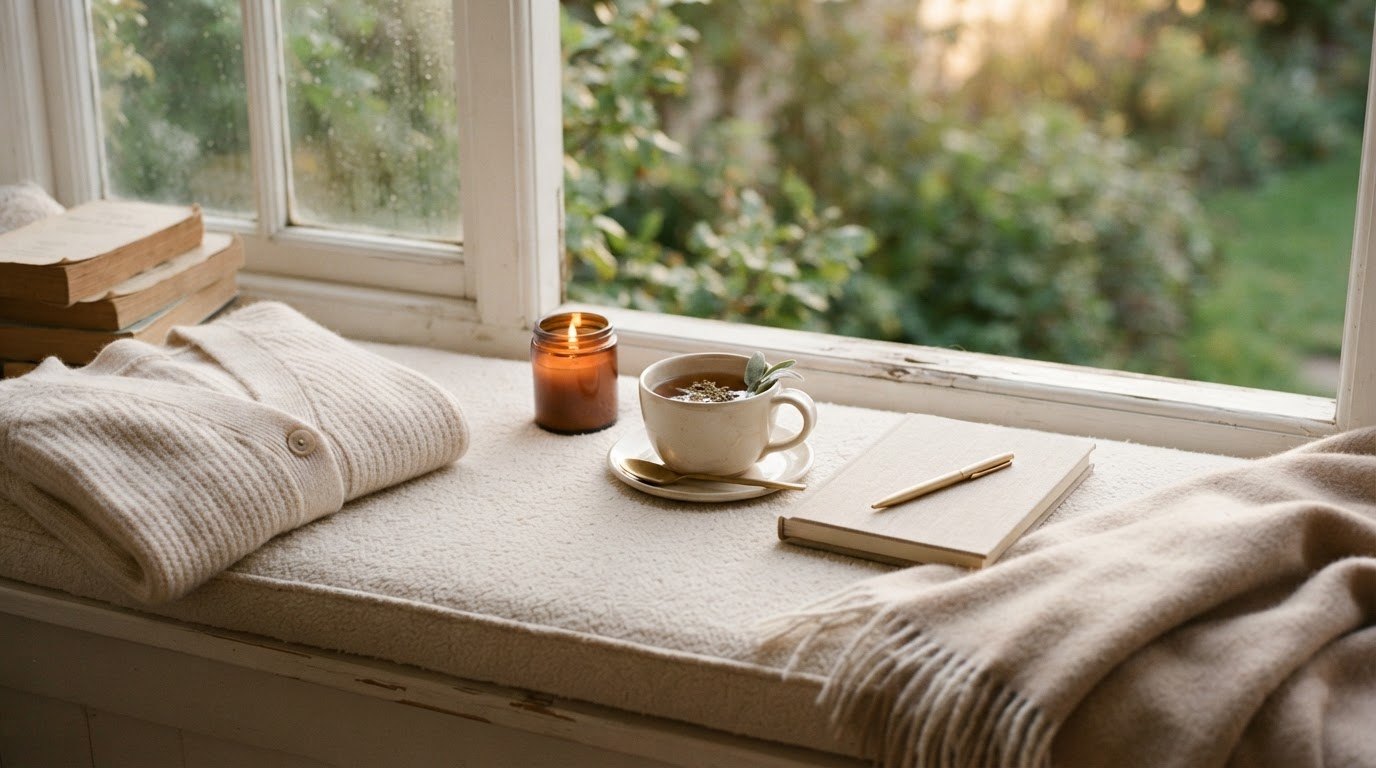
A while ago I watched a "how to completely change your life" video that told me to wake up at five, join a run club, go to three networking events a week, post every day and say yes to every invitation. I closed the app feeling tired before I had even started. Not because the advice was bad for everyone, but because it was written for someone who gets energy from people, noise and being seen.
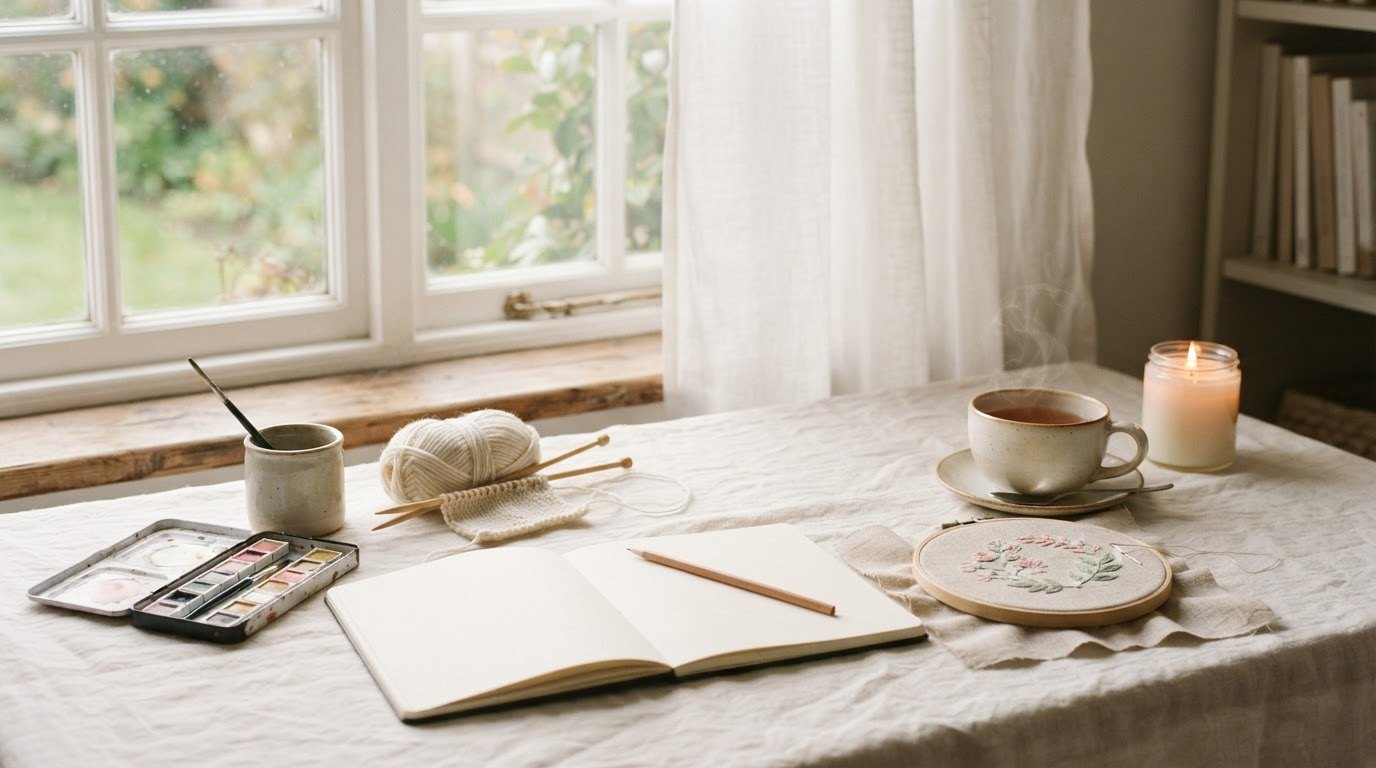
I've always needed quiet evenings to feel like myself. A busy day full of conversations leaves me a little wrung out, and the thing that brings me back is a glass candle, a mug of evening tea and an hour where nobody needs anything from me. For a long time I thought that meant a "glow up" wasn't really for me. It turns out it just needed a different shape.
So these are my glow up tips for introverts: twenty quiet ways to feel your best in four areas (skin, style, mind and energy), each with a low-social-energy version for the weeks when you have nothing left to give. There's also a recharge-friendly weekly rhythm table at the end, so your self-improvement fits around your need for rest instead of fighting it.
No dramatic before-and-after, no "new year, new you" pressure, no rule that you have to become louder. Just small, steady changes you can make mostly at home, mostly alone, mostly in comfortable socks.
What a Quiet Glow Up Actually Means
A quiet glow up is the same thing as any other glow up, minus the audience. It's taking better care of your skin, dressing in a way that feels like you, being kinder to your own mind and protecting your energy so you have more of it. The difference is that you do it privately, slowly and without announcing it.
That suits introverts well, because most of us already have the raw materials: we notice details, we're comfortable with routines, we reflect a lot and we don't need outside applause to keep going. What tends to trip us up is copying plans built for extroverts and then feeling like failures when they drain us.
Three ground rules for this whole guide:
- Rest counts as progress. Recharging isn't a break from your glow up. It's part of it.
- Small beats impressive. A five-minute habit you keep for months does more than a dramatic plan you drop in a week.
- Nobody needs to notice. If people do, lovely. If they don't, it still worked.
If being on your own still feels a bit uncomfortable rather than restful, my guide on how to be happy alone is a gentle place to start before you build anything else on top.
The Quiet Glow Up Plan: 4 Areas at a Glance
This is the heart of the guide. Each area has a "full energy" version for good weeks and a low-social-energy version for weeks when you're running on empty. Both count. Screenshot it and pick one area to start with.
| Area | Full energy version | Low-social-energy version | Time |
|---|---|---|---|
| Skin | Full evening routine plus a weekly at-home mask night | Cleanse, moisturize, sunscreen in the morning. Nothing more. | 3–15 min a day |
| Style | Plan three outfits on Sunday, try one new combination | Wear your "uniform" outfit and add one finishing touch | 2–10 min a day |
| Mind | Journal after tea, read for 20 minutes, one small brave thing | Write three lines before bed, nothing else | 3–30 min a day |
| Energy | One planned social plan a week, a gentle walk most days | Protect two quiet evenings, say a kind "not this week" | Ongoing |
The point of the low-energy column is that you never fall off the plan completely. On hard weeks you shrink it instead of quitting it, and that's what makes a glow up last.
Skin: 5 Quiet Glow Up Tips
Skincare is the most introvert-friendly part of any glow up. It happens at home, it's calming, and it rewards patience rather than performance.
1. Turn Your Evening Routine Into a Recharge Ritual
Instead of rushing through skincare at the sink, slow it down on purpose. Dim the bathroom light, light a candle if you like, and give each step its own minute: cleanse, pat dry, apply your serum, then moisturizer. Breathe out slowly while you massage it in.
It takes five or six minutes, and it becomes a clear signal to your brain that the social part of the day is over. On days when I've talked more than I wanted to, this little routine is often where I start feeling like myself again.
2. Keep Your Routine to Three Core Steps
A glow up doesn't need a twelve-step regimen. A gentle cleanser, a moisturizer that suits your skin and a daily sunscreen do most of the work. Add one targeted product only once those three feel automatic.
My skin is combination and sensitive, with a T-zone that gets shiny by lunch, so I keep things simple and add new products one at a time. If your skin is similar, my skincare routine for combination skin lays out a calm morning and evening order.
3. Upgrade Where Your Face Rests
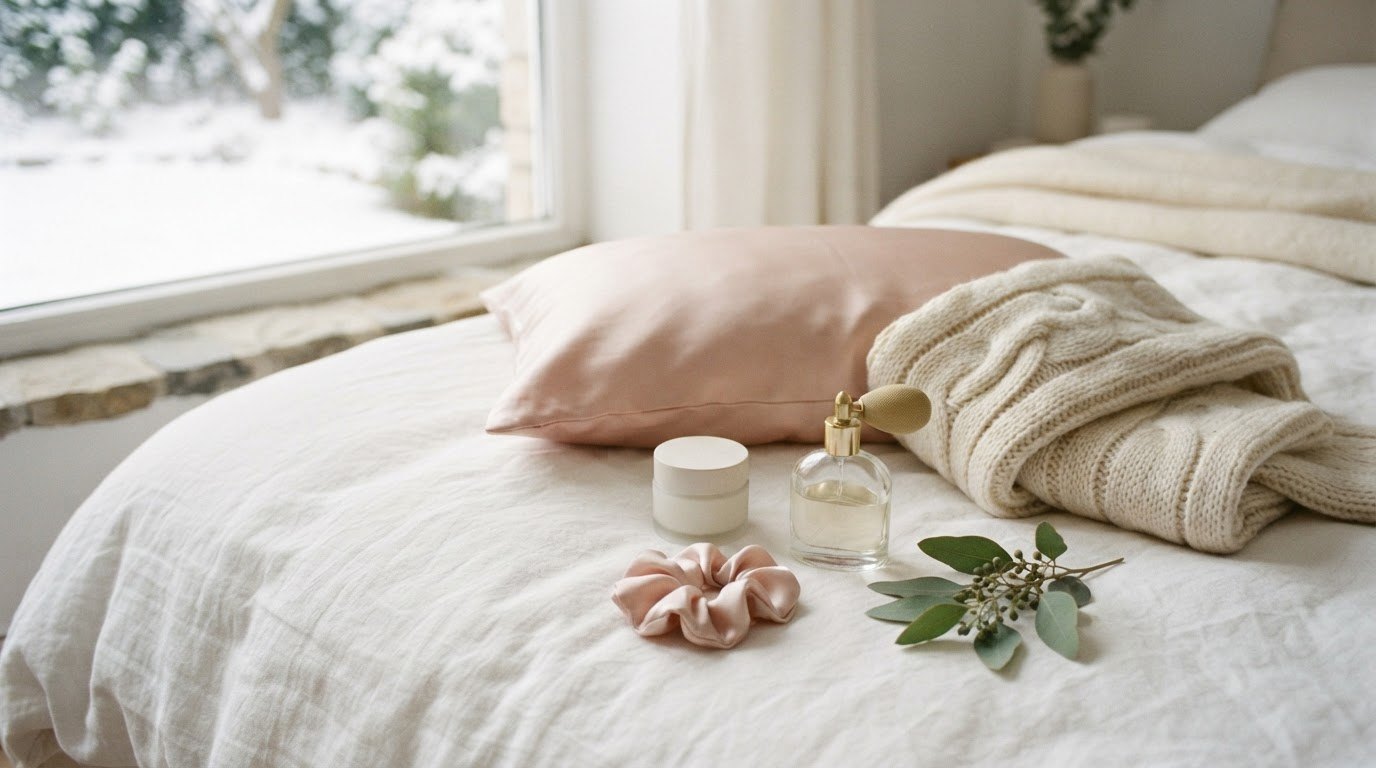
You spend about a third of your life with your cheek on a pillowcase, so it's an easy, zero-effort upgrade. A soft blush pink silk pillowcase creates less friction than rough cotton, which many people find kinder to sensitive skin and to hair. Look for real mulberry silk and a hidden zipper or envelope closure.
Change it at least once a week. Whatever you pick, a fresh pillowcase is one of the simplest skin habits there is.
4. Plan One At-Home Mask Night a Week
Choose one evening (Sunday works for most people) for a slightly longer routine: a gentle mask, a face massage with your moisturizer, maybe a warm shower first. Put on a podcast or an album and give yourself twenty minutes.
This is your "spa day" without a spa, a receptionist or small talk. Keep everything for it in one basket so setting up takes thirty seconds, not ten minutes of searching.
5. Drink Water at Your Desk, Not Just at Meals
Keep a glass or bottle within arm's reach while you work or read, and refill it each time it's empty. It won't transform your skin overnight, but feeling properly hydrated tends to make everything, including your mood, a little easier.
Low-energy version: on depleted days, cleanse, moisturize and go to bed. That still counts.
Style: 5 Quiet Glow Up Tips
Style can feel like a loud, social topic, but it doesn't have to be. For introverts, getting dressed is mostly about feeling comfortable and quietly confident, so you're not thinking about your clothes once you leave the house.
6. Build a Personal "Uniform"
Find one outfit formula that makes you feel good and repeat it without guilt. For example: straight-leg jeans, a soft knit and simple flats, or a midi skirt, a fitted tee and a long cardigan. A uniform saves decision energy, which is exactly the energy many of us are short on.
To find yours, look at the three outfits you reach for most and write down what they have in common: the silhouette, the colors, the fabric. That's your formula.
7. Choose Soft Layers You Can Hide In (a Little)
There's nothing wrong with wanting a bit of a comfort shield in a busy room. A cream oversized knit cardigan looks polished over almost anything, keeps you warm in over-air-conditioned offices and feels like a hug on a long day. Look for a soft cotton or wool blend that doesn't itch at the neck.
8. Stick to a Small, Calm Color Palette
Pick three or four colors that work together (for example cream, camel, soft pink and denim) and buy mostly within them. Everything matches, getting dressed takes two minutes and you look put together without trying to stand out. My post on how to develop your unique personal style walks you through finding colors and shapes that feel like you.
9. Add One Finishing Touch Every Day
One small detail is what makes a simple outfit look intentional: small gold earrings, a delicate necklace, a neat bag or a bit of color on your lips. A soft pink tinted lip balm is the easiest version of this. It takes five seconds, needs no mirror skills and makes you look rested even when you're not.
10. Do a Quiet Closet Edit Once a Season
Set aside an hour on a weekend with nobody around. Try on anything you haven't worn in months and ask one question: "Do I feel like myself in this?" If the answer is no, it goes into a donate bag. You don't need to explain it to anyone or film it. Fewer, better-loved clothes make mornings calmer.
Low-energy version: wear your uniform and add your finishing touch. Done.
Mind: 5 Quiet Glow Up Tips
This is where introverts often shine. We're naturally reflective, which means mental habits like journaling and reading tend to stick for us more easily than for people who find solitude boring.
11. Journal After Your Evening Tea
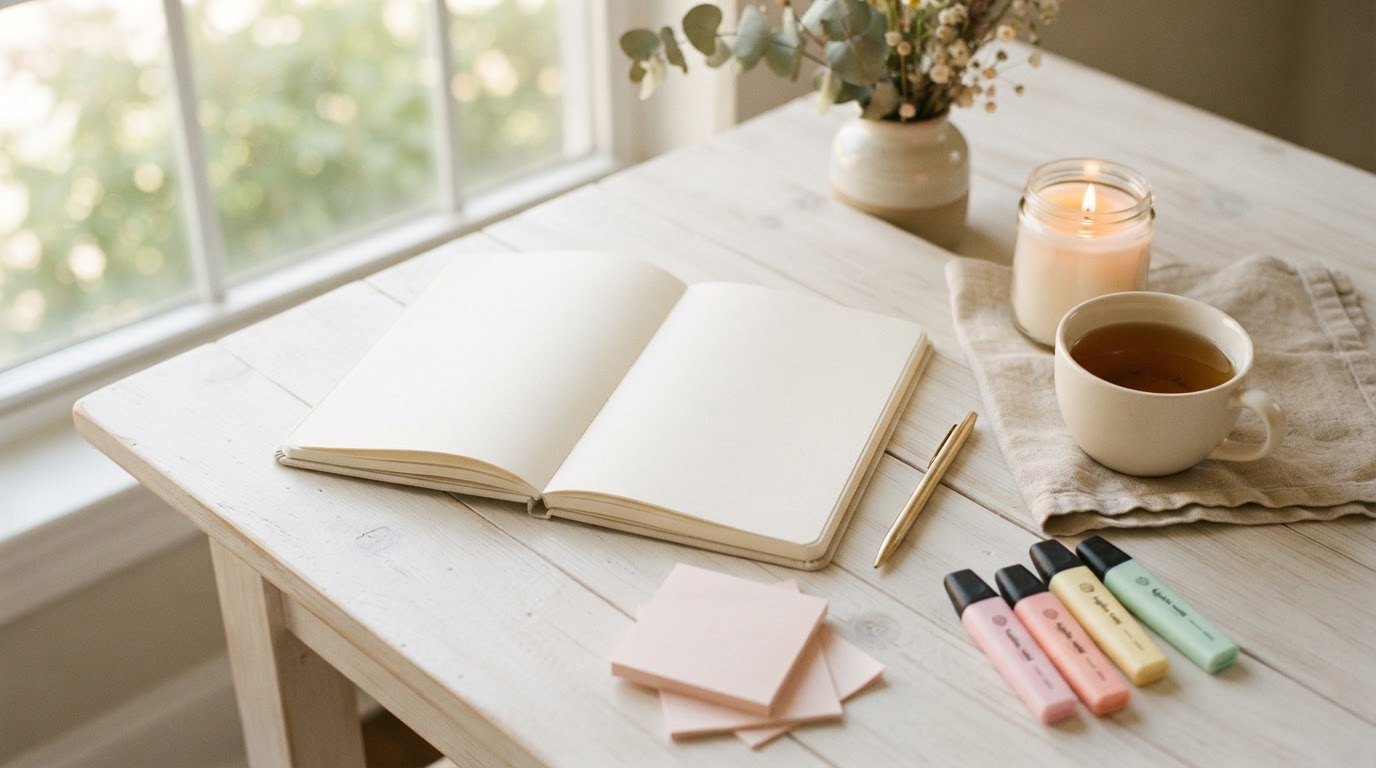
Make tea, sit somewhere comfortable and write for ten minutes. No rules about what. My own habit is journaling right after evening tea, and pairing the two means I rarely skip it. A beige linen hardcover journal makes it feel like a small treat rather than homework; look for lay-flat binding and thick paper so pens don't bleed through.
If you stare at the blank page, my list of journaling ideas has fifty prompts for exactly that moment.
12. Use a 3-Line Check-In on Busy Days
On days with a lot of people, you might not have ten minutes of reflection in you. Write three lines instead:
- One thing that drained me today.
- One thing that gave me energy.
- One thing I need tomorrow.
Over a few weeks you'll see clear patterns, which makes planning your week much easier.
13. Read 20 Pages Before Bed
Reading is one of the most restful things an introvert can do: it's quiet, absorbing and entirely yours. Twenty pages a night adds up to roughly a book every two weeks. Keep the book on your pillow in the morning so it's the first thing you see at bedtime, and put your phone on charge across the room.
14. Do One Small Brave Thing a Week
A quiet glow up isn't about avoiding everything hard. It's about choosing your stretches carefully. Once a week, do one small thing that feels a little uncomfortable: ask a question in a meeting, return something to a shop, message an old friend first. Small enough that it doesn't wreck your week, real enough that you feel proud.
15. Talk to Yourself Like a Friend
Introverts tend to replay conversations for days ("why did I say that?"). When you catch yourself doing it, try this mini script: "That was one small moment. Nobody is thinking about it as much as I am. I did my best with the energy I had." Then move on to something with your hands, like making tea or tidying a shelf.
Low-energy version: three lines in your journal and a few pages of a book you love.

Energy: 5 Quiet Glow Up Tips
This is the area most glow up plans skip, and it's the one introverts need most. Every other change is easier when your energy isn't constantly in the red.
16. Learn Your Personal Social Battery
For two weeks, rate your energy at the end of each day from 1 to 5 in your journal, and note what happened (a long call, a dinner out, a quiet day at home). You'll quickly learn your real limits, for example "two social plans a week feels good, three leaves me flat." Plan around that number instead of around what you think you should manage.
17. Build Recovery Time Into Your Calendar
After a big social event, block the next evening as "recharge." Treat it like any other appointment. It doesn't need to be productive: a bath, a film, a candle and a blanket all qualify. If resting still makes you feel guilty, my post on how to stop feeling guilty for resting is a gentle read.
18. Create Quiet Pockets in Noisy Days
You can't always choose a calm environment, but you can carry a little calm with you. A pair of cream wireless noise cancelling headphones turns a loud commute or open-plan office into a much gentler place. Look for comfortable ear cushions and a long battery life. Even ten minutes of quiet with your eyes closed at lunch can reset a draining day.
19. Make Your Home a Real Recharge Space
Choose one corner that's only for resting: a chair, a soft throw, a small lamp and something that smells lovely. A cream glass jar candle in a soft vanilla or linen scent is my favorite kind of signal that it's time to switch off. Light it when you sit down, blow it out before you leave the room, and keep it away from curtains and anything that could catch.
20. Practice a Kind "Not This Week"
Saying no doesn't have to be cold. Try one of these mini scripts:
- "I'd love to see you, but this week is full for me. Could we do something next week?"
- "I'm going to have a quiet night in tonight, but please send me photos."
- "I can come for an hour, then I'll head home."
That last one is underrated. Arriving with a planned exit time often makes social plans feel far more doable.
Low-energy version: protect two quiet evenings a week and use one kind script when you need it.
A Recharge-Friendly Weekly Rhythm
Here's how the four areas can fit into a week without draining you. Social plans sit next to recharge time, and the bigger glow up tasks land on quieter days. Adjust the days to match your own schedule.
| Day | Social load | Glow up focus | Recharge |
|---|---|---|---|
| Monday | Low | Plan three outfits, quick 3-line check-in | Early night with a book |
| Tuesday | Medium | One small brave thing | Headphones on the way home |
| Wednesday | Low | Full evening skincare ritual, 20 pages | Tea and journaling |
| Thursday | Medium to high | Your one planned social plan | Leave at your planned time |
| Friday | Low | Minimum routine only | Protected recharge evening |
| Saturday | Flexible | Gentle walk, closet edit once a season | A long afternoon in your recharge corner |
| Sunday | Low | Mask night, rate your week | Candle, blanket, no plans |
Notice that the high-energy day is followed by a deliberately quiet one. That pairing is the whole trick. If you'd like more ideas for calming down after a busy day, these stress relief activities for introverts fit perfectly into the recharge column.
How To Start Without Feeling Overwhelmed
Twenty tips is a lot to look at, so please don't try them all at once. Here's a gentler way in:
- Week one: pick one tip from the area that feels easiest. For most people that's skin.
- Week two: add one tip from the energy area, because protecting your energy makes everything else possible.
- Week three: add one mind habit, like the 3-line check-in.
- Week four: add one style habit, then keep going at your own pace.
By the end of a month you'll have four small habits that genuinely fit your life. That's a real glow up, even if nobody else can name exactly what changed.
When Quiet Starts To Feel Heavy
Needing time alone is healthy. But sometimes "I just need a quiet night" slowly turns into avoiding everyone, losing interest in things you used to love or feeling low most days. Introversion is a temperament; persistent sadness, anxiety or withdrawal is something else.
If your mood has felt low or anxious for more than a couple of weeks, or quiet time stops recharging you, please reach out to a doctor or a licensed therapist. Asking for support is a kind thing to do for yourself, not a failure of your glow up.
Final Thoughts
You don't have to become louder, busier or more visible to grow. A quiet glow up happens in slow evening routines, in a closet that finally feels like you, in journal pages nobody else reads and in the evenings you protect for yourself.
Start with one tip, let the low-energy version count on hard weeks and trust your need for rest. The softer, steadier version of you is already on her way.