
Missing out isn't always a loss. Sometimes it's the most restful thing you can choose. When you say no to a plan because you'd truly rather be at home with a book, a candle and nowhere to be, you're not falling behind anyone. You're picking the evening that fits the life you want.
That's the heart of JOMO, the joy of missing out. It isn't about hiding from people or pretending you never feel left out. It's about noticing that a quiet night can be a real pleasure, and then letting yourself enjoy it without keeping tabs on what everyone else is doing.
This guide is all about JOMO and how to actually enjoy it: what it means, why staying in can feel restful instead of lonely, the signs you could use more of it, 8 gentle ways to practice it, and a swap table for the moments when the old pull to say yes kicks in.
Think of it as permission, written down. You're allowed to like your own evenings.
What JOMO Really Means
JOMO stands for the joy of missing out. It started as the gentle opposite of FOMO, the fear of missing out, and it describes a simple shift: instead of worrying about what you're skipping, you focus on what you're choosing.
The key word is choosing. JOMO isn't the night you stay home feeling rejected because nobody invited you. It's the night you got the invitation, thought about it for a moment and decided your sofa, a soft cream knit throw and an early bedtime sounded better. Same quiet evening, completely different feeling.
A few things JOMO is not:
- It's not antisocial. You can love your friends and still love a night alone.
- It's not a rule. You don't have to turn down every plan to do it right.
- It's not a judgment of social people. Some people refill at a busy dinner party, and that's wonderful for them.
- It's not avoidance. Staying in to rest is different from staying in because everything feels too hard (more on that near the end).
If you've been working through feeling left out, my guide on how to deal with FOMO covers that side of things. This article is about the next step: actually enjoying the life you pick when you say no.
Why Staying In Can Be Restful, Not Lonely

Loneliness and solitude can look identical from the outside. Same person, same couch, same Friday night. The difference is inside: loneliness feels like something is missing, while chosen solitude feels like something is finally there. Space. Quiet. Your own pace.
Here's why a chosen night in can feel so good:
- Your nervous system gets a break. No small talk, no noise, no planning what to wear or how to get home.
- You get to follow your own rhythm. Eat when you're hungry, read until you're sleepy, change into soft clothes the second you walk in.
- You notice yourself again. A quiet evening is often when your real thoughts show up, the ones that get drowned out during busy weeks.
- You come back to people with more to give. Rest makes you warmer, funnier and more present the next time you do go out.
I'm prone to anxiety (mostly well managed these days), and I've learned that a week packed with plans leaves me jittery and short-tempered, even when every single plan was lovely. A couple of protected evenings is what keeps the whole week feeling good. If being alone still feels a little uncomfortable for you, my guide on how to be happy alone is a gentle place to build that muscle.
Signs You Need More JOMO in Your Life
You don't need to be burned out to deserve a quiet night. Still, a few signs suggest your calendar has been running you instead of the other way around:
- You feel tired before plans even start, and wiped out for a day or two after.
- You say yes mostly from guilt, then spend the week quietly dreading it.
- You can't remember the last evening with nothing scheduled.
- You scroll other people's weekends and feel worse, even when your own weekend was fine.
- You cancel last minute more than you'd like, because you overcommitted in the first place.
- Your home feels like a place you only sleep in.
- Rest only happens when you get sick.
If three or more of those feel familiar, your social energy might simply be running low. My guide to your social battery explains how to tell when you're drained and how to recharge without feeling guilty about it.
8 Ways To Practice JOMO
JOMO is a practice, not a personality. These 8 ways build it gently, one evening at a time. Pick one or two to start, and let the rest come later.
1. Decline Kindly With a Short Phrase

Half the stress of missing out happens in the moment of saying no. The longer the explanation, the more guilty you feel, and the more room the other person has to talk you into it. A short, warm phrase works better.
Try one of these and keep it in your notes so it's ready:
- "Thank you so much for thinking of me. I'm going to sit this one out, but have the best time."
- "I'm keeping this weekend quiet, but I'd love to catch up soon. Are you free for coffee next week?"
- "I'm not up for a big night this time. Send me a photo of the cake!"
The formula is simple: thanks + clear no + warm extra. No apology, no list of reasons. You don't owe anyone a doctor's note for wanting a night in.
2. Plan a JOMO Evening on Purpose
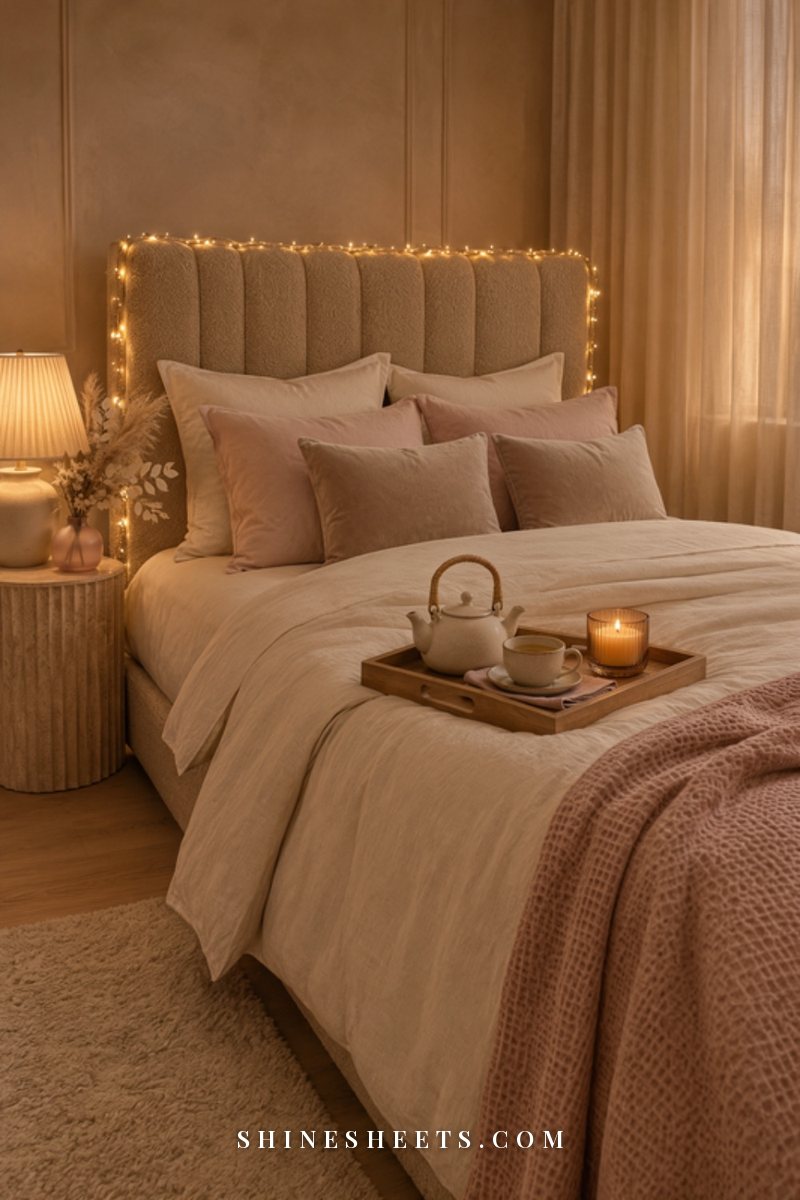
A night in feels very different when it's planned rather than leftover. If you just drift home and collapse in front of a screen, it can feel like nothing happened. If you plan it like a little date with yourself, it becomes the thing you look forward to.
Give your evening a simple shape:
- Arrival (10 minutes): change into soft clothes, wash your face, light a lavender candle in a glass jar (and remember to blow it out before you fall asleep).
- The main thing (60–90 minutes): one chosen activity: an old movie, a novel, a long bath, a puzzle.
- Wind-down (20 minutes): tea, a few lines in your journal, lights low.
Little touches make it feel special. A string of warm white fairy lights over the bed or bookshelf, the good blanket, the pretty mug. My own favorite version is an Old Hollywood movie, evening tea and then journaling once the tea is done. It costs almost nothing and it feels like a treat every time.
3. Put Your Phone in Another Room

It's hard to enjoy missing out when you're watching the whole thing happen in real time. One scroll through stories from the party you skipped can turn a lovely evening into a quiet ache.
Try this for one JOMO evening a week: put your phone on silent, set it face down in another room (a basket by the door works well) and check it once, at a set time, if you need to. If you use it as an alarm, plug it in across the bedroom so you're not tempted to scroll in bed.
The first 20 minutes might feel twitchy. That's normal. Usually the restlessness fades and the evening starts to feel longer and calmer. If you'd like to go further, my gentle digital detox plan walks you through a full week of using your phone less.
4. Choose One Slow Hobby
A slow hobby gives your quiet time a center. Without one, nights in can slide into aimless scrolling, which tends to feel more draining than restful.
Good slow hobbies have three things in common: they use your hands or your full attention, they don't need to be shared online, and you can stop anytime. A few ideas:
- Knitting or crochet (even a simple scarf counts)
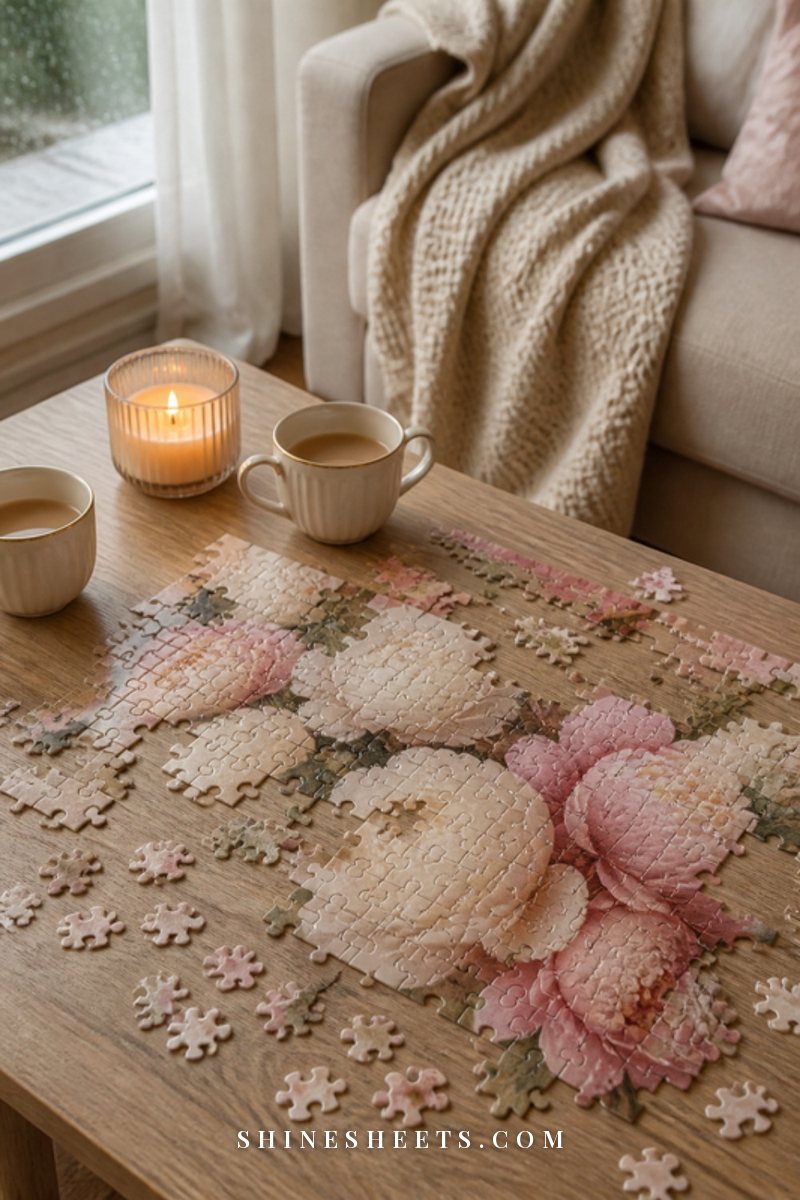
- Jigsaw puzzles on a tray you can slide under the sofa
- Reading one genre you love, with no pressure to finish books fast
- Watercolor or sketching in a small notebook
- Pressing flowers or arranging a small vase each week
- Learning the lyrics to old songs you love
Give it 30 minutes, two or three evenings a week. The point isn't to get good. The point is that you have something you genuinely want to stay home for.
5. Protect a Free Weekend Each Month

One free evening is lovely. One completely free weekend is a whole different kind of rest. Pick one weekend each month, mark it as "busy" in your calendar the moment the month starts, and treat it like an appointment you can't move.
Keep it loose. A slow breakfast in bed, a walk with no destination, a nap if you want one. Chores are allowed in small amounts (a load of laundry, fresh sheets), but skip big projects, or the weekend just becomes a different kind of busy.
When someone asks if you're free, you can honestly say, "I've got plans that weekend." You do. They're just with yourself.
6. Savor Small Pleasures
JOMO lives in the details. The joy part only shows up if you actually notice the good things in your quiet evening, instead of rushing through it.
Try the 3-breath pause: before your first sip of tea, take three slow breaths and notice the warmth of the cup, the smell, the quiet. Do the same when you get into fresh sheets, or when you light your candle. It takes 15 seconds and it turns an ordinary moment into one you remember.
A herbal tea sampler is a small, easy way to make this ritual feel new: a different flavor each night, poured into a cream ceramic mug you love holding. Fresh flowers from the grocery store, clean pajamas, a window cracked open for fresh air all count. My guide on how to slow down and enjoy life has more ways to bring this savoring habit into ordinary days.
7. Check Your Energy Before Saying Yes
Most of us say yes on autopilot, in the moment, often in a text while we're doing three other things. A short energy check before answering changes everything.
When an invitation comes in, wait at least an hour (or until the next morning) and ask yourself three quick questions:
- On a scale of 1 to 10, how much energy do I have this week?
- Will I feel glad I went, or just glad it's over?
- If this plan were tomorrow, would I feel excited or tired?
If you land on "tired" and a low number, that's your answer. If it's a yes, go fully and enjoy it. JOMO and saying yes go together just fine when the yes is real.
8. Share Your Plans Less Online
When you post your quiet night, part of you starts living it for an audience: the right angle of the candle, the right caption. It's sweet, but it can pull you out of the very moment you're trying to enjoy.
Try keeping some evenings completely private. No photo, no story, no check-in. If you want a record, write three lines in a guided reflection journal instead: what you did, how it felt, one small thing you loved. Those notes are just for you, and they make it easier to remember why you keep choosing these nights.
Bringing this kind of purpose to the rest of your week is a lovely next step, and my guide to intentional living is all about doing that without pressure.
The FOMO to JOMO Swap Table
When the old pull to say yes (or to scroll and compare) shows up, it helps to have a calmer response ready. Here are common moments, the FOMO thought that tends to appear, a JOMO choice you could make instead, and how it usually feels afterward. Screenshot it for the next time you're hovering over "Sure, count me in!"
| Invitation or pull | FOMO thought | JOMO choice | How it feels after |
|---|---|---|---|
| Last-minute invite to drinks on a Friday | "Everyone will be there and I'll miss the inside jokes." | Send a warm no and plan a movie-and-tea night at home. | Rested on Saturday, with a whole free morning |
| Friends posting stories from a party | "They're having more fun than me." | Put the phone in another room and go back to your book. | Calmer, and the evening feels like yours again |
| A packed weekend of plans | "If I skip one, they'll stop inviting me." | Keep the plan you're most excited about and decline one. | Present and happy at the one you chose |
| A group trip you can't really afford in time or energy | "I'll regret it forever." | Say no to the trip and suggest a one-day visit later. | Relieved, with no stress hangover |
| A free Sunday with nothing planned | "I should be doing something productive." | Take a slow walk, a nap and a long bath with no to-do list. | Refilled and ready for Monday |
| Seeing a friend's busy, exciting month online | "My life is boring." | Write three things you loved about your own quiet week. | Grateful for your own pace |
| An event you feel you "should" attend | "People will think I don't care." | Send a kind message and a small gesture, like a card. | Connected without being drained |
Notice that none of the JOMO choices are about cutting people off. They're about choosing with care, and finding something good in the choice.
How To Enjoy Missing Out Without the Guilt
Even when you choose the night in, guilt can tag along. A few small reminders help:
- A no to a plan is not a no to the person. You can decline an event and still love your friend.
- Rest is not a reward you have to earn. You don't need a hard week to justify a quiet evening.
- Other people's fun doesn't take anything away from yours. Their night out and your night in can both be great.
- You can change your mind next time. Saying no tonight doesn't lock you into saying no forever.
If guilt stays loud, try a one-line journal entry before bed: "Tonight I chose ___ because I needed ___." Seeing your reason written down quiets the inner critic surprisingly fast.
Keep Connection in the Mix

Here's the gentle balance: JOMO works best when it sits next to real connection, not instead of it. We all need people. The goal is to spend your social energy on the ones who refill you, in the formats that feel good.
A few ways to keep that balance:
- Choose smaller, softer plans. Tea at your place with one friend often feels more nourishing than a loud group dinner.
- Invite people into your JOMO. A quiet movie night with your closest friend is still a night in.
- Keep a weekly touchpoint. One call, voice note or walk with someone you love, every week.
- Notice who leaves you lighter. Make a little more room for those people, and a little less for plans that always drain you.
A good rhythm for many people is two or three protected evenings a week and one or two connection plans. Adjust it to your own energy. There's no right number, only what feels good to you.
When Staying In Stops Feeling Good
JOMO should feel like relief. If staying home starts to feel heavy instead, it's worth paying gentle attention. Some signs to watch for: you avoid people you used to enjoy, you feel lonely most days, you cancel because everything feels overwhelming rather than because you want rest, or your mood stays low for weeks.
That isn't a failure, and it isn't JOMO either. It might be anxiety, low mood or deep loneliness asking for care. Talking to a therapist or your doctor can really help, and reaching out to one trusted person this week is a brave, lovely first step.
Final Thoughts
The joy of missing out isn't about doing less for the sake of it. It's about choosing your evenings on purpose and then letting yourself enjoy them fully, candle lit, phone away, no explaining needed.
Start with one planned night in this week. Make it soft, make it yours, and let it be enough. The life you choose when you say no can be every bit as sweet as the one you see online, and often it's sweeter.