A narrow hallway doesn't need to be bigger to feel bigger. It needs more light, a clear line for the eye to follow and fewer things sticking out into the path. Get those three right and even the skinniest corridor starts to feel calm, bright and a little bit elegant.
Hallways are also the most forgotten space in most homes. We walk through them a dozen times a day, but they rarely get the same love as the living room. That's a shame, because a hallway is a small area, so a few small changes make a very visible difference (and the budget stays small too).
This guide is all about hallway decor ideas for the corridor itself: 12 renter-friendly ways to make it brighter, wider-feeling and welcoming, how much clear space to keep for walking, what to skip in tight spots, a problem-and-fix table and a few budget picks. If you're looking for the drop zone by your front door (shoes, keys, bags), my entryway ideas guide covers that part in detail.
No renovation, no knocking down walls. Just good, simple choices.
Why Narrow Hallways Feel So Tight
Before buying anything, it helps to know what is actually making the space feel cramped. Usually it's a mix of these:
- Not enough light. Most hallways have no window, just one ceiling fixture, so the walls look gray and the corners disappear.
- Dark or busy walls. Deep colors and lots of small frames make the walls feel like they're leaning in.
- Things in the walkway. A deep table, a bulky shoe rack or a laundry basket forces you to turn sideways.
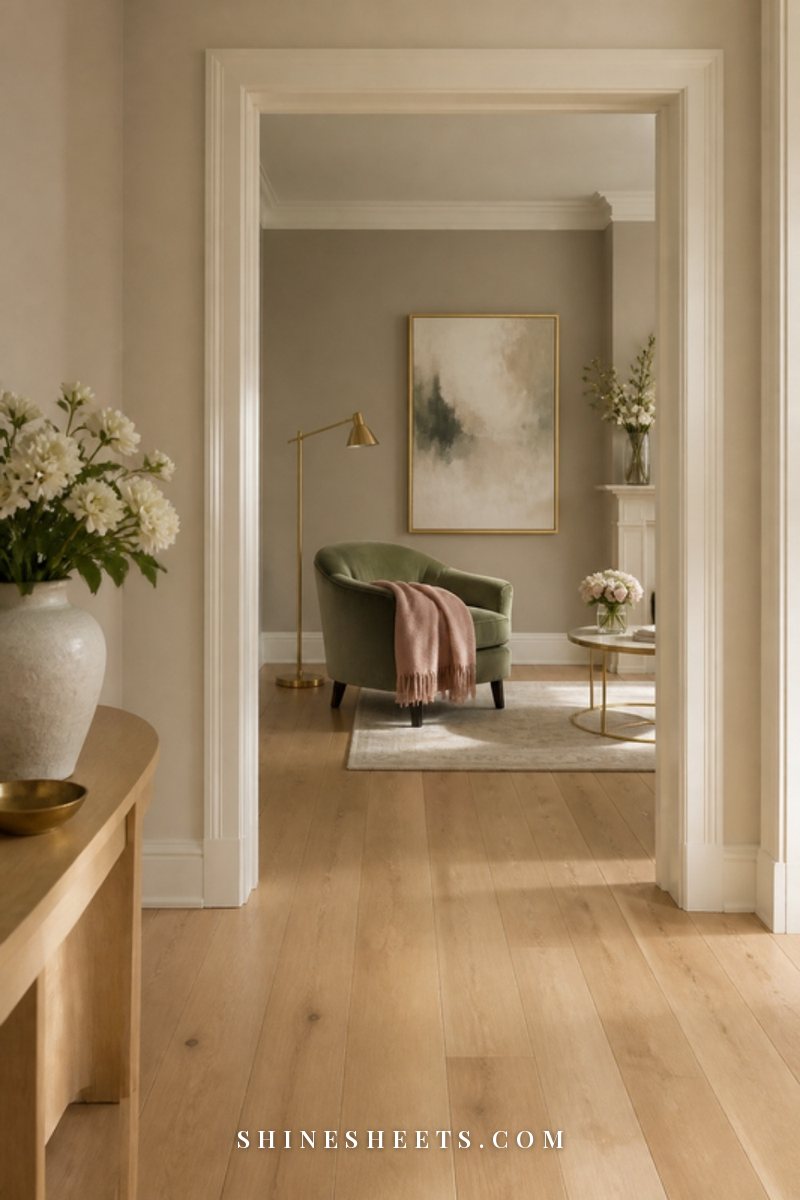
- Nowhere for the eye to land. A long, blank tunnel ending in a closed door feels longer and narrower than it is.
Every idea below fixes at least one of these four problems. Choose the ones that match what your hallway struggles with most.
First, Keep a Clear Path
Decor should never make you squeeze. As a rough guide, try to keep at least 36 inches (about 90 cm) of clear walking width, which is comfortable for one person carrying a laundry basket. If your hallway is very narrow, around 30 to 32 inches (75 to 80 cm) is the minimum I'd leave free.
A quick way to plan it: measure the width wall to wall, subtract the clear path you want to keep, and what's left is your "decor depth." In a 42-inch hallway, that leaves about 6 inches, which is enough for a picture ledge or slim floating shelf but not a standard console. In a 48-inch hallway, you have room for a console about 10 to 12 inches deep on one side.
Also keep door swings clear, and avoid anything at shoulder or hip height near corners where people turn. If you have kids, pets or anyone who walks through at night, this matters even more.
12 Hallway Decor Ideas for a Narrow Hallway
You don't need all twelve. Three or four, chosen well, can transform a corridor in a weekend.
1. Keep Walls and Ceiling Light
Light colors reflect whatever light you have, which is exactly what a windowless hallway needs. Warm whites, soft creams and very pale greige feel welcoming without the chilly look of stark white. Paint the ceiling the same color or a shade lighter so the eye doesn't stop at a hard line.
Choose an eggshell or satin finish for hallway walls. It wipes clean far better than flat paint (hallways get a lot of bag scuffs and fingerprints). Renting? Ask your landlord. Many are happy for you to repaint in a neutral shade, especially if you agree to repaint before you move out. If not, the next ideas brighten things just as well without a brush.
2. Lay a Long Runner Rug
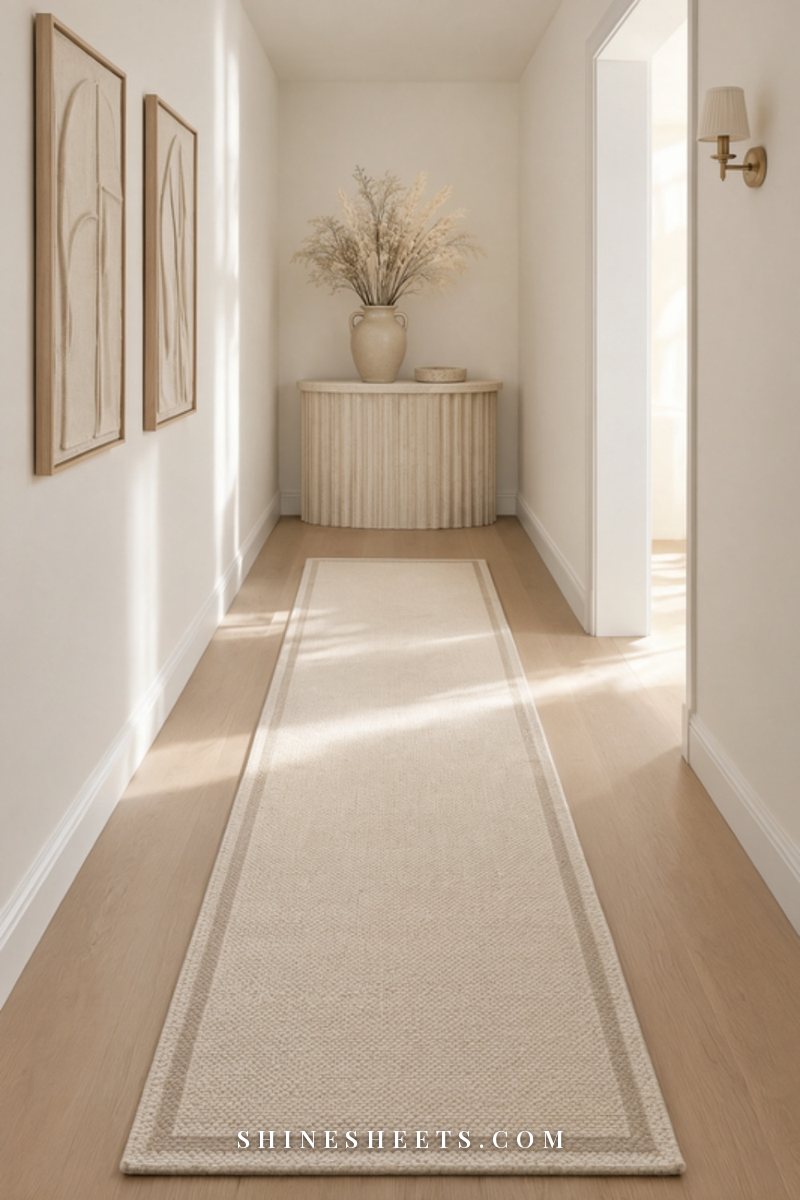
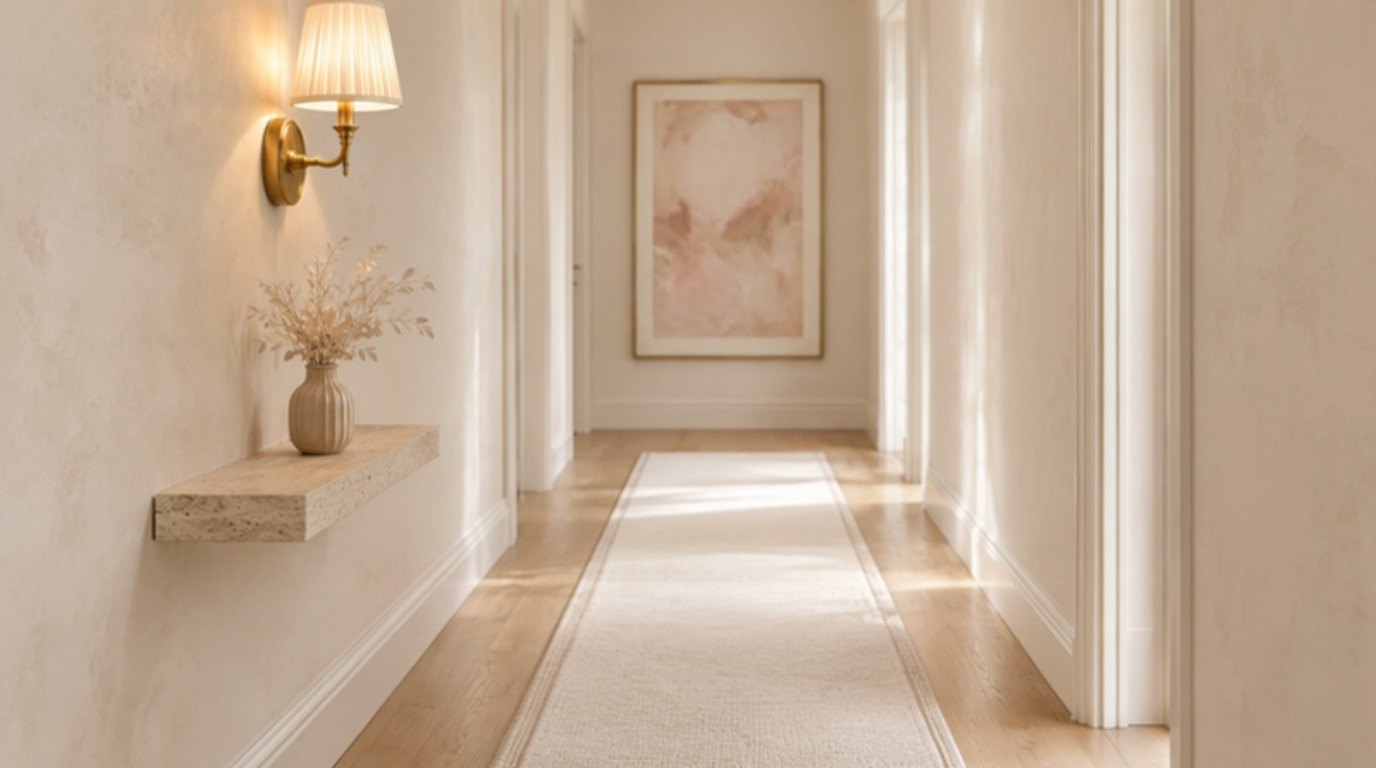
A runner draws the eye forward, softens footsteps and makes the hallway feel finished. For the right size, leave about 4 to 6 inches of floor showing on each side and 6 to 12 inches at each end. If the hallway is very long, two matching runners with a small gap often look better than one huge one.
For a busy hallway, I'd choose a washable cream runner rug in a flat weave. Low-pile rugs don't catch on doors, and being able to throw it in the wash is a gift. Always add a non-slip rug pad underneath so it doesn't slide on hard floors.
3. Hang Mirrors To Bounce Light
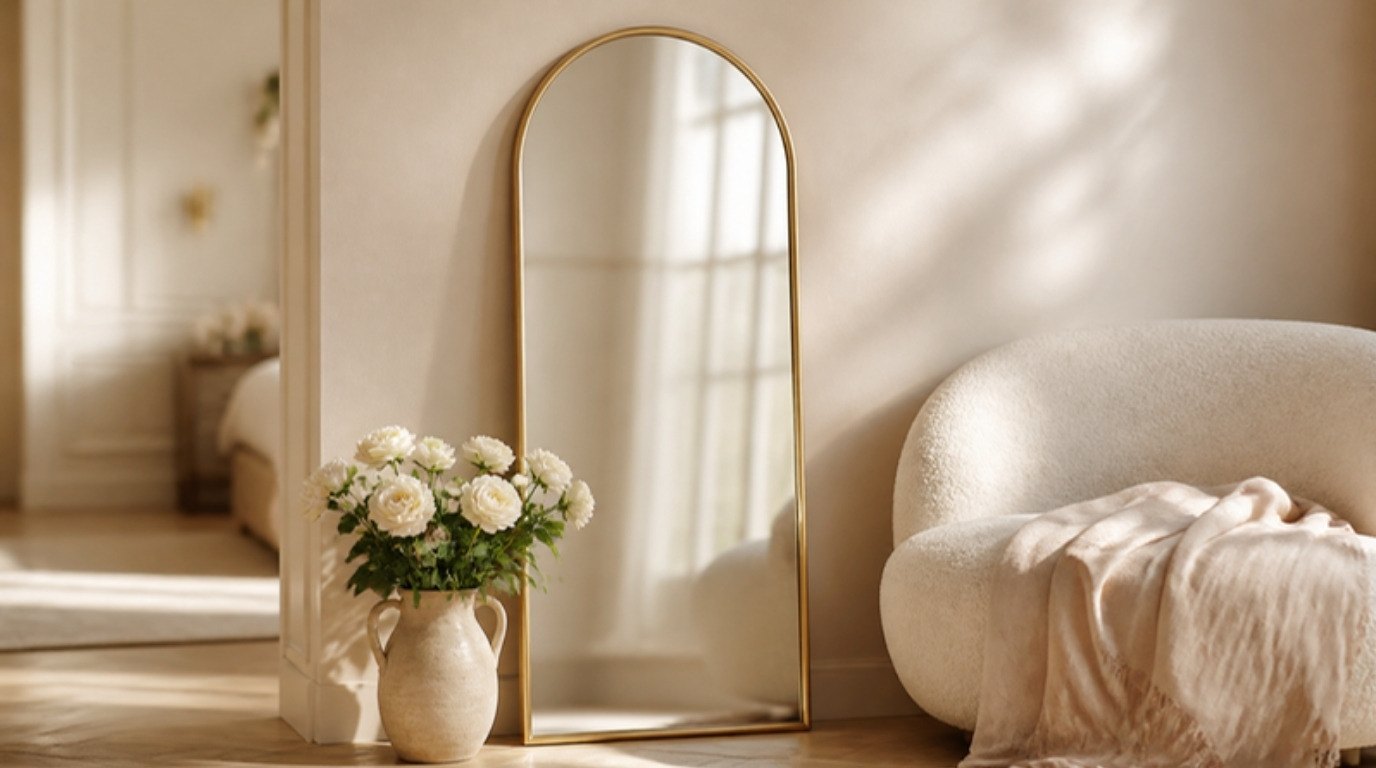
A mirror is the closest thing to adding a window. Hang it opposite a doorway or a light source so it catches light from the next room and throws it back into the hallway. A gold round mirror softens all the straight lines of a corridor and adds a little Old Hollywood warmth (I can't resist a gold frame).
In a tight space, choose a flat, wall-hung mirror rather than a leaning floor mirror, which sticks out and is easy to knock. Hang it with the center at roughly eye level, around 57 to 60 inches from the floor. For more placement ideas, my guide to mirror decor ideas has plenty.
4. Create a Gallery Wall or Picture Ledge
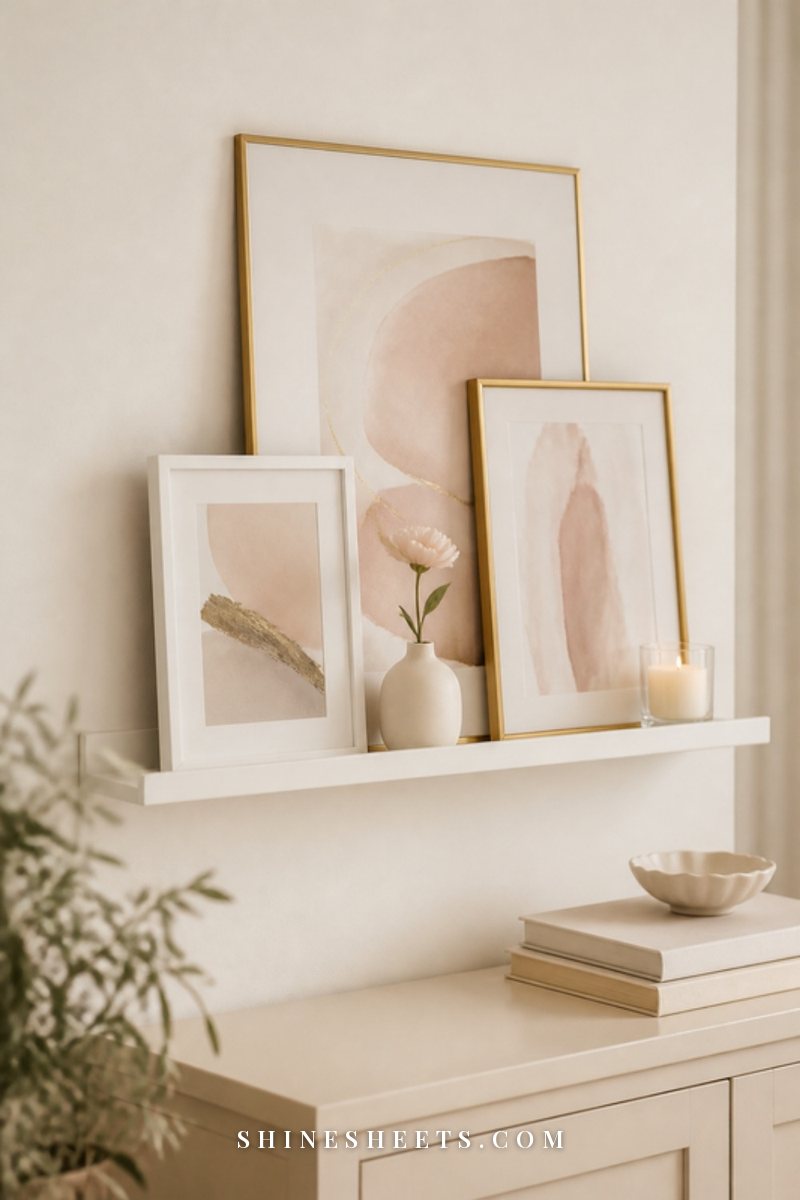
A hallway is the perfect gallery, because people walk past slowly and close up. Keep frames in one or two finishes (white and gold, for example) and similar mats so the wall feels calm rather than cluttered. Hang the middle of the arrangement at about eye level, with 2 to 3 inches between frames.
If you change your art often, or want fewer holes in a rental, a white picture ledge shelf is lovely: two or three screws, and you can lean and swap prints as often as you like. My gallery wall ideas guide walks through layouts and spacing if you want to plan it on paper first.
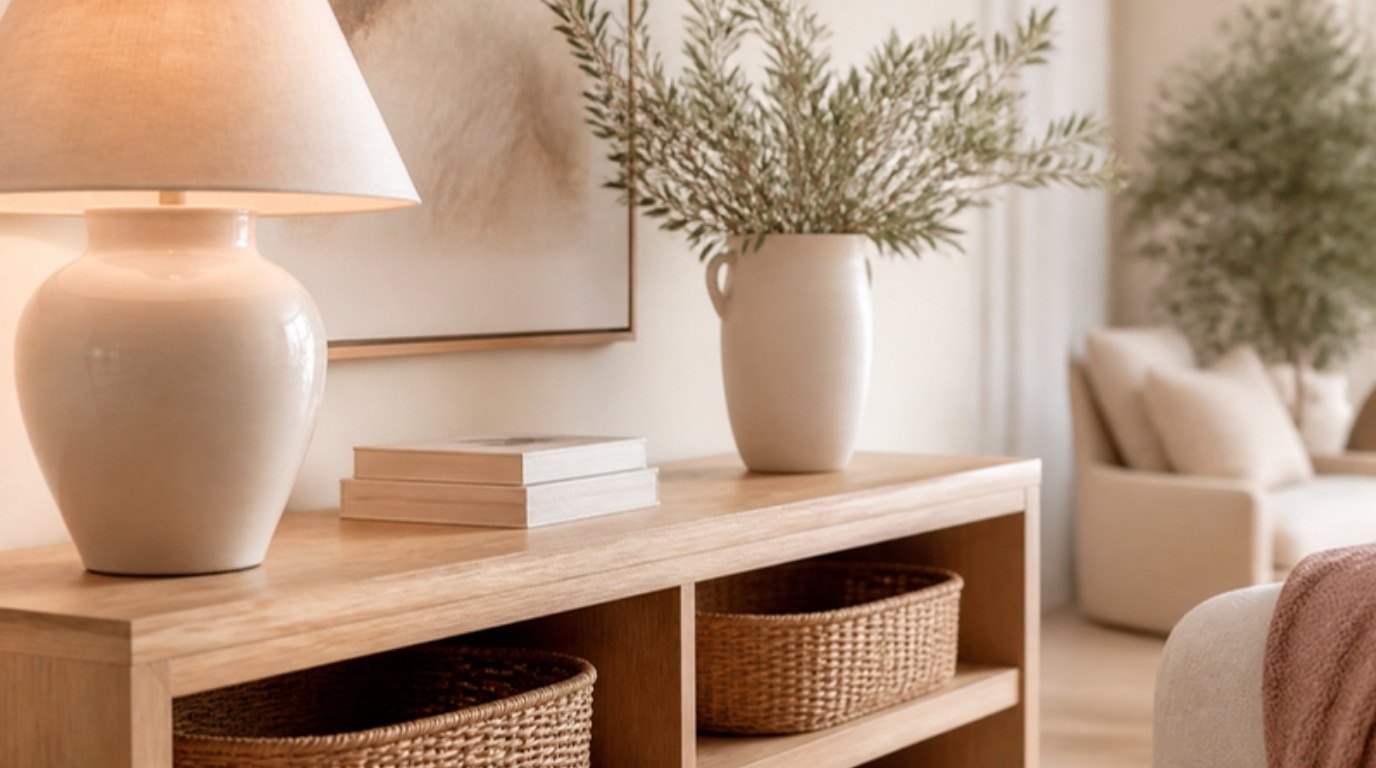
5. Add a Slim Console or Floating Shelf
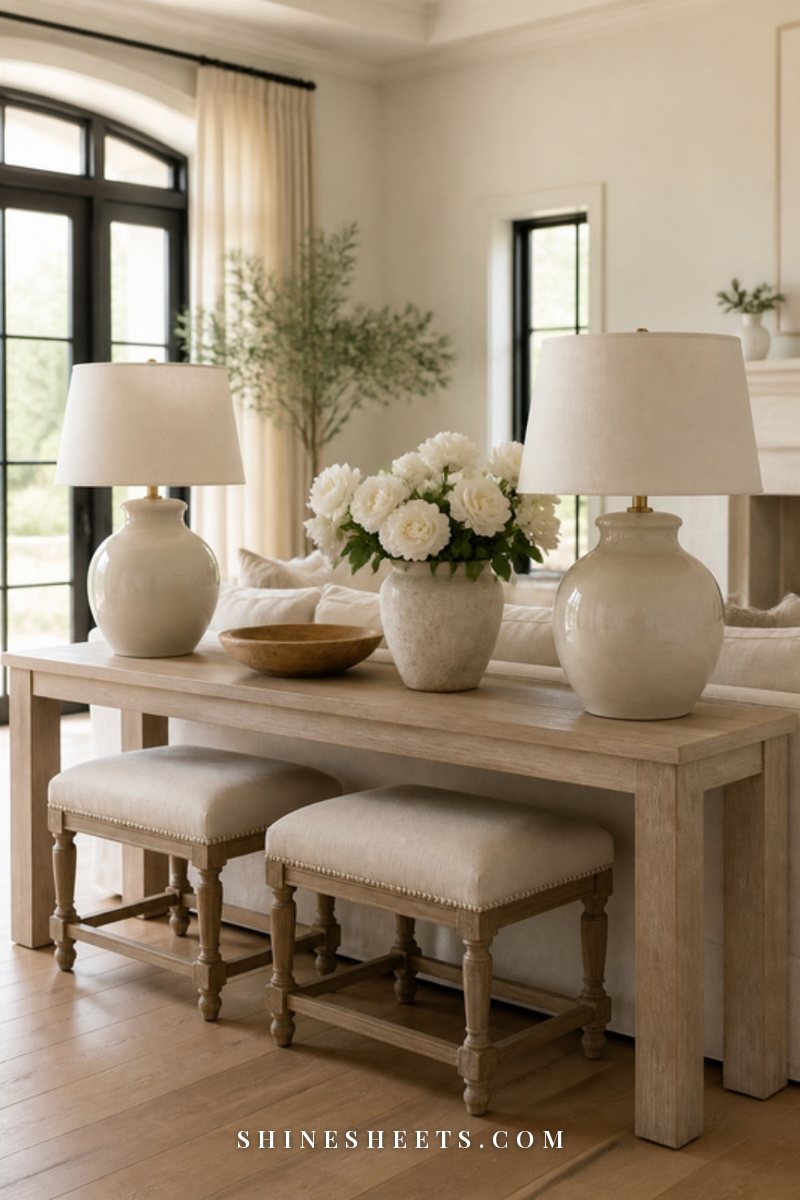
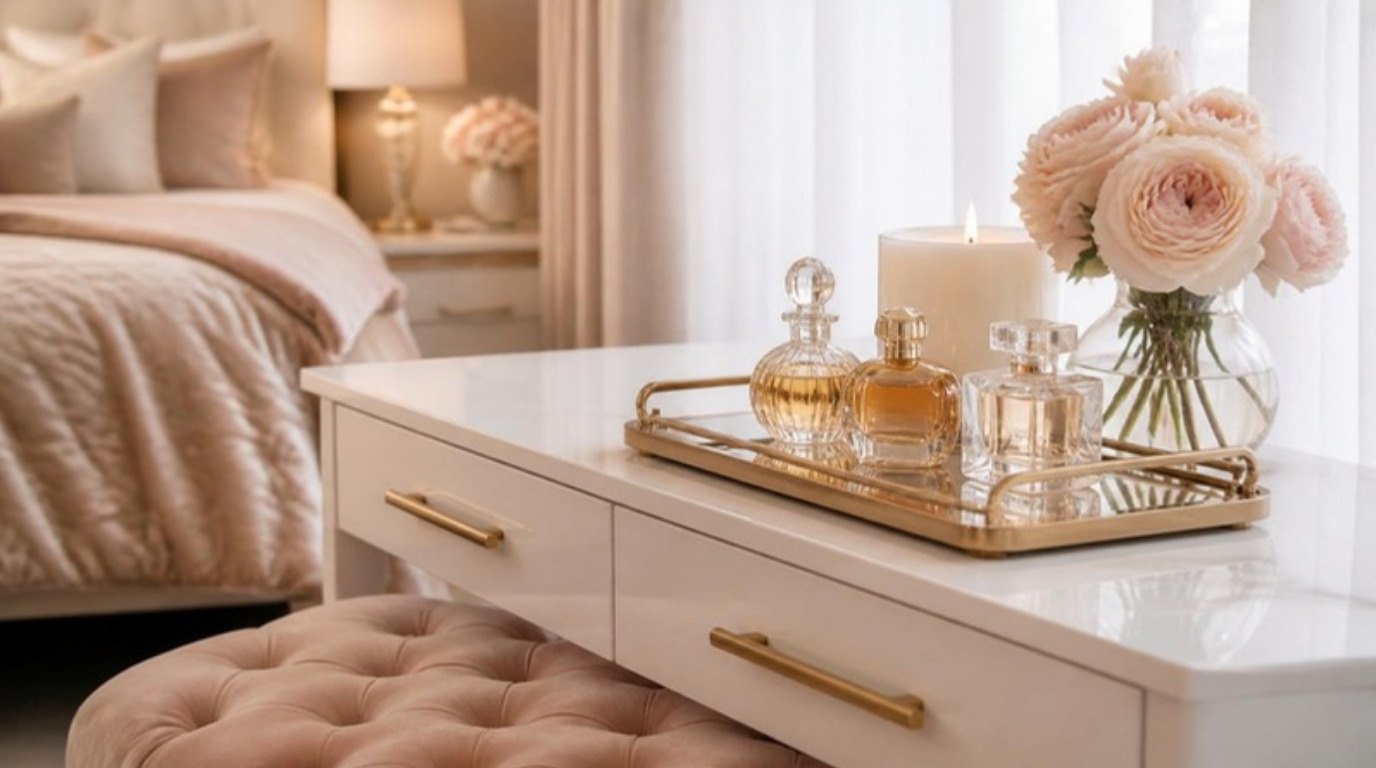
A narrow surface gives the hallway a purpose: a spot for a small lamp, a bowl for keys, a vase of fresh stems. In hallways 48 inches or wider, look for a slim white console table no deeper than about 10 to 12 inches. Legs that are thin or slightly tapered keep it looking airy.
Too narrow for a console? A single floating shelf, 5 to 6 inches deep, does the same job without touching the floor. Keep the styling simple: one tall thing, one low thing and one small dish. My console table styling guide has more easy combinations that don't tip into clutter.
6. Use Plug-In Wall Sconces
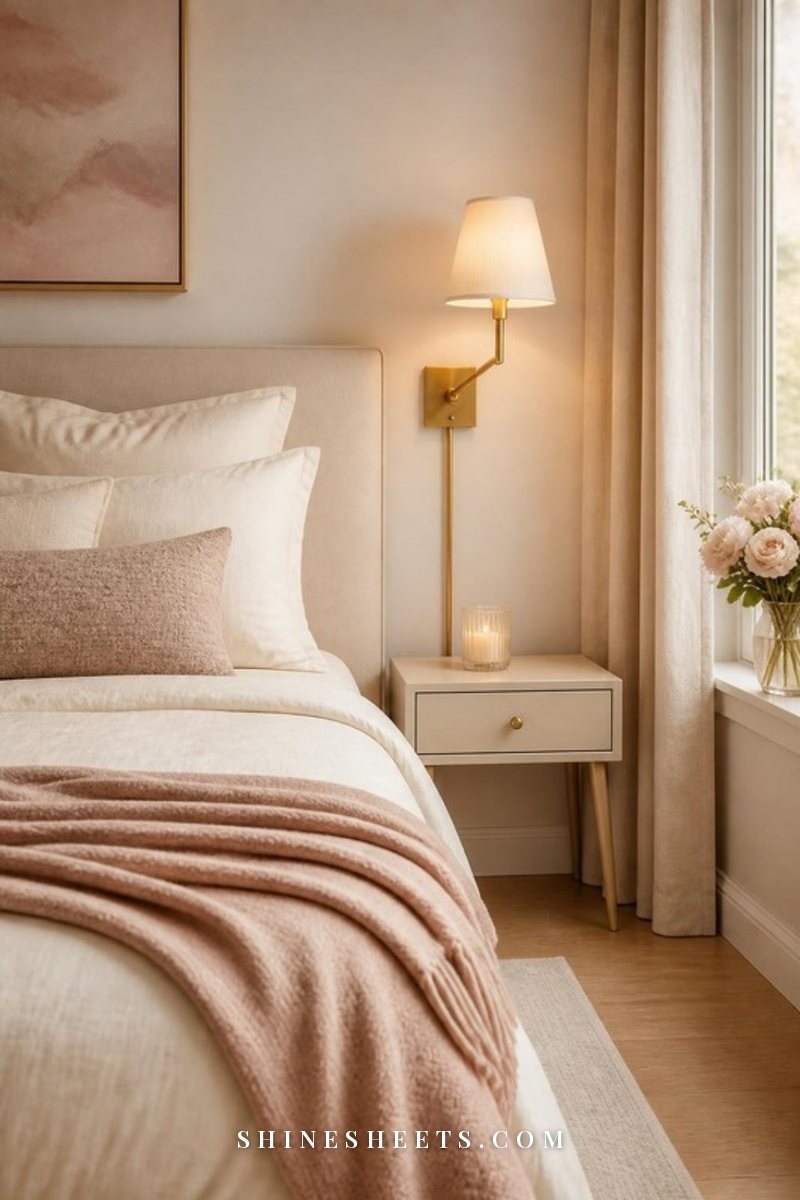
Sconces add warm, low light at the height where it does the most good, and plug-in versions need no electrician. A brass plug-in wall sconce with a cream or linen shade gives a gentle, hotel-style glow, especially in the evening. Hang them around 60 to 66 inches from the floor and roughly 6 to 8 feet apart in a long hallway.
The only downside is the cord. A paintable cord cover, run straight down the wall, makes it almost disappear. My guide on how to hide cords has several renter-friendly ways to do it neatly. Many sconces also work with rechargeable puck lights if there's no outlet nearby, and warm white bulbs (around 2700K) feel the coziest.
7. Upgrade the Ceiling Light
Many hallways have a small, harsh builder fixture. Swapping it for a flush-mount with a fabric or frosted glass shade, or a slim semi-flush in brass, changes the whole mood. Choose something no lower than about 7 feet from the floor so nobody has to duck.
Renters, please don't rewire anything yourself. Ask your landlord, and leave hardwired changes to a licensed electrician. Easy no-wiring upgrades include a warmer, brighter bulb, a simple clip-on shade cover, or a motion-sensor plug-in night light at floor level for those late-night trips to the kitchen.
8. Put Peel-and-Stick Wallpaper on One Wall
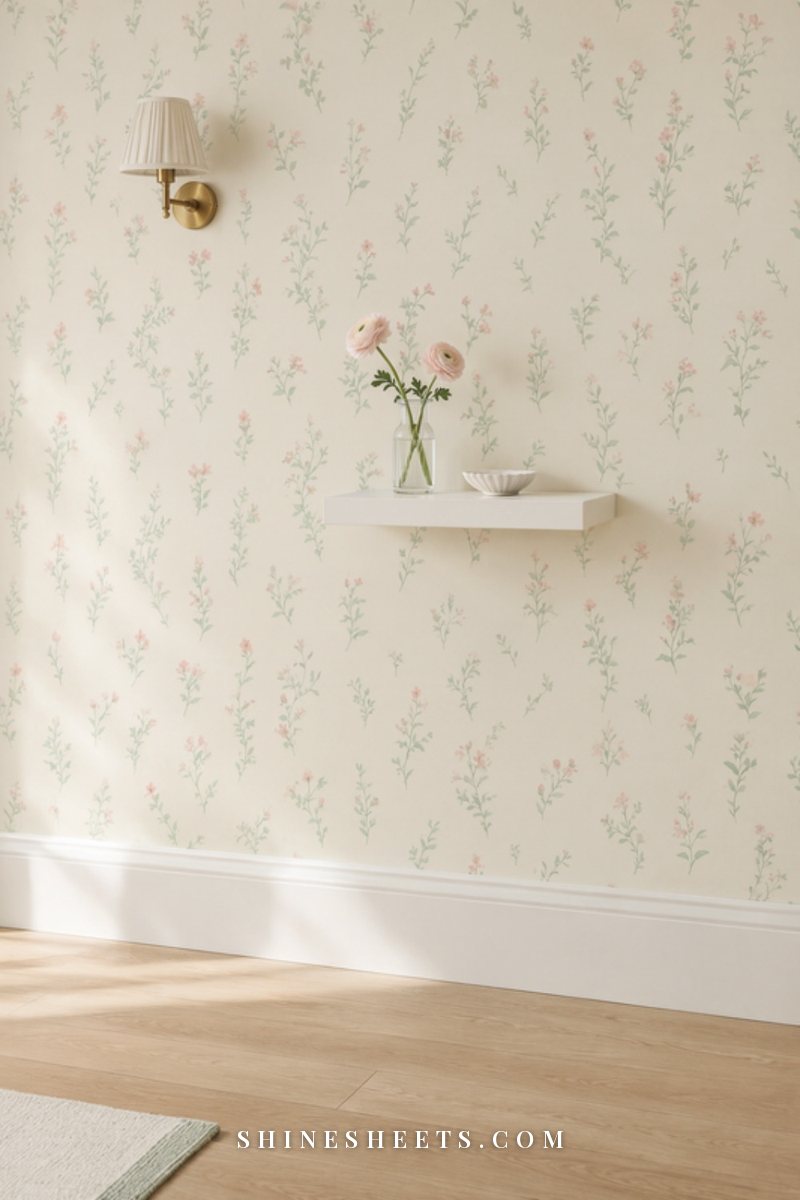
One papered wall adds personality without closing the space in. In a narrow hallway, choose a light background with a soft, small to medium pattern, like delicate florals, thin stripes or a gentle trellis. Vertical stripes can make a low ceiling feel taller.
Before you commit, test a small patch somewhere hidden for a few days, and make sure the wall is clean, dry and smooth (fresh paint usually needs a few weeks to cure first). My sister guide on peel-and-stick wallpaper covers prep, hanging and removing it without damage.
9. Place Art at the End To Draw the Eye
The end wall of a hallway is prime real estate. A single large piece of art, a framed print or a pretty mirror there gives your eye a destination, which makes the walk feel shorter and more intentional.
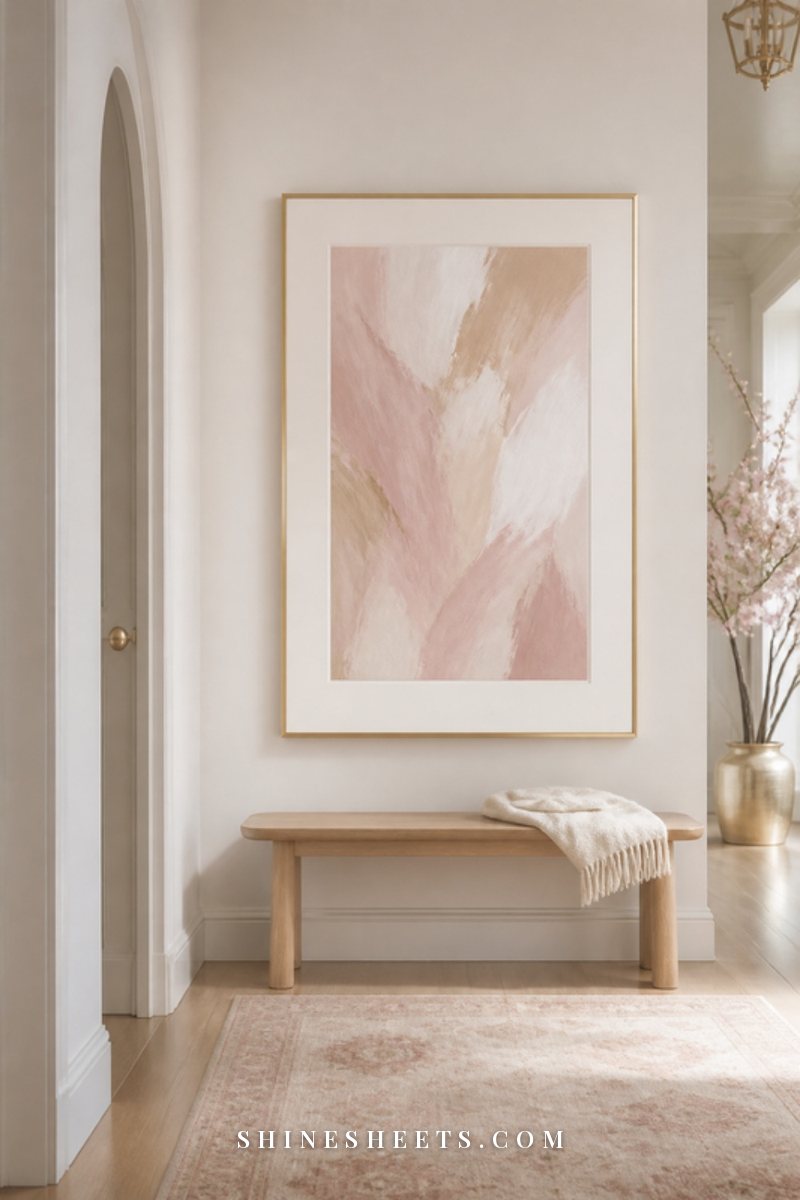
Go bigger than you think. A piece roughly two-thirds the width of the end wall looks deliberate, while a small frame on its own can look lost. Soft landscapes, abstract washes of blush and beige or a calm botanical work beautifully. If there's a door at the end instead, try idea 12.
10. Add Hooks Only Where You Need Them
Hooks are wonderful by the front door, but a row of coats halfway down a narrow hallway steals precious width. Use them only where they serve a real purpose: a couple near the door for the bag and coat you use daily, maybe one by the bathroom for a robe.
A small set of gold wall hooks looks like jewelry on a plain wall. Choose slim, flat hooks over chunky ones so nothing catches a shoulder, and set a limit: one coat per hook, with the rest stored in a closet.
11. Bring In a Plant That Tolerates Low Light
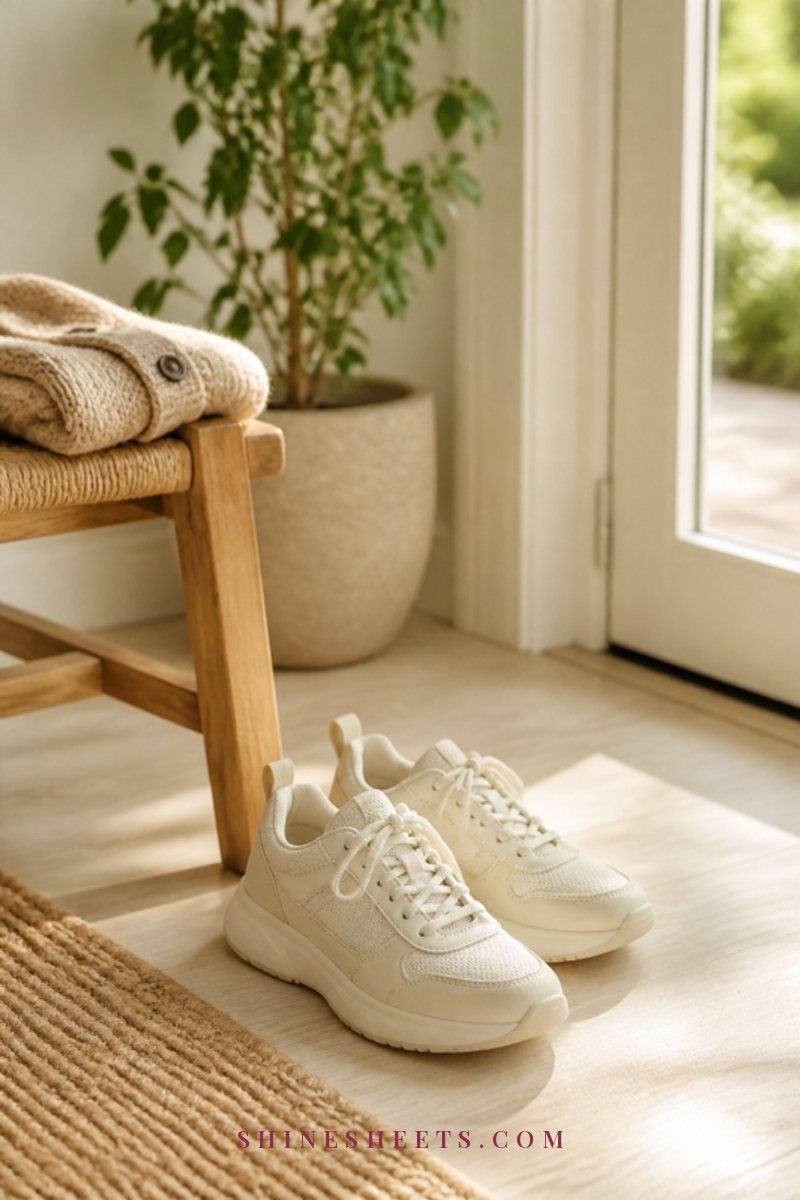
A bit of green makes a hallway feel alive. Pick plants that cope with low light, such as a snake plant, a ZZ plant or a pothos on a shelf where it can trail. A tall, narrow snake plant is ideal for a corner, because it grows up rather than out.
If your hallway gets almost no daylight, a good-quality faux plant in a real ceramic pot is a perfectly respectable choice. And if you have pets, check which plants are safe for them before you bring one home, since some common houseplants aren't.
12. Refresh the Doors
Hallways are often lined with doors, so they make up a big part of what you see. Painting them the same soft color as the walls makes them recede and the hallway feels wider. Painting them a gentle contrast (a muted sage or a soft greige) can look elegant and intentional.
For renters, there are removable options: swap plain knobs for brass ones and keep the originals in a labeled bag, or add lightweight panel molding with removable mounting strips for a classic Parisian look. Ask before painting, and always test removable strips on a small spot first.
Hallway Problems and Fixes Table
Here's a quick way to match your hallway's biggest struggle with the right idea. Costs are rough and depend on where you shop.
| Hallway problem | Idea | Rough cost | Renter-friendly? |
|---|---|---|---|
| Dark, no window | Plug-in wall sconces | $40–$120 a pair | Yes |
| Dark, no window | Mirror opposite a doorway | $30–$150 | Yes (small holes) |
| Walls feel close and dull | Light paint on walls and ceiling | $50–$100 in paint | Ask first |
| Feels long and tunnel-like | Runner rug | $40–$150 | Yes |
| Feels long and tunnel-like | Large art at the end wall | $30–$200 | Yes (small holes) |
| Bare, boring walls | Picture ledge or gallery wall | $25–$120 | Yes (a few holes) |
| Bare, boring walls | Peel-and-stick wallpaper on one wall | $40–$150 | Yes (test first) |
| Nowhere to put keys or mail | Slim console or floating shelf | $40–$180 | Yes |
| Harsh overhead light | Warmer bulb or new shade | $10–$60 | Yes |
| Harsh overhead light | New ceiling fixture | $60–$200 plus electrician | Ask first |
| Lots of plain doors | Paint or new knobs | $20–$80 | Knobs yes, paint ask first |
| Feels lifeless | Low-light plant | $15–$60 | Yes |
Screenshot it before your next shopping trip so you buy for the problem, not just for the pretty object in front of you.
What To Skip in a Tight Hallway
Some things just don't work in a narrow corridor, no matter how lovely they look online:
- Deep furniture. Anything deeper than 12 inches usually eats too much of the walking path.
- Floor lamps and leaning mirrors. Easy to bump, easy to knock over. Go wall-mounted instead.
- Lots of tiny frames on both walls. It feels busy and closes the space in. Choose one gallery wall and leave the other side calmer.
- Thick, shaggy rugs. They catch doors and trip feet. Flat weave or low pile is safer.
- Storage overflow. The hallway is a path, not a backup closet. Baskets of "stuff to sort" quietly make it feel smaller.
- Dark, heavy colors everywhere. A deep color can work on one lower wall section or a door, but all-over dark paint usually shrinks a windowless hallway.
How To Style a Hallway on a Budget
You can make a real difference to a hallway with very little money if you spend it in the right order:
- Clear it out (free). Remove anything that doesn't belong. This alone often makes a hallway feel wider.
- Fix the light (small spend). A warmer bulb, or one pair of plug-in sconces, is the most noticeable change per dollar.
- Add the runner (medium spend). It instantly makes the space look finished and cared for.
- Hang one focal piece (small to medium spend). A mirror or a large print at the end wall, from a thrift store or a printed digital art file in a simple frame.
- Finish with a living touch (small spend). One plant, or a few fresh stems in a vase on a shelf each week.
Thrift stores and marketplace apps are full of mirrors and frames that only need a coat of gold spray paint (do it outside, with a mask, on a calm day). And if you can only do one thing this month, choose light. It changes everything else.
How To Keep Your Hallway Looking Fresh
Once your hallway looks lovely, a few tiny habits keep it that way. Hallways collect clutter quickly because everything passes through them on the way somewhere else.
- Do a two-minute reset each evening. Put away shoes, bags and anything that landed on the console. Two minutes really is enough when the space is small.
- Wipe walls and light switches weekly. A soft microfiber cloth with a little warm, soapy water lifts fingerprints and bag scuffs (test on a hidden spot first if your paint is flat).
- Wash or shake the runner every two to four weeks. Hallway rugs catch a surprising amount of grit from the front door.
- Dust frames and the top of the mirror monthly. Dust shows quickly under sconce light.
- Change one small thing each season. Swap a print, change the flowers in the vase or rotate a cushion color if you have a bench. A tiny change keeps the space feeling cared for without any new shopping.
The point isn't perfection. It's keeping the path clear and the light soft, so the hallway keeps doing its quiet job of making your home feel welcoming.
Final Thoughts
A narrow hallway is a small space with a big job: it connects your whole home and sets the mood every time you walk through. Keep the path clear, bring in soft light, give the eye somewhere pretty to land, and let one or two personal touches do the rest.
Start with the idea that solves your hallway's biggest problem, add the others slowly, and your corridor will become one of the quiet little joys of coming home.