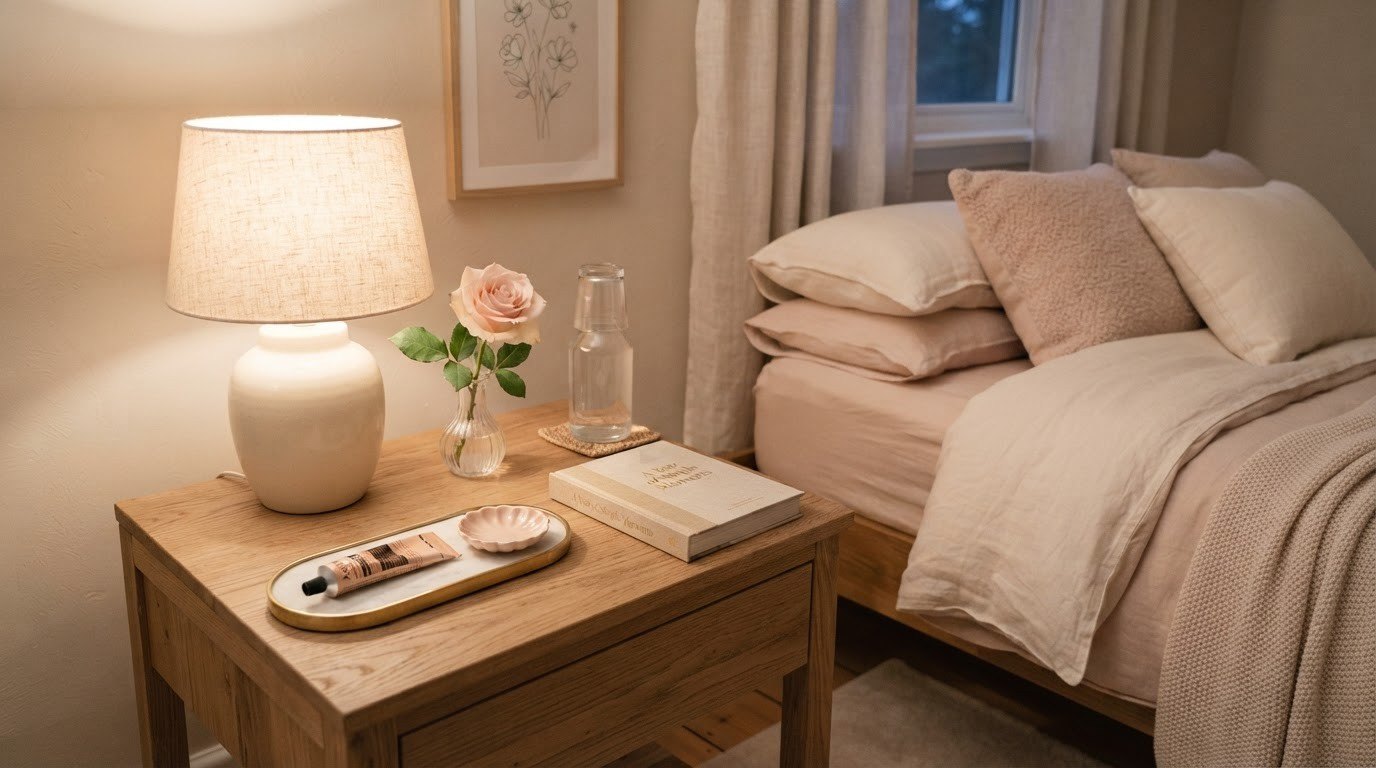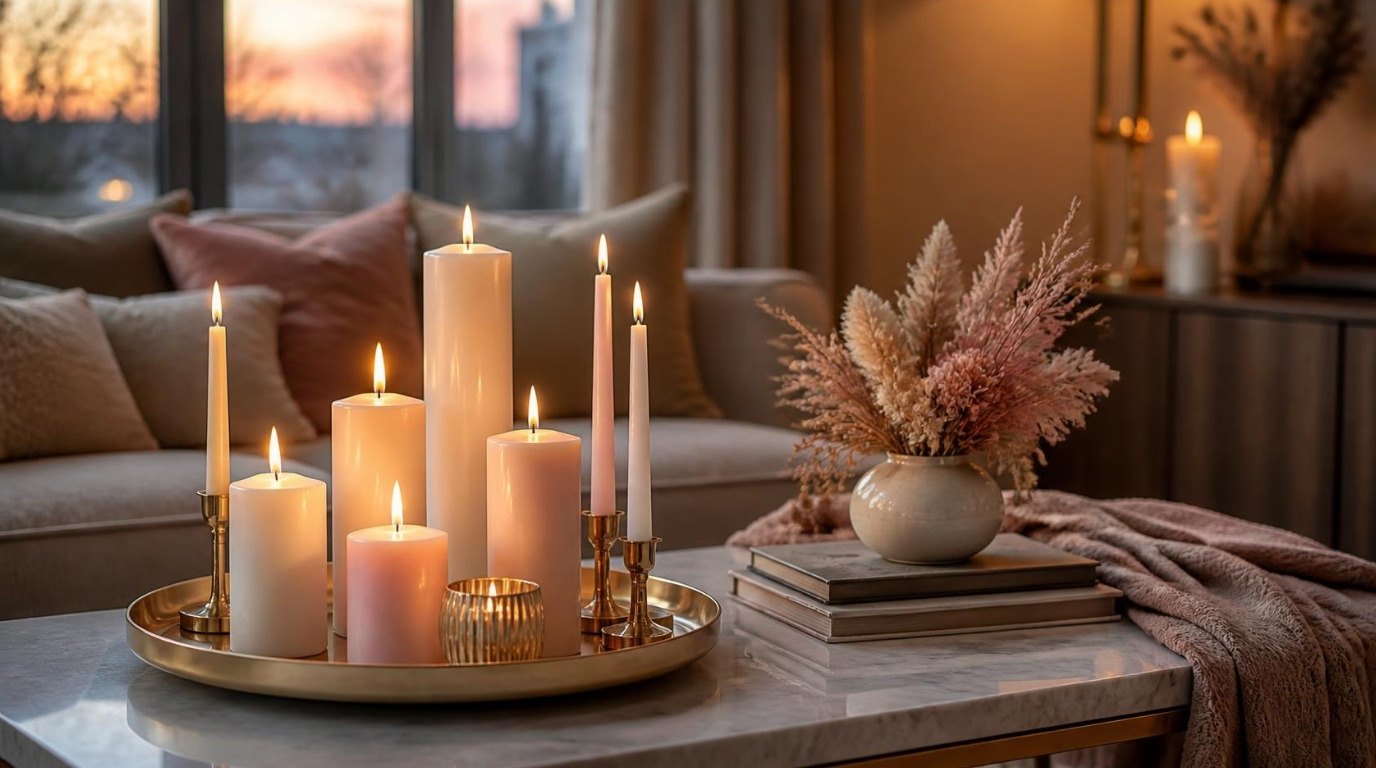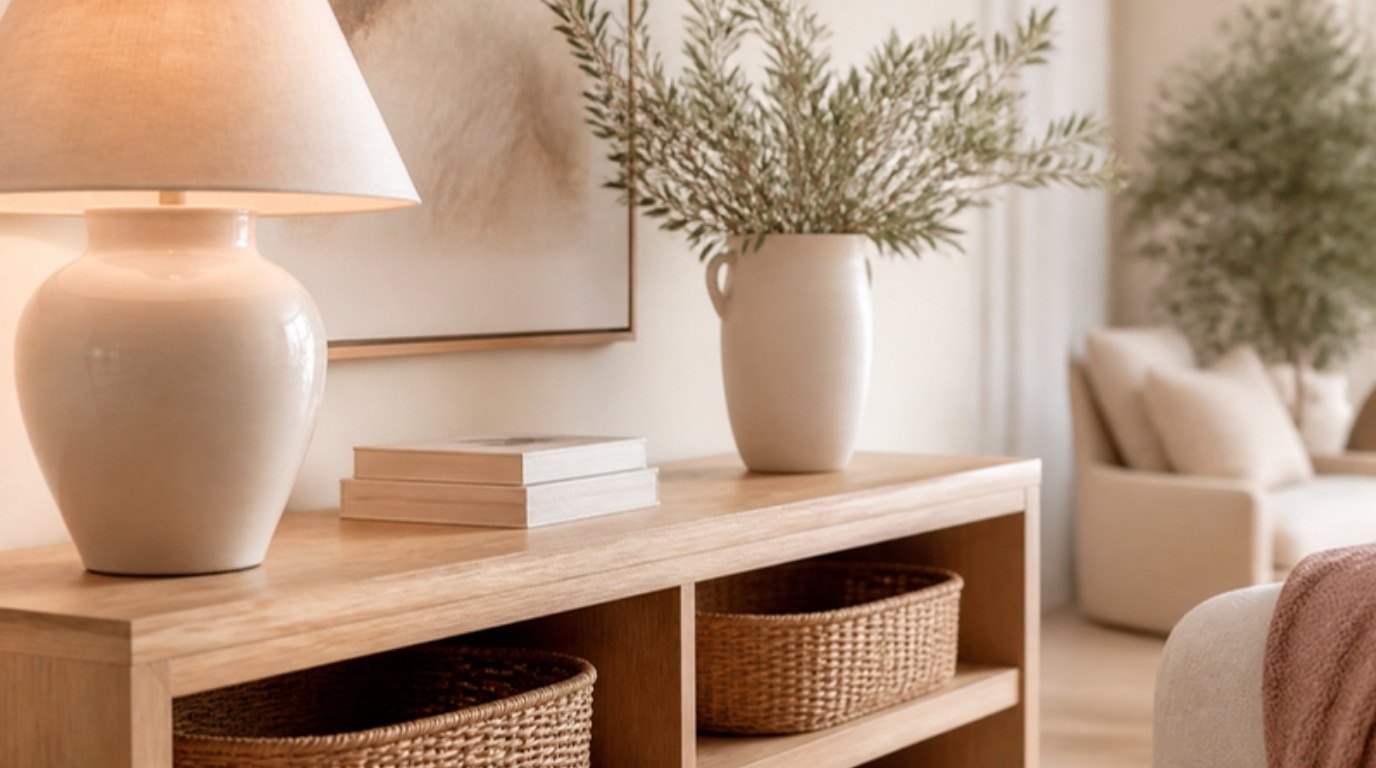
A beautifully styled console table isn't about owning more pretty things. It's about choosing a few pieces in different heights and textures, giving each one a job, and leaving enough empty space that the whole thing can breathe. Once you understand that, styling stops being guesswork and becomes a simple, repeatable formula.
Console tables are tricky because they're narrow and they sit in the most-seen spots of a home: the entryway, behind the sofa, at the end of a hallway. They catch keys, mail, sunglasses and that one candle you never light. Without a plan, they slide into clutter within a week.
This guide is all about console table styling that looks calm and stays practical. You'll get a six-layer formula (with a table of item ideas and size rules), exact measurements for hanging art and choosing a lamp, how to balance a table with symmetry or asymmetry, styling ideas for entryways and behind-the-sofa consoles, gentle seasonal swaps and the mistakes that make even lovely pieces look messy. Grab a tape measure – a few numbers will save you a lot of rearranging.
What a Console Table Is For (Before You Style It)
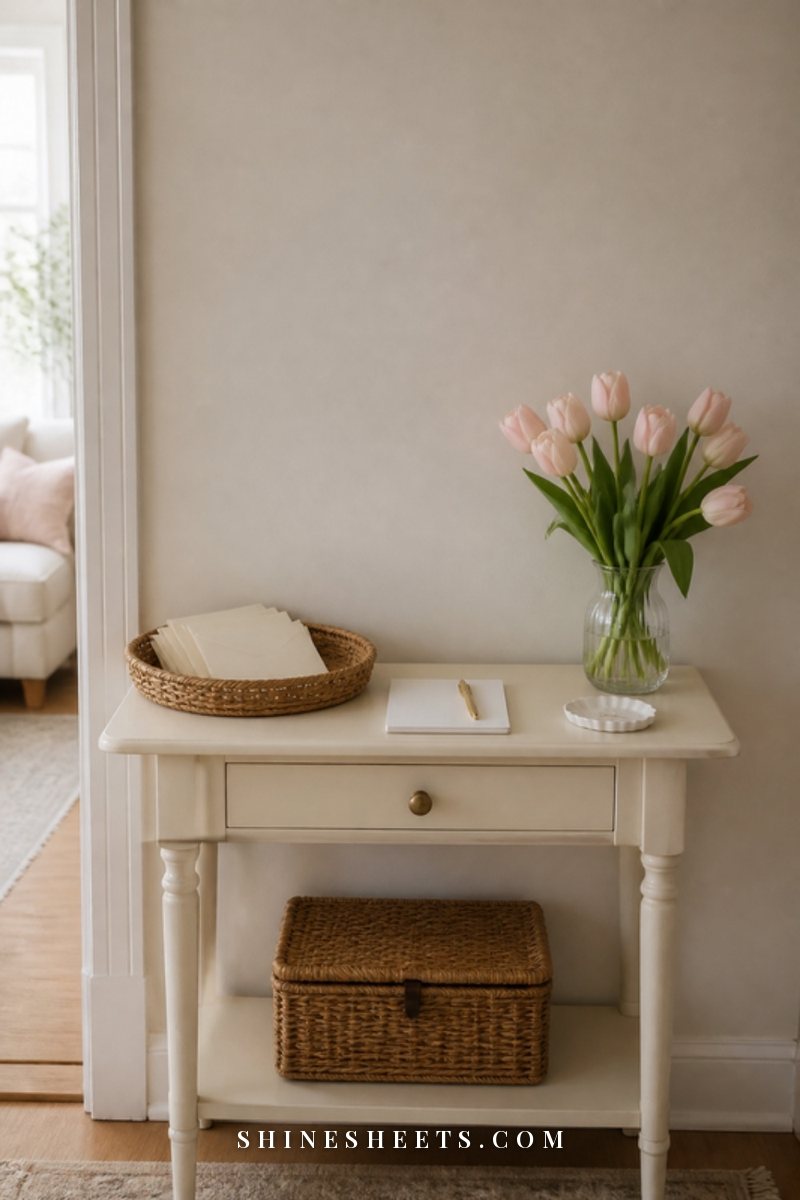
Before you place a single object, decide what your console table needs to do. The styling changes depending on the answer:
- Drop zone (entryway): keys, mail, sunglasses, a place to set a bag for a second. Function comes first; decor works around it.
- Display (hallway or landing): mostly decorative, a pretty pause point. You can style more freely here.
- Behind the sofa: lighting, a spot to rest a drink or a book, extra storage underneath.
- Dining or living room sideboard stand-in: serving space when guests come, decor the rest of the time.
Most console tables are 10–16 inches deep and around 30 inches high, which means you're working with a long, shallow strip. That's why the formula below focuses on height and layering rather than filling the surface.
The Console Table Styling Formula
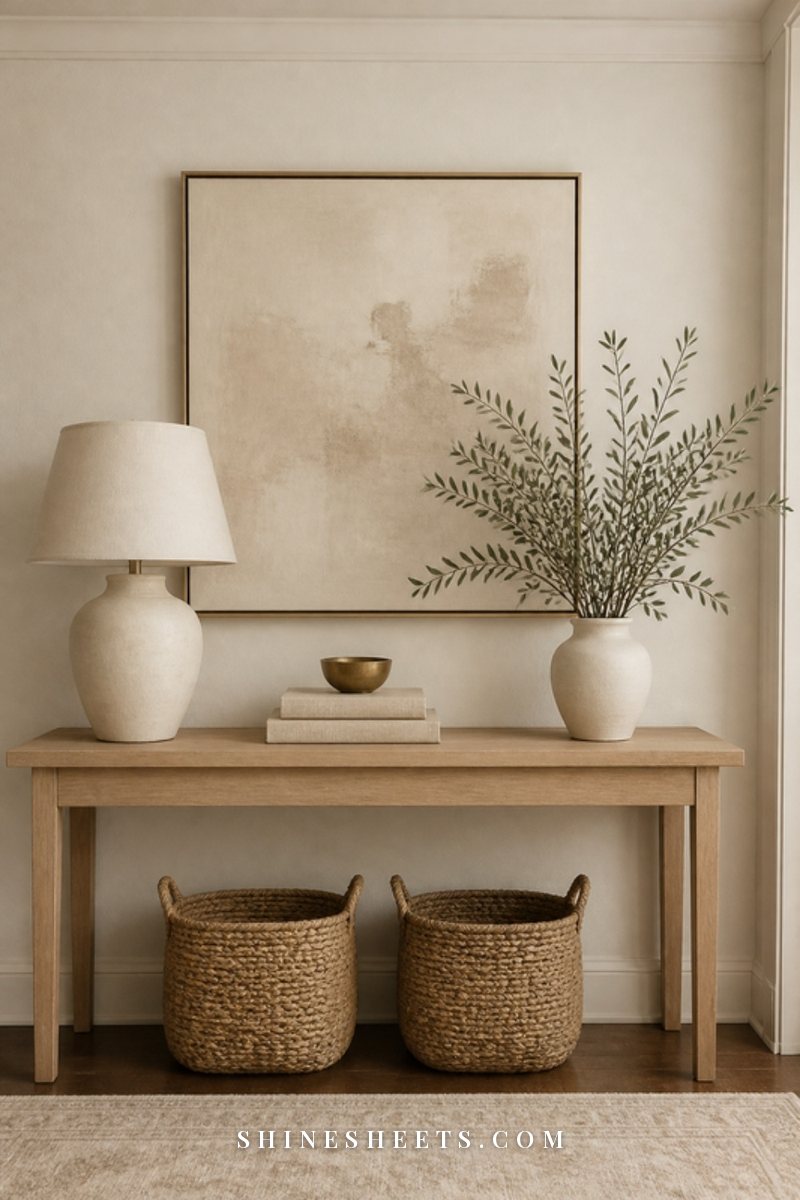
Here's the formula I'd use for almost any console: six layers, each with a clear purpose. You don't need every layer on every table (a tiny hallway console might only need three), but going through them in order keeps you from overbuying and overfilling. Screenshot this table and keep it handy when you shop or rearrange.
| Layer | What it does | Item ideas | Size rule |
|---|---|---|---|
| 1. Anchor | Sets the focal point and ties the table to the wall | Framed art, a large print, a woven wall piece, a round mirror | About 2/3 to 3/4 of the table's width; bottom edge 6–10 in above the tabletop |
| 2. Height | Adds a tall element on one or both sides | Table lamp, tall vase with branches, a pair of candlesticks | Lamp roughly 24–32 in tall; shade no deeper than the table |
| 3. Layer | Creates mid-height interest and corrals small items | Stacked books, a tray, a low box | Book stack 4–8 in high; tray about 1/3 of table length |
| 4. Living | Brings softness, movement and life | Fresh stems, branches, a trailing plant, dried grasses | Stems 1.5–2× the height of the vase |
| 5. Personal | Makes it feel like your home, not a showroom | A framed photo, a travel find, a small sculpture, a vintage bowl | One or two pieces, palm-sized to 8 in |
| 6. Underneath | Grounds the table and adds storage | Baskets, a pouf, a pair of stools, a bench | Leave 2–3 in of air above baskets; keep 1–2 in from the legs |
A good final test: roughly a third of the tabletop should stay empty. If every inch is covered, take one thing away.
1. Anchor It With Art Above
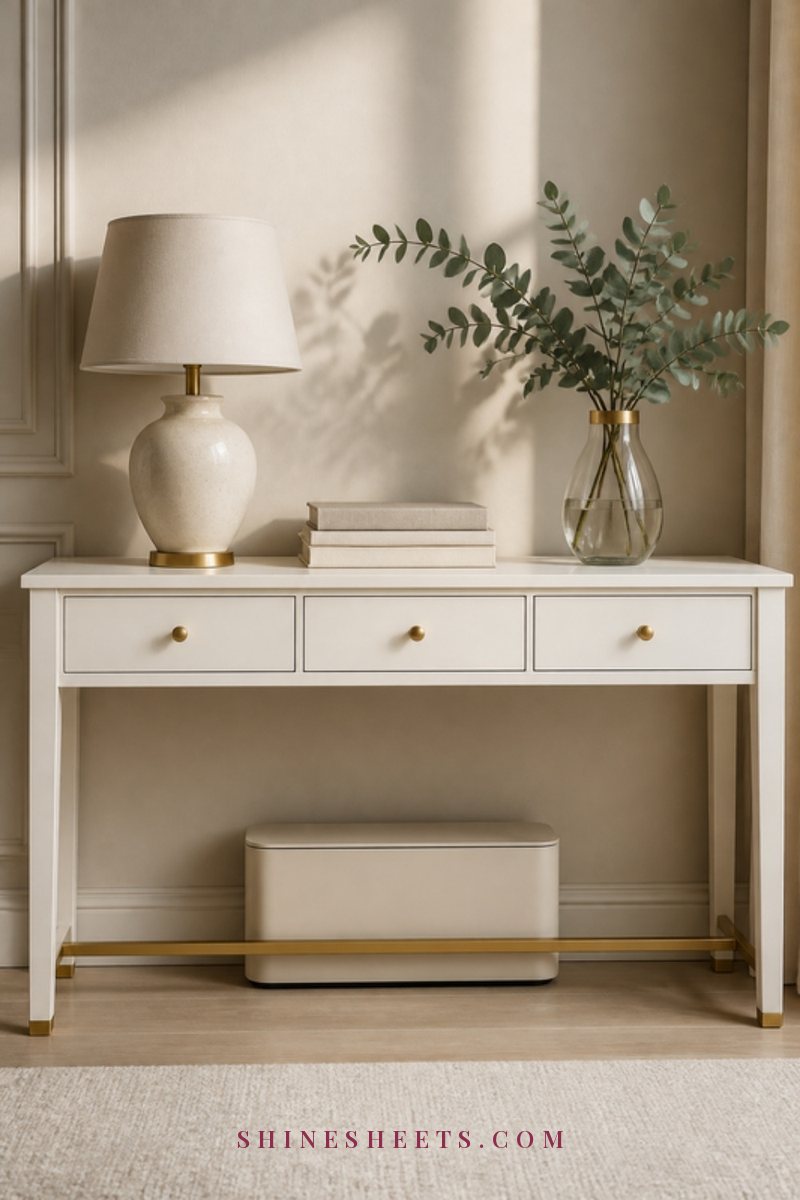
The anchor is the piece on the wall above the table, and it does more work than anything sitting on top. Without it, a console can look like it's floating in the middle of a blank wall.
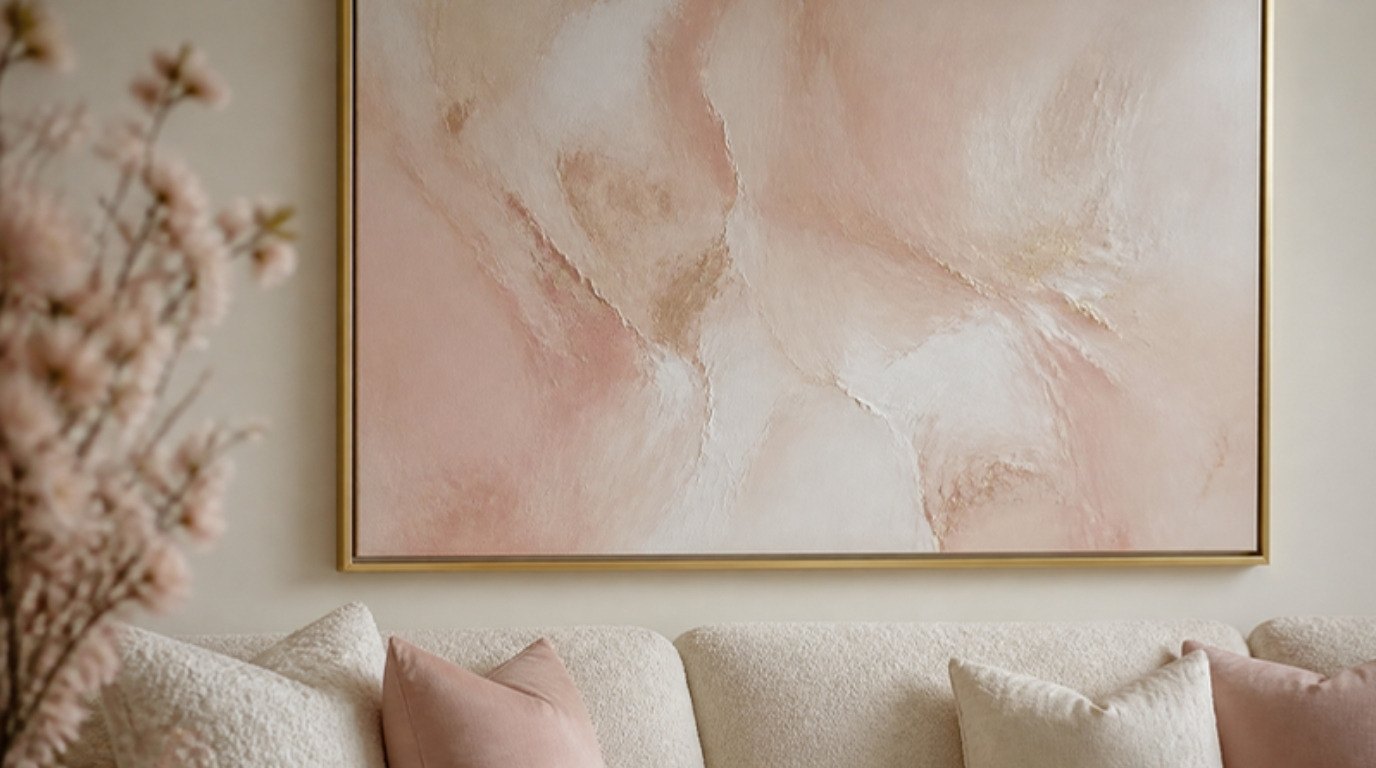
- Width: aim for art that's about two-thirds to three-quarters the width of the table. A 48-inch console looks lovely with a piece around 32–36 inches wide. Too small and it looks lost; wider than the table and it feels top-heavy.
- Height: hang it so the bottom edge sits 6–10 inches above the tabletop. This makes the art and the table read as one unit instead of two separate things.
- Centered: center it over the table, not over the wall, even if the table is off to one side.
- Layered option: lean a large frame on the table against the wall and overlap a smaller one in front of it. It's renter-friendly (no holes) and looks relaxed and collected.
A round mirror is a classic anchor in entryways and makes a narrow space feel brighter. If you're unsure about placement, my guide on how to hang art walks through measuring and hanging without a dozen extra nail holes.
2. Add Height on One Side
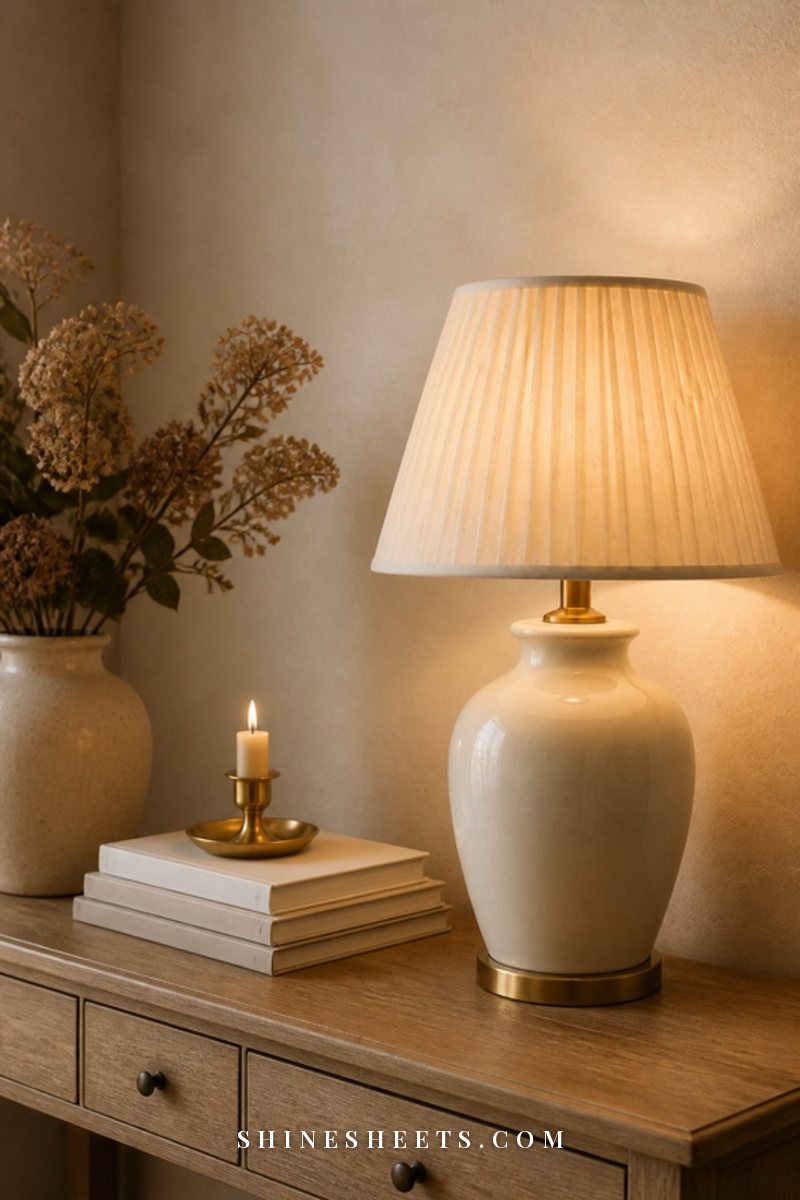
Next, add something tall near one end. This creates the visual "triangle" that makes vignettes feel finished: high on one side, medium in the middle, low on the other.
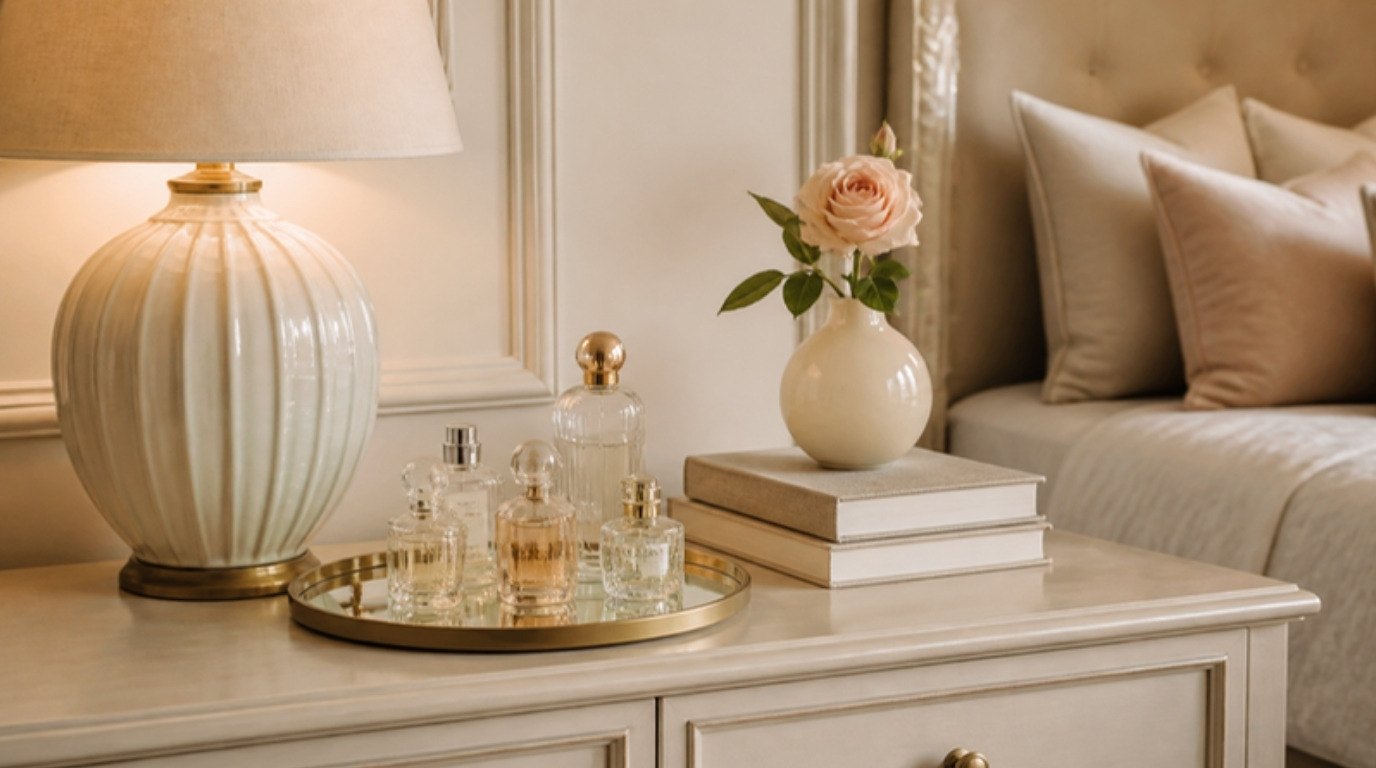
A ceramic table lamp with a linen shade is my first choice, especially for entryways and behind-sofa consoles, because it adds warm evening light where you actually need it. Look for a lamp around 24–32 inches tall and a shade no deeper than your table so it doesn't hang over the edge. A warm white bulb (2700K) keeps the light soft and flattering.
No outlet nearby? A tall cream ceramic vase with branches, or a pair of candlesticks, gives the same height without cords. If you do use a lamp, tuck the cord behind a table leg and secure it with small clear clips.
3. Layer Books and a Tray
The middle layer brings the eye down from the art and lamp and gives small objects a home.
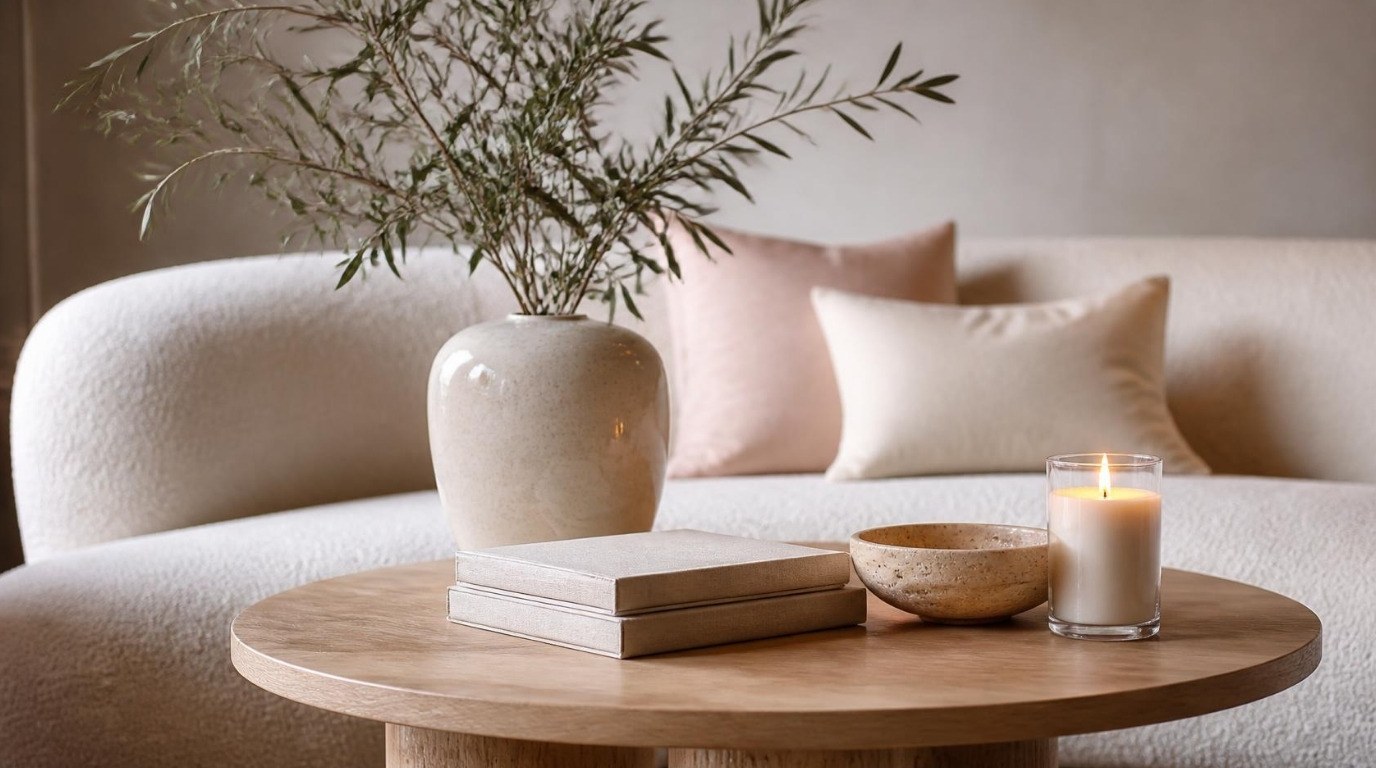
- Books: stack two to four coffee table books horizontally, largest on the bottom, spines facing out. Then place a small object on top – a candle, a little bowl, a brass figure. That one move turns a stack of books into a pedestal.
- Tray: a gold decorative tray about a third of the table's length is the single best clutter-control trick. Anything inside the tray reads as one grouped item instead of five scattered ones.
- Remove dust jackets on hardcovers if they're bright or busy; the linen covers underneath are often softer and more neutral.
This is the same layering principle behind good coffee table styling, just stretched into a longer, narrower shape.
4. Bring In Something Living
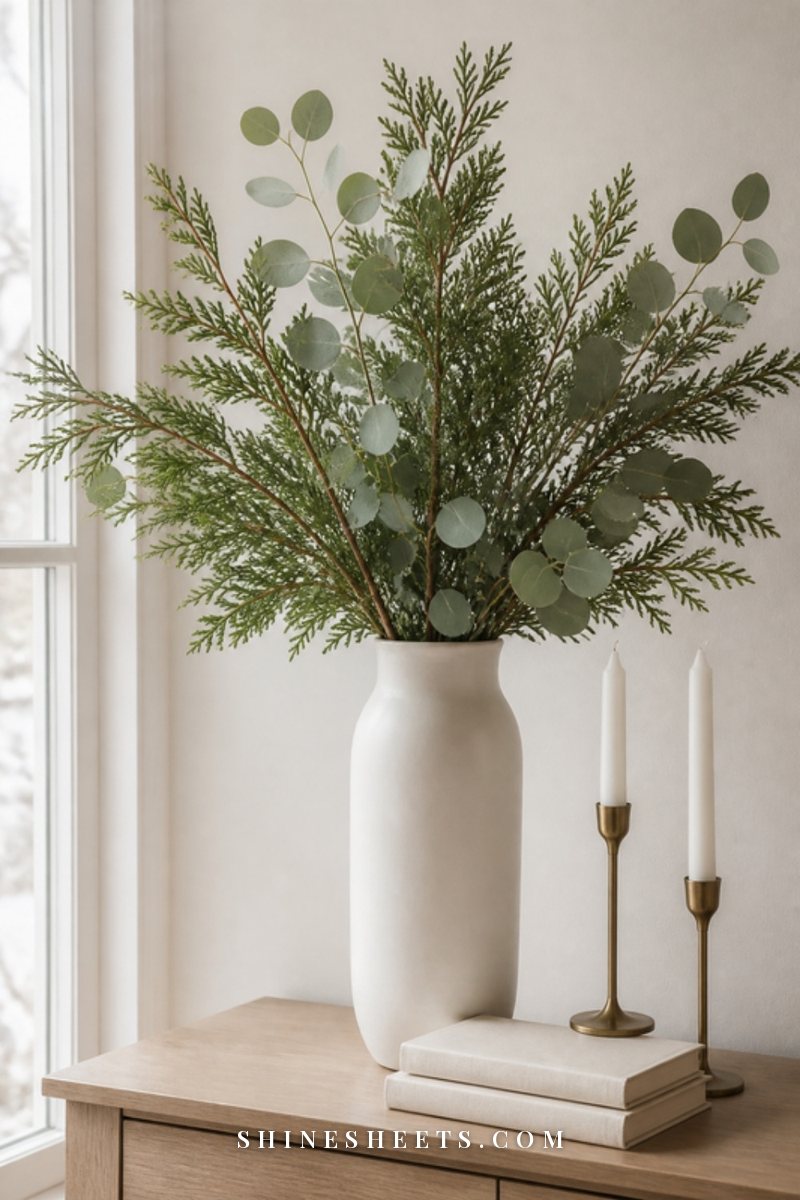
Every vignette needs something soft and organic to break up the hard lines of frames, books and lamps. Living elements add movement and make the whole table feel cared for.
- Branches: olive, eucalyptus, magnolia or cherry branches last one to three weeks in water and give lots of height for very little money.
- Fresh stems: a single variety (tulips, ranunculus, garden roses) looks more elegant than a mixed bunch on a narrow surface.
- Trailing plants: a pothos or string-of-pearls softens a table edge beautifully if your space gets bright, indirect light.
- Dried stems: pampas, bunny tails or dried hydrangea are a no-water option for darker hallways.
Proportion tip: stems should be about one and a half to two times the height of the vase. Change the water every two to three days and trim the stems at an angle to keep them fresh longer.
5. Add One Personal Piece
This is the layer that makes people pause and ask about it. A framed photo from a trip, a ceramic bowl you found at a market, your grandmother's small brass bell, a shell from a favorite beach. Keep it to one or two pieces so they feel special rather than like a collection that needs dusting.
If you have lots of meaningful little objects, give them their own home on a shelf instead – my trinket shelf ideas show how to display small treasures without the clutter creeping onto your console.
6. Use the Space Underneath
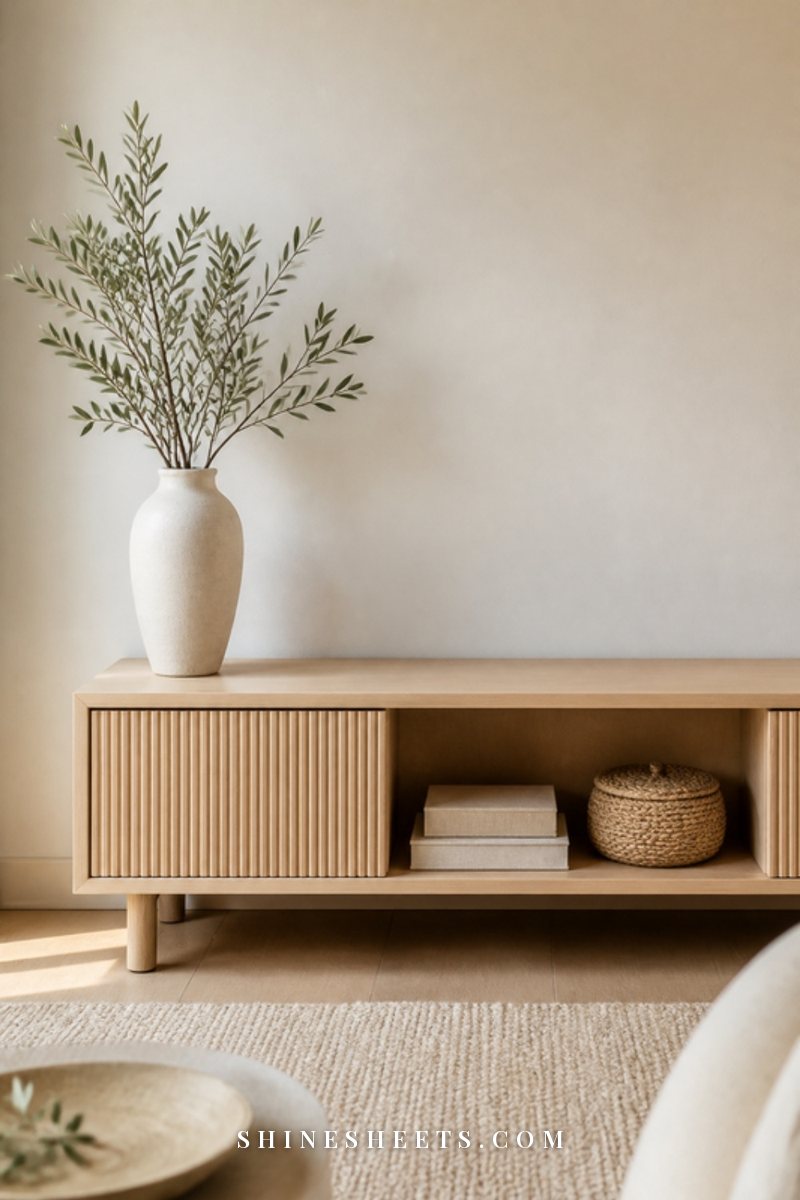
The empty space under a console is easy to forget, but filling it grounds the whole arrangement and adds real storage.
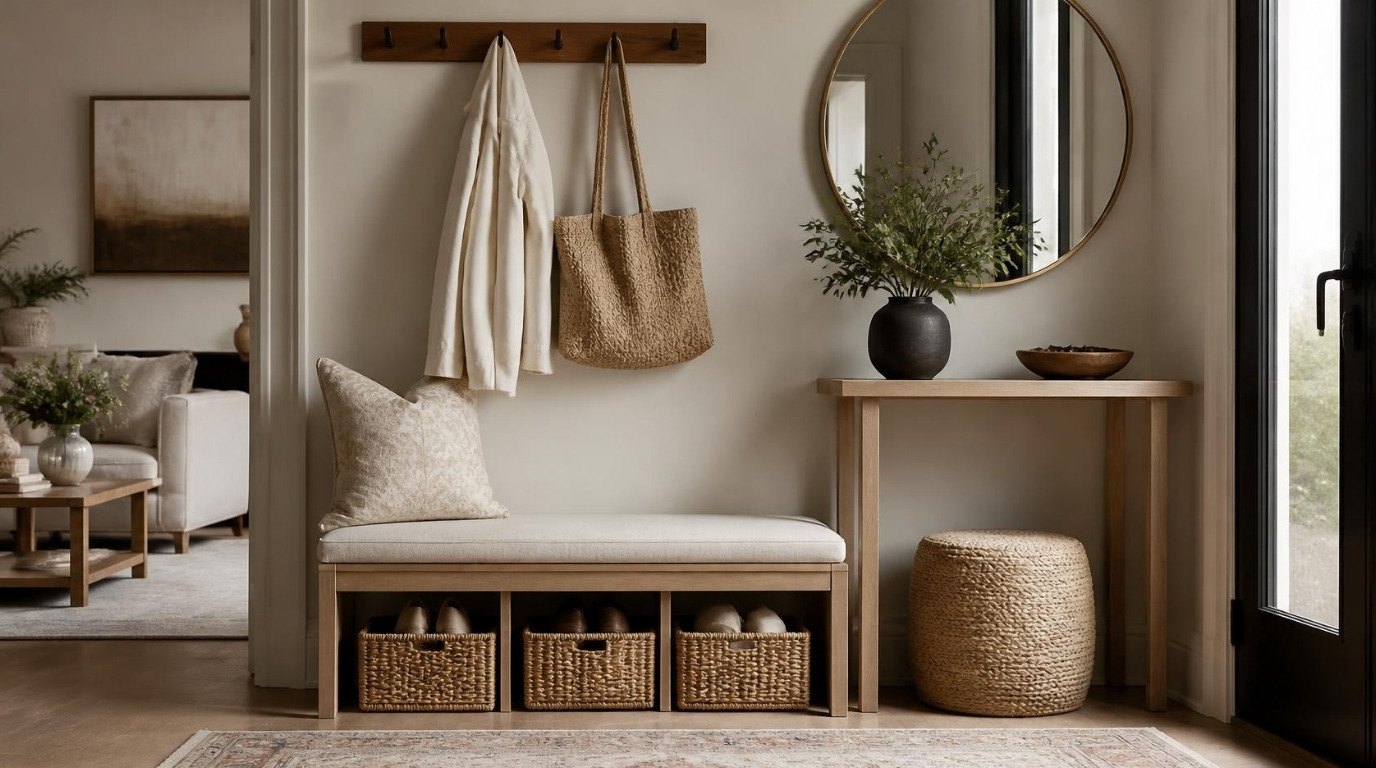
- Baskets: two matching woven storage baskets are the classic choice. Measure the height under any lower shelf or stretcher and leave 2–3 inches of air above the baskets so they slide in and out easily.
- Stools or a pouf: a pair of small upholstered stools under a behind-sofa console become extra seating when friends come over.
- A bench: in an entryway, a slim bench under (or next to) the console gives you a spot to put on shoes.
- Keep it simple: one or two items underneath is plenty. A crowded bottom level makes the whole table look heavy.
Pick a Simple Color and Material Palette
Even a well-layered console can look busy if every object is a different color and finish. The quickest fix is to choose a small palette before you shop (or before you pull things from around the house):
- Two or three main colors. For a soft, calm look, try cream, warm white and one accent such as blush, sage or soft caramel. Everything on the table should fit into one of those.
- One metal. Brass or gold accents (a tray, a candlestick, a small bowl) repeated two or three times look intentional. Mixing gold, silver and black metal on one narrow surface usually reads as random.
- Three textures. Something smooth (ceramic or glass), something natural (wood, rattan, linen) and something soft or organic (branches, a folded throw). Texture is what makes a neutral palette feel warm instead of flat.
- Tie it to the room. Repeat one color from a nearby rug, cushion or curtain so the console feels like part of the space, not a separate display.
If you're not sure where to start, look at the art you've chosen as your anchor. Pull two colors from it and you have your palette ready-made.
Symmetry vs. Asymmetry: How To Balance a Console Table
Balance is what makes a console look "right" at a glance. There are two ways to get there:
- Symmetrical: matching lamps or vases on each end, art centered, a single item (a bowl or book stack) in the middle. It's calm, formal and very forgiving – perfect for traditional rooms, dining spaces and behind sofas.
- Asymmetrical: a tall item on one side, a medium stack in the middle and something low on the other. The visual "weight" still balances, just not in mirror image. It feels relaxed and collected, ideal for entryways and modern or cottage-style spaces.
A quick way to check: take a photo of your table on your phone and look at it in black and white. If one side feels much heavier, add height or volume to the lighter side or remove something from the heavier one.
The Rule of Odd Groups
Objects grouped in threes (or fives) look more natural and pleasing to the eye than pairs or fours, which tend to look stiff unless you're going fully symmetrical. On a console, try this:
- Vary the heights within each group – tall, medium, short.
- Vary the shapes – something round (a bowl), something upright (a vase), something flat (a book).
- Repeat one material or color across the group so it feels connected, like brass, cream ceramic or natural wood.
Keep each group overlapping slightly rather than lined up in a row. Lining objects up like soldiers is one of the fastest ways to make a table look staged.
Entryway Console Tables: Style for Function
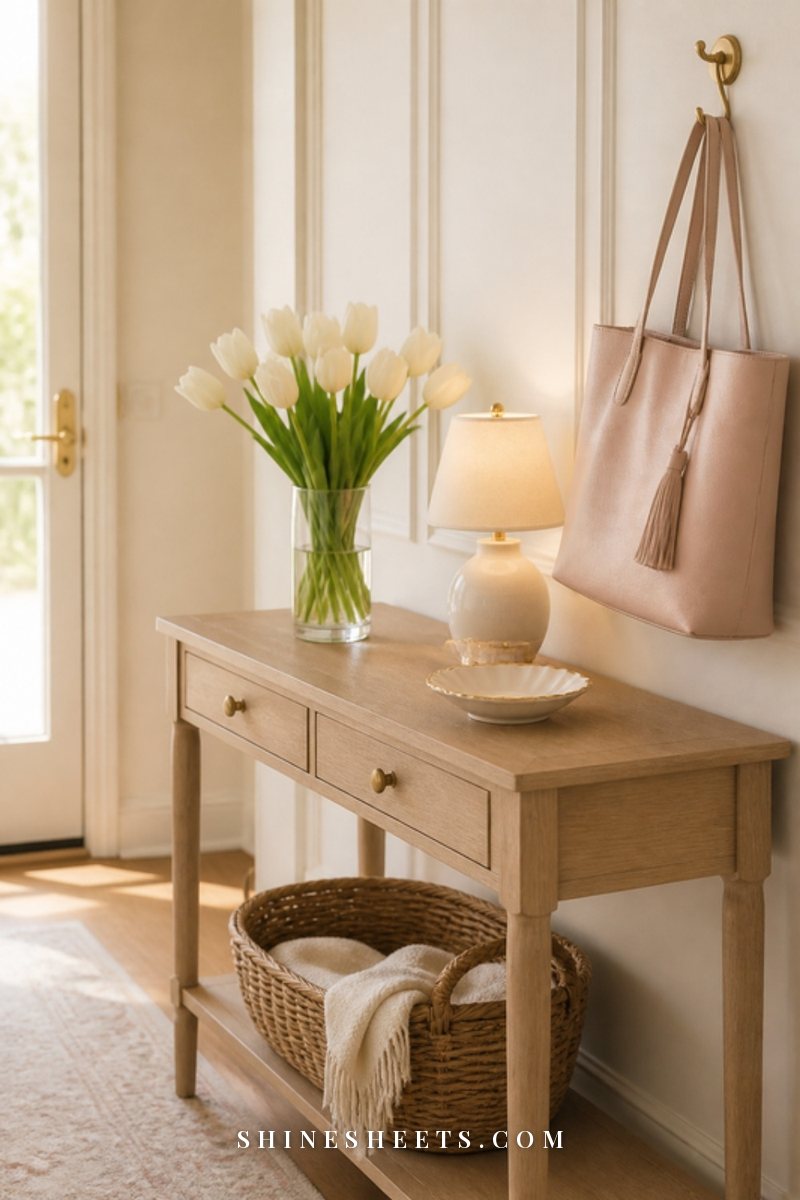
An entryway console works hard every single day, so the styling has to make dropping things easy, not stressful.
- A catchall dish: place a ceramic catchall dish closest to the door for keys and earbuds. It's the one item that will genuinely change your mornings.
- Key hooks: if you prefer hanging keys, add a small row of adhesive hooks on the wall beside the console, not above it, so they don't compete with your anchor art.
- A mail spot: a slim box or letter tray keeps envelopes from spreading. Clear it once a week.
- Baskets below: one for scarves and gloves, one for dog leashes or tote bags.
- Light: a small lamp on a timer makes coming home in the dark feel welcoming.
Keep at least 36 inches of walking space between the console and the opposite wall or door swing if you can. For more ideas, my guide to entryway ideas covers small and no-entryway homes too.
Behind-the-Sofa Console Styling
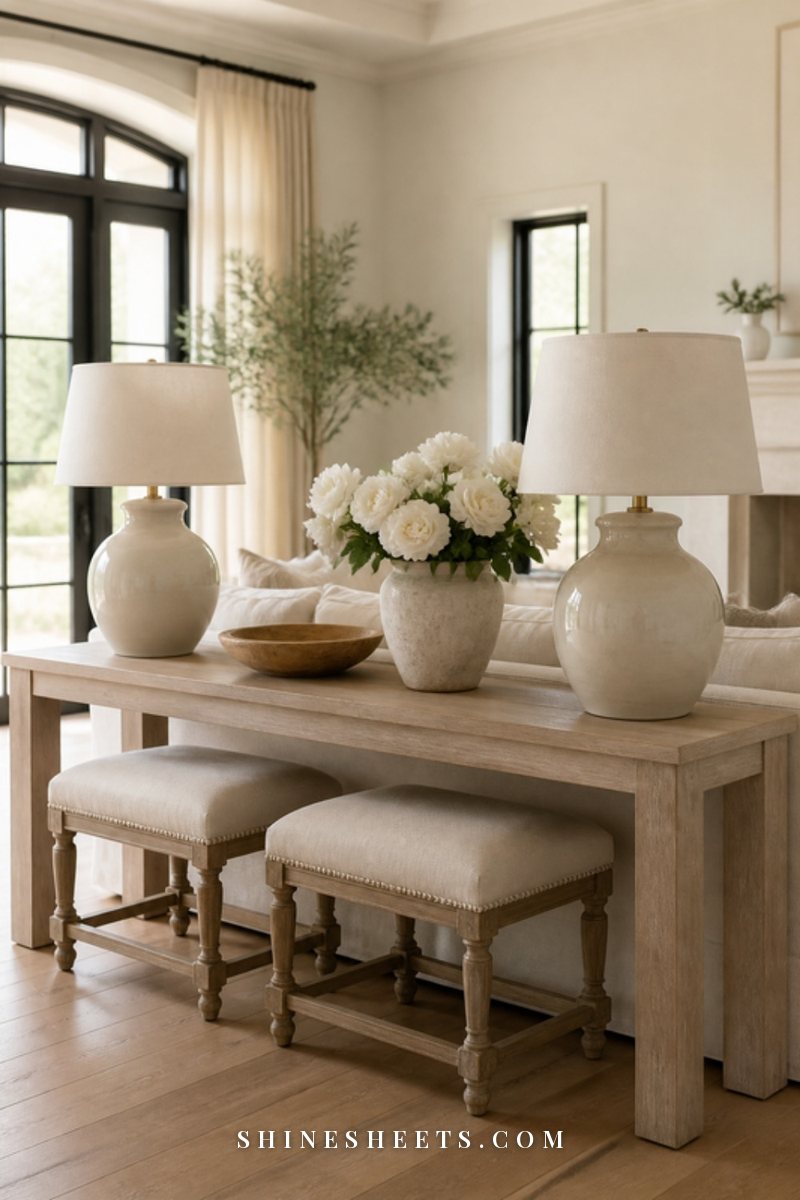
A console behind a floating sofa does three jobs: it finishes the back of the sofa, adds light to the middle of the room and gives you a landing spot for drinks and books.
- Height: choose a console that's level with or an inch or two below the top of the sofa back, so it doesn't tower over seated guests.
- Length: aim for about two-thirds of the sofa's length, and never longer than the sofa itself.
- Gap: leave a small 1–2 inch gap between the sofa and console so the sofa doesn't rub against it.
- Styling: a pair of matching lamps at each end (symmetry works beautifully here), a low centerpiece like a wooden bowl or a book stack, and stools or baskets tucked underneath.
- Keep it low in the middle: since people see it from both sides, avoid tall items in the center that block the view across the room.
Seasonal Swaps (Autumn and Beyond)
The easiest way to keep a console fresh is to change just one or two layers each season while the anchor, lamp and baskets stay put. A few gentle ideas:
- Autumn: dried wheat or oak-leaf branches in your tall vase, a small pile of cream or white pumpkins in the tray, an amber glass candle.
- Winter: evergreen branches or bare birch, a chunky pillar candle, a soft knit throw folded in the basket below.
- Spring: cherry or magnolia branches, a bud vase of tulips, lighter books on top of the stack.
- Summer: a bowl of shells or a single sculptural leaf in a clear vase, linen in place of wool.
Store the swap-outs together in one labeled box so changing seasons takes ten minutes instead of an afternoon.
7 Console Table Styling Mistakes To Avoid
- Too many small things. Ten little objects look like clutter; three larger ones look intentional. If an item is smaller than your hand, group it in a tray or remove it.
- Art that's too small or too high. Keep it 2/3 to 3/4 of the table's width and 6–10 inches above the surface.
- Everything at the same height. Without a tall element, the eye has nowhere to travel.
- Ignoring the space underneath. An empty bottom can make a slim console look flimsy.
- Lining objects up in a row. Overlap and group instead.
- Styling for photos, not life. If you drop keys there daily, give keys a home or they'll land on top of your vignette anyway.
- Visible cords. Run lamp cords down the back of a leg and secure them so they disappear.
Many of these overlap with the most common home decor mistakes in general – too much, too small and too spread out.
Final Thoughts
Console table styling gets so much easier once you stop thinking about decorating and start thinking in layers: anchor, height, layer, living, personal and underneath. Choose a few pieces with purpose, leave a little empty space and let the table do its everyday job.
Start with what you already own, move things around until the triangle feels balanced, and add one new piece at a time. A calm, welcoming console is often just a few thoughtful choices away.