Dry patches on your face usually don't need more effort. They need less. The rough spot beside your nose or the flaky line along your brows is often a small area of skin barrier that has been asked to do too much – too much exfoliating, too much hot water, too much dry air – and the fastest way to smooth it is to stop poking at it and start protecting it.
That can feel counterintuitive, because flakes look like something you should scrub away. But scrubbing a dry patch is a bit like sanding a sunburn. The gentle, slightly boring approach almost always works better: a softer cleanser, moisture on damp skin, a protective layer at night and a pause on anything strong.
This guide covers why dry patches on face appear around the nose, brows, chin and cheeks, the most common triggers, a table that matches each trigger with what it looks like and a gentle fix, seven calm steps to smooth the patches, a few makeup tips, and clear signs that it's time to see a dermatologist. Barrier first, always.
What Dry Patches on Your Face Usually Are

A dry patch is a small, local area where your skin is rougher, flakier or tighter than the skin around it. Common spots are the sides of the nose, between and along the eyebrows, the chin, the cheeks and around the mouth. They can look slightly pink, feel tight after washing and grab onto foundation in an unflattering way.
Most of the time, these patches mean that the skin barrier in that area is a little weakened. The barrier is the outermost layer of your skin, made of cells held together by fats like ceramides, cholesterol and fatty acids. When those fats are stripped away, water escapes more easily and the surface becomes rough and flaky.
This is different from having a dry skin type overall. If you're not sure which one you are dealing with, my guide to dehydrated vs dry skin explains the difference simply. You can have combination or even oily skin and still get dry patches – I have combination, sensitive skin with a shiny T-zone, and the sides of my nose can still go flaky when the air turns dry.
A gentle note: this article covers everyday dryness. It isn't meant to diagnose or treat skin conditions like eczema, psoriasis or dermatitis, which need a dermatologist's eye.
Common Triggers for Dry Patches
Dry patches rarely have one cause. Usually two or three small things stack up. Read through these and see which ones fit your routine or your surroundings right now.
Over-Exfoliating
Acids, scrubs, peel pads and cleansing brushes all remove the top layer of skin. A little can be lovely. Too much, too often – or several of them in one routine – leaves the barrier thin and easily irritated, especially on delicate areas around the nose and mouth.
Retinoids
Retinol and prescription retinoids are known for causing dryness and flaking, especially in the first weeks or when the dose goes up. The patches often show up where skin is thinnest: around the nose, mouth and chin, where product tends to collect.
Cold Wind and Indoor Heating
Cold outdoor air holds very little moisture, and heated indoor air dries out even more. Moving between the two all day is hard on skin. Cheeks and the area around the nose often feel it first.
Hot Showers and Hot Water
A long, steamy shower feels wonderful, but very hot water dissolves the natural oils in your skin. Rinsing your face under the shower stream can be especially drying, because the water is often hotter than you would choose at the sink.
Harsh Cleansers
Cleansers that leave your face feeling "squeaky clean" or tight are usually too strong. Strongly foaming formulas, high-pH bar soaps and cleansers with a lot of drying alcohol can all strip the barrier, especially if you use them twice a day.
Fragrance
Fragrance (including some essential oils) is one of the common reasons skin becomes irritated. Not everyone reacts, but if you have sensitive skin and your patches sting when you apply products, a fragrance-free routine is worth trying.
Mask or Scarf Friction
Anything that rubs against your face repeatedly – a face mask, a wool scarf, a turtleneck, even resting your chin on your hand – can create rough, dry spots exactly where the friction happens. Look at where your patches are and think about what touches that spot every day.
Hard Water
Water with lots of minerals can leave a residue on skin and make some cleansers rinse off less cleanly. If you live in a hard water area and your skin always feels tight after washing, it may be adding to the problem. A gentle, non-foaming cleanser and a moisturizer applied straight away usually help.
Dry Patches on Face: Triggers, Signs and Gentle Fixes
Use this table to match what you see with the most likely cause. Screenshot it if you like. If more than one row fits, start with the gentlest fix and give it a week before changing anything else.
| Likely trigger | What it looks like | Gentle fix | When to see a dermatologist |
|---|---|---|---|
| Over-exfoliating | Shiny, tight, slightly pink skin that stings with products | Stop acids and scrubs for 2–4 weeks; creamy cleanser, ceramide cream | Burning or rawness that doesn't ease after a week of pausing |
| Retinoids | Fine flakes around nose, mouth and chin | Pause, then return 2 nights a week with moisturizer underneath | Peeling that stays painful, or if you're using a prescription and it worsens |
| Cold wind and heating | Rough, tight cheeks; worse after time outdoors | Richer cream by day, humidifier at night, cover up in wind | Cracked, bleeding or very itchy skin |
| Hot showers | Tightness and redness right after washing | Lukewarm water, wash face at the sink, moisturize within minutes | Redness that lingers for hours or spreads |
| Harsh cleanser | Squeaky, tight feeling; flaky by midday | Switch to a creamy or low-pH gentle cleanser | No change after two weeks of a gentle routine |
| Fragrance | Stinging, itchy or red patches where you apply product | Go fragrance-free; patch test anything new | Swelling, blisters, hives or intense itch |
| Mask or scarf friction | Patches exactly where fabric rubs | Soft, clean fabrics; a thin balm as a buffer | Broken skin or patches that keep spreading |
| Hard water | Tight, dull skin after every wash | Non-foaming cleanser, moisturize straight away | Persistent scaling or redness despite changes |
The last column matters most. A gentle routine helps everyday dryness, but it isn't a replacement for a professional when something doesn't look or feel right.
7 Gentle Steps To Smooth Dry Patches
Think of these as a short reset for your skin. Most people see a difference in one to two weeks. Go slowly – the goal is calm, not quick.
1. Pause Acids, Scrubs and Retinoids
Put your exfoliating acids (glycolic, lactic, salicylic), scrubs, peel pads and retinol on a shelf for now. This is the single most helpful step for most dry patches, because it gives the barrier space to rebuild.
Give it at least two weeks, and longer if the patches are stubborn. If you use a prescription product, ask the doctor who prescribed it before stopping or changing how you use it.
2. Switch to a Creamy Cleanser
Choose a cleanser that leaves your face feeling soft, not tight. Look for a creamy, milky or gentle low-foam texture, fragrance-free if your skin is sensitive. A gentle hydrating cream cleanser in the style of the popular Korean and drugstore formulas is a good pick for dry patches.
Use lukewarm water and your fingertips only – no brushes or rough cloths. In the morning, many people with dry patches do fine with just a splash of water. Massage for about 30 seconds, rinse and pat dry with a soft towel.
3. Moisturize on Damp Skin
This small habit makes a big difference. After cleansing, leave your face slightly damp and apply your moisturizer within a minute or two. Moisturizer helps hold that water in the skin instead of letting it evaporate.
If you use a hydrating toner or serum, pat it on first while your skin is still damp, then follow straight away with cream. Keep the layers simple – two or three products are plenty while your skin is healing.
4. Use a Ceramide or Gentle Urea Cream on the Patches
Ceramides are one of the fats your barrier is built from, so creams that contain them help support it. A ceramide barrier repair cream is one of the most reliable everyday picks for dry patches. If you want to understand why they work so well, my guide to ceramides in skincare explains it in plain words.
Urea is another lovely option for rough, flaky spots. At low percentages it hydrates and gently softens rough skin. Look for a gentle face cream with urea at a low percentage (often around 5% for the face) and use it only on the patches at first. My article on urea in skincare covers percentages and how to use it safely. If urea stings, stop and stick with ceramides.
5. Seal With a Thin Layer of Squalane or Balm at Night
At night, a protective layer on top of your moisturizer helps reduce water loss while you sleep. Two easy choices:
- Squalane: a lightweight, skin-friendly oil. Press 1–2 drops of pure squalane facial oil over your cream, only on dry areas if the rest of your face is oily.
- A healing balm: a thicker, occlusive layer for very rough spots. Dab a rice-grain amount of panthenol repair balm on the patch itself, not your whole face.
With a shiny T-zone like mine, I'd keep these strictly to the dry spots – the sides of the nose, the brows, the chin – so the rest of your face doesn't feel heavy.
6. Run a Humidifier in Your Bedroom
If your patches get worse when the heating is on, the air itself may be the problem. A white cool-mist humidifier by your bed adds moisture while you sleep. Aim for comfortable, moderate humidity rather than a damp room, and clean the tank regularly as the instructions say so it doesn't grow mold or bacteria.
A small bowl of water near a radiator is not a real substitute, but airing the room briefly each day and keeping bedroom heating a little lower can help too.
7. Wear Sunscreen Every Day
Sun exposure weakens the barrier over time, and healing skin is extra sensitive. Wear a broad-spectrum sunscreen of SPF 30 or higher every morning, even on cloudy days. If your skin is reactive right now, a moisturizing sunscreen for sensitive skin can double as your day cream.
Sunscreen becomes even more important later, when you reintroduce acids or retinol, because both make skin more sensitive to the sun.
If your whole face feels stripped, not just a few spots, my guide on how to restore your skin barrier has a fuller reset plan to follow alongside these steps.
A Simple Daily Routine While Your Patches Heal
If you like to see it all in one place, here is how the steps fit together into an easy morning and evening routine. Keep it this simple for at least two weeks.
Morning:
- Rinse with lukewarm water, or use your creamy cleanser if your skin feels oily.
- While skin is still damp, apply your ceramide cream all over and a little extra on the patches.
- Finish with broad-spectrum SPF 30 or higher.
Evening:
- Remove makeup and sunscreen with a gentle cleanser (a cleansing balm first if you wear a lot of makeup).
- Pat on a hydrating toner or serum if you like, then your ceramide or low-percentage urea cream on damp skin.
- Press a thin layer of squalane or balm onto the dry spots only.
- Switch on the humidifier before bed.
That's it. No masks, no new serums, no peel pads. Boring routines are often the ones skin loves most.
Why You Shouldn't Pick or Scrub Off the Flakes
It is so tempting to lift a flake with a fingernail or scrub the patch with a washcloth to make it look smooth. Please don't. The flake is attached to skin that is still healing underneath, and pulling it away can leave a raw, pink spot that takes longer to settle – and can even lead to irritation or marks.
Instead, soften flakes from the outside. Apply your ceramide cream, wait a minute, then gently press (don't rub) a little more product onto the patch. Within a few days of a gentle routine, most flakes loosen and fade on their own.
Makeup Tips for Smooth Wear Over Dry Patches
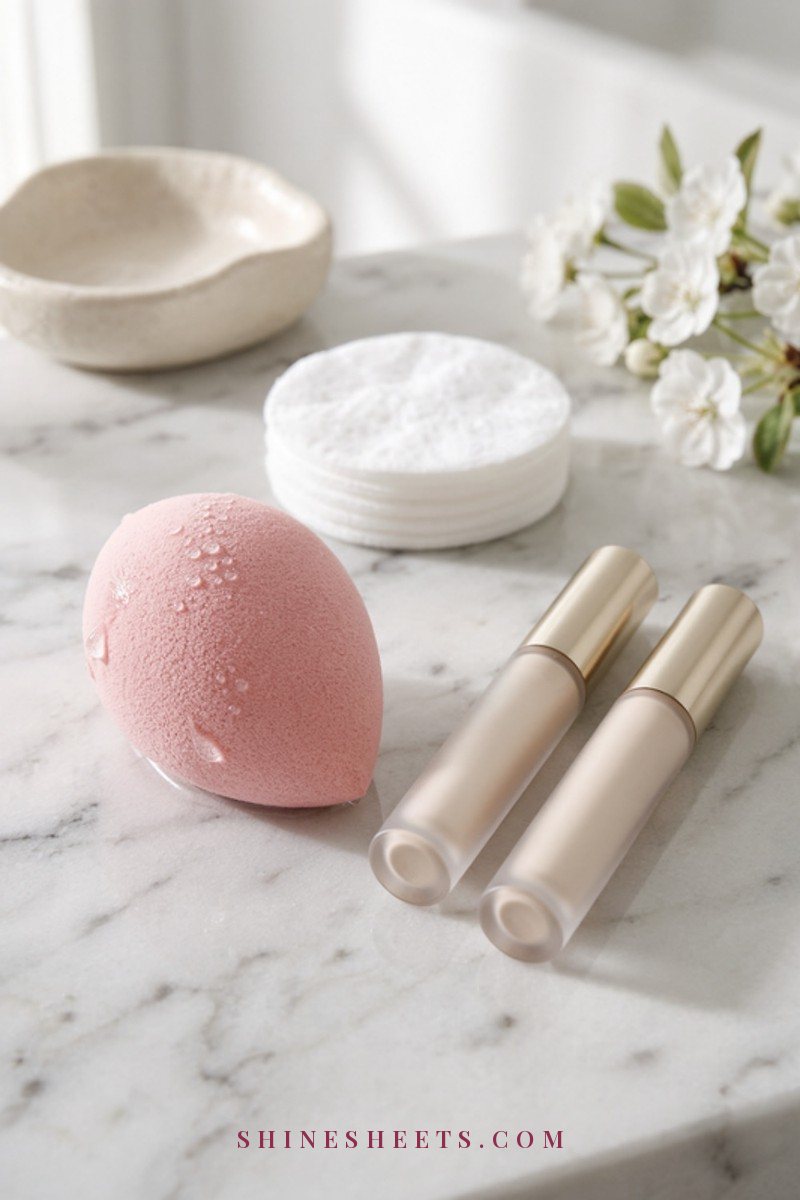
You don't have to skip makeup while your skin heals. A few small changes make a big difference in how it sits:
- Prep the patch: moisturize, wait about five minutes, then press a tiny bit of balm onto the roughest spots.
- Choose dewy textures: skin tints, hydrating foundations and cream blush sit more smoothly than matte, powdery formulas.
- Use a damp sponge: press and bounce rather than swiping, which drags flakes up.
- Go light on powder: set only the areas that get shiny, like the T-zone, and skip the patches.
- Remove gently: use a cleansing balm or milk at night instead of rubbing with makeup wipes.
My full guide to makeup for dry skin has more product types and techniques for a smooth, dewy finish.
How To Reintroduce Actives Slowly
Once your patches have been smooth and comfortable for about a week or two, you can bring back your actives – carefully, one at a time.
- Patch test first: apply a small amount on a hidden spot (like behind the ear or along the jaw) for a few days before using it on your whole face.
- Start with one product: choose the one you missed most and leave the others out for now.
- Go low and slow: use it two nights a week for the first two weeks, then three if your skin is happy.
- Buffer if needed: apply moisturizer before or after retinol to soften it, and skip the areas where patches appeared.
- Watch and adjust: if a patch comes back, step back to the previous frequency instead of pushing through.
If you are pregnant or breastfeeding, ask your doctor before using retinoids. And keep up the daily sunscreen while you use any acids or retinol.
When To See a Dermatologist
Everyday dry patches usually soften within one to two weeks of a gentle, barrier-first routine. Please see a dermatologist if your patches are:
- persistent, or not better within two weeks of gentle care
- very itchy, painful, cracked or bleeding
- thick, scaly or silvery
- very red, swollen or spreading
- coming with yellow crusts, oozing or blisters
- in places like the eyelids or around the eyes and not settling quickly
Conditions like eczema, psoriasis and seborrheic dermatitis can look like ordinary dryness at first, and they need a proper diagnosis and treatment plan. It isn't worth trying to self-treat them with stronger products from the shelf. A dermatologist can tell you exactly what you're dealing with, which is often a relief in itself.
Final Thoughts
Dry patches on your face are your skin's quiet way of asking for a softer routine. Fewer strong products, a gentle cleanser, moisture on damp skin and a little protection at night usually do more than any scrub ever could.
Be patient with those rough spots. With a calm, barrier-first routine and a bit of time, your skin knows how to smooth itself again.