Cracked fingertips rarely heal from more hand cream alone. They heal when you stop the small daily habits that keep reopening the split and give that tiny wound a protected, moist place to close. The cream matters, but the timing, the cover and the gloves matter just as much.
That's why a split on your thumb can linger for weeks even if you moisturize "all the time." Every hot rinse, every swipe of sanitizer and every box you open pulls the edges apart again. Fingertips are also the busiest skin you have, so they get no rest unless you build some in.
This guide is a calm plan for cracked fingertips in the cold season: why fingertips split in winter, where cracks form and why they hurt so much, a 7-step healing routine, a table that matches each cause to a habit change and a product type, what to skip while you heal, prevention habits and clear signs it's time to see a doctor. It took me a few chapped winters to understand that the overnight steps do most of the work – so they get extra attention here.
Why Fingertips Crack in Winter
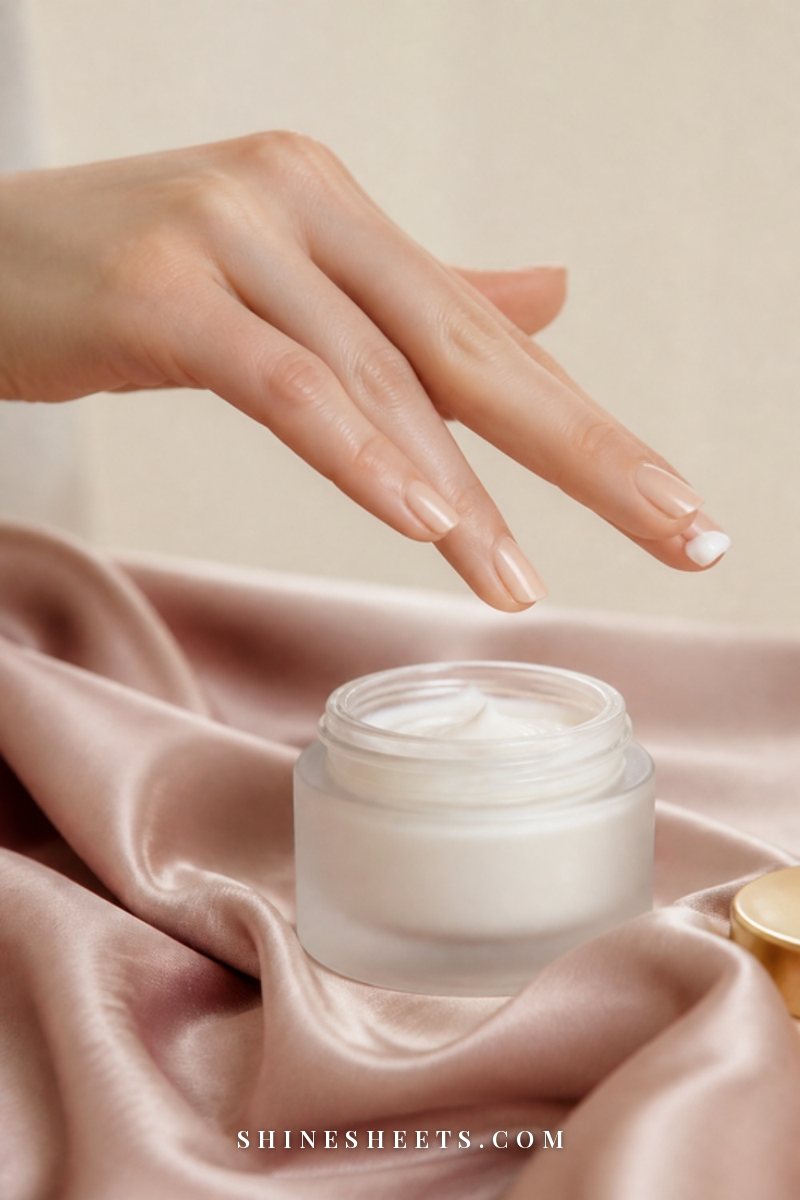
Healthy skin holds water thanks to a thin outer barrier made of lipids (including ceramides) and skin cells. In winter, that barrier gets worn down from several directions at once, and the thick skin on your fingertips loses its flexibility. When stiff skin bends hundreds of times a day, it splits instead of stretching.
The usual causes:
- Cold, dry air. Low humidity outside and heated air inside pull moisture out of the skin all day long.
- Frequent hand washing. Washing is important, but every wash strips some natural oils, especially without moisturizing after.
- Hand sanitizer. Alcohol-based sanitizers are drying, and they sting badly once a split has opened.
- Hot water. It feels wonderful on cold hands, but hot water dissolves skin lipids faster than lukewarm water.
- Cleaning products. Dish soap, sprays and wipes are designed to remove grease, and your skin's oils are no exception.
- Paper and cardboard. Sorting mail, opening boxes and handling paper wicks moisture from the fingertips – the holiday season's packages make it worse.
Most people have two or three of these going at once. That's useful to know, because changing even one habit can make the whole routine work faster. If your whole hands feel tight and rough, not just the tips, my full guide to winter hand care for soft hands covers the bigger picture.
Where Cracks Form and Why They Hurt
Fingertip splits usually show up in a few predictable spots: at the very tip of the thumb and index finger, along the side of the fingertip, next to the nail edge and across the skin creases of the first knuckle. These are the areas that bend, press and grip the most.
They hurt out of all proportion to their size because fingertips are packed with nerve endings – that's what makes them so sensitive to touch in the first place. A split also tends to go deeper than it looks, opening into the lower, living layer of skin. Every time you bend the finger, the edges pull apart, which is why a crack can feel like a paper cut that won't quit.
Cracks near the nail often travel along with rough cuticles and hangnails. If that sounds like your hands, my guide on how to get rid of hangnails safely is a helpful companion to this one.
How To Heal Cracked Fingertips in 7 Steps
This routine works best when you do all seven steps for at least a week, not just when a crack hurts. Think of it as giving the split a calm, protected place to close, then keeping it from reopening.
Step 1: Wash With Lukewarm Water and a Mild Soap
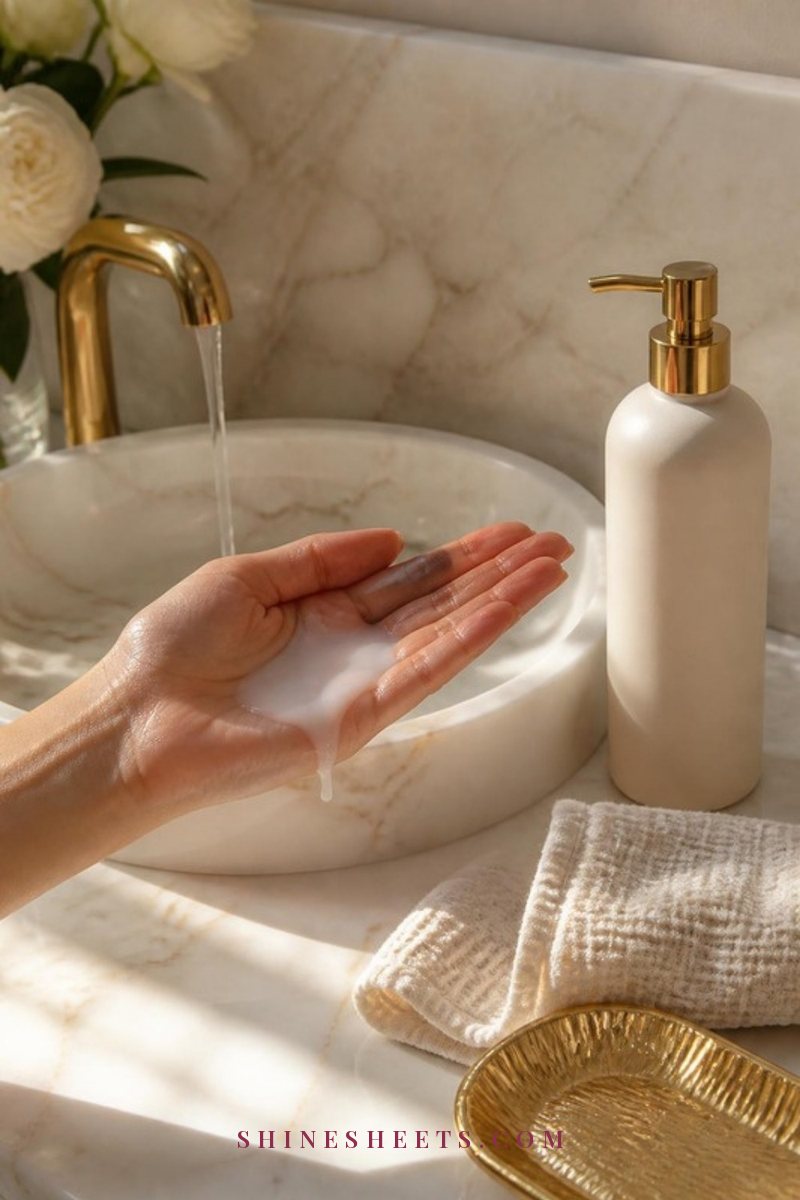
Keep washing your hands as often as you need to – just make it gentler. Use lukewarm water (comfortably warm on your wrist, never hot) and a mild, fragrance-free soap or a creamy unscented gentle hand wash. Twenty seconds of washing is enough; long soaks soften the skin and make it split more easily once it dries.
Rinse well, because leftover soap in the creases keeps drying the skin after you've walked away from the sink.
Step 2: Pat Your Hands Dry, Gently and Completely
Rubbing with a towel pulls at the edges of a split. Pat instead, with a soft, clean towel, paying attention to the fingertips and between the fingers. Damp skin left to air-dry in cold air loses even more moisture as the water evaporates.
At home, keep your own small hand towel and swap it every day or two. Paper towels are fine in public bathrooms; just pat, don't scrub.
Step 3: Apply a Thick Hand Cream Right After Washing
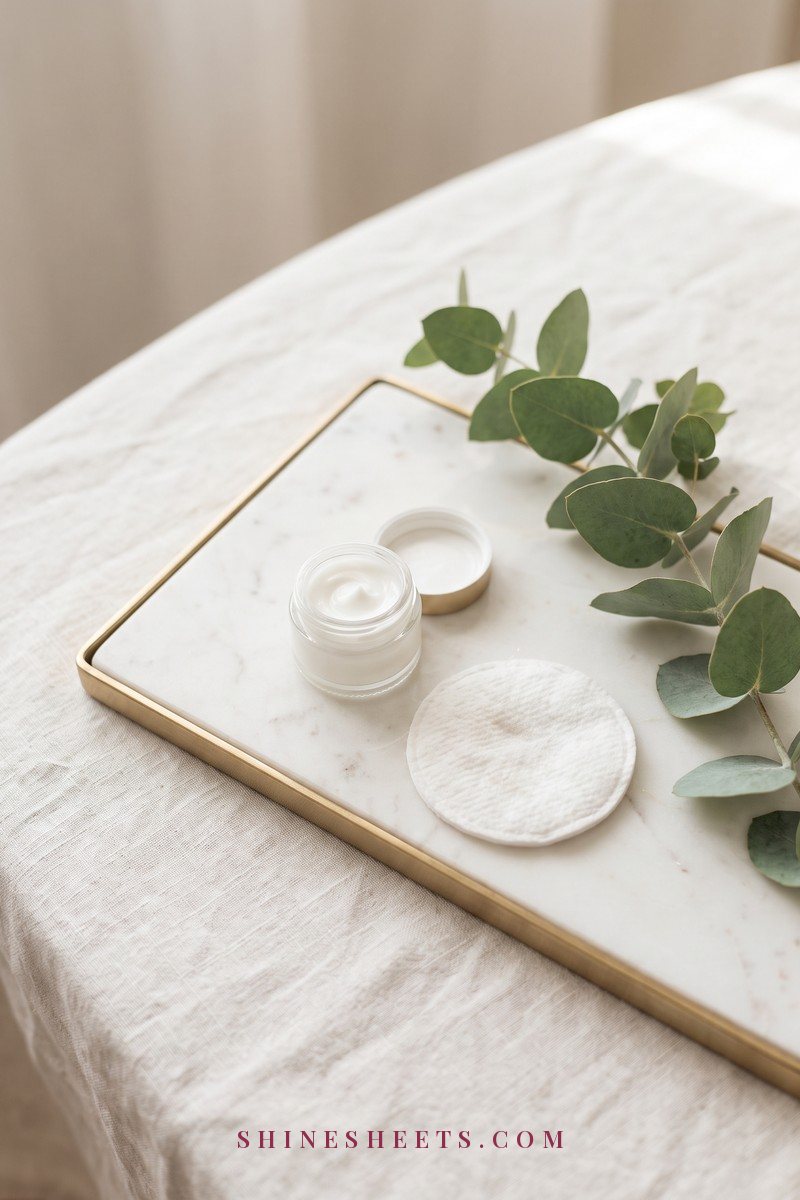
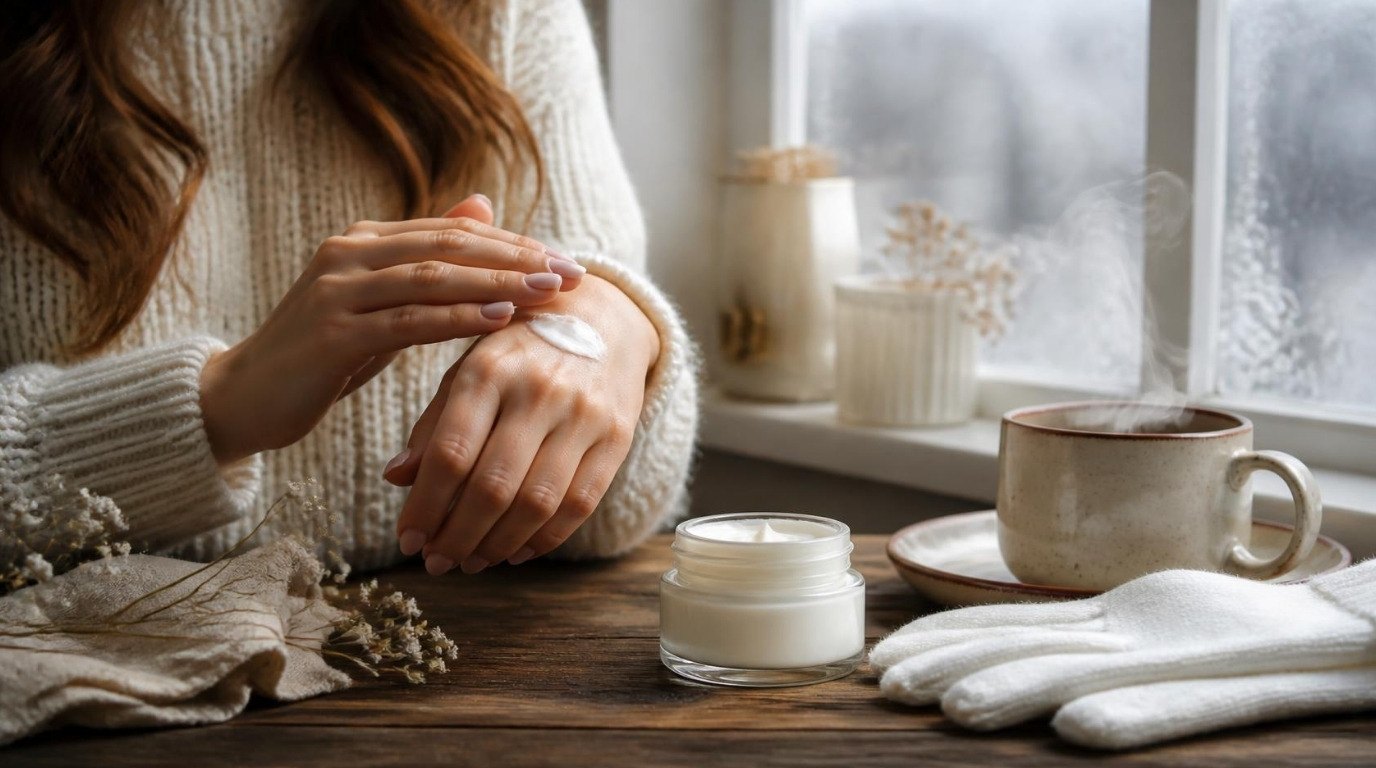
This is the step that changes everything. Within a minute or two of drying your hands, while the skin is still slightly soft, apply a pea-sized amount of a thick unscented hand cream and massage it into the fingertips, knuckles and cuticles.
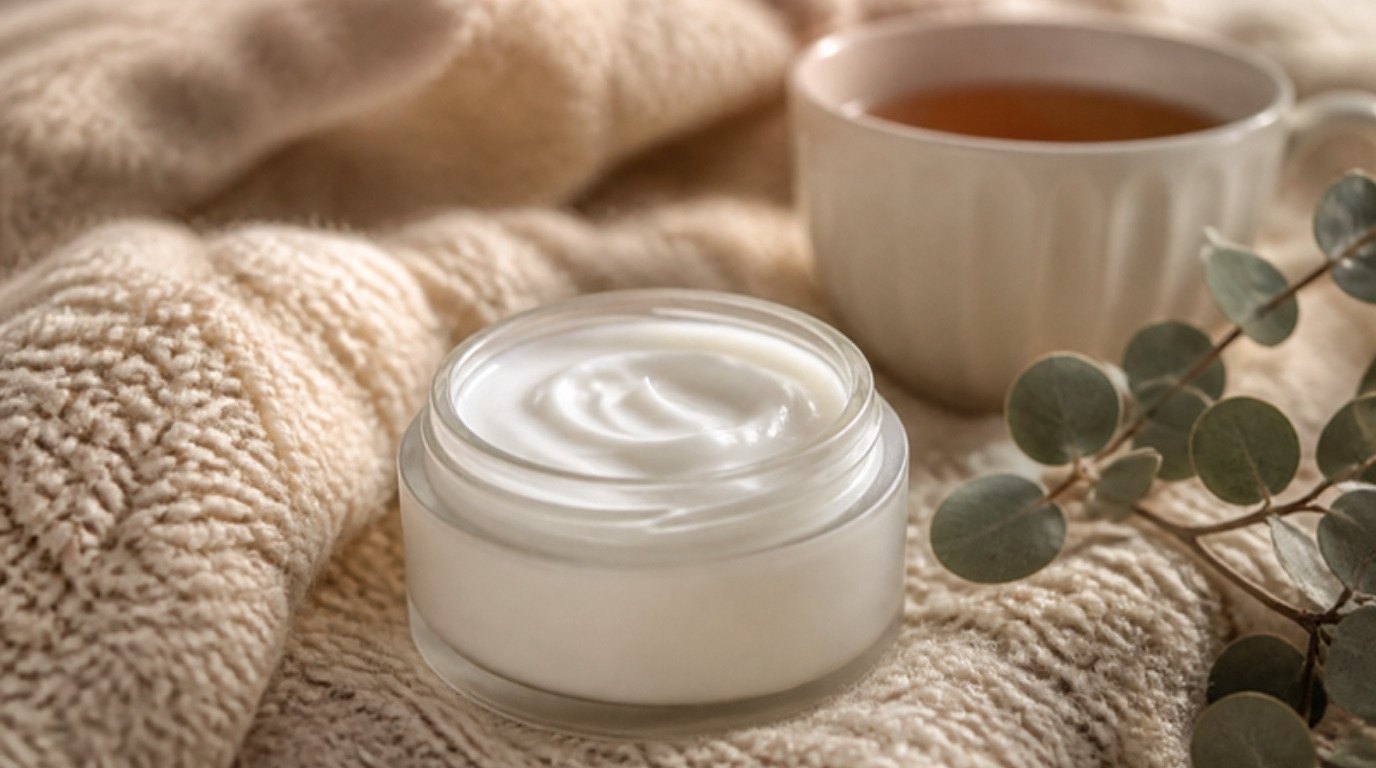
Look for a rich cream rather than a thin lotion, ideally fragrance-free, with barrier-friendly ingredients like glycerin, shea butter, dimethicone or ceramides. A fragrance-free ceramide cream is a good pick if your skin is sensitive (you'll find more about how these work in my guide to ceramides and why your skin needs them). Keep one tube by every sink you use and one in your bag, so moisturizing becomes automatic. Patch test any new cream on the inner arm for a couple of days first, especially if your skin reacts easily.
Step 4: Seal the Split With a Healing Ointment
Cream moisturizes, but an ointment protects. After your hand cream, dab a tiny amount of a petrolatum healing ointment directly onto the crack itself. Petrolatum forms a seal that slows water loss and keeps the split soft and flexible, so the edges are less likely to tear again.
You only need a rice-grain amount per crack. Do this at least two or three times a day, and always at bedtime. Choose a plain, fragrance-free version and skip ointments with added fragrance, menthol or essential oils on broken skin.
Step 5: Wear Cotton Gloves Overnight
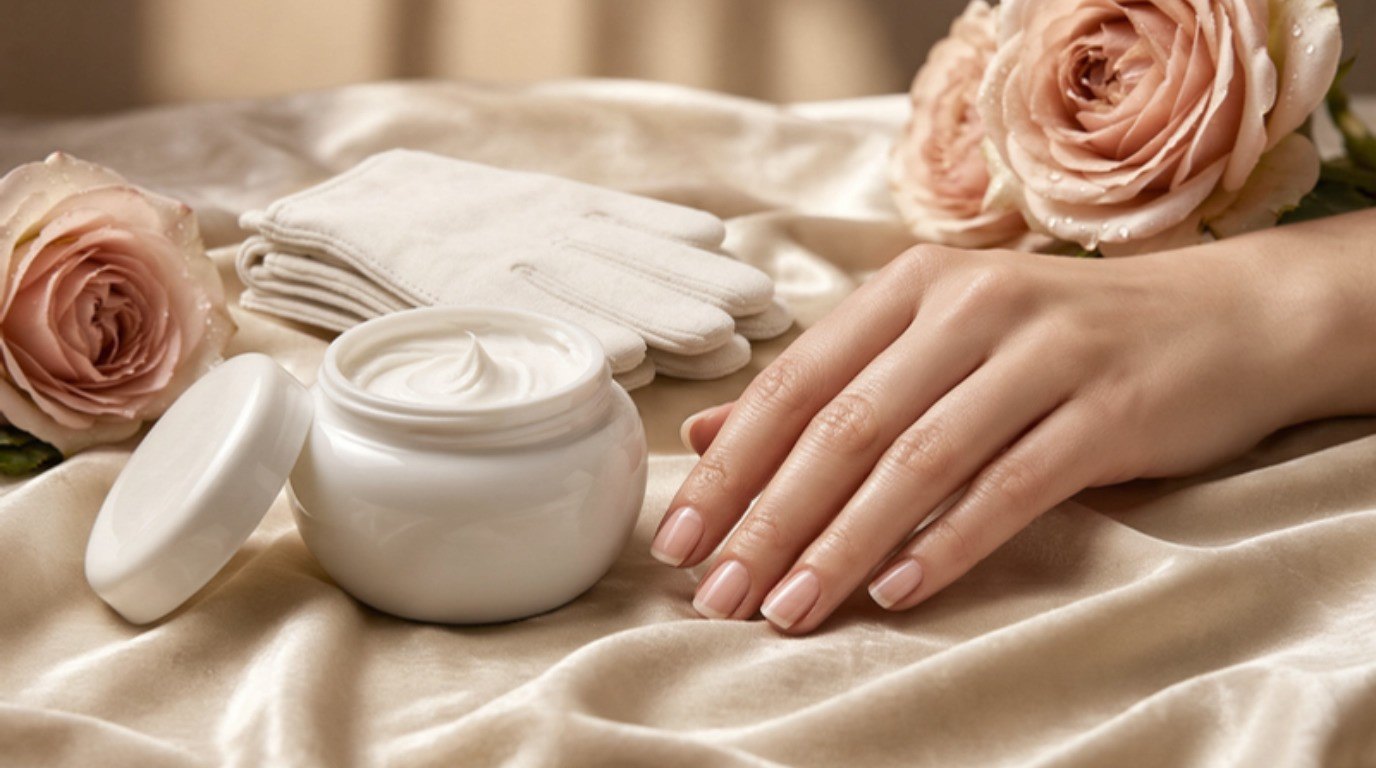
Nighttime is when your fingertips finally rest, and it's the best healing window you have. Before bed, apply a generous layer of hand cream, add ointment on each split, then slip on a pair of white cotton moisturizing gloves. The gloves keep the products on your skin instead of your pillowcase and create a warm, moist environment that helps splits close.
Wash the gloves every few nights (fragrance-free detergent is gentlest), and keep two pairs so one is always clean. For me, this pairs nicely with the calm part of the evening – tea, a little journaling, gloves on, lights low. Most people notice a difference within three or four nights.
Step 6: Cover the Crack by Day With a Bandage or Liquid Bandage
During the day, the split needs protection from water, soap and friction. After applying ointment, wrap a small fabric finger bandage around the fingertip – fabric ones flex better than plastic. Change it whenever it gets wet or dirty, and at least once a day.
If a bandage keeps slipping off or gets in your way, a liquid bandage is another option for small, clean, shallow splits: it dries into a thin flexible film that seals the crack. Follow the package directions, expect a brief sting when applying it, and don't use it on deep, bleeding or infected cracks. Let it wear off on its own rather than peeling it.
Step 7: Wear Rubber Gloves With Cotton Liners for Chores
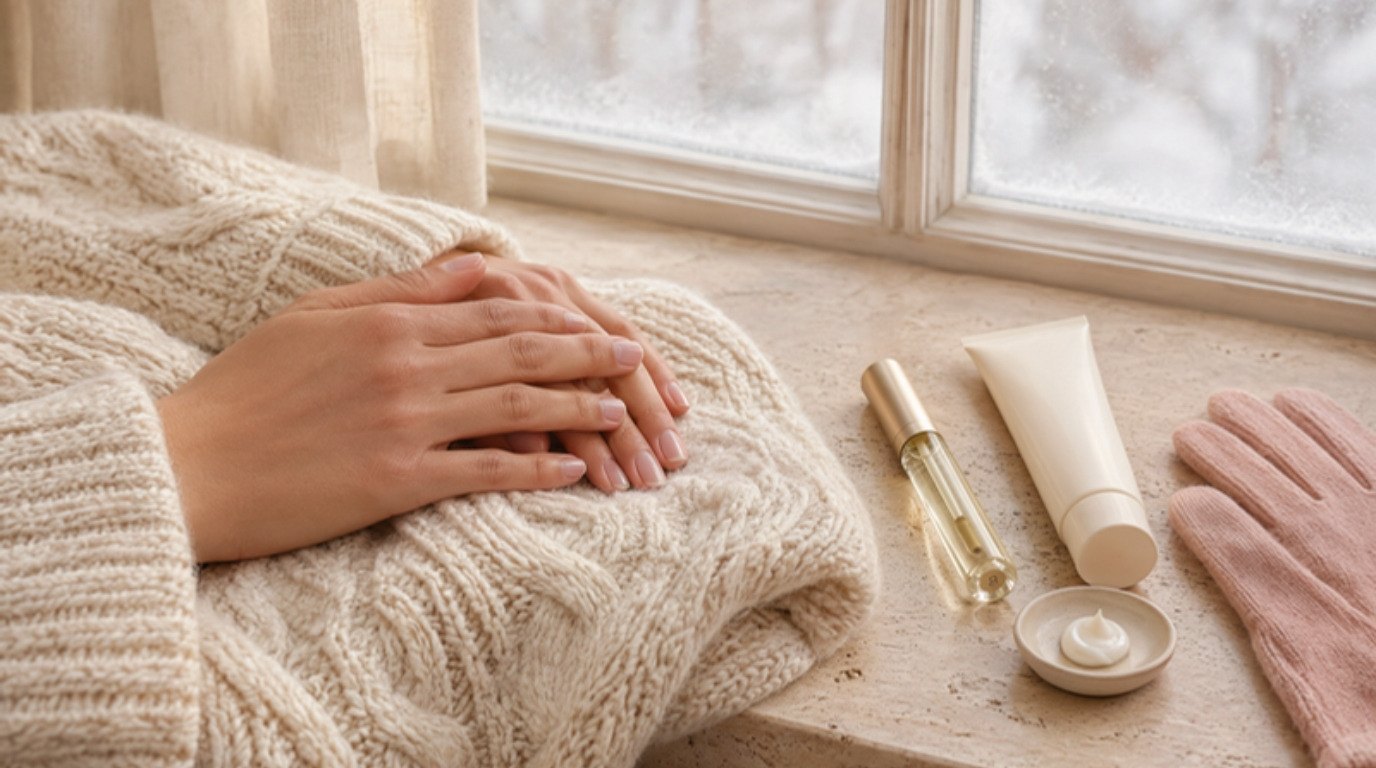
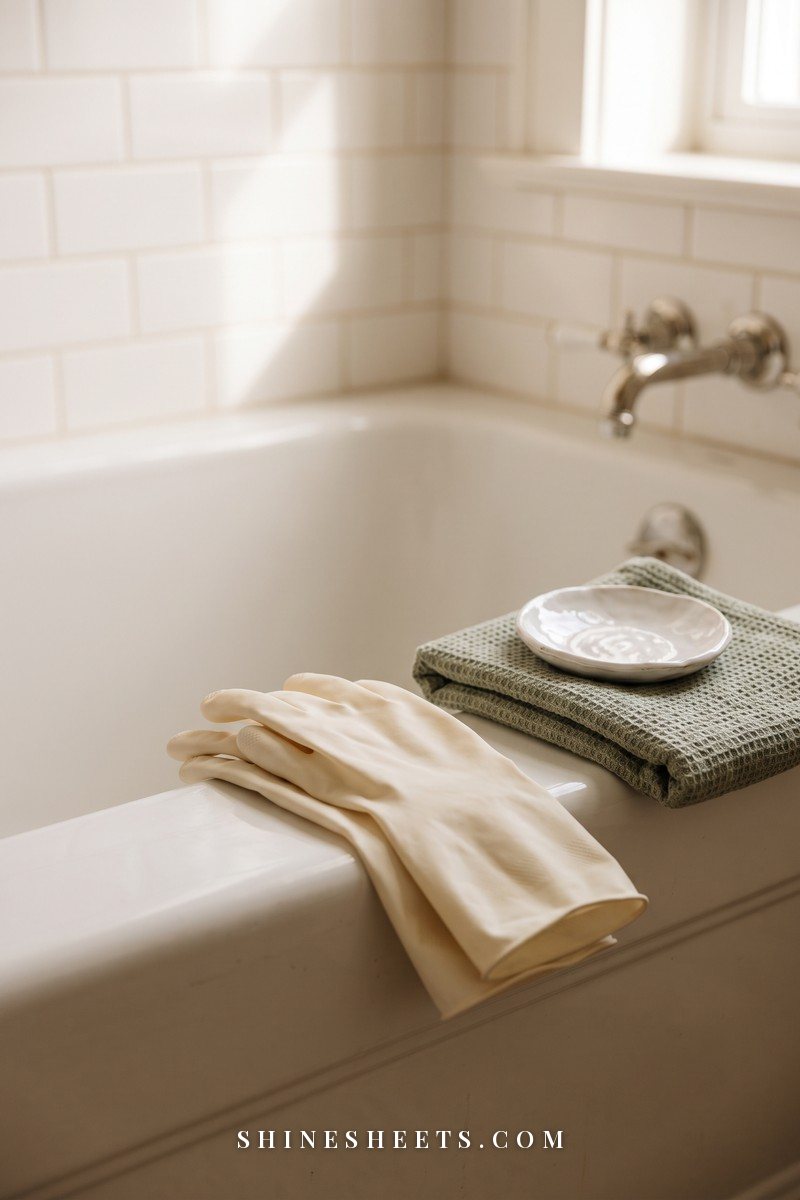
Dishwater and cleaning products are some of the harshest things your hands touch, and they reopen splits fast. Wear cleaning gloves in blush with cotton liners for washing dishes, wiping counters and anything with sprays. The cotton liner absorbs sweat, which can irritate the skin on its own inside rubber gloves.
If latex bothers you, choose nitrile or vinyl gloves. Take them off as soon as you're done, and moisturize right after. This one habit often makes the difference between a crack that heals in a week and one that lingers all winter.
A Simple Daily Rhythm While Your Fingertips Heal
Seven steps can sound like a lot when your hands are sore, so here's how they fit into an ordinary day. It adds maybe five minutes in total, spread out in small moments.
- Morning: wash with lukewarm water, pat dry, apply hand cream, dab ointment on each split and cover the worst one with a fabric finger bandage. Put a small tube of cream in your bag or coat pocket before you leave.
- Midday: after each hand wash, cream within two minutes. If a bandage got wet at the sink, swap it for a fresh one rather than leaving damp fabric on the crack.
- Chores: gloves with cotton liners on before the water runs, off as soon as you finish, then cream straight away. If you're sorting mail or opening packages, keep the bandage on and go slowly around the sore finger.
- Coming in from the cold: warm your hands slowly, not under hot water. Hold a warm mug of tea or tuck them under a blanket for a few minutes, then moisturize.
- Bedtime: a generous layer of cream, a rice-grain dot of ointment on each split, cotton gloves on. This is the most important moment of the day, so try not to skip it even when you're tired.
Small and steady beats big and occasional here. A crack that gets ten gentle touches of care a day usually closes much faster than one that gets a thick mask once a week and nothing in between. If you miss a moment, just pick up at the next one – no need to start over.
It can also help to notice which part of your day is hardest on your hands. For some people it's the morning rush with lots of washing, for others it's the evening dishes or a job that involves paper and boxes. Once you know your toughest hour, put an extra tube of cream and a spare pair of gloves right there.
Cracked Fingertips Healing Table
Find the cause that sounds most like your days, then make the habit change and use the product type next to it. The healing times are rough guides for small, shallow splits with consistent daily care – deeper cracks take longer, and everyone's skin is different.
| Cause | Habit change | Product type | Typical healing time for a small split |
|---|---|---|---|
| Cold, dry air and indoor heating | Moisturize every time you come inside; run a humidifier in the bedroom | Thick fragrance-free hand cream | About 5 to 10 days |
| Frequent hand washing | Lukewarm water, mild soap, pat dry, cream within two minutes | Gentle unscented hand wash plus hand cream | About 5 to 10 days |
| Alcohol hand sanitizer | Wash with soap and water when you can; avoid sanitizer on open splits | Petrolatum ointment over the split | About 7 to 10 days |
| Hot water | Turn the tap down to lukewarm for hands, showers and dishes | Ceramide cream after washing | About 5 to 7 days |
| Cleaning products and dishwater | Rubber gloves with cotton liners for every chore | Cleaning gloves plus ointment underneath | About 7 to 14 days |
| Paper, cardboard and packages | Wear thin cotton gloves for sorting or unboxing; cover splits | Fabric finger bandage or liquid bandage | About 7 to 14 days |
| Picking or peeling dry skin | Keep nails short and smooth; trim loose skin with clean scissors only | Ointment and overnight cotton gloves | About 7 to 14 days |
If a split isn't clearly improving after two weeks of this routine, that's your cue to have it checked rather than trying yet another cream.
What To Skip While Your Fingertips Heal
A few common habits quietly undo all your good work. While a crack is healing, try to avoid these:
- Picking or peeling dry skin. It's so tempting, but pulling at flakes tears the skin deeper. If a loose flap catches, trim it carefully with clean, small scissors and cover the spot with ointment.
- Alcohol sanitizer on open splits. It stings for a reason. Wash with soap and water when possible, and if you must use sanitizer, cover the split with a bandage first and moisturize as soon as it dries.
- Hot water. For dishes, showers and warming up your hands after a cold walk, lukewarm is kinder.
- Fragranced lotions and scrubs. Perfume and exfoliating grains can irritate broken skin. Save them for when your hands are fully healed.
- Super glue. Household glue isn't made for skin; if you want a sealing film, choose a liquid bandage product designed for it.
- Biting or tearing at cuticles. Splits near the nail heal much faster when the cuticle area is left alone and oiled.
Prevention Habits for the Cold Season

Once your fingertips have healed, a few small habits help them stay that way all winter. None of them takes more than a minute:
- Moisturize at the same moments every day. After every wash, after chores, and right before bed. Tying it to things you already do makes it stick.
- Wear warm gloves outside. Cold wind dries skin fast. Knit gloves with a soft lining are kinder than bare hands in your pockets.
- Run a humidifier in the bedroom. Keeping the air from getting too dry helps skin overnight. Clean it as the instructions say, so it stays fresh.
- Keep nails short and smooth. Snags and jagged edges catch on dry skin. My guide to winter nail care for dry cuticles and splitting nails covers this gently.
- Give your hands a weekly treat. One evening a week, a thicker layer of cream and ointment with cotton gloves keeps the skin supple before cracks start.
- Drink water and eat regular meals. It won't fix cracks on its own, but well-cared-for skin starts from a cared-for body.
If you'd like a complete daily rhythm for your hands, not just winter first aid, my simple daily hand care routine puts it all together.
When To See a Doctor or Dermatologist
Most small fingertip splits heal with gentle care. But please don't push through if something feels wrong. See a doctor or dermatologist if:
- A crack is bleeding and won't stop with gentle pressure.
- You notice swelling, pus, warmth, spreading redness or red streaks, which can be signs of infection.
- A split hasn't healed or clearly improved in about two weeks.
- Cracks keep coming back, are very deep or are spreading across your hands.
- Your skin is also itchy, blistered, scaly or inflamed, which can point to a skin condition that needs a proper diagnosis.
- You have diabetes, poor circulation or a weakened immune system – in that case, check in sooner rather than later, even for small cracks.
A professional can figure out what's behind the cracks and suggest treatment that suits your skin. Getting it checked isn't overreacting; it's simply taking care of the hands that take care of everything else.
Final Thoughts
Cracked fingertips are small, but they make every button, zipper and keyboard feel like a test. The good news is that they usually respond beautifully to a gentle, consistent routine: lukewarm water, cream right away, ointment on the split, gloves overnight and protection during chores.
Give it a week of steady care and be patient with your skin. Warm hands, a cup of evening tea and a pair of soft cotton gloves at bedtime is a pretty lovely way to heal.