Your birthday is the one day of the year that belongs only to you. Not to the calendar, not to a holiday, not to anyone's schedule. That makes it the perfect moment to pause, look back at the last twelve months of your own life and decide, gently, what you want to carry into the next one.
A birthday review isn't a performance review. Nobody is grading you. It's a quiet hour with a notebook where you notice what made you happy, what taught you something, who showed up for you and what you're ready to leave behind. It took me a while to understand that this kind of reflection works best when it's soft, not strict.
In this guide to the birthday review, you'll find why your birthday is such a natural reset, how to turn it into a cozy little ritual, 12 reflection questions, a simple life-area table, and four small closing steps: three highlights, one thing to forgive yourself for, a word for your next year and a short letter to reread next birthday.
Think of it as a gift you give yourself before the cake and the messages arrive.
Why Your Birthday Is a Natural Reset
Most of us already do some kind of reflecting at the end of the calendar year, but that's a shared moment. Everyone is looking back at once, the feeds are full of other people's highlights and the pressure to have "a big year" is everywhere. If you love celebrating the calendar year, my guide to a year in review that celebrates your wins is a lovely companion piece.
A birthday review is different. It follows your personal year, from one birthday to the next. That year has its own rhythm: maybe it started in a new home, in the middle of a hard season or right after a big change. Looking back birthday to birthday lets you see your life in your own chapters instead of the calendar's.
There's also something emotional about birthdays that makes reflection easier. You're already a little more tender, a little more aware of time. Instead of letting that feeling turn into worry, a birthday review gives it somewhere useful to go.
And it's quieter. Nobody else is doing it on the same day, so there's no comparing. Just you, your notebook and the year you actually lived.
How To Make Your Birthday Review a Cozy Ritual
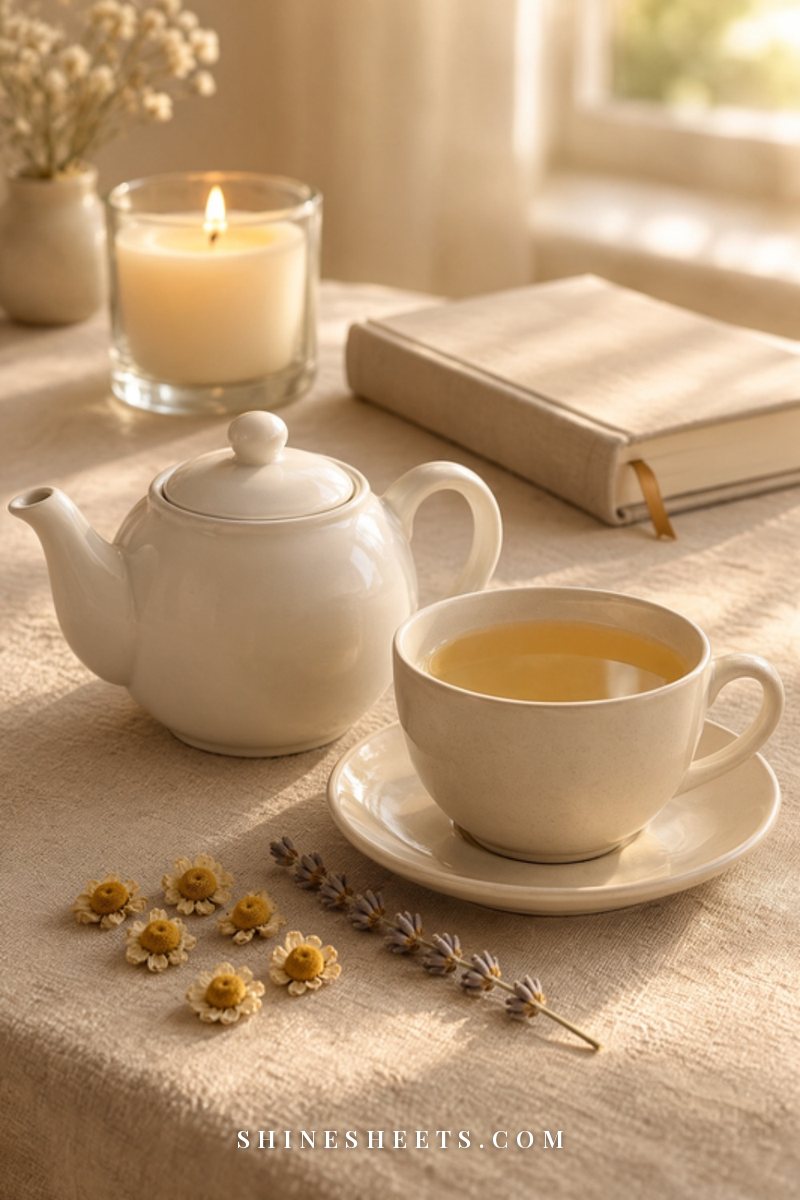
The ritual matters more than you'd think. If your review feels like a chore, you'll rush it. If it feels like a treat, you'll want to come back to it every year. Here's how I'd set it up:
- Pick your hour. It doesn't have to be on the day itself. The evening before, the morning of or the first quiet weekend afterward all work. Block out 60–90 minutes and treat it like a real plan.
- Put your phone away. Not face down on the table, actually in another room. Birthday messages can wait an hour, and you'll think more clearly without the little buzzes.
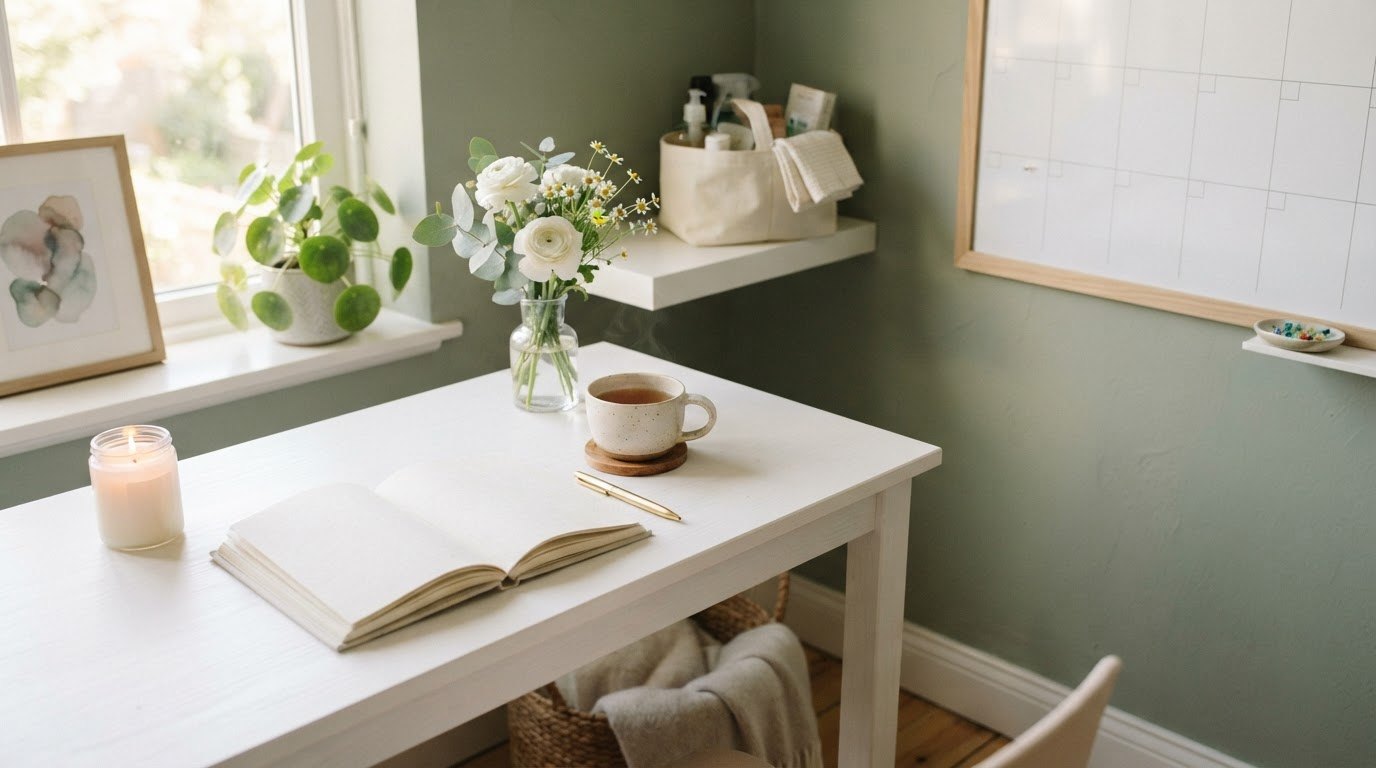
- Make it pretty. Light a candle, put on soft music without lyrics, wrap yourself in a blanket. A cream scented candle in a glass jar is a pick for this, because the steady flame quietly signals "this time is different."
- Pour something warm. Tea is my choice, always. A herbal tea sampler box makes it feel special, since you can choose a new flavor each year.
- Choose one notebook. Ideally one you'll keep for many birthdays, so each year's review sits next to the last.
A simple structure for the hour: 10 minutes gathering your year, 30 minutes on the questions, 15 minutes on the table, and the rest on highlights, forgiveness, your word and your letter. If you run out of time, stop and finish another day. That's allowed.
Before You Start: Gather Your Year

Memory is a funny thing. Without a little help, most of us remember the last two months clearly and the rest of the year as a blur. Spend ten minutes collecting clues before you write anything:
- Look through your photos from birthday to birthday, month by month.
- Look back at your calendar or planner for trips, visits and milestones.
- Flip through any journal pages you wrote this year.
- Check your messages for long conversations that mattered.
Jot down quick notes as you go: "spring move," "the long weekend by the lake," "that awful week in summer," "started evening walks." Don't analyze yet. You're just laying out the pieces of the year on the table so you can see them.
12 Birthday Review Questions To Reflect on Your Year
These twelve questions cover the big areas of a year: joys, lessons, people, health habits, what you've outgrown and what you want more of. Answer in full sentences or short bullet points, whatever feels natural. If one question doesn't speak to you, skip it. A linen-bound guided reflection journal is a nice pick if you like having prompts on the page, though any notebook works. And if you want even more prompts for the rest of the year, my list of gentle self-reflection questions has plenty.
1. What Moments Made Me Happiest This Year?
Not the most impressive moments, the happiest ones. Often they're small: a slow breakfast, a laugh with a friend, a quiet walk. Write down at least five.
2. What Am I Proud Of?
Include the invisible things. Getting through a hard month, keeping a promise to yourself, asking for help. Pride doesn't need an audience.
3. What Was the Hardest Part of This Year?
Name it plainly, without judging how you handled it. Just seeing it written down often makes it feel more manageable.
4. What Did This Year Teach Me?
Look for one or two lessons, not ten. A useful formula: "This year I learned that I…" and finish the sentence honestly.
5. Who Showed Up for Me?
List the people who made your year better, even in small ways. You might want to send a few of them a thank-you message after your review.
6. Who Did I Grow Closer To, and Who Drifted Away?
Relationships change shape every year. Notice it with kindness. Drifting isn't always a failure; sometimes it's just two lives moving in different directions.
7. How Did I Take Care of My Body?
Think about sleep, movement, food, doctor visits and rest. Which habits felt good? Which slipped? This isn't about how you look, only how you've been feeling.
8. Which Small Habit Made the Biggest Difference?
Maybe it was a regular bedtime, a weekly call with your sister, journaling after evening tea or a ten-minute walk at lunch. Small habits are easy to overlook, and they're often the ones worth keeping.
9. What Did I Outgrow?
A habit, a belief, a role you kept playing, a style that no longer feels like you. Outgrowing things is a sign of growth, not loss.
10. When Did I Feel Most Like Myself?
Picture those moments. Where were you, who were you with, what were you doing? These are clues to what you need more of.
11. What Do I Want More Of Next Year?
Keep this about feelings and experiences rather than achievements: more rest, more time outdoors, more evenings with friends, more creative mornings.
12. What Do I Want Less Of?
Overcommitting, late nights on your phone, saying yes when you mean no, carrying other people's moods. Naming it is the first step to gently making room.
The Birthday Review Table

Once you've answered the questions, the table pulls everything together. Copy it into your notebook (or screenshot it) and fill in one row per life area. One short sentence per box is plenty. Here's an example of how a filled-in version might look:
| Life area | What went well | What I'm letting go | Focus for next year |
|---|---|---|---|
| Health and body | Walked three times a week most months | Feeling guilty about missed workouts | A steady bedtime on weeknights |
| Home | Made my bedroom feel calm | The idea that everything must be finished | One cozy corner just for reading |
| Relationships | Monthly dinners with two close friends | Chasing people who don't reach back | More one-on-one time, fewer big groups |
| Work or study | Learned to ask for help sooner | Answering messages late at night | A clear end to the workday |
| Money habits | Started tracking spending each week | Comparing my lifestyle to others | A small fund for things that bring joy |
| Rest and fun | Took a real weekend off | "Earning" my rest first | One hobby I do purely for pleasure |
| Inner life | Kept journaling, even in hard weeks | Harsh self-talk after mistakes | Speaking to myself like a friend |
Your areas can be different. Some people add creativity, faith, travel or family. If you'd like a more visual way to see your balance, the wheel of life exercise pairs beautifully with this table.
One rule for the last column: keep it to a focus, not a goal list. "A steady bedtime" is a direction you can return to all year. "Sleep eight hours every night, wake at 6, meditate for 20 minutes" is a list that will make you feel behind within a few weeks.
Name Your Three Highlights
Out of everything you wrote, choose three highlights of your year. Just three, so you're forced to notice what really mattered. They can be big ("moved into my own apartment") or tiny ("the morning I finally slept in without guilt").
Write each one on its own line, then add one sentence about why it mattered. That second sentence is where the magic is, because it tells you what you value.
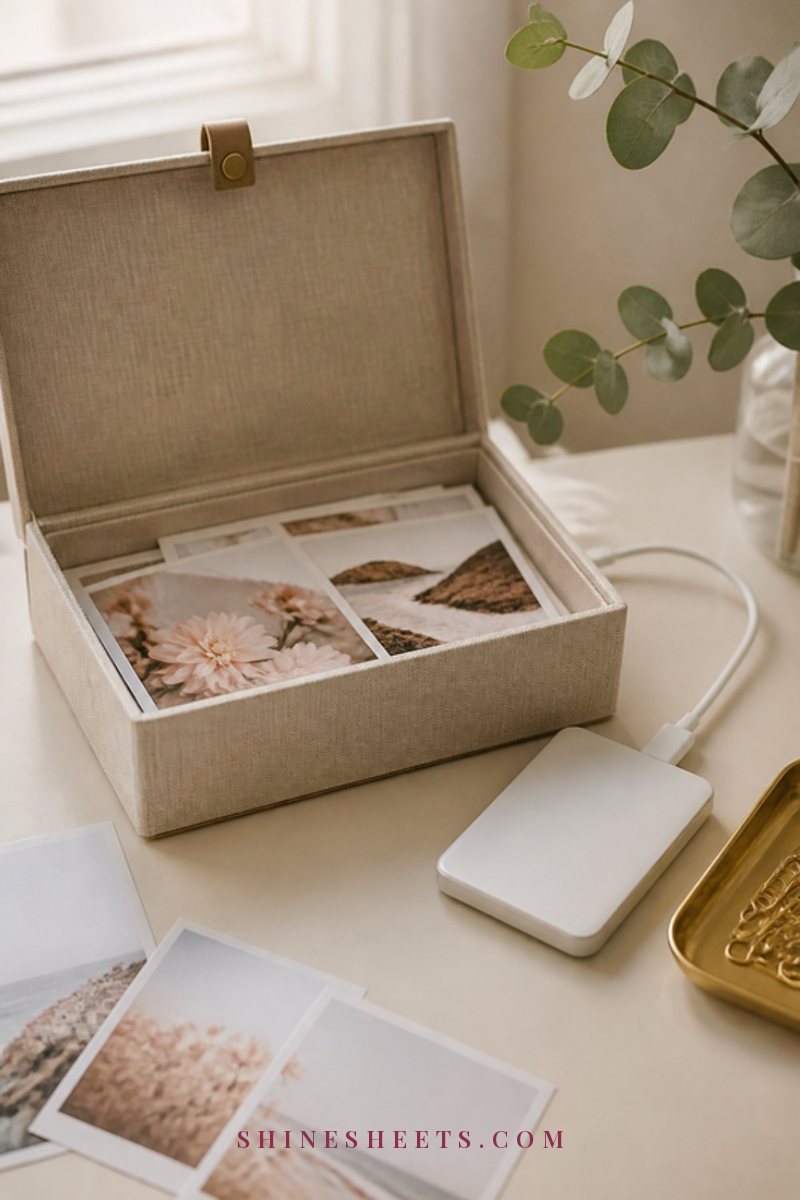
If you like keeping little souvenirs, this is a sweet moment to add a photo, a ticket or a pressed flower from each highlight to a blush keepsake box. Over the years it turns into a quiet archive of your happiest days.
One Thing To Forgive Yourself For
This is the step most people want to skip, and the one that often feels the best afterward. Look back at the year and find one thing you've been quietly holding against yourself. A friendship you let slip, a decision that didn't work out, a habit you dropped, words you wish you hadn't said.
Then write a short forgiveness note using this formula:
"I forgive myself for ___. I did the best I could with what I knew and how I felt at the time. Next year, I'll try ___."
Forgiving yourself doesn't mean pretending it didn't matter. It means you stop carrying it into a new year of your life. If an apology to someone else is part of that, you can add it to your focus column too.
Choose a Word or Theme for Your Next Year
Instead of a long list of resolutions, choose one word or short theme for your next age. It works like a compass: when you're unsure what to say yes to, you check whether it fits your word.
A few to get you thinking: steady, softer, rooted, brave, lighter, home, bloom, enough, open, play. Or a short phrase: "less rushing," "more mornings outside," "my own pace."
To find yours, look at your answers to questions 10, 11 and 12. The word is usually hiding there. Write it big on the first page of your notebook, and maybe on a small card for your bathroom shelf or bedside table. If you want help turning a word into daily life, my guide on how to set intentions and actually live by them walks you through it.
Write a Short Letter To Read Next Birthday
The last step is my favorite. Write a short letter to yourself, to be opened on your next birthday. Half a page is enough. Writing it with a gold-accent fountain pen on nice paper makes it feel like a real letter rather than a note to self, but any pen will do.
Not sure what to write? Try these five lines:
- "Right now, my life looks like…"
- "I'm hoping that by the time you read this…"
- "I'm a little worried about…"
- "Please remember that…"
- "Whatever happened this year, I'm proud of you for…"
Seal it in an envelope, write the date of your next birthday on the front and tuck it into your notebook or keepsake box. Reading it a year later is surprisingly moving: you'll see what worried you, what changed and how much you've grown. For more ideas, my guide to writing a letter to your future self has 40 gentle prompts.
If This Year Was Hard
Some years are about surviving, not thriving. If yours involved loss, illness, heartbreak, burnout or simply a long gray stretch, your birthday review can be smaller and softer.
- Skip the questions that hurt. Answer just three: what helped me get through, who was there, and what I need most now.
- Count survival as an achievement. Getting up, showing up and still being here are real accomplishments.
- Make your word for next year a comfort word: gentle, rest, heal, safe.
- Let your letter be mostly kindness. Tell next-year-you that it's okay if things are still slow.
And if the year left you feeling low for a long time, talking to a therapist or your doctor can help you carry it. Reflection is lovely, but it doesn't have to do all the work on its own.
What a Birthday Review Is Not
A few gentle boundaries keep this ritual kind instead of stressful:
- It's not a productivity audit. You don't need to measure output, income or how "optimized" your year was.
- It's not a long goal list. One focus per life area and one word for the year are plenty.
- It's not a comparison. Other people's birthdays, milestones and timelines have nothing to do with yours.
- It's not about age. If you notice thoughts like "I should be further along by now," write them down, then gently set them aside. There is no deadline for a good life.
The point is to know yourself a little better, not to feel behind. If you finish your review feeling heavier than when you started, go back to your three highlights and read them slowly.
After Your Review: Keep It Alive All Year
A birthday review is most useful when it doesn't disappear into a drawer the next morning. You don't need a big system, just a few soft touchpoints:
- Thank the people on your list. Within a week of your birthday, send a short message to two or three people from question 5. Something as simple as "I was thinking about my year and you were such a bright part of it" means more than you'd expect.
- Check in at the half-birthday. Six months later, reread your table and your word. Ten minutes is enough. Notice what's working and adjust the focus column if life has changed.
- Keep your word visible. Put it somewhere you'll see it daily: the first page of your planner, a card by your bed, a note on your bathroom shelf.
- Keep every review together. Same notebook, same box, year after year. After a few birthdays you'll have a gentle record of who you've been becoming.
That last one is the quiet reward. Reading three or four birthday reviews side by side shows you patterns you'd never notice in a single year: the habits that always help, the people who always show up and the things you've finally stopped worrying about.
Final Thoughts
A birthday review is a small, quiet hour that can shape a whole year. You look back with kindness, name what mattered, let go of one thing and choose a word to walk with. Then you close the notebook, blow out the candle and go enjoy your day.
Next birthday, your letter will be waiting for you, along with a version of yourself who knows a little more about what makes her happy. That's a beautiful thing to look forward to.