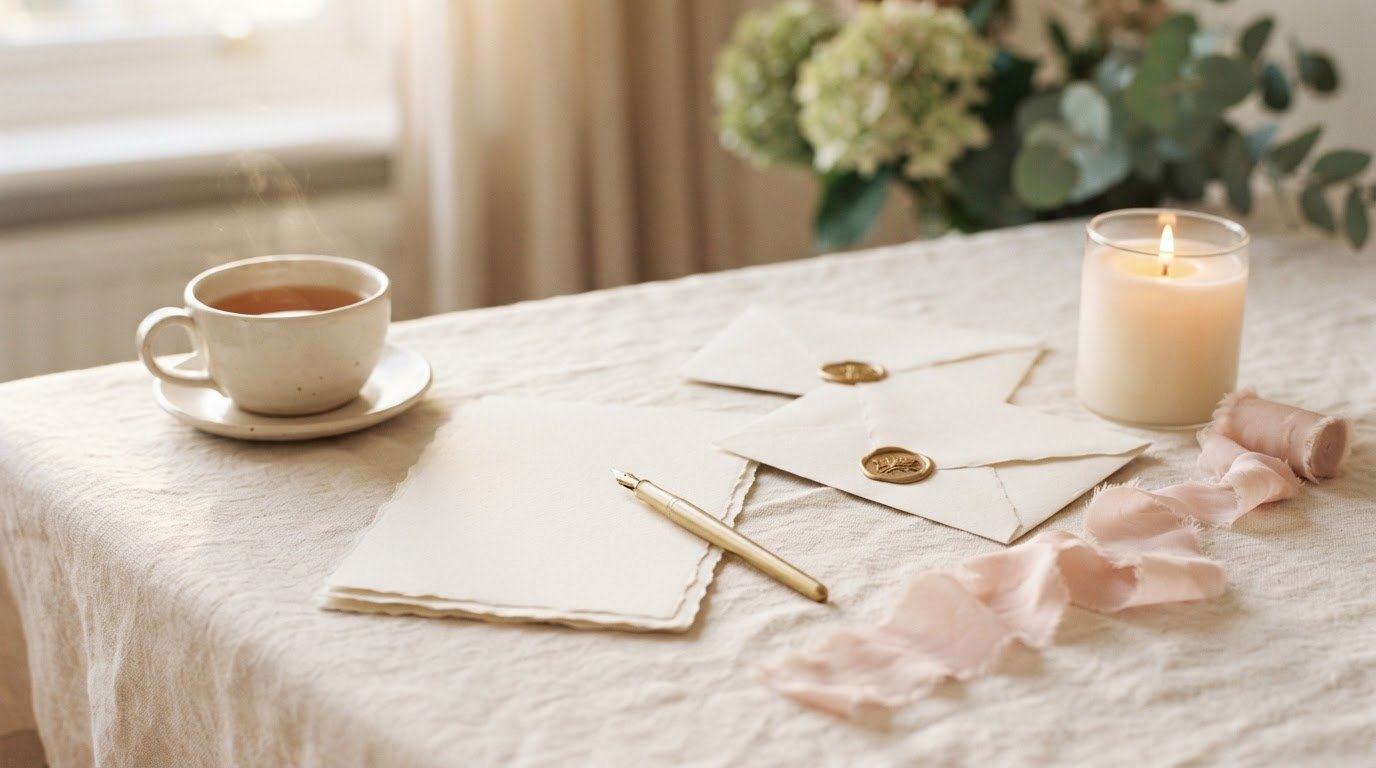
A good year in review isn't a performance report. It's a gentle collection of evidence that you showed up, grew and got through more than you remember. Most of us end the year with a vague feeling of "I didn't do enough," and that feeling is almost never accurate. It's just what happens when nobody stops to count.
Looking back on purpose changes that. When you sit down and actually gather your wins, the year starts to look fuller, kinder and far more yours. I've found that one honest evening of looking back does more for my confidence than a dozen new-year plans.
This guide walks you through a warm year in review from start to finish: why we forget our wins, when and how long to do it, where to find your evidence, month-by-month memory prompts, seven life areas to look at, a wins table, 12 reflection prompts, how to hold lessons without self-blame, what to carry forward and how to celebrate before the year ends.
Think of it as a cozy evening with yourself, not homework.
Why We Forget Our Wins

Your brain is wired to remember what went wrong more vividly than what went right. Psychologists call it negativity bias, and plainly put, it means one awkward moment can outshine ten good days. That was helpful when our ancestors needed to remember danger. It's less helpful when you're trying to judge your own year.
There's a second reason too: wins fade quickly. The moment you reach something, it becomes your new normal. The job you were nervous to start is now just your job. The habit you fought to build is now just Tuesday. You stop seeing them as achievements, even though they were.
A year in review is a small correction. You're not inventing good things or pretending the hard parts didn't happen. You're simply giving the good parts the same attention your brain already gives the bad ones.
When To Do Your Year in Review

You don't need a whole weekend. One cozy evening of 60–90 minutes is enough for most people. Late November or December works beautifully, because the year is nearly complete but you're not yet swept up in new-year energy.
A few things make it easier:
- Pick a calm evening. Not after a draining day, not on a night with plans afterwards. A quiet Sunday or an open weekday evening is ideal.
- Set the mood. Make a pot of tea (a tea sampler set is lovely here, because choosing a new flavor makes the evening feel special). Light a candle in a neutral jar on a heat-safe surface and remember to blow it out when you're done.
- Choose your notebook. A cream linen journal makes this feel like a ritual you'll want to repeat, and you can keep every year's review in the same book.
- Put your phone away once you've gathered your photos and notes (more on that next).
If you like, split it into two shorter sessions: 30 minutes for gathering evidence, then a second evening for reflecting and celebrating.
Here's a simple order for the evening, so you never sit there wondering what comes next:
- 10 minutes: make tea, light the candle, settle in.
- 20–30 minutes: gather your evidence.
- 20 minutes: month-by-month prompts and the seven life areas.
- 15 minutes: your wins table and a few reflection prompts.
- 10 minutes: carry forward, leave behind and choose how you'll celebrate.
If you run out of energy halfway, stop. Whatever you've written is already a gift to your future self, and you can pick it up another night.
Gather Your Evidence First

Memory alone is a terrible witness. Before you start writing, spend 20–30 minutes collecting proof of what actually happened this year. You'll be surprised how much you'd forgotten.
- Your camera roll. Go through it month by month and jot down one or two moments per month that made you smile or meant something. This is usually the richest source.
- Your calendar. Look for appointments you finally booked, trips, events, deadlines you met and evenings you protected for yourself.
- Your notes and journal. Old lists, worries and plans show you how far you've come, especially the worries that never happened.
- Your messages. Kind texts, thank-yous and "proud of you" notes from friends are wins too, written in someone else's handwriting.
- Your bank or shopping history. Gently, without judgment: classes you paid for, things you saved for, debts you shrank.
Some people like to print five or six favorite photos to tape into the journal. A mini photo printer makes that easy, and a few strips of pastel washi tape keep the pages pretty without glue.
Month-by-Month Memory Prompts
If the year still feels like a blur, go month by month. Spend about two minutes on each and write whatever comes up, even if it's tiny. These prompts help jog your memory:
- January: How did the year start? What did you hope for?
- February: Who did you spend time with? What kept you warm?
- March: What did you start, try or sign up for?
- April: What changed as the days got lighter?
- May: What made you proud, even quietly?
- June: Where did you go? What did you see for the first time?
- July: What did you do just for fun?
- August: What did you rest from or let go of?
- September: What fresh start did you give yourself?
- October: What hard thing did you handle?
- November: What are you grateful for so far?
- December: What do you want to remember about how this year ends?
Don't worry if some months are empty. Some seasons are for surviving, and that counts too.
Look Back at 7 Areas of Your Life

Once your memories are warmed up, look at your year through different lenses. This keeps one big area (usually work) from swallowing everything else. Write two or three wins for each, using a set of fine-liner pens in a different color per area if you like visual order.
- Health: Movement you kept up, appointments you booked, sleep you protected, ways you listened to your body.
- Home: A corner you made cozier, a space you decluttered, a routine that made daily life easier.
- Work: Projects you finished, skills you learned, a conversation you were brave enough to have, a boundary you held at your desk.
- Money: A savings goal, a better budget, a smart decision, or simply getting through an expensive season.
- Relationships: Friendships you deepened, people you showed up for, hard talks you handled kindly.
- Growth: Books you read, fears you faced, habits you built, ways you're different from last December.
- Fun: Trips, laughs, hobbies, spontaneous evenings and anything that made you feel light.
Your Year in Review Wins Table
This table is the heart of your year in review. It turns a list of wins into a little map of what works for you. Copy the four columns into your journal and fill in at least one row per area. Here's how it can look:
| Area | Win | What Made It Possible | Keep Doing |
|---|---|---|---|
| Health | Walked three times a week most weeks | Walking right after work, before sitting down | Keep the "shoes on before the sofa" rule |
| Home | Turned the bedroom into a calm space | One small change per weekend, not a big makeover | Weekend mini resets |
| Work | Asked for (and got) more flexible hours | Preparing my reasons on paper first | Writing things down before big talks |
| Money | Built a small emergency fund | Automatic transfer on payday | Keep it automatic, raise it slightly |
| Relationships | Monthly catch-up calls with an old friend | Booking the next call before hanging up | Use the same trick with family |
| Growth | Journaled most evenings | Tea first, then journal, same chair | Protect the evening tea ritual |
| Fun | Tried a pottery class | A friend came with me | Say yes to one new thing per season |
The "What Made It Possible" column is the secret. It shows you the conditions that help you thrive, so you can create them on purpose next year instead of hoping they happen again.
Don't Skip the Small and Invisible Wins

Some of the most meaningful things you did this year won't show up in any photo. Nobody threw you a party for them, and you might not even think of them as wins. Please write them down anyway.
- Habits you kept on days you didn't feel like it.
- Hard days, weeks or months you got through.
- Boundaries you held, even with a shaky voice.
- Times you rested instead of pushing through.
- Apologies you made or old habits you quietly stopped.
- Moments you were kind to yourself instead of harsh.
- Asking for help when you needed it.
I'm prone to anxiety, and some of my proudest moments of any year are the ones where I noticed a spiral early and gently talked myself down. No one else would call that an achievement, but I know what it took. Your invisible wins deserve the same respect.
12 Reflection Prompts for Your Year in Review
With your wins gathered, these prompts help you go a little deeper. Answer as many as you like, in a few lines each. If you want even more, my list of end-of-year reflection questions has 50 gentle ones.
- What am I most proud of this year, and why?
- What surprised me about myself?
- When did I feel most like myself?
- What was harder than I expected, and how did I get through it?
- Who made this year better, and have I told them?
- What did I learn that I want to remember?
- What habit or routine helped me most?
- What did I stop doing that made my life lighter?
- Which moment would I happily live again?
- What did I say yes to that turned out well?
- What did I say no to that protected my peace?
- If this year had a title, what would it be?
That last prompt is a sweet bridge into choosing a word of the year for the months ahead. And if gratitude flows easily while you write, keep going with these gratitude journal prompts.
Lessons Without Self-Blame
A year in review isn't only wins, and it shouldn't be. Looking at what didn't go well is useful, as long as you do it like a kind friend, not a strict judge.
Try this simple formula for each disappointment: "This happened. I learned ___. Next time I'll try ___." For example: "I burned out in the spring. I learned I can't say yes to every request. Next time I'll check my calendar before agreeing."
Notice what's missing from that formula: words like "should have," "always," "never" and "failure." You made the best choices you could with the energy, information and support you had at the time. That's true for everyone, including you.
If something from this year still feels heavy or painful when you write about it, you don't have to process it alone. A therapist can help you work through it at your own pace.
What To Carry Forward and What To Leave Behind

Now draw a line down a fresh page. On the left, write Carry Forward; on the right, Leave Behind. Look back at your wins table, your prompts and your lessons, and sort what you find.
- Carry forward: routines that helped, people who lifted you, the "keep doing" column from your table, a skill you want to grow.
- Leave behind: a habit that drained you, a belief about yourself that no longer fits, commitments you only kept out of guilt, the need to do everything perfectly.
Keep each side to five items or fewer, so it stays clear and doable. This page becomes a lovely starting point for the new year, and you'll find it much easier to shape gentle plans from it. If you're deciding between firm goals and softer guidance, my sister post on resolutions vs. intentions can help you choose what fits.
How To Celebrate Your Wins Before the Year Ends
Counting your wins is lovely. Celebrating them is what makes them stick. Pick one of these and actually put it on your calendar before the year is over.
A Solo Date

Take yourself out for a slow morning or afternoon: your favorite café, a museum, a bookshop, a long winter walk. Bring your wins page and read it over a warm drink. It sounds simple, but spending a few hours enjoying your own company is a quiet way of saying "I'm proud of you" to yourself.
A Letter to Yourself
Write a short letter to the version of you who started this year. Tell her what happened, what she got through and what she'd be surprised by. Or write forward instead, to the person you'll be next December, using these letter to your future self prompts. Seal it, date the envelope and tuck it into your journal.
A Slow Night In
If going out feels like too much in December, make home the celebration. Put fresh sheets on the bed, run a warm bath, make your favorite tea and play an album you loved this year from start to finish. Read your wins page one more time before bed. Quiet celebrations count every bit as much as loud ones.
Telling a Friend
Share three wins with someone you trust, and ask them to share theirs. It can feel a little awkward to say your achievements out loud, but hearing someone respond with "that's amazing" helps your brain believe it. It's also a lovely way to celebrate each other.
Doing It With a Partner or Friend

A year in review can be beautiful as a shared ritual. Set aside an evening together, each with your own notebook, and work through the steps side by side.
- Gather evidence separately for 20 minutes, then swap favorite photos and memories.
- Fill in your wins tables on your own, then share one win per area. Often the other person remembers wins you forgot.
- Answer three prompts out loud together. Prompts 3, 5 and 9 work especially well for this.
- Keep it kind. This isn't the evening to review each other's mistakes. Focus on what you're proud of, for yourselves and each other.
- End with one shared hope for the new year, something you'd love to do or feel together.
Keep your answers private if you prefer. Sharing is a gift, never a requirement.
Keep Your Year in Review Somewhere Safe
Once you're done, don't let the pages disappear into a drawer you never open. Your year in review becomes more valuable with time, because next December you'll be able to compare and see how much has changed.
- Use the same journal every year so your reviews live side by side.
- Mark the page with a ribbon or a strip of washi tape so you can find it quickly.
- Revisit it in late January, when new-year motivation usually dips. Reading your wins is a lovely boost on a gray day.
- Take a photo of your wins table and keep it in a favorites album, so it's there whenever you need a reminder of what you can do.
Over a few years, these pages turn into a quiet record of your growth, written by the one person who knows the whole story.
Final Thoughts
You did more this year than you give yourself credit for. Some of it was visible and celebrated, and some of it happened quietly, on ordinary days, when you kept going anyway.
Give yourself one cozy evening to notice it all. Make the tea, open the notebook and let the year show you who you've become. That's something truly worth celebrating before the new one begins.