A good weekend isn't measured by how much you get done or how much you manage to skip. It's measured by how you feel on Sunday night. If you end the weekend rested, a little bit delighted and quietly ready for Monday, it worked, even if nothing on it would impress anyone.
Most of us lose our weekends in the same few ways: chores spread across both days, a phone that eats the afternoon, a too-long lie-in that leaves us groggy, or a plan so packed that Monday arrives as a relief. The fix is rarely more discipline. It's a loose, kind structure that gives each part of the weekend a job.
This guide is all about building a weekend routine that helps you rest and reset without feeling like you wasted it. You'll find why weekends slip away, the three things a good weekend needs, a simple Friday, Saturday and Sunday rhythm, a weekend schedule table you can copy, how to rest without guilt, phone boundaries that actually hold, and sample weekends for three very different lives.
Think of it as a shape, not a rulebook. You can bend it any way you like.
Why Weekends Feel Wasted

Weekends rarely disappear because we're lazy. They disappear because nothing is protecting them. Here are the most common leaks, and you might recognize more than one:
- Chores swallow Saturday. Laundry, groceries, the bathroom, returning that package. When chores have no time limit, they expand to fill the whole day, and the fun part never quite starts.
- The phone takes the afternoon. Ten minutes of checking messages turns into two hours, and you come out the other side tired without having rested.
- Sleeping off half the day. A very long lie-in sounds restorative, but waking at noon often leaves you foggy, behind and a bit low, and it makes Sunday night sleep harder.
- No plan at all. Without even one small intention, the weekend drifts. Sunday evening comes and you can't remember what you did with it.
- Overplanning. The opposite problem: brunch, a party, a family visit, a big clean and a workout, all squeezed in. You're busy the whole time and come back to Monday more tired than you left it.
Here's my small honest admission: for a long time I swung between the last two. One weekend completely shapeless, the next one scheduled to the minute. Neither felt good. What helped was realizing a weekend doesn't need to be full or empty. It needs balance.
What a Good Weekend Actually Needs: Rest, Fun and Reset
A weekend that leaves you feeling good usually has three ingredients, in roughly this order of importance:
- Rest. Real rest, not just stopping work. Sleep, slow mornings, lying on the sofa with a book, a long bath, a walk with nowhere to be.
- Fun. Something you look forward to. It can be tiny (a new café, a film, a phone call with a friend) or bigger (a day trip, a class, a dinner out). Fun is what makes a weekend feel like a weekend instead of a second, unpaid workweek.
- Reset. A small, contained amount of practical prep so Monday doesn't ambush you. Clean clothes, a quick look at the week, a tidy-ish home.
The trick is keeping reset in its lane. It should be the smallest of the three, not the biggest. If you only remember one thing from this guide, let it be this: chores get a block, not a weekend.
Friday Evening: The Wind-Down

Your weekend actually begins on Friday evening. How you close the week sets the tone for Saturday morning, so give these first few hours a little care.
Close the Week on Purpose
Before you shut your laptop or leave work, take five minutes to close the loops in your head:
- Close every work tab and app, so nothing is waiting for you when you open the computer on Saturday.
- Write down the three things you'll pick up first on Monday. Once they're on paper, your brain can stop holding them.
- Turn off work notifications until Monday morning, if your job allows it.
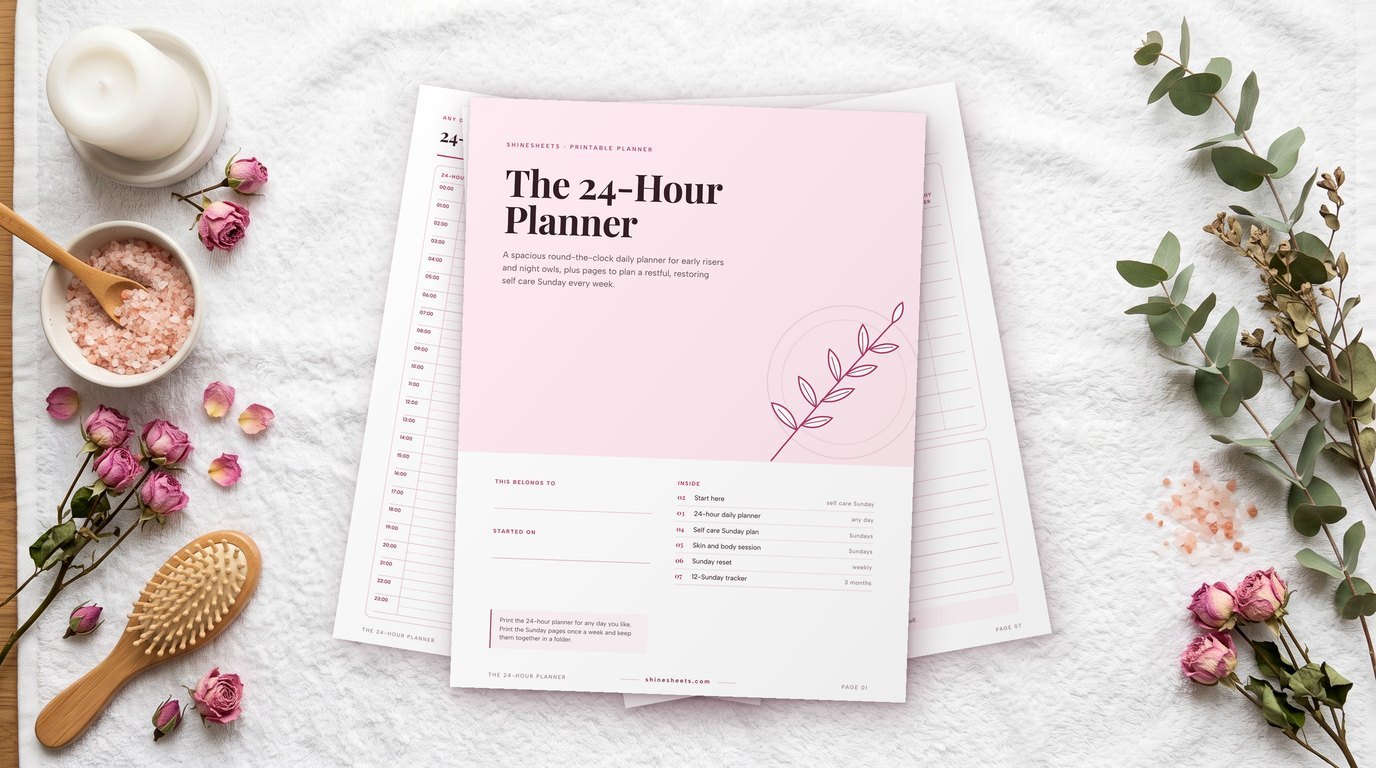
An undated weekly planner is lovely for this, because it lets you start any week, any time, without wasted pages. Look for one with a simple weekly spread and a little space for notes, nothing too busy.
Do a 15-Minute Tidy
Set a timer for 15 minutes and reset the main room you'll wake up to. Dishes in the dishwasher, shoes by the door, the bag hung up, cushions plumped, the coffee table cleared. When the timer goes off, stop. This isn't a deep clean. It's a gift to Saturday-morning you, who gets to wake up somewhere calm instead of somewhere that needs attention.
End With Something Soft
Then do something gentle that signals the week is over. For me, that's evening tea, a glass candle and a little journaling after the tea, but yours might be a film, a long shower, a takeaway on the sofa or a phone call with your best friend. Keep it simple and keep it the same most Fridays, so it becomes a ritual your body recognizes. Light the candle on a stable surface, keep it away from curtains and blankets, and blow it out before you go to bed.
Saturday: Rest and Fun
Saturday is the day for rest and fun. Practical tasks are allowed, but they get one tidy container so they can't spill into everything else.
Sleep In, But Only a Little

Sleeping in feels like the ultimate weekend luxury, and a little of it is lovely. The sweet spot for most of us is waking up no more than about an hour later than usual. A much bigger shift can confuse your body clock, and it's part of why Sunday night sleep feels so hard and Monday morning feels so brutal.
If you wake up at your usual time and still feel tired, you can always rest later: a slow morning in bed with tea, or a short afternoon nap of 20 to 30 minutes. Make the bed feel like a treat, too. A soft linen pajama set in cream makes lingering in the morning feel deliberate rather than lazy. Look for a breathable, relaxed fit with a button top you'd happily wear all morning.
Have a Slow Morning
Give yourself at least an hour on Saturday morning with no task attached. Make a proper breakfast, drink your coffee or tea sitting down, open the curtains, read a few pages, sit by the window. Leave the phone in another room for the first 30 minutes if you can. (Coffee is a weekend joy for me, though on some days it perks me up and on others it makes me jittery, so on anxious mornings I swap to tea.)
If you'd like more ideas for building these unhurried hours, my slow morning routine guide walks through it step by step.
Batch Your Errands Into One Block
This is the change that gives most people their Saturday back. Instead of scattering errands across the weekend, pick one block, usually late morning, and do all of them in a row: groceries, pharmacy, post office, the dry cleaner, returns.
- Write the list on Friday evening, so you don't have to think on Saturday.
- Plan the route in one loop, ending closest to home.
- Give the block a time limit, roughly 90 minutes to two hours.
- Whatever doesn't fit moves to a weekday evening, not to Sunday.
When the block is over, it's over. The rest of the day belongs to you.
Make One Fun Plan
Choose one thing on Saturday that you'll genuinely look forward to, ideally outdoors or with people, because both tend to refill us faster than another hour indoors alone with a screen. A walk in a park you haven't explored, a farmers' market, a museum, lunch with a friend, a class, a matinee. One plan is enough. Two is fine if you're feeling social. Three usually tips into overplanning.
Sunday: A Gentle Reset
Sunday is for winding down and getting gently ready. The aim isn't to cram in everything you didn't do on Saturday. It's to make Monday a little softer.
Get the Laundry Going

Start one or two loads in the morning, so they're washed, dry and put away by mid-afternoon. Laundry is the perfect Sunday task because it mostly works by itself. You press a button, then go and have your tea.
Keep the system easy: a sturdy woven laundry basket for each person in the home makes sorting simple and looks pretty enough to leave out. Look for one with handles and a removable cotton liner. Fold straight from the dryer and put clothes away the same day. A basket of clean laundry that sits for a week quietly drains a little energy every time you walk past it.
Do a 20-Minute Week Preview
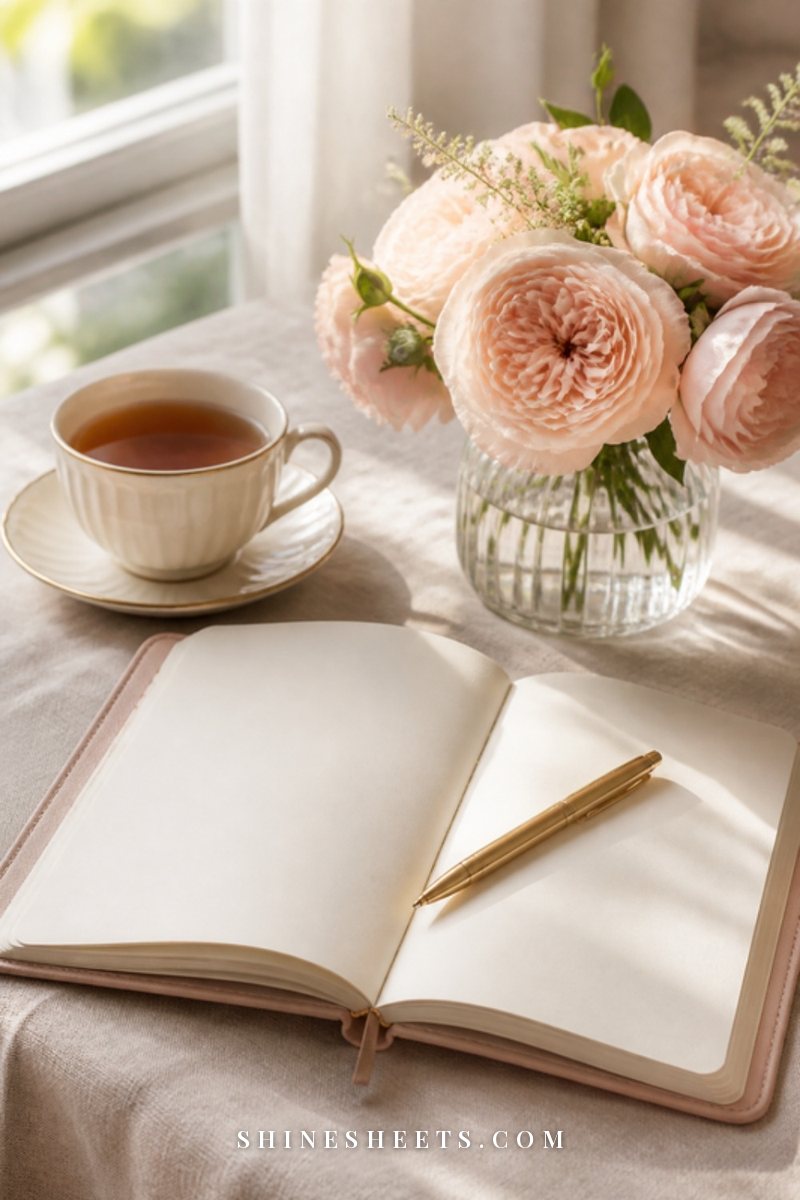
Sometime on Sunday afternoon, sit down with a cup of tea and your planner for 20 minutes. Not two hours. Twenty minutes. Here's what fits into that window:
- Look at your calendar for the week and note any early starts, appointments or evening plans.
- Choose your top three priorities for the week.
- Spot the busiest day and plan something easy for that evening.
- Pencil in one small thing to look forward to midweek.
- Note anything you need to buy, book or send by Wednesday.
If you'd like a fuller version of this, my Sunday reset routine breaks the whole afternoon into calm steps.
Set Out Outfits and Your Bag
Choose Monday's outfit (or even Monday and Tuesday) and hang it somewhere visible. Pack your bag with keys, wallet, headphones, lip balm, a charger and anything specific for the week. It takes ten minutes on Sunday and saves you a frantic quarter of an hour on Monday morning.
Go to Bed a Little Early
Aim to be in bed about 30 minutes earlier than a normal weeknight on Sunday. Dim the lights after dinner, take a warm shower, put the phone on the charger outside the bedroom and read something gentle. This is also a lovely night for a longer wind-down, and if you enjoy that kind of evening, my self care Sunday ideas go further.
Your Weekend Schedule Table
Here's the whole rhythm in one place. Screenshot it, then move the times to fit your own life. The purpose column is the important part: if a block is doing its job, the exact hour doesn't matter.
| Time block | Saturday | Sunday | Purpose |
|---|---|---|---|
| Wake up | Up to about 1 hour after your usual time | Up to about 1 hour after your usual time | Rest without confusing your body clock |
| Early morning (first 1–2 hours) | Slow morning: breakfast, tea or coffee, no phone for 30 minutes | Slow morning, start the laundry | Rest |
| Late morning | Errand block, 90 minutes to 2 hours | Walk, gentle movement or a café | Reset (Saturday), rest (Sunday) |
| Lunch | Lunch out or at home with a friend | Easy lunch at home | Fun and connection |
| Afternoon | One fun plan, ideally outdoors or with people | Fold and put away laundry, 20-minute week preview | Fun (Saturday), reset (Sunday) |
| Late afternoon | Free time or a short nap (20–30 minutes) | Outfits and bag ready, 15-minute tidy | Rest, reset |
| Evening | Social plan or a quiet night in | Calm dinner, bath or shower, a book | Fun (Saturday), wind-down (Sunday) |
| Bedtime | Your usual time, give or take an hour | About 30 minutes earlier than a weeknight | Protect Monday morning |
Notice that reset tasks take up only three blocks across two whole days. That's on purpose.
How To Protect True Rest Without Guilt

For many of us, the hardest part of a weekend isn't finding time to rest. It's resting without the little voice that says you should be doing something useful. A few gentle reminders help:
- Rest is part of the plan, not a reward for finishing the plan. Write it into your weekend the same way you'd write an errand: "Saturday 3–5 pm: sofa, book, nothing else."
- Create a rest spot. A corner with a chunky knit throw, a good lamp and a cushion tells your body "this is where we slow down." Choose a soft, washable throw in cream or oatmeal that's big enough to wrap around your shoulders.
- Make it smell like a pause. A reed diffuser in a calming scent such as linen, lavender or white tea gives the room a gentle, consistent signal without a flame to watch. Pick one with a soft, not sugary, scent and flip the reeds once a week.
- Read for pleasure. A wooden book stand on a side table keeps a book open beside your tea, so reading feels effortless instead of like holding a heavy thing. Look for one with adjustable angles and page clips.
- Let "unproductive" be the point. A walk where you don't count steps, a bath with no podcast, a nap with no alarm (well, maybe a 30-minute one). Not everything has to improve you.
If guilt follows you onto the sofa every single time, my gentle reminders on how to stop feeling guilty for resting are worth a read with your next cup of tea.
Phone Boundaries That Give You Your Weekend Back
Phones aren't the enemy, but without a boundary they quietly take hours you'd rather spend elsewhere. Pick two or three of these, not all of them:
- No phone for the first 30 minutes after waking. Leave it charging in another room and use a regular alarm clock if you need one.
- Delete or log out of work email for the weekend. You can log back in on Monday in ten seconds.
- Set a daily limit on social apps, around 30 to 45 minutes on weekend days, so the app nudges you when time is up.
- Phone-free meals. Face down in a drawer or another room, especially when you're eating with someone.
- A phone basket by the door for Saturday afternoons, so your fun plan gets your full attention.
- Charge it outside the bedroom on Sunday night. It protects your early night and makes Monday morning calmer.
Small admission: I'm prone to anxiety, and checking my phone constantly makes it noticeably worse. Weekends with fewer pings almost always feel longer and lighter.
Sample Weekends for Three Different Lives

There's no single right weekend. Here's how the same rest, fun and reset structure might look for three different kinds of weeks. Borrow whatever fits.
The Busy Working Woman
Her weekdays are full, so the weekend has to do a lot of quiet repair.
- Friday: closes every work tab at 6 pm, 15-minute tidy, takeaway and a film on the sofa.
- Saturday: wakes about 45 minutes later than usual, slow breakfast, one tight errand block from 10:30 to 12:30, then a long walk and lunch with a friend. Evening at home with a bath.
- Sunday: laundry in the morning, a yoga class or a stroll, a 20-minute week preview at 4 pm, outfits ready for Monday and Tuesday, in bed by 10.
Her biggest win is batching. One errand block means the rest of Saturday is genuinely free.
The Introvert
She loves her friends, but too many plans leave her drained.
- Friday: no plans at all. Tea, a glass candle, journaling, an early night.
- Saturday: slow morning, quick errands, then one low-key plan: coffee with one close friend or a solo museum visit. Afternoon reading in her favorite corner.
- Sunday: a long walk alone, laundry, the week preview, a calm evening with a book and her phone out of reach.
Her biggest win is permission. One social plan per weekend is enough, and saying no to a second one isn't rude.
The Social Butterfly
She's energized by people, so the risk is overbooking and arriving at Monday exhausted.
- Friday: drinks or dinner with friends, but home at a reasonable hour.
- Saturday: brunch, an afternoon outing, an evening plan. Errands squeezed into one short block before brunch.
- Sunday: deliberately quiet. Laundry, a solo walk, the 20-minute preview and a quiet night in with nothing booked after 4 pm.
Her biggest win is a protected Sunday. A fun Saturday feels even better when Sunday has room to breathe.
Small Habits That Make Every Weekend Better
Once the basic rhythm feels natural, these little extras make weekends feel fuller without adding work:
- Keep a "weekend ideas" note. Whenever you hear about a café, a walk, an exhibit or a film, add it. When Saturday comes, you choose instead of searching.
- Change one small thing every weekend. A new route for your walk, a different café, a new tea. Novelty makes time feel longer and more memorable.
- Get outside at least once each day, even for 20 minutes. Daylight helps your mood and your sleep.
- Move gently. A walk, a stretch, a dance in the kitchen. Nothing punishing.
- End Sunday with a tiny reflection. One line in your journal: what felt good this weekend, and what you'd change next time.
And if your weekdays feel chaotic enough that the weekend always has to rescue you, it may help to look at the whole week. My guide on how to create a daily routine can make the weekend's job a lot lighter.
Final Thoughts
A weekend routine isn't about squeezing more out of two days. It's about giving rest, fun and a small reset each a place, so none of them crowds out the others. Close Friday on purpose, keep chores in one block, make one plan you look forward to and let Sunday be gentle.
Some weekends will go exactly to plan and some will fall apart on Saturday morning, and both are fine. The rhythm will still be there next Friday, ready whenever you are. You deserve weekends that leave you feeling like yourself again.