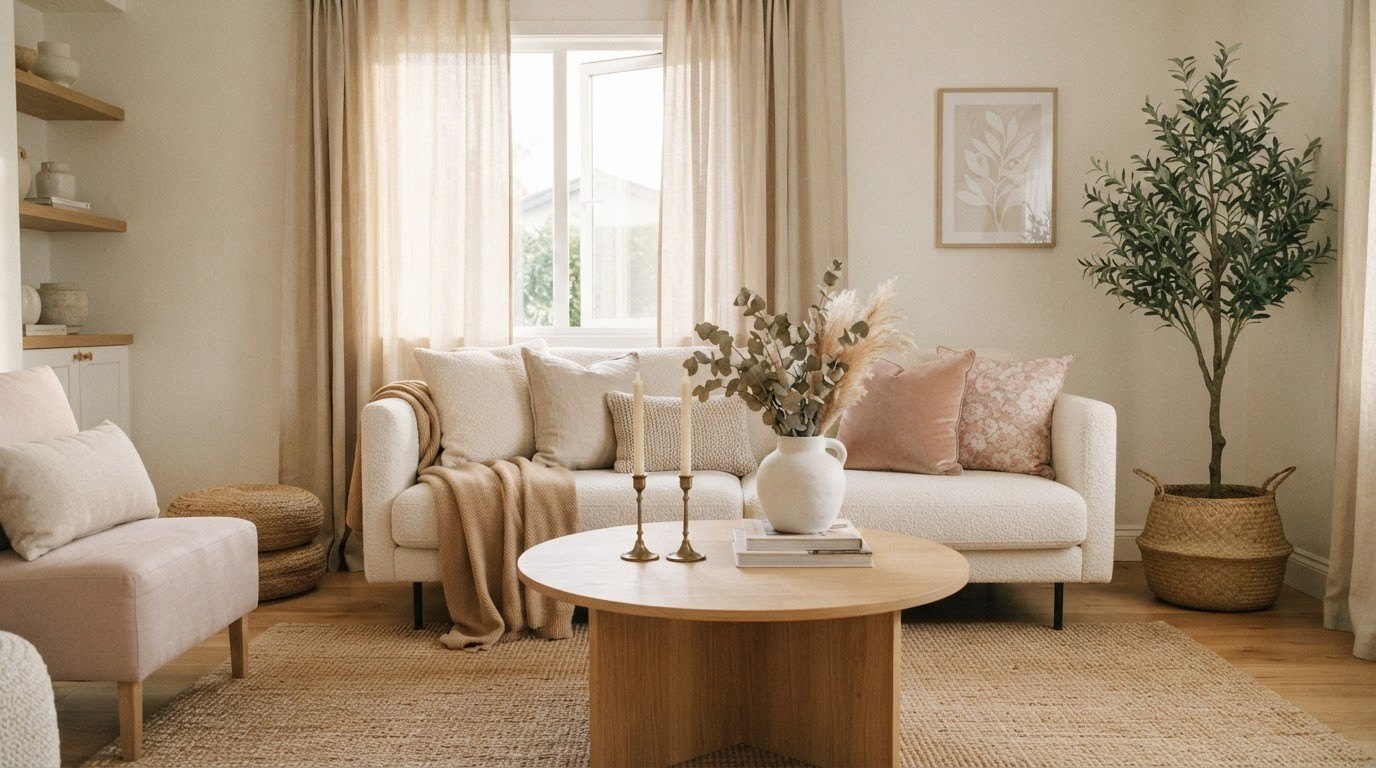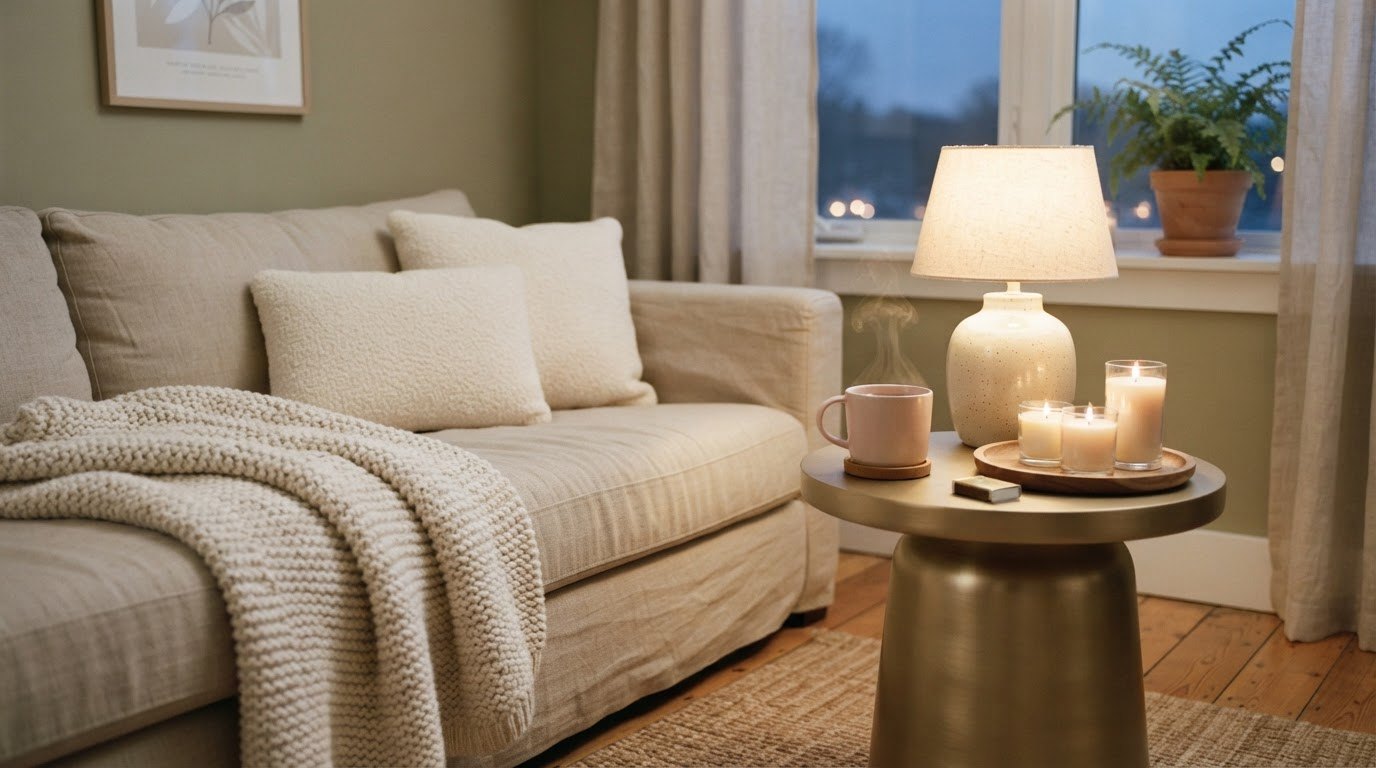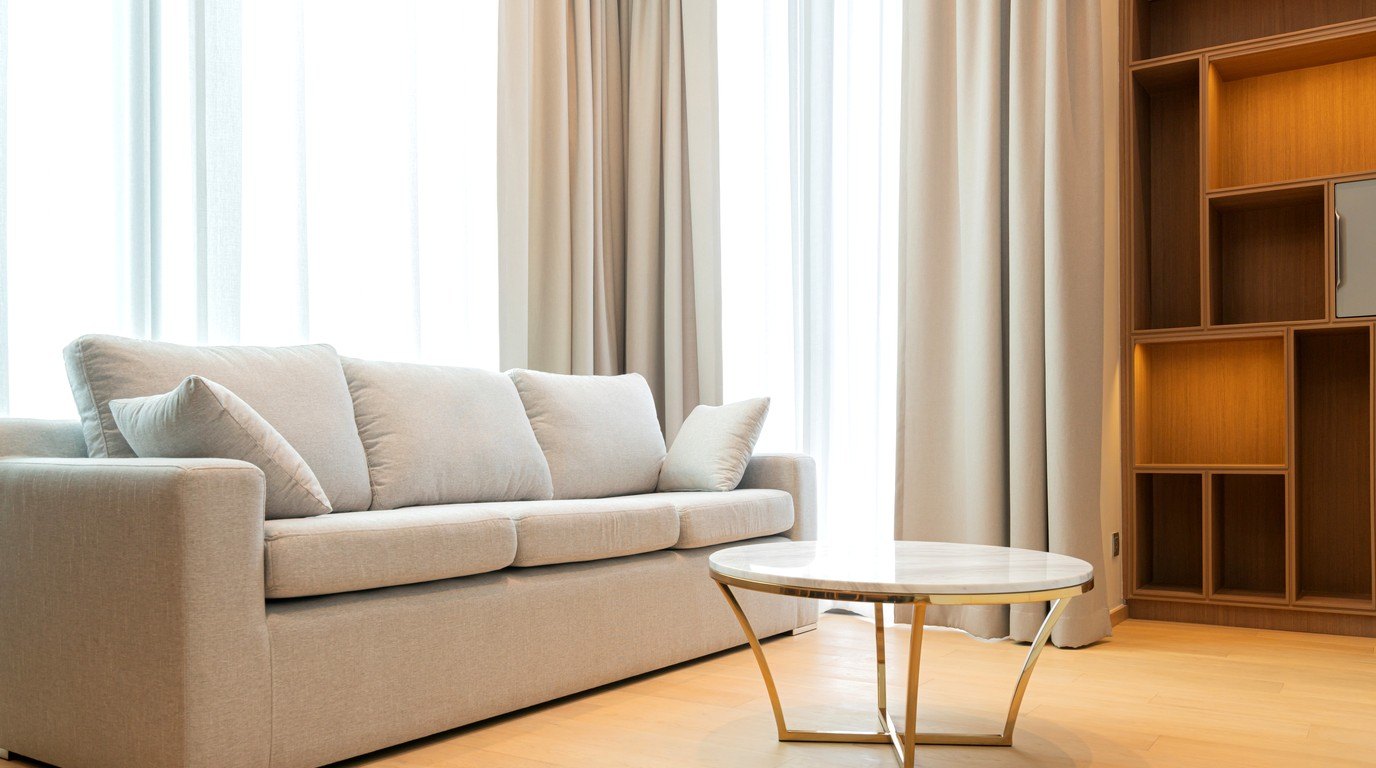
A minimal home doesn't have to feel like a waiting room. The calm of clear surfaces and fewer things is real, but when everything is stark white, hard-edged and bare, that calm can tip into cold. Warm minimalism keeps the breathing room and adds back what makes a home feel lived in: texture, natural materials, soft light and a few things you truly love.
It isn't a specific style with rules about which chair to buy. It's a method. You choose fewer things, and you choose each one for the warmth it brings. That makes it wonderfully flexible, whether you rent a small apartment or you're slowly furnishing a bigger place, and whether your taste leans modern, classic or a little romantic.
This guide covers warm minimalism from the ground up: what it is, the 7 principles behind it, ideas for the living room, bedroom, kitchen and entry, a room-by-room table of what to remove and what to add, the 5 mistakes that make minimal spaces feel cold and the renter-friendly swaps that do most of the work.
What Warm Minimalism Actually Is
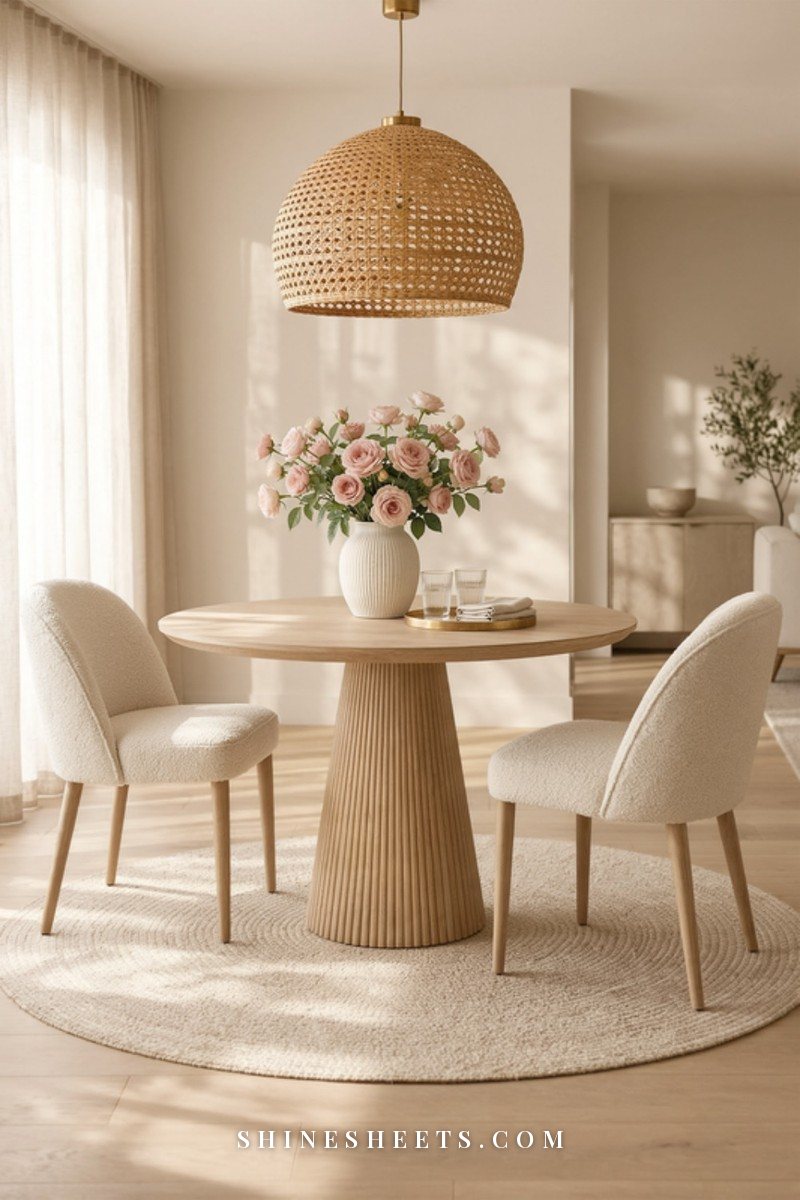
Warm minimalism sits between two extremes. On one side is classic, strict minimalism: white walls, empty surfaces, hard lines and very few objects. On the other is a full, layered, collected look with something on every shelf. Warm minimalism takes the clarity of the first and the comfort of the second.
In practice, it looks like this:
- Clear surfaces and calm lines, so your eye can rest.
- A warm neutral palette instead of cool, bright white.
- Natural materials like wood, linen, wool, rattan, stone and ceramic.
- Texture layered on texture, so the room feels soft even when it's sparse.
- Warm light from several low sources rather than one ceiling light.
- A few meaningful objects on display, with everything else tucked away.
If you've read my Japandi decor ideas, you'll notice some overlap. Japandi is a specific look that blends Japanese and Scandinavian design. Warm minimalism is broader. You can apply it to any style you love, from French-inspired to modern farmhouse, because it's about how many things you keep and how they feel, not about one aesthetic.
7 Principles of Warm Minimalism
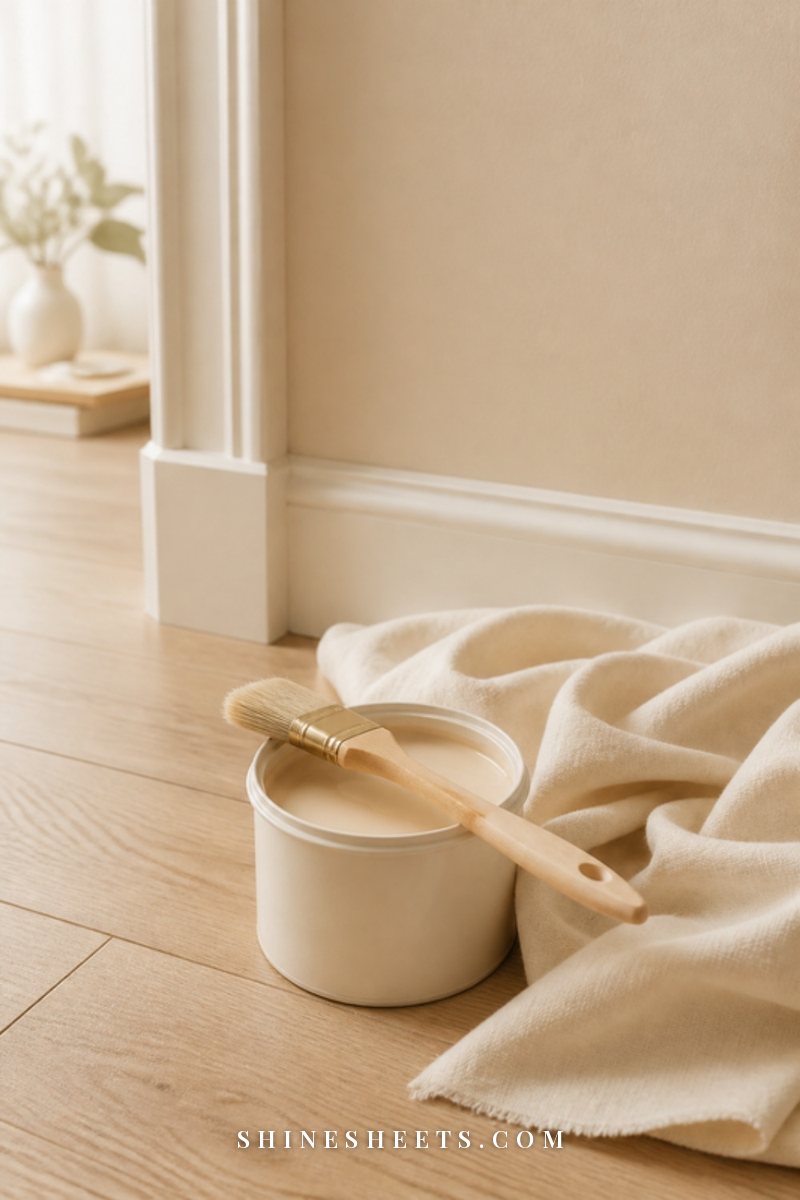
These seven principles are the backbone of the whole approach. You don't need to do them all at once. Even two or three will change how a room feels.
1. Edit Before You Decorate
Warm minimalism starts with removing, not buying. Before you add a single pillow, take everything off one surface (a coffee table, a dresser, a kitchen counter) and only put back what you use daily or truly love. Give it a week. Most of what you didn't put back, you won't miss.
If editing feels overwhelming, my guide to decluttering methods helps you find the approach that suits your personality, from one small drawer a day to a room-by-room reset.
2. A Warm Neutral Base
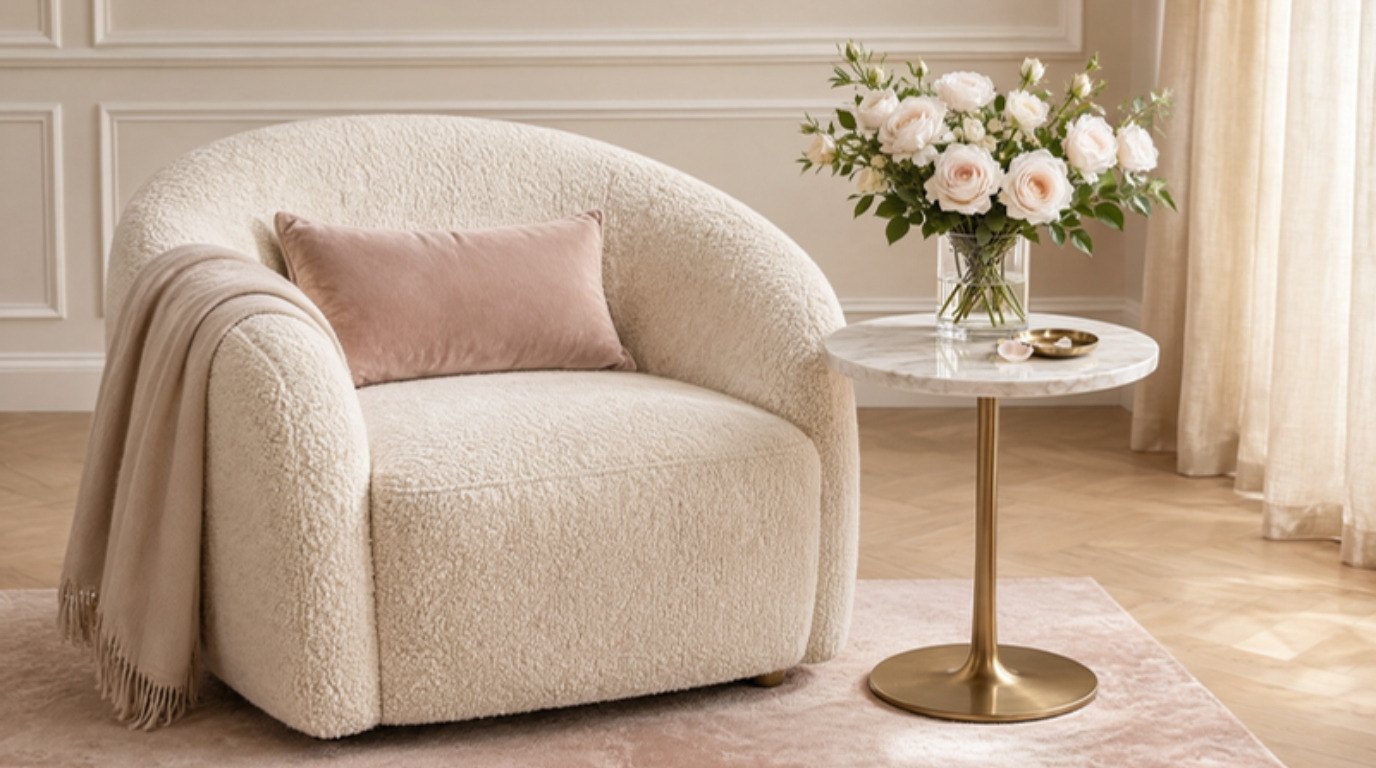
Swap stark, blue-toned white for warmer neutrals: cream, ivory, soft white with a hint of yellow, beige, oatmeal, greige and light taupe. These colors reflect light gently instead of harshly. If you can't paint, bring them in through larger pieces: curtains, a rug, a bedspread, a sofa throw. My guide on neutral home decor that never feels bland has more ideas for building a layered neutral palette.
3. Natural Materials
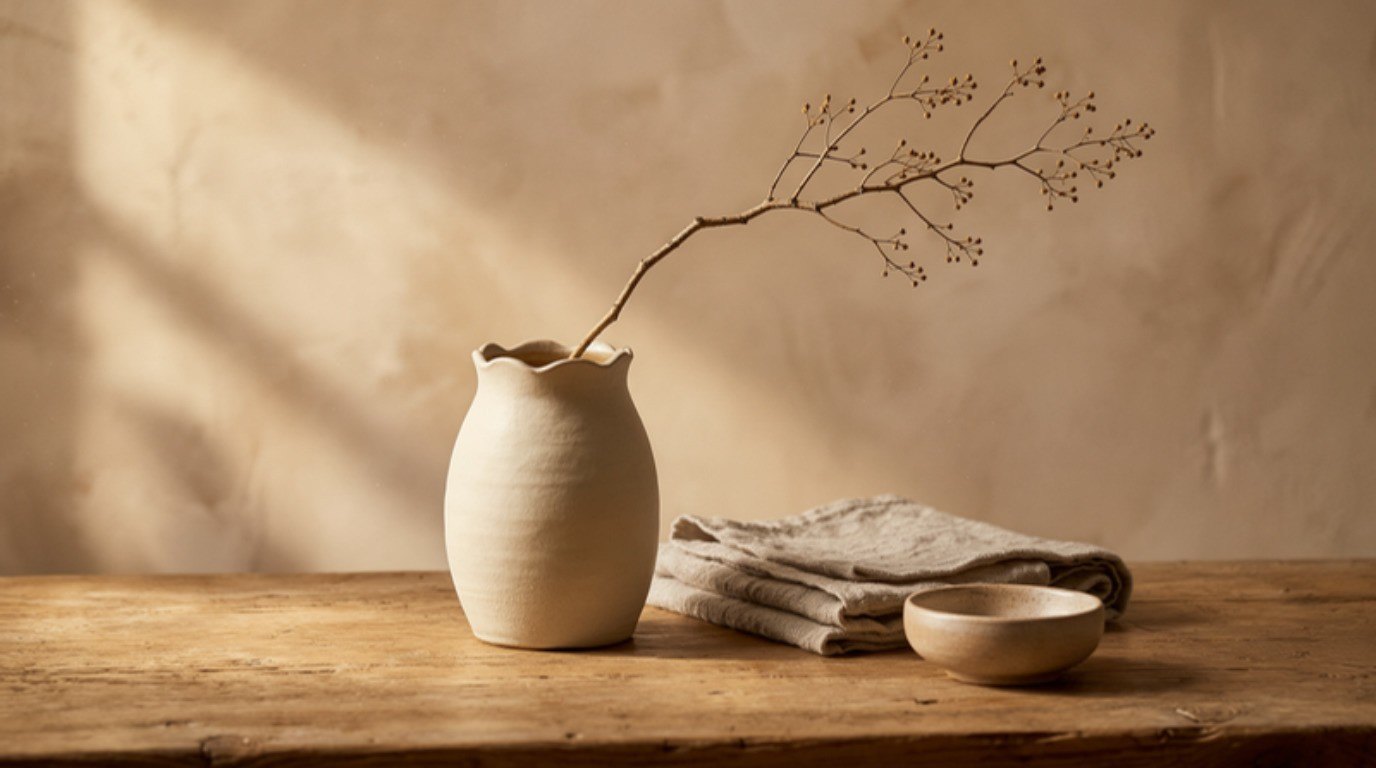
Natural materials carry warmth on their own, even in small amounts. Look for light or mid-tone wood, linen, cotton, wool, rattan, jute, stone, terracotta and matte ceramic. A wooden stool used as a side table, a rattan basket for blankets or a stoneware vase does more for warmth than a shelf of small decor.
4. Layered Textures
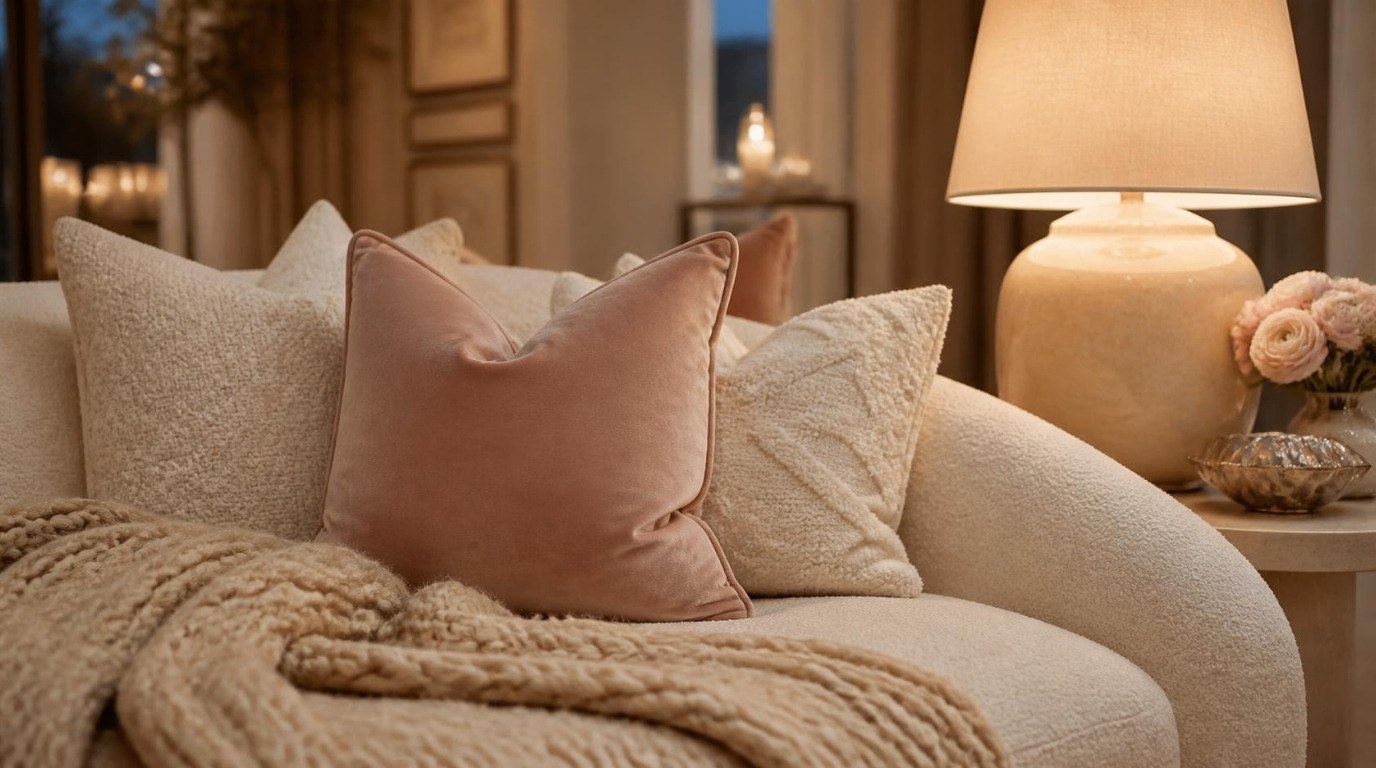
When you have fewer objects, texture becomes the main source of interest. Combine smooth with nubby, matte with a little sheen, soft with structured: a boucle pillow on a linen sofa, a chunky knit throw over a smooth wooden bench, a woven rug on a plain floor. The guide to mixing patterns and textures has easy rules for layering without clutter.
An easy start is a cream boucle throw pillow paired with a plain linen cushion. Two textures, one color family, instant softness.
5. Warm Lighting at Different Heights
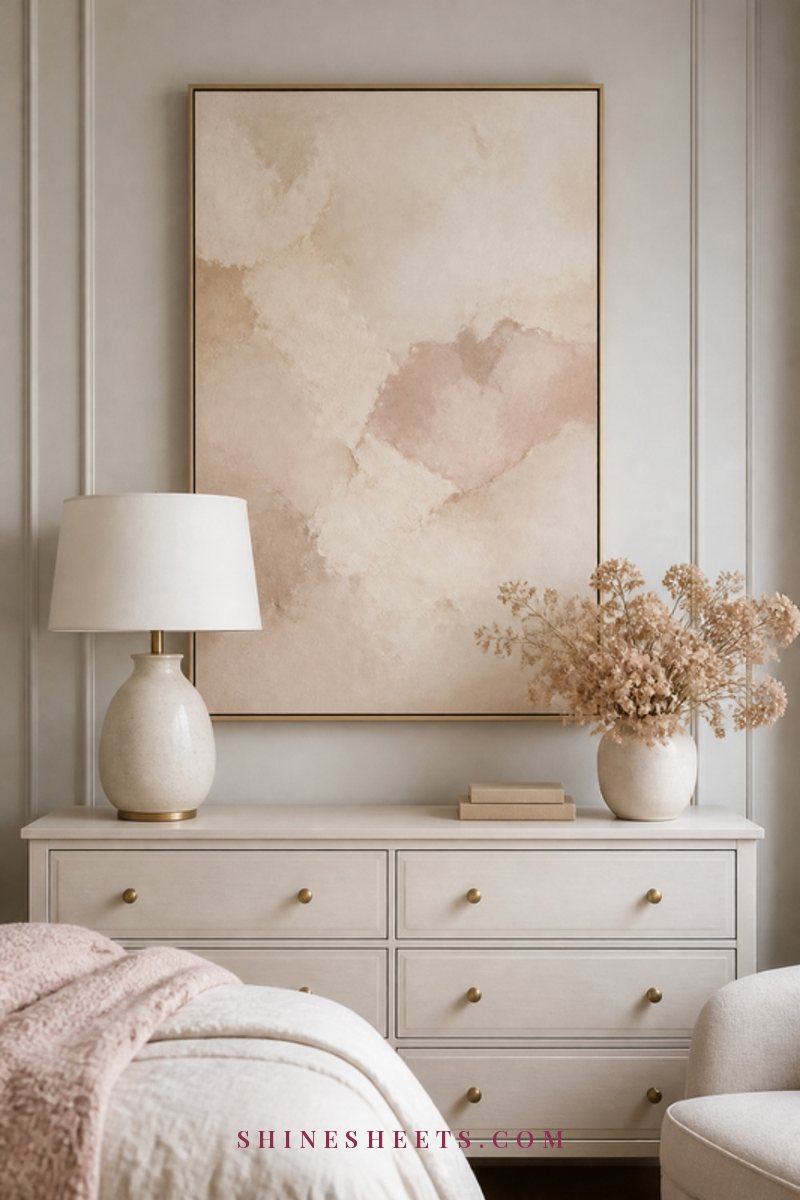
Light is the single biggest difference between cold and warm minimalism. Aim for three or more light sources in the main room, at different heights: a floor lamp, a table lamp and something low, like a glass candle or a small accent lamp on a shelf. Choose bulbs labeled warm white (around 2700K) for evenings.
An ivory ceramic table lamp with a linen shade is a lovely, simple choice that works in almost any room. For more ideas, my guide on lighting ideas that make a room feel warm walks through every option.
6. A Few Meaningful Objects
Minimal doesn't mean impersonal. Choose a small number of objects that mean something: a framed photo, a ceramic bowl from a trip, a stack of your favorite books, fresh flowers. Group them in odd numbers (three is easy) on one surface instead of scattering them everywhere. Rotate them with the seasons so things feel fresh without buying more.
7. Hidden Storage
The secret behind clear surfaces is a home for everything. Lidded baskets, closed cabinets, drawer dividers, under-bed boxes and a simple tray for daily items let you live normally without visual noise. If it's visible, it should be beautiful or used every day. If it's neither, it goes behind a door.
Start with the things that collect on surfaces most often in your home. For many of us that's mail, chargers, skincare, keys and the throw blankets that never get folded. Give each category one specific container in the room where it's used: a lidded box on the console for mail, a drawer for chargers, a basket by the sofa for blankets. When a home exists for something, putting it away takes two seconds, and clear surfaces stop needing willpower.
Choose storage in the same natural materials as the rest of the room (woven baskets, wooden boxes, linen-covered bins), and it quietly becomes part of the warmth instead of something to hide.
A Warm Minimal Color Palette
Color does a lot of the warming in a minimal home, because there are fewer objects to carry personality. The easiest approach is one main warm neutral, one or two supporting neutrals and a single soft accent. Here are four combinations that work in almost any room:
- Cream, oatmeal and light oak with a touch of brass. The classic, endlessly calm version.
- Ivory, warm greige and sage. Fresh and quiet, lovely in bedrooms and kitchens.
- Soft white, beige and blush. A romantic, gentle take that still feels clean.
- Cream, taupe and walnut. A slightly deeper, grounded version for living rooms with lots of daylight.
Keep the large surfaces (walls, sofa, bedding, rug) in the main and supporting neutrals, and bring in the accent through small, easy-to-change things: a throw, a pillow, a vase, a single print. That way, if you tire of sage, you swap a few textiles instead of starting over.
One practical tip: look at fabrics and paint swatches in your own room at different times of day before committing. A cream that looks buttery in a store can turn gray in a north-facing room, and warm light at night changes everything again.
Warm Minimalism Room by Room
Here's how the principles translate into each main space, with two or three ideas per room that make the biggest difference.
Living Room
- Clear the coffee table down to one tray with a candle, a book and a small vase. A light wood tray with gold accents keeps everything together and is easy to lift off when you need the space.
- Soften the sofa with two or three pillows in different textures and one throw. A sage wool throw adds a gentle hint of color that still feels calm.
- Ground the room with a large, light rug in wool or jute so the furniture doesn't float.
Bedroom
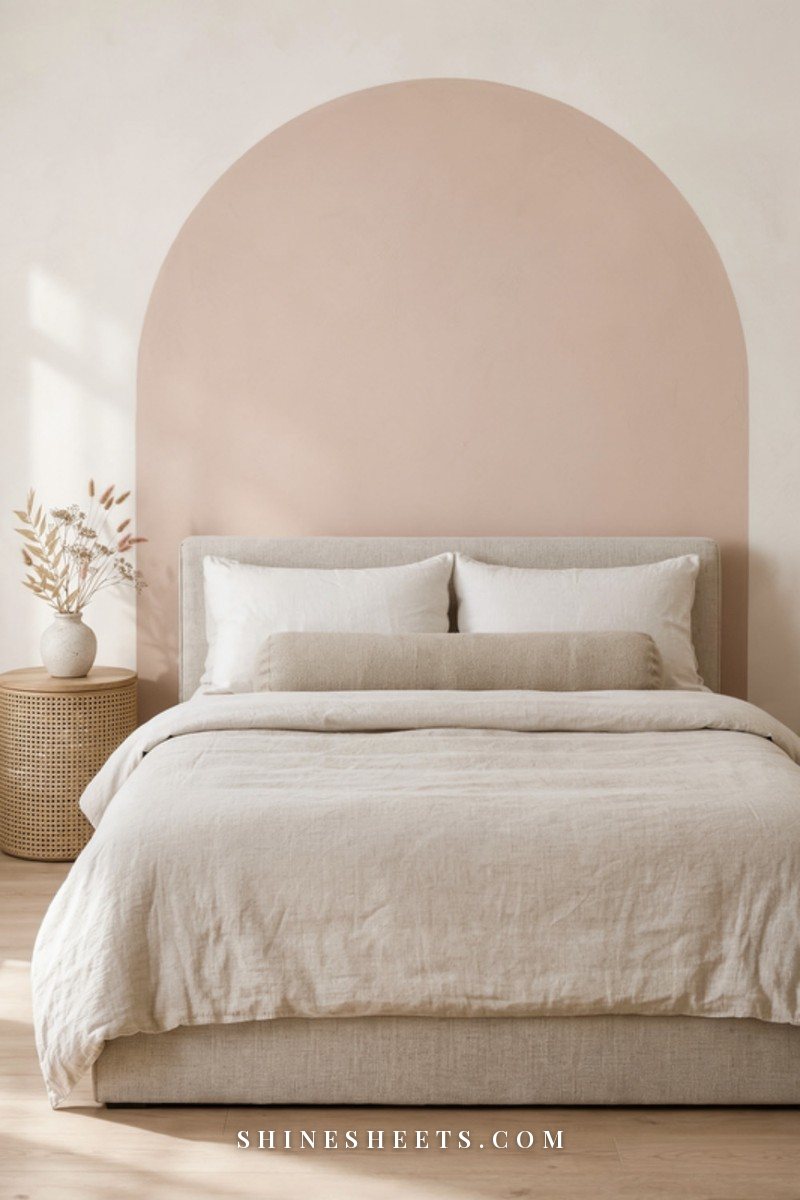
- Layer the bed in linen or cotton in cream, oatmeal and white: a duvet, a textured blanket folded at the foot and two or three pillows.
- Keep the nightstand simple: a lamp, one book, a glass of water and a small dish for jewelry. Everything else goes in a drawer.
- Dress the window with soft fabric. Beige linen curtains hung high and wide make the room feel taller and filter light beautifully.
Kitchen
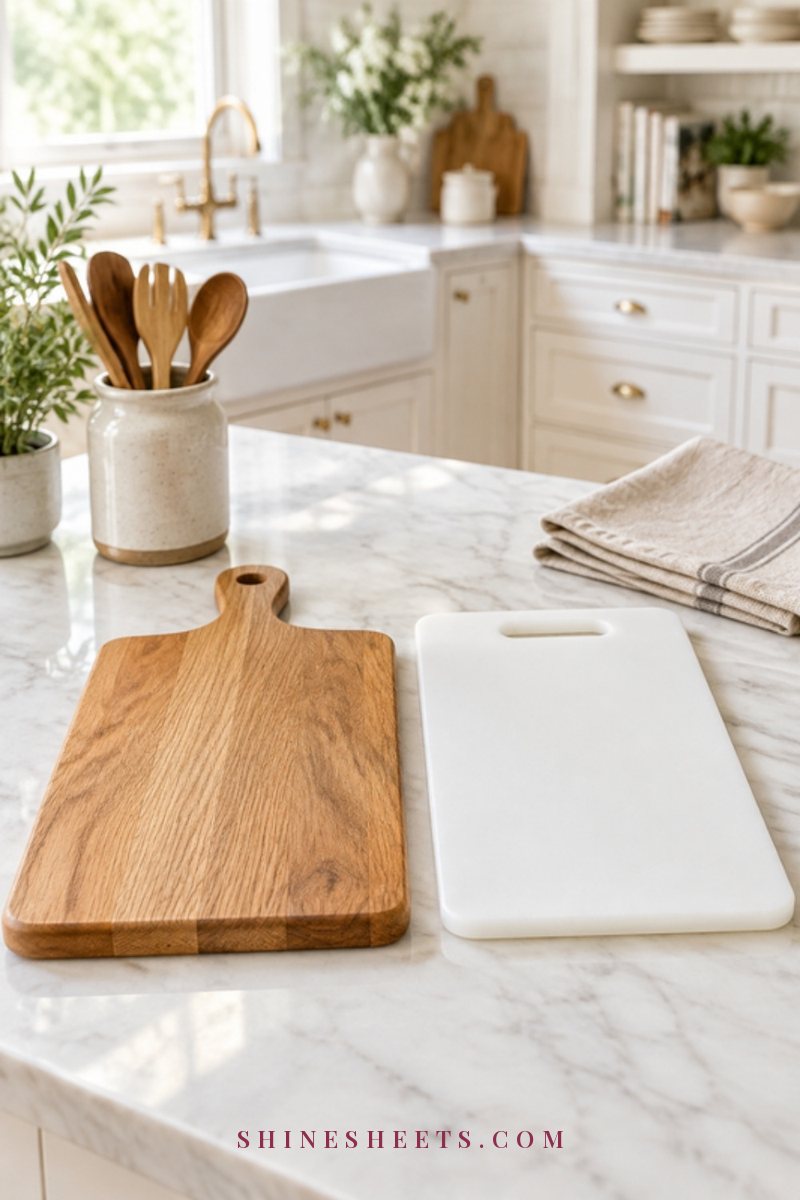
- Clear the counters except for the things you use every single day, like the kettle and a cutting board.
- Bring in wood and ceramic: a wooden board leaning against the backsplash, a stoneware crock with wooden spoons, a small plant.
- Swap mismatched containers for a few matching glass or ceramic ones, and keep the rest inside cupboards.
Entry
- Give everything a landing spot: a hook for each bag and coat, a small dish for keys and a basket for shoes.
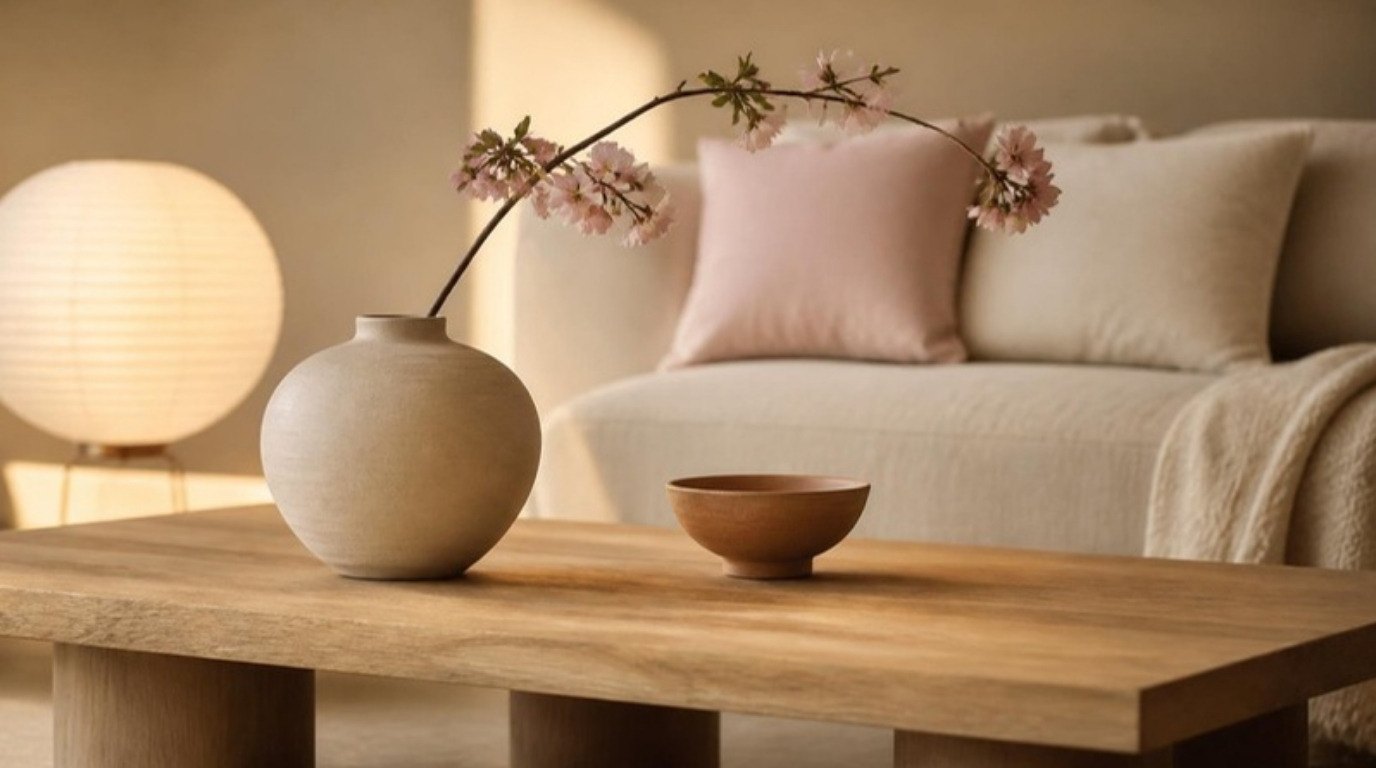
- Add one warm welcome: a small lamp, a vase with a single branch or a woven runner.
- Keep the floor clear so the first thing you see when you walk in is space.
Room-by-Room Warm Minimalism Table
This is the table I'd screenshot before a weekend reset. For each room it shows what to remove, the warm element to add and a renter-friendly swap you can do without touching the walls.
| Room | What to remove | Warm element to add | Renter-friendly swap |
|---|---|---|---|
| Living room | Coffee table clutter, extra throws, small decor scattered on shelves | A textured pillow mix, a wool throw, a lamp at seating height | Plug-in table and floor lamps instead of the overhead light |
| Bedroom | Piles on the nightstand, chair "wardrobe", busy bedding | Layered linen bedding in warm neutrals, a soft rug by the bed | Tension-rod or hook-mounted linen curtains |
| Kitchen | Rarely used appliances on the counter, mismatched containers | A wooden board, a ceramic crock, a small plant | Peel-and-stick shelf liners and a freestanding wooden rack |
| Entry | Shoe piles, mail stacks, extra bags | A small lamp, a woven basket, a single branch in a vase | Removable adhesive hooks and a washable runner |
| Bathroom | Half-used bottles on every surface | Folded cream towels, a wooden tray, a glass candle | Over-the-door hooks and a freestanding ladder shelf |
| Home office corner | Paper stacks, tangled cables | A linen-covered box, a wooden desk organizer, a warm desk lamp | Adhesive cable clips and lidded storage boxes |
5 Warm Minimalism Mistakes To Avoid
These are the most common reasons a minimal room ends up feeling cold, empty or a little sterile. The good news is that each one has a simple fix.
1. Cold White Everything
Bright, blue-toned white walls with white furniture and white bedding can feel clinical, especially in rooms with northern light. Bring in at least two warmer neutrals (cream, beige, oatmeal) and one natural wood tone.
2. Bare Walls With No Softness
Minimal walls don't have to be empty. One large piece of art, a simple fabric hanging, a floating shelf with a few books or even full-length curtains add softness and stop sound from echoing.
3. One Overhead Light
A single ceiling light flattens everything and makes even the nicest room feel like an office in the evening. Add lamps at different heights and use the overhead light only when you need to see clearly.
4. Too Many Matching Pieces
A full matching furniture set can feel like a showroom. Mix a few materials and shapes: a wooden side table next to a linen sofa, a rattan chair at a smooth table. Things should go together, not match exactly.
5. Minimalism That Hides the People Who Live There
A home should tell you something about the person in it. If you've edited away every book, photo and souvenir, bring a few back. The aim is fewer, more meaningful things, not a space that could belong to anyone.
Renter-Friendly Warm Minimalism Swaps
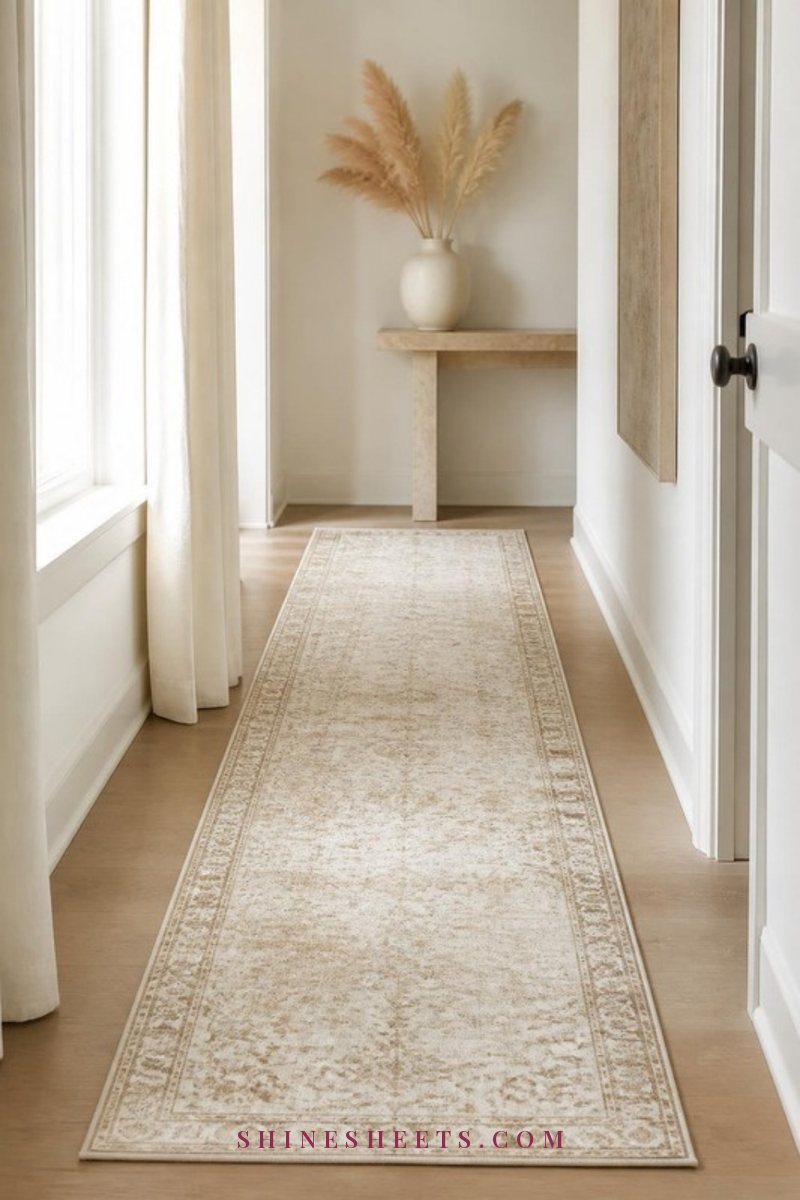
You don't need to paint, replace floors or install anything to get the look. These swaps are all reversible and come with you when you move.
- Lamps instead of overhead lighting. Plug-in table, floor and wall lamps (some have a cord cover you can stick on and remove later) change the mood of a room in one evening.
- Rugs over cold floors. A large rug in wool, jute or a soft neutral weave warms tile or laminate instantly and makes a room feel finished.
- Curtains over blinds. Hang linen curtains on a tension rod or removable hooks over existing blinds. Go high and wide for a softer, taller window.
- Removable hooks and strips like simple adhesive wall hooks for art, keys, bags and towels, so nothing ends up on the floor or the backs of chairs.
- Slipcovers and throws to warm up a landlord's sofa in a color you don't love.
- Freestanding storage like ladder shelves, rolling carts and lidded baskets instead of wall-mounted units.
- Warm bulbs. Swapping cool bulbs for warm white ones is one of the cheapest changes you can make, and it affects every room.
Warm Minimalism in a Small Space
Small apartments are where warm minimalism really shines, because every object you remove gives back visible floor and wall. A few ideas that help in tight rooms:
- Choose fewer, larger pieces. One generous rug and one larger lamp look calmer than several small ones.
- Raise furniture off the floor. Sofas, beds and side tables on slim legs let light pass underneath and make the room feel bigger.
- Use the same warm neutral across rooms so your eye flows from one space to the next without stopping.
- Make storage do double duty. A lidded bench, an ottoman with storage or a bed with drawers hides the everyday things a small home has to hold.
- Keep one surface completely empty. Even a single clear side table or windowsill gives the whole room a sense of breathing space.
A small home also benefits most from warm, layered light. Two lamps in a studio can make it feel like a series of calm little zones instead of one bright box.
How To Keep a Warm Minimal Home Without Being Strict
Warm minimalism should make your life easier, not add a new set of rules to feel guilty about. A few gentle habits keep it going:
- A ten-minute evening reset. Return things to their homes, clear the coffee table and fold the throw. I like doing mine while the kettle boils for evening tea.
- One in, one out for decor, textiles and kitchen items.
- A monthly surface check. Pick one surface and edit it again. Things creep back, and that's completely normal.
- Seasonal swaps instead of extra decor. Lighter linen and fewer throws in warmer months, wool and an extra blanket when it's cold.
- Permission to be lived in. A book left open, a mug on the side table, shoes by the door. A home that's used is a warm home.
Buy slowly, too. When you do add something, ask whether it brings warmth (texture, material, light or meaning) and whether it has a place to live. If the answer to both is yes, it belongs.
Final Thoughts
Warm minimalism is really about choosing with care. Fewer things, each one picked for how it feels, in a palette that's soft on the eyes and lit by warm, low light. The result is a home that feels calm and spacious and still unmistakably yours.
Start with one surface and one lamp this week. Small changes add up faster than you think, and every room you soften becomes a little easier to come home to.