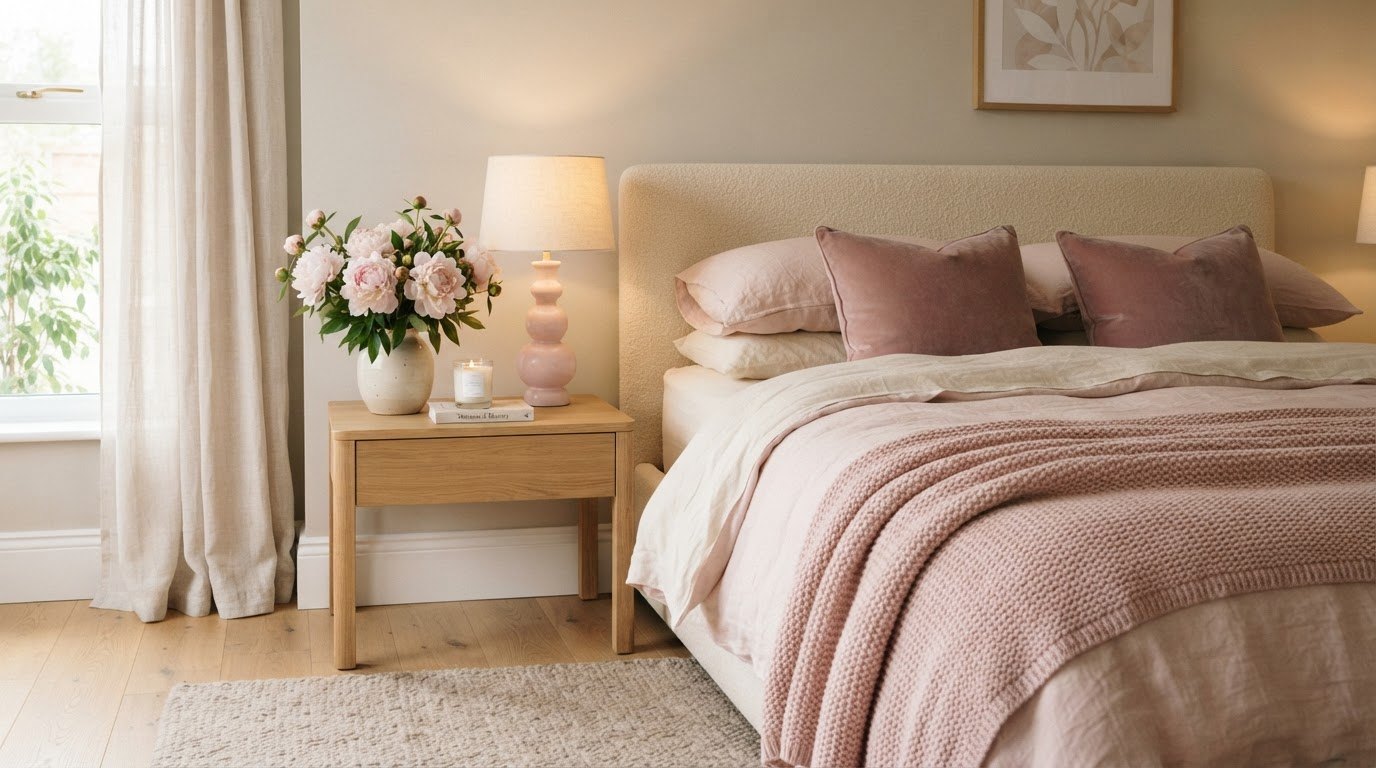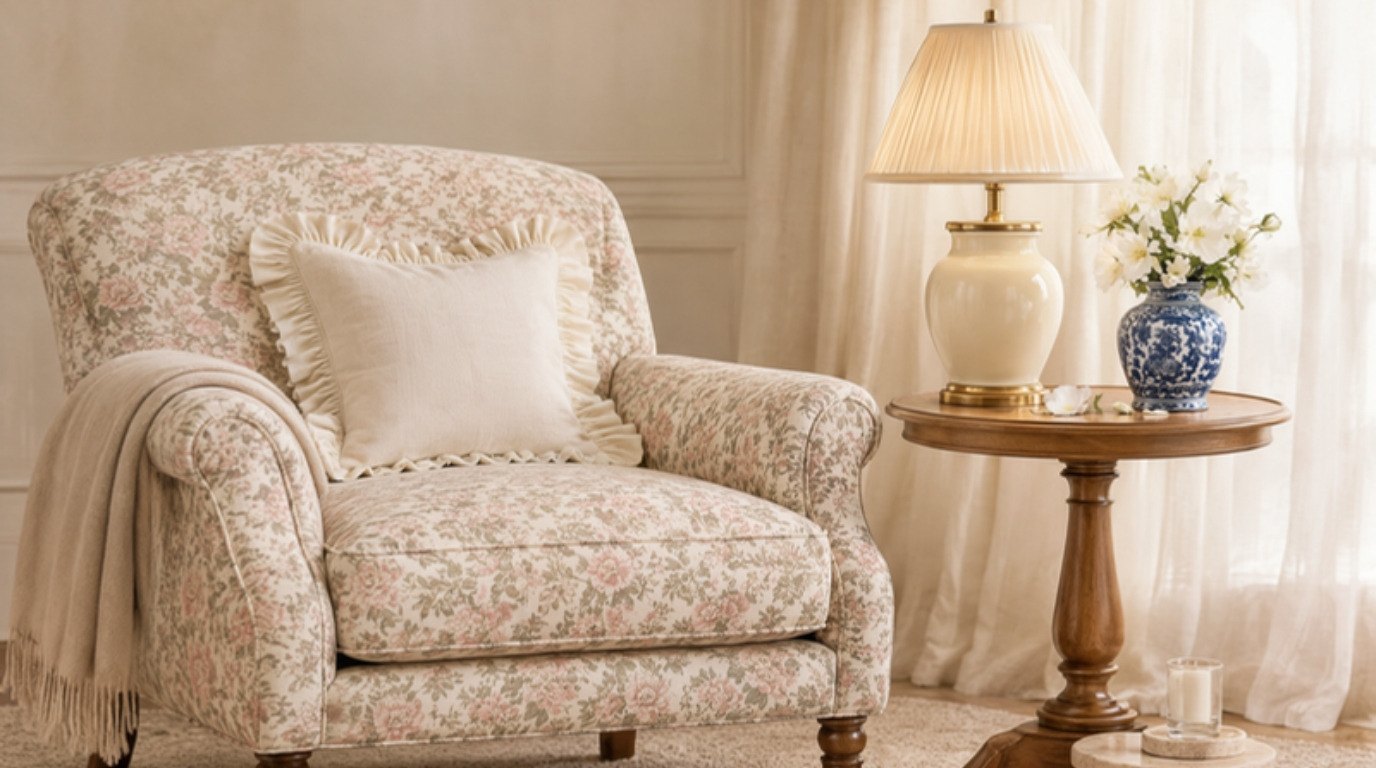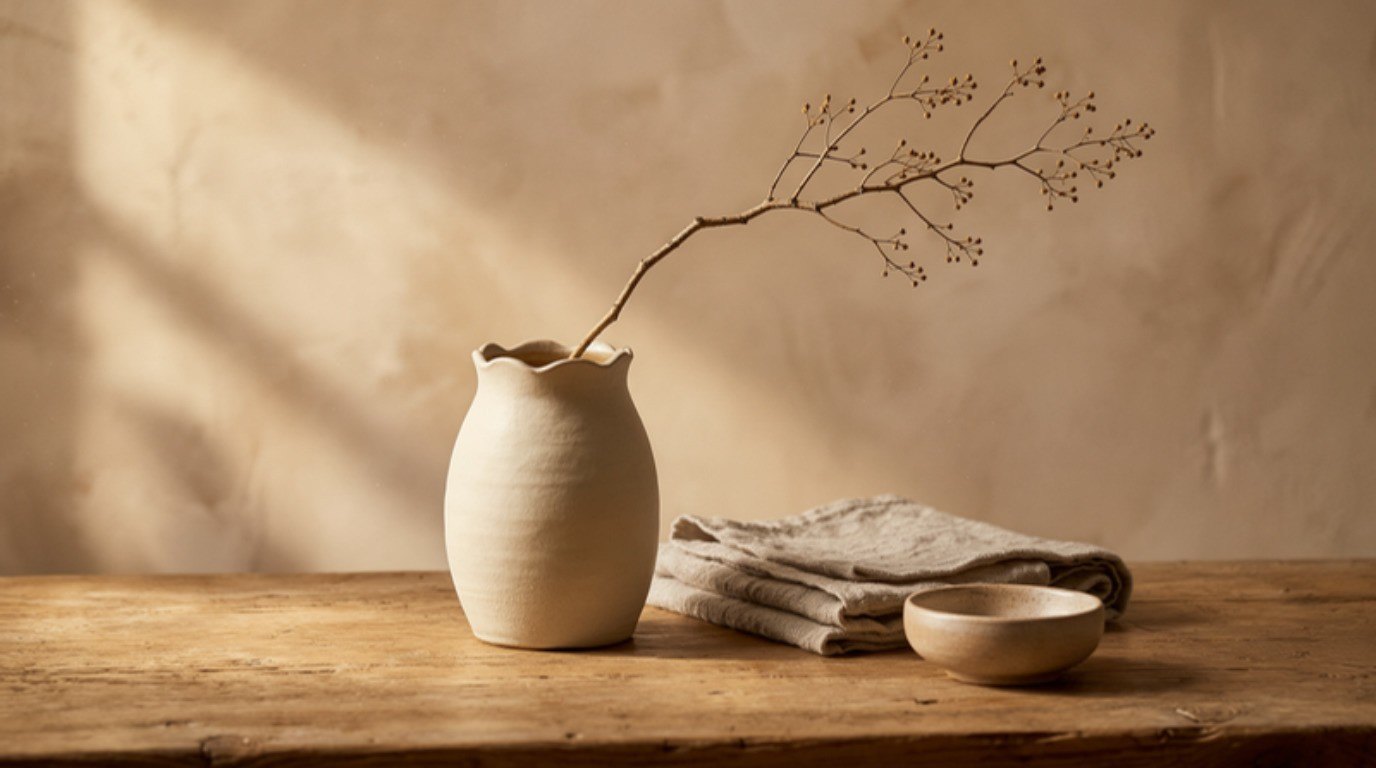
A home doesn't have to be perfect to feel calm. Some of the most peaceful rooms are full of things that are a little uneven, a little faded and clearly loved: a hand-thrown bowl with a wobbly rim, a linen cushion softened by years of washing, a wooden board with knife marks from a thousand ordinary evenings. That quiet acceptance of imperfection is the heart of wabi-sabi.
Wabi-sabi is a Japanese way of seeing beauty in things that are simple, natural, worn and impermanent. As a decor approach, it isn't about buying a particular look. It's about choosing fewer, honest materials, letting objects age gracefully and leaving room to breathe. It's also wonderfully budget-friendly, because so much of it starts with what you already own.
This guide to wabi-sabi decor covers what the style really means, how it differs from minimalism and Japandi, the eight key elements, room-by-room ideas, renter-friendly swaps, how to edit clutter without chasing perfection and where to find pieces without spending much. There's a handy table in the middle you can screenshot for your next thrift trip.
What Wabi-Sabi Decor Really Means
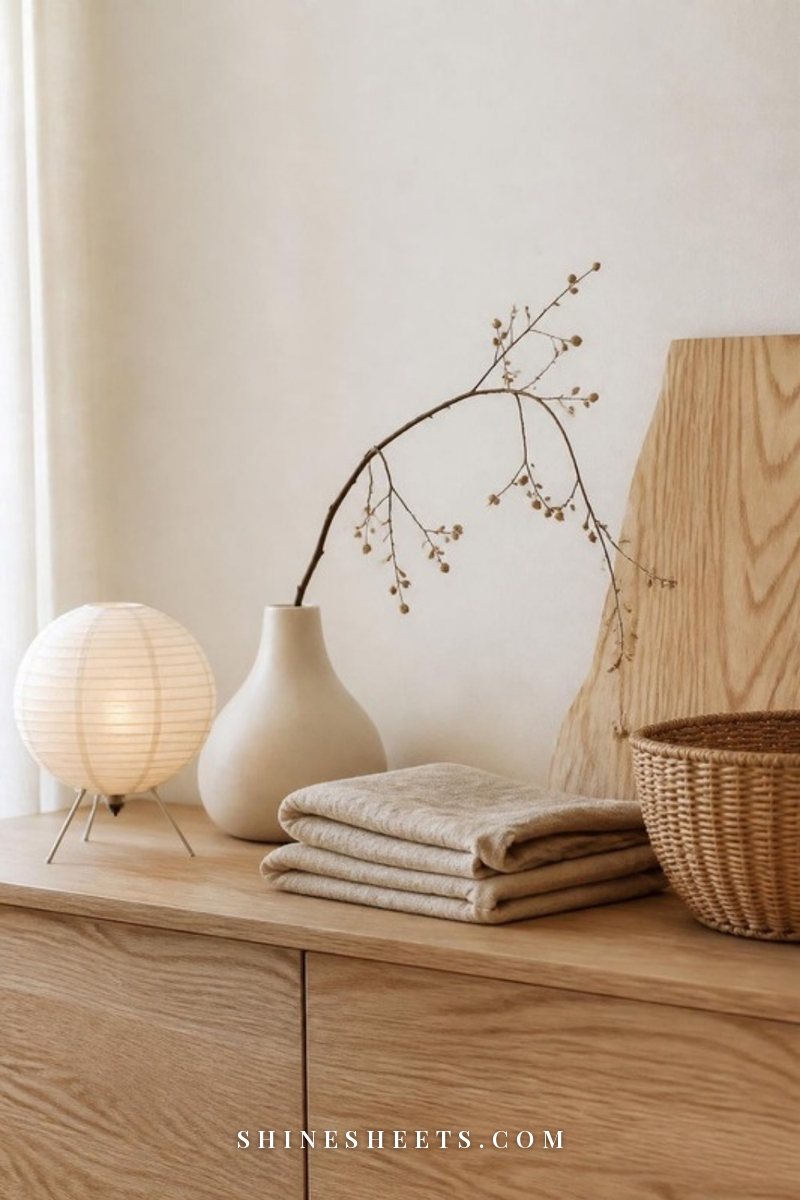
The phrase comes from two Japanese words with long, layered histories. Very simply, wabi is often linked to quiet simplicity and humble beauty, and sabi to the beauty that comes with age and wear. Together they describe an appreciation for things that are modest, natural and shaped by time.
In a home, that translates into a few gentle ideas:
- Natural over synthetic. Wood, clay, linen, stone, paper and wool, ideally in their honest, unpolished forms.
- Handmade over mass-produced. Slight irregularities are a feature, not a flaw.
- Worn over brand-new. Patina, fading and small chips tell the story of a life lived.
- Enough over more. A few meaningful things, given space, rather than a crowd of decor.
I love that wabi-sabi takes the pressure off. You're not trying to make a room look like a showroom. You're trying to make it feel honest, calm and lived in, which is a much kinder goal.
Wabi-Sabi vs Minimalism vs Japandi
These three get mixed up a lot, and they do overlap. The difference is mostly in the mood.
- Minimalism focuses on owning less and keeping surfaces clear. It can be crisp, bright and quite polished, with clean lines and very little texture. If you're curious about the mindset behind it, my piece on the quiet benefits of minimalist living explains why less can feel so freeing.
- Japandi blends Japanese calm with Scandinavian comfort. It's warm and minimal, with light woods, clean shapes and a tidy, well-designed feel. My guide to calm, warm Japandi decor shows how that look comes together.
- Wabi-sabi is the least polished of the three. It welcomes rough textures, uneven shapes, faded colors and visible wear. Where minimalism might hide a chipped mug, wabi-sabi keeps it on the shelf because you love it.
Think of it this way: minimalism asks "Do I need this?", Japandi asks "Is this calm and well made?", and wabi-sabi asks "Is this honest, natural and meaningful to me?" You can borrow from all three, and many homes do.
8 Key Elements of Wabi-Sabi Decor
You don't need all eight at once. Start with two or three that feel natural in your home, and the rest will follow over time.
1. Natural Materials
This is the foundation. Look for wood, clay, stone, linen, cotton, wool, jute, paper and rattan. Choose finishes that feel honest: matte rather than glossy, oiled rather than lacquered, raw rather than coated. A simple test is to touch it. Natural materials usually feel slightly cool, textured or soft, never plasticky.
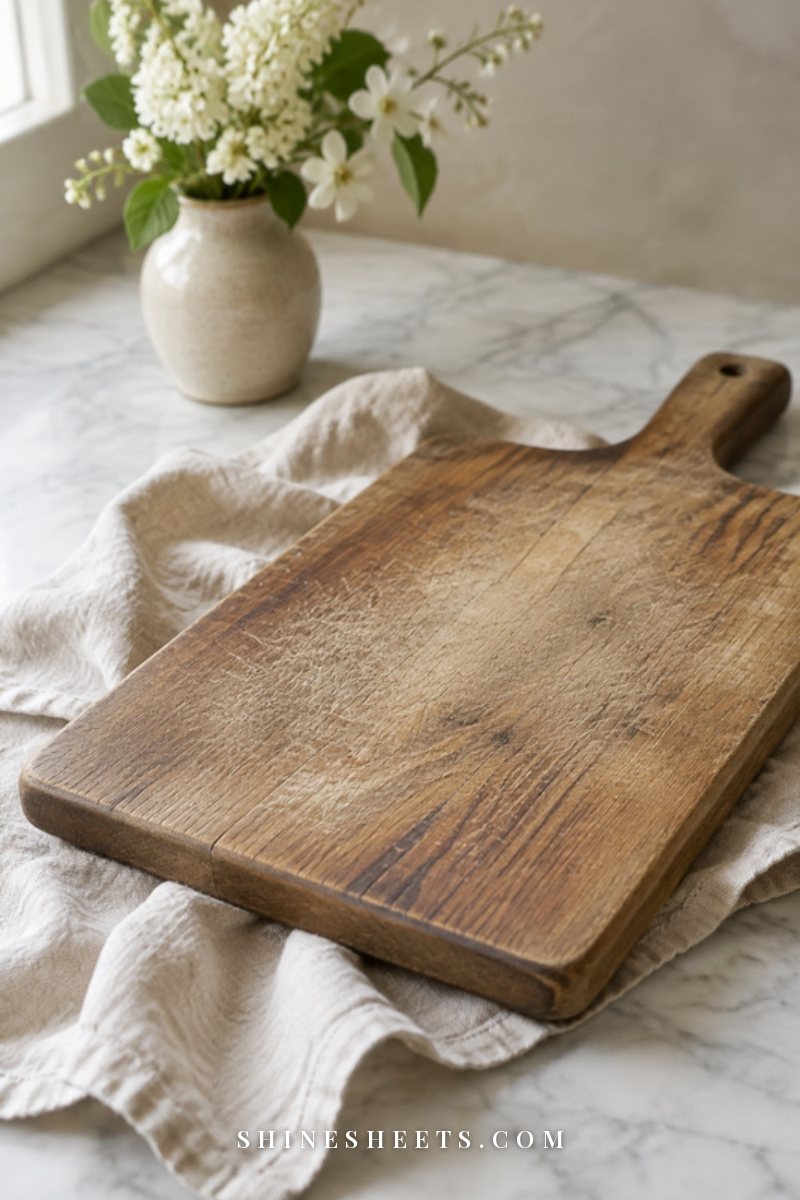
Start small. Swap one plastic storage box for a woven basket, or a shiny tray for a wooden one. A natural wood serving board leaning against a kitchen backsplash is a lovely, practical first step, and it only gets more beautiful with use.
2. Handmade Ceramics
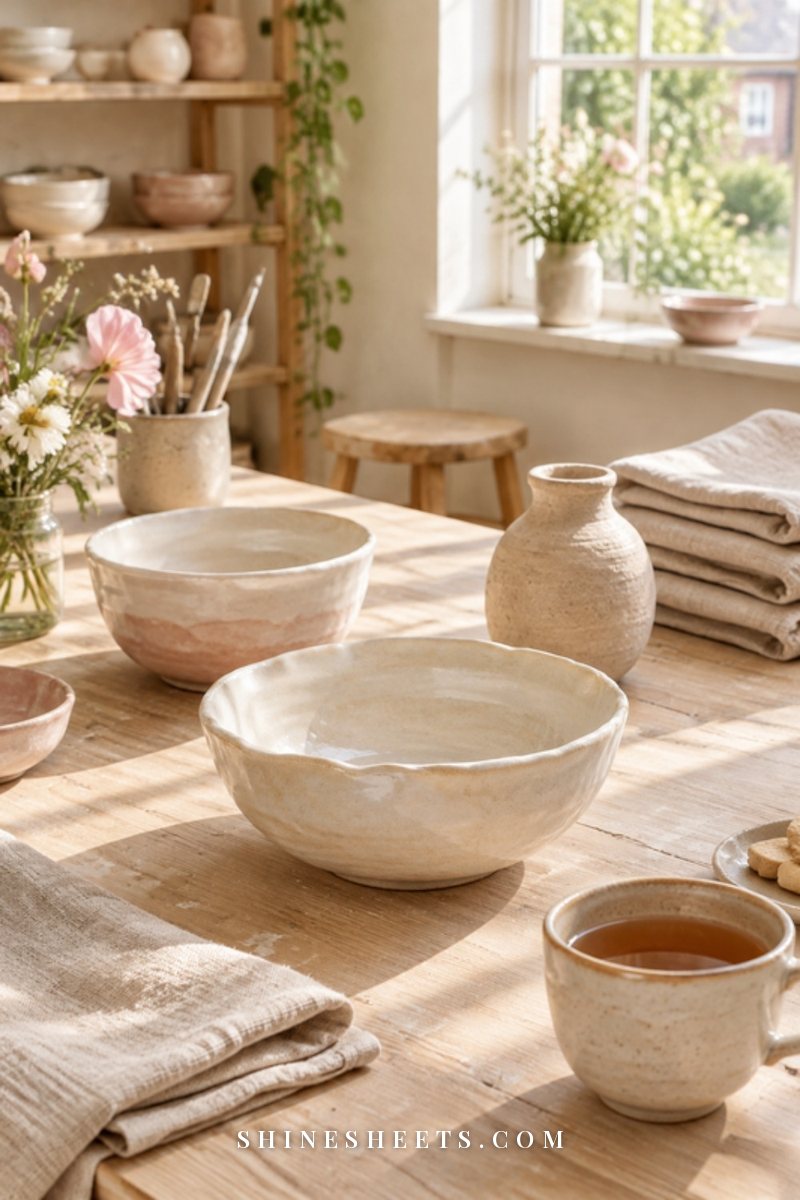
Ceramics are one of the easiest ways to bring wabi-sabi into a room. Look for pieces with visible fingerprints, uneven rims, speckled or pooled glazes and a slightly heavy, earthy feel.
A single cream handmade ceramic vase on a side table or windowsill can set the tone for a whole room. For everyday use, an ivory stoneware mug set with a matte glaze turns your morning coffee or evening tea into a small, grounding ritual. If the mugs don't quite match each other, even better.
3. An Earthy Neutral Palette
Wabi-sabi colors come straight from nature: oatmeal, cream, warm gray, clay, sand, muted olive, soft charcoal and the faded brown of old wood. They're quiet, slightly uneven colors rather than crisp whites or bright accents.
The secret is variety within that calm range. If everything is the exact same beige, a room can feel flat, so mix lighter and darker tones and plenty of texture. My guide to keeping neutral decor from feeling bland has more ways to add depth without adding color.
4. Linen and Raw Textures
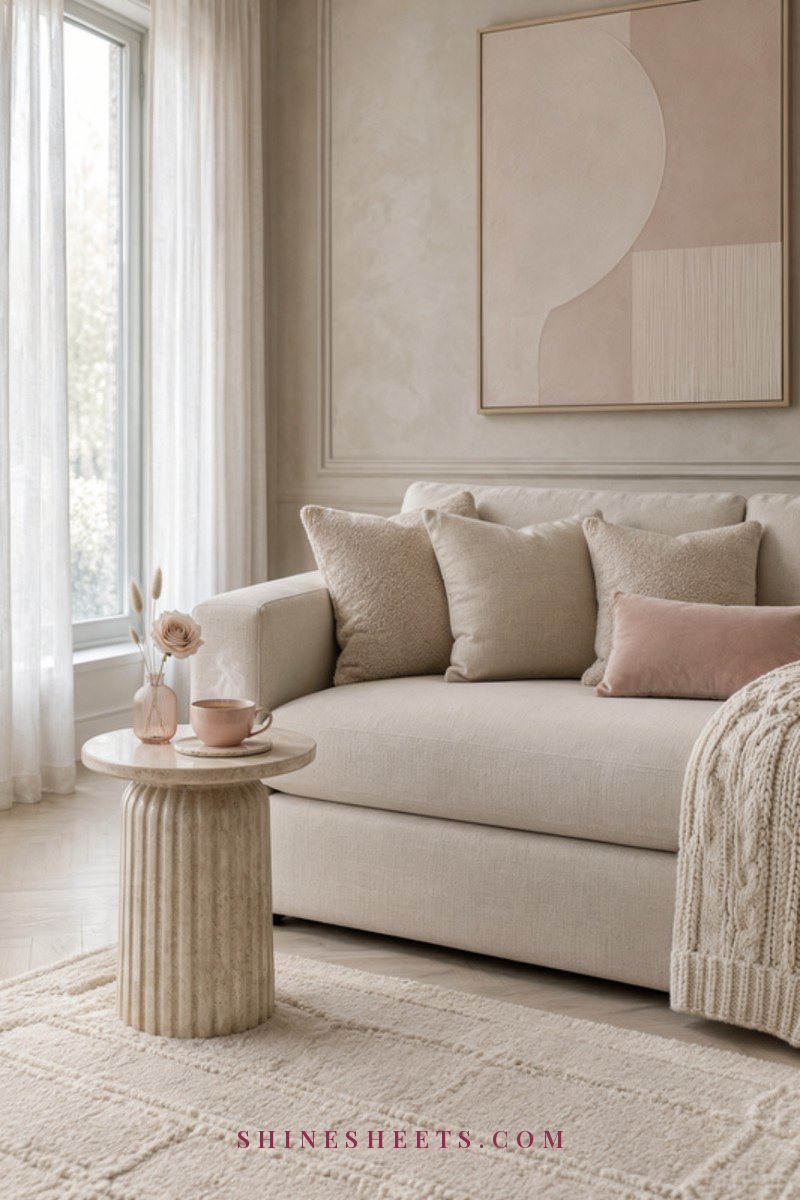
Texture does a lot of the work in wabi-sabi rooms. Wrinkled linen, nubby wool, rough jute, raw cotton and unglazed clay all add warmth without needing any pattern.
Linen is a perfect starting point because it actually looks better as it softens and creases. A few beige linen throw pillow covers are an easy way to change a sofa or bed without buying new cushions. Wash them a few times before you style them; they'll relax into that soft, rumpled look. To combine textures without the room feeling busy, my guide to mixing patterns and textures walks you through a few simple rules.
5. Aged Wood
Wood with knots, grain, scratches, fading and a little patina brings a sense of time into a room. Think of a weathered stool used as a side table, a worn wooden bench by the door, an old chopping board or a secondhand dresser with soft, rounded edges.
Don't rush to sand away every mark. A light clean and a little furniture oil or wax keeps wood healthy while letting its history show. If a piece is wobbly or sharp, fix that for safety, but leave the character.
6. A Single Branch or Dried Stem
Wabi-sabi often celebrates nature in its simplest form: one branch, a few stems, a single seasonal flower that will fade in a few days. It's a quiet reminder that nothing stays the same, and that change can be beautiful.
Fresh branches from a walk or a garden are lovely and cost nothing. For something longer-lasting, a small bundle of dried pampas or stems in a neutral tone works well. Keep it sparse. Three stems in a vase feel more wabi-sabi than a big, full arrangement.
7. Empty Space
Empty space is an element in its own right. A bare corner, a mostly empty shelf or a wall with just one small piece gives the eye somewhere to rest and lets the things you do display really stand out.
Try this: choose one surface, like a sideboard or windowsill, and remove everything. Put back only two or three items you truly love. Leave the rest of the surface empty for a week and notice how it feels. Most people are surprised by how calming it is.
8. Objects With History
This is the most personal element, and my favorite. A teapot from a grandparent, a bowl from a trip, a stool you found at a flea market, a faded quilt. Objects with history make a home feel like yours rather than a catalog page.
They don't have to be valuable. They just have to mean something. Give one or two of them a place where you see them every day, and let them be a little worn. That wear is part of the story.
Wabi-Sabi Decor at a Glance
Here are all eight elements in one place, with what to look for and where to find them on a budget. Screenshot it before your next thrift trip.
| Element | What to look for | Budget source | Room |
|---|---|---|---|
| Natural materials | Matte wood, clay, stone, woven fibers; nothing glossy or plastic | Thrift stores, swapping plastic boxes for baskets you own | Every room |
| Handmade ceramics | Uneven rims, speckled or pooled glaze, a slightly heavy feel | Local makers' markets, pottery studio seconds, thrift shelves | Kitchen shelf, living room, entry |
| Earthy neutral palette | Oatmeal, clay, sand, warm gray, muted olive | Paint samples, dyed or naturally faded textiles you already own | Living room, bedroom |
| Linen and raw textures | Washed linen, wool, jute, raw cotton | Secondhand linen, pillow covers instead of new cushions | Bedroom, living room |
| Aged wood | Knots, grain, soft edges, gentle patina | Flea markets, online secondhand listings, family pieces | Living room, entry, kitchen |
| A single branch or stem | One branch or a few stems, sparse and natural | Walks, gardens, a small bundle of dried stems | Entry, living room, bedroom |
| Empty space | Bare surfaces, one piece per wall or shelf section | Editing what you already own (it's free) | Every room |
| Objects with history | Items with a story, visible use, gentle wear | Family, travel finds, keeping what you love | Living room, entry, bedroom |
Room-by-Room Wabi-Sabi Ideas
You don't need to redo a whole room. A few small changes in each space go a long way.
Living Room
- Swap busy patterned cushions for two or three linen covers in oatmeal and cream.
- Replace a glossy coffee table tray with a wooden board or a simple stoneware dish.
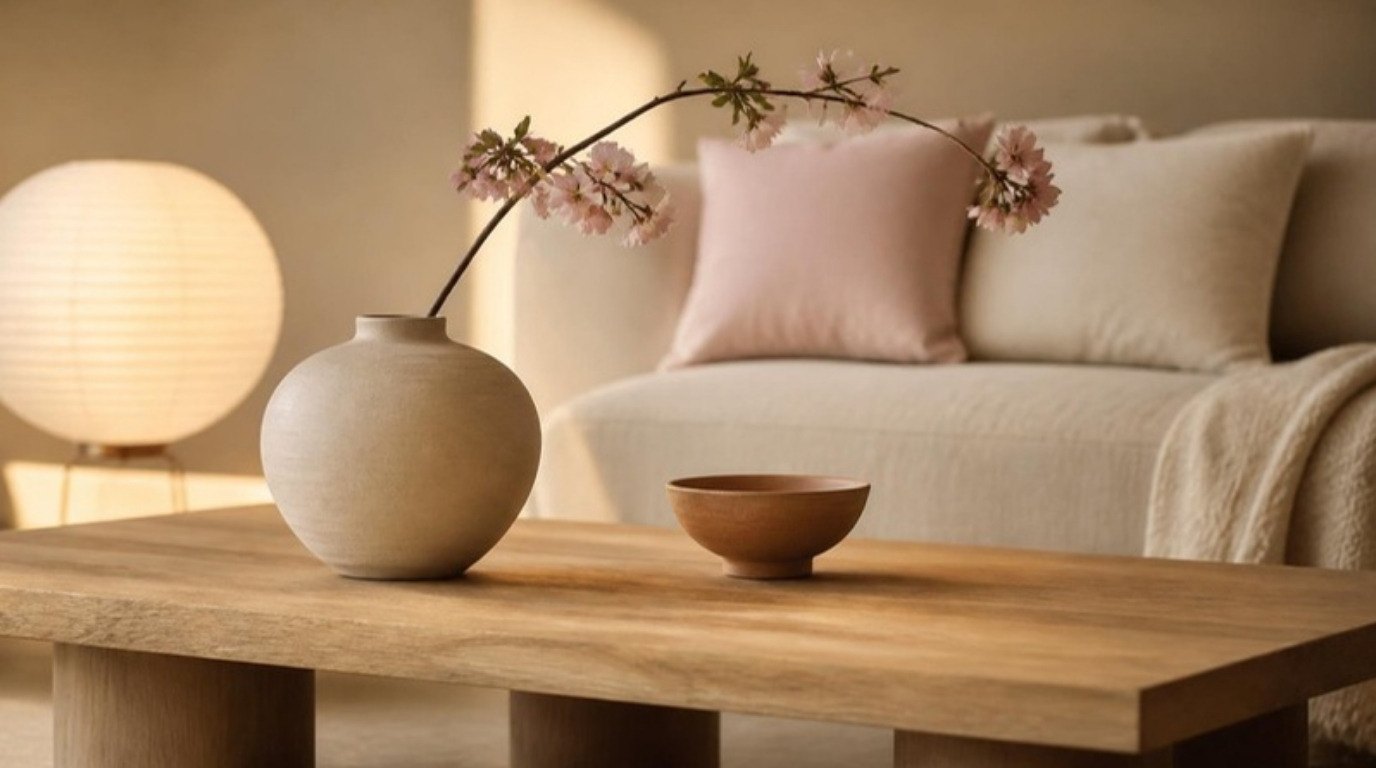
- Choose one ceramic vase with a single branch as the room's main "decor moment."
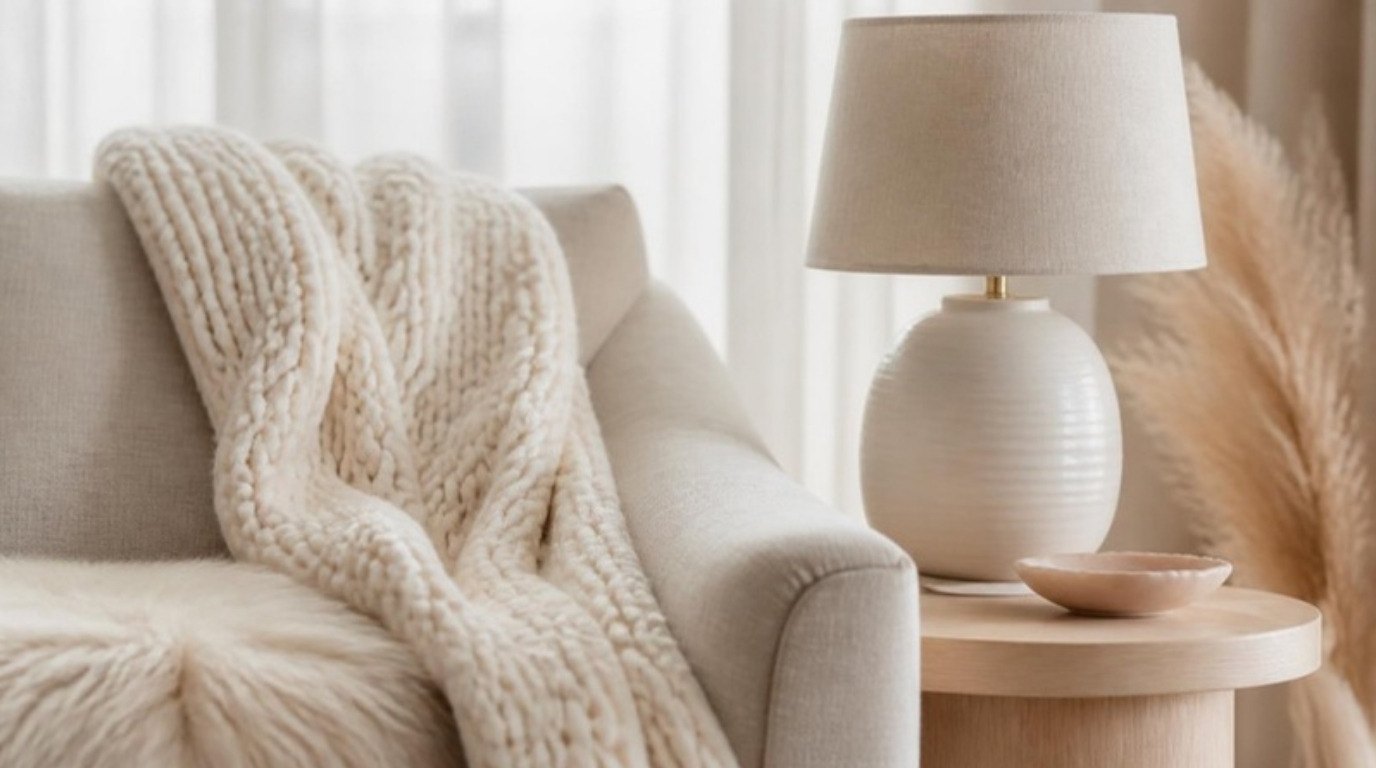
- Drape a wool or cotton throw over the arm of the sofa, loosely, not folded perfectly.
- Clear at least one shelf section completely and leave it that way.
Bedroom
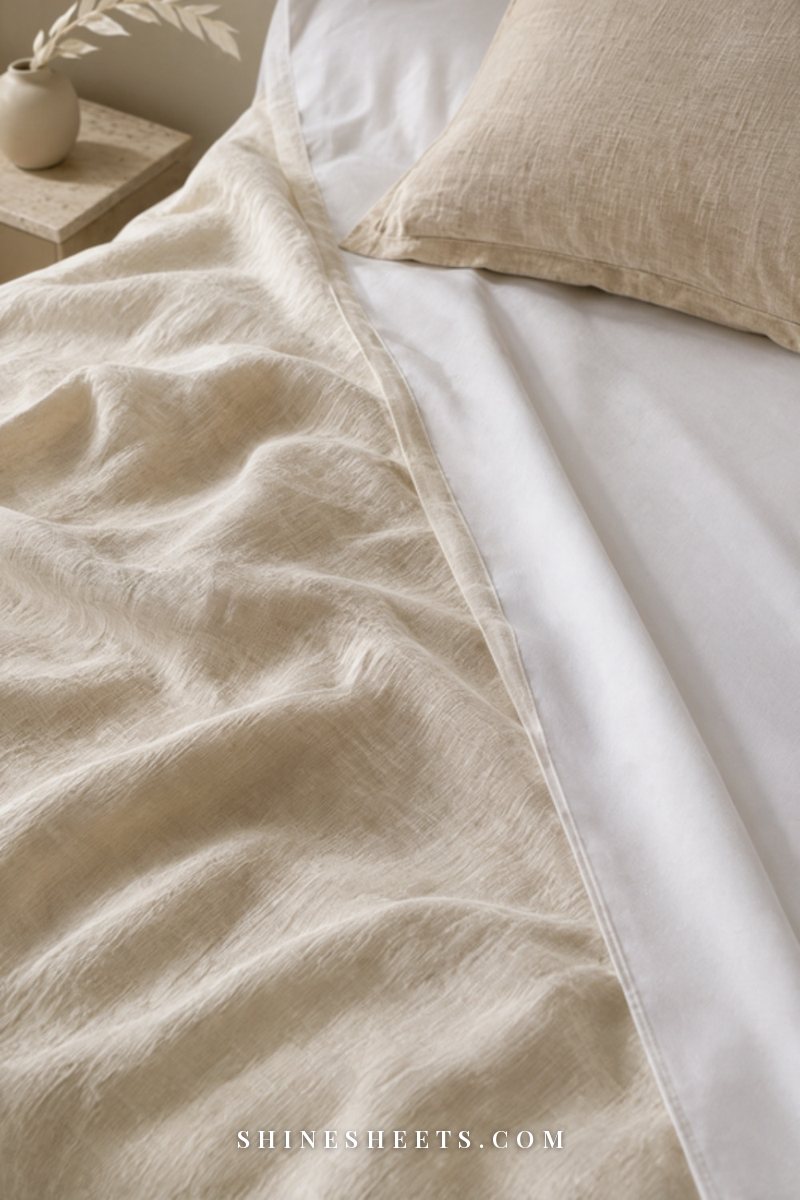
- Use washed linen or cotton bedding in soft neutrals, and let it look a little rumpled. A bed doesn't need to be perfectly smooth to feel restful.
- Try an old wooden stool as a nightstand, holding just a glass of water, a book and a small dish.
- Keep surfaces nearly bare, and store everyday clutter in woven baskets or a lidded box.
- Add one small ceramic piece or a single dried stem on the windowsill.
- Choose warm, low lighting, like a paper or linen lampshade, over bright overhead light in the evening.
Kitchen Shelf
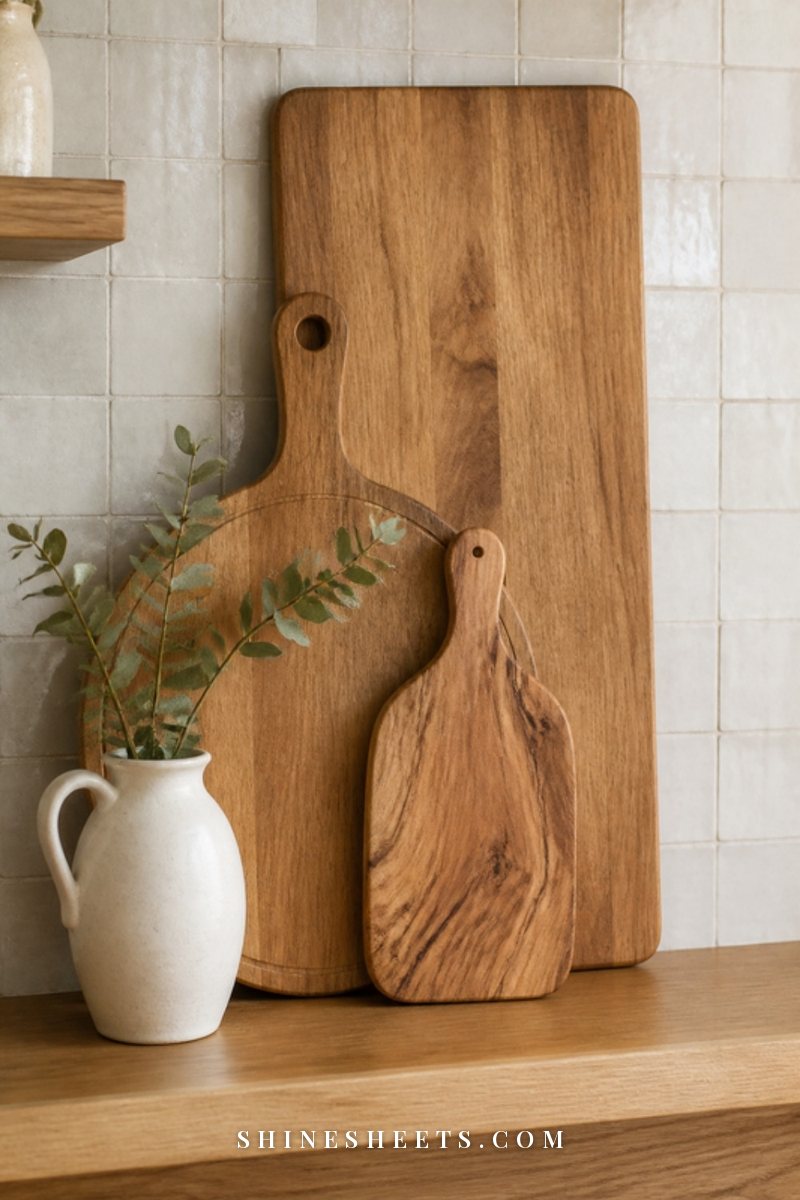
- Display the everyday pieces you actually use: mugs, bowls, a teapot, a wooden board.
- Group items in small, uneven clusters of two or three rather than straight rows.
- Mix ceramics in related tones (cream, ivory, sand, clay) even if they're from different makers.
- Leave gaps between groups so the shelf breathes.
- Hide the plastic and the brightly packaged things behind cabinet doors.
Entry
- Set a small wooden bench or stool by the door for keys, bags or just sitting down to take off shoes.
- Place a handmade bowl for keys and a basket for scarves.
- Add one branch in a tall vase, or a single framed piece in muted tones.
- Keep it simple. An entry with a few calm objects feels much more welcoming than one filled with decor.
Renter-Friendly Wabi-Sabi Swaps
Wabi-sabi is perfect for renters, because almost all of it lives in soft furnishings and objects rather than walls and floors. A few easy, reversible swaps:
- Textiles first. Linen curtains, pillow covers, a jute or wool rug and a soft throw change the whole feeling of a room without a single nail.
- Lean, don't hang. Lean artwork, a wooden board or a simple framed print on a shelf or the floor instead of drilling holes.
- Cover what you can't change. Drape linen over a shiny side table, or tuck a woven basket over a plastic bin.
- Soften the lighting. Swap a harsh shade for a paper or linen one, and use warm bulbs.
- Use removable hooks for a hanging dried stem or a small woven piece.
- Bring in plants. A potted olive tree, a trailing plant or a simple branch in water adds life and natural texture.
Letting Things Show Their Use
This is the most freeing part of wabi-sabi. A chip on a favorite mug, a faded patch on a linen cushion, soft wear on a wooden chair arm or a patina on a brass bowl are signs of a well-used, well-loved home.
A few gentle ways to embrace it:
- Keep the chipped piece if you love it and it's still safe to use. A small chip on the base of a vase is pure character. (A sharp chip on a cup's rim is a different story; move that cup to holding pens or a little plant.)
- Repair rather than replace when you can. Re-glue a handle, re-oil a cutting board, darn a small hole in a throw. The visible repair becomes part of its story.
- Let linen wrinkle. Skip the ironing and enjoy the soft creases.
- Don't over-polish. Clean things, of course, but let wood, brass and stone develop a natural, gentle patina.
It's a small mindset shift that makes daily life calmer. You're no longer protecting things from life; you're letting them be part of it.
Editing Clutter Without Chasing Perfection
Wabi-sabi loves empty space, but it isn't about strict decluttering rules or a perfectly bare home. It's about keeping what's useful or meaningful and letting go of what isn't, at a pace that feels kind.
- Edit one surface at a time. A windowsill, a shelf, a nightstand. Clear it, clean it, and put back only what you love or use.
- Ask two questions: "Do I reach for this?" and "Does this feel calm and meaningful to me?" If both answers are no, it can probably go.
- Rotate rather than display everything. Keep a small box of objects you love and swap a few out every now and then.
- Accept the lived-in bits. A book left open, a throw on the sofa or a mug on the table are part of a real home, not failures.
If one room still feels heavy, start where you spend the most time. A single calm corner often inspires the rest of the home.
Budget Sourcing: Where To Find Wabi-Sabi Pieces
This style is naturally gentle on your budget, because new and expensive is the opposite of the point.
- Start with what you own. Look through cupboards and storage for old ceramics, wooden boards, baskets and linen. You may already have most of what you need.
- Thrift stores and flea markets. Look for stoneware, wooden bowls, old stools, linen tablecloths and baskets. Turn ceramics over: a heavy, unglazed base is often a sign of something handmade. My guide on decorating with thrifted finds has tips for spotting the good pieces.
- Local makers. Pottery studios often sell "seconds" with small flaws at lower prices, which is perfect here.
- Family and friends. Ask if anyone is clearing out old dishes, wooden furniture or linens.
- Nature. Branches, stones, dried grasses and seed pods from a walk cost nothing. Just take only what's fallen or plentiful, and never from protected areas.
Buy slowly. Wabi-sabi rooms come together over months and years, one honest piece at a time, and that slowness is part of their charm.
Final Thoughts
Wabi-sabi decor is less about a look and more about a softer way of living with your things. It invites you to choose natural materials, keep what has meaning, leave space to breathe and let wear tell its story.
Start with one shelf, one branch or one chipped mug you've always loved. A home that feels honest and imperfectly beautiful is already within reach, and it gets a little lovelier every year you live in it.