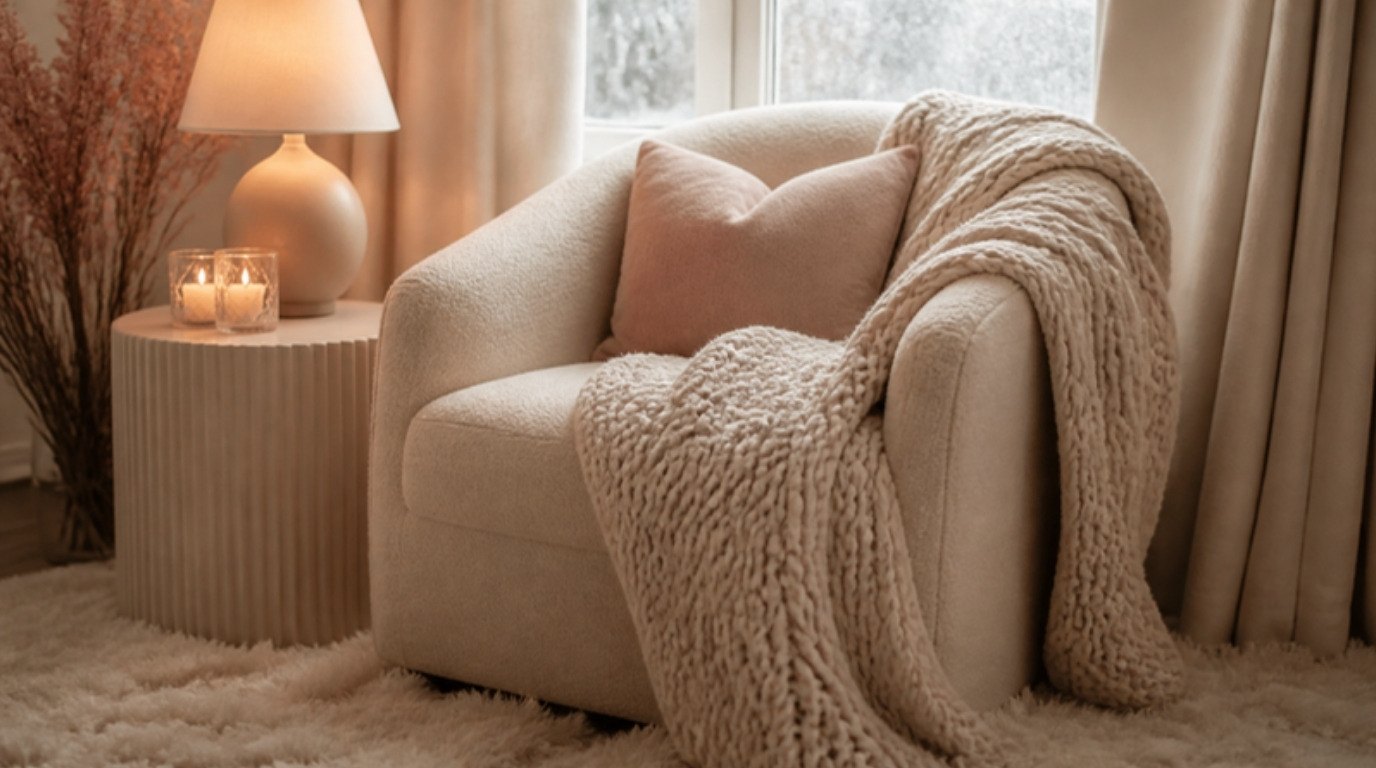
A warm home in winter is less about turning the thermostat higher and more about keeping the heat you already have. Most chilly rooms aren't cold because the heating is weak. They're cold because warm air is slipping out under doors, through thin curtains and across bare floors, while cold air quietly creeps in to take its place.
The good news is that the fixes are mostly small, inexpensive and renter-friendly. A rolled draft stopper, a heavier curtain, a rug in the right spot and a few smart habits can change how a room feels within a single evening. It took me a few cold seasons to realize that the coziest homes aren't always the warmest on the thermostat. They're the ones that hold onto their warmth.
This guide covers how to make your home warmer in winter in a practical, safe way: how to find where the cold is getting in, ten ways to keep heat inside, a room-by-room warm-up table, how to make a space feel warmer, tiny daily habits, the safety rules that matter most and a quick list of fixes that work in rentals.
Let's start where the chill starts.
Find Where the Cold Is Coming From
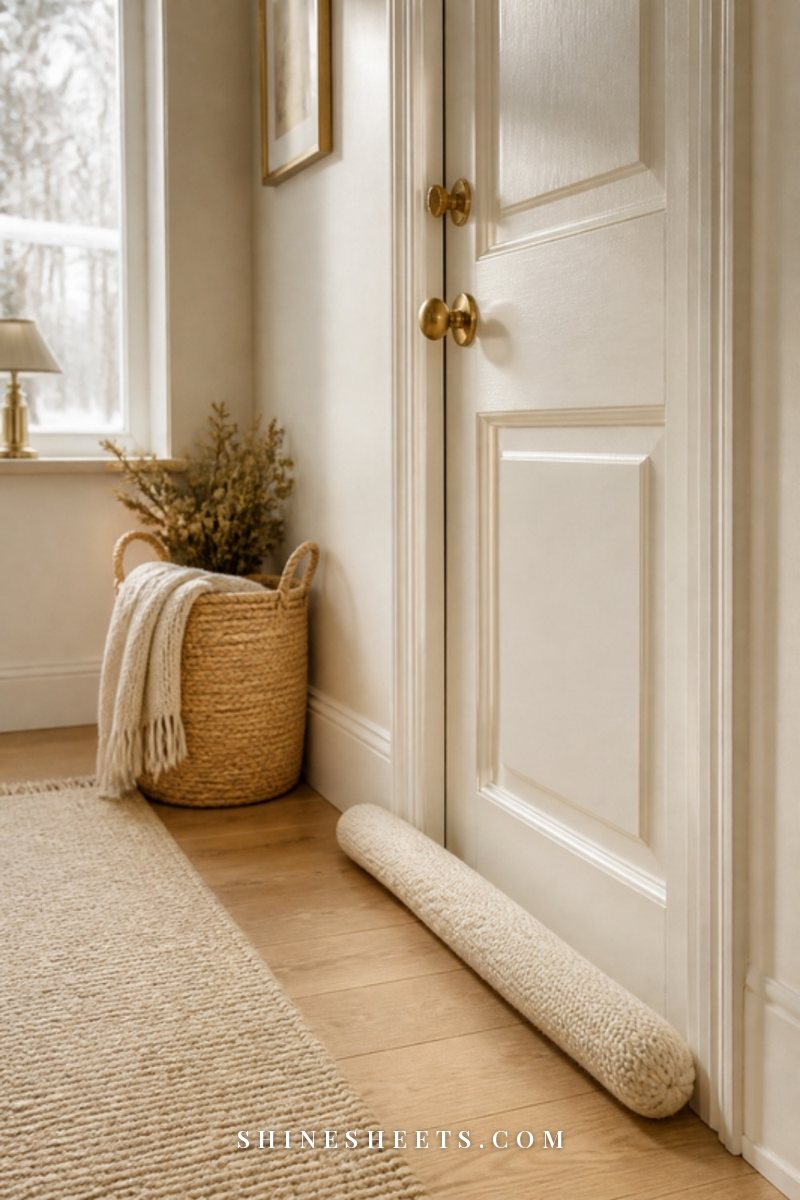
Before you buy anything, spend ten minutes finding your home's cold spots. It saves money, because you'll fix the real problem instead of guessing.
Here's a simple way to do it on a cold, windy day:
- Walk the edges. Slowly move the back of your hand along the bottoms of exterior doors, around window frames and near electrical outlets on outside walls. A cool breeze means a draft.
- Try the tissue test. Hold a single tissue or a light ribbon near a gap. If it flutters, air is moving through.
- Check your floors. Bare wood, tile and laminate can feel icy, especially over unheated spaces. Note which rooms feel coldest underfoot.
- Look at the light. At night, if you can see daylight or streetlight around a closed door, warm air is escaping there.
- Feel your windows. Single-pane or older windows lose a lot of heat. If the glass feels very cold, curtains will help a lot.
Jot down the three coldest spots. Those are your priorities, and you'll likely find that fixing just those makes the whole home feel different.
10 Ways To Keep the Heat In
These are the practical changes that make the biggest difference. Start with the first three; they're the quickest wins in almost any home.
1. Stop Drafts Under Doors
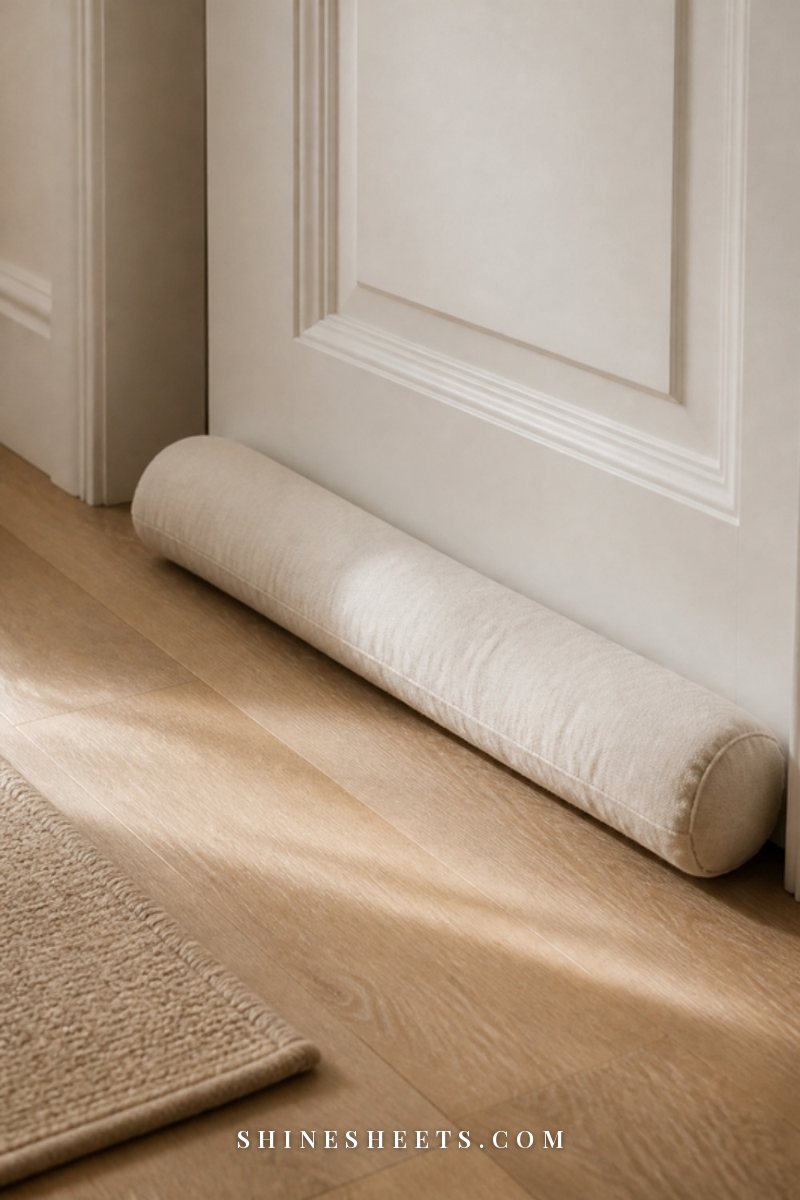
The gap under an exterior door can let in a surprising amount of cold air. An under-door draft stopper is one of the easiest fixes there is: it slides onto the bottom of the door or sits against it, and you can move it from room to room. Look for one with a washable cover in a soft neutral so it blends in instead of looking like a gadget.
For interior doors to unheated rooms (a spare room, a laundry room, a cold hallway), a simple fabric snake works too. In a pinch, a rolled bath towel does the job for a night.
2. Hang Thermal Curtains
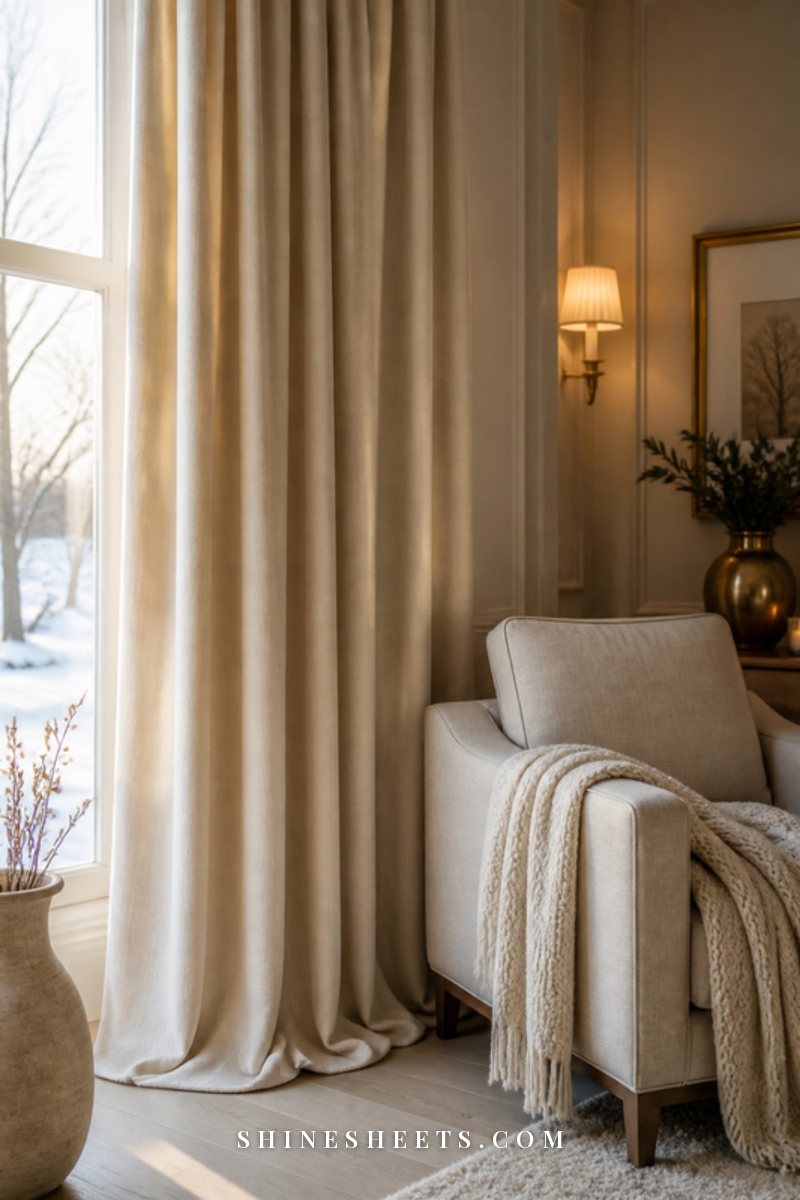
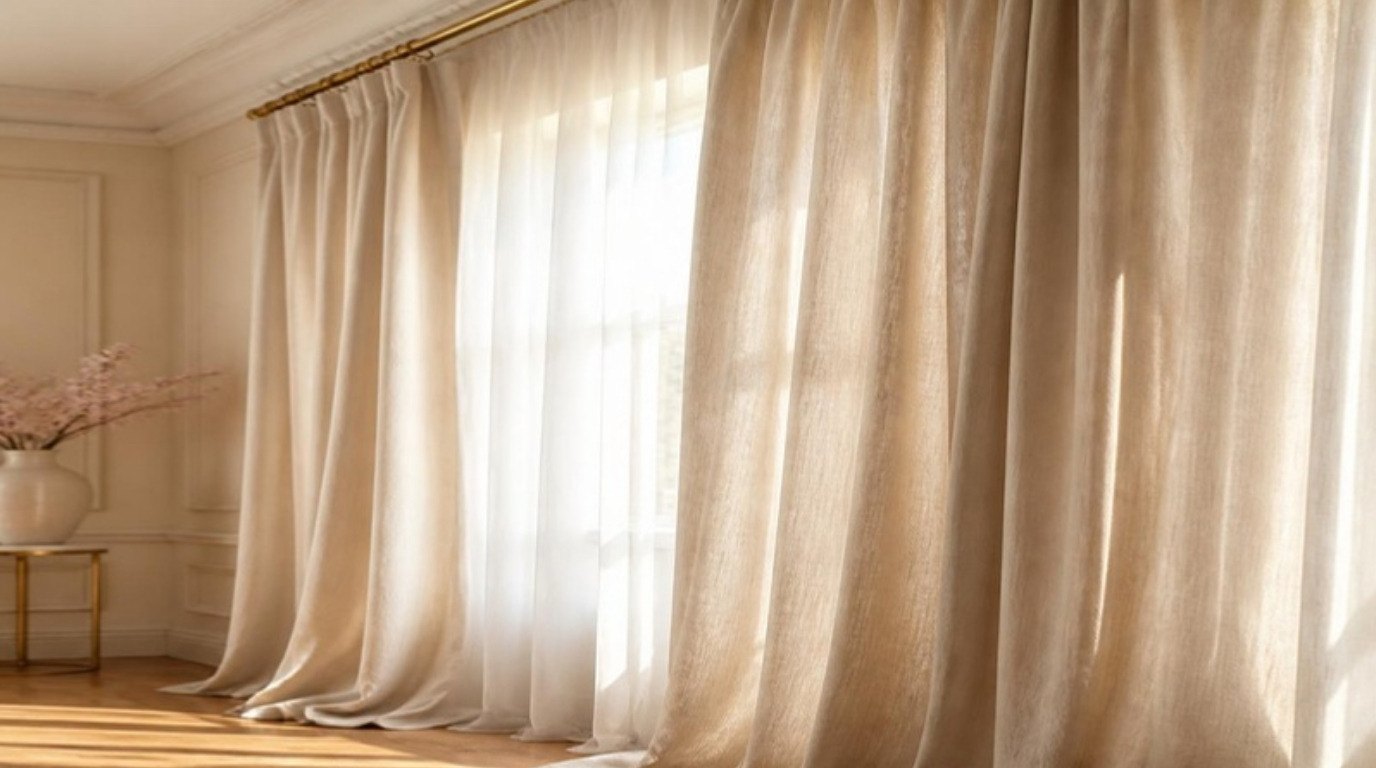
Windows are often the coldest surface in a room. Lined or thermal curtains add a layer of insulation between you and the glass, so the room loses less heat at night. Cream thermal curtains keep the space bright during the day and look calm and elegant at night.
A few details make them work much better:
- Hang the rod a few inches above the window frame and extend it past the sides, so the curtains overlap the wall.
- Let them reach the floor or the windowsill, with no big gap at the bottom.
- Close them as soon as it gets dark, and open them on sunny mornings.
If you're choosing new curtains anyway, my guide to curtain ideas has tips on length, fabric and hanging height that also help with warmth.
3. Cover Cold Floors With Rugs

Bare floors pull warmth from your feet and make a room feel colder than the thermostat says. A thick rug adds insulation and instantly makes a space feel softer. A cream wool area rug is a lovely choice for winter, because wool is naturally warm, dense and comfortable underfoot.
Place rugs where you actually stand or sit: beside the bed, in front of the sofa, under a desk chair, by the kitchen sink. Add a rug pad underneath for extra insulation and to stop slipping. For help with size and material, see my guide on how to choose a rug.
4. Seal Window Gaps the Renter-Friendly Way
If windows rattle or leak air around the frame, removable weatherstripping tape or clear removable caulk can seal the gaps for the season. Window insulation film is another option: it creates a thin pocket of air over the glass. Follow the package instructions, and test any adhesive on a hidden spot first if you rent.
Start with the window you noticed first in your draft check, usually the one in the room you use most. Clean and dry the frame before applying anything, because tape won't stick to dust or condensation. Press weatherstripping firmly into place and check it again after a week; if a corner lifts, replace that piece rather than layering more tape on top. On very old windows, even a strip of removable tape along the bottom edge can stop that thin, steady chill you feel when sitting nearby.
5. Let the Sun In, Then Lock It In
Sunlight is free heat. On sunny days, open curtains on south- and west-facing windows (in the Northern Hemisphere) from late morning to mid-afternoon. As soon as the sun drops, close them to trap that warmth inside. It's a tiny habit with a noticeable effect, especially in smaller rooms.
Dark floors and stone surfaces that catch direct sun soak up warmth and release it slowly, so a sunny patch of floor can stay pleasantly warm after the light moves. Keep that spot clear of clutter and let the sun reach it. In north-facing rooms that never get direct light, focus on curtains and rugs instead; there's simply less free warmth to collect there.
6. Close Off Rooms You Don't Use
Heating rooms you rarely enter wastes warmth. Keep doors to spare rooms and storage spaces closed, and put a draft stopper at the base if the gap is large. Keep the room above freezing, though, especially if it has pipes on exterior walls, and check with your landlord or a professional before closing any heating vents, since some systems are designed to run with all vents open.
7. Keep Vents and Radiators Clear
A sofa pushed against a radiator or a rug over a floor vent blocks the heat you're paying for. Leave a little space around heat sources so warm air can move into the room. Dust radiators and vent covers too; a clean surface heats more efficiently.
If you have radiators on exterior walls, a sheet of radiator reflector foil behind them (installed according to the package instructions) can bounce more heat back into the room instead of into the wall. And if your radiators feel warm at the bottom but cold at the top, they may need bleeding; ask your landlord or a qualified professional if you aren't sure how to do it safely.
8. Run Your Ceiling Fan in Reverse
Warm air rises and collects near the ceiling. Many ceiling fans have a small switch on the base that changes the direction. Set it to turn clockwise on the lowest speed, and it gently pushes warm air back down without creating a chilly breeze. It's especially helpful in rooms with high ceilings.
9. Layer Your Bed for Winter
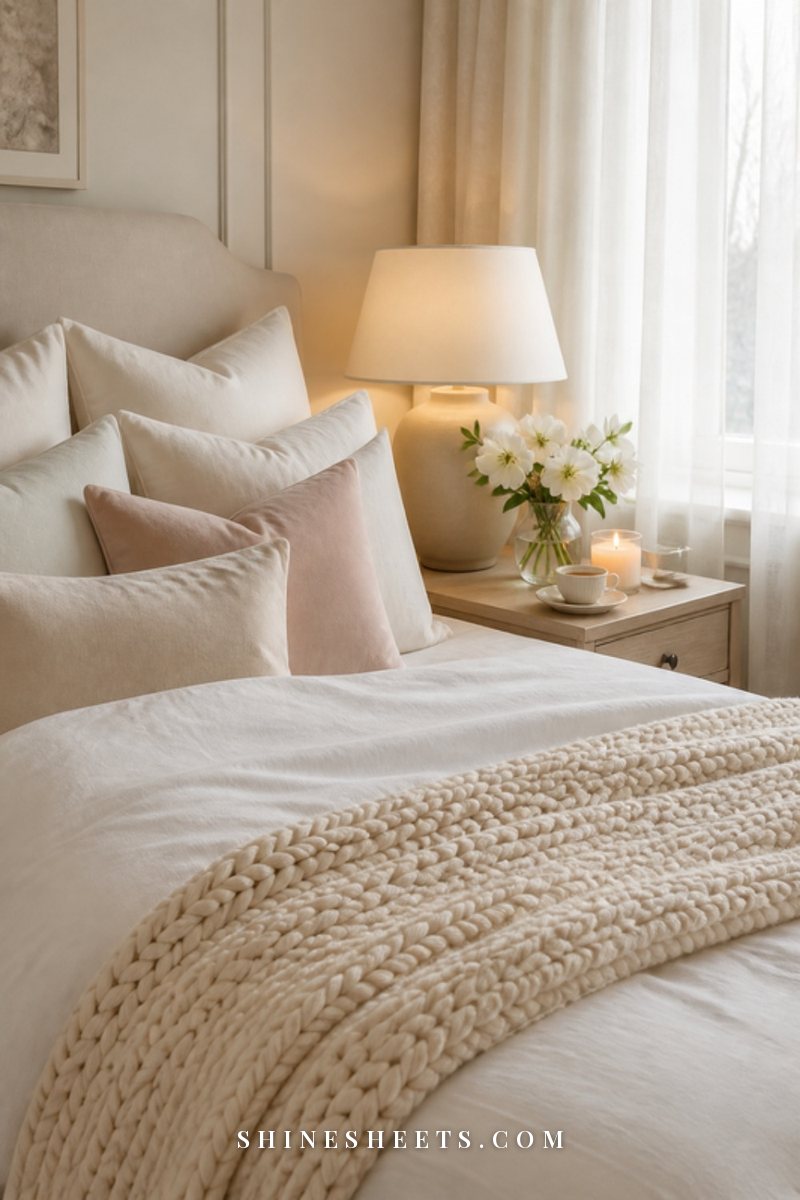
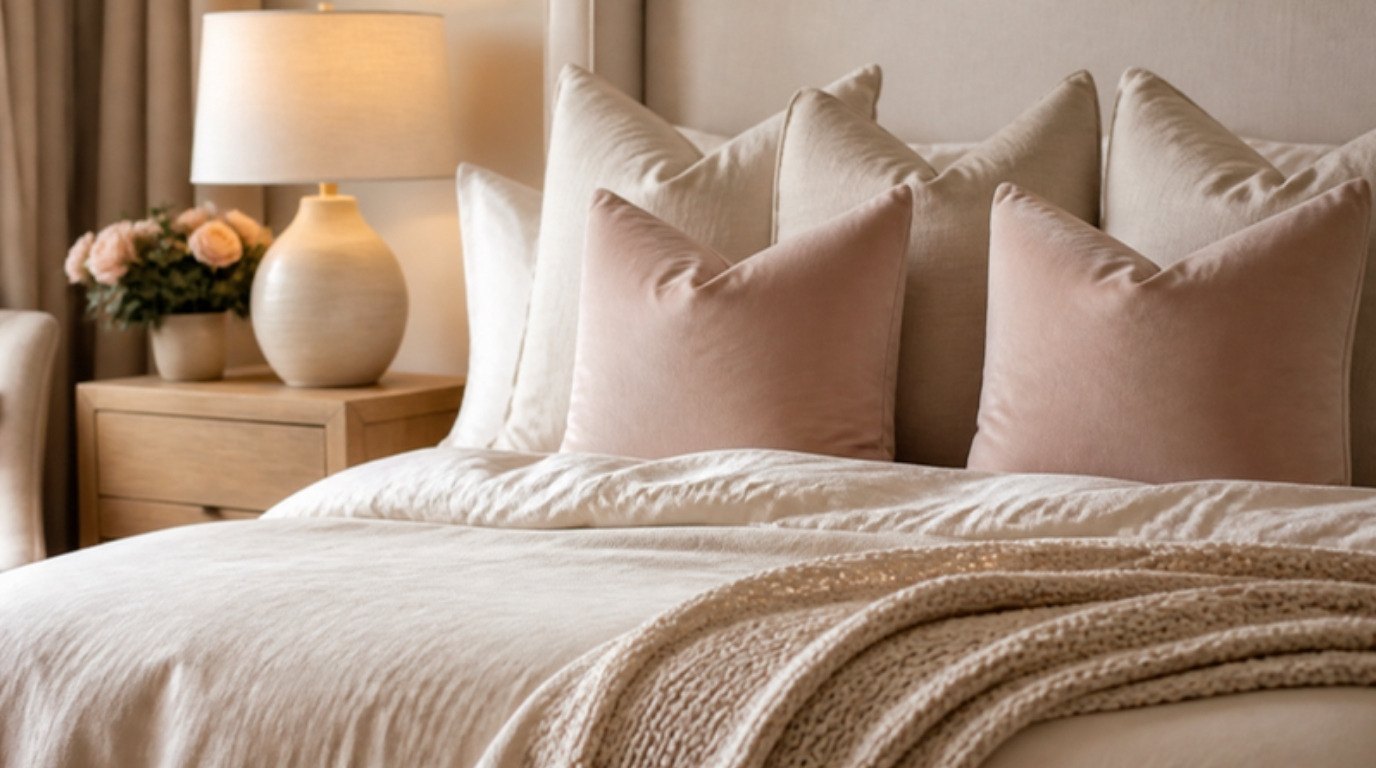
You spend hours in bed every night, so it's worth making it the warmest spot in your home. Layering works better than one heavy blanket, because air between layers holds heat:
- Switch to flannel or brushed cotton sheets for the coldest months.
- Add a duvet with a higher fill weight, or keep a lighter one and add a blanket on top.
- Drape a throw across the foot of the bed, where your feet get cold first.
- Pull the bed a few inches away from a cold exterior wall or drafty window if you can.
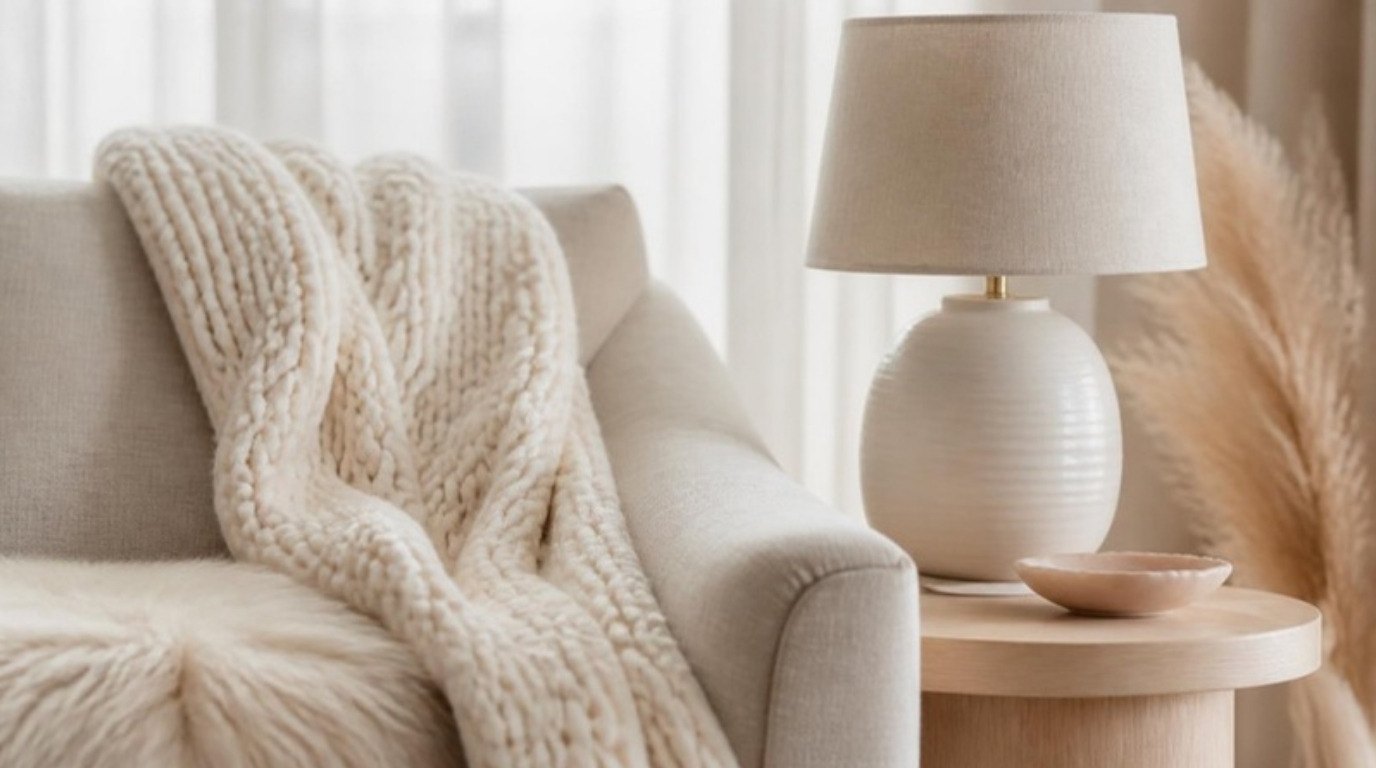
A chunky knit throw works twice: across the bed at night and on the sofa in the evening. If you love the layered, plush look, my guide to creating a hotel bed at home shows how to build it beautifully.
10. Use a Space Heater Safely
A space heater can make one room comfortable without heating the whole home, but it needs care. These rules are non-negotiable:
- Keep anything that can burn, including curtains, bedding, rugs, furniture and paper, at least 3 feet away from the heater.
- Place it on a hard, flat, level floor, never on a rug, bed or table.
- Plug it directly into a wall outlet, not an extension cord or power strip.
- Choose a model with automatic tip-over shutoff and overheat protection.
- Turn it off when you leave the room or go to sleep.
- Keep children and pets away from it.
Read the heater's manual before the first use, and keep your smoke alarms tested and working.
Room-by-Room Warm-Up Table
Here's a quick plan for each part of your home. Pick one or two fixes per room rather than trying everything at once.
| Room | Quick warm-up | Bigger fix | Feels-warmer touch |
|---|---|---|---|
| Living room | Close curtains at dusk, pull the sofa off the radiator | Thermal curtains and a large wool rug | Knit throw, warm lamps, a few cushions in textured fabrics |
| Bedroom | Flannel sheets, close the door at night | Seal window gaps, add a rug beside the bed | Throw at the foot of the bed, soft bedside lamp |
| Kitchen | Rug or runner by the sink | Draft stopper on an outside door | Warm bulbs under cabinets, a kettle of tea |
| Bathroom | Thick bath mat, close the door while showering | Seal gaps around the window | Warm towels hung near (not on) a heat source, robe on a hook |
| Home office | Rug under the desk chair | Thermal curtain behind the desk | Lap blanket, slippers, a warm desk lamp |
| Entryway | Draft stopper at the front door | Weatherstripping around the door frame | Thick doormat, a basket for warm socks and scarves |
| Spare room | Keep the door closed | Draft stopper at the base of the door | Warm it up only before guests arrive |
How To Make Your Home Feel Warmer
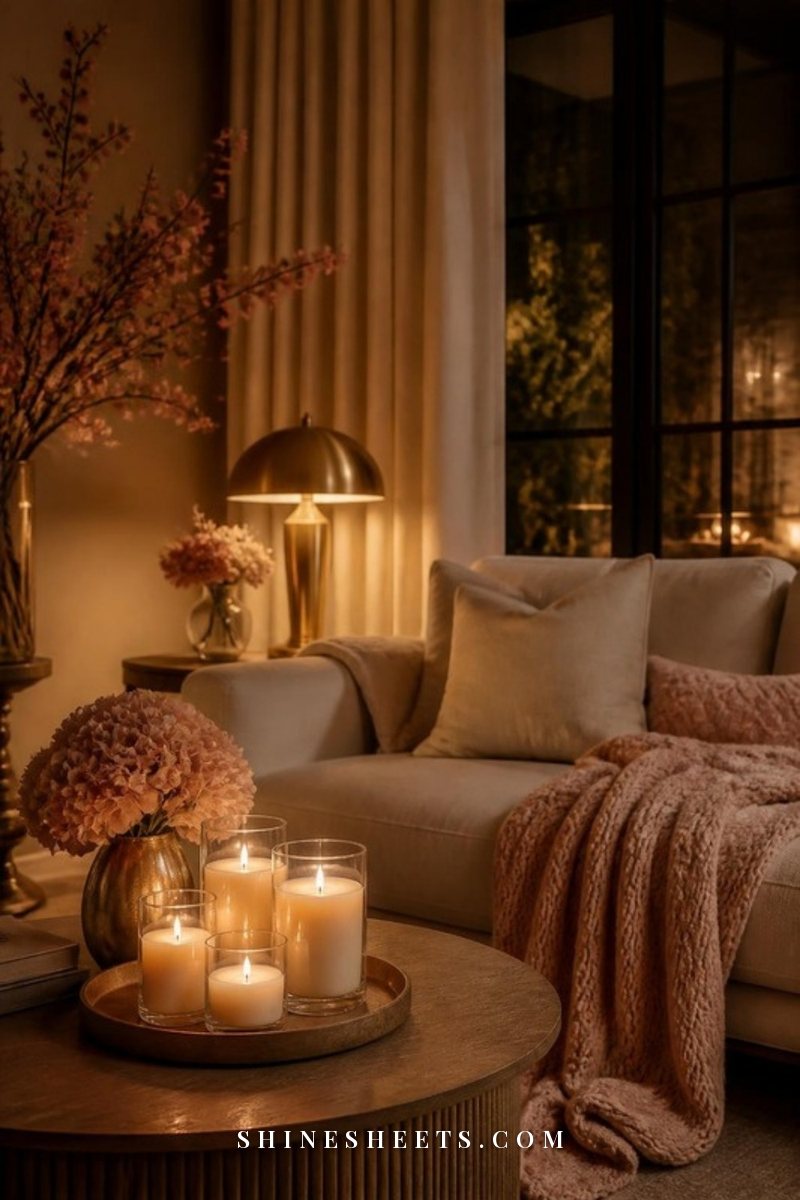
Temperature is only half the story. A room can be a perfectly reasonable temperature and still feel cold if it's lit with harsh white light and full of slick, hard surfaces. These touches make your home feel warm even before the heat kicks in:
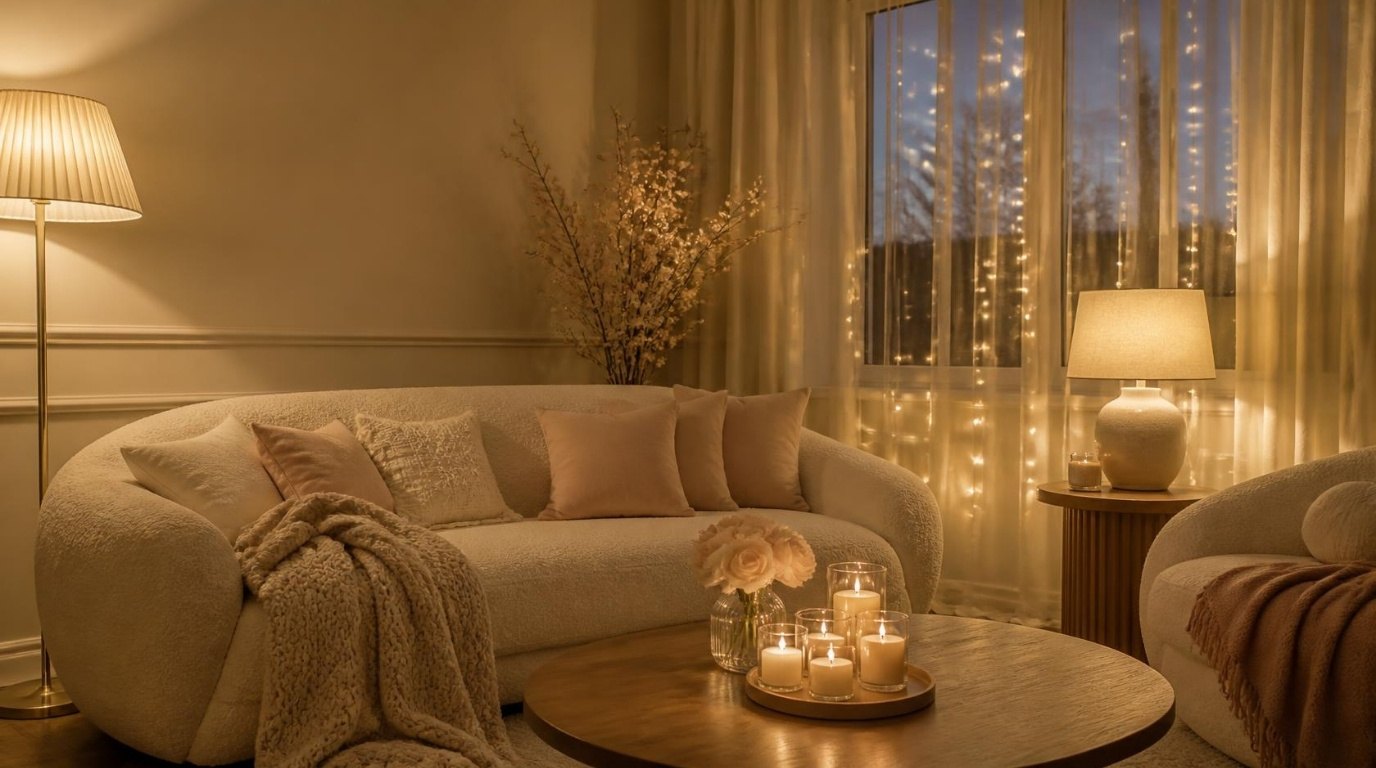
- Warm lighting. Swap cool white bulbs for warm white (around 2700K) and use several low lamps instead of one bright overhead light. My guide to lighting ideas shows how to layer light so evenings feel soft and inviting.
- Textured fabrics. Bouclé, wool, velvet, chunky knits and faux sheepskin add visual and physical warmth. Swap a few cushion covers and drape a throw over a chair.
- Warm colors. Cream, camel, caramel, blush and soft terracotta accents feel warmer than stark white or cool gray.
- Candles, safely. A few glass candles make a room glow (I love them on a tray on the coffee table). Keep them away from curtains and anything that can burn, never leave them unattended, and blow them out before bed. The NFPA's candle safety tips are worth a quick read. Flameless candles are a lovely option for bedrooms.
- Soft zones. Create one small nook with a chair, a blanket, a lamp and a side table for your tea. A small, enclosed-feeling spot often feels warmer than a big open one.
If you want more ideas for that wrapped-up feeling, my guides to cozy home ideas and the hygge lifestyle are full of them.
Small Habits That Keep You Warm
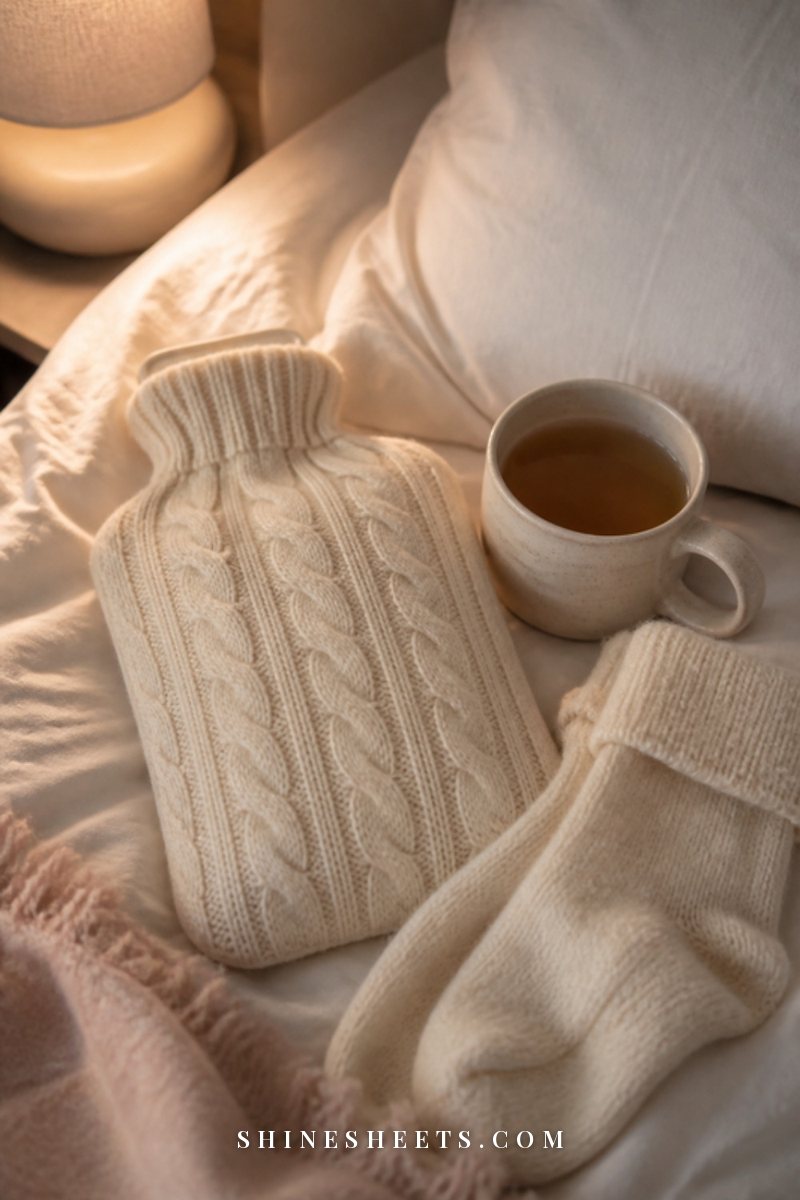
Sometimes the warmest thing you can do is warm yourself, not the whole house. These everyday habits help a lot:
- Use a hot water bottle. Fill it with hot (not boiling) tap or kettle water that has cooled slightly, only about two-thirds full, and push out the air before closing. A hot water bottle with a knit cover is lovely for warming your bed ten minutes before you get in. Replace it if the rubber shows any cracks.
- Wear warm socks and slippers. Cold feet make your whole body feel cold. Soft wool socks or sherpa-lined slipper socks are a simple fix.
- Layer your clothes. A thin base layer under a sweater keeps you warmer than one thick piece.
- Drink something warm. A mug of herbal tea in the evening warms your hands and slows you down in the nicest way.
- Move a little. Five minutes of stretching or a quick tidy gets your blood flowing when you've been sitting still.
- Cook and bathe smart. After using the oven for dinner, leave the door closed and let it cool naturally. After a bath, let the warm, steamy air drift into the hallway if your bathroom doesn't get damp.
What To Avoid for Safety
Winter warmth should never come at the cost of safety. Please avoid these:
- Never use your oven or stovetop to heat your home. It's a fire risk and, with gas appliances, can produce dangerous carbon monoxide.
- Never use outdoor heaters, grills or generators indoors, including in a garage with the door open.
- Don't overload outlets with heaters, electric blankets and lamps all on one power strip.
- Don't dry clothes or towels on top of a space heater or drape anything over it.
- Don't block exits with heaters, furniture or draft stoppers that could trip someone in the dark.
- Don't ignore your alarms. Test smoke alarms monthly, and if you have any fuel-burning appliance, make sure you have a working carbon monoxide alarm too.
Electric blankets and heated throws should be used exactly as the manual says, never folded while on, and switched off before sleep unless the product is designed for overnight use. If your heating system isn't working properly, call your landlord or a qualified professional rather than trying a workaround.
Renter-Friendly Fixes at a Glance

Renting doesn't mean putting up with a cold apartment. All of these can be added and removed without damage (always test adhesives in a hidden spot first and check your lease):
- Under-door draft stoppers and fabric draft snakes
- Thermal curtains on tension rods or existing hardware
- Large rugs with non-slip pads
- Removable weatherstripping tape around doors and windows
- Removable window insulation film
- Clear removable caulk for small window gaps
- Layered bedding and throws
- Warm-white bulbs in existing lamps
Keep the packaging and notes on what you added, so it's easy to take everything down when you move.
Final Thoughts
A warmer home in winter usually comes from many small, gentle fixes rather than one big expensive one. Stop the drafts, dress your windows and floors, layer your bed, and give yourself a few cozy rituals to come home to.
Start with your coldest spot this week, keep safety first with every heater and candle, and let your home become the soft, warm place you look forward to on the coldest evenings.