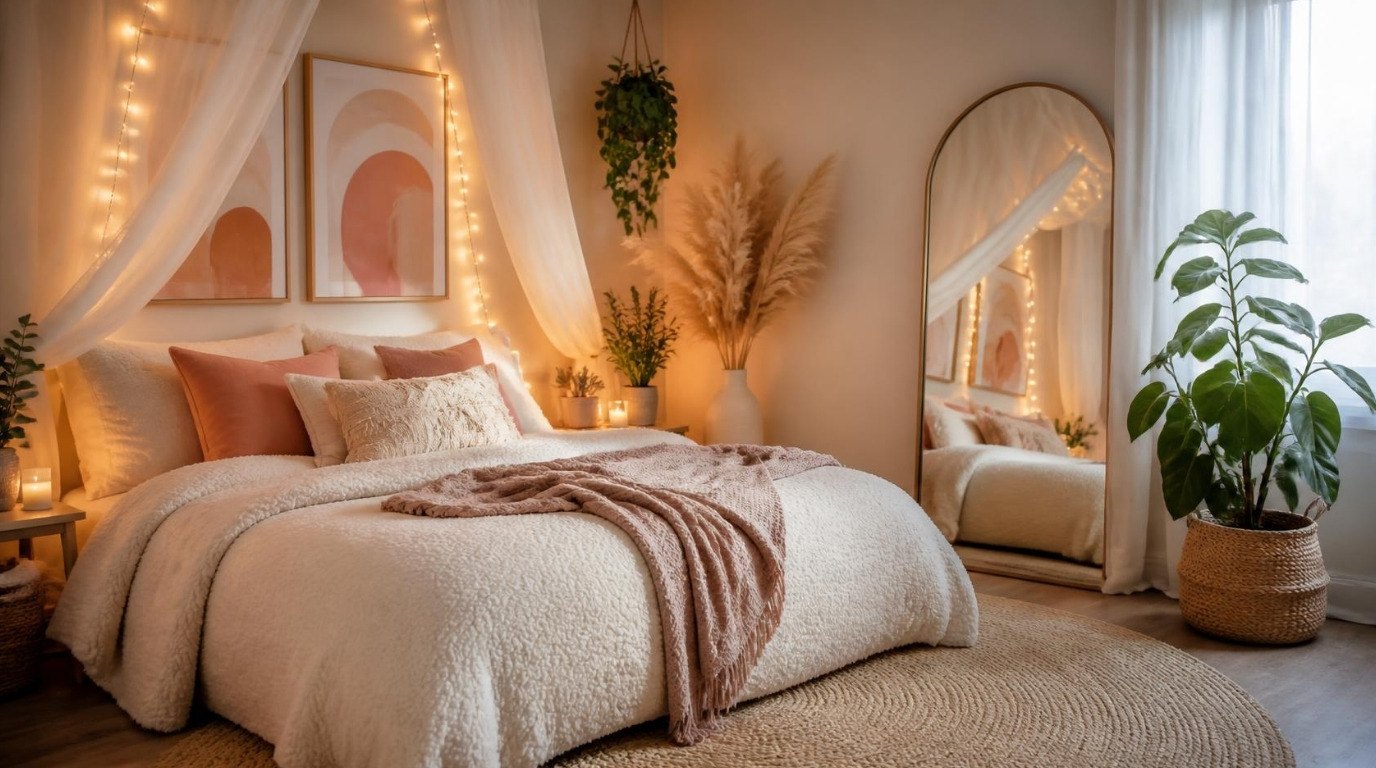
A bedroom rarely needs new furniture to feel new. It needs fewer things, softer light and one or two pieces that change how the room feels the second you walk in. That's good news for your wallet, because the changes that make the biggest difference are usually the cheapest ones.
The trick is doing things in the right order. If you buy a pretty lamp before you've cleared the nightstand, it just becomes one more thing on a crowded surface. If you buy curtains before you've decided on the bedding, you might end up with two colors that quietly argue. A little planning stretches every dollar further.
This guide covers a bedroom makeover on a budget from start to finish: a quick plan before you spend anything, 12 ideas ranked roughly from free to small splurges, a "makeover by budget" table with $50, $150 and $300 plans, what's worth spending on and what isn't, and the mistakes that make a budget room look, well, budget.
You deserve a room that feels like a soft landing at the end of the day. Let's make it happen without the stress.
Before You Spend a Dollar: Make a Simple Plan
Ten minutes of planning saves you from the most common budget trap: buying random pretty things that don't add up to a finished room. Here's what I'd do first:
- Pick three words for the feeling you want. "Calm, airy, soft" leads to very different choices than "warm, moody, layered." Every purchase should match at least two of your three words.
- Choose a palette of three to four colors. Start with what you already own and can't replace (flooring, a dresser, the wall color in a rental). A safe formula: one main neutral, one secondary neutral, one soft accent and a metal finish like gold or brass.
- Measure everything. Window width and height, the wall behind the bed, the floor area beside the bed. Keep the numbers in your phone notes so you can shop on the spot.
- Write a list with prices. Note what you'll do for free, what you'll thrift and what you'll buy new. Then set your total budget and stick to it.
If you're working with a tiny footprint, my guide to small bedroom ideas pairs perfectly with this plan, since layout and scale matter even more in a small room.
12 Budget Bedroom Makeover Ideas That Make the Biggest Difference
These are roughly in the order I'd tackle them. The first few cost nothing, and they make every later purchase look better.
1. Declutter First (It's Free)
Clutter is the single biggest thing that makes a bedroom feel tired. Before buying anything, clear every surface completely: nightstands, dresser top, the chair that's become a second closet. Then put back only what you love or use daily.
A good rule: nightstands get three to five items, the dresser top gets one "styled" moment (a tray, a lamp, one decorative object) and the floor is for furniture and a rug only. Bags, laundry baskets and shoe piles go inside closets or under the bed in lidded bins. You'll be amazed how much bigger and calmer the room feels before you've spent a cent.
2. Rearrange the Layout
Moving furniture is free and can completely change how a room flows. A few principles to try:
- Put the bed on the wall you see first when you walk in, so it becomes the focal point.
- Leave at least 24 inches of walking space around the sides and foot of the bed where possible.
- Avoid placing the bed directly under a window if you can, since it often feels drafty and makes curtains awkward.
- Keep the path from the door to the bed clear, even if that means a smaller chair or no chair at all.
Before you move anything heavy, sketch two or three options on paper. Ask a friend to help with the bed, and slide furniture on folded towels to protect the floor.
3. Make the Bedding the Star
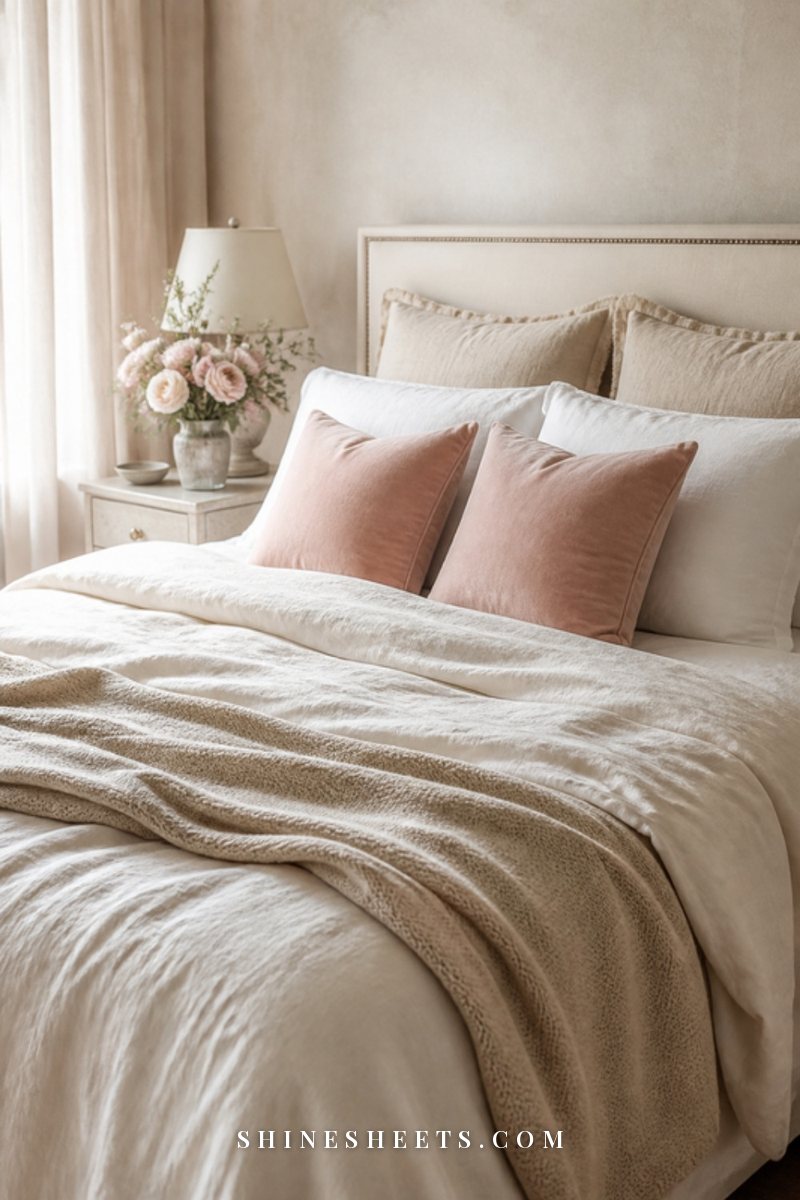
Your bed takes up more visual space than anything else in the room, so it's where your money works hardest. Even if you change nothing else, fresh bedding can make a bedroom feel brand new.
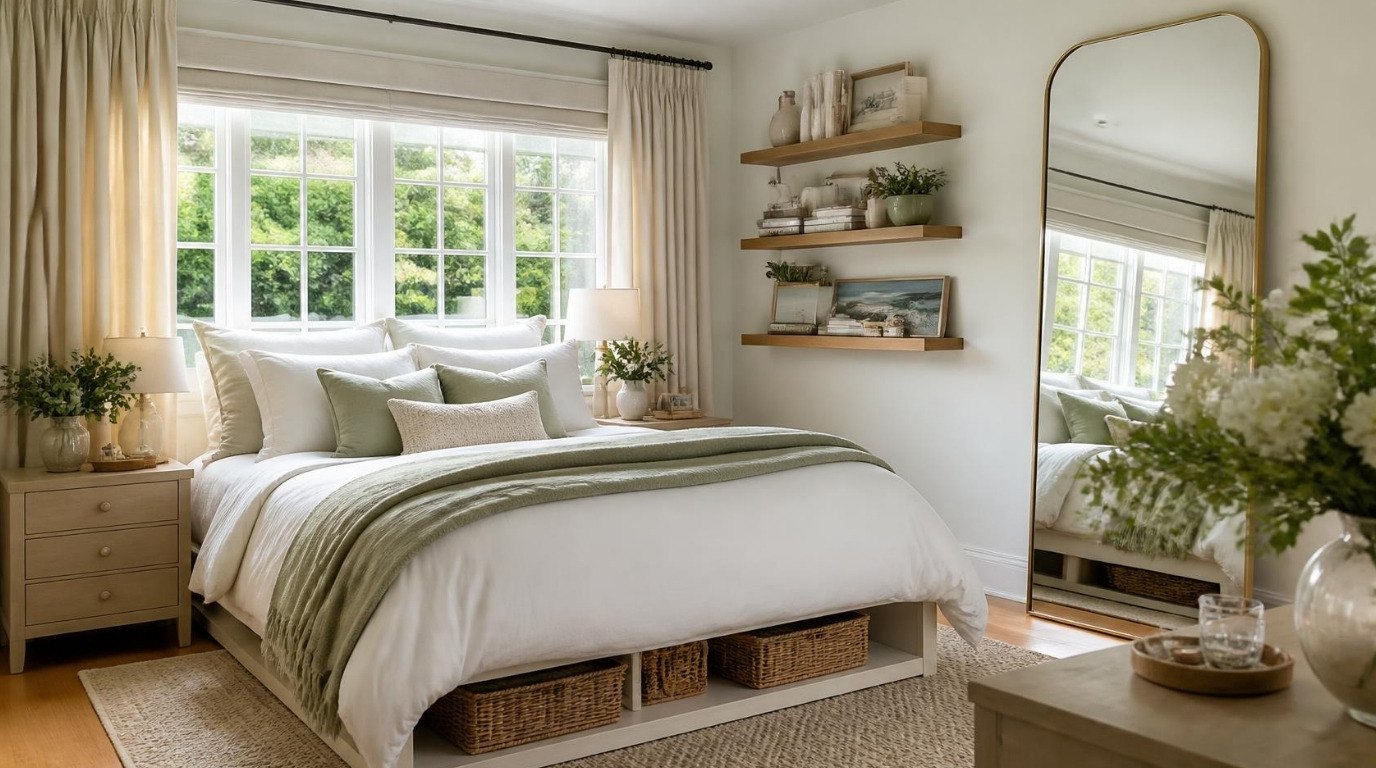
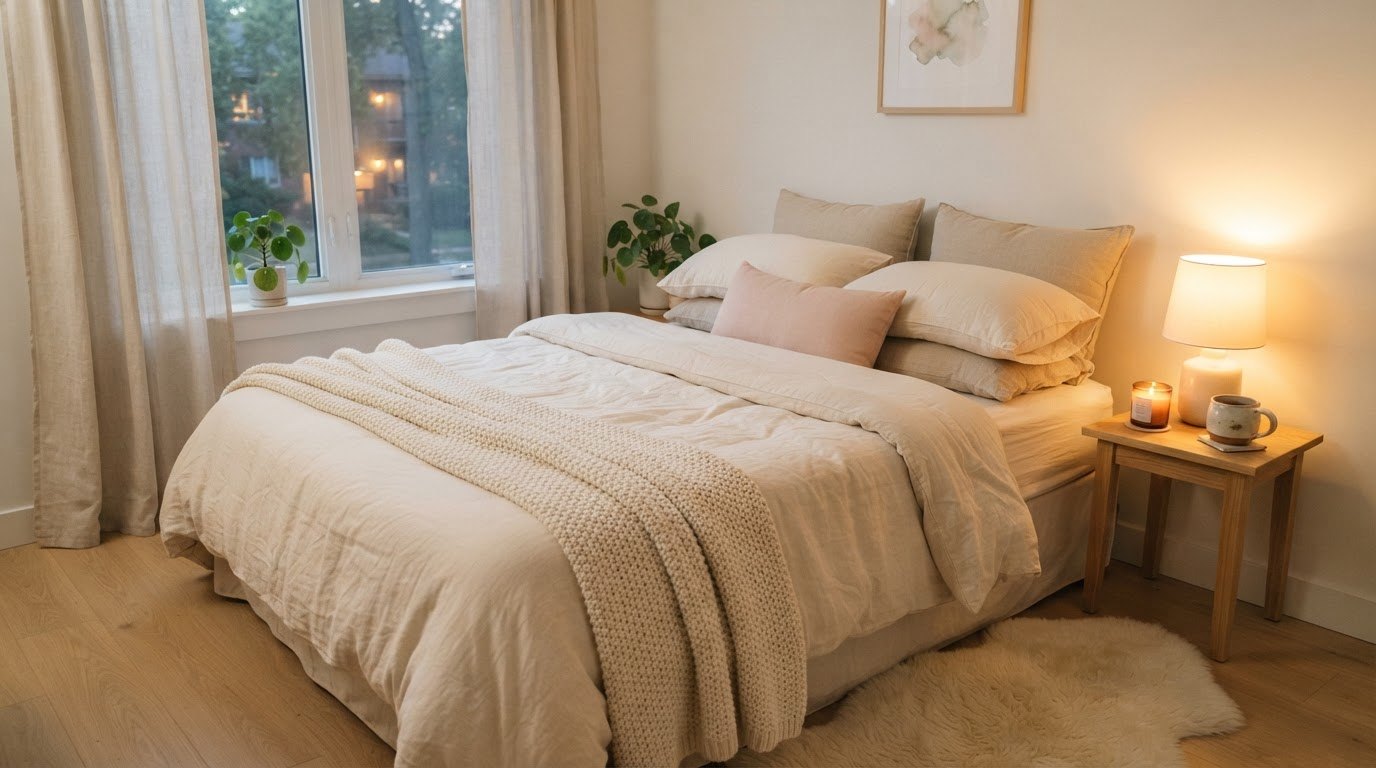
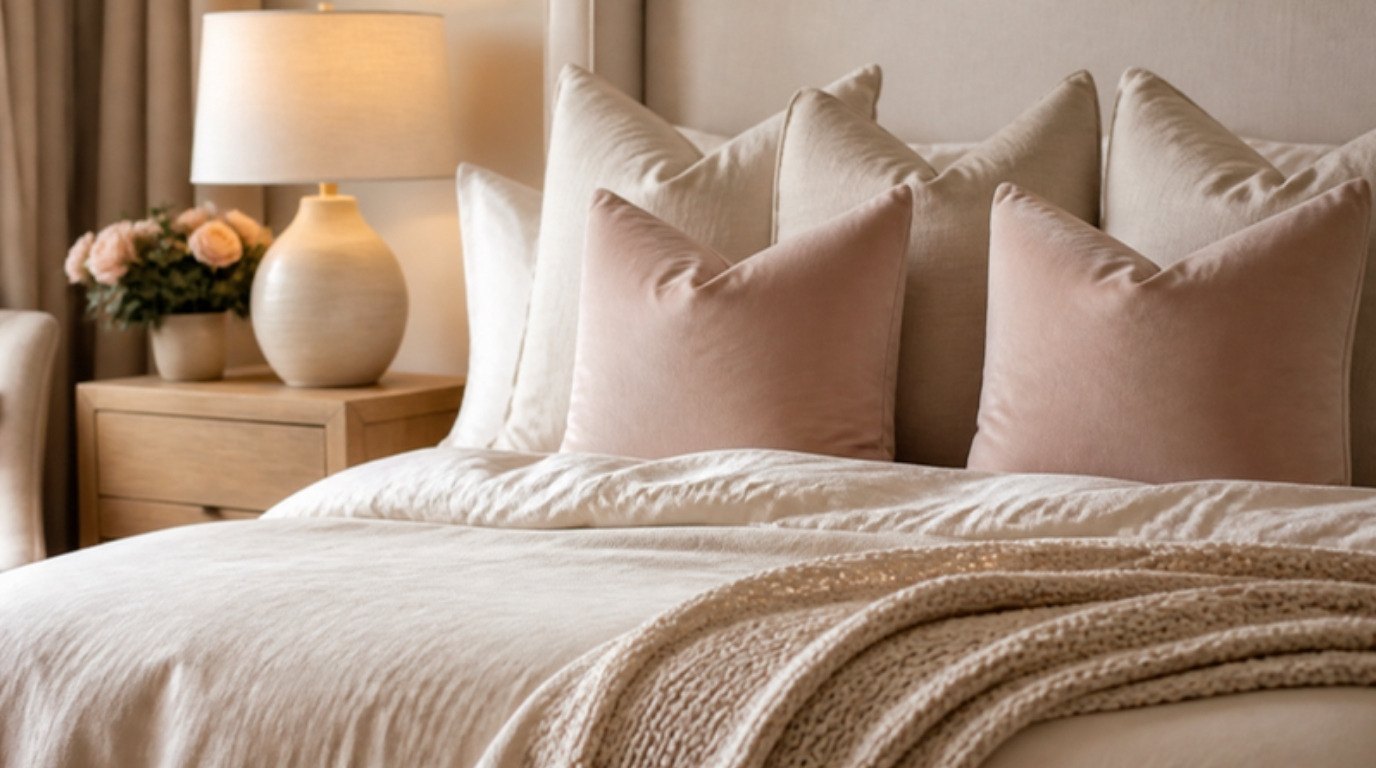
Look for a cream linen duvet cover or a linen-look cotton blend, which looks relaxed and expensive even when it's a little rumpled. Then layer: two sleeping pillows, two larger Euro or standard shams behind them, one or two smaller decorative pillows in front and a throw folded across the bottom third of the bed.
You don't need new pillow inserts to change the look. A set of blush throw pillow covers slipped over the inserts you already have costs a fraction of new pillows. If you want the full five-star look, my guide on how to create a hotel bed at home walks through the layering step by step.
4. Layer Your Lighting
Most bedrooms rely on one bright ceiling light, which is the least flattering light in the house. Good lighting comes from three levels: overhead light for cleaning, a bedside lamp for reading and something low and soft for evenings.
Start with the bulbs. Swapping cool white bulbs for warm ones (around 2700K) changes the mood instantly and costs very little. Then add a warm bedside lamp with a fabric shade on at least one side of the bed. A glass candle or a small plug-in wall sconce adds the third layer. If you only do one thing in this section, turn off the overhead light after dinner and live by lamp light for a week. You'll never want to go back.
5. Paint One Wall or Try Peel-and-Stick
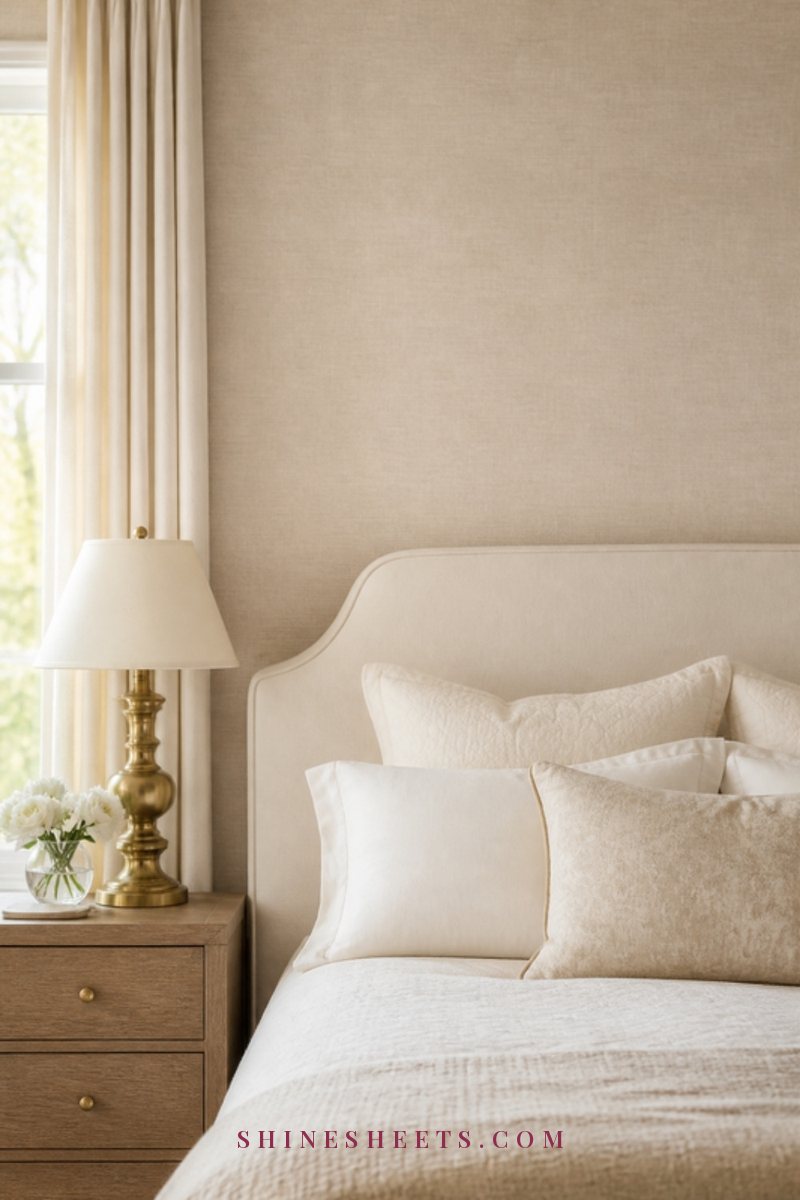
Color on the wall behind your bed is one of the most dramatic changes you can make for under $60. A gallon of paint usually covers one accent wall with two coats, and soft warm shades like greige, mushroom, muted sage or a dusty blush are easy to live with.
Renting or nervous about paint? Neutral peel-and-stick wallpaper in a subtle texture, linen weave or tiny pattern gives you the same impact and peels off when you leave. Apply it only to the wall behind the bed to keep costs down. Test a small piece in an inconspicuous spot first, since some wall paints don't love adhesive.
6. Fake a Headboard
A bed without a headboard can look unfinished, but upholstered headboards are pricey. A few budget alternatives that still look intentional:
- A painted arch or rectangle on the wall behind the bed, slightly wider than the mattress, in a shade two steps deeper than the wall.
- A row of oversized pillows propped against the wall, which reads as soft and layered.
- A fabric panel: a padded board wrapped in linen-look fabric and mounted to the wall.
- A thrifted headboard refreshed with paint or new fabric.
Whatever you choose, aim for the headboard area to extend at least a few inches past each side of the mattress, so it feels anchored rather than squeezed.
7. Hang Curtains High and Wide
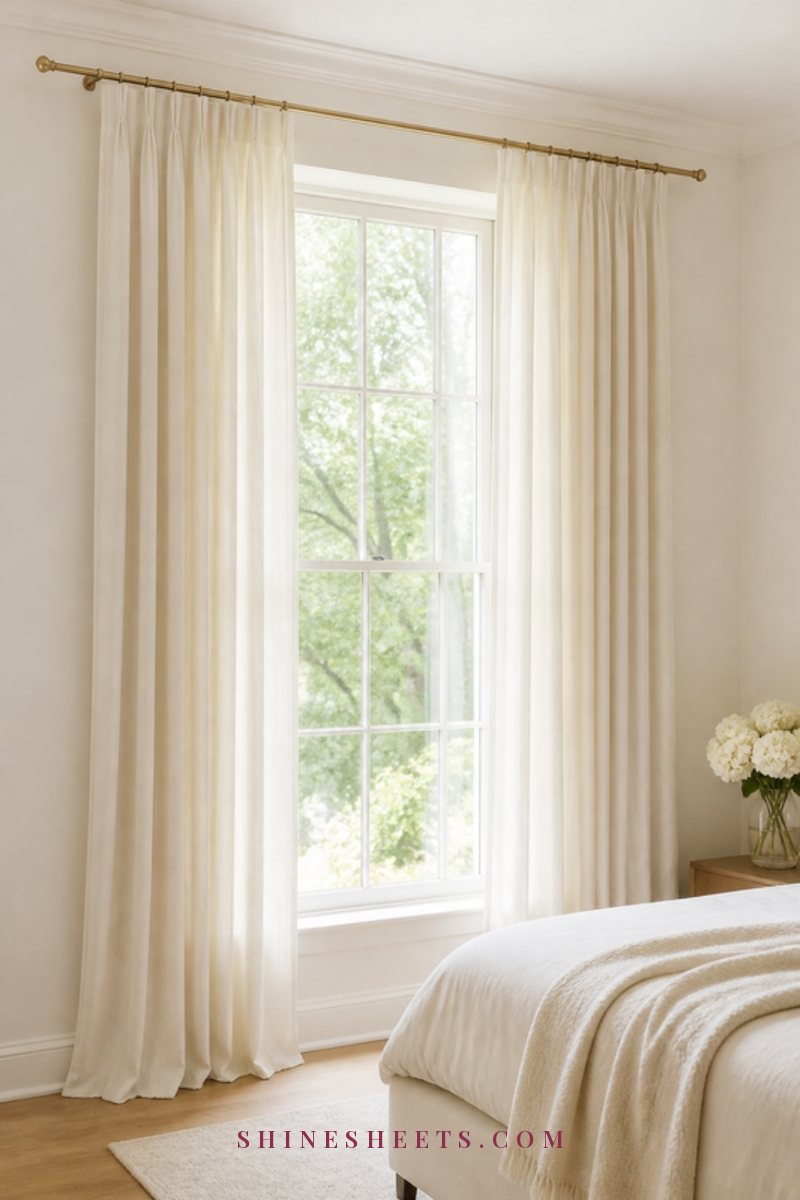
This is my favorite budget trick of all because it makes ceilings look taller and windows look bigger. Mount the rod about 4 to 6 inches below the ceiling (or halfway between the window frame and the ceiling) and extend it 8 to 12 inches past each side of the window frame. Choose curtains that just kiss the floor.
A slim gold curtain rod with simple ivory linen-look panels looks far more expensive than it is. For more on fabrics, lengths and styles, my guide to curtain ideas covers it all.
8. Ground the Room With a Rug
A rug makes a bedroom feel finished and softer underfoot. The most common mistake is buying one that's too small. Ideally, the rug should extend at least 18 to 24 inches beyond the sides of the bed, so your feet land on it when you get up.
If a large rug isn't in the budget, two runners on either side of the bed or a smaller rug at the foot of the bed both work. Flat-woven and jute rugs tend to be the most affordable and are easy to layer with a smaller vintage rug later.
Color-wise, a rug a shade or two lighter or darker than your floor looks intentional, while one that's almost exactly the floor color tends to disappear. A rug pad under it (even a thin, inexpensive one) keeps it from sliding and makes a budget rug feel noticeably plusher underfoot.
9. Put Something Meaningful on the Walls
Empty walls make a room feel temporary. You don't need expensive art. Ideas that cost little or nothing:
- Frame a favorite postcard, a page from an old book or a pressed flower in a large mat to make it look important.
- Print a favorite photo in black and white, which instantly looks more artistic.
- Hang a vintage textile or scarf on a wooden hanger.
- Lean one large piece on the dresser instead of hanging several small ones.
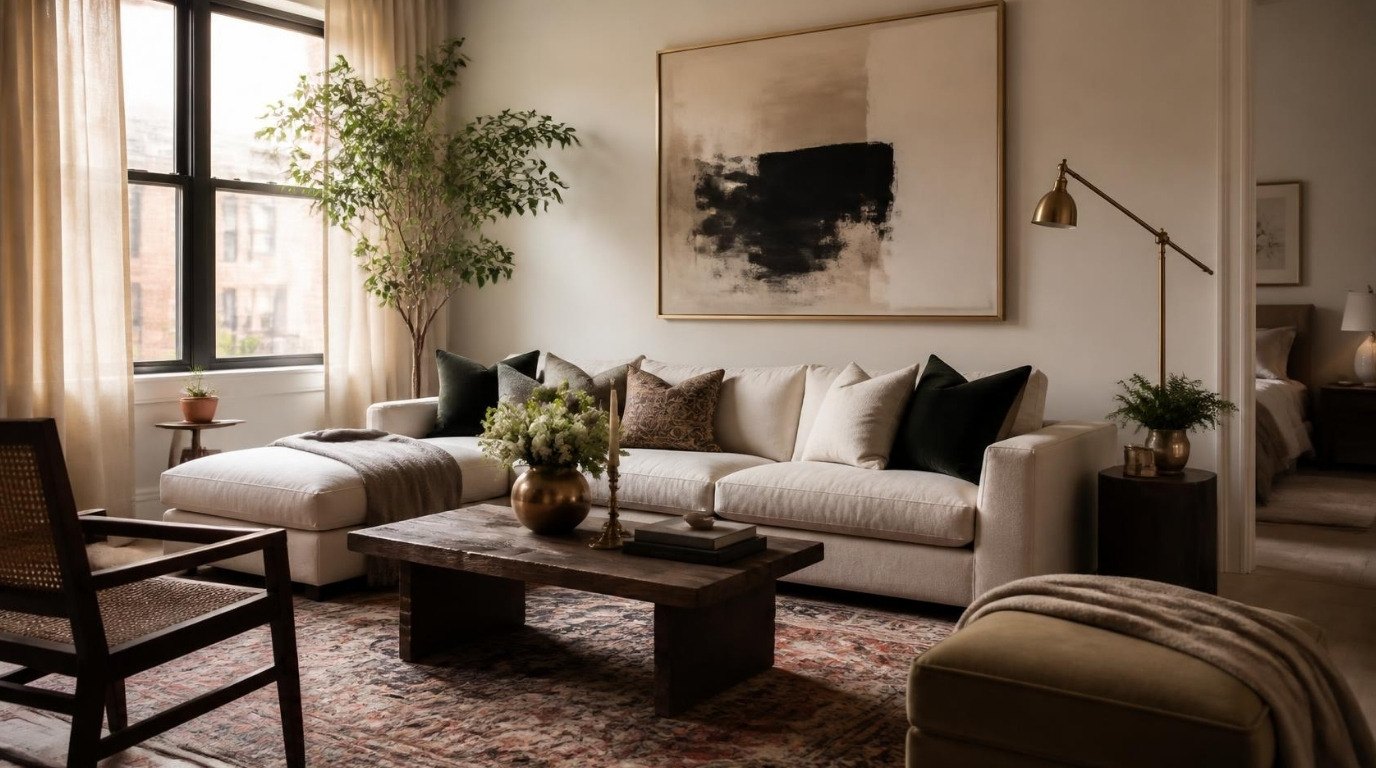
One larger piece above the bed usually looks more polished than several tiny frames. Aim for art that's about two-thirds the width of the bed.
10. Bring in Greenery (Faux Counts)
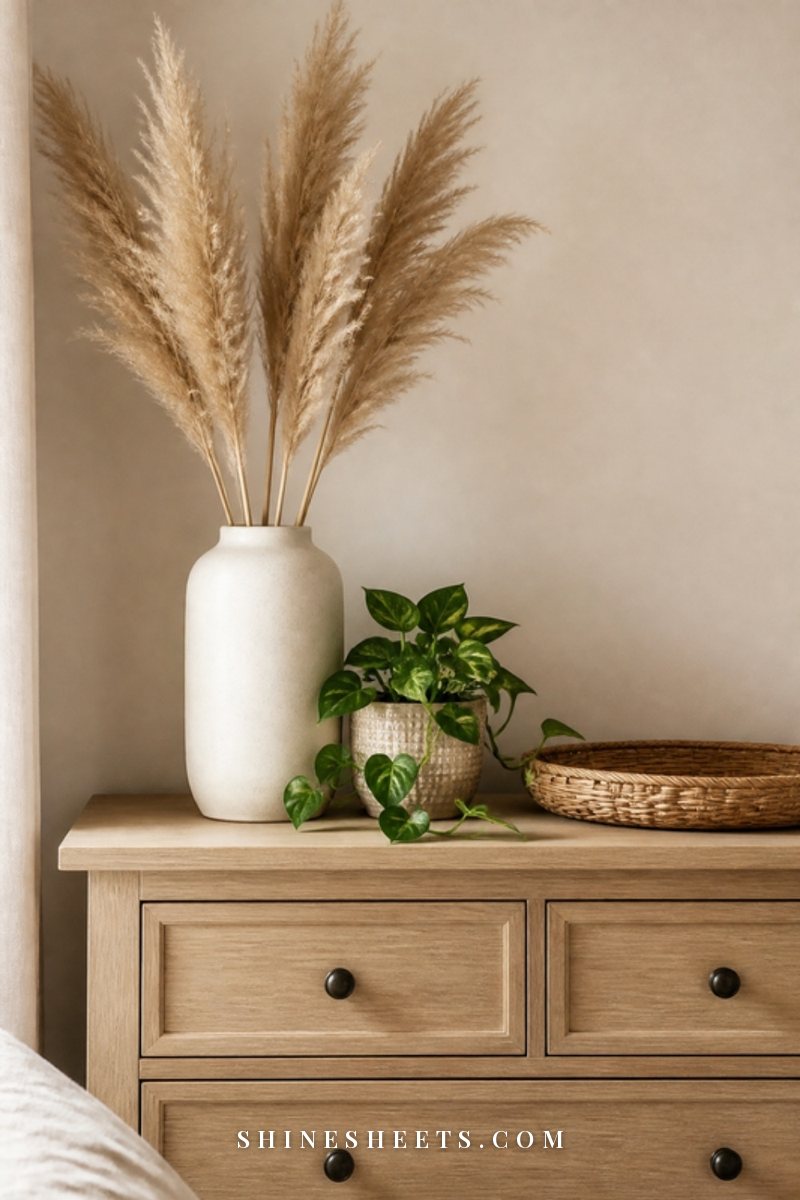
Something living (or convincingly living-looking) softens hard lines and makes a room feel cared for. If you have good light, a pothos or snake plant is forgiving and inexpensive. If your bedroom is dark or you tend to forget watering, faux is completely fine.
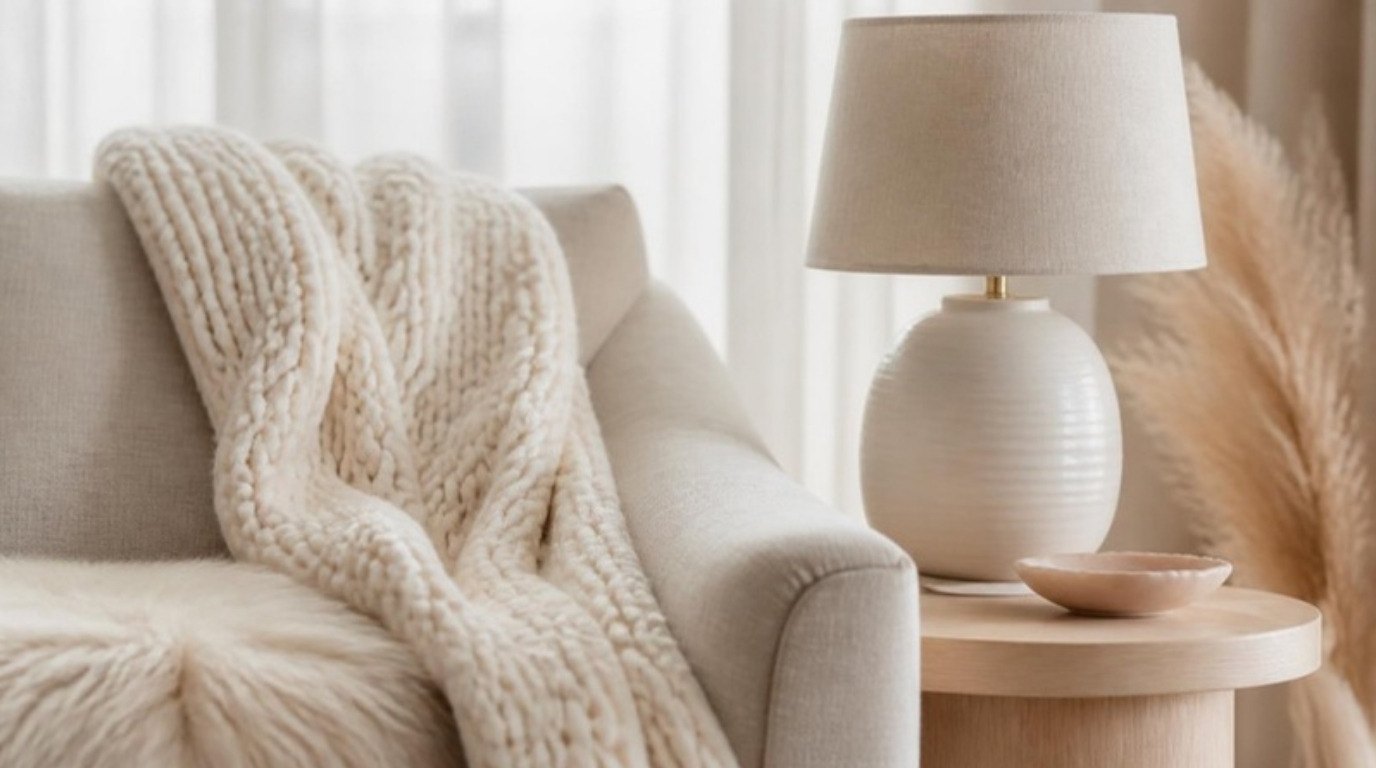
Dried and faux pampas grass in a simple cream vase adds height and texture to a dresser corner or the floor beside a chair. One generous arrangement looks better than several small ones scattered around.
11. Restyle Your Nightstand
Nightstands are small, but they're the first thing you see when you wake up and the last thing you see at night. A styled nightstand makes the whole room feel considered.
A simple formula: something tall (a lamp), something personal (a framed photo, a small dish for rings), something living (a bud vase) and something useful (a book, a glass of water, a hand cream). Keep cables tidy and the surface at least partly clear. My guide to nightstand styling has plenty of combinations to try.
12. Shop Secondhand Like a Pro
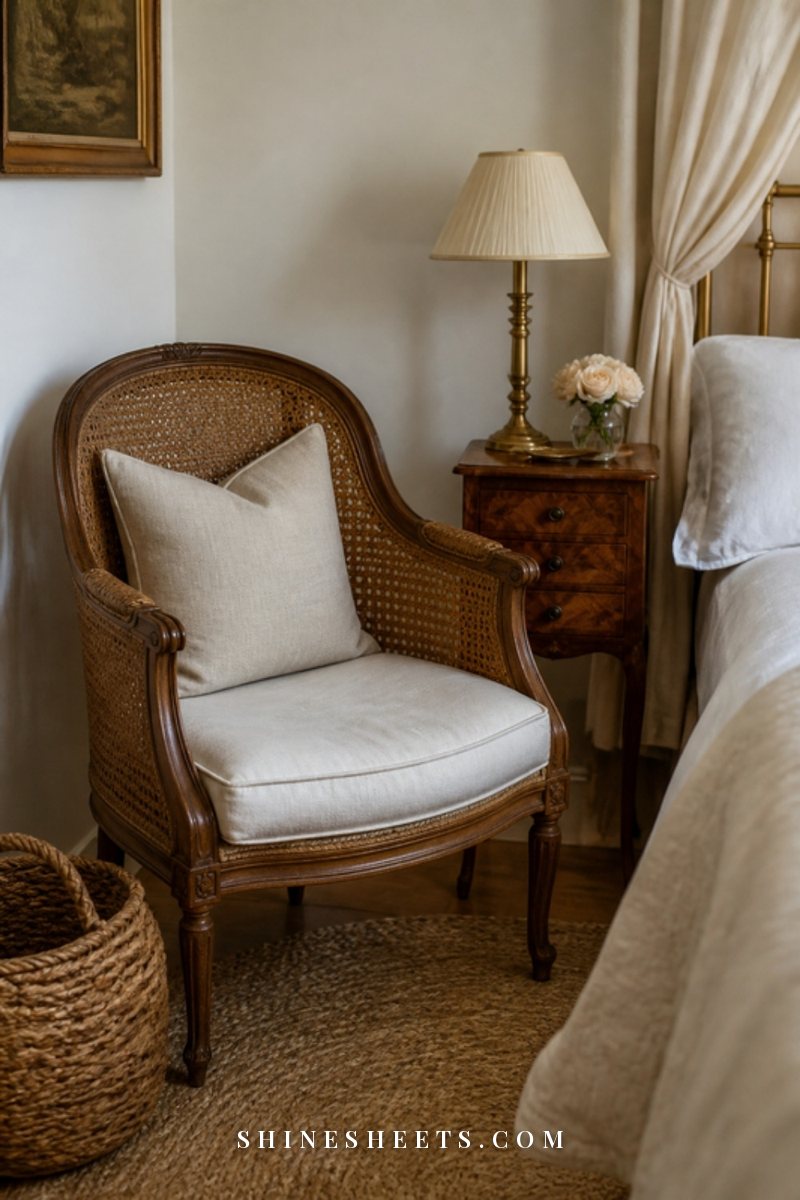
Thrift stores, estate sales and local marketplace listings are where budget bedrooms get their character. Some of the best things to look for secondhand:
- Solid wood nightstands and dressers that just need new knobs or a coat of paint.
- Brass and ceramic lamp bases (add a new shade and it looks new).
- Picture frames of all sizes, even if you don't like the art inside.
- Rattan and cane chairs, baskets and mirrors.
- Wool rugs, which clean up beautifully.
Things I'd skip secondhand: mattresses, pillows and anything upholstered that you can't clean properly. Wipe down every find with a gentle cleaner and let it air out before bringing it into your bedroom.
Makeover by Budget: $50, $150 and $300 Plans
Here's how I'd split the money at three different budgets. Prices are approximate and will vary by store and region, but the priorities stay the same. Every plan starts with decluttering and rearranging, because those are free.
| Area | $50 plan | $150 plan | $300 plan |
|---|---|---|---|
| Declutter and layout | Free | Free | Free |
| Bedding | Two new pillow covers, wash and iron existing bedding ($20) | Linen-look duvet cover plus pillow covers ($70) | Linen duvet cover, Euro shams and pillow covers ($120) |
| Lighting | Warm 2700K bulbs ($10) | Warm bulbs plus one bedside lamp ($40) | Warm bulbs plus a pair of bedside lamps ($70) |
| Walls | Rehang or reframe what you own (free) | Thrifted frames for one large art piece ($15) | Paint or peel-and-stick accent wall ($50) |
| Windows | Keep existing | Keep existing, rehang higher (free) | New rod and floor-length panels hung high ($45) |
| Decor and greenery | Thrifted vase and faux stems ($20) | Faux pampas and a small plant ($25) | Secondhand rug ($15 if you're lucky) or save for one later |
| Total | About $50 | About $150 | About $300 |
If you're starting with the $50 plan, don't worry about the rest. You can add one item a month and get to the $300 room slowly, which often leads to better choices anyway.
A Simple Weekend Makeover Plan
If you'd like to see a real change by Sunday night, here's a calm two-day rhythm that keeps the project from taking over your whole life.
Saturday Morning: Clear and Clean
Take everything off the surfaces and out from under the bed. Sort it into four piles: keep in the bedroom, belongs elsewhere, donate and trash. Then vacuum, dust the baseboards and wipe down the windows and light switches. A clean, empty room shows you what you're really working with.
Saturday Afternoon: Layout and Shopping
Try your new furniture arrangement while the room is empty. Live with it for an hour before deciding. Then do your thrift run or pick up the few new items on your list, and nothing that isn't on it.
Sunday Morning: Walls and Windows
Paint or apply wallpaper first, while the bed is pulled away from the wall. Then hang the curtain rod and art. Doing the messy, tool-heavy jobs early leaves the fun part for last.
Sunday Afternoon: Make the Bed and Style
Wash the new bedding, make the bed with all its layers, set up the lamps and style the nightstands and dresser. Switch off the overhead light, light a candle and see how it feels. Leave anything you're unsure about for next week. Fresh eyes make better decisions.
One small extra that costs almost nothing: give the room a signature scent and sound. A linen spray on the pillows, a candle you only light in the bedroom and a quiet playlist you put on while you wind down all tell your brain "this is the calm place." It's the finishing layer people notice without being able to name it.
Where To Splurge and Where To Save
Not every item deserves the same budget. Here's how I think about it:
Worth a Little More
- Anything you touch every night: sheets, duvet cover and pillows. Comfort matters more than looks here, and good bedding lasts.
- Lamps you use daily: a sturdy base and a quality fabric shade make a real difference to the light.
- Curtains: thin, shiny panels instantly cheapen a room, so choose the heaviest linen-look fabric you can afford.
Easy To Save On
- Decorative pillows: covers only, swap them seasonally.
- Frames and art: thrift, print and frame your own.
- Vases, trays and baskets: secondhand stores are full of beautiful ones.
- Plants: start with cuttings from friends or one faux arrangement.
Budget Makeover Mistakes To Avoid
A few common slip-ups can make even a carefully planned room look less finished. Watch for these:
- Buying before decluttering. New pieces get lost in old clutter.
- Too many small accessories. Ten tiny objects look like clutter; three larger ones look styled.
- Rugs and art that are too small. Size up whenever you can.
- Matching everything exactly. A matching furniture set can feel flat. Mixing wood tones and textures looks collected.
- Ignoring the bulb color. Cool light makes even beautiful bedding look clinical.
- Doing it all in one weekend on a credit card. A room that comes together slowly usually feels more personal.
Once the basics are in place, my guide to cozy bedroom ideas is full of little finishing touches for the softer, warmer side of the room.
Final Thoughts
A beautiful bedroom isn't about how much you spend. It's about clearing space, choosing softer light and putting your money where you'll feel it every single night. Start with the free steps, add one meaningful piece at a time and let the room become yours slowly.
The best bedroom makeover is the one that makes you sigh with relief when you open the door, and that's absolutely possible on a small budget.